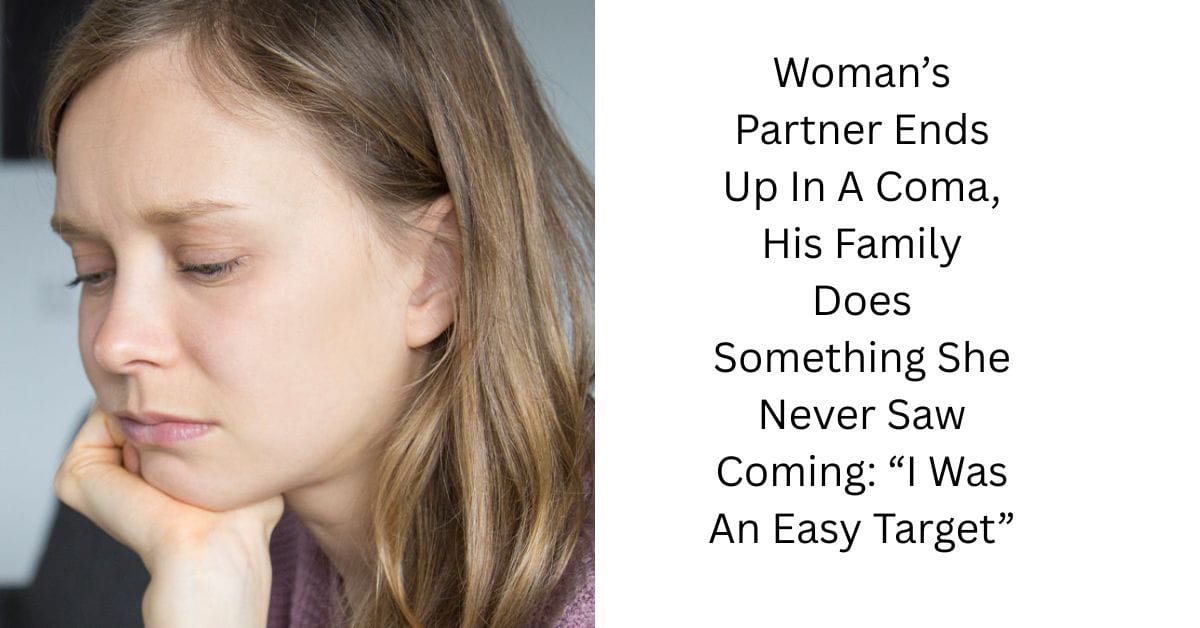
Woman’s Partner Ends Up In A Coma, His Family Does Something She Never Saw Coming: “I Was An Easy Target”
The first few days after the accident felt like a nightmare that refused to end. Every morning, she arrived at the hospital hoping for a sign that he would wake up, only to find the same quiet room filled with the steady beeping of medical equipment. Doctors explained that his condition was critical and that recovery, if it happened at all, could take months. She barely left his bedside, speaking to him about their favorite memories, future plans, and all the things she still wanted them to experience together. Holding onto hope became her full-time job, even as exhaustion and uncertainty slowly consumed her. Friends encouraged her to rest, but she feared that if she left for even a moment, he might wake up and wonder why she was gone.
Instead of finding comfort in his relatives, she was met with coldness that grew more obvious each day. At first, they acted polite, thanking her for supporting him, but their attitude quickly changed. They questioned every decision she made, criticized how often she visited, and even implied that she had no right to be involved because they were “real family.” Since the couple had never married, they used that fact to undermine her role in his life. They demanded access to his belongings, excluded her from important medical conversations, and began spreading subtle rumors that she was only interested in his finances. Already overwhelmed by fear and grief, she felt powerless to defend herself. Looking back, she realized she had become an easy target because she was emotionally drained and standing alone against an entire family.
As the weeks passed, the situation escalated beyond hurtful comments. She discovered that some of his personal possessions had disappeared from their shared home, while others claimed they had permission to take whatever they wanted. When she questioned them, they accused her of creating unnecessary drama during an already painful time. The emotional manipulation became relentless, making her second-guess her own memories and decisions. Yet despite everything, she refused to abandon the man she loved. She continued visiting the hospital, documenting every incident, saving every message, and quietly preparing herself in case the conflict turned into a legal battle. Deep down, she believed that when he finally opened his eyes, the truth about everything that had happened in his absence would eventually come to light.
Read Story…
My partner’s family made my life hell while he was in a coma. Now everyone expects me to just move on. What would you do?
I (34F) have been with my partner (31M) for almost nine years. We live about a 90-minute drive from his family. Before this, we all got along well. We’d visit often, travel together, and I genuinely considered them family. Looking back, though, his mother had always been a little… off.
In January, my partner was involved in a terrible car accident. I wasn’t with him, and the other driver was entirely at fault. He suffered a severe traumatic brain injury and went into a coma.
His mother, younger sister, brother-in-law, and father immediately came to our city and stayed in our small two-bedroom apartment so they could stay close to the hospital. At first, I was genuinely grateful they were there. I thought we would support each other through the worst moment of our lives.
Instead, everything fell apart almost immediately.
His mother walked into our home as if she owned it. On the very first night, she decided she would sleep in our bed next to me and asked me to clear closet space for her and her daughter. She also expected me to cook and clean for everyone. I was so depressed and terrified I was barely able to take a shower myself.
His sister took and started using my partner’s phone and house keys, and began making major decisions, including which hospital he should be transferred to, despite being almost ten years younger than me and knowing nothing about our city. She also made passive-aggressive comments about the fact that we weren’t officially married (we both thought it was just a formality, and his own parents aren’t officially married, plus my mom got seriously ill… long story).
When I tried to establish even the smallest boundaries in the house (where I pay for 50% of everything), like asking them not to move sentimental gifts my mother had given me, they became increasingly hostile. So less than a week after the accident, I begged his sister to put herself in my shoes. She pointed her finger in my face and told me she should “put me in my place.” In my own home.
I couldn’t understand where all this hatred was coming from. Asking them to leave didn’t feel like an option. They couldn’t afford a hotel, and I knew my partner would have wanted his family nearby while he was fighting for his life.
So instead, I packed my own things and stayed in an Airbnb with supportive friends for about a week because I no longer felt safe or welcome in my own apartment.
Eventually, I returned home and endured two more months living with them while trying to help my partner recover.
If I stood up for myself, I was “combative.” If I stayed quiet, I was “cold.” It felt like I couldn’t win.
One day, I overheard his mother and sister in my kitchen calling me names and saying I was “playing dumb.” I confronted my MIL immediately. She apologized, but after that I could never trust her again.
I felt emotionally tortured and completely isolated during the hardest period of my life. Every attempt I made to repair the relationship was rejected. Whenever I asked what I’d actually done wrong, the answers were always vague: they didn’t like my “energy” or my “tone”, or how I “moved” MIL’s toothbrush away from his toothbrush (yeah, I can’t believe it either).
To this day, I honestly believe they redirected all the fear, grief, and anger from the accident onto me because I was an easy target. I’m naturally a people pleaser, and I think they knew I wouldn’t fight back during such a serious time.
Thankfully, my partner gradually recovered. But the better he got, the nicer they became to me. Especially when he was around.
Part of me understands that everyone was traumatized and relieved he survived. But another part of me can’t ignore how convenient it was that they suddenly became pleasant once he was awake to witness their behavior.
Now everyone acts as though none of it ever happened.
My partner says they didn’t mean it, they were under unimaginable stress, we’re all lucky he’s alive, and we should leave the past in the past. They are so nice to him that he barely believes when I tell him how different they were just weeks ago. I feel a bit gaslighted by them.
And I was under unimaginable stress too. I was caring for the love of my life while believing he might die. I had no family in town. And instead of finding support, I was bullied, humiliated, and made to feel like an unwanted guest in my own home.
I love my partner deeply, and I’m endlessly grateful he survived… But I honestly never want to see his mother or sister again.
The problem is that now he wants us to spend lots of time with them, travel together again, celebrate holidays together… and I’m the one who looks bitter for wanting distance.
I can’t forget the complete lack of empathy, the disrespect, and the humiliation when I needed kindness the most. Should I be able to move on?
To complicate things further, my partner now wants children more than ever. But after everything that happened, I don’t want those two women to be my future child’s grandmother and aunt.
I’m completely torn. What would you do?
She Refused To Leave His Side Despite The Uncertainty
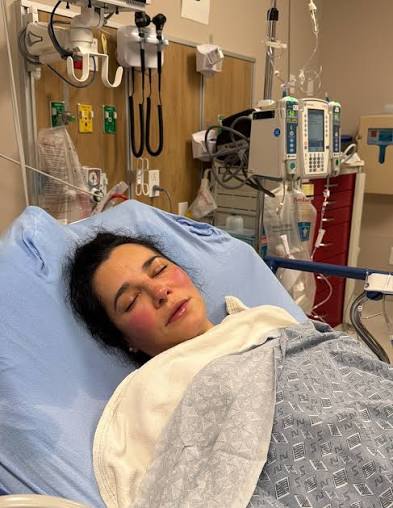
Even though every day followed the same exhausting routine, she refused to give up. She would arrive at the hospital before visiting hours officially began and often stayed until nurses gently reminded her that it was time to leave. She read him books they had once planned to enjoy together, played his favorite songs through a small speaker, and talked about ordinary things to make the room feel less like a hospital. Doctors could not promise that he heard her, but they encouraged her to continue because familiar voices sometimes provided comfort. Those quiet conversations became her way of holding onto hope when everything else felt uncertain.
Advertisement
Financial pressure soon added another layer of stress. With her partner unable to work, household bills continued to arrive every week. Rent, utilities, insurance payments, and everyday expenses quickly consumed their savings. She picked up extra shifts whenever she could, often working late into the night before returning to the hospital the following morning. Sleep became a luxury she could no longer afford. Despite her determination, she constantly worried about how long she could keep everything together without completely burning out.
The family showed little sympathy for the sacrifices she was making. Instead of acknowledging her efforts, they criticized nearly every decision she made. If she spent time at work, they accused her of neglecting him. If she stayed at the hospital, they questioned how she planned to pay the bills. It seemed that no matter what choice she made, someone found a reason to blame her. Their endless criticism slowly chipped away at her confidence until she began questioning whether she was doing anything right.
One afternoon, she arrived to find several of his relatives gathered outside his hospital room. Their conversation stopped the moment they saw her approaching. They exchanged uncomfortable glances before one family member stepped forward and suggested she should “give the family some private time.” Although she understood their desire to be together, she couldn’t ignore the feeling that they were intentionally shutting her out. She waited in the hallway for hours, wondering what had been discussed behind those closed doors.
As the weeks passed, she noticed that important updates about his condition were reaching other relatives before they reached her. Medical appointments had taken place without her knowledge, and treatment decisions seemed to be happening while she was left waiting outside. Every time she asked questions, someone insisted it had simply been a misunderstanding. But after the same thing happened repeatedly, she realized it was becoming a deliberate pattern rather than an unfortunate coincidence.
The emotional strain began affecting every part of her life. Friends noticed she had become unusually quiet and withdrawn. Activities she once enjoyed no longer brought her happiness, and even simple tasks felt overwhelming. She often found herself crying in her car before entering the hospital, determined to wipe away every tear before walking through the doors. She didn’t want her partner to see sadness if he somehow became aware of her presence.
One nurse quietly approached her after noticing the growing tension between her and the family. Without taking sides, the nurse encouraged her to keep detailed records of every conversation, document important dates, and save any messages related to her partner’s care. At first, the advice seemed unnecessary, but she followed it anyway. Over time, those notes became an organized timeline that helped her make sense of events that had once felt confusing and chaotic.
Meanwhile, whispers among extended relatives became louder. Some believed the family was being unfair, while others felt blood relatives should naturally have more authority. Family gatherings became divided, with people choosing sides based on incomplete information. Rumors spread faster than facts, making it increasingly difficult for anyone to know what was actually happening. She avoided responding publicly, hoping the truth would eventually speak louder than speculation.
Unexpectedly, several of the couple’s close friends stepped forward to support her. They shared stories about the relationship they had witnessed over the years, reminding others that the couple had built a life together long before the accident occurred. Some offered financial assistance, while others helped with daily responsibilities like grocery shopping and transportation. Their kindness reminded her that family is not always defined by biology alone.
Months into the ordeal, doctors finally noticed small but encouraging signs of improvement. His reflexes became stronger, and he occasionally responded to simple commands during neurological examinations. Although these changes were subtle, they represented progress that everyone had been desperately hoping to see. The possibility that he might eventually recover gave her renewed strength to face the challenges waiting outside his hospital room.
The family, however, seemed more focused on preparing for every possible outcome than celebrating the signs of recovery. Discussions about legal documents, financial responsibilities, and future decisions became increasingly frequent. Whenever she entered the room, conversations abruptly ended. She couldn’t shake the feeling that plans were being made without considering the wishes her partner had shared with her before the accident.
Determined not to let fear control her, she consulted professionals who explained her rights and the limitations she faced because the couple had never legally married. While the information was difficult to hear, it helped her understand the complicated situation more clearly. Rather than acting out of anger, she began making careful, informed decisions based on facts instead of emotions. Knowledge gradually replaced the helplessness she had felt during the first few weeks.
Looking back on the experience, she realized the greatest lesson had nothing to do with hospitals or legal documents. It was about how quickly relationships can be tested when life changes without warning. She never imagined that standing beside the person she loved would become a battle requiring courage, patience, and resilience every single day. No matter how the story ended, she knew she had remained loyal through the darkest chapter of their lives, refusing to walk away when it would have been easier to give up.