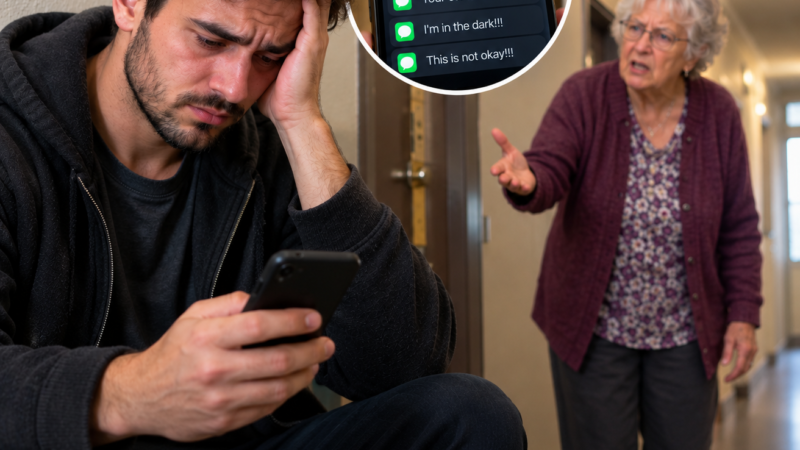
Woman Feels Taken Advantage Of By Terminally Ill Husband Who’s Spending Her Savings

When Laura married her husband, Daniel, she expected their vows to carry them through every season of life, including the difficult ones. Over the years, they worked hard to build a stable future together, carefully managing household expenses and contributing to a shared savings account that represented years of discipline and sacrifice. Laura often worked extra shifts, postponed vacations, and delayed personal purchases so they could achieve long-term financial goals like paying off their mortgage and preparing for retirement. Although life wasn’t always easy, they faced challenges as a team, believing honesty and mutual respect would guide every important decision they made. When Daniel was diagnosed with a terminal illness, Laura devoted herself completely to caring for him, determined to make his remaining time as comfortable and meaningful as possible despite the heartbreaking circumstances.
The Savings Started Disappearing
The diagnosis changed nearly every aspect of their daily lives. Medical appointments became routine, treatment options were carefully researched, and conversations that once revolved around future plans shifted toward managing symptoms and preserving quality of life. Laura willingly accepted the emotional, physical, and financial responsibilities that came with becoming both a spouse and primary caregiver. She understood that healthcare costs would increase and never questioned spending money on medications, specialized equipment, or experiences that genuinely brought Daniel comfort. However, as the months passed, she noticed an increasing number of unexpected withdrawals from their savings account. Expensive online purchases, generous gifts to distant relatives, luxury electronics, and impulsive spending began appearing on their bank statements without any prior discussion. At first, Laura assumed there must be reasonable explanations, but the growing pattern left her deeply concerned about the financial future she had spent years trying to protect.

Advertisement
Eventually, Laura gathered the courage to ask Daniel about the unusual expenses, expecting an honest conversation about their changing priorities. Instead, he responded that since his time was limited, he wanted to enjoy life without worrying about money or long-term consequences. He argued that savings were meaningless if they were never used and believed he had every right to spend whatever brought him happiness during his remaining months. Laura sympathized with his desire to make the most of the time he had left, but she couldn’t ignore the difficult reality that she would continue living with the financial consequences long after he was gone. As the discussion became increasingly emotional, Laura found herself questioning whether her concerns were reasonable or whether she was being unfair to someone facing the most difficult chapter of his life. The heartbreaking disagreement forced her to confront a painful question: how could she balance compassion for her husband’s circumstances while also protecting the financial security they had built together over many years?
Read Story…
My (29F) husband (27M) is likely going to die soon from cancer, but I feel like he is taking advantage of my support.
My husband (then boyfriend) was diagnosed with cancer a year ago. His work contract was expiring and they didn’t extend it when they found out he had cancer, and since I have pretty good health insurance, we decided to get married so he would still be covered. I told him he doesn’t need to find another job because I make enough to cover our expenses and I wanted him to focus on getting better. Before this, our relationship was great and we felt like we were going to get married at some point anyways, so we might as well do it now.
At first this worked great for us. He could relax at home with our dog and my work schedule was flexible enough where I can go with him to his appointments and we weren’t financially unstable. I was able to pay all of our bills and his medical expenses, and even send him some spending money so he would have some funds of his own.
But he started doing some really irresponsible financial decisions that are really taking a hit on my wallet. The timeline is kind of messy so I will do my best to describe what happened.
A few months ago he decided he really wanted a motorcycle. At this point in time, we received news that his cancer is a really complicated case and the chances of being cured were really low if not non-existent. My husband told me he wants his own motorcycle before he dies, and that this was essentially his dying wish. I talked about it with my mom and she offered to pay for it all in one go, but told me it would take a while for her to send the money. So the agreement was that I pay for it initially and the check she sends will be to reimburse me for the money spent. I told my husband that the money I’m sending him is specifically for the bike, and I sent him $8k.
Shortly after this, we received news that chemotherapy is no longer working and they are looking into clinical trials. They would be prescribing him chemo pills the next week to hopefully hold back the cancer while they wait for him to be approved for clinical trials. He took this news hard and decided he wanted to go back to his home city to see friends and family before he started treatment again.
I told him buying plane tickets the day before the flight is extremely expensive, especially if it was a direct flight. So I asked him if he was ok either waiting a few days to help lower the cost or taking a layover. He was extremely against both and said this is his last time to see his friends and family again before he likely dies from cancer, so I bought the plane ticket he wanted. The flights usually cost around $250, but his ticket cost $800.
On top of that, he misplaced his wallet shortly before he was supposed to leave for the airport and broke a hole in one of our walls, broke a chair, and broke our bedroom door. When I confronted him about it he brushed it off and told me to just buy another door and it’s not that big of a deal.
While he was in his home city, he decided to go to a casino with his friends without informing me and told them he gambled about $1k and profited $1k. Then spent the rest of the day spoiling his friends and buying them things they wanted (I only found out after he returned home).
When he returned home, I finally received the money from my mom so I asked my husband how much is left to owe on the bike. He told me “you never told me that money was for the bike. Just pay it off with your card”. I got upset and told him I did in fact tell him, and I sent him $8k. What else did he think that money is for and if he still had it. He told me again just to pay it off with my card and “I don’t know why you’re making a big deal out of it”. I suspect that $8k was partially used to gamble, but he has been guarding his phone so I cannot check his transaction history.
On top of that, he hasn’t been taking his chemo pills like he was supposed to. I told him if he’s not taking it then he needs to tell his oncology team. I’ve been telling him for days to inform them and he snapped at me and told me to mind my own business and that I was being annoying, and that if I kept bringing it up he would start excluding me from anything medical related.
I’m exhausted and burnt out. I’m trying my best to support him but feeling like my efforts are not appreciated are starting to really take a toll on me. Ever since he was diagnosed, he has not thanked me once for anything I’ve done for him. There has been no acknowledgement whatsoever. Not about marrying him to get him on health insurance, not about covering all our expenses, not about paying for all his medical bills. The money I’ve spent for him in the last year has been in the tens of thousands and he doesn’t even acknowledge it.
I know he’s spiraling because he’s basically being forced to face an early death, but he’s dragging me down with him and he refuses any kind of therapy to help deal with it. How do I tell him I’m feeling underappreciated without causing an argument or making him feel like a burden?
Update: I am trying to reply as many comments as I can but they are coming in fast and I’m currently at work so it might take a while.
Also to clarify, we do not have any joint accounts. The bike was taken out from a loan under his name, which is why I sent him money for it. Any money he spends was sent from me.
Update 2: Sorry this post is gaining more traction than I thought and I’m afraid my husband or his friends will find it and I don’t know how my husband will react if he reads it. So if you guys could try to keep this post on the down low that would be great lol
A Difficult Conversation About Money
The conversation ended with both of them emotionally exhausted. Laura understood that Daniel’s diagnosis had changed the way he viewed time and money, but she also felt her own fears had been dismissed. She wasn’t objecting to spending on meaningful experiences or necessary care. What troubled her was the growing pattern of expensive purchases made without any discussion, leaving her uncertain about what remained of the savings they had spent years building together.
Over the following weeks, Laura paid closer attention to their finances. She organized receipts, reviewed bank statements, and created a detailed list of recent transactions. The numbers painted a troubling picture. Several large purchases had little connection to Daniel’s medical care or comfort. Luxury watches, high-end electronics, generous cash gifts, and costly subscriptions had quietly reduced their savings far faster than she had realized.
When Laura gently brought up the subject again, Daniel admitted he had intentionally avoided discussing many of the purchases because he expected she would disagree. He explained that after receiving his diagnosis, he no longer wanted to postpone happiness for a future he might never experience. Every purchase, in his mind, represented an attempt to reclaim control over a life that suddenly felt unpredictable.
Although Laura sympathized with his reasoning, she struggled with the lack of partnership. Throughout their marriage, financial decisions had always been made together. Even relatively small expenses were usually discussed first. Watching that shared understanding disappear left her feeling excluded from decisions that would affect her long after Daniel was gone.
Seeking guidance, Laura scheduled a meeting with a financial adviser who specialized in helping families navigate serious illness. Rather than focusing solely on numbers, the adviser encouraged her to separate two different issues: the emotional impact of Daniel’s diagnosis and the practical responsibility of protecting her own financial future. Both deserved attention, and neither automatically outweighed the other.
The adviser also recommended creating a realistic budget for the months ahead. Together they estimated medical expenses, household costs, and discretionary spending. Seeing everything written down helped Laura realize that while they could afford meaningful experiences, unlimited spending would eventually place her own long-term stability at risk.
Encouraged by that conversation, Laura invited Daniel to participate in another discussion, this time with the financial adviser present. Initially reluctant, he eventually agreed. During the meeting, the adviser carefully acknowledged Daniel’s desire to enjoy his remaining time while also explaining how rapidly the current spending habits could affect Laura’s future security.
For the first time, Daniel listened without becoming defensive. Hearing an objective perspective helped him recognize that Laura’s concerns were not rooted in selfishness but in uncertainty. She wasn’t trying to deny him comfort or happiness; she simply feared facing retirement, unexpected emergencies, and everyday expenses without the financial cushion they had built together.
The discussion gradually shifted away from blame and toward priorities. Daniel admitted there were several purchases he regretted making impulsively. Some had brought only temporary satisfaction, while others had been motivated by frustration and anger rather than genuine enjoyment.
Together they created a list of experiences that truly mattered. Instead of buying expensive possessions, Daniel wanted to take one final family vacation, record personal video messages for loved ones, organize old photographs into albums, and complete several meaningful projects he had postponed for years. Those goals felt far more valuable than accumulating more things.
Laura welcomed the change in focus. She had never objected to spending money on creating memories. In fact, she wanted Daniel’s remaining months to be filled with moments that reflected the life they had shared rather than purchases that would soon lose their value.
Even with better communication, difficult days continued. Daniel occasionally became frustrated with the limitations imposed by his illness and admitted that shopping had become a temporary distraction from emotions he struggled to express. Recognizing this pattern helped both of them understand that the spending itself was often a symptom of deeper grief.
Their counselor encouraged them to speak openly about fears they had both been avoiding. Daniel confessed that he worried about being forgotten after his death. Laura admitted she feared facing life alone while also managing financial uncertainty. Sharing those fears brought a level of honesty that had been missing from many of their recent conversations.
As the weeks passed, Daniel canceled several unnecessary orders and even returned a few expensive items that had not yet been opened. Although those actions couldn’t undo every financial decision, they demonstrated his willingness to rebuild trust and acknowledge Laura’s concerns.
Taking Control of Their Financial Future
The couple also updated important legal and financial documents together. They reviewed insurance policies, organized account information, discussed outstanding debts, and ensured Laura understood every aspect of their finances. Completing those tasks gave both of them greater peace of mind despite the difficult circumstances.

Advertisement
Friends and relatives noticed a difference in their relationship. Rather than arguing about money, they spent more time visiting favorite places, sharing meals with family, and reminiscing about happier years. While the sadness of Daniel’s illness remained, the constant tension surrounding finances gradually began to fade.
Laura realized that compassion and boundaries could exist together. Supporting Daniel through his illness did not require ignoring her own future needs. Likewise, protecting her financial security did not mean she loved him any less.
Daniel eventually thanked Laura for insisting on difficult conversations instead of remaining silent. He admitted that during the darkest moments after his diagnosis, he had viewed every financial concern as an attack on his independence. Looking back, he understood that her questions had come from love rather than control.
As time went on, they focused less on possessions and more on creating meaningful memories. They spent quiet afternoons in the garden, revisited places that held sentimental value, and invited close friends to share stories that brought laughter despite the circumstances.
Although the future remained uncertain, Laura no longer felt completely powerless. Honest communication, thoughtful planning, and mutual respect allowed them to navigate an incredibly painful chapter with greater understanding than either believed possible only months earlier.
Looking back, Laura understood that the real conflict had never been about money alone. It was about fear, grief, responsibility, and the challenge of balancing two very different realities. Daniel was trying to make the most of the limited time he had left, while Laura was trying to protect the life she would continue living afterward. By acknowledging both perspectives instead of treating them as competing priorities, they found a path forward built on empathy, cooperation, and the shared commitment that had brought them together in the first place.