“Am I Letting My Siblings’ Engagements Put a Strain on My Relationship?”
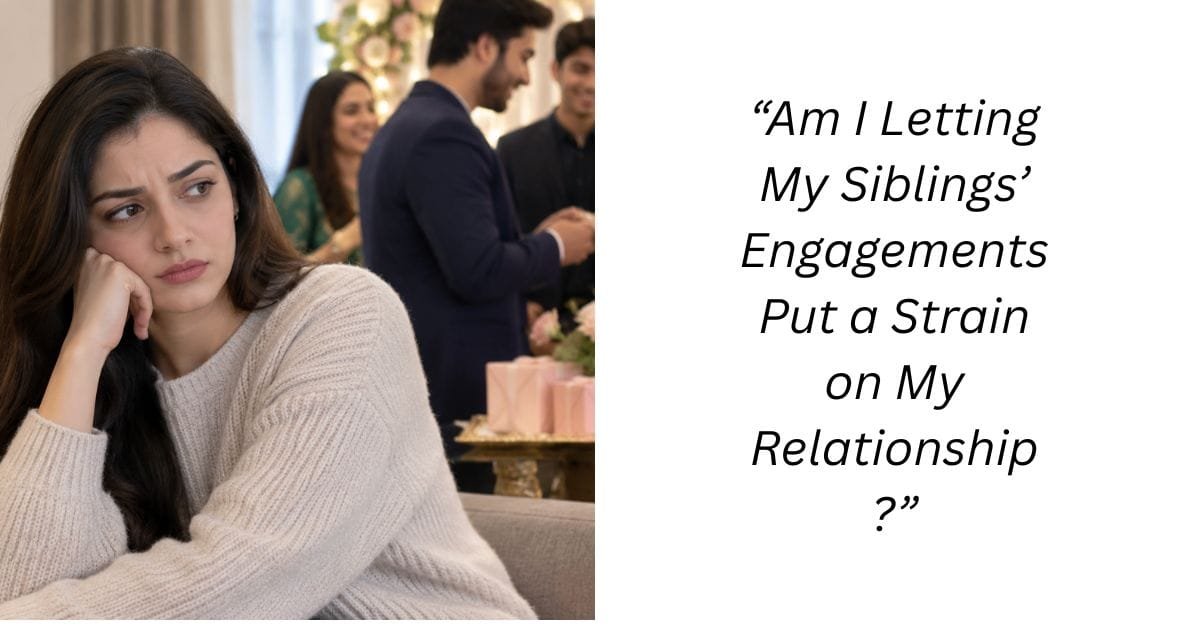
For the past year, it feels like my entire family has been caught up in engagements, weddings, parties, and endless celebrations, and somewhere in the middle of all of it, my own relationship has started to suffer. I have several siblings, and one by one, they have been getting engaged and preparing for marriage. At first, I was genuinely happy for every single one of them. I helped with planning, attended family dinners, listened to wedding ideas, went shopping, helped organize events, and did whatever I could to make their special moments easier. I never thought of it as a burden because they are my family, and I wanted to be there for them. The problem is that the more engagements happened, the more my time, energy, and attention seemed to disappear from my own relationship. My partner began pointing out that I was constantly busy with my siblings and their upcoming weddings. At first, I dismissed the concern because I thought it was temporary. I kept telling them that once the wedding season was over, things would go back to normal. But then another engagement happened, followed by another family event, another dinner, another planning meeting, and another weekend that was already committed before I had even discussed plans with my partner. Without realizing it, I had started treating my relationship like something that could simply wait whenever my family needed me.
My partner eventually stopped making casual comments and started having serious conversations with me about how they felt. They told me they understood that family was important and that they were not asking me to abandon my siblings. What hurt them was feeling as though they were always coming second. They said that whenever there was a choice between spending time with them or attending something related to my siblings, I almost automatically chose my family. I tried to explain that these engagements were important milestones and that I did not want to regret not being there for my siblings later. I also pointed out that weddings only happen once, or at least that is what everyone hopes, and that these moments were special. My partner understood the logic but said that relationships also need to be treated as important before they reach a breaking point. That statement stayed with me because I realized they were not really complaining about one dinner or one missed date. They were talking about a pattern that had developed over months. I had become so focused on supporting everyone else that I had stopped noticing how lonely my partner was becoming. Even when we were physically together, I was often answering family messages, discussing wedding plans, looking at venues, or worrying about something one of my siblings needed. My partner began feeling like they were competing with my entire family for my attention, and honestly, I could understand why.
The situation became even more complicated because some of my family members started expecting my involvement rather than simply appreciating it. If I said I could not attend something, someone would ask why I was choosing my relationship over family. If I skipped a planning dinner because I had already made plans with my partner, I would hear comments about how I had “changed” since getting into a relationship. One sibling even joked that my partner was slowly stealing me away from the family, and everyone laughed. I laughed too, but my partner did not find it funny. Later, they told me that comments like that made them feel as though they were being treated like an outsider who was taking me away from the people who mattered most. I started realizing that I had allowed my family to set an expectation that I would always be available. Because I had always been the person who helped, people became surprised whenever I said no. At the same time, my partner had become the person expected to understand whenever I canceled plans or arrived late because something came up with my siblings. The more I thought about it, the more uncomfortable I became with the possibility that I had created this imbalance myself. I had been saying yes to everyone because saying no made me feel guilty, but every yes to someone else sometimes meant an unspoken no to my partner. I had convinced myself that being supportive made me a good sibling, but I had not asked whether constantly putting my relationship on hold was making me a good partner.
Eventually, my partner reached a point where they told me they could not continue living in the background of my family’s life. They were not demanding that I stop attending weddings or helping my siblings, and they were not asking me to choose between them and my family. Instead, they asked me to create boundaries and make space for our relationship as well. They wanted planned time together that would not be automatically sacrificed whenever a family event appeared. They wanted me to stop assuming that they would always understand. Most importantly, they wanted to feel like they had a real place in my life rather than being someone I fit into whatever time remained after everyone else had been taken care of. Hearing that was difficult because I had never intentionally made them feel unimportant. In my mind, I had simply been helping my family through an unusually busy period. But intentions do not always change the impact of our actions. I realized that while I was proudly telling myself that I was being there for my siblings during one of the biggest moments of their lives, I might have been neglecting the person who was supposed to build a future with me. That realization forced me to look at my priorities differently. Family will always matter to me, and I do not want to become someone who disappears from their siblings’ lives just because they are in a relationship. But I also began to understand that having boundaries does not mean loving your family less. Sometimes it means respecting every important relationship in your life enough to give each one the attention it deserves.
Now I am trying to figure out whether I have already done too much damage or whether this is something we can repair. I have started saying no to some family requests, making plans with my partner in advance, and putting my phone away when we spend time together. Surprisingly, some of my siblings initially reacted badly because they were used to having me available whenever they needed help. But after a few conversations, they began to understand that I was not abandoning them. I was simply learning that their engagements and weddings could not become my entire life. My partner has also noticed the difference, although things are not magically perfect. There is still some resentment because they remember all the times they felt pushed aside, and I cannot blame them for that. At the same time, I am realizing that relationships are not always damaged by one huge mistake. Sometimes they are damaged slowly through dozens of small choices that seem harmless individually. I never cheated, lied, or intentionally hurt my partner. I simply kept choosing everyone else’s needs because it was easier than disappointing people. Now I am wondering whether I should have recognized the problem much earlier. Am I genuinely responsible for letting my siblings’ engagements put this much strain on my relationship, or was my partner expecting too much from me during an unusually demanding period for my family? I love my siblings, but I also love my partner, and I am finally learning that loving both does not mean constantly sacrificing one for the other.
Read Story…
“Am I Letting My Siblings’ Engagements Ruin My Relationship?”
I’m a 31-year-old female in a five-year relationship with a 28-year-old man with whom I have lived for the past three years. For the first couple of years, he brought up marriage frequently and how much he wanted us to build a life together. It freaked me out a little early on because I wasn’t there yet, but I could still definitely see myself marrying him one day. Then this talk cooled, and life marched on. The most “life building” we’ve done is getting a cat together.
Fast forward to last year, and his younger brother gets married. Then my sister gets engaged, followed shortly by my brother. I’m super happy for them, but I can’t help but feel a little sad that I’m not there yet. My boyfriend and I have been together longer than either of my siblings have been with their significant others and only slightly less long than my boyfriend’s brother has been with his. I didn’t bring up any of this, but my boyfriend came to me and nervously “joked” how the pressure was on. I told him the absolute last thing I want is to be proposed to under pressure. I said I only want him to propose if he really, truly wants to marry me and thinks I’m worth it. He was relieved. He even said he was glad they got engaged, because now that gives him “another year, at least.”
Now as my siblings’ wedding plans progress, so do my worries about our relationship. I find myself scrutinizing my boyfriend daily in my head, getting frustrated over his lack of career (he hates work and has no ambition to do more with his professional life), his willingness to quit things early when things get tough (he left college when he was one semester away from graduating), his social anxiety (he can’t be anywhere crowded or he becomes beyond unpleasant), his frequent money management issues (I bail him out all the time), and even his relationship with his mom (I actually love his mom, but I do feel like she coddles him too much). I know I’m such a jerk for thinking this way, and I hate even more that I’ve become less attracted to him as a result of it. I know I’m not perfect either, and I keep trying to remind myself of that, but it’s not helping much. I wish I could go back to just loving him blindly.
With my siblings’ marriages pending, I just know that we’re going to have to fend off a lot of “when will it be your turn?” My family adores him, so I know they’d definitely like to see it happen. But at this rate, I’m now worried that if it ever does, it’ll be because he felt pressured and not because he genuinely wanted it. Am I just overthinking because of my siblings’ situations? Or, is my relationship doomed? — Stressed and Sad
You, like a lot of people in your position who’ve been in a relationship for a while and are watching their peers get engaged, get married, essentially move forward, are asking the wrong question(s). The two explicit questions you ask here get close to the real question but don’t hit the bull’s eye, and the implicit questions you’re asking are completely wrong for figuring out what it is you want to know.
Explicitly, you’re asking whether you’re overthinking things because your siblings have recently gotten engaged and whether your relationship is doomed. I don’t think you are “over” thinking anything, but it’s not a leap to say that your siblings’ recent engagements – to people they’ve been dating less than you’ve been dating your boyfriend – have triggered some contemplation on your part about the state of your own relationship. And if you’re thinking about your relationship through the lens of “why are we not engaged yet?”, then wondering whether it’s doomed isn’t such a leap either, especially if there are no signs of forward movement. In fact, your boyfriend, by saying that these recent engagements have bought him “at least a year” to put off proposing to you is suggesting that any forward movement is still a ways off.
It’s understandable, given all this, that you’re questioning your relationship. The questions you’re posing, though – to me, but most of all to yourself – are not the ones that are going to get the crux of the issue here. Instead, I suggest you ask yourself whether you want to build a future with your boyfriend, whether you want to spend your life with him. You focus a lot on your boyfriend’s feelings about proposing, and about your own feelings about his proposing – you don’t want him to feel pressured, you want him to propose because he wants to marry you, because he thinks you’re “worth it.” But what about your own feelings about getting engaged? What do you want?
As you think about these questions, I want you to pay particular attention to two things. The first is the issues you outline in your third paragraph. Your boyfriend isn’t perfect and you have a list of the things that you don’t like about him. But no one’s perfect, right? So that brings us to the second thing I want you to think about, especially in relationship to all the issues you have with your boyfriend: Is he worth it? It’s a question you ask about yourself in relation to him. You want to feel “worth it” to him. And I think of that term in two ways, and maybe you do, too. First is the idea that we all have value, and you would hope that in your partner’s eyes your positive attributes exceed your negative ones so that you are of high value to him, an asset in life and in love.
The second way I think of the term “worth it” is whether a relationship is worth the energy it takes to “make it work” and move it forward. I can’t tell from your letter how hard either of you is actually working at your relationship, and maybe that’s part of the problem. Maybe you’re both in a holding pattern, withholding the effort it takes to move a relationship forward, because neither of you has decided whether the relationship is “worth” the energy it would take to move it forward: the sacrifice; the self-reflection; the honest and open communication; the compromises; the giving up of certain fantasies to embrace the reality – fully embrace the reality – of the person you love, limitations and flaws and all.
The question is not whether you are “worth it.” The question is not whether your relationship is doomed. It’s not even whether you’re overthinking things simply because your siblings are recently engaged. The questions you want to ask yourself are whether you want to marry your boyfriend and whether the relationship is worth the effort it would take to move things forward to a place where a marriage could be successful and happy. You can answer “no, not yet” to the first question while still answering “yes” to the second, and you can spend a while actually putting effort into your relationship to see if the answer to the first question changes. But if it doesn’t, or if your answer to the second question is “no” already, I think it’s pretty safe to say that it’s probably time to MOA, move on already.
When Family Celebrations Started Affecting the Relationship
For the past year, my family has felt like it is permanently stuck in wedding season. One sibling got engaged, then another, and before we had even finished celebrating one engagement, there was already another event being planned. At first, I was genuinely excited about everything. I love my siblings, and seeing them happy made me happy too. I wanted to be involved in every celebration, every dinner, every planning discussion, and every little detail that made the engagements special. I never imagined that something as positive as my siblings finding their future partners could eventually create problems in my own relationship. But somewhere along the way, my partner started feeling like my family was receiving all of my attention while they were receiving whatever time was left over.

Advertisement
When the first engagement happened, nobody in my family expected me to do anything extraordinary. I simply volunteered because I wanted to help. I helped with invitations, looked at venues, went shopping, attended family dinners, and listened to my sibling talk endlessly about their plans. My partner was supportive and even came along to some of the events. At that point, everything seemed completely normal. We would laugh about how busy everyone was becoming and joke about how many wedding conversations we were having. I honestly thought my partner enjoyed being part of it too. Looking back, however, I realize that I may have mistaken their willingness to support my family for genuine enjoyment of constantly being involved.
As the months went by, another sibling became engaged. Suddenly there were two weddings being discussed at the same time. Family group chats became busier, weekends became filled with plans, and almost every conversation eventually turned into something related to weddings. My partner began noticing that whenever we made plans, there was a possibility that I would cancel them because something had come up with my siblings. I kept telling them that it was temporary and that things would calm down eventually. But every time one event ended, another one appeared. I never stopped to ask myself how long I had been saying the word “temporary.”
My partner first brought up the issue casually. We were supposed to have dinner together one Friday evening, but my sibling needed help with something related to their engagement celebration. I told my partner that I had to change our plans. They were disappointed but said they understood. Then they quietly asked me if this was going to keep happening. I assured them it would not. I promised that after the upcoming family event, I would make more time for us. At the time, I completely believed what I was saying. I was not trying to avoid them. I simply thought helping my sibling was something I had to do.
The problem was that one canceled plan became several. Then several became a pattern. Whenever there was a family event, I automatically assumed my partner would understand. If my sibling needed someone to accompany them somewhere, I went. If my parents needed help organizing something, I helped. If relatives were visiting from out of town, I made myself available. I became the person everyone could depend on, and I was proud of that. What I failed to notice was that my partner was becoming the person who was expected to wait patiently.
My partner never asked me to stop loving or supporting my family. In fact, they repeatedly told me that they understood why these events mattered to me. What they wanted was balance. They wanted to know that our relationship mattered enough for me to protect our time together. They said that they were beginning to feel like an outsider in my life because almost every important decision seemed to revolve around my family. Hearing that made me defensive at first because I felt like they were asking me to choose between the people I loved.
I told them that family milestones only happen once. I said my siblings would remember who showed up for them and who did not. I reminded them that weddings were important events and that I wanted to be present. My partner listened and then asked me a question that I could not easily answer. They asked, “What about us? When do we get to have moments that you protect just as carefully?” I did not have a good answer. I realized I had been treating their needs as flexible while treating my family’s needs as urgent.
That conversation stayed in my mind for days. I started thinking about how often I had asked my partner to compromise. They had moved dinners, changed weekend plans, attended family events they probably would not have chosen themselves, and listened to endless conversations about wedding preparations. They had rarely complained. Instead, they had quietly adjusted. I suddenly wondered whether their silence had caused me to assume everything was fine.
Another problem was that my family had become accustomed to my availability. Whenever I said yes to something, people began assuming I would continue saying yes. If I declined, someone would ask whether I was busy with my partner. Sometimes the question was harmless, but other times it sounded like criticism. I started feeling guilty whenever I chose my relationship over a family event. Instead of asking myself what I actually wanted to do, I started worrying about who might be disappointed with me.
One evening, my sibling called me because they needed help with an engagement-related problem. I was already at home with my partner, and we had planned to spend the evening together. Without thinking, I got up and started preparing to leave. My partner looked at me and asked whether I even realized what I was doing. I told them I would not be gone long. They simply said, “You always say that.” That sentence hit me harder than I expected because it was true.
I stayed home that night, but the decision created another problem. I felt guilty for not helping my sibling, and my partner could see that I was distracted. Instead of enjoying our evening, I kept checking my phone and wondering whether my family was upset with me. My partner eventually told me that they did not want me to stay with them out of guilt. They wanted me to actually want to be there. That made me realize how complicated the situation had become. Even when I chose my relationship, I was mentally somewhere else.
I started noticing other things too. My partner had stopped asking me about weekend plans because they already assumed I would be busy. They stopped suggesting spontaneous dates because they believed my family would probably need me. They even stopped bringing up certain concerns because they did not want another argument about my siblings. I had interpreted their lack of complaints as acceptance, when it may actually have been exhaustion.
Then one of my siblings made a joke during a family dinner. They said that I was becoming difficult to reach because my partner was “stealing” me away from the family. Everyone laughed, including me. My partner smiled politely, but I could tell something was wrong. Later that night, they told me that the joke hurt because it reflected how they had been feeling for months. They did not want to steal me from anyone. They wanted to feel like they belonged somewhere in my life too.
I tried to explain that my family had always been extremely close. I told my partner that I had responsibilities toward my siblings and that I could not suddenly disappear because I was in a relationship. They agreed with me. Then they said something that changed the way I viewed the entire situation. They told me that boundaries were not the same thing as abandonment. They were not asking me to disappear from my family’s life. They were asking me to stop acting like my family had unlimited access to my time.
That distinction made sense. I had always believed that setting boundaries with family meant being selfish. If someone needed help and I was available, I felt like I should help. If I was invited somewhere, I felt guilty saying no. If my sibling asked me to do something, I usually agreed before thinking about whether I had already made plans. I had never considered how many times I was saying yes simply because I was afraid of disappointing someone.
My partner eventually told me that they were tired of competing for my attention. They said they did not want to become resentful toward my siblings because they knew my siblings were not entirely responsible for my choices. That was another uncomfortable truth. My siblings were asking for help, but I was the one agreeing to everything. Nobody was physically forcing me to cancel dates or change plans. I was making those decisions myself.
For the first time, I started looking at my own behavior rather than blaming the circumstances. I realized that I had been using my family’s engagements as an excuse to avoid making difficult decisions. It was easier to say yes to my siblings because refusing them made me feel guilty. It was harder to tell my family that I had already made plans with my partner and that those plans mattered too. I had been choosing the easier conversation repeatedly, even though it was creating a harder problem in my relationship.
I decided to start making changes. The first thing I did was stop automatically agreeing to every family request. When someone asked me to help, I started checking my schedule before answering. Sometimes I said yes, and sometimes I said no. At first, it felt incredibly uncomfortable. I expected everyone to become angry with me. But most of the time, people simply found another solution. That showed me that I had been carrying responsibilities that were not always mine to carry.
I also started protecting time with my partner. If we made plans, I treated them like real commitments instead of something that could easily be replaced by a family event. This did not mean I stopped attending important celebrations. It simply meant I stopped assuming that my partner’s time was automatically less important. We began having regular evenings together without phones, family discussions, or wedding planning.
The changes were not immediately easy. My partner had spent months feeling ignored, so they did not suddenly trust everything to be different. There were moments when they still questioned whether I would cancel. I could not blame them. Trust is not repaired by one conversation or one good weekend. It is rebuilt through repeated behavior. I understood that I needed to show them through my actions that I was serious about creating balance.
My family also noticed the difference. One sibling asked why I was suddenly saying no to things I had always agreed to before. I explained that I still wanted to help, but I could not be available for every single request. They seemed surprised at first. One relative even suggested that my partner was influencing me. That comment bothered me because it implied that I could not make decisions for myself. I calmly explained that these were my choices and that having a relationship did not mean I loved my family any less.
There was another difficult moment when two family events happened on the same weekend that my partner and I had planned a short trip. In the past, I probably would have canceled our trip immediately. This time, I told my family that I would attend one event but would not be available for the other. I expected a major argument. Instead, after some initial disappointment, everyone moved forward. My partner noticed what I had done and thanked me. It was a small moment, but it meant a lot.
I began to understand that relationships are often damaged through small repeated choices rather than one dramatic event. I had never cheated on my partner or intentionally betrayed them. I loved them and believed I was doing the right thing. Yet my actions had still communicated something painful: that everyone else’s needs were urgent while theirs could wait. That was not the message I wanted to send, but it was the message they had received.
I also realized that my siblings’ engagements were not actually the problem. Engagements are supposed to be happy occasions. My siblings deserved to celebrate their relationships, and I wanted to celebrate with them. The real issue was my inability to balance being a supportive sibling with being a supportive partner. I had allowed one role to completely overwhelm the other. Instead of creating boundaries, I had simply tried to make everyone happy, which eventually meant nobody was completely happy.
My partner and I have had several honest conversations since then. We have talked about what we each expect from the relationship and what boundaries make sense with our families. I have apologized for making them feel like an afterthought. They have also admitted that some of their frustration came from keeping things inside for too long. We both realized that we should have addressed the problem earlier instead of allowing resentment to build quietly.
Things are better now, but I would not say everything is perfect. There is still some tension whenever another family event appears on the calendar. My partner sometimes worries that the old pattern will return, and I understand why. At the same time, I am learning that rebuilding a relationship does not require proving that my family is unimportant. It requires proving that my partner is important too.
The strange thing is that setting boundaries has actually improved my relationships with my siblings as well. I am no longer helping because I feel trapped by guilt. When I do show up, I am more present and genuinely happy to be there. I have also stopped feeling responsible for solving every little problem. My siblings are adults, and they are capable of handling many things themselves. I can support them without becoming responsible for every detail of their lives.
Looking back, I think I was afraid that saying no would make people think I did not care. I wanted to be the dependable sibling, the helpful family member, and the person everyone could count on. But I forgot that being dependable does not mean being permanently available. It is possible to love people deeply while still having limits. In fact, healthy boundaries may make it easier to maintain those relationships for years instead of becoming exhausted and resentful.
The biggest lesson for me has been that love is not measured by how much of yourself you sacrifice. I thought constantly putting my family first was proof that I cared about them. But sacrifice without balance can eventually hurt the people closest to you, including the very people you are trying to protect. My partner did not want me to abandon my siblings. They wanted me to remember that our relationship deserved effort, attention, and protection too.
Now, whenever a new family request comes up, I pause before answering. I ask myself whether I genuinely need to be involved, whether someone else can help, and whether I have already made plans with my partner. That small pause has made a huge difference. I no longer automatically assume that family comes first in every situation. Sometimes family comes first. Sometimes my relationship comes first. Sometimes I need to prioritize myself. The important thing is that I am finally making those decisions intentionally rather than automatically.
I still love celebrating my siblings’ engagements. I still want to be there for their weddings, parties, and important milestones. But I no longer believe that supporting them requires me to put my own relationship on hold. My partner deserves to feel chosen too, and I deserve to enjoy my family without feeling guilty about having boundaries. Maybe the real question was never whether my siblings’ engagements were ruining my relationship. Maybe the real question was whether I was allowing my fear of disappointing my family to prevent me from giving my relationship the attention it needed. And honestly, I think I already know the answer.