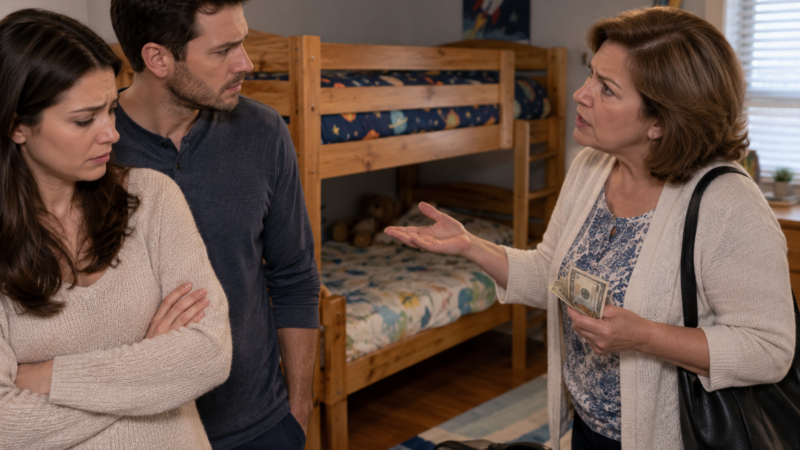
My Mom Told My Husband He Deserved an Affair, and I Was Left Heartbroken
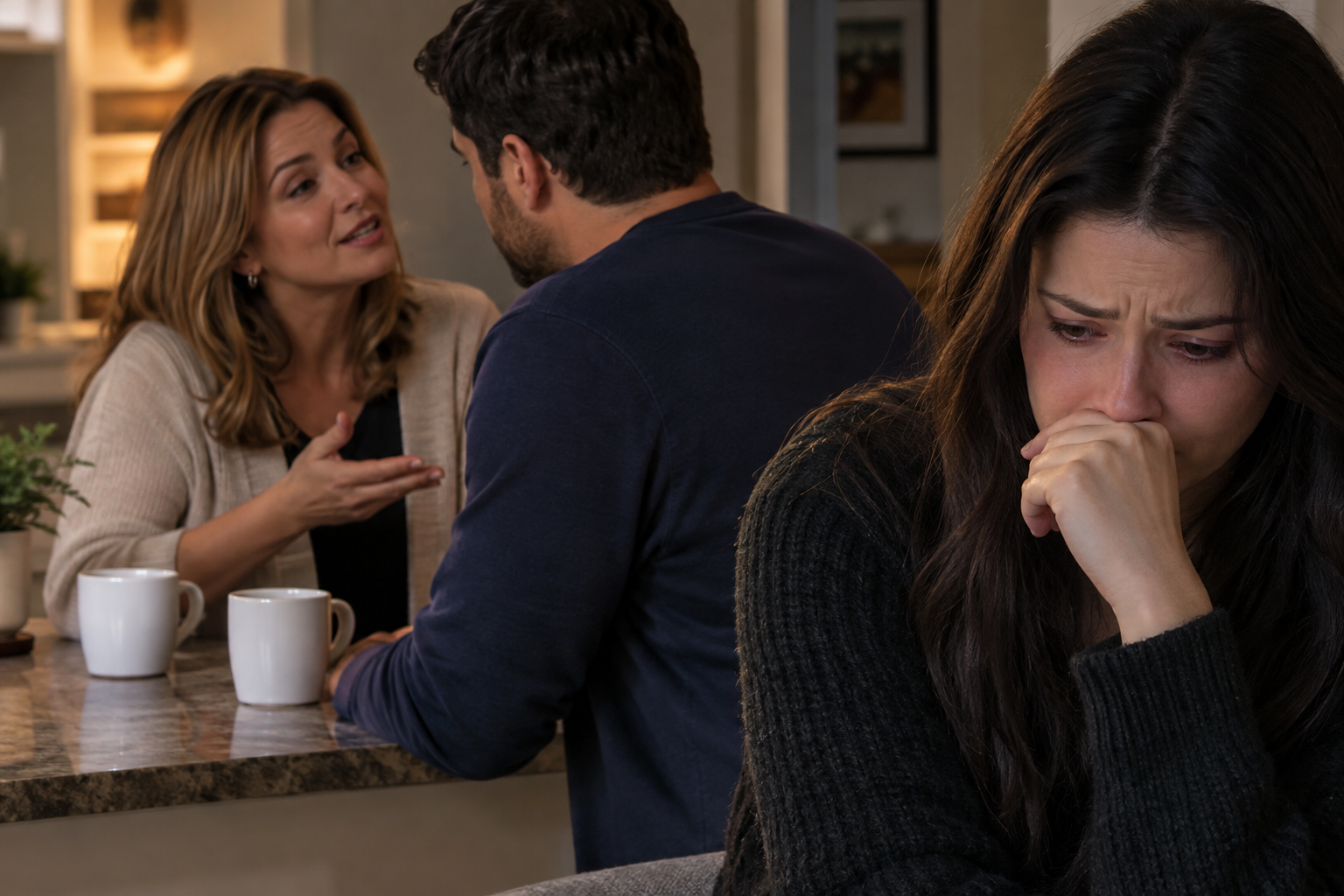
I never imagined that the two people I trusted most in this world would become the reason my heart was shattered. My husband, Daniel, and I had been married for six years, and although our relationship wasn’t perfect, I genuinely believed we had built something worth protecting. Like every couple, we had our disagreements, stressful days, and moments when we struggled to understand each other. However, I never thought our marriage was in serious trouble. We both worked hard, shared responsibilities, and tried to make time for each other despite our busy schedules. My mother had always been involved in my life, and I often turned to her whenever I needed advice about my marriage. I believed she wanted me to be happy and would always support me, even when things became difficult. Looking back, I realize I trusted her opinions far too much without questioning whether she truly had my best interests at heart.
Over the past few months, I had noticed that Daniel was becoming increasingly distant. He spent more time on his phone, stayed out later than usual, and seemed irritated whenever I asked him simple questions about his day. At first, I convinced myself that he was dealing with work-related stress. His job had become more demanding, and I didn’t want to make him feel as though he had to explain every little thing to me. My mother, however, kept telling me that I was expecting too much from him. She would say things like, “Men need freedom,” and “You can’t expect your husband to make you the center of his entire world.” Whenever I tried to explain that I simply wanted more communication and affection, she made me feel unreasonable and insecure. I began questioning myself, wondering whether I had become too demanding or whether I was failing to give Daniel the space he needed. I had no idea that my mother might already know something about his behavior that she was deliberately keeping from me.
The truth came out one evening when Daniel accidentally left his phone on the kitchen counter while he was taking a shower. I wasn’t looking for evidence of an affair, and I had never considered secretly checking his messages before that moment. However, a notification appeared on his screen from a woman whose name I didn’t recognize. The message said, “I can’t stop thinking about last night.” My stomach dropped, and I felt as though the entire room had suddenly become silent. I knew I should have waited to speak with Daniel directly, but my hands were shaking so badly that I could barely think clearly. When I eventually confronted him, he initially tried to dismiss my concerns and claimed that the message was being misunderstood. After several minutes of arguing, he finally admitted that he had been seeing another woman for several weeks. I felt physically sick listening to him explain how it had started. He said he had been unhappy with certain aspects of our marriage and had allowed himself to become emotionally involved with someone else. I asked him how he could do something so devastating without even giving me a chance to address our problems. Instead of offering a sincere apology, he suggested that our relationship had been struggling for a long time. That night, I barely slept. I cried until my eyes hurt, wondering how the person who had promised to love me could betray me so easily.
The following morning, I called my mother because I desperately needed someone to comfort me. I expected her to be furious with Daniel, or at the very least, to acknowledge how deeply he had hurt me. Instead, she became strangely defensive when I told her about the affair. She asked whether I had been paying enough attention to my husband and whether I had considered how lonely he might have felt. I couldn’t believe what I was hearing. When I asked her why she was defending him, she went quiet for several seconds before admitting something that made my entire body go cold. She confessed that Daniel had spoken to her about our marriage weeks earlier and that she had told him he deserved to feel wanted and appreciated. Then she said the words I will never forget: “I told him that if he wasn’t getting what he needed at home, I wouldn’t blame him for finding it somewhere else.” I stared at my phone, struggling to process what she had just said. She insisted that she hadn’t directly arranged the affair and claimed she had only been giving him advice. But to me, there was a world of difference between encouraging someone to communicate with their spouse and telling them that cheating was understandable. My own mother had known that my husband was unhappy, yet instead of encouraging him to work through our problems honestly, she had given him a reason to justify betraying me.
What hurt me most wasn’t simply that my husband had cheated. It was the realization that my mother had listened to him discuss our marriage while knowing that I was completely unaware of what was happening. She had allowed me to blame myself, question my worth, and believe I was imagining things while privately sympathizing with the man who was deceiving me. When I asked her how she could do that to her own daughter, she became upset and accused me of twisting her words. She said she had only wanted to help Daniel and never expected things to go this far. Daniel, meanwhile, continued asking me to consider saving our marriage, but I no longer knew whether I could trust anything he said. I told him that repairing our relationship would require much more than an apology, and I made it clear that I needed time to decide what I wanted for my future. I also stopped discussing my marriage with my mother because every conversation left me feeling more hurt and confused. For the first time in my life, I began setting boundaries with the person who had always told me she knew what was best for me. I still don’t know whether my marriage can survive this betrayal, and I don’t know if my relationship with my mother will ever return to what it was. All I know is that love should never require someone to accept humiliation, dishonesty, or betrayal. Now I’m left wondering whether I should try to rebuild my marriage, walk away from my husband, or distance myself from my mother permanently. If you discovered that your own mother had encouraged your husband to have an affair, would you ever be able to forgive either of them?
Read Story…
Apparently, my mom encouraged my husband to have an affair.
I just found out. Well, I’ve found out yesterday, blocked her everywhere because what the actual f*ck. And decided to sleep on it. Which didn’t help.
5 years ago my mom came over to our home for some chat and coffee time.
She used to be a frequent guest. And when I went to the kitchen to get more coffee for her this woman said to my husband:
— I know it’s your first year after the wedding, and all is rainbows and sunshine right now.
But I know that she’s a… difficult girl. So you know… it’s okay to have a side piece. Just make sure no one would know. It’s actually a very normal thing to do…
My husband informed her that this is not normal or acceptable personally for him, left it at that, and kept his mouth shut for 5 years, because she was my mom, and I adored and admired her.
She’s not a narcissist, she has a husband and my brother and sister, and an interesting job, and it still wasn’t enough to make her happy. So here we are I guess.
Oh, and me being difficult is just me asking once if I could send a bit less money home since I was struggling financially, and could use additional $100 a month from my own salary. I wasn’t even living at her house anymore. I had a full time job and rented a room. Oh, and I was 16. She was 35, married and just had a kid.
I can’t even understand if I’m pissed or just tired.
Anyways, some strawberry, avocado, and prosciutto (or something like that) salad.
UPD: you guys! I never expected so much comments let alone the astonishing amount of support. Thank you so much. Sorry I wasn’t replying: my toddler is sick, and my free time is non existent (just like my sleep). I’ll put little chaos gremlin to bed in several hours and do my best to answer all questions and as much comments as I’ll be able to.
UPD 2: quick answers to the main questions.
- Why did my husband tell me now?
We’re in couples therapy. It came up during a session.
He didn’t tell me earlier because he didn’t want to add to my plate since this is not the most weird thing she did or said, and I had enough reasons to be upset as it was.
Apparently he has a ton of (valid) reasons why he hates her with passion, but he did his best to respect my feelings for her and handle her from time to time.
He did try to have gentle and somewhat vague conversations with me about the fact that my mom is not very nice.
2. Why did I adore her?
My bio-father was the definition of abuse. She got us out. Well, she got out and then she took me with her 3 days later when her called her screeching about the fact that they couldn’t calm me down with meds, so “come and get her”.
I saw her hurting and struggling, and admired her strength, and wanted to protect her and help her. And she was also my mom, so there’s that.
I also didn’t know any better until I became a mom myself. Only then did I finally have that “wait a fucking minute…” realisation about a lot of things.
3. Did I keep sending her money?
I was upset yesterday, so my ramble had a messy timeline. I’m sorry.
I did worse.
I started working at 16 because my step-dad lost his business and was left with debt. And she just recently gave birth to my little sister. So she sat in front of me and told me that I need to get a job because that can no longer support me.
I was so sorry for her… My mom was 35, step-dad somewhere around 32 – 33, I’m not sure.
I was responsible financially for the family for a couple of months, then I just participated, because the moment I got an office job I moved in with my coworkers, because I didn’t have a place at home and used to sleep on a chair in a corridor, so was not in the best shape for 12 hour shifts.
I sent money home till I was ~24. At that age I created a business and gave her a job so she could have a new profession and stable income. And take on additional clients.
That went well /s. I’m still at fault for the moment when my business took a hit, we had to pause all projects involving her, and she had to find additional clients (I already wasn’t the only one, so it’s not like I left her stranded). Which led her to having a great career. But still. I let her down.
So yeah. I was still paying her when she shared that motherly advice.
I went NC with her last year due to other reasons, though.
4. Why do I think she’s not a narcissist?
Because she doesn’t have the traits, but she does have a huge amount of trauma and extremely shitty coping mechanisms. And needs a lot of therapy like yesterday. But she avoids it, and her own PTSD consumed her and turned her into who she is now.
I’m the daughter from an abusive husband that she married at 17. She gave birth to me at 19. A teenager.
I also somewhat look like him. So I guess it made it difficult for her to keep loving me when she got older, less hopeful about the future, and PTSD got worse.
She used to be great. And still is a good person to a lot of people. She did her best.
But there’s not much one can do without proper treatment.
It took me more that 10 years to finally manage my own cPTSD from my childhood. She had it worse.
PS Sorry for my English, I’m not a native speaker and my language skills got rusty.
PPS Thank you to whoever gave my incoherent ramble an award. I really appreciate it ❤️
I Trusted My Husband and My Mother, but Both Betrayed Me in the Worst Possible Way
I never imagined that the two people I trusted most in this world would become the reason I questioned everything I believed about love, loyalty, and family. My husband, Daniel, and I had been married for six years, and although our relationship had experienced its fair share of challenges, I genuinely believed we had built a strong foundation together. We had shared countless memories, celebrated important milestones, and supported each other through difficult times. I knew marriage wasn’t always easy, but I believed that as long as we continued communicating and respecting each other, we could overcome almost anything. What I never expected was that my own mother would encourage my husband to betray me, leaving me wondering whether the person who had raised me truly understood what it meant to protect her daughter.
Daniel and I met when I was twenty-six and he was twenty-eight. At the time, he was funny, thoughtful, and incredibly attentive. He remembered the smallest details about me, including my favorite coffee order and the name of the book I had mentioned wanting to read. Whenever I had a difficult day at work, he would show up with my favorite takeout and listen patiently while I talked about everything that had gone wrong. He made me feel understood and appreciated in a way I had never experienced before. When he proposed, I didn’t hesitate to say yes because I genuinely believed he was the person I wanted beside me for the rest of my life. Looking back, those memories are painful because I sometimes wonder whether the man I loved still exists beneath the person who eventually betrayed me.
My mother, Linda, had always played an important role in my life. She raised me to believe that family should come first and that marriage required patience, compromise, and forgiveness. Whenever I faced a difficult decision, I usually called her before anyone else. Even after I got married, we spoke several times a week, sometimes for hours at a time. I shared details about my relationship because I trusted her judgment and believed she wanted the best for both Daniel and me. She often reminded me that every marriage had difficult seasons and that walking away should never be the first solution to a problem. I took her advice seriously because I believed it came from experience and love. I never considered that the same woman who taught me about commitment might one day help justify my husband’s betrayal.
For the first four years of our marriage, Daniel and I were genuinely happy. We had ordinary disagreements about finances, household responsibilities, and how we wanted to spend our weekends, but nothing that made me question our future together. We both worked full-time, contributed to our expenses, and tried to make time for each other despite our responsibilities. We enjoyed cooking dinner together, watching movies on Friday nights, and visiting family whenever our schedules allowed. We didn’t have a perfect relationship, but we had routines that made our lives feel comfortable and secure. I believed we were growing together rather than apart. When people asked me about married life, I would tell them that marriage required effort but that finding someone who genuinely cared about you made the effort worthwhile.
Things began changing gradually during the last year of our marriage. Daniel started working longer hours and frequently came home looking exhausted or distracted. At first, I didn’t think much of it because his company had recently taken on several demanding projects. I tried to be supportive by preparing dinner when he worked late, giving him quiet time when he seemed stressed, and avoiding unnecessary arguments. Sometimes I asked whether something was bothering him, but he always insisted that work was the problem. I believed him because I had no reason to suspect otherwise. I thought I was being a good wife by giving him room to handle his responsibilities without adding pressure. I didn’t realize that while I was trying to make his life easier, he was gradually becoming more comfortable keeping secrets from me.
My mother began making comments about my marriage around the same time. Whenever I mentioned that Daniel had been distant, she would tell me that men sometimes needed more independence than women understood. If I complained that we hadn’t spent much time together recently, she would suggest that I should find more hobbies and stop expecting him to entertain me. Her advice always seemed reasonable enough at first, but something about the way she delivered it made me feel as though I was the problem. Instead of asking whether Daniel was making an effort, she repeatedly asked what I could do differently. I started questioning whether I had become too demanding without realizing it. I even apologized to Daniel for bringing up our lack of communication because I worried that I was making his already stressful life more difficult.
One afternoon, I visited my mother for lunch and mentioned that Daniel had canceled our weekend plans for the third time in a month. I had been looking forward to spending a quiet weekend together, especially because we had barely seen each other outside our usual routines. I wasn’t asking for an expensive vacation or anything elaborate. I simply wanted a few hours when we could put our phones away and enjoy each other’s company. My mother listened while preparing coffee, then casually told me that I needed to stop treating my husband like a child who required constant attention. I was surprised by how harshly she spoke, but I laughed awkwardly and changed the subject. I didn’t want to argue with her, so I convinced myself she was simply offering an opinion based on her own experiences.
Over the following weeks, Daniel became increasingly protective of his phone. He started keeping it face down on the table and taking it with him whenever he left the room. If a message arrived while we were watching television, he would sometimes glance at the screen and smile before quickly putting the device away. When I asked who had messaged him, he would say it was someone from work. I didn’t want to become suspicious of every interaction he had, so I tried not to question him too much. However, I couldn’t ignore the growing distance between us. He seemed more interested in conversations happening on his phone than in anything I had to say. Whenever I tried to discuss it, he accused me of overthinking harmless behavior. Eventually, I began keeping my concerns to myself because I was tired of feeling as though I had done something wrong simply by asking questions.
The first moment that genuinely frightened me happened when I asked Daniel whether he was still happy in our marriage. We were sitting at the kitchen table after dinner, and I had spent the entire evening trying to find the courage to ask the question. I wasn’t looking for a dramatic declaration of love. I just wanted an honest conversation about why we seemed to be drifting apart. Daniel sighed, leaned back in his chair, and told me that he felt as though everything he did was being questioned. I explained that I wasn’t trying to control him and that I simply missed the closeness we used to share. Instead of reassuring me, he said he needed space and that I should stop making everything about our relationship. I went to bed feeling embarrassed for being vulnerable with my own husband. For the first time, I wondered whether the emotional distance between us was something I couldn’t repair on my own.
I continued talking to my mother because I thought she might help me understand what was happening. During one phone call, I admitted that I was worried Daniel no longer felt connected to me. I asked whether she thought we should consider counseling or make a conscious effort to spend more time together. Her response shocked me because she immediately defended him. She said that men could become unhappy when their wives focused too much on emotional conversations and that sometimes a husband needed to feel appreciated without being asked to explain himself constantly. I reminded her that I wasn’t demanding constant attention; I was asking my husband to communicate with me. She told me that I needed to stop being so sensitive. After that conversation, I felt foolish for having reached out to her. I didn’t understand why she seemed determined to dismiss my concerns rather than help me address them.
Despite everything, I tried to improve our marriage. I suggested going out for dinner, planning a short weekend trip, and setting aside one evening each week when we could spend time together without distractions. Daniel agreed to some of my suggestions but frequently canceled at the last minute. Whenever I expressed disappointment, he would say that work had become unpredictable and that I should be more understanding. I tried to be understanding because I didn’t want every conversation between us to turn into an argument. I also started taking better care of myself, reconnecting with friends, and returning to hobbies I had neglected during the busier years of our marriage. I hoped that giving both of us room to breathe would help us find our way back to each other. What I didn’t realize was that I was trying to repair a relationship while Daniel was already allowing another person into a part of his life that should have been protected by honesty.
One evening, Daniel came home unusually cheerful. He smiled at his phone several times while eating dinner and seemed to be in a better mood than I had seen in months. When I asked what had happened, he said that a difficult project at work had finally gone well. I was happy to see him relaxed, but a small part of me wondered why he had seemed so miserable at home while appearing perfectly content elsewhere. I pushed the thought away because I didn’t want suspicion to control my life. Later that night, he received another message and immediately stepped into the hallway to answer it. When he returned, I asked whether everything was okay. He said it was just a coworker asking about something unimportant. I nodded, although the explanation no longer felt as reassuring as it once had. Something had changed, and I could feel it even though I couldn’t yet explain it.
The truth began to emerge on an ordinary Tuesday evening. Daniel had left his phone on the kitchen counter while he went upstairs to shower. I was cleaning up after dinner when the screen lit up with a notification. I had no intention of checking his private messages, and I had never considered myself the kind of person who would search through a partner’s phone. However, the message appeared clearly enough that I couldn’t help noticing it. A woman’s name I didn’t recognize appeared above a sentence that read, “I can’t stop thinking about last night.” My hands suddenly felt cold, and I stood completely still, staring at the screen. I read the message again because I desperately wanted to believe I had misunderstood it. Maybe it was an innocent conversation taken out of context. Maybe there was an explanation that would make the knot in my stomach disappear. But deep down, I already knew that the message was not something a wife wanted to discover on her husband’s phone.
When Daniel came downstairs, I was still standing beside the counter. I asked him who the woman was and why she had sent him that message. For a few seconds, he looked genuinely startled, then quickly reached for his phone. He told me that I was making assumptions and that I shouldn’t read so much into a single message. I asked him to explain what “last night” meant, and he became defensive. He accused me of invading his privacy and said that he was tired of being treated like a suspect. I couldn’t believe he was focusing on my reaction rather than the message itself. I told him that I deserved an honest answer, especially after months of feeling that something was wrong between us. The room became painfully quiet. Daniel looked down at his phone, rubbed his forehead, and finally admitted that the woman was someone he had been seeing outside our marriage.
I remember feeling as though the floor had disappeared beneath my feet. I asked him how long it had been happening, and he admitted that the relationship had started several weeks earlier. He said they had begun talking more frequently because they worked together and that their conversations had eventually become personal. According to him, things had developed gradually until he crossed a line he could no longer pretend was harmless. I wanted to know how he could look me in the eyes every day and continue lying to me. I asked whether he had thought about our wedding vows, the life we had built, or the pain his actions would cause. He said he hadn’t planned for things to happen this way. I told him that an affair wasn’t a single accidental moment; it involved a series of decisions. Every secret message, every lie about where he was, and every opportunity to tell me the truth had been another chance for him to choose honesty. He had chosen otherwise.
Daniel eventually tried to explain his behavior by saying that he had felt lonely in our marriage. He claimed that we had become more like roommates than romantic partners and that he hadn’t known how to talk to me about his unhappiness. I listened, partly because I wanted to understand what had happened and partly because I was still struggling to believe that the conversation was real. I asked him why he hadn’t suggested counseling or told me directly that he was considering leaving. He admitted that he had avoided difficult conversations because he didn’t want to deal with the consequences. That answer hurt almost as much as the affair itself. He had apparently preferred secrecy over honesty because secrecy allowed him to keep the comfort of our marriage while pursuing something else. I told him that being unhappy did not give him permission to deceive me. If he had wanted to end our relationship, he could have said so. Instead, he had made a decision that took away my ability to make informed choices about my own life.
That night, I slept in the guest bedroom because I couldn’t bear the thought of lying beside him. Daniel tried to talk several times, but I asked him to leave me alone until morning. I sat on the edge of the bed for hours, replaying the past several months in my mind. Every late night, every canceled plan, and every defensive response suddenly seemed different. I wondered how many times he had lied to me while I was preparing dinner or waiting for him to come home. I wondered whether he had ever felt guilty or whether he had simply convinced himself that he deserved whatever happiness he could find elsewhere. Most painfully, I wondered whether I had been the only person in our marriage who still believed we were trying to save it. I barely slept, and by sunrise, my eyes were swollen from crying. I knew I needed someone to talk to, and despite everything, the first person I thought of was my mother.
The next morning, I called Linda and asked whether I could come over. I didn’t tell her exactly what had happened because I wanted to speak with her face-to-face. She agreed immediately and said she would make coffee. When I arrived, she greeted me with a hug, but I couldn’t bring myself to relax in her arms. I sat at her kitchen table and explained that Daniel had confessed to having an affair. I expected her to become angry, ask whether I was okay, or at least acknowledge how devastating the news was. Instead, she sighed and asked whether I had considered what might have pushed him toward another woman. I stared at her, certain that I had misunderstood. My husband had just admitted to betraying me, and my mother was already searching for reasons to explain his behavior. I told her that whatever problems existed in our marriage, Daniel had been responsible for his own choices. She responded that relationships were complicated and that there were usually two sides to every story.
I asked my mother why she was defending him instead of comforting me. She looked uncomfortable and began rearranging the coffee cups on the counter. At first, she insisted that she wasn’t defending anyone and was simply trying to be fair. I told her that fairness did not require her to minimize my pain. I wasn’t asking her to solve my marriage or decide what I should do next. I simply needed my mother to recognize that I had been hurt by someone I trusted. She finally admitted that Daniel had spoken to her about our relationship several weeks earlier. According to her, he had told her that he felt unhappy and unappreciated. I asked why she hadn’t mentioned the conversation to me. She said she didn’t want to get caught in the middle of our marriage. I couldn’t understand how she could listen to my husband express his dissatisfaction while allowing me to believe that everything was simply a result of work stress.
Then I asked her the question that changed everything. I wanted to know what she had actually told Daniel during that conversation. My mother hesitated, looked away, and said she had advised him to think about his own happiness. I asked what that meant, and she finally admitted that she had told him he deserved to feel wanted and appreciated. When I pressed her further, she confessed that she had also said she wouldn’t blame him if he found those feelings somewhere else. I felt as though someone had struck me across the face. I asked whether she understood what those words meant when spoken to a married man whose wife trusted him. She insisted that she hadn’t specifically told him to have an affair. She claimed she had simply been acknowledging his feelings and that Daniel was responsible for his own decisions. I told her that those statements might technically be different, but they had still given him encouragement to cross a line he should never have crossed.
My mother then said something that made the situation even more painful. She told me that she had always believed Daniel and I were mismatched in certain ways and that perhaps we had married before fully understanding what we needed from each other. I asked her why she had never expressed those concerns directly to me. She replied that she hadn’t wanted to upset me unnecessarily. I couldn’t understand her reasoning. If she genuinely believed our marriage was struggling, why hadn’t she encouraged us to seek counseling, communicate honestly, or reconsider the relationship before someone got hurt? Why had she chosen to give my husband permission, at least emotionally, to seek affection outside our marriage? She told me I was being unfair and accused me of making her responsible for something Daniel had done. I reminded her that I wasn’t claiming she had physically forced him to cheat. I was asking why she had encouraged him to view infidelity as an acceptable response to marital problems.
The conversation quickly became an argument. My mother said that I was twisting her words because I was angry and looking for someone else to blame. She insisted that Daniel was an adult who could make his own decisions and that her comments had not determined what happened afterward. I agreed that Daniel was responsible for his affair, but I refused to accept that her involvement was meaningless. She was my mother. She knew how much I valued my marriage, and she knew how deeply betrayal would affect me. She could have told Daniel to speak honestly with me, seek professional help, or end the marriage before pursuing another relationship. Instead, she had apparently sympathized with his desire to feel wanted without considering what his actions would do to her own daughter. I left her house feeling more devastated than when I had arrived. I had gone there hoping to find comfort, only to discover that the person I trusted to protect me had helped normalize the very betrayal that was destroying my marriage.
When I returned home, Daniel was waiting for me in the living room. He asked whether I had spoken to my mother and seemed surprised when I told him everything she had admitted. His expression changed, and he began explaining that he had only spoken to her because he needed someone neutral to listen. He said he hadn’t expected her advice to be interpreted as encouragement to cheat. I asked whether he had told her about the other woman before the affair began. He admitted that he had already been attracted to her and had been considering taking things further when he spoke to my mother. Hearing that made me even angrier. He hadn’t simply gone to my mother because he was confused about our marriage. He had approached her while already entertaining the possibility of betraying me, and her response had apparently made him feel more justified in doing so. He said he had made his own choices, but I couldn’t ignore how convenient it had been for him to receive reassurance from someone who knew and loved his wife.
I asked Daniel whether he had ever intended to tell me the truth voluntarily. He remained silent for a long time before admitting that he didn’t know. He said he had been confused and had hoped the situation would somehow resolve itself. I told him that hoping a lie would disappear did not make him innocent. He had allowed me to continue believing that our marriage was intact while he built a relationship with someone else. He had watched me try to improve things without telling me that he was already involved in an affair. When I suggested spending time together, he let me believe my efforts might help us reconnect. When I asked whether he was happy, he avoided giving me an honest answer. I realized that the issue wasn’t simply whether he still loved me. It was whether I could trust him to treat me with the basic respect every marriage required. At that moment, I couldn’t imagine what rebuilding that trust would even look like.
Over the next several days, Daniel repeatedly asked me not to make any permanent decisions while I was upset. He said he loved me, regretted hurting me, and wanted to find a way to repair our marriage. He promised to stop communicating with the other woman outside necessary work matters and offered to attend counseling. Part of me wanted to believe him because six years of marriage could not simply disappear overnight. I still remembered the man who had once made me laugh until I cried and held my hand when I was afraid. But another part of me wondered whether I was holding on to memories rather than responding to the reality of our relationship. I told him that I wasn’t ready to promise him anything. If he genuinely regretted what he had done, he would need to accept that I had a right to take time to decide whether staying married was healthy for me. I couldn’t offer forgiveness simply because he was finally afraid of losing me.
My mother began calling frequently after our argument. At first, she acted as though nothing serious had happened and asked whether Daniel and I were speaking normally again. When I told her that things were still difficult, she suggested that I should avoid making the situation worse by holding on to anger. She said that marriage required forgiveness and that many couples survived infidelity. I reminded her that forgiveness was a personal decision, not an obligation she could impose on me. I also told her that I was deeply hurt by her role in the situation and needed space from her. She seemed genuinely offended that I would distance myself from my own mother. She said she had spent my entire life supporting me and that one poorly worded conversation shouldn’t erase everything she had done. I understood that our history mattered, but I also knew that our history didn’t automatically excuse what had happened. Loving someone did not mean I had to pretend their actions hadn’t hurt me.
A few days later, my mother sent me a long message explaining that she had only wanted Daniel to feel comfortable discussing his problems. She said she believed men sometimes needed to feel understood without immediately being criticized and that she had tried to offer him a sympathetic perspective. She also insisted that she had never wanted me to suffer. I read the message several times, searching for something that sounded like genuine understanding of my pain. She acknowledged that her words might have been misunderstood, but she didn’t clearly acknowledge why encouraging a married man to seek affection elsewhere was harmful. Most of her explanation focused on her intentions rather than the consequences. I finally replied that I wasn’t asking her to accept responsibility for Daniel’s affair. I was asking her to accept responsibility for what she had personally said and for the fact that she had kept the conversation from me. I told her that I needed an apology that recognized the hurt she had caused rather than one that simply explained why she believed she was right.
The response I received was not the apology I had hoped for. My mother said she was sorry that I felt betrayed but maintained that she had never instructed Daniel to cheat. That distinction mattered to her far more than the emotional impact of her words. I told her that I understood the difference between giving someone direct instructions and encouraging them to justify harmful behavior. However, I couldn’t ignore that she had told my husband she wouldn’t blame him for finding affection elsewhere. She knew he was married to her daughter, and she knew I had been struggling with the distance between us. Her words might not have created the affair, but they had failed to protect me when she had an opportunity to encourage honesty instead. After that exchange, I stopped responding to her messages for a while. It wasn’t an attempt to punish her. I simply couldn’t continue having conversations that left me feeling responsible for making everyone else comfortable while my own pain was treated as an inconvenience.
Meanwhile, I began speaking with a close friend named Rachel, who had known Daniel and me since before our wedding. I hadn’t told many people about the affair because I was embarrassed and didn’t want our private problems to become the subject of gossip. Rachel listened without interrupting while I explained what had happened, including my mother’s involvement. When I finished, she told me something I desperately needed to hear: I didn’t have to make a decision about my marriage simply to satisfy the people around me. She reminded me that I was allowed to feel angry, confused, heartbroken, and uncertain all at once. She also pointed out that my mother’s intentions, whatever they had been, did not erase the consequences of her behavior. For the first time since discovering the affair, I felt as though someone was listening to me without trying to explain away what had happened. That conversation didn’t solve my problems, but it helped me understand that I didn’t have to ignore my own feelings to prove I was being fair.
I eventually agreed to attend an initial counseling session with Daniel, although I made it clear that doing so didn’t mean I had decided to remain in the marriage. During the session, I explained how the affair had affected my ability to trust him and how painful it had been to discover that my mother had encouraged him to seek affection elsewhere. Daniel admitted that he had avoided difficult conversations and had used his dissatisfaction as an excuse to make selfish decisions. The counselor emphasized that relationship problems could be discussed and addressed, but they did not justify deception. Daniel needed to understand that rebuilding trust would require consistent honesty rather than promises made in the immediate aftermath of being caught. I also needed time to determine whether I wanted to participate in that process. For the first time, Daniel listened without immediately accusing me of being too sensitive. I appreciated the effort, but I also knew that one counseling session could not undo weeks of lies or restore the sense of safety I had lost.
As the weeks passed, I began paying attention to how Daniel behaved rather than simply listening to what he promised. He became more transparent about his schedule and stopped hiding his phone whenever I entered a room. He continued attending counseling and answered my questions more directly, even when the conversations were uncomfortable. Those changes mattered, but they didn’t automatically make me feel secure. Sometimes I would remember a particular evening when he had claimed to be working late, and the uncertainty would return. I wondered whether there were details I still didn’t know or whether I could ever stop questioning the explanations he gave me. Daniel sometimes became frustrated that I wasn’t recovering as quickly as he wanted, but I reminded him that he had been making decisions for weeks while I had only recently discovered the truth. He could not expect me to process the consequences of his actions on a schedule that suited him. If our marriage had any chance of surviving, he would need to accept that trust would take time.
My relationship with my mother remained much more difficult. She continued to believe that I was exaggerating her involvement and that I had allowed my anger toward Daniel to influence how I viewed her words. During one phone call, she told me that she couldn’t believe I was considering damaging our relationship over something she had said in a private conversation. I replied that the problem wasn’t simply the conversation itself. It was the fact that she had known my husband was considering another relationship, encouraged him to think about finding affection elsewhere, and then allowed me to struggle with my concerns without telling me what she knew. She said she hadn’t wanted to interfere in our marriage, but I asked why she had been willing to advise him while refusing to be honest with me. She didn’t have an answer that satisfied me. After that conversation, I decided to take a longer break from communicating with her. I wasn’t ready to end our relationship permanently, but I needed distance before I could determine whether a healthier relationship between us was possible.
Taking that distance was harder than I expected. My mother had been part of nearly every important stage of my life, and the thought of not calling her when something happened felt unnatural. Sometimes I would reach for my phone to share a funny story before remembering that I was no longer speaking to her regularly. I missed the familiar parts of our relationship, even while feeling angry about what had happened. I also struggled with guilt because I had been raised to believe that family relationships should be preserved whenever possible. However, I began to understand that protecting a relationship could not mean ignoring repeated hurt or pretending that nothing needed to change. If my mother and I were going to rebuild our bond, she would need to acknowledge the impact of her actions and respect my boundaries. I could love her and still disagree with her. I could miss her and still recognize that I wasn’t emotionally ready to return to our previous relationship.
Several months after the affair came to light, I still hadn’t made a final decision about my marriage. Daniel continued working on himself and participating in counseling, and there were moments when I could imagine us rebuilding something meaningful. At other times, I wondered whether the trust we once shared had been damaged beyond repair. I was learning that forgiveness, reconciliation, and trust were not the same thing. I might eventually forgive Daniel without deciding to stay married to him, and I might someday forgive my mother without allowing her the same level of access to my personal life. Neither decision had to happen immediately. I also realized that I couldn’t make my choices based on what my mother believed a wife should tolerate or what Daniel wanted to avoid losing. The future of my marriage had to depend on what I genuinely wanted and whether I believed a healthy relationship was still possible. For once, I was trying to listen to myself instead of allowing other people’s opinions to determine what I should feel.
The hardest lesson in all of this has been realizing that betrayal doesn’t always come from the person you initially suspect. I expected that discovering my husband’s affair would be the most painful experience of my marriage, but learning that my own mother had encouraged him to seek affection outside our relationship created an entirely different kind of heartbreak. Daniel made the decision to cheat, and he remains responsible for that choice. My mother did not force him to betray me, but her words and her willingness to sympathize with him while keeping me in the dark damaged my trust in her as well. I don’t know whether my marriage will survive, and I don’t know when or whether my relationship with my mother will return to normal. What I do know is that I deserve honesty, respect, and relationships in which my pain is taken seriously. I’m no longer willing to accept the idea that being a good wife or a good daughter means sacrificing my own emotional well-being to keep everyone else comfortable. If you discovered that your husband had an affair and your own mother had encouraged him, would you try to rebuild both relationships, or would you walk away from one or both of them?