Petty Revenge on My MIL: I Stayed Silent While She Made a Scene at the Restaurant
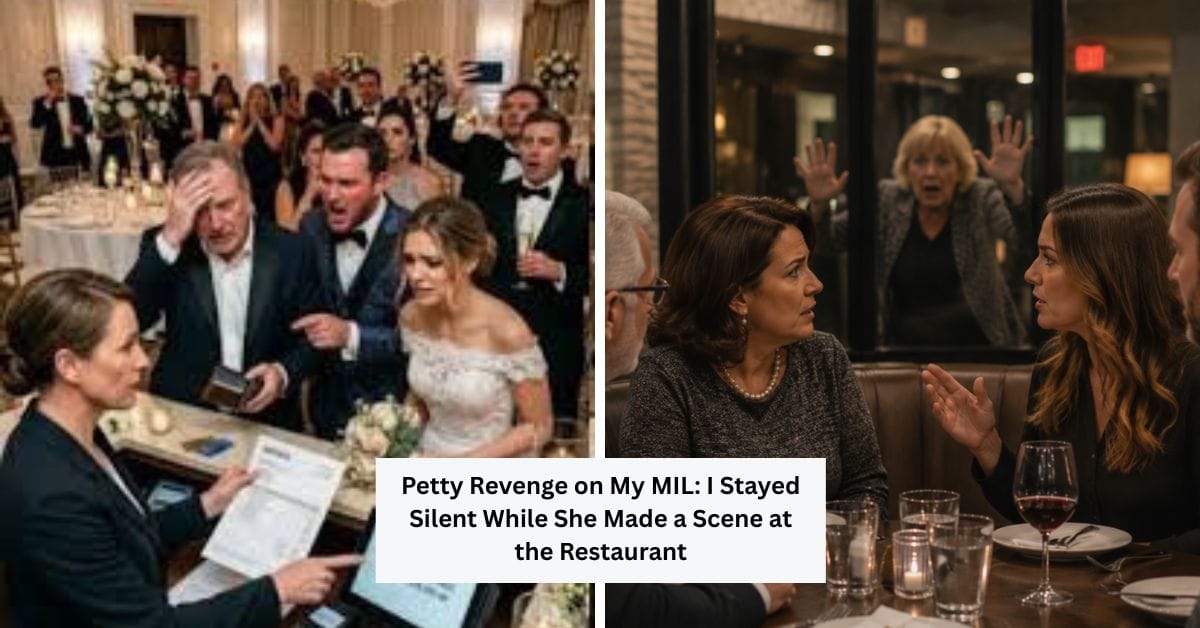
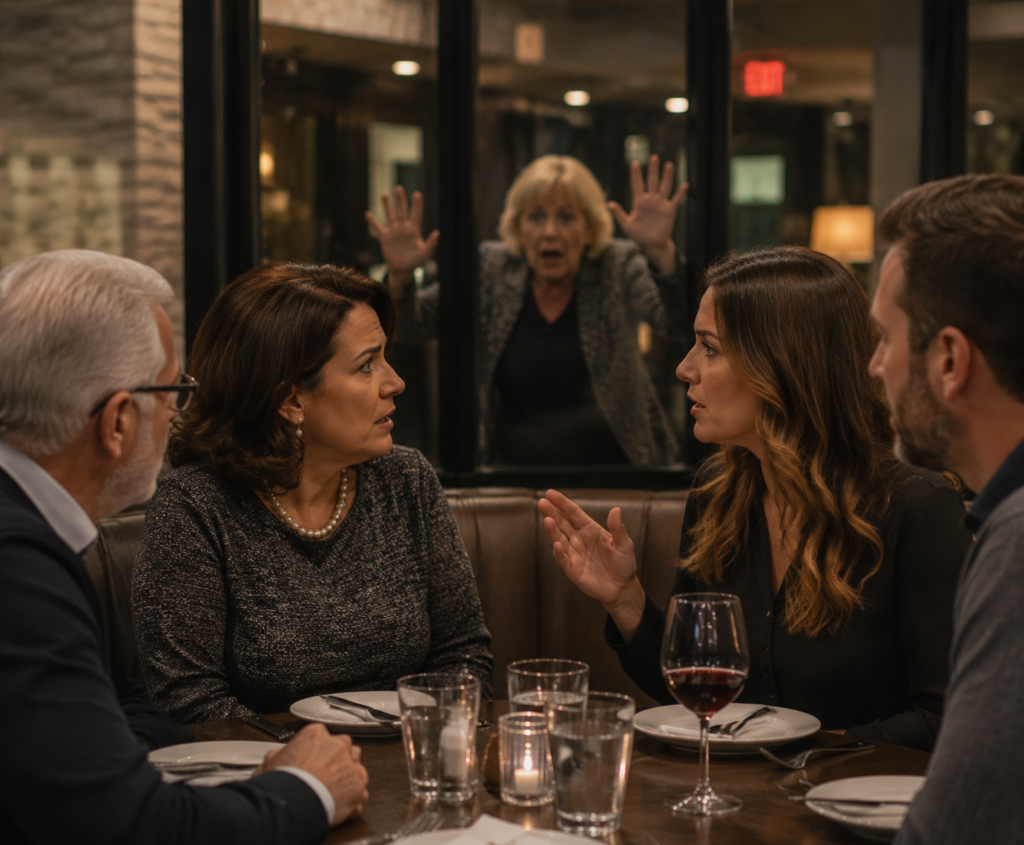
A turning point came during a family dinner on a stormy evening. Anticipating that her mother-in-law would likely comment on anyone arriving late, she made a point of reaching the restaurant early. While waiting, she noticed her mother-in-law repeatedly glancing through a glass window toward the parking area, clearly watching for the rest of the family to arrive. The behavior became unexpectedly amusing as she observed her attempts to discreetly “run into” her daughter-in-law.
Handling Family Tension With Grace
Later during dinner, she calmly brought up what she had noticed. Her comment left the mother-in-law without a response, while the rest of the family reacted with surprise. For her, it was a small but meaningful moment—one that reinforced the idea that staying composed, setting boundaries, and responding thoughtfully can sometimes be the most effective way to handle ongoing family tension.
Advertisement
Read Story…
Petty revenge on my MIL
My MIL is a manipulator. Shocking right? LOL
At first it drove me crazy, but it isn’t worth the fights with my husband. Now I just observe and let her run wild. Just to amuse myself, so I don’t go insane.
My MIL makes all kinds of passive aggressive comments, this story is just one example.
However, I finally got my revenge moment after 10 years of taking her shit.
Backstory:
There hasn’t been a single time in our marriage when my husband and I have been late to a family dinner reservation.
Yet every time we attend a dinner with MIL, she makes a comment about tardiness. Usually at my expense.
Why? Who knows, but it’s become a big issue for me, to the point I didn’t go to family Christmas last year.
Why?
My bday is also during Christmas. In-Laws offered to take us to dinner, I didn’t want to go. Husband was bummed, so I accepted for him. I psyched myself up that day, thinking surely they wouldn’t make the “you’re late” comments on my bday.
I was right they didn’t. The waitress did it for them.
As I sat down at the table, the waitress came by and said, ”You made it on time!”
I immediately looked at my MIL and said, “Yep! We’re actually always on time, they’re just old and like to be 30 minutes early to everything.”
Thinking that would shut down the comments for good.
Nope.
Flash forward to last week.
We went to family dinner for my nephews bday. It was storming so I told my husband we should leave an hour early even though the drive is typically 25 minutes. That way we would be first, and she wouldn’t be able to say anything.
My sweet husband is a moron though, and told her we were leaving early for the weather. Not only did she beat us there, she told the rest of the family to leave early and they all live 7-10 min away.
So we arrive at 5:10 for a 5:30 reservation, and sure as shit, everyone is seated already. However, they didn’t know I could see them. There was two way glass in the lobby between the entryway and the restaurant.
My husband had dropped me off at the door because of the rain, so instead of walking inside I sat in the entryway on a bench and waited.
As I was waiting, I could see her obsessively looking at the front doors. Then she got up and walked to the lobby, realized there were two way mirrors, and started pressing her face against the glass so she could see outside. She looked insane doing it, and I loved every moment.
Some of the glass panes were to the exterior and the other side, (where I was), were to the entryway where I was sitting on the bench. So as she made her way down the row of glass, I knew she would eventually see me.
She did-but I didn’t turn around.
I just let her think I didn’t notice. She jumped back a little when she saw me. I kept looking straight ahead.
Then she busts through the double doors as if she was about to RUN outside to the parking lot. Being a terrible actress, she grabs the exterior door handle and full on fake stops, turns around, and pretends to “run into me.”
That moment, my husband walked through the doors and she got all excited. I let her think she pulled off her weird window watching expo, like I normally ignore her behavior.
She shows us to the table and told me where to sit. That way my nephew could be next to my husband, and I would be at the end of the table across from her.
As I sat down, my FIL said, “Took you long enough, did you walk here?”
To which I replied,
“No actually, we left an hour early so we could be here on time, just like every other time. Yet somehow there’s always comments about us being late, what’s up with that? If you want us to get here at 5, then make the reservation for 5.”
Table went silent.
MIL goes, “It’s just his way, he doesn’t mean anything by it.”
I said, “ Well, it’s usually you that makes the comments if I’m being honest.”
She goes, “Honey, you know I don’t care when y’all get here, we’re just so grateful you made it.” (Eye roll city)
I replied, “Are you sure? Because I watched you press your face against every piece of glass in the lobby trying to spot us in the parking lot. Where were you going when you were heading outside? Did you need something from your car or what? Because you never went back, and I found that odd. I also found it strange that you saw me through the glass and pretended to run into me. What were you doing?”
She said nothing in response and changed the subject.
Then I ordered a glass of wine, and stewed in my pettiness.
I hope they never invite me to anything ever again 😂💅🏼


This story reflects the reality of difficult family relationships, especially for those who have dealt with challenging in-laws. Many readers may relate to the daughter-in-law’s experience because she did not react with anger or start a confrontation. Instead, she remained calm, observed the situation, and chose her moment carefully. Her patience, emotional control, and awareness helped her manage the situation in a thoughtful way.
On the surface, punctuality may seem like a minor issue, but in family dynamics it can often become a recurring source of tension. Relationship experts note that repeated criticism about being on time is sometimes less about scheduling and more about control or expectations. In this case, the mother-in-law’s constant focus on timing and her critical remarks gradually created unnecessary stress within the relationship.
What stands out is the daughter-in-law’s decision to simply observe rather than react immediately. By paying attention instead of engaging in conflict, she allowed the behavior to become clear on its own. Communication specialists often suggest that calm observation can be more effective than emotional responses in tense situations.
When she eventually addressed it, she did so in a composed and straightforward manner, sharing what she had noticed without exaggeration. Clear and factual communication often reduces misunderstandings and helps others see the situation more objectively.
From a family dynamics perspective, the story highlights confidence and personal growth. People in difficult family environments often feel powerless, but choosing patience and timing can help them assert themselves without escalating conflict. The daughter-in-law’s approach showed that it is possible to stand up for oneself while still maintaining respect.
The husband’s role also reflects a common situation in families, where certain behaviors go unnoticed or are normalized over time. In many cases, long-term exposure can make individuals less aware of problematic patterns. Her calm response helped bring clarity without creating unnecessary tension at home.
Humor also plays an important role in coping with stressful family experiences. Looking back on such moments with humor can reduce emotional pressure and support mental well-being. For many people, humor becomes a healthy way to process challenging interactions.
From a broader perspective, addressing behavior calmly rather than through confrontation can often lead to better outcomes. Respectful communication helps prevent escalation and encourages understanding between family members.
The story also reinforces the importance of boundaries. Rather than trying to change others, the daughter-in-law focused on controlling her own response. Healthy boundaries are essential for emotional well-being and maintaining stable relationships.
Family expectations and roles can also create pressure during gatherings, especially when certain behaviors go unspoken. By staying composed, she reinforced the importance of mutual respect and understanding within the family structure.
Overall, the key lesson is that patience, emotional intelligence, clear communication, and healthy boundaries can make a significant difference in managing difficult family situations. Sometimes, the most effective response is not confrontation, but calm confidence and thoughtful timing.
See The Comments Below








NTA — Not the Asshole
She didn’t escalate the situation, raise her voice, or engage in any confrontation. Instead, she quietly observed her manipulative mother-in-law and allowed her own exaggerated behavior to speak for itself. After years of patience and restraint, the daughter-in-law eventually reached a moment where she calmly pointed out what had been happening.
In the end, the mother-in-law ended up looking foolish without any direct argument or conflict. Meanwhile, the daughter-in-law stayed composed, maintained her sense of humor, and handled the situation with quiet confidence. It became a subtle but satisfying form of petty revenge—calm, controlled, and unexpectedly effective.