My Fiancée Started Acting Strange—Now I Fear She’s Hiding an Affair
For the past few years, I believed I had found the woman I wanted to spend the rest of my life with. I was 27 years old, and my fiancée was 27 as well. We had been together long enough to understand each other’s habits, personalities, and dreams for the future. Our relationship wasn’t perfect, but I trusted her completely. We were engaged and had started making plans for our wedding, choosing dates, discussing arrangements, and imagining what our life together would look like. I never thought I would reach a point where I would question her honesty, but lately, something about her behavior has changed, and I can’t ignore it anymore.
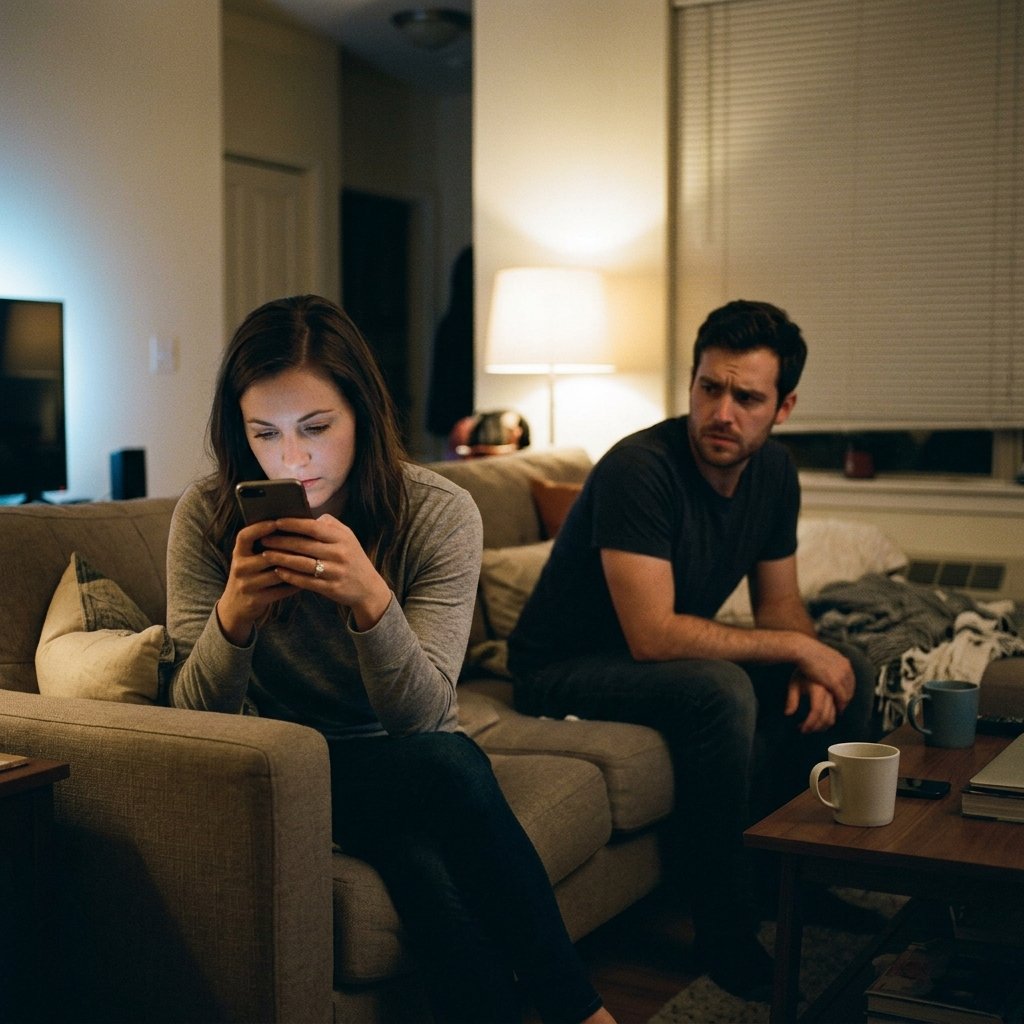
At first, the changes were small enough that I tried to convince myself I was overthinking everything. She started keeping her phone close to her at all times, even when she went into another room for just a few minutes. Before, she would leave it on the kitchen counter or the sofa without giving it a second thought. Now, whenever I walked near her while she was texting, she would sometimes turn the screen away or quickly switch to another application. I didn’t immediately accuse her of anything because I understood that everyone deserves privacy, even in a serious relationship. However, the sudden change made me uncomfortable, especially because there had never been a reason for her to act so secretive before.
Another thing I noticed was that she had become less emotionally available. We used to talk about everything, from our workdays to the smallest things that happened during the week. We would sit together in the evening, have dinner, and discuss our plans for the future. Recently, though, those conversations had become shorter and less meaningful. Sometimes, I would ask her how her day went, and she would simply say that it was fine before returning to her phone. When I tried to ask more questions, she seemed irritated, as if I were bothering her. I began wondering whether she was stressed about the wedding or dealing with something she hadn’t told me. I wanted to support her, but she wasn’t giving me much opportunity to understand what was happening.
The most confusing part was that her attitude seemed to change depending on the situation. Some days, she acted exactly like the woman I had fallen in love with. She would hug me, joke around with me, and talk excitedly about our future together. On other days, she seemed distant and distracted, almost as though she were mentally somewhere else. I started noticing that she smiled at certain messages on her phone but rarely shared what was making her happy. If I casually asked who she was talking to, she would give a vague answer and quickly change the subject. I knew that asking about every little thing could make me seem insecure, so I tried to remain calm. Still, the feeling that something had changed between us continued to grow.
One evening, we were sitting together when her phone lit up with a notification. She looked at the screen, smiled briefly, and then immediately turned the phone facedown. When I glanced in her direction, she seemed unusually nervous. I asked whether everything was okay, and she replied that it was nothing important. I didn’t push the conversation further, but the incident stayed in my mind. It wasn’t simply the notification that bothered me; it was the way she reacted to it. I remembered how comfortable we used to be around each other and how neither of us felt the need to hide ordinary conversations. For the first time, I seriously wondered whether someone else had entered her life.
After that evening, I began paying closer attention to the things happening around me. I noticed that she sometimes made plans without telling me until the last minute. She also seemed less interested in spending time together, even on days when we had nothing else to do. When I suggested going out for dinner or watching a movie, she occasionally said she was tired or had other things to take care of. Of course, I understood that being engaged didn’t mean we had to spend every moment together. People need their own space, friendships, and activities. But the combination of her sudden secrecy, emotional distance, and unusual reactions made it difficult for me to believe that nothing had changed. I began asking myself whether I was seeing genuine warning signs or allowing my own fears to turn ordinary behavior into something suspicious.
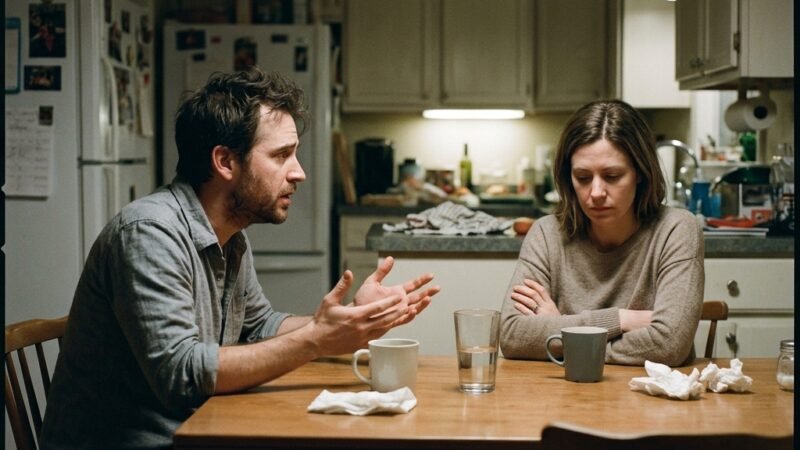
Eventually, I decided to talk to her directly rather than continue silently worrying. I chose a quiet evening when neither of us was busy and told her that I had been feeling a distance between us. I explained that I wasn’t trying to control her or demand access to her private conversations. I simply wanted to understand why things felt different. At first, she looked surprised, but her expression quickly changed to frustration. She told me I was overthinking things and that she had been busy lately. When I asked whether something was wrong in our relationship, she insisted that everything was fine. Her answer should have reassured me, but the conversation ended without resolving anything. I was left feeling guilty for bringing it up while still wondering why my concerns had been dismissed so quickly.
What frightened me most was the fact that we were supposed to be preparing for marriage. Getting engaged had been one of the happiest moments of my life, and I had always believed that marriage required honesty, communication, and trust. Now, instead of looking forward to our future, I found myself worrying about whether I truly knew what was happening in her life. I didn’t want to accuse her of cheating without evidence, and I certainly didn’t want to destroy our relationship because of assumptions. At the same time, I couldn’t pretend that my concerns didn’t exist. If she was dealing with personal problems, I wanted to be there for her. If she had doubts about marrying me, I wanted her to tell me honestly. And if there was someone else, I needed to know before making a lifelong commitment.
For now, I am trying to figure out the best way to handle the situation without allowing fear to control my decisions. I know that checking her phone secretly or constantly questioning her would not create the kind of trust a healthy marriage needs. What I want is an honest conversation in which we can both speak openly about what has changed. I am prepared to listen if she has concerns about our relationship, but I also need her to take my feelings seriously instead of dismissing them. I still love her, and part of me desperately hopes that there is a simple explanation for everything. However, another part of me fears that I am ignoring signs I should not overlook. Am I being unnecessarily suspicious, or is my fiancée hiding something important from me? I don’t want to enter a marriage filled with doubt, but I also don’t want to lose the woman I love because I allowed my imagination to get the better of me.
Read Story…
I [27M] think my fiancee [27F] might be cheating
First off, I wanted to thank everybody who commented on my original post. Most of you guys wanted me to call the number Sandra was constantly texting and I honestly was about to. She came home an hour after I had posted the original post. I was almost asleep by then and I guess she thought I was asleep. She took out her phone and unlocked it. I saw her password.
Eventually she fell asleep and I unlocked her phone and searched the number on her phone. The number belonged to some guy named Jeff and the text messages were extremely sexual. Some examples:
From Jeff: I loved the way you bounce when we fuck.
From Sandra: I love it when you go down on me.
Those were just 2 examples of the sexts between them, but there was a hell of a lot more. I screenshotted a ton of them and sent them to myself.
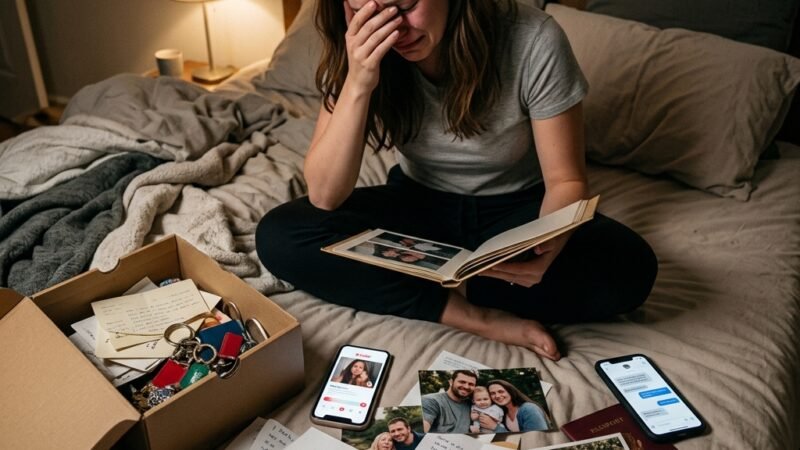
At this point, I was done with her. I confirmed that she was cheating on me. So I decide to snoop some more and looked through her photos. They were a couple of photos of her kissing and cuddling with some guy, who I assume is the same guy she’s been cheating on me with. Of course I also send those photos to myself.
But what threw me over the edge was a video of her (I assume one of her friends were recording this) giving some guy head. I almost lost it and woke her up to confront her, but I calmed down. Of course, I also sent the video to myself.
At this point I went for a walk for nearly 2 hours. Mind you this is the middle of the night and the area I walked through isn’t the safest of areas. Still, I didn’t care. I was so angry.
Eventually I calmed down enough and went back to our place. I slept for maybe 3 hours and woke up. I printed off some of the sexts and photos and waited for her to get up.
She finally got up at about 6AM. When she finished eating breakfast I slammed the text messages on the table. She looked at me with horror. She started crying and shaking. I took the engagement ring from our dresser and walked out.
I came back a couple of hours later and she wasn’t there. I called my landlord and told him we wouldn’t be renewing our lease. I told her I was moving out and to never contact me again. I packed all my shit and moved in with a friend.
So yeah that’s it. She was cheating on me and I’m done with her. She’s been blowing up my phone begging for a 2nd chance, but she’s not getting one.
tl;dr: Sandra is a cheating bitch. She can go fuck herself.
I Thought I Had Found My Forever Love—Until I Started Questioning Her Loyalty
For the past few years, I believed I had found the woman I wanted to spend the rest of my life with. I was 27 years old, and my fiancée was 27 as well. We had been together long enough to understand each other’s personalities, habits, dreams, and fears. Our relationship wasn’t perfect, but I always believed we had something strong enough to survive the challenges life might bring us. When I proposed to her, she said yes without hesitation, and I genuinely thought the hardest part of finding love was behind me. We began planning our wedding, discussing where we would live, and imagining the family we might build together. I never expected that, just when our future seemed so close, I would begin questioning whether I could trust her.
In the beginning, everything felt normal. We had our routines, our favorite restaurants, and little traditions that belonged only to us. Every weekend, we tried to spend time together, even if it meant staying home, ordering food, and watching a movie. She used to tell me about the people she worked with, the problems she encountered during the day, and the little things that made her laugh. I enjoyed listening to her because I wanted to be involved in her life. She was more than my girlfriend; she was the person I imagined standing beside me on my wedding day. That was why the changes I eventually noticed bothered me so much. They didn’t happen all at once, but gradually, small differences began appearing in places where I had never seen them before.
The first thing I noticed was her relationship with her phone. Previously, she would leave it on the kitchen counter while cooking or forget it on the sofa when she went upstairs. Sometimes, she would even ask me to answer a call if she was busy. There had never been anything secretive about it. Recently, however, she seemed unwilling to leave her phone unattended. She carried it everywhere, even when she only needed to walk into another room for a minute. If we were sitting together and a notification appeared, she would immediately pick it up and read it. I tried not to attach too much meaning to this behavior because people are allowed to have private conversations. Still, I couldn’t help noticing how different she had become.
At first, I assumed she might have been dealing with something stressful at work. Her job had become more demanding, and she occasionally mentioned deadlines and difficult coworkers. I thought perhaps she was receiving important messages that she didn’t want to discuss outside working hours. Whenever I noticed her checking her phone repeatedly, I reminded myself that I didn’t want to become the kind of partner who questioned every little thing. Trust had always been important to me, and I wanted her to feel comfortable in our relationship. I decided to give her space rather than make accusations based on nothing more than a change in routine.
However, another change soon became difficult to ignore. Our conversations began losing the warmth they once had. We used to sit together after dinner and talk about almost anything. Sometimes, we would discuss our wedding plans for hours, imagining the music, the decorations, and the people we wanted to invite. Other times, we would talk about completely ordinary things, such as what groceries we needed or which television show we should watch next. Those conversations made me feel close to her. Lately, though, she seemed distracted whenever I tried to talk. She would give short answers, glance at her phone, and sometimes appear impatient when I asked a follow-up question.
I asked her once whether she was feeling okay because she seemed unusually tired. She said she was fine and that I shouldn’t worry about her. I accepted that answer because I didn’t want to pressure her into discussing something she wasn’t ready to share. But as the days passed, I began to feel as though I was talking to someone who was physically present but emotionally somewhere else. She still sat beside me, still slept in the same bed, and still occasionally hugged me, but the connection between us felt weaker. I couldn’t explain it properly, and I didn’t know whether she felt the same distance. All I knew was that I missed the woman who used to tell me everything without my having to ask.
One evening, we were sitting on the couch when her phone lit up with a message. She glanced at the screen and smiled. It was a small smile, the kind people make when they receive something funny or sweet. Normally, I wouldn’t have thought anything of it. But when she noticed that I had looked in her direction, she quickly turned the phone facedown. Her expression changed almost immediately, and she picked up the remote as if nothing had happened. I asked casually whether someone had sent her something funny. She replied that it was nothing important and returned her attention to the television. I didn’t press her, but the moment stayed in my mind long after the evening ended.
What bothered me wasn’t simply that she had received a message. I understood that she had friends and coworkers with whom she communicated regularly. The problem was the sudden secrecy surrounding something that had never seemed secret before. If a friend sent her a joke, she usually shared it with me. If something happened at work, she often told me about it. Now, there were moments when she seemed determined to keep an entire part of her day separate from me. I began wondering whether I had missed something important. Perhaps she had developed feelings for someone else. Perhaps there was a problem in our relationship that she was afraid to discuss. Or perhaps I was allowing my anxiety to create a story that had no connection to reality.
I tried to push those thoughts aside by focusing on our upcoming wedding. We still had invitations to discuss, arrangements to finalize, and decisions to make about our future home. I thought that spending more time planning something exciting together might help us reconnect. One afternoon, I suggested that we sit down and review our wedding budget. She agreed, but when I brought out the notes I had prepared, she seemed uninterested. She looked at a few figures, said we could discuss everything later, and returned to her phone. I reminded myself that wedding planning could be exhausting and that not everyone enjoyed discussing budgets and guest lists. Still, I couldn’t shake the feeling that I was becoming the only person actively looking forward to our future.
Over the following week, I noticed that she was making plans without mentioning them until the last minute. One evening, she told me she would be meeting a friend after work, even though we had previously discussed having dinner together. Another time, she said she needed to run a few errands and would probably be home late. None of these plans was suspicious on its own. She was entitled to her friendships and personal time, and I had no desire to control how she spent every evening. What unsettled me was that she had stopped sharing these details naturally. Previously, she would tell me about her plans because conversation came easily between us. Now, I often learned about them only when I asked what she was doing.
I began noticing changes in her appearance as well. She seemed to be spending more time getting ready before leaving the house, especially on evenings when she said she was meeting friends. She occasionally bought new clothes and appeared more conscious of how she looked. I knew that people could change their style for countless reasons, and I didn’t want to interpret her taking care of herself as evidence of infidelity. In fact, I had always encouraged her to do things that made her feel confident. But because I was already worried about her secretive behavior, every new detail seemed to raise another question in my mind. I hated feeling this way because I knew suspicion could damage a relationship even when no wrongdoing had occurred.
The hardest part was that she could still be affectionate when she wanted to be. Some mornings, she would kiss me goodbye before leaving for work. Occasionally, she would send me a sweet message during the day or ask whether I wanted anything from the grocery store. Those little gestures reminded me of the relationship we had built, and I would feel embarrassed for having questioned her loyalty. Perhaps I was making a mistake. Perhaps she was simply busy and distracted, and I was interpreting ordinary changes as warning signs. But then another evening would come when she would barely speak to me, guard her phone, and seem irritated by my presence. I felt trapped between the hope that everything was fine and the fear that something serious was happening behind my back.
Eventually, I decided I needed to speak with her honestly. I waited until we were both home, had eaten dinner, and had some time without distractions. I turned off the television and told her that I wanted to discuss something important. She looked at me with a slightly impatient expression and asked what was wrong. I explained that I had noticed a distance between us recently. I told her that I missed our conversations, that she seemed distracted whenever we spent time together, and that I was worried something might be bothering her. I made it clear that I wasn’t trying to accuse her of anything. I simply wanted to understand what had changed.
For a moment, she remained quiet. Then she told me that nothing was wrong and that she had been busy with work. I asked whether there was anything about our relationship that she wanted to discuss. She sighed and said that I was overthinking everything. According to her, I was turning ordinary behavior into a problem because I had too much time to worry. Her response made me feel as though I had done something wrong merely by expressing my feelings. I didn’t want to turn the conversation into an argument, so I explained that I wasn’t asking her to report every movement or show me every message. I was asking for reassurance because the person I loved seemed increasingly distant.
She insisted that she loved me and still wanted to marry me. Those words should have made me feel better, but something about the conversation remained unresolved. I wanted to ask why she had suddenly become so protective of her phone, but I worried that the question would make me sound controlling. I also wanted to know why our conversations had become so shallow, but I didn’t want to force her to talk when she clearly didn’t want to. Eventually, we stopped discussing the issue. She went upstairs, and I stayed downstairs for a while, trying to convince myself that I had received the answer I needed. Yet I couldn’t stop thinking about how quickly she had dismissed my concerns instead of trying to understand them.
Over the next few days, I tried to behave normally. I didn’t ask about every notification, and I made an effort not to watch her whenever she used her phone. I wanted to prove to myself that I could trust her and that I wasn’t going to let fear dictate my behavior. I focused on work, spent time with friends, and continued helping with the wedding preparations. But whenever she received a message and turned her screen away, I felt that familiar knot in my stomach. I hated the uncertainty more than anything. If she was hiding something, I wanted to know the truth. If she wasn’t, I wanted to stop living as though I were waiting for bad news.
One Saturday, we went out to look at a few things for the wedding. At first, I thought the day might bring us closer together. We walked through several stores, discussed possible decorations, and even laughed about a disagreement over the color scheme. For a little while, everything felt normal again. Then her phone rang, and she stepped away to answer it. She walked far enough that I couldn’t hear the conversation clearly. When she returned, I asked whether everything was okay. She said it was just a friend and immediately began talking about something else. I didn’t have any reason to believe she was lying, but the way she avoided discussing the call made me uneasy. I wondered whether she realized how distant she had become or whether she believed I hadn’t noticed at all.
Later that evening, I thought about the difference between privacy and secrecy. I knew that even married couples didn’t need to share every thought, conversation, or personal detail. Everyone deserved a certain amount of independence. But there was also a difference between having private conversations and deliberately making a partner feel excluded from an important part of one’s life. I didn’t want to demand access to her phone or insist that she prove her loyalty through constant explanations. I wanted to feel that we were still a team. I wanted to know that if something was troubling her, she would eventually trust me enough to talk about it.
I also began questioning my own behavior. Had I become too focused on the wedding and forgotten to pay attention to her emotional needs? Had I been working too much or assuming that our relationship would remain strong without regular effort? It was possible that she felt neglected in ways I hadn’t recognized. If that was the case, I wanted to take responsibility for my part. I didn’t believe a healthy relationship meant that one person was always right and the other was always wrong. I wanted us to be able to acknowledge our mistakes and make changes together. But I couldn’t repair a problem I didn’t understand, especially if she continued insisting that nothing was wrong.
One night, while we were getting ready for bed, I asked her whether she was happy with our relationship. It was a simple question, but I had spent days trying to find the courage to ask it. She looked at me and said she was happy, then asked why I kept bringing up the same subject. I told her that I wasn’t trying to start an argument. I was genuinely worried because I could feel something changing between us. She said I needed to stop worrying so much and trust her. I wanted to believe that answer. I wanted to put my arms around her, apologize for making her feel questioned, and go back to the comfortable certainty we had once shared. Instead, I lay awake for a long time, wondering why reassurance had become so difficult for us.
The wedding was approaching, and the pressure of making such a significant commitment began to weigh on me. Getting married meant more than wearing rings and celebrating with family and friends. It meant building a life based on honesty, loyalty, and the belief that we could face difficult situations together. I didn’t expect either of us to be perfect, but I did expect us to communicate when something was wrong. I couldn’t imagine standing at the altar while secretly wondering whether my fiancée was emotionally involved with someone else. At the same time, I knew it would be unfair to treat my fears as facts. I had noticed changes, but I had not yet discovered proof of an affair.
I decided that before making any major decision, I needed to have another serious conversation with her. This time, I wanted to be specific about what concerned me without presenting assumptions as accusations. I planned to explain that the distance between us was affecting my trust and that I needed us to address it together. I wanted to ask whether she was feeling uncertain about our wedding, whether something in her personal life was troubling her, or whether there was someone else she had developed feelings for. The last possibility frightened me most, but avoiding the question wouldn’t make the fear disappear. If she had doubts about our future, I would rather hear the truth now than discover years later that we had entered marriage with important things left unsaid.
Before I could arrange that conversation, another small incident made me question things again. We were sitting together after dinner when her phone vibrated several times in quick succession. She looked at the notifications, typed a response, and smiled. When I asked what was so funny, she said a friend had sent her something amusing. I asked what it was, expecting her to share the joke as she normally would. Instead, she said it was difficult to explain and put the phone away. I didn’t argue, but the exchange left me feeling strangely excluded. It wasn’t the message itself that hurt. It was the realization that a person who once shared the smallest details of her day with me now seemed reluctant to share even harmless moments.
That night, I started remembering earlier moments that I hadn’t thought much about at the time. There had been a few occasions when she had received calls late in the evening and stepped outside to answer them. She had sometimes mentioned a coworker whose name I couldn’t quite remember, although she had never said anything that clearly suggested romantic interest. There were also days when she seemed unusually cheerful after spending time away from home. None of those memories proved anything. Looking back, it was easy to connect unrelated details and create a story that supported my fears. I knew I had to be careful not to mistake coincidence for evidence. Still, I couldn’t stop wondering whether I had overlooked something because I trusted her so completely.
I considered asking one of her close friends whether she had noticed any changes in my fiancée’s behavior. But I quickly realized that involving other people could make the situation more complicated. If my suspicions were wrong, I could create unnecessary rumors and damage her reputation. If something really was happening, I still wanted to hear it directly from her rather than through someone else’s interpretation. I also didn’t want to turn our relationship into a situation where everyone around us was taking sides. Whatever the problem was, it belonged between the two of us first. I needed to approach it with maturity instead of letting my anxiety push me into actions I might regret.
I thought about the possibility that she was struggling with the pressure of getting married. Weddings could bring financial stress, family expectations, and difficult decisions about the future. Perhaps she was having doubts about the timing or worrying about what life would look like afterward. If she was afraid of making such a significant commitment, I wanted her to feel safe telling me. I would rather postpone the wedding and work through our concerns than force ourselves into a marriage neither of us felt ready for. That was a difficult thought to accept because I had spent so long looking forward to our future together. But I also understood that getting married simply because we had already made plans would not solve a problem that existed between us.
At the same time, the possibility of infidelity continued to trouble me. I imagined how I would feel if I discovered that she had been sending romantic messages to another man or meeting someone behind my back. I wondered whether she would tell me the truth if I asked directly or whether she would deny everything. Those thoughts made me feel angry, then sad, and finally embarrassed for allowing myself to imagine the worst without proof. I didn’t want to become suspicious of every person she mentioned or interpret every smile as evidence of betrayal. I knew that if I allowed these thoughts to control me, I could damage the very relationship I was trying to protect.
I tried to focus on what I actually knew. My fiancée had become more protective of her phone. She seemed emotionally distant, and our conversations had changed. She occasionally avoided explaining messages or calls that she received. When I raised my concerns, she dismissed them instead of discussing them openly. These were real changes in our relationship, but they didn’t automatically mean she was having an affair. There could be explanations I hadn’t considered. What mattered was that the changes were affecting my ability to feel secure with her, and we needed to address that before taking the next step toward marriage.
I also recognized that trust couldn’t be restored by a single promise. Even if she told me that nothing was happening, we would still need to work on our communication. I needed to feel that she could listen to my concerns without treating them as accusations, and she needed to feel that I respected her independence. A relationship couldn’t thrive if one person constantly demanded reassurance while the other refused to discuss anything uncomfortable. We both had responsibilities in creating an environment where difficult conversations were possible. I wanted us to reach that point before our wedding day, because I didn’t want our marriage to begin with resentment and unanswered questions.
A few days later, I tried approaching the subject in a different way. Instead of mentioning her phone, I told her that I missed feeling close to her. I reminded her of the evenings when we used to sit together and talk for hours, and I asked whether she felt that we had been drifting apart. For a moment, she seemed to consider what I was saying. Then she admitted that she had been stressed lately but didn’t want to discuss the details. I told her I would respect that, but I hoped she would eventually feel comfortable sharing whatever was troubling her. She thanked me for understanding, and we hugged. It was a small moment, but it gave me some hope that we might still be able to reconnect.
Unfortunately, the improvement didn’t last. Over the next few days, she returned to her usual distant behavior. I tried not to treat that as proof of anything, but the inconsistency made it difficult to understand where we stood. Sometimes she seemed affectionate and interested in our future. Other times, she acted as though she would rather be anywhere else than sitting beside me. I began to wonder whether she was confused about her own feelings or simply going through a difficult period. I also wondered whether she was trying to maintain our relationship while hiding something she knew would change everything. I had no answers, and the uncertainty was becoming exhausting.
I began thinking about what I would do if my worst fear turned out to be true. I loved her, but I also knew that marriage required honesty. If she had been unfaithful, I would need to decide whether trust could ever be rebuilt and whether both of us genuinely wanted to repair the relationship. I couldn’t make that decision before knowing the facts. I also couldn’t promise that I would forgive something that had not yet been admitted or explained. For now, I needed to remain calm and avoid making decisions based on imagined conversations and possible scenarios. I wanted to give her the opportunity to tell me the truth, whatever that truth might be.
I also realized that I needed to be honest with myself about my own boundaries. I didn’t want to control her friendships, dictate how she dressed, or insist that she report every detail of her day. Those things wouldn’t make a relationship stronger. But I did need openness about matters that could affect our commitment to one another. If she had developed feelings for someone else, I expected her to tell me rather than allow us to proceed toward marriage under false assumptions. If she was unhappy, I wanted us to discuss it honestly. And if she genuinely believed nothing was wrong, I needed her to understand that dismissing my concerns wouldn’t make them disappear.
As the days passed, I found myself looking at our engagement ring differently. When I had first given it to her, it represented excitement, commitment, and the future we planned to share. Now, it reminded me of the serious promise we were preparing to make. I didn’t want to cancel our wedding over suspicion alone, but I also didn’t want to ignore problems simply because I was afraid of losing the life I had imagined. I had to remind myself that a wedding date was not more important than the relationship itself. We could change plans, have difficult conversations, and seek help if necessary. What we couldn’t do was build a healthy marriage by pretending that everything was perfect.
Eventually, I decided that our next conversation needed to be more direct. I would tell her that I loved her and still wanted our relationship to work, but that I couldn’t continue feeling this level of uncertainty. I would ask her whether there was anything she had been hiding from me, including whether another person had become involved in her life. I would give her time to answer and try to listen without immediately becoming defensive. I hoped she would recognize that I wasn’t looking for a reason to leave. I was looking for a reason to believe that the future we had planned was still something we both genuinely wanted.
I knew the conversation might not go the way I hoped. She might become upset, deny that anything was wrong, or finally reveal something I wasn’t prepared to hear. I might discover that my suspicions had been misplaced and that we simply needed to improve our communication. Or I might learn that there was a serious problem we could no longer ignore. Either way, I needed to stop living in a state of constant guessing. I wanted to approach the situation with respect, but I also needed to respect my own feelings. Loving someone did not mean that I had to ignore every concern or accept a relationship in which honest communication had disappeared.
For now, I am trying to remember the reasons I fell in love with her while acknowledging the problems that exist today. I don’t want fear to erase the good memories we have shared, and I don’t want those memories to prevent me from recognizing a serious issue if one exists. I still hope that we can sit down, talk honestly, and understand what has changed between us. If she is dealing with something difficult, I want to support her. If she is questioning our future, I want her to be honest with me. And if she has been unfaithful, I need to know before we make a lifelong commitment.
The hardest part of all this is that I never imagined questioning the woman I planned to marry. I thought trust would be one of the strongest parts of our relationship, something we could rely on even when life became stressful. Now, I find myself wondering whether I have mistaken silence for peace and whether my fear is warning me about something real or simply reflecting my own insecurity. I don’t want to accuse her unfairly, but I don’t want to ignore the changes I have noticed either. My fiancée has become distant, secretive with her phone, and unwilling to discuss why our relationship feels different. Am I overthinking these changes, or is there a real possibility that she is hiding an affair from me? Before I walk down the aisle, I need an honest answer—not because I expect perfection, but because I believe the marriage we build deserves to begin with trust, openness, and the truth.