I Ignored My Elderly Neighbor’s Calls, and Now My Family Says I’m Heartless
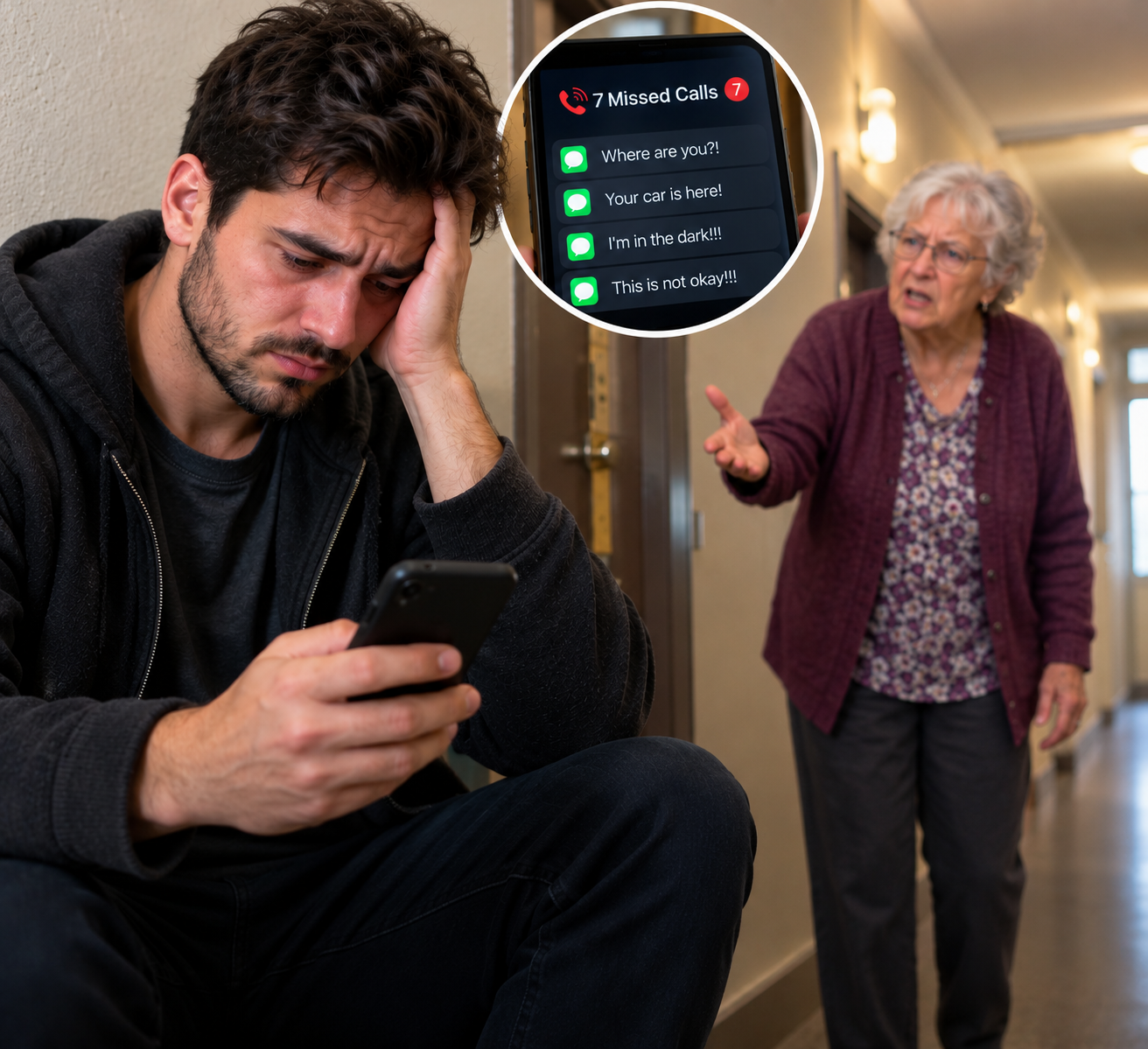
I never thought ignoring a few phone calls could turn into such a huge family controversy, but that is exactly what happened when I stopped answering my elderly neighbor. I am not someone who enjoys being rude to people, and I have always tried to be respectful toward older people, especially those who live alone. My neighbor, whom I will call Margaret, is in her late seventies and has lived next door to me for several years. When we first met, she seemed like a sweet, lonely woman who occasionally needed someone to talk to. I was happy to help her with small things, such as carrying groceries, bringing her packages inside, or checking whether everything was okay after a storm. At first, our relationship was perfectly normal, and I genuinely enjoyed helping her whenever I had the time. However, over the past year, her phone calls became increasingly frequent, and what started as occasional conversations gradually turned into something that made me feel overwhelmed in my own home.
Initially, Margaret would call once or twice a week to ask a simple question or see whether I was available to help her with something. Sometimes she needed assistance understanding a letter, carrying something heavy, or figuring out why her television was not working. I never minded helping when I could, and I often stayed longer than necessary because I knew she appreciated the company. The problem started when she began calling several times a day, sometimes for reasons that were not urgent at all. She would call while I was working, eating dinner, spending time with friends, or trying to relax after a long day. If I did not answer immediately, she would call again and again until I finally picked up. Occasionally, she would even leave messages asking why I was ignoring her or whether I was upset with her. I tried explaining that I could not always answer my phone, but she seemed to interpret my unavailability as a personal rejection.
Things became more difficult when Margaret started expecting me to drop whatever I was doing whenever she called. One afternoon, I was in the middle of an important work meeting when my phone began vibrating repeatedly. I ignored it because I could not leave the meeting, but when I checked afterward, I had several missed calls and multiple messages from her. She wanted me to come over and help her rearrange some furniture because she had decided she did not like the way her living room looked. When I called her back and explained that I could not come that day, she sounded offended and asked why I was suddenly too busy for her. I reminded her that I had work and personal responsibilities of my own. She responded that she had nobody else to depend on and that I was the only person nearby who genuinely cared about her. I felt terrible hearing that, but I also felt uncomfortable being made responsible for solving every problem in her life.
After several months of this pattern, I finally reached my limit. I had started feeling anxious whenever my phone rang because I expected it to be Margaret asking for something else. Even when I was spending time with my family, I found myself checking my phone repeatedly because I worried she would become upset if I did not respond. I decided that I needed some distance, so I stopped answering her nonurgent calls and began responding only when I had the time and energy. I did not block her number, insult her, or tell her that I never wanted to speak to her again. I simply stopped treating every call as an emergency. A few days later, my mother contacted me and asked why Margaret had complained that I was ignoring her. Apparently, Margaret had told someone in our neighborhood that she felt abandoned and that I had suddenly stopped caring about her. My mother said I should be ashamed of myself for treating an elderly woman that way, especially when she lived alone and did not have many people to rely on.
The situation has now become a bigger issue than I ever expected. Some members of my family believe that I should answer Margaret’s calls out of kindness, while others think I have every right to protect my time and establish reasonable boundaries. My mother keeps reminding me that I might be in a similar position when I am older and that I should treat people the way I would want to be treated. I understand her point, and I do feel sympathy for Margaret because I know loneliness can be difficult. However, I also believe that being compassionate does not mean making myself available around the clock or accepting guilt every time I cannot help someone. I am willing to help her occasionally, have a friendly conversation, and check on her when there is a genuine concern. What I cannot do is become her permanent source of assistance simply because I happen to live next door. I have started wondering whether I should call her and explain my boundaries more clearly, or whether that would only lead to another argument. So, am I the asshole for ignoring my elderly neighbor’s repeated phone calls after feeling overwhelmed by her constant demands, or is my family right that I am being heartless toward a lonely older woman who may genuinely need help?
Read Story…
AITA for ignoring my elderly neighbors phone calls
Hi everyone. This is my first time posting here, and I honestly never expected that I would end up asking strangers on the internet whether I was wrong in a situation involving an elderly neighbor. I am a 28-year-old man, married, with children, and my family lives in an apartment above an elderly woman who has a back injury.
I have known this woman for a while, and although I have always tried to be respectful toward her, we have never exactly had the best relationship.
Before I moved into this apartment, I already knew who she was because of my job at a grocery store. I work in the online shopping department, where customers place orders and we collect the items they want. Over time, she became known among the employees as one of those customers who could turn even the simplest request into a complicated task.
She would call about incredibly specific details, sometimes asking us to make sure that the sliced turkey contained an exact amount of sodium or that the weight was precisely what she had requested.
One example that always stuck with me was when she wanted exactly three-quarters of a pound of sliced turkey with a particular sodium content. She would call repeatedly to make sure that nobody had misunderstood her instructions. I understand that customers have preferences, especially when they have dietary restrictions, but the way she handled things often made our jobs more stressful than necessary. Because of these experiences, I had already formed an opinion about her personality before we ever became neighbors.
When I moved into the apartment with my wife and children, I discovered that she lived directly downstairs. At first, I thought it might be manageable. We would occasionally exchange greetings in the hallway, and I figured that as long as we respected each other’s space, there would not be any problems. However, as time passed, she began asking me for small favors on a regular basis.
At first, I did not mind helping her. She is elderly and has a back injury, so I understand that certain everyday tasks can be difficult for her. I am not someone who believes that people should simply ignore an older person who needs assistance. If I am available and the request is reasonable,
I generally have no problem lending a hand. I believe that being a decent neighbor means helping one another when possible.
Some of her requests included driving her to doctor’s appointments, carrying her laundry up and down the stairs, and helping with other little things around the building.
None of these tasks was particularly difficult on its own, and I initially felt good about being able to help. However, the frequency of the requests gradually increased, and I started feeling as though she expected me to be available whenever she needed something.
The biggest issue was that she rarely seemed to consider my schedule. I work long hours at the grocery store, and sometimes my shifts are split throughout the day. My work can be physically and mentally exhausting because I spend hours walking around the store, collecting groceries, dealing with customer requests, and making sure orders are completed correctly. When I finally get home, I often have very little energy left.
My family also needs my attention. I want to spend time with my wife and children instead of constantly worrying about whether another request will come from downstairs.
My wife has been understanding about helping the neighbor when reasonable, but we both know that we cannot put our own lives on hold every time she needs assistance.
We have responsibilities of our own, and sometimes we simply need to rest.
Yesterday was particularly difficult because I was working a split shift that added up to approximately sixteen hours.
By the time I came home during my break, I was completely exhausted.
I had only a limited amount of time before I needed to return to work, and I desperately wanted to take a shower and get some sleep. I was not in the mood to talk to anyone or deal with anything that was not absolutely necessary.
I took a quick shower, hoping that it would help me relax enough to fall asleep. Afterward, I checked my phone and realized that I had missed a call from the woman downstairs.
She had left a voicemail explaining that she had apparently blown a circuit in her apartment. She said that she could not see well enough to determine which breaker had tripped because she could not find her glasses.
I understood what the problem was, at least generally. The electricity in part of her apartment had stopped working, and she was having trouble locating the correct switch in the breaker box. However, I was so exhausted that I could barely think straight. I knew I had another long stretch of work ahead of me, and the only thing I wanted was to close my eyes for a little while.
I looked at the time and realized that if I did not sleep immediately, I would have even less rest before returning to work. I considered calling her back, but I knew that doing so would probably turn into a conversation or a request for me to come downstairs and fix the problem.
I did not feel capable of dealing with anything else at that moment. I decided to put my phone on silent and lie down.
At the time, I did not think I was doing anything particularly cruel. I was not deliberately trying to punish her, and I was not ignoring her because I wanted her to suffer. I was simply an exhausted man trying to get enough sleep to function through another long shift. I figured that the problem was probably manageable and that I could check on her if I had time after waking up.
Unfortunately, things did not remain quiet for long. When I eventually woke up, I discovered that I had seven missed calls from her. There were also several angry text messages waiting for me. She was furious that I had not answered her calls, and one of the things she mentioned was that she could see my car parked outside.
According to her messages, the fact that my car was there meant she knew I was home. Apparently, she assumed that because I was physically inside my apartment, I should have been available to help her. She seemed completely unconcerned about the possibility that I might be sleeping, sick, busy with my family, or simply unable to answer my phone.
I read the messages while getting ready for work, and I could feel my frustration building. I had worked an exhausting shift, taken a very short break, and tried to get some rest before returning to my job. Instead of waking up feeling refreshed, I was now dealing with angry messages from someone who seemed to believe that I owed her my immediate attention whenever she called.
I decided not to respond to the texts. I did not want to get into an argument, especially when I was already running short on time. I got dressed, gathered my belongings, and prepared to leave for work. My intention was to get out of the building without turning the situation into a bigger confrontation.
However, as I walked into the hallway, I ran into her. She had apparently been waiting for an opportunity to confront me because she immediately began berating me for ignoring her. She was angry and spoke as though I had committed some terrible offense against her. She accused me of having no respect and demanded to know how I could leave her sitting in the dark when she knew I was home.
I tried to explain that I had been sleeping because I needed to return to work after an extremely long shift. I told her that I was exhausted and could not spend the entire day answering calls. However, she did not seem interested in hearing my explanation. From her perspective, I had been home, she had needed help, and I had deliberately chosen to ignore her.
I was annoyed, but I also realized that arguing with her in the hallway would not accomplish anything. I had limited time before I needed to be back at work, and I could not afford to be late because of a disagreement. I told her that I needed to leave, but before walking away, I decided to take a quick look at the breaker box to see whether the problem could be resolved.
I opened the breaker box and looked at the switches. I am not an electrician, but I know that a circuit breaker can sometimes trip and interrupt the electricity to part of a home. Rather than spending time trying to identify the exact switch she had mentioned,
I simply flipped each switch back into position. Thankfully, the problem was resolved almost immediately.
Once the electricity was back on, I closed the breaker box and told her that everything should be working again. I did not stay to discuss the situation because I genuinely did not have the time.
I needed to get into my car and return to the grocery store, where I still had hours of work ahead of me. I left the building feeling irritated and wondering why such a minor issue had turned into such a major confrontation.
The more I thought about it during my drive, the more conflicted I became. On one hand, I knew that she was elderly, had a back injury, and could not easily solve every household problem herself. Being stuck without electricity, especially when she could not find her glasses, must have been frustrating. I could understand why she wanted help, and I did not like the idea of someone struggling unnecessarily.
On the other hand, I was not her caretaker, personal assistant, or family member.
I was her neighbor, and I had already helped her with numerous things without expecting anything in return.
I had never promised to answer every call immediately, nor had I agreed to be responsible for fixing every problem in her apartment. The fact that I lived upstairs did not mean that my time automatically belonged to her.
I also started wondering whether I had unintentionally encouraged this behavior by helping her so often. Perhaps she had become accustomed to relying on me because I usually said yes. Maybe she interpreted my willingness to help as a promise that I would always be available. If that was the case, I could understand how the situation had developed, but I still did not think it was reasonable for her to become angry when I was unavailable.
My wife asked me about the situation later, and I explained what had happened. She agreed that the neighbor’s behavior sounded unreasonable, especially considering how little rest I had gotten. At the same time, we both acknowledged that an elderly person with an injury might genuinely need assistance from time to time.
We did not want to become the kind of neighbors who ignored someone in genuine distress, but we also did not want to establish a situation where every minor inconvenience became our responsibility.
What bothered me most was not the initial call. If she had called once, left a message, and waited until I was awake, I probably would have checked on her when I had the opportunity.
The part that upset me was the repeated calling, the angry messages, and the assumption that seeing my car outside meant I had no excuse for not responding. It felt as though she believed she had the right to demand my attention simply because I was nearby.
I have started thinking that I need to establish clearer boundaries before this situation gets worse. I can still help with reasonable requests when I have the time and energy, but I cannot continue acting as though I am permanently on call. If she needs regular assistance with laundry, transportation, or household problems, perhaps she should contact relatives, friends, community services, or someone who can formally help her.
I do not want to be unkind, but I also need to protect my time and my family’s peace.
So now I am asking for an outside perspective. Was I wrong for putting my phone on silent and going to sleep after hearing that she had a blown circuit? Should I have gone downstairs immediately, even though I was exhausted and had to return to work after a sixteen-hour shift?
I eventually fixed the problem when I saw her in the hallway, but she still seemed convinced that I had disrespected her by not answering sooner.
Am I the asshole for choosing sleep over helping my elderly neighbor immediately, or is it time for me to make it clear that being a good neighbor does not mean being available twenty-four hours a day?
When Helping My Elderly Neighbor Became an Unexpected Responsibility
I never imagined that ignoring a few phone calls could turn into such a huge family controversy, but that is exactly what happened when I stopped answering my elderly neighbor’s calls. I have always considered myself a considerate person, and I genuinely believe that elderly people deserve kindness, patience, and respect. My neighbor, whom I will call Margaret, is in her late seventies and has lived next door to me for several years. When we first met, she seemed like a sweet woman who enjoyed talking to people but did not have many visitors. I was happy to help her whenever I could because I understood that living alone could sometimes be lonely. At first, our relationship was friendly and comfortable. I occasionally carried her groceries, helped her with small household tasks, and listened to her stories about her younger days. I never expected anything in return, and I was glad that I could make her life a little easier. Unfortunately, over time, her occasional requests for help became increasingly frequent, and I started feeling as though I had accidentally taken on a responsibility that I had never agreed to.

Advertisement
When Margaret and I first became acquainted, our interactions were completely normal. She would wave when she saw me outside, ask how my day was going, and sometimes invite me over for tea. If she needed help carrying a heavy package or moving something around her house, she would ask politely and accept it when I explained that I was busy. I appreciated that she respected my time, and I never felt pressured to help her. In fact, I sometimes volunteered before she even asked because I wanted to be a good neighbor. She once thanked me for helping her bring home several bags of groceries, saying that she was grateful to have someone nearby who was willing to lend a hand. Those moments made me feel good about our relationship. I thought we had developed a healthy friendship based on mutual respect, and I was happy to maintain it as long as it remained comfortable for both of us.
The situation gradually changed about a year ago when Margaret began calling me more frequently. At first, it was only once or twice a week, usually because she needed assistance with something minor. She might ask me to look at a letter she had received, help her understand a television setting, or check whether a package had been delivered to the wrong house. I did not mind those requests because they were reasonable, and I could usually help her in a few minutes. However, the calls soon became a daily occurrence. Sometimes she would call several times in the same afternoon, even when I had already spoken to her earlier that day. If I answered and explained that I was busy, she would often ask how long I would be unavailable or whether I could come over as soon as I finished what I was doing. I tried to be patient because I knew she lived alone, but I began noticing that she was treating my availability as something she could automatically rely on.
One of the first signs that things were getting out of hand happened when I was working from home. I had an important deadline and needed several uninterrupted hours to finish a project. Margaret called me in the morning, asking whether I could come over and help her figure out why her television remote was not working properly. I told her I was working and could not come over at that moment, but I offered to take a look later in the evening if she still needed help. She sounded disappointed but ended the call. Less than twenty minutes later, my phone rang again. I assumed something urgent had happened, so I answered immediately. Instead, she asked whether I had finished my work yet. When I explained that I was still busy, she sighed and said she did not understand why such a small task was taking priority over helping a neighbor. I was surprised by her response because I had already offered to help when I was free.
After that incident, I started feeling uneasy whenever Margaret’s name appeared on my phone. I never knew whether she would need something genuinely important or whether she simply wanted company. There were days when I was happy to talk to her, but there were also days when I was exhausted and needed time to myself. Unfortunately, she did not seem to understand the difference. If I answered while cooking dinner, she might keep me on the phone for forty minutes discussing neighborhood gossip or telling me the same story she had shared the previous week. If I mentioned that I needed to get back to what I was doing, she would sometimes continue talking as though she had not heard me. I felt guilty ending the conversations because I knew she was lonely, so I often stayed on the phone much longer than I wanted. Eventually, I realized that I was sacrificing my own peace simply because I was afraid of making her feel rejected.
The calls became even more stressful when Margaret started calling repeatedly whenever I did not answer immediately. I could be in the shower, grocery shopping, exercising, or spending time with friends, and I would return to my phone to find several missed calls from her. Sometimes she would leave a voicemail asking whether I was all right. That would have been understandable if it had happened occasionally, but she began doing it almost every time I was unavailable. Other messages sounded less concerned and more upset. She would ask why I was avoiding her or whether I had suddenly decided that I no longer wanted to be her friend. I tried explaining that I did not always have my phone nearby and could not answer every call. She would usually apologize, but the same pattern would begin again a few days later. I felt trapped between wanting to be compassionate and wanting to establish a normal boundary around my time.
I eventually tried having an honest conversation with her about the situation. One afternoon, after she had called me five times while I was out with friends, I went over to her house and explained that I was becoming overwhelmed by the frequency of her calls. I told her that I was happy to help with reasonable requests when I was available, but I could not always answer immediately or visit whenever she wanted. I suggested that she leave me a message explaining what she needed, and I would respond as soon as I could. I thought this was a fair compromise because it would allow her to contact me without expecting an instant response. Margaret became quiet and looked hurt. She said she had never imagined that helping her had become such a burden. I immediately felt guilty and reassured her that I did not dislike her or want to end our friendship. I simply needed her to understand that I had responsibilities of my own.
For a few days after that conversation, things seemed to improve. Margaret called less frequently, and when she did call, she was more willing to accept that I might not be available. I felt relieved and hoped we had finally found a balance that worked for both of us. I even went over one afternoon with some groceries I had picked up for myself and offered to share a few items with her. We chatted for a while, and she seemed genuinely happy to have company. I left feeling hopeful that our relationship could return to the friendly arrangement we had enjoyed before. Unfortunately, the improvement did not last. Within a couple of weeks, the repeated calls started again, and I found myself dealing with the same expectations that had made me uncomfortable in the first place. I began to realize that our earlier conversation had not changed her understanding of my boundaries as much as I had hoped.
The breaking point came on a particularly stressful weekday when I had several deadlines to meet. I had been working since early morning and had barely taken a break when Margaret started calling. I ignored the first call because I was in the middle of a meeting. When the second call came a few minutes later, I assumed she might have an urgent problem, so I sent her a quick message asking whether everything was all right. She replied that she needed me to come over and help rearrange some furniture in her living room. I explained that I could not leave work and would not be available until later in the week. She responded that it would only take a few minutes and that she could not understand why I was making such a big deal out of it. I told her that I was not available and ended the conversation. Within the next hour, she called several more times, leaving me distracted and increasingly frustrated.
When I finally called her back that evening, Margaret sounded upset. She told me that she had been waiting for me and had hoped I would come over as soon as I finished work. I explained that I had never promised to visit that day and had clearly told her I was unavailable. She insisted that I could have found a few minutes if I had really wanted to help. I tried to remain calm, but I could feel my patience disappearing. I reminded her that I had my own job, responsibilities, and personal life, and that I could not organize my entire day around her requests. She replied that she did not have anyone else to depend on and that I was the only person in the neighborhood who seemed to care about her. Hearing those words made me feel awful, but it also made me realize how much emotional pressure I had been carrying. I was being made to feel responsible not only for her practical needs but also for her loneliness.
After that conversation, I decided I needed some distance. I did not block Margaret’s number or tell her that I never wanted to speak to her again. Instead, I stopped answering every call and began responding only when I had the time and energy. If she left a message about something ordinary, I would reply later rather than interrupting whatever I was doing. I also stopped visiting her house every time she asked me to come over. At first, I felt uncomfortable about the change because I was used to being available whenever she needed something. I kept wondering whether I was being unkind or whether something bad might happen while I was ignoring my phone. Eventually, however, I started feeling less anxious. I could concentrate on my work, spend time with my friends, and enjoy quiet evenings without constantly worrying that I would upset someone by not answering immediately.
A few days later, my mother called me and asked what was happening between Margaret and me. I was surprised because I had not told my family about the situation in detail. My mother explained that Margaret had spoken to someone who knew our family and complained that I had suddenly become distant. According to her, Margaret felt abandoned and believed I no longer cared about her. My mother said that she was concerned about the way I was treating an elderly woman who lived alone. I explained that I had not abandoned Margaret and was simply trying to establish boundaries after months of repeated calls and constant requests. I told my mother that I still cared about my neighbor and would help if there were a genuine emergency. However, I could not continue being available every time she wanted company or needed help with an ordinary household task. My mother listened but seemed unconvinced.
My mother then reminded me that elderly people often struggle with loneliness and that small acts of kindness can make a significant difference in their lives. She said Margaret might not have many friends or relatives nearby and could genuinely depend on my company. I agreed that loneliness was a serious issue and that Margaret deserved compassion. I also acknowledged that I had benefited from her friendship in the beginning and did not want her to feel as though I had suddenly turned against her. However, I explained that being kind to someone should not require sacrificing every bit of personal time or feeling guilty whenever I am unavailable. I told my mother that I had already tried discussing the issue politely with Margaret, but the behavior continued. My mother responded that I should have more patience because Margaret was older and might not fully understand how much pressure she was putting on me.
The conversation with my mother left me feeling conflicted. Part of me wondered whether I had been too harsh by reducing my responses instead of having another conversation with Margaret. Another part of me felt frustrated that my family seemed to expect me to solve the problem simply because I was the person living next door. I had never agreed to become Margaret’s caregiver, personal assistant, or only source of companionship. I had simply been a friendly neighbor who occasionally offered help. Somehow, that kindness had turned into an expectation that I would always answer my phone and rearrange my schedule whenever she asked. I began thinking about how often people, especially those who are naturally helpful, end up taking on responsibilities they never intended to accept because they are afraid of being judged as selfish. I did not want to become resentful toward Margaret, but I also did not want to continue living with the constant pressure.
Things became more uncomfortable when another family member contacted me and said that my behavior was making Margaret feel unwanted. They told me that I should consider how frightening it might be for an elderly person to feel that the people around her were losing interest in her. I explained that I understood her situation and had no intention of making her feel unwanted. However, I also pointed out that I had not stopped speaking to her completely. I was simply no longer answering every call immediately. My relative said that answering a phone took only a few seconds and that I was making a small issue unnecessarily complicated. I tried explaining that the problem was not a single phone call. It was the repeated calls, the long conversations, the pressure to help immediately, and the guilt whenever I said no. Unfortunately, my explanation did not seem to change their opinion.
A few days later, Margaret called me again while I was having dinner with a friend. I saw her name appear on my screen, but I decided not to answer because I wanted to enjoy the evening without interruptions. After the dinner, I checked my phone and found a voicemail from her. She sounded upset and said she did not understand why I was ignoring her. She mentioned that she had always considered me a good neighbor and had thought we were friends. Hearing her voice made me feel guilty because I did not want her to believe that our friendship meant nothing to me. At the same time, I felt frustrated that she seemed unable to accept that I could care about her without being available all the time. I waited until the next morning before responding because I wanted to think carefully about what I would say instead of replying out of guilt or irritation.
The following morning, I sent Margaret a message explaining that I was not angry with her and had not stopped caring about her. I told her that I had a busy schedule and needed to be able to respond to calls when I was free. I also explained that if she ever had a genuine emergency, she should contact emergency services or another appropriate source of help rather than relying entirely on me. I wanted her to understand that I could not guarantee an immediate response, especially when I was working or away from home. I hoped the message would reassure her while making my boundaries clear. Margaret replied that she understood, but she added that she missed the way things used to be. I felt sad reading that because I missed our earlier friendship too. I wished we could return to a time when helping her felt like a choice rather than an obligation.
Later that week, I decided to visit Margaret in person. I brought a small treat from a local bakery and asked whether she wanted to sit outside for a while. She seemed pleased to see me, and we talked about ordinary things for a few minutes. I then explained that I wanted us to remain on good terms, but I needed our relationship to be healthier. I told her that I could help with occasional tasks when I was available, but I could not promise to answer every phone call or visit whenever she wanted company. I suggested that she consider joining a local community group, attending activities at a nearby senior center if one was available, or reaching out to relatives and other neighbors who might also be willing to help. I was not trying to push her away. I simply wanted her to have more than one source of companionship and practical support.
Margaret did not react particularly well to my suggestions. She said that she was not interested in joining groups or making friends with strangers, and she preferred talking to people she already knew. She also said that asking other neighbors for help would make her feel embarrassed because she did not want people thinking she could not manage her own life. I understood those concerns, but I also realized that she was rejecting many of the alternatives that might reduce her dependence on me. I gently explained that I could not be the only person she relied on, especially because I had work and personal responsibilities. She became quiet and said that she had never intended to make me feel burdened. I told her that I believed her, but intentions did not change the effect the repeated calls were having on me. We ended the conversation politely, although I could tell she was still disappointed.
Since then, I have tried to maintain a reasonable balance. I still greet Margaret when I see her outside, and I occasionally stop by to ask how she is doing. If she calls and leaves a message explaining that she needs help with something I can reasonably assist with, I respond when I am available. I have also made an effort not to assume that every call is an attempt to take advantage of my kindness. However, I no longer feel obligated to answer immediately, and I do not cancel my plans simply because she wants company. I have learned that caring about someone does not mean accepting unlimited responsibility for their needs. I can be compassionate without becoming their permanent support system. I also recognize that if Margaret has a genuine safety concern or urgent medical problem, she needs appropriate help rather than relying on a neighbor who may not always be available.
Despite these changes, my family still seems to think I should do more. My mother recently told me that Margaret had mentioned feeling lonely again and suggested that I should call her more often. I understand why my mother feels sympathy for her, but I wish she would also acknowledge the pressure I experienced before setting boundaries. I never wanted Margaret to feel abandoned, and I have no intention of treating her cruelly. I simply want our relationship to return to something that feels voluntary and manageable rather than an ongoing obligation. I sometimes wonder whether I should make a regular plan to visit her once a week or check in at a time that works for both of us. That might offer some consistency without requiring me to answer every unexpected call. Still, I do not believe I should be pressured into taking on that responsibility just because my family thinks it is the right thing to do.
Ultimately, I am struggling to determine where kindness ends and an unreasonable expectation begins. Margaret is an elderly woman who may genuinely be lonely, and I do not want to dismiss her feelings or pretend her situation is easy. At the same time, I am not her relative, professional caregiver, or emergency contact, and I cannot be responsible for meeting all her emotional and practical needs. I have tried to communicate respectfully, offered help when possible, and encouraged her to build a wider support network. I have not insulted her, blocked her, or deliberately tried to make her suffer. I have simply stopped answering every phone call as though it were an obligation. My family believes that I am being heartless toward a vulnerable older woman, while I believe that reasonable boundaries are necessary if I want to remain a kind and supportive neighbor without becoming overwhelmed. So, am I the asshole for ignoring my elderly neighbor’s repeated phone calls after they began interfering with my daily life, or is it reasonable to expect her to respect my time even when she feels lonely?