My 22-Year-Old Sister Is Facing Brain Surgery, and Our Parents Are Acting Like They Don’t Care
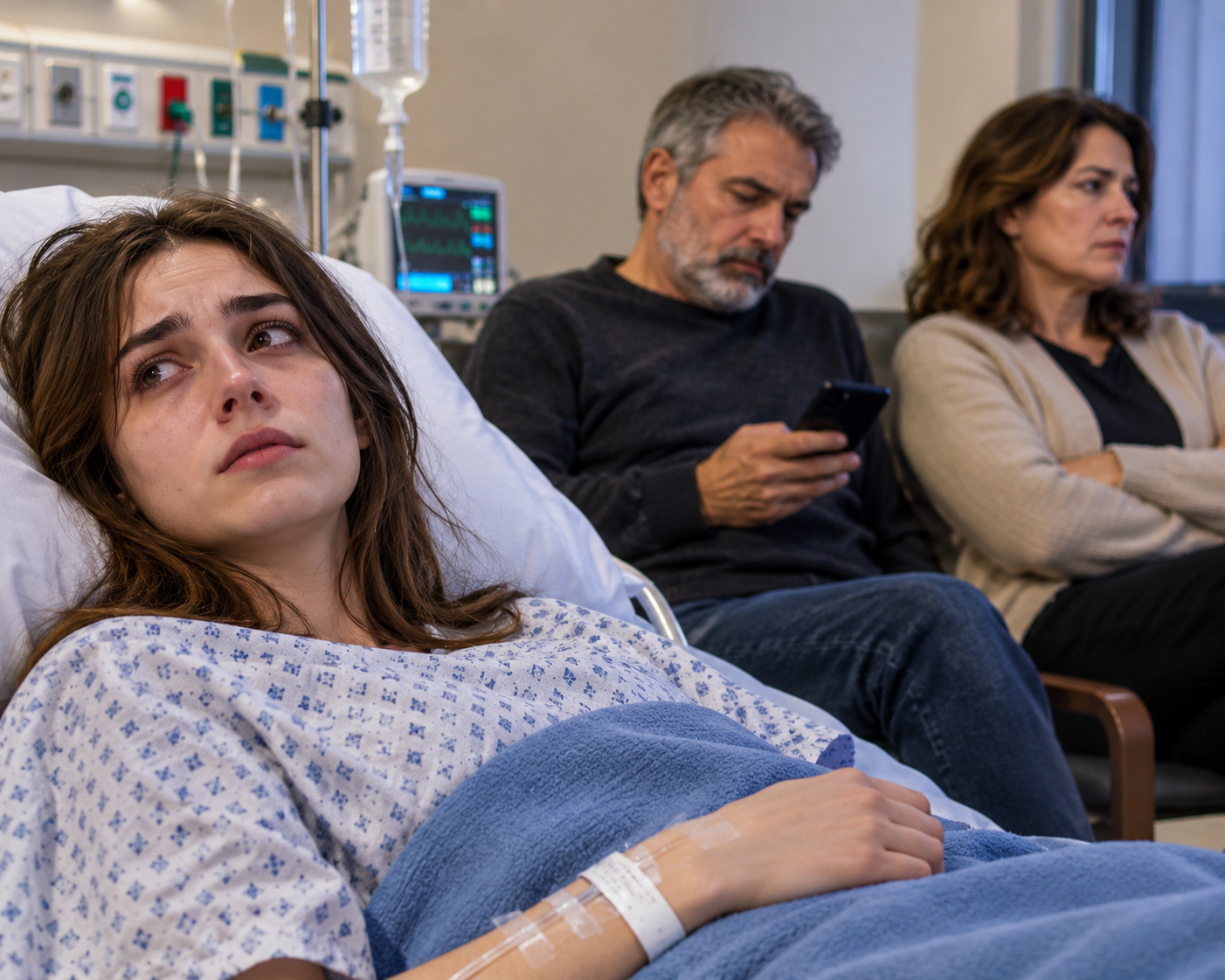
I never imagined that I would have to watch my younger sister face something as terrifying as brain surgery while also trying to understand why our own parents seem so emotionally distant from the situation. My sister is only 22 years old, and she should be enjoying this stage of her life, making plans for her future, spending time with friends, and figuring out what she wants to accomplish. Instead, she is preparing to undergo surgery for a brain tumor this week, and our entire family should be focused on helping her get through one of the most frightening experiences she has ever faced. I know that everyone reacts differently to serious medical situations, and I understand that fear can make people behave in unexpected ways. However, what has been happening with our parents is difficult for me to comprehend. Rather than showing my sister the emotional support she desperately needs, they have been acting as though her situation is something they would rather avoid discussing. When she talks about the surgery, they change the subject or give short responses that make it seem as though they do not want to hear about it. I have tried to convince myself that perhaps they are simply struggling to process the news, but the closer we get to the surgery, the more painful their behavior becomes. Watching my sister prepare for such a serious procedure is already difficult enough, and seeing her deal with our parents’ apparent indifference makes everything feel even worse.
When we first learned that my sister had a brain tumor, I expected our family to come together. I imagined our parents asking questions, attending medical appointments, checking on her regularly, and making sure she knew that she would not have to face this experience alone. Instead, their reactions were surprisingly detached. They did not seem particularly interested in understanding the details of her condition or what the doctors had explained about the surgery. Whenever I tried to discuss the situation with them, they acted as though I was making things unnecessarily dramatic. I was not asking them to become medical experts or spend every waking moment worrying about what might happen. I simply wanted them to acknowledge how serious the situation was and recognize that their daughter was frightened. A brain tumor is not something a 22-year-old should have to navigate while wondering whether her own parents care about what she is going through. I know that some people cope with fear by avoiding difficult conversations, and perhaps that is part of what is happening here. However, avoiding the subject does not make the situation disappear. The surgery is still approaching, my sister is still scared, and the emotional support she needs is still missing. What bothers me most is that our parents seem to expect everyone else to behave normally while refusing to acknowledge that our family is facing something potentially life-changing.
The hardest part has been seeing how my sister reacts to their behavior. Despite everything she is dealing with physically and emotionally, she keeps trying to make excuses for them. She tells me that they might be stressed, that they probably do not know what to say, or that they may be processing their feelings privately. Sometimes she even changes the subject herself when I express frustration because she does not want to create more tension in the family. I can tell that she is trying to protect herself from disappointment by lowering her expectations, and that hurts to watch. She should not have to comfort other people about her own medical emergency. She should be able to tell our parents that she is frightened without worrying about whether she is making them uncomfortable. There are moments when she tries to act cheerful and insists that everything will be fine, but I know that she is facing a tremendous amount of uncertainty. She has medical appointments to think about, questions about the procedure, and the understandable fear that comes with undergoing brain surgery at such a young age. I try to be there for her as much as I can, listening when she wants to talk and distracting her when she needs a break from thinking about the operation. Still, I cannot help feeling angry that she has to find ways to manage her emotions while also dealing with the absence of the people she would naturally expect to support her.
As the surgery gets closer, I have started questioning whether I should confront our parents directly. Part of me wants to tell them exactly how disappointed I am and ask why they seem unable to show their daughter even a basic level of concern. I want them to understand that their behavior is not going unnoticed and that my sister deserves better than silence and avoidance during such a frightening time. At the same time, I worry that starting an argument right now could create additional stress for her. The last thing I want is for her to spend the days before surgery listening to family members fight about whether they have been supportive enough. She needs peace, reassurance, and people who can help her focus on getting through the procedure. I have considered speaking to our parents privately, explaining what I have observed, and asking them to make a genuine effort to be present for her. They do not need to have perfect words or know exactly how to handle every emotion. Sometimes, simply asking how she is feeling, accompanying her to an appointment, or telling her that they love her would make a meaningful difference. I want to give them an opportunity to recognize the impact of their behavior, but I am also afraid that they will dismiss my concerns and accuse me of overreacting. I do not know whether their distance comes from fear, denial, or something else entirely, but I know that my sister should not have to bear the emotional consequences of it.
Right now, my main priority is making sure my sister knows that she is not alone. Whatever happens with our parents, I want her to have people around her who are willing to listen, help with practical arrangements, and support her through the uncertainty surrounding the surgery. I remind her that she does not have to pretend to be brave every second and that it is completely understandable to feel frightened, angry, or overwhelmed. I also try not to make promises about the medical outcome because I know that her doctors are the people best equipped to explain the risks, expectations, and recovery process. What I can promise is that I will do my best to be there for her and help her navigate the days ahead. However, I cannot ignore how deeply our parents’ behavior has affected me. I always believed that when a family member faced a serious medical crisis, the family would at least try to come together, even if everyone handled their emotions differently. Instead, I feel as though I am watching my sister prepare for one of the biggest challenges of her life while the people who should be comforting her remain emotionally distant. I do not know whether our parents will eventually realize how much their support matters, and I do not want to make assumptions about what they are feeling internally. But their actions are hurting someone who is already going through enough. Am I wrong for being angry with them and expecting them to show up for their daughter before her brain tumor surgery, or should I accept that some people simply do not know how to handle a situation this frightening?
Read Story…
My sister [22F] is having a brain tumor surgery this week and parents [54s] aren’t showing any support.
I am NOT OOP. OOP is u/13e12sr1a
My sister [22F] is having a brain tumor surgery this week and parents [54s] aren’t showing any support.
Thanks to a longtime lurker for the suggestion
Trigger Warnings: harassment, emotional abuse, physical violence
Original Post: May 2, 2015
This is a very difficult time for our family (although I’m not sure about my mom). My sister was recently diagnosed with a primary malignant brain tumor and is going to have surgery this Wednesday. I don’t want to go through the medical stuff, just that this is very serious. Doctors are optimistic that with surgery and radiotherapy, she has a good chance of making a full recovery, but this is a very risky and dangerous situation.
My parents have this twisted ideology that helping people in need only makes them less independent, and for this reason they have decided not to be involved or show any support to my sister, thinking that allowing her to go alone through the most difficult time of her life will make her a much stronger person. They live by these values themselves as well, if they have problems they will never accept any help from anyone.
Going back to my sister, she is really freaked out as thing whole thing has happened very fast. She now has this life threatening condition and a surgery in a few days that even if successful, can leave her with many side effects that may take years to overcome, and my parents act like she has a cold. I truly think that having them around will be helpful to my sister, but they haven’t shown the slightest interest in being involved in any way. They only live 1 hour away and my mom has all the time in the world as she doesn’t work. My sister called them last night, asking to see them before the surgery but they refused, saying that they can’t make it there on time, but they will be around for her birthday (which is in 3 months).
I’m genuinely just pissed off at them and told them this, and they again said it’s a responsibility and independence issue and that I also shouldn’t get too much involved into this and allow her to deal with her own problems. Their suggested that I should visit her “a few days” after the surgery. I’m posting this as more of a rant than asking for advice to be honest, I know what I need to do. I should focus on helping my sister in any way possible, but I can’t help being angry at them.
tl;dr: My sister is having a life-threatening condition and is going to have a major dangerous surgery next week, and parents think supporting her discourages her independence.
Editor’s note: OOP did not leave any comments in the original post
Top Comments
Commenter 1: Your parents are being ridiculous. The only thing you can do is try to talk to them about it, but you can’t control their actions. Your sister really needs support right now and if your parents aren’t giving that you should try to be there for her as best you can.
Commenter 2:
I’m genuinely just pissed off at them and told them this, and they again said it’s a responsibility and independence issue and that I also shouldn’t get too much involved into this and allow her to deal with her own problems
They might be your biological parents, but they have just confirmed that they aren’t your family, they have no clue what the concept of “family” even is. All you can do is tell them how much they are failing their daughter right now with their cold viewpoint, but you can’t force them to care unfortunately. I would limit your contact with them after this, how they are acting towards their own child is unfathomable and unforgivable. If they don’t want to be there for their children in the worst of times, they shouldn’t get to be there during the good times.
Commenter 3: Your parents are weird. Go support your sister and give her as much love as possible. Probably communicate the details as little as possible with your parents. You and she can find support with each other and elsewhere.
Also, your parents won’t change. They are just jerks.
Commenter 4: This is a compassion issue and clearly they have none to spare. If it was truly responsibility and independence they would be single and living alone.
Aside from them- and please set them aside- your sister is lucky to have you there. Nobody should face surgery alone ever. And her recovery will take some time.
Please be sure she knows she will not be her usual self right away. The brain has to relax again, the anesthesia has to really leave the body, and the emotional shock/fear will slow down her responses at first. She cannot measure the success of the surgery until the full recovery is complete (4-6 weeks).
I am sorry your parents don’t choose to share in this important time. Hang in there. And best wishes for your sis.
Update #1: May 12, 2015 (10 days later)
So my sister had the surgery on Wednesday. It was a very difficult one, it took longer than expected and there were multiple complications during the surgery but in the end she pulled through. It took over 2 days for her to regain consciousness. She’s not exactly doing great as she has great weakness in the left side of her body, but the doctors say this was to some extent expected and she will make some recovery within 2 months, and after that they will know what to expect in the long term. Soon we will know about the next stages of her treatment with radiotherapy.
About my parents, I called them every day before the surgery and on the morning of the surgery and begged them to come as it will mean a lot to my sister, but they still refused. They only asked me to let them know how the surgery goes. I only texted them after the surgery when she was still unconsciousness and my mom replied, “she’s a strong one”. How reassuring. I haven’t made any further contact with them (and neither have they), and I don’t think I ever will. They made us so independent that we don’t even need to talk to them anymore.
Luckily my sister has some good friends that have been around during this time and offered all sorts of help and support and will be here with us during her recovery. Her high school best friend flew 3000 miles from abroad to be here with her and is going to stay here for two weeks. She is her family, our parents are not.
tl;dr: Sister had her surgery with complications. Parents don’t seem to care. I won’t talk to them ever again.
Relevant / Top Comments
Commenter 1:
Sister had her surgery with complications. Parents don’t seem to care. I won’t talk to them ever again.
Seems reasonable. Normal parents would break out of jail and beg, borrow and steal to get to their kid’s bedside in a situation like this. There is something seriously wrong with your parents.
Glad your sister is recovering, though. Best of luck to both of you.
ETA: When your sister recovers, you might talk to her about temporary medical guardianship. This would guarantee that you and not your parents would be making any medical decisions for her if she’s incapacitated.
Commenter 2:
ETA: When your sister recovers, you might talk to her about temporary medical guardianship. This would guarantee that you and not your parents would be making any medical decisions for her if she’s incapacitated.
THIS. Get help with this and make sure that you have all the paperwork in place so that you can have guardianship, power of attorney, etc. Super important.
OOP: We have already taken care of all of that. I wasn’t going to allow my parents make insane decisions with her life and she fully agrees.
Commenter 3: Remember this as your parents age and start to have their own medical issues. Remind them then that helping them would undermine their independence and they will have to go it alone. Or better yet, never have contact with them again and make your own support system.
Commenter 4: Your parents are heartless. You are making the right decision to cut them out of your life. Just do your best to be there for your sis!
Commenter 5: Just because your parents raised you doesn’t mean to have to continue to associate with them after you leave the house.
Your parents are clearly not interesting in being part of your (you and your sisters family) So fuck’em and forget them. Remember this moment when they need help, and have a resounding “NO.” wall up. They want to be strangers, and distant treat them the way you would treat any other stranger.
Give yourself and your sister our warm wishes and happy thoughts!
Update #2: July 8, 2015 (nearly two months later)
It’s been a while since my last update but since you’ve all been so nice to me and my sister with your help and wonderful wishes I think I should give an update.
First about my sister’s recovery: It has been more difficult than we’ve expected. She’s had many side effects from the surgery and the speed that things are getting better is not as the doctors hoped. She has problems with movement and sensation in her left side, sleep problems, vision and hearing issues. She also used to have some mood issues but those are mostly resolved. Doctors expect her to make a full recovery though, but it may take some years of rehab and hard work. She has great motivation these days so we’re very optimistic.
About parents, well I don’t know where to start. They didn’t make any contact until 3 weeks after the surgery. They were upset that my sister hasn’t called them. I told them to piss off and don’t contact us again. A week later they showed up at my sister’s place, they didn’t even know that she had moved out of her place and moved in with me, how could have they known when they don’t care? They called me angrily asking where their ‘daughter’ is. I told them that maybe she died after the surgery and hung up.
I know this was cruel, but I couldn’t play nice with them anymore. They called me again, but I didn’t answer.
They came to my door, I opened the door but didn’t let them in. I took a very strong punch in the face from my dad, but I still didn’t let them in and told them to fuck off and went inside. My dad threatened to break the door, I told them that I’m calling the police and if they do anything crazy they will be in jail for breaking and entering. They told me that I’m disowned and left.
My sister was sleeping during this. I told her everything and she was happy with how I handled it (which is all that matters to me). We had talked about what to do if something like happened. I’m not sad that they disowned me, we had disowned them long before that. It’s just the two of us now.
tl;dr: My sister’s recovery is going slow, but it is expected that she will make a full recovery. Parents showed up but I didn’t let them in. They disowned me.
Relevant / Top Comments
Commenter 1:
I took a punch to the face but still didn’t let them in
Absolutely fucking based.
Stand strong against anything they might throw at you in the future and continue to actually care for, love, and live a long and happy life alongside your sister, my man.
Commenter 2: WHY DOESNT THE OP EVER PRESS CHARGES???????
“Breaks down weeping”
Commenter 3: In the real world, pressing charges is a pain in the ass.
Yes, he took a punch. Yes, his dad deserves it. No, the OP probably doesn’t deserve to be burdened with the what the trial process will put him through, particularly if a win to him is not seeing his parents any more, as a trial will force them closer.
Commenter 4: Is the OP male? I didn’t read that anywhere.
OOP: I’m a girl. I did call the police to report what happened but didn’t press charges because I just wanted them out of our lives.
Commenter 5:
I’m not sad that they disowned me, we had disowned them long before that.
That’s the perfect attitude. It’s better to have no parents than to have parents like that.
Commenter 6: Your dad fucking punched you in the face? Jesus, I’m so sorry. Glad the situation has improved for both of you. Your little sister is lucky to have you!
My 22-Year-Old Sister Is Facing Brain Surgery, but Our Parents’ Lack of Support Is Breaking My Heart
I never imagined that I would find myself questioning my own parents while my younger sister was preparing to undergo brain surgery. My sister is only 22 years old, and she should be enjoying her life, making plans for her future, spending time with friends, and figuring out what she wants to accomplish over the next several years. Instead, she is facing one of the most frightening experiences imaginable at an age when most people are just beginning to discover who they want to become. She has a brain tumor, and her surgery is scheduled for this week. Naturally, the news has been terrifying for everyone who cares about her, but what has surprised me most is the way our parents have reacted. Rather than surrounding her with reassurance, asking how she feels, or making an effort to understand what she is going through, they have been acting strangely distant. I keep expecting them to recognize how serious this situation is and step up as parents, but every day that passes makes me question whether they understand how much their daughter needs them right now. I am trying to remain strong for my sister, but watching her face this situation while feeling emotionally unsupported by our parents has been incredibly difficult. I never thought a medical emergency would reveal such an uncomfortable side of my own family.
When we first learned about the tumor, I assumed our parents would immediately become more involved. I imagined them asking the doctors questions, researching the procedure, helping organize appointments, and checking on my sister regularly. I thought they would want to know everything they could about her condition because any parent would naturally want to understand what their child was facing. Instead, their reaction was surprisingly muted. They listened when the news was first discussed, but afterward, they seemed eager to return to their usual routines. There was no real effort to sit down as a family and talk about what the coming weeks might look like. Whenever I tried to bring up the surgery, they gave short responses or changed the subject. At first, I thought perhaps they were still processing the information and needed time to understand what was happening. I tried to give them the benefit of the doubt because I know that frightening medical news can affect people in different ways. However, as the surgery date approached, their lack of involvement became harder to explain. My sister was preparing for a serious operation, and our parents were behaving as though acknowledging the situation would somehow make it more real.
My sister has always been the kind of person who tries to make things easier for everyone else. Even when she is struggling, she tends to minimize her own problems because she does not want people to worry about her. She is independent, thoughtful, and usually reluctant to ask anyone for help unless she genuinely needs it. That is one of the reasons this situation has been so upsetting to watch. She is facing something frightening, yet she continues to make excuses for our parents instead of admitting how their behavior affects her. Whenever I express frustration about their lack of support, she tells me that they might simply be overwhelmed. She suggests that perhaps they are scared and do not know how to express themselves. I understand that possibility, and I do not expect anyone to react perfectly when confronted with something as serious as a brain tumor. However, there is a difference between struggling to find the right words and making no meaningful effort to comfort your own child. My sister should not have to spend her limited emotional energy trying to explain away our parents’ behavior. She should be allowed to focus on her health, ask questions, express her fears, and receive reassurance without worrying about whether she is making anyone uncomfortable.
One of the first things that really bothered me was how little our parents seemed interested in the details of her medical appointments. My sister had been receiving information from her medical team about the tumor and the planned surgery, and there were understandably many things she needed to understand. I assumed our parents would want to hear what the doctors had explained and would ask whether she needed help preparing for the procedure. Instead, most of the conversations seemed to happen because I initiated them. I would bring up an appointment or mention something the doctors had discussed, hoping our parents would ask questions or show some curiosity. Sometimes they responded briefly, but they rarely followed up with anything that made me feel they were genuinely engaged. I found myself wondering whether they were deliberately avoiding the subject or simply assuming that someone else would handle everything. I did not expect them to become medical experts overnight, and I certainly did not expect them to understand every technical detail. I just wanted them to show that they cared enough to learn what their daughter was going through. Even a simple question about how an appointment went would have made a difference. Instead, I felt as though I was repeatedly trying to remind them that something serious was happening to a member of our family.
As the days passed, I began noticing how much effort my sister was putting into appearing normal. She would talk about ordinary things, make jokes, and try to keep conversations light even when the upcoming surgery was clearly on her mind. Sometimes she would suddenly become quiet, and I could tell that she was thinking about what was ahead. I never wanted to pressure her into talking about her fears, but I made sure she knew she could come to me whenever she needed someone to listen. There were times when she admitted that she was frightened, although she usually tried to follow those admissions with a reassuring comment about how everything would hopefully work out. I would listen and remind her that she did not need to pretend to be fearless around me. She could be worried, upset, frustrated, or uncertain without having to apologize for any of those feelings. What hurt was knowing that she seemed less comfortable expressing those emotions around our parents. Instead of expecting them to provide reassurance, she appeared to be protecting them from the discomfort of hearing about her fears. It was heartbreaking to realize that a 22-year-old preparing for brain surgery might feel responsible for managing the emotions of the adults who were supposed to support her.
I eventually asked our parents directly whether they understood how frightened my sister was. I tried to approach the conversation calmly because I did not want to accuse them of something without giving them a chance to explain themselves. I told them that she was facing a serious medical procedure and that I thought she needed more emotional support than she was receiving. I asked whether they had spoken to her privately about how she was feeling or whether they had offered to help with anything related to the surgery. Their responses were vague, and they seemed uncomfortable with the conversation. One of them suggested that there was no point in constantly talking about something that was already being handled by doctors. I understood the basic idea behind that statement. None of us could control the medical situation simply by worrying about it, and there was no benefit in spending every minute discussing worst-case scenarios. However, I was not suggesting that we should all sit around panicking. I was asking them to acknowledge their daughter’s feelings and let her know that they would be there for her. Medical professionals could provide treatment and explain the procedure, but they could not replace the emotional reassurance that family members might offer. I left the conversation feeling as though I had explained something obvious to people who did not want to hear it.
What made their response especially frustrating was that I was not asking them to make dramatic gestures. I was not expecting them to cancel every responsibility they had or spend every hour at my sister’s side. I simply wanted them to check on her regularly, ask how she was coping, and make an effort to be emotionally present. A short conversation could have helped her feel less alone. An offer to accompany her to an appointment, help organize practical arrangements, or sit with her while she talked through her concerns would have been meaningful. They did not need to know exactly what to say, and they did not need to eliminate her fear. Sometimes, telling someone that you love them and will support them through a difficult experience is enough to make them feel less isolated. I tried explaining this to our parents, but they seemed to believe that because the doctors were managing the medical side of things, there was little else they could do. I found that reasoning difficult to understand. There are many ways to support someone who is sick that have nothing to do with treatment itself. My sister needed more than medical appointments and instructions. She needed to feel that the people closest to her recognized what she was facing and wanted to help her through it.
The closer the surgery date came, the more anxious I became about the situation. I knew that the medical team would be responsible for explaining the procedure, its risks, and the expected recovery, and I did not want to speculate about outcomes that none of us could predict. Still, it was impossible to ignore the emotional weight of the situation. Brain surgery sounds frightening, especially when the person undergoing it is someone you love. My sister was trying to prepare herself mentally while also dealing with the uncertainty surrounding the operation. I found myself thinking about all the things she should have been able to focus on at 22, and it felt deeply unfair that she had to devote so much attention to a serious medical problem instead. I wanted our family to create an environment where she could feel safe asking questions and expressing concerns. Instead, I felt that I had to be careful not to let my own frustration make things harder for her. I did not want to spend the days before surgery arguing with our parents, and I did not want my sister to feel responsible for resolving a family conflict while preparing for an operation. That left me trying to manage my anger privately while doing whatever I could to make her feel supported.
At one point, I began wondering whether our parents were simply frightened themselves. It occurred to me that their distance might be a defense mechanism rather than evidence that they did not care. Some people respond to serious medical news by becoming practical and emotionally reserved. Others avoid conversations because they are afraid that acknowledging their feelings will make them lose control. I tried to consider those possibilities because I did not want to assume that I knew exactly what was happening inside their minds. Perhaps they were worried but unable to express it. Perhaps they believed that remaining calm would help my sister stay calm as well. Perhaps they were waiting for more information from the doctors before allowing themselves to react emotionally. I could accept that any of these explanations might be true. However, understanding a possible explanation did not make the consequences disappear. If they were frightened, my sister still needed reassurance. If they were avoiding the topic because it was uncomfortable, she was still the one left feeling unsupported. I did not need them to display their fear in the same way I did. I simply wanted them to find some way of showing her that she mattered and that they were willing to stand beside her during a difficult time.
I also became increasingly aware of how differently my sister and I were experiencing the situation. I was angry on her behalf because I believed our parents should be doing more, but she seemed determined to avoid criticizing them. Whenever I brought up their behavior, she would tell me that she did not want any arguments before the surgery. She wanted everyone to remain calm and focus on what needed to happen next. I respected that wish because the last thing I wanted was to add more stress to her life. However, I sometimes worried that she was suppressing her own disappointment because she did not want to deal with another emotional burden. She had already been forced to think about her health, the operation, and the possibility of a difficult recovery. The last thing she needed was to feel that she had to defend our parents whenever I expressed concern. I started being more careful about how I spoke to her about the situation. Instead of repeatedly asking why our parents were behaving this way, I focused on asking what she needed from me. I wanted to make sure that my anger did not become another problem she had to manage. Even though I was upset with our parents, my sister’s emotional well-being had to come first.
One evening, I sat with my sister and asked whether she wanted to talk about the surgery. I made it clear that she did not have to discuss anything she was uncomfortable sharing, but I wanted her to know that I was available if she needed someone to listen. At first, she said she was fine and wanted to think about something else for a while. We talked about ordinary things, and I tried to give her a break from the constant medical discussions. Later, however, she admitted that she was more nervous than she had been letting on. She had questions about what the experience might be like, how long recovery could take, and how much her routine might change afterward. I listened without pretending to have answers I did not possess. When she asked questions that required medical guidance, I encouraged her to discuss them with her doctors so she could receive information specific to her condition. I also reminded her that it was completely normal to feel uncertain before a major procedure. She did not have to be cheerful for everyone else’s benefit. That conversation made me realize how valuable simple emotional support could be. I could not remove her medical concerns, but I could help create a space where she did not have to hide them.
After that conversation, I wondered why our parents had not made a similar effort. They had known about the surgery for some time, and they had opportunities to ask how she was feeling. They could have sat beside her and allowed her to speak without trying to fix everything. They could have acknowledged that the situation was frightening and told her that she did not have to face it alone. I was not expecting a perfect emotional response. I knew that people sometimes say awkward things when they do not know how to comfort someone. Even an imperfect attempt would have been better than the repeated avoidance I had observed. I began thinking about how many people struggle with serious illnesses while also having to deal with the disappointment of family members who cannot show up emotionally. It seemed especially unfair that my sister might be experiencing something similar at such a young age. I wanted her to feel surrounded by people who cared about her, not forced to question whether her parents were willing to support her when life became frightening. The situation made me reconsider some of my assumptions about family. I had always believed that a serious crisis would naturally bring people together, but I was beginning to understand that difficult situations can expose differences in how people handle responsibility, fear, and emotional closeness.
Eventually, I decided to speak to our parents again, this time focusing on specific things they could do rather than telling them that their behavior was disappointing. I explained that my sister had been feeling anxious and that it would help if they checked on her without waiting for her to initiate every conversation. I suggested that they ask whether she wanted company, whether she needed help preparing for the hospital, or whether there were practical tasks they could take off her hands. I also encouraged them to ask her directly how she was feeling instead of assuming that she was fine because she was not openly expressing distress. I told them that they did not need to have all the answers. They could simply acknowledge that she was going through something difficult and that they loved her. I hoped that giving them concrete suggestions would make the situation less overwhelming if their distance came from not knowing what to do. It was easier to tell someone to make an effort than to expect them to understand every emotional need without explanation. I wanted to give our parents a fair opportunity to respond differently before deciding that they were unwilling to help. Their reaction was still reserved, but I hoped that at least some of what I said would stay with them.
I also started helping with practical arrangements where I could. I asked my sister whether she needed assistance organizing anything before the operation, and I helped her think through questions she wanted to ask her medical team. We discussed what information she had already received and what remained unclear, making sure that questions about the procedure and recovery were directed to the professionals responsible for her care. I tried to make the days before surgery feel a little less overwhelming by breaking things down into manageable tasks. When she wanted to talk about something unrelated to her health, I joined in because I knew that constantly discussing the tumor could become exhausting. We watched things together, talked about memories, and occasionally joked about ordinary situations. I wanted her to have moments when she could simply be herself rather than a patient preparing for brain surgery. I also reminded myself not to take on more than I could realistically handle. I was her sibling, not a medical professional, and I could not control the outcome of the operation. My role was to support her, help where appropriate, and encourage her to communicate with her doctors. Even so, I wished our parents would share some of that responsibility so that my sister would not have to rely so heavily on one person for emotional reassurance.
The more involved I became, the more complicated my feelings toward our parents became. I was grateful that I could be there for my sister, but I was also frustrated that I seemed to be putting so much effort into providing support that I had expected them to offer naturally. I did not want to turn the situation into a competition over who cared about her most. Supporting someone through illness should not be about proving that one family member is better than another. However, it was difficult not to compare our behavior when the contrast seemed so obvious to me. I was trying to listen, help with arrangements, and make sure she knew that her feelings were valid. Our parents, at least from what I could see, were continuing to avoid meaningful conversations about the surgery. I kept asking myself whether I was being unfair by judging them during a frightening period or whether I was simply responding to what they were actually doing. I knew I could not read their minds, and I did not want to assume that their emotional distance meant they did not love their daughter. But love that remains completely invisible during a crisis can still leave someone feeling abandoned. I wanted them to understand that their intentions, whatever they were, could not replace the support my sister needed in practice.
There was one particular moment when I realized just how much the situation had affected my own emotions. I was talking with my sister about something ordinary, and she mentioned that she had not wanted to tell our parents how frightened she was because she did not want to upset them. Hearing that made me incredibly sad. She was the person facing the operation, yet she was worried about protecting the emotional comfort of people who could have been supporting her. I told her that she did not have to hide her feelings for my sake or anyone else’s. If she was frightened, she was allowed to say so. If she needed reassurance, she was allowed to ask for it. If she was angry or overwhelmed, those feelings were understandable too. I also told her that she was not responsible for making everyone else comfortable with her medical situation. She deserved to receive care without feeling guilty about needing it. I did not criticize our parents in that moment because I did not want to make her feel caught between us. Instead, I focused on reminding her that her needs mattered. Afterward, I found myself thinking about how easily a family can fall into a pattern where the person experiencing the greatest difficulty becomes the person expected to remain the strongest. I did not want that to happen to my sister.
As the operation approached, I began thinking about what support would look like on the actual day of surgery. I knew there would be practical questions about transportation, hospital arrangements, communication with the medical team, and what information the family would receive. I wanted to make sure we understood the arrangements provided by the hospital and knew who would be available to answer questions. I also wanted my sister to know that she would have someone she could contact when she needed reassurance. I did not want to make assumptions about how long the procedure would take or what her recovery would involve because those details depended on her specific medical circumstances. Instead, I focused on the things we could prepare for and the questions that needed answers. I hoped our parents would become more engaged as the date got closer, perhaps because the reality of the situation would finally feel more immediate. I thought they might start asking practical questions or offer to help coordinate arrangements. I did not need them to express their emotions dramatically. I just wanted to see evidence that they were preparing to support their daughter through a difficult experience rather than treating the surgery as something that belonged entirely to the doctors and the patient.
Unfortunately, their continued distance made me consider whether I needed to adjust my expectations. I had spent so much time hoping that they would suddenly recognize what my sister needed that I was beginning to exhaust myself emotionally. I kept waiting for them to ask the right question, make the right offer, or initiate a conversation that would show they understood the seriousness of the situation. Every time that did not happen, I felt disappointed all over again. I eventually realized that I could not force them to respond in the way I believed they should. I could explain what I observed, tell them what might help, and encourage them to be present, but I could not make them emotionally available. Accepting that possibility was painful because I wanted my sister to receive support from both of our parents. I did not want her to have to settle for less during such a vulnerable time. However, I also knew that constantly waiting for our parents to change could distract me from the support I was actually able to provide. I began focusing more on what my sister needed from me in the present instead of allowing every interaction with our parents to determine how I felt about the entire situation.
At the same time, I did not want to use my frustration as a reason to cut our parents out of the situation without understanding what was happening. There might be things they were dealing with privately that I did not know about. Perhaps they were terrified and expressing that fear through avoidance. Perhaps they believed that discussing the surgery too much would make my sister more anxious. Perhaps they were struggling with their own emotions and did not realize how distant they appeared. I wanted to leave room for those possibilities because I did not think it was fair to assume the worst without a clearer conversation. However, I also believed that adults have a responsibility to recognize when their coping mechanisms are affecting someone who needs their support. If they were frightened, they could still make an effort to ask how their daughter was doing. If they did not know what to say, they could admit that and simply sit with her. They did not have to resolve every feeling or guarantee a positive outcome. They only needed to show that they were willing to face the situation alongside her. I hoped that they would eventually understand this distinction and recognize that emotional support does not require perfect confidence or perfect words.
My sister, meanwhile, continued trying to maintain some sense of normality. She still talked about things she wanted to do after the surgery, although she was understandably uncertain about the recovery process and what her doctors would recommend. I encouraged her to ask her medical team about any plans that might depend on her recovery, rather than making assumptions about how quickly she would return to her usual routine. We talked about small things she looked forward to, and I tried to help her focus on what she could control without suggesting that she should ignore her fears. I wanted her to feel that her life was bigger than this medical crisis, even though the operation understandably occupied much of her attention. I also reminded her that she could change her mind about plans, take time to rest, and ask for help whenever she needed it. Throughout these conversations, I kept noticing how often she avoided asking our parents for anything. She seemed to have accepted that they might not respond in the way she hoped, and that acceptance made me sad. I did not want her to enter the hospital feeling that she had to manage everything alone. Whatever happened with our parents, I wanted her to know that needing support was not a weakness and that she deserved care during a frightening chapter of her life.
The situation has also made me reflect on what it means to be supportive when someone you love is facing a serious medical problem. I used to think that people naturally understood the importance of showing up during a crisis, even if they were unsure how to help. Now I realize that some people avoid difficult situations because they are afraid of saying the wrong thing, while others focus entirely on practical matters and overlook the emotional side. There are also people who simply struggle to tolerate uncertainty and prefer to behave as though nothing has changed. I cannot say which explanation best describes our parents, and I do not want to label their behavior without knowing more. But I have learned that support is not just about having good intentions or feeling worried privately. It also involves taking the time to understand what the other person needs and making an effort to respond. Sometimes that means helping with practical tasks. Sometimes it means listening without interrupting. Sometimes it means admitting that you do not know what to say but staying present anyway. My sister does not need our parents to become experts in medicine or emotional counseling. She needs them to recognize that she is their daughter and that she should not have to navigate such a frightening experience without knowing whether they will stand beside her.
I have considered whether I should confront them more forcefully before the surgery, especially because I worry that they may not realize how deeply their behavior has affected my sister. Part of me wants to tell them that they are failing her at a moment when their support could make a real difference. I want them to understand that avoiding uncomfortable conversations may protect them temporarily, but it does not help the person who is actually facing the operation. However, I also worry that a confrontation could create more stress for everyone, particularly my sister. I do not want her to spend the days before surgery listening to an argument about our parents’ behavior. I do not want her to feel that she has to defend them or reassure me that everything is fine. I have therefore tried to keep my focus on specific requests rather than accusations. I have encouraged our parents to check in with her, ask what she needs, and be available if she wants to talk. If they choose to make an effort, I will welcome it. If they continue to remain distant, I will have to accept that I cannot make that decision for them. My priority is making sure that my sister has the support available to her, whether it comes from our parents, other relatives, friends, or me.
What makes this entire experience especially painful is that I never expected to be thinking about family relationships while my sister was preparing for brain surgery. I thought the main challenge would be helping her manage her fears, understanding the practical arrangements, and supporting her through the uncertainty of the procedure. I did not expect to spend so much time wondering why our parents were not more involved or whether I was being unfair by feeling disappointed in them. The situation has forced me to confront the fact that families do not always respond to serious problems in the ways we hope they will. Sometimes people become closer during a crisis, and sometimes the crisis reveals emotional distance that was easier to overlook when life was relatively normal. I do not know whether our parents will eventually become more supportive, and I do not want to assume that their current behavior tells me everything about how they feel. What I do know is that my sister deserves compassion, reassurance, and practical help right now. She should not have to wait for everyone around her to process their emotions before receiving the support she needs. I want to keep reminding her that she is loved and that she does not have to carry the emotional burden of the entire family on top of her medical concerns.
As the surgery approaches, I am trying to prepare myself for whatever the next few days bring. I know that I cannot control the medical outcome, and I am doing my best to rely on the information provided by her doctors rather than allowing fear to turn into endless speculation. I can help my sister prepare questions, make sure she knows who to contact about practical concerns, and provide company when she wants it. I can listen when she needs to talk and respect her wishes when she wants a distraction. I can also continue encouraging our parents to be present without making their behavior the center of every conversation. I want to give them room to improve, but I cannot make their participation a condition of my own support for my sister. She needs people who are willing to show up, and I intend to do what I reasonably can to be one of those people. I also need to remember to look after myself, because being frightened for someone you love while feeling angry with other family members can be emotionally draining. I do not need to resolve every family disagreement before the surgery. Right now, I need to focus on what is most helpful, remain available to my sister, and take each day as it comes.
Ultimately, I am struggling with two feelings at once. I am scared for my sister because she is only 22 and is facing a serious medical procedure that none of us can simply dismiss. I want her to get the care she needs, receive clear information from her doctors, and have the best possible support throughout the experience. At the same time, I am deeply disappointed in our parents because their apparent lack of emotional involvement has made an already frightening situation more painful. I do not know whether they are avoiding the subject because they are afraid, whether they believe they are helping by remaining calm, or whether there are other reasons for their behavior. I am willing to listen if they explain themselves, and I am not demanding that they react exactly as I do. But I do believe that a parent should make a reasonable effort to support a child facing something this serious. My sister should not have to pretend she is fine just to keep the family comfortable, and she should not have to reassure everyone else while preparing for surgery. I want our parents to recognize that showing support does not require them to have all the answers. Sometimes, being present and saying, “We love you, and we are here for you,” is enough to make someone feel less alone.
So, I am asking for an outside perspective because I genuinely do not know how to handle this situation without making things more difficult for my sister. Am I wrong for being angry with our parents and expecting them to show more emotional support while their 22-year-old daughter prepares for brain tumor surgery? Should I give them more time and accept that they may be coping with the news in their own way, or should I be more direct about how their behavior is affecting her? I do not want to turn the days before surgery into a family conflict, and I certainly do not want my sister to feel responsible for resolving it. At the same time, I cannot ignore what I have been seeing or pretend that their distance has not hurt me. I want to respect the possibility that they are frightened, but I also want them to understand that fear does not have to prevent them from offering comfort. My sister deserves to feel supported by the people who love her, especially now. I am doing everything I can to make sure she knows that she is not alone, but I wish I did not have to wonder why our parents have struggled so much to show her the same reassurance. I do not expect perfection from anyone in this family. I simply want us to remember that, before anything else, a young woman is preparing for brain surgery, and she deserves compassion, understanding, and support rather than silence.