My $280 Coat Was Ruined at the Dry Cleaners, and Their $40 Offer Feels Insulting
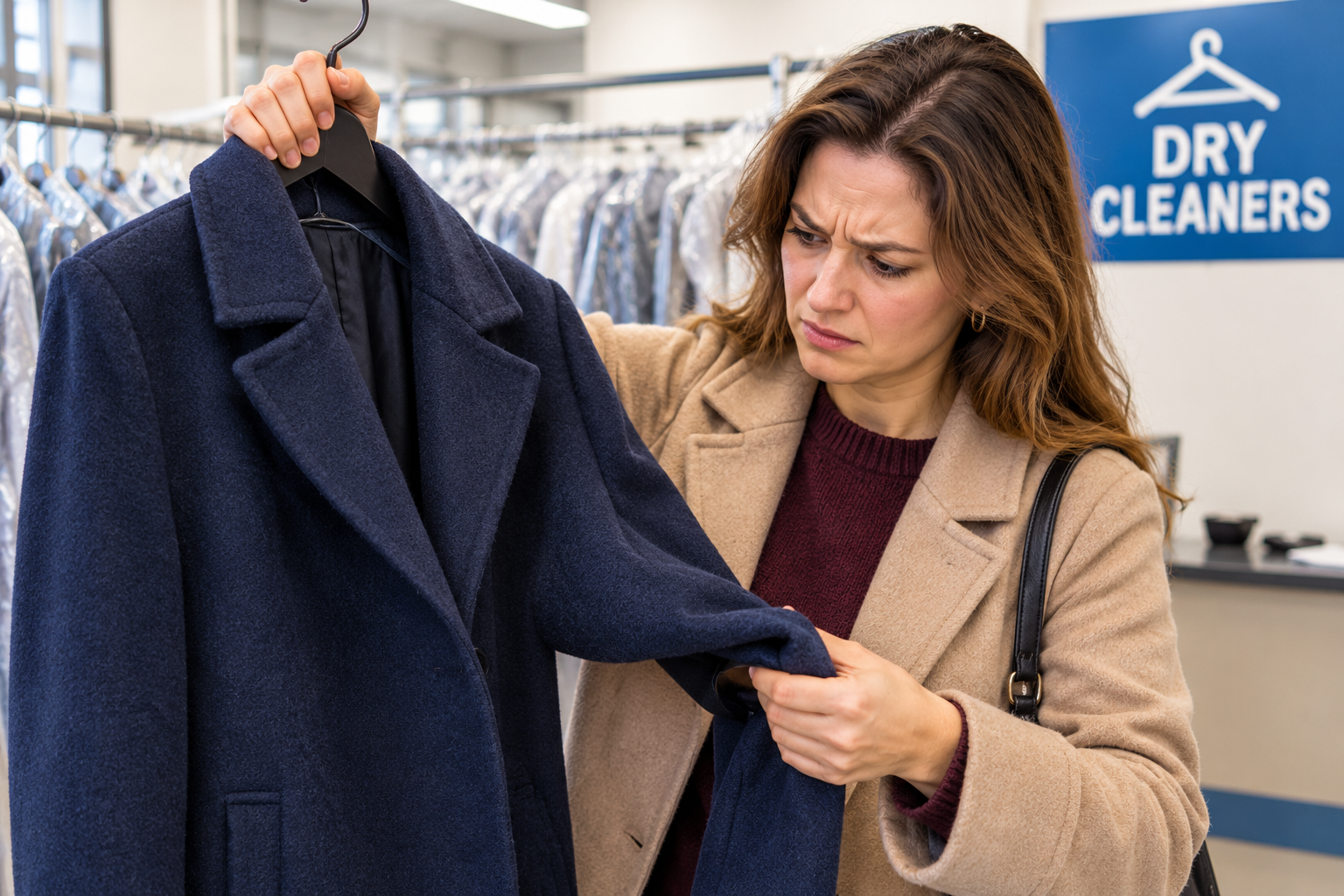
I never expected a simple trip to the dry cleaners to turn into such a frustrating experience, but here I am, trying to figure out how to get fair compensation for a coat they ruined. I bought a wool coat for $280, which was a significant purchase for me. I did not buy it on a whim, and I spent a considerable amount of time comparing different options before deciding on it. It was well-made, comfortable, and something I planned to wear for several years. Because it was made of wool, I knew it required proper care, so I decided to take it to a professional dry cleaner rather than risk damaging it myself. I trusted them to know how to handle delicate clothing, especially something that was not cheap. Unfortunately, when I went to collect my coat, I immediately noticed that something was wrong. The coat had shrunk noticeably, and it no longer fit me the way it had before. The sleeves, body, and overall shape looked different, making it uncomfortable and almost impossible to wear properly. I was shocked because I had handed it over in perfectly wearable condition and expected it to come back clean, not damaged.
At first, I thought there might have been some mistake, so I brought the issue to the dry cleaner’s attention and explained what had happened. I showed them how the coat fit before and how it looked after their cleaning service. I expected them to take the complaint seriously and investigate whether something had gone wrong during the cleaning process. After all, I had paid them to care for my clothing professionally, and I believed they should be responsible if their service damaged it. Instead of immediately offering a reasonable solution, they eventually came back with an offer of just $40. I could hardly believe it. My coat had cost $280, and now it was significantly damaged through a service I had trusted them to perform correctly. Their offer seemed completely inadequate, especially considering that the coat was no longer in the condition I had paid for. I understand that compensation may depend on a business’s policies and the item’s age, but $40 felt like a dismissive response rather than a genuine attempt to resolve the problem.
What makes this situation even more frustrating is that I cannot simply take the $40 and replace my coat with an equivalent one. Clothing prices vary, and finding another wool coat with the same quality, fit, and style could easily cost a similar amount or more. Even if I found something less expensive, I would still be paying out of pocket because someone else had damaged an item that was perfectly wearable before I handed it over. I also do not believe that a business should automatically escape responsibility simply because it has a standard compensation policy. If a customer brings in a delicate item and pays for professional cleaning, there should be some expectation that the business will use an appropriate method. I am not claiming that every damaged item deserves full reimbursement regardless of its age or condition, but I do think the circumstances should be considered fairly. I would be much more understanding if they explained how they calculated the $40 offer and showed me the policy they were relying on. So far, the amount has left me feeling as though the value of my coat and the inconvenience caused by the damage have barely been considered.
I have been thinking about how to push back without turning this into an unnecessarily hostile argument. I want to remain calm and reasonable, but I also do not want to accept an offer simply because the business expects me to give up. My plan is to gather the receipt showing the original purchase price, any photographs I have of the coat before cleaning, and pictures that clearly show the shrinkage and changes in fit. I also want to request a written explanation of the cleaning process they used and the policy under which they determined that $40 was appropriate compensation. If they have a claim form or a specific procedure for damaged garments, I would like a copy of that as well. I believe it is reasonable to ask them to reconsider their offer based on the actual damage, the coat’s age and condition before cleaning, and the cost of replacing a comparable item. I am willing to have a fair discussion about depreciation rather than insist that the coat must automatically be worth its original purchase price. However, I want their offer to reflect a genuine assessment of the loss instead of an arbitrary amount that leaves me responsible for nearly the entire cost.
At this point, I am trying to decide what a fair outcome would look like and how far I should take the matter if the dry cleaner refuses to reconsider. I do not want to spend weeks arguing over a coat, but I also do not think it is right to lose hundreds of dollars because a professional service may have handled my clothing incorrectly. I am considering asking for compensation based on the coat’s reasonable current value or the cost of replacing it with a comparable garment, depending on what is appropriate under the applicable rules and the facts of the situation. I would also consider a repair if a qualified tailor believes the coat can be restored to its original fit without compromising its quality. If the business continues to dismiss my concerns, I may look into the local consumer protection process or other formal complaint options available where I live. I want to approach this fairly, with evidence and a clear explanation of what I am requesting. So, I am wondering whether anyone has dealt with a similar situation: Is there a reasonable way to push back against a dry cleaner’s $40 offer for a $280 wool coat that came back noticeably shrunk, and what would be a fair amount of compensation to request?
Read Story…
Dry cleaner shrank my $280 wool coat and is offering $40. Is there a fair way to push back?
I am NOT OOP, OOP is u/LyraPeachMist
Originally posted to r/whatdoIdo
Dry cleaner shrank my $280 wool coat and is offering $40. Is there a fair way to push back?
Original Post: October 9, 2026
Last winter I finally bought a good coat. Charcoal wool, $280 on sale, and I’ve worn it maybe twenty times. Before putting it away this fall I took it to the dry cleaner two blocks from my apartment, the same place I’ve used for my work shirts for three years.
When I picked it up, the sleeves were about two inches shorter and the lining was bunched and puckered at the hem. It looks like it went through a hot wash. The tag inside clearly says dry clean only, and it’s still attached.
The owner, Mr. Lim, looked at it and agreed it didn’t look right. But he said the fabric must have been “poor quality” and that their policy pays out based on the age of the garment. He offered $40.
I showed him the receipt from the store on my phone, dated last November. He said coats lose value fast and $40 is generous. I thanked him, said I’d think about it, and took the coat home in its bag. I haven’t touched it since.
I don’t want to make an enemy of a small business I like. But I can’t wear the coat, and it was less than a year old.
Is $40 just how these things go, or is there some kind of standard for dry cleaner damage I can point to?
TL;DR: My dry cleaner shrank my less-than-a-year-old $280 wool coat, the tag says dry clean only, and the owner offered me $40.
Additional Information from OOP
OOP: A coworker used the same cleaner last spring and had a silk blouse come back with a burn mark. She says they refunded her the full price, so I know they’ve done it before.
Relevant Comments
Commenter 1: Small claims court.
OOP: Thanks, that is an option to consider. I still have the receipt and the coat untouched in its bag, but I have not started any claim.
Commenter 2: Small court will only give you what it is valued now. Check ebay for a similar coat and then show dry cleaner that price.
OOP: Looking at comparable coats could help me explain why $40 seems low. I have the purchase receipt, and this coat was less than a year old with relatively little wear.
Update: October 21, 2026 (12 days later)
UPDATE: Dry cleaner shrank my $280 wool coat and offered me $40. I finally pushed back.
I figured I’d update everyone because I finally got somewhere with the dry cleaner, although it took more effort than I expected.
After reading the comments on my original post, I decided not to accept the $40.
A few people suggested getting a second opinion before going back, so I took the coat to another dry cleaner across town.
The woman there examined it and immediately noticed the shortened sleeves and the puckering around the lining.
She said she couldn’t confirm exactly what happened without knowing how it had been cleaned, but that the damage was consistent with improper handling of wool.
She also told me that restoring it to its original condition probably wasn’t realistic.
That was honestly disappointing because part of me was still hoping the coat could somehow be fixed.
I asked if she could put her observations in writing, and she agreed.
Last Friday, I went back to Mr. Lim’s shop with the original receipt, pictures of the coat before cleaning, and the written assessment.
I explained that I understood the coat wasn’t brand new anymore, but it was less than a year old and had been worn maybe twenty times.
I wasn’t expecting him to hand me $280 without a conversation. I just wanted something closer to the actual loss.
He looked at the assessment and seemed annoyed that I’d gone somewhere else.
He repeated that clothing naturally loses value and said he couldn’t be responsible for how every fabric reacts to cleaning.
I asked whether he had any record of the cleaning method used on my coat.
He said he’d have to check.
Then he offered me $75.
I told him I appreciated the increase, but $75 still wouldn’t come close to replacing a coat I’d bought less than a year ago.
That’s when he said something that really frustrated me.
He told me that if I wanted expensive clothes to stay perfect, I should be more careful about where I took them.
I didn’t really know how to respond to that.
I mean, isn’t taking a dry-clean-only coat to a professional dry cleaner exactly what I’m supposed to do?
I stayed polite and asked whether he’d be willing to review the situation with his insurance provider or whoever handled customer damage claims.
He said he’d think about it.
Two days later, I received a phone call from his daughter, who apparently helps manage the business.
She was much easier to talk to.
She apologized for how the situation had been handled and said she’d reviewed my receipt and the pictures.
She explained that their usual compensation policy considered the age and condition of garments, so they wouldn’t reimburse the full purchase price.
However, she offered me $180 as a final settlement.
I asked whether I could have the offer in writing before agreeing.
She sent it that afternoon.
After thinking about it, I accepted.
I know some people will probably say I should’ve pushed for the full $280, especially since the coat was still relatively new.
But I also didn’t want to spend weeks arguing over the remaining $100, particularly when I wasn’t guaranteed to recover it.
I picked up the payment yesterday.
I’m still disappointed because I genuinely loved that coat. It was one of the few nicer things I’d bought for myself, and I was hoping to wear it for years.
But getting $180 instead of $40 feels like a reasonable outcome.
The strangest part is that I almost accepted the original offer because I felt uncomfortable arguing with a business owner.
Looking back, I think I was more worried about seeming difficult than about the fact that something I paid good money for had been damaged.
I’m glad I spoke up.
I probably won’t be returning to that cleaner, but I’m not planning to leave an angry review or make a bigger issue out of it.
I’m just going to find somewhere else and be a lot more careful about who handles my clothes.
Still, I’m curious whether other people would’ve accepted the $180 or kept pushing for the full amount.
TL;DR: I got a second opinion confirming that my wool coat’s damage was consistent with improper cleaning. When I returned with documentation, the owner increased his offer from $40 to $75. After I asked about their claims process, his daughter contacted me and offered $180. I accepted, although I’m still disappointed about losing a coat I loved.
Additional Information from OOP
OOP: the $180 was offered as a final settlement, and I agreed to it in writing. I also got to keep the damaged coat, although I’m not sure there’s much I can do with it now. I know some people suggested small claims court, but I wasn’t sure the additional time and effort would be worth it over the remaining $100. For anyone who’s dealt with damaged clothing at a dry cleaner, is getting around 65% of the original purchase price actually a decent outcome, or did I settle too quickly?
Relevant Comments
Commenter 1: $180 is very reasonable and a bit more than I would expect for them to offer. Going to small claims court would not have gotten you $280. It might not have even gotten you $180, and that’s assuming you win. I would have guessed they’d top out at $150 max.
Your coat is still ruined. I would leave reviews reflecting that, whatever number you feel is appropriate, and acknowledge that they gave you $180.
OOP: I can’t know what a court would have awarded, and that uncertainty was part of my decision. I accepted the $180, but it hasn’t made the loss of a coat I hoped to keep for years feel good.
Commenter 2: I would definitely leave a review, not a bashing one just a realistic one. This is what happened and it was different to get a satisfactory resolution. I personally have several wool coats and would want to know that I shouldn’t trust this dry cleaner with them. Also I definitely wouldn’t take your items there anymore, go to the place that gave you the written assessment! They seem much more deserving of your money.
OOP: I appreciate the perspective from someone with wool coats too. The second cleaner’s assessment was helpful and careful about its limits. I understand why the handling of the complaint would matter to another customer.
Commenter 3: I think that you were smart to take it, but it’s bizarre that Mr. Lim had said that you should have been more careful about where you had brought your coat. Judge Wapner would have explained that, once Mr. Lim had undertaken the job, it was his responsibility. He could have refused the job, if he had felt that it was beyond his capability to safely clean the coat.
Commenter 3: I agree. Mr. Lim’s response is bizarre. Isn’t he a professional? You did the right thing taking your coat to a professional dry cleaner. It was on him to state whether or not he had the expertise to handle the cleaning of your coat. I’m sorry you lost use of your coat but I’m glad you spoke up because at the end of the day it’s the principal of the matter where that company needed to take accountability for ruining your coat. They offer services and if they don’t deliver those services the least they can do is apologize and take accountability for their actions.
OOP: Thank you. The daughter’s apology helped as well as the increased offer. I’m still disappointed about the coat, but being able to explain the damage and have it taken more seriously mattered.
Commenter 4: “but I’m not planning to leave an angry review”
Something bad happened there but instead of helping other people make a better choice you decide to protect the owner who was rude.
You know there is a middle ground right? you could leave a 2 – 3 star review adressing a damaged product, difficult owner but that daughter was polite and nice to work with and the problem got solved.
Nobody says you have to be angry.
OOP: I understand the distinction between describing an experience and writing an angry review. The account would need both parts: the difficult conversations with the owner and the daughter later apologizing and arranging the payment.
Commenter 5: I’m not saying to leave a horrible review, but please review no higher than 2 or 3 at best, and quote the part where he told you if you have anything valuable to go someplace else. I would want this information and attitude as a consumer. What if it was a vintage coat or family heirloom? If someone already experienced their handling of damages I would that info. Would I still take some things there? Probably if their prices were good and most people didn’t have issues, but I would not take my wedding dress.
Sorry this happened :/ it’s so disappointing! I hope you can find something similar!
OOP: Thank you for the kind wishes. I understand wanting to know how a business handles a problem, not just whether mistakes happen. The daughter’s apology and the final payment are part of the experience too.
I Trusted a Professional Dry Cleaner With My $280 Wool Coat, but They Ruined It and Offered Me Only $40
I never imagined that taking a coat to the dry cleaners would turn into a frustrating dispute over compensation, but here I am, trying to figure out how to handle a situation that should have been relatively straightforward. I bought a wool coat for $280, which was a considerable amount of money for me to spend on a single piece of clothing. I did not purchase it impulsively. I spent time comparing different coats, checking their quality, and making sure I was getting something that would last for several years. The coat fit perfectly, looked great, and was comfortable enough to wear regularly during colder weather. Because it was made of wool, I knew it required special care, and I did not want to risk damaging it by attempting to clean it myself. That was precisely why I decided to trust a professional dry cleaner. I expected them to return my coat clean and in the same condition I had given it to them. Instead, I ended up with a damaged garment and an offer that felt almost insulting.
Before taking the coat in, I checked its condition and made sure there was nothing seriously wrong with it. It had been worn, of course, but it was still in excellent shape for its age. There were no major stains, tears, missing buttons, or other obvious problems that affected its appearance or fit. The sleeves were the correct length, the shoulders sat properly, and the body of the coat had the shape I expected from a well-made wool garment. I had taken care of it because I wanted it to remain wearable for as long as possible. I understood that clothing gradually loses value through normal use, and I never expected to get every dollar back simply because I had purchased something expensive. However, there is a significant difference between an item becoming worn over time and an item becoming noticeably damaged after a professional service. I thought that by choosing a dry cleaner instead of experimenting with home cleaning methods, I was doing the responsible thing.
When I handed the coat over, I explained that it was a wool garment and needed to be handled appropriately. I assumed that a business specializing in garment care would know how to clean wool without causing unnecessary shrinkage. I did not ask for anything unusual or complicated. I simply wanted the coat cleaned according to the care requirements of the material. The employee accepted it without raising any concerns or warning me that there might be a significant risk of damage. If they had told me that they could not safely clean it or that there was a particular problem with the garment, I could have considered other options. Instead, I left the coat with them and paid for the service, believing that everything would be fine. At the time, I had no reason to suspect that I would soon be dealing with a complaint, an argument over responsibility, and a compensation offer that would leave me questioning whether the business took its customers seriously.
When I returned to collect the coat, I immediately noticed that something was wrong. At first, I thought the way it was hanging might have made it look different, so I examined it more closely. Unfortunately, the problem became obvious when I tried it on. The coat had shrunk noticeably, and the fit was no longer what it had been before. The sleeves seemed shorter, the body felt tighter, and the overall shape looked different. It was not a minor change that I could ignore or easily adjust by changing how I wore it. The coat had lost the comfortable fit that made me want to wear it in the first place. I stood there trying to understand how a garment that had been perfectly wearable when I dropped it off could come back in such a different condition. I had trusted the business to clean it, not fundamentally change its size and shape.
My first reaction was disbelief rather than anger. I wanted to believe there had been some mistake, or perhaps the coat had somehow become folded or positioned in a way that made the problem appear worse than it actually was. I checked the sleeves, shoulders, and body again, hoping I was overreacting. However, after trying it on and comparing the fit with what I remembered, I became increasingly convinced that the coat had genuinely shrunk. I asked the staff what might have happened and explained that it had fit properly before I brought it in. I was not looking for a confrontation. I simply wanted someone to acknowledge the problem and explain how it could have occurred. Instead of receiving an immediate explanation, I found myself having to establish that the damage was real and that I had not simply changed my mind about the coat.
The employee did not immediately provide a solution that made me feel reassured. I understand that staff members may not know exactly what happens during every cleaning process, so I was willing to give them an opportunity to investigate. I explained the original purchase price and emphasized that the coat was not an inexpensive item. I also made it clear that I had brought it in specifically because I believed professional cleaning would be safer than attempting to clean it myself. I expected the business to take the complaint seriously, review what had happened, and explain its approach to resolving damaged garments. Instead, the conversation felt uncertain and frustrating. I left without a clear answer about why the coat had shrunk or what the business intended to do about it. That lack of clarity made the situation even more upsetting because I now had a damaged coat and no reliable information about whether anyone intended to take responsibility.
Over the next few days, I kept thinking about the situation. I looked at the coat again and wondered whether there was any way to restore its original shape. I considered taking it to a tailor or a specialist who works with wool garments, but I was worried about making the damage worse. Some garments can be carefully reshaped, depending on the fabric and the extent of the shrinkage, but there is no guarantee that the original fit can be restored. I did not want to spend additional money on a repair that might not work, especially when the damage had occurred after I paid someone to clean the coat professionally. I also did not want to throw it away without first exploring reasonable options. The coat had been a worthwhile purchase, and I had expected to enjoy wearing it for years. Now, I was faced with the possibility that it might never fit properly again, despite having taken steps to care for it.
Eventually, the dry cleaner offered me $40 as compensation. When I first heard the amount, I genuinely thought there had been some misunderstanding. My coat had cost $280, and the damage appeared serious enough to make it difficult to wear. I was not expecting the business to automatically hand me the full purchase price without considering the coat’s age or previous use. I understood that compensation might depend on its current value, the business’s written policy, and the circumstances surrounding the damage. However, $40 seemed extremely low compared with the loss I believed I had suffered. It felt as though the business was treating the matter as a small inconvenience rather than acknowledging that a relatively expensive garment had become significantly less useful after its service. I could not understand how they had arrived at that figure, and I wanted an explanation before considering whether it was reasonable.
What bothered me most was that the offer did not appear to account for the actual condition of the coat before cleaning or the extent of the damage afterward. I had not brought in a garment that was already falling apart or barely wearable. It was a coat I used and intended to continue using. Although it was not brand-new, it remained in good condition and had considerable practical value to me. If the coat had been returned in the same condition, I would have had no reason to complain. Instead, I now had to consider whether to pay someone else to attempt a repair, replace the coat, or simply accept the loss. Each option would involve additional inconvenience or expense. A $40 payment would not necessarily cover a successful repair, let alone the cost of replacing the garment with something of similar quality. That was why I found the offer so difficult to accept without further discussion.
I also began wondering whether the dry cleaner had a written policy covering damaged clothing. Businesses sometimes have terms that explain how compensation is calculated, whether they use a depreciation schedule, and what customers must do when an item is damaged. I recognize that such policies can be relevant, and I did not want to assume that the business had no rules simply because I disliked its offer. However, I believed I was entitled to understand exactly which policy applied to my coat and how it had been used to determine the proposed compensation. If they had a standard formula, I wanted to see it. If they believed the coat’s age reduced its value, I wanted to know how they had assessed that reduction. If they believed the damage was unrelated to their cleaning process, I wanted them to explain why. A clear, evidence-based explanation would have made the conversation much more productive than simply being told that $40 was what they were willing to offer.
I decided that the first thing I needed to do was gather any evidence I could find. Fortunately, I still had the purchase receipt showing that the coat had cost $280. I also checked whether I had photographs from previous occasions when I had worn it. Pictures might not prove every detail about the coat’s condition, but they could help demonstrate its original fit and appearance. I took new photographs showing the shortened sleeves and the areas where the fit had changed. I wanted to document the damage carefully rather than rely entirely on my memory or become involved in an argument based on conflicting descriptions. I also kept the receipt for the cleaning service and made a note of the dates when I had dropped off and collected the garment. I believed that having these details organized would help me explain my complaint clearly and make it easier for the business to reconsider its position.
I then started thinking about how I could challenge the offer without making the situation unnecessarily hostile. I did not want to shout at employees, threaten anyone, or turn a relatively ordinary consumer dispute into a personal conflict. I wanted a fair resolution, and I believed that remaining calm would make it easier to communicate what I was asking for. At the same time, I did not want to accept an amount that seemed unreasonable simply because I was uncomfortable pushing back. Sometimes customers accept inadequate offers because they assume the business has all the power or because they do not know what options are available. I did not want to make that mistake. My plan was to explain the problem in writing, attach the relevant evidence, and request a formal review of the compensation offer. That way, I could set out the facts clearly without getting distracted by an emotional conversation at the counter.
One issue I wanted to clarify was whether the cleaning method had been appropriate for the coat’s fabric and care instructions. Wool garments can be sensitive to certain combinations of moisture, heat, and mechanical agitation, although the exact risk depends on the garment’s construction and care requirements. I did not have the technical knowledge to determine precisely what had caused the shrinkage, so I did not want to make an unsupported accusation. However, I thought it was reasonable to ask the dry cleaner what process they had used and whether it was consistent with the manufacturer’s care label. If they had followed the appropriate procedure and believed another factor had caused the damage, they could explain that position. If an unsuitable process had been used, that would be important information when determining responsibility. I was not asking them to admit fault without investigation. I was asking them to provide enough information for both sides to understand what had happened.
I also wanted to avoid assuming that the coat was automatically worth the full $280 simply because that was what I had originally paid. I know that used clothing generally loses value over time, even when it is well maintained. The reasonable value of the coat immediately before the cleaning service might therefore be less than its original retail price. However, I did not think that meant the business could simply choose an arbitrary figure and expect me to accept it. The coat’s age, condition, quality, and remaining useful life were all relevant considerations. So was the extent to which the damage had reduced its usefulness. I wanted any proposed compensation to be based on a reasonable assessment of those factors. I was willing to be realistic about depreciation, but I also expected the business to be realistic about the loss I had experienced. A fair resolution should take both sides of that equation into account.
Another possibility was to obtain an independent opinion from a tailor or a professional who specializes in wool garments. Someone with relevant experience might be able to assess whether the coat could be restored and estimate the cost of doing so. That information could help me determine whether repairing the coat was a practical solution or whether the damage was effectively irreversible. If the repair cost was reasonable and the result was likely to be satisfactory, I might prefer that option to replacing the entire garment. However, if a specialist concluded that the coat could not be returned to a wearable condition, that would help explain why the damage had a more substantial impact than a minor alteration. I would need to consider the cost of getting that assessment and whether it would be worthwhile given the amount in dispute. Still, I thought an independent opinion could be useful if the dry cleaner continued to insist that $40 was an adequate response.
I was particularly concerned about spending even more money trying to resolve a problem that I had not created. There is a practical limit to how much time and expense it makes sense to invest in a dispute over clothing. If I paid a specialist for an assessment, hired a lawyer, or pursued a formal claim, those costs could eventually become disproportionate to the amount I hoped to recover. On the other hand, doing nothing would mean accepting a loss that I felt deserved more consideration. I was trying to find a sensible middle ground between giving up immediately and turning the issue into a lengthy battle. My first preference was to resolve it directly with the business. I hoped that a clear written complaint, supported by photographs and the original receipt, might encourage them to reconsider without requiring either side to spend more time or money than necessary.
I also began looking into the consumer protection options available in my area. I understand that the rules governing damaged goods and service-related disputes can vary depending on the location, and I did not want to assume that a particular law or compensation formula applied to me without checking. Some places have consumer complaint agencies, mediation services, or small-claims procedures that may be suitable for disputes involving damaged personal property. Other places may have specific rules governing dry-cleaning businesses and their responsibility for garments. Before taking any formal step, I would need to establish which rules applied and whether the amount in dispute justified pursuing the matter. I was not interested in making empty threats or pretending to have legal rights I had not verified. I simply wanted to understand my options if the business refused to engage in a reasonable discussion.
Throughout this process, I kept wondering whether the dry cleaner would have reacted differently if the damaged item had belonged to someone else. Perhaps $40 was the amount they routinely offered for certain claims, regardless of the circumstances. Perhaps they believed the coat’s age made that amount reasonable. Or perhaps they were hoping I would accept the offer because challenging it would take more effort than I was willing to make. I could not know their intentions, and I did not want to assume the worst without evidence. Still, the way the offer had been presented left me feeling dismissed. A customer who brings an item to a professional service should be able to raise a legitimate concern and receive a clear explanation. Even if the business ultimately disagrees with the customer’s requested compensation, a transparent process can make the difference between a frustrating experience and a dispute that becomes unnecessarily adversarial.
I spoke to a couple of people about the situation, and their reactions were mixed. Some thought I should push back because the coat had been expensive and was now noticeably damaged. They felt that the dry cleaner should take responsibility if its cleaning process had caused the shrinkage. Others suggested that I might be overestimating the coat’s current value because clothing depreciates, and they advised me not to expect a full refund for an item that had already been worn. I understood that point, but it did not resolve the main issue. I was not insisting that the coat was worth exactly $280 at the time I took it in. I was questioning whether $40 was a fair assessment of its value before the damage and the loss I had suffered afterward. Those are different questions, and I thought it was important not to confuse them.
The more I considered the situation, the more I realized that I needed to define what outcome I would actually consider acceptable. Initially, my frustration made me want to reject the offer immediately and demand a much larger amount. However, I knew that an emotional reaction would not necessarily help me reach a fair agreement. I needed to consider whether the coat could be repaired, how much a comparable replacement would cost, and what the garment had reasonably been worth before cleaning. If a qualified specialist could restore it at a reasonable price, repair costs might provide a useful starting point for negotiations. If the damage was irreversible, I would need to consider the coat’s pre-damage value rather than automatically demand the original purchase price. I wanted to be able to explain my request with evidence instead of simply saying that $40 felt insulting. The goal was to reach a defensible figure that reflected the actual circumstances.
I also thought about how I would respond if the business refused to change its position. I could ask for the manager or owner to review the complaint, particularly if the initial offer had been made by an employee without authority to approve a different amount. I could request a written explanation of the final decision and ask whether the business had an insurer or a formal claims process for damaged garments. If the response remained unsatisfactory, I could investigate whether a local consumer agency could review the dispute or advise me on the next step. I would also want to keep copies of all messages, receipts, photographs, and any written statements from the business. I did not know whether I would ultimately pursue a formal complaint, but I wanted to preserve the option rather than allow the issue to disappear simply because the first conversation had been discouraging.
At the same time, I did not want this experience to make me assume that every dry cleaner was careless or dishonest. I have used professional services because I recognize that some garments require knowledge and equipment that most people do not have at home. A single bad experience does not necessarily mean that every business in the industry operates the same way. However, it has reminded me that trusting a professional does not mean I should ignore what happens if something goes wrong. In the future, I may take photographs of particularly expensive garments before handing them over, keep receipts, read the care labels carefully, and ask questions about the cleaning process when appropriate. Those precautions would not guarantee that damage could never happen, but they could make it easier to document a problem if it did. I wish I had never needed to think about these things, but now I understand why some people are careful about how they handle valuable clothing.
The biggest frustration is that this entire situation could potentially have been handled much more easily. If the dry cleaner had acknowledged the damage, explained what they believed caused it, and offered a transparent assessment of the loss, I might have been willing to negotiate without much difficulty. Instead, the $40 offer made me feel that I was being asked to absorb nearly the entire cost of the problem. I would have appreciated a conversation in which both sides could review the facts and consider reasonable options. Even if we disagreed about the final amount, I would have preferred a clear explanation over an offer that seemed to come without any meaningful justification. I do not expect businesses to give customers whatever they demand, but I do expect them to take complaints seriously and explain their decisions when a service appears to have caused damage.
At this point, I am trying to decide how firmly to push back and what amount I should request. I have the original receipt, I can document the coat’s current condition, and I am prepared to ask for a written explanation of the dry cleaner’s compensation policy. I am also considering getting an independent assessment of the damage before deciding whether to seek repair costs or compensation for the coat’s reduced value. I do not want to exaggerate the situation, and I do not want to demand more than I could reasonably justify. However, I also do not want to accept $40 just because the business has offered it. The coat was in good condition before I handed it over, and I believe the circumstances deserve a more careful review. If the business can explain why its offer is fair and support that explanation with a reasonable assessment, I am willing to listen. If it cannot, I believe I have good reason to ask it to reconsider.
What I really want is a fair resolution that recognizes both the value of the garment and the practical consequences of the damage. I paid for a professional cleaning service because I wanted to maintain the coat, not because I was willing to gamble on whether it would come back in wearable condition. I understand that accidents can happen, and I am not claiming that every unfortunate result automatically makes a business responsible for the full retail price. But if the cleaning process caused the shrinkage, I believe the business should be willing to discuss what happened and consider an appropriate remedy. I would prefer to resolve the issue directly rather than spend weeks arguing about it. Still, I do not think accepting an inadequate offer is the only reasonable option available to me. I want to approach the matter calmly, document the facts, and make a request that reflects the actual loss.
So, I am turning to people who may have dealt with something similar. My $280 wool coat came back noticeably shrunk after a visit to the dry cleaners, and the business is offering me only $40. Am I being unreasonable for thinking that amount is far too low? What would be a fair way to calculate compensation for a coat that was in good condition before cleaning but is now difficult to wear? Should I focus on the cost of a possible repair, the current value of the coat before the damage, or the price of a comparable replacement? And if the dry cleaner refuses to reconsider, what practical steps would you recommend before giving up or pursuing a formal complaint? I am not trying to get something for nothing. I simply want to know how to stand up for myself and seek a fair outcome without turning a frustrating consumer dispute into a much bigger ordeal.