Frustrated Groom Tells His Entitled Sister She Can’t Bring A Plus One To His Small Wedding Since She And Her Four Children Are Already Attending
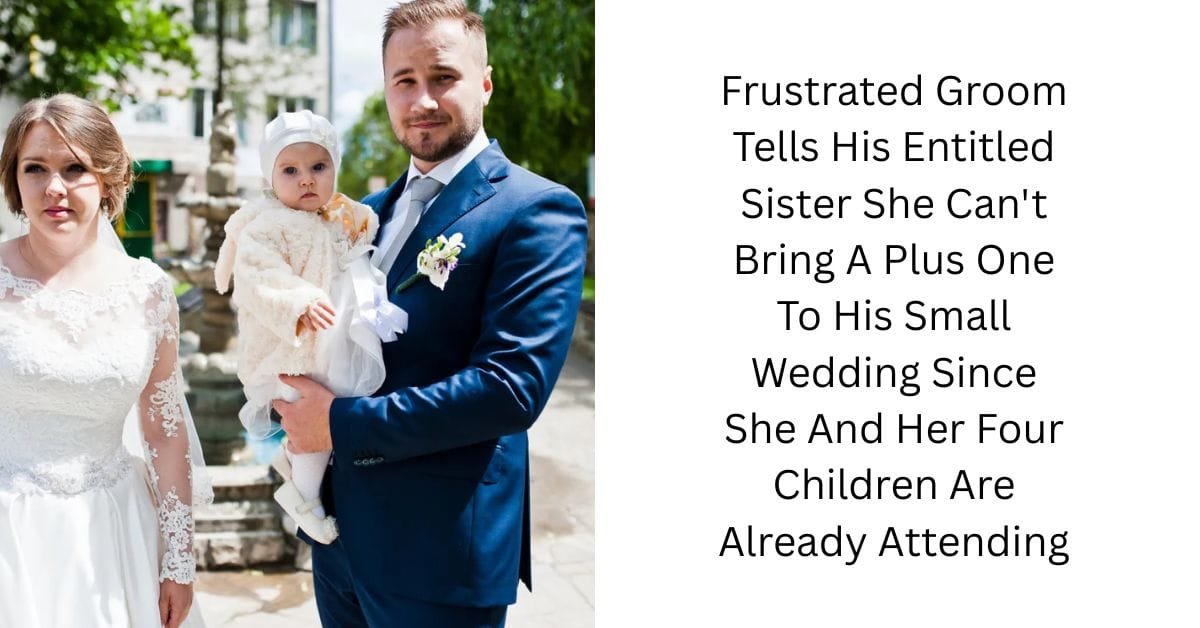
Twenty-nine-year-old Daniel had spent nearly a year planning what he hoped would be an intimate and meaningful wedding. Unlike many of his friends who dreamed of lavish celebrations with hundreds of guests, Daniel and his fiancée, Emily, wanted something much smaller. Their budget was limited, and the venue they had fallen in love with could comfortably accommodate only sixty people. Every invitation had been carefully considered, with close family members and lifelong friends taking priority over distant relatives and casual acquaintances. Because space was so limited, the couple made the difficult decision to allow plus-ones only for married couples, engaged partners, or guests in long-term relationships they both knew well. Although they realized not everyone would be thrilled with the restrictions, they believed their policy was fair and necessary to keep the celebration within budget.
Daniel’s older sister, Rachel, immediately questioned the guest list after receiving her invitation. She was invited along with her four young children, ensuring that none of them would be left out of the family celebration. However, Rachel was upset that her new boyfriend, whom she had been dating for only a few months and whom Daniel and Emily had never met, was not included as a plus-one. She argued that attending family events without him would make her feel uncomfortable and claimed that other guests were being treated more generously. Daniel calmly explained that every available seat had already been assigned and that making an exception for one person would likely require removing another guest who had been close to the couple for years. Rachel dismissed his explanation, insisting that family should always come before friends and accusing Daniel of intentionally excluding someone important to her.

Advertisement
The disagreement quickly escalated over the following week. Rachel repeatedly called and sent messages asking Daniel to reconsider, suggesting various compromises that would allow her boyfriend to attend. She even proposed that one of her children could stay home so her boyfriend could take the empty seat instead, an idea Daniel rejected immediately because he wanted all of his nieces and nephews to share the special occasion. Their parents attempted to mediate, encouraging Daniel to “keep the peace” by making a single exception, but he worried that once one guest received special treatment, other relatives would begin requesting additional invitations as well. Emily supported Daniel’s decision, reminding him that they had already made dozens of difficult choices to stay within their financial limits and that changing the guest list so late would only create more problems.
Eventually, Daniel had a direct conversation with Rachel and firmly explained that the decision was final. He reminded her that she and her four children already occupied five of the limited guest seats and that he was genuinely happy to have them celebrate with the family. However, he could not justify replacing another invited guest with someone the couple barely knew simply to avoid an uncomfortable conversation. Rachel became angry, accusing Daniel of caring more about appearances than his own sister’s happiness. She even threatened not to attend the wedding unless her boyfriend was invited, hoping Daniel would change his mind at the last minute. Although disappointed by her reaction, Daniel refused to give in, believing that allowing emotional pressure to dictate the guest list would only create lasting resentment.

Advertisement
After Daniel shared the situation online, thousands of readers debated whether he had handled the conflict fairly. Many commenters supported his decision, arguing that weddings are deeply personal events and that couples have every right to control their guest list according to their budget and venue limitations. Others sympathized with Rachel’s disappointment but felt she had crossed the line by demanding special treatment after already receiving invitations for herself and all four of her children. The discussion ultimately highlighted a common dilemma faced by many couples planning small weddings: balancing family expectations with practical limitations. While Daniel hoped his sister would eventually understand his reasoning, he remained convinced that protecting the celebration they had carefully planned was more important than giving in to pressure that could easily unravel months of thoughtful preparation.
Read Story…
AITA for telling my sister her 4 kids are her plus one?
Im (30M) in the midst of planning a wedding and deciding everything regarding the guest list. We have a hard cap of people allowed given the venues small size. We can only have 105 people, anything after that would not be allowed due to fire codes and venue policy. I have an older sister Mia who’s life is a bit of a mess right now. She and her latest ex partner and dad of one of her kids broke up in the last 6 months. She has 4 kids and they are all living at my parents’ house for the time being.
We opted to not have a childfree wedding after there being so much drama about it so Mia’s 4 kids between 4 and 11 will be at our wedding. She recently got her invite that stated her name and her 4 kids names. She then called me and said “I assume as an adult I also get a plus 1”. We told her no, she’s not a in a serious relationship and she and her kids are already about 5% of our total guest list. Our caterer also doesnt charge less for kids so we’re paying about $400 for those 4 kids to be there, we dont want to pay another $100 for some random that she’d bring. She’s not dating anyone but said she could easily find a date or bring a friend to have someone to dance with. We told her she has 4 kids there, that should be more than enough instead of having a “plus one”.
My dad is my side, and is tired of her taking up their house, my mom is a little more sympathetic and saying I should allow her to have a plus one because thats what you do for adults. Spending $600 on just my sister her kids and a date when she’s not seeing anyone seriously just seems ridiculous to me though. She is pretty ticked off though. Am I being the AH here?
Groom Plans Intimate 60-Guest Wedding, But His Guest List Soon Sparks Family Drama
Thirty-year-old Daniel had always dreamed of a simple wedding surrounded by the people who had supported him throughout his life. After getting engaged to his fiancée, Emma, the couple agreed they would rather spend their savings on buying their first home than hosting an extravagant celebration. They booked a charming countryside venue that could accommodate only sixty guests, making every invitation incredibly valuable.

Advertisement
Creating the guest list turned out to be far more difficult than choosing the venue. Daniel and Emma spent weeks deciding who should receive invitations. Every extra guest meant someone else would have to be left out, and they knew some relatives would inevitably feel disappointed.
To keep things fair, they established one simple rule. Married couples, engaged couples, and long-term partners they personally knew would receive plus-ones. Everyone else would attend individually because the venue and budget simply could not stretch any further.

Advertisement
Daniel’s older sister, Rachel, was invited along with her four children. The couple wanted their nieces and nephews to be part of the ceremony because they played an important role in the family. Including all five of them already required sacrificing invitations that could have gone to close friends.

Advertisement
A few days after receiving her invitation, Rachel called Daniel with an unexpected request. She wanted to bring her new boyfriend, a man she had been dating for only a few months. Daniel and Emma had never even met him.

Advertisement
Daniel politely explained that they were unable to accommodate additional guests. Every chair had already been assigned, and the caterer required final numbers weeks before the wedding. He hoped Rachel would understand the difficult position they were in.
Rachel did not take the news well. She argued that family should always receive special treatment and insisted her boyfriend was now an important part of her life. In her opinion, excluding him was disrespectful.
Daniel reminded her that she and her four children already occupied five seats at the wedding. He explained that making room for another guest would mean removing someone else from the invitation list. Rachel dismissed the concern, saying the couple should simply “figure something out.”
The conversation ended awkwardly. Daniel believed the matter had been settled, but Rachel continued sending text messages over the following days asking him to reconsider. Each message became more emotional than the last.
Emma watched the situation unfold with growing concern. She worried that giving Rachel an exception would encourage other relatives to demand additional invitations. They had already received similar requests from cousins and coworkers.
Soon Daniel’s parents became involved. His mother encouraged him to keep the peace, suggesting that one more guest would not make much difference. His father remained neutral but hoped the siblings could resolve the disagreement.
Daniel carefully explained the financial reality. Each guest increased catering costs, seating arrangements, and venue expenses. Their budget had already reached its limit, leaving no room for unexpected additions.
Rachel argued that her boyfriend could simply share her meal or attend only the reception. Daniel explained that the venue required accurate attendance numbers for safety and seating, making that impossible.
Frustrated, Rachel suggested leaving one of her children at home so her boyfriend could attend instead. Daniel immediately rejected the idea, saying he wanted all of his nieces and nephews present far more than someone he barely knew.
That response only made Rachel angrier. She accused Daniel of judging her relationship and claimed he was embarrassed by her boyfriend because he had never met the family.
Daniel calmly replied that the issue had nothing to do with personal feelings. If Rachel had been in a long-term relationship before invitations were finalized, the situation might have been different. However, changing the guest list weeks before the ceremony would be unfair to everyone else.
Several relatives began offering unsolicited opinions. Some believed Daniel should make an exception for his sister, while others privately admitted that Rachel often expected special treatment at family gatherings.
Emma tried to avoid the growing family drama by focusing on final wedding preparations. Unfortunately, Rachel continued discussing the issue with relatives, causing unnecessary tension before what should have been a joyful occasion.
Eventually Rachel issued an ultimatum. If her boyfriend was not invited, she threatened not to attend the wedding at all. She hoped Daniel would change his mind rather than risk family conflict.
Although disappointed, Daniel refused to give in. He told Rachel he would be saddened if she chose not to attend, but he would not pressure another invited guest to give up their seat simply to accommodate a last-minute request.
After several days of silence, Rachel realized her brother was serious. She discussed the matter with her boyfriend, who reportedly told her he understood why he had not been invited and encouraged her to attend with the children.
Rachel eventually accepted the invitation without her boyfriend. While she remained disappointed, she recognized that the wedding was about celebrating Daniel and Emma’s marriage rather than making the day about her own wishes.
The wedding itself was everything the couple had hoped for. Surrounded by close friends and immediate family, they exchanged vows in a warm and intimate ceremony. Rachel’s children happily participated, bringing smiles to everyone in attendance.
Following the celebration, Daniel reflected on the difficult weeks leading up to the event. He realized that setting reasonable boundaries was sometimes uncomfortable, especially with family, but it prevented resentment and ensured the wedding reflected the couple’s priorities.
When Daniel later shared the experience online, readers debated whether he had been too strict or entirely reasonable. Many agreed that weddings require difficult decisions and that couples should never feel obligated to exceed their budget or venue capacity simply to satisfy one person’s demands. In the end, Daniel believed respecting the limits they had established from the beginning helped preserve both the celebration and the fairness of their guest list.