Woman Is On A Mission To Gift Her Family Hand-Made Quilts To Fulfill Her Petty Revenge Against MIL
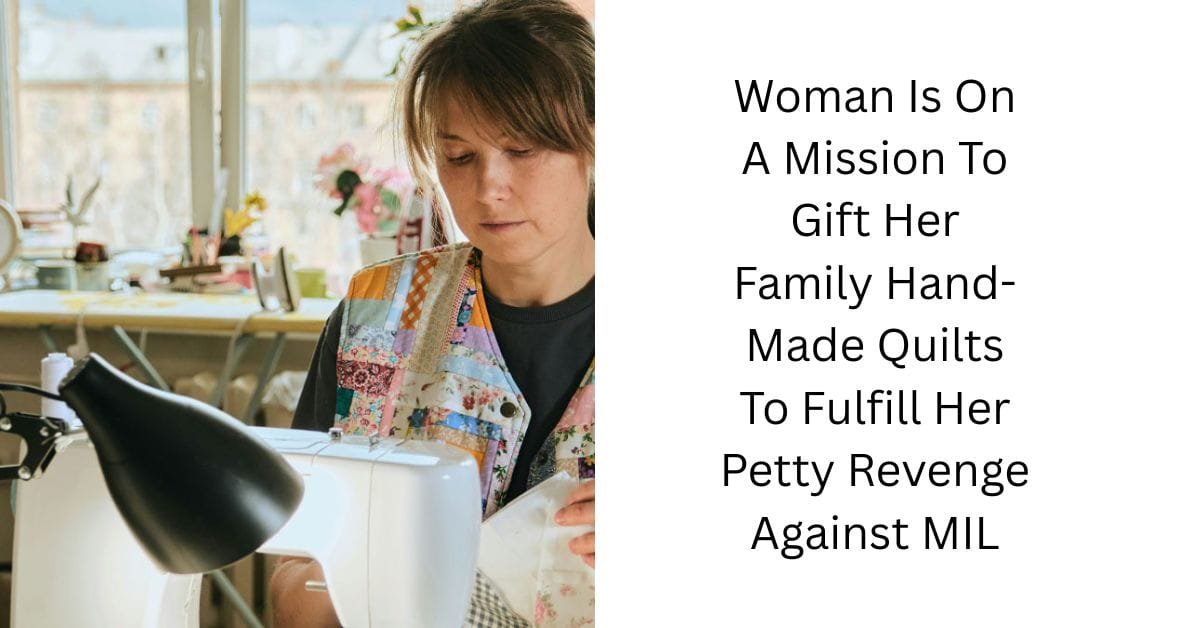
For most of her adult life, thirty-eight-year-old Rachel had been known as the creative heart of her family. While others bought expensive gifts from department stores, she preferred spending countless evenings sewing personalized quilts, stitching together fabrics that reflected the personalities, memories, and milestones of the people she loved most. Every quilt required weeks of careful planning, precise cutting, and hundreds of hours behind her sewing machine. Family members treasured her creations because they were more than blankets—they were keepsakes filled with stories, birthdays, anniversaries, and pieces of family history carefully preserved in fabric. Rachel never expected praise or recognition for her work. Seeing her loved ones wrap themselves in something she had made with her own hands was always enough to make every late night worthwhile.
Unfortunately, not everyone appreciated the effort Rachel invested in her handmade gifts. Her mother-in-law, Margaret, constantly dismissed handmade items as “cheap” and believed expensive store-bought presents carried far more value. At birthdays, holidays, and family gatherings, Margaret frequently made passive-aggressive comments about Rachel’s quilts, suggesting she only made them because she wanted to save money instead of buying “real gifts.” On more than one occasion, Rachel overheard Margaret joking with relatives that anyone could sew pieces of fabric together if they had enough free time. Those comments stung deeply because Margaret had no idea how much patience, skill, and emotional energy went into every single quilt Rachel created.

Advertisement
The situation reached its breaking point during a large family Christmas celebration. Rachel proudly presented Margaret with one of the most intricate quilts she had ever completed, featuring carefully embroidered family initials and patterns inspired by old photographs. Instead of thanking her, Margaret casually unfolded it in front of everyone, laughed, and remarked that she would probably use it to protect furniture during painting projects because it was “too homemade” to display in her house. The room fell awkwardly silent as several relatives exchanged uncomfortable glances, but Margaret seemed completely unaware of how insulting her words were. Rachel smiled politely, gathered herself, and decided at that exact moment that she would never again waste months creating something for someone who clearly had no respect for her work.
Advertisement
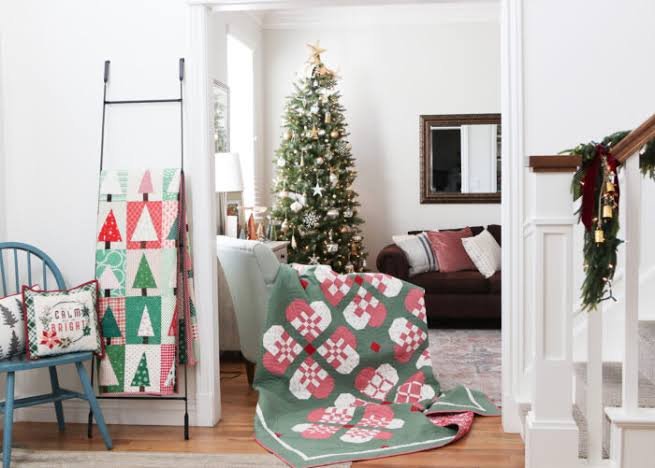
Rather than confronting Margaret with another argument, Rachel came up with a far more satisfying response. She announced that she had started a special long-term quilting tradition for the rest of the family. Every child, sibling, cousin, aunt, uncle, and grandparent would receive a unique handmade quilt designed specifically for them to celebrate important life events such as weddings, graduations, anniversaries, and the birth of children. Margaret, however, would quietly be left off the list entirely. Rachel never mentioned the reason publicly, nor did she encourage anyone else to criticize her mother-in-law. She simply redirected her time, talent, and love toward people who genuinely appreciated the effort behind every stitch, allowing her actions to speak louder than any confrontation ever could.

Advertisement
As the years passed, family gatherings slowly transformed into unofficial showcases of Rachel’s remarkable craftsmanship. Nearly every relative proudly displayed their personalized quilt in their homes, often sharing stories about the thoughtful details Rachel had included specifically for them. Guests frequently admired the collection, naturally asking why Margaret was the only family member without one. Rachel never answered with bitterness or sarcasm. She simply smiled and explained that she preferred making quilts for people who truly valued handmade gifts. Margaret, meanwhile, became increasingly frustrated as she watched everyone else receive meaningful keepsakes that celebrated their place within the family while she remained the only exception—a quiet but unforgettable reminder that genuine appreciation, not obligation, earns the most heartfelt gifts.
Advertisement
Read Story…
I am the Queen of Passive Aggression!
My hobby used to be making quilts from vintage cloth. I would buy the cloth, usually flour and feed print sacks from the 30’s and 40’s, at flea markets and antique stores. I pieced them by hand and sewed the squares together on my old treadle sewing machine. Then I would hand quilt the tops using vintage blankets as batting and older cotton thread. This took a lot of time but the end results were beautiful and heirloom quality. Besides, it was a lot of fun.
One year I made a such a quilt for my BIL’s birthday. (husbands younger brother) He and his wife freaked out over it and thanked me profusely.
Two days later my MIL walked into my house without even knocking. (her reasoning was that it was ‘her son’s house’ and therefore her right to do so) I had been super busy all day and had just sat down on the living-room floor to play Super Mario Kart with my boys. I was surprised to see her. She usually avoided me if my husband wasn’t around. She snorted at me when she saw me on the floor and asked me if this was what I did all day and then added that it must be nice to have so much free time. (I have always worked from home. You would be surprised at how many people think that this isn’t a real job) Then she dumped a bunch of fabric swatches out of a bag onto my sofa.
Before I could ask her what she was doing she started telling me that she wanted a quilt like the one I made for BIL. But she needed her’s to be bigger and with these colors. Oh…and she wanted new cloth, not that ‘old junk’. She brought these swatches so I would know what to buy for ‘her quilt’.
At first I was too stunned to speak up. Then I was too angry to trust my mouth. My two boys never liked this woman and they scrambled to their feet and ran out of the room. I envied them for this because I was stuck facing this cow alone.
This woman had always been as awful to me as she could; she had told my boys to their little faces that they were not her grandsons because they looked nothing like ‘her son’. She told her other grandkids this too, so we weren’t singled out. She had told all of her five sons that she would only recognize her daughter’s kids because she knew THOSE were her grandkids. She only claimed the other grandkids as hers when she wanted to look good around other people.
This woman had tried to fix my husband up with other women for five years after we were married. This woman, who had been trying to make me freak out for the past 18 years, was so entitled that she thought I should do all this work for her…for free.
So I looked through the swatches, asked for the dimensions she wanted as well as the block pattern, thought for a few moments then told her: “Yeah, I can do all that…for about five thousand dollars.”
I figured that this was a large enough sum to freak her out and make her go away. If not, well sure, I’ll make her a quilt for that stupid amount.
“Five thousand dollars?!! But you just GAVE one to BIL!”
“That was a birthday present.”
“Well then this can be MY birthday present.”
“I’ve never given you a birthday present. The only time I tried to, you handed it back unopened. You told me that you only accepted gifts from family or friends and that I was neither. Five thousand dollars…up front… or no quilt.”
Frowning and pressing her lips together she gathered up her stupid swatches and left. I opened the door for her and held it so she couldn’t slam it. (she was a slammer) As I watched her drive away I couldn’t help but think about how much FUN that had been!!
So, for the rest of the year my husband’s other three brothers got quilts for their birthdays. Also, to add insult to injury, I made them out of ‘new’ cloth and not that ‘old junk’, as well as the colors and patterns my MIL wanted…because I knew it would get back to her that I had done this.
That crazy woman tried as hard as she could to guilt one of her sons into giving her their quilt. Nope, didn’t happen.
1993 was a fun year!
Rachel Believed the Best Gifts Couldn’t Be Bought
Thirty-eight-year-old Rachel had always believed that the most meaningful gifts were the ones made with patience rather than purchased with money. Ever since her grandmother taught her how to sew when she was twelve years old, quilting had become more than a hobby—it was her favorite way to show love. Every quilt she created told a story through carefully chosen fabrics, embroidered initials, and patterns inspired by family memories. Friends often joked that Rachel could turn scraps of cloth into priceless heirlooms, but she simply smiled because she never expected recognition. Watching someone wrap themselves in one of her quilts was reward enough. Over the years, birthdays, anniversaries, graduations, and weddings within her family were all marked by one of Rachel’s handmade creations.
Advertisement
When Rachel married her husband, Daniel, eight years earlier, she hoped quilting would also help her bond with his family. Daniel’s relatives initially seemed welcoming, especially his mother, Margaret, who complimented Rachel’s sewing room during her first visit to their home. Rachel believed they would eventually become close. She even imagined passing down quilting traditions to future grandchildren together. Unfortunately, those optimistic expectations slowly disappeared as Margaret’s true personality became impossible to ignore. Behind polite smiles were subtle remarks that left Rachel feeling as though nothing she did would ever be considered good enough.

Advertisement
Margaret valued appearances above almost everything else. She proudly displayed expensive handbags, designer furniture, and luxury kitchen appliances whenever guests visited. During conversations, she frequently mentioned the price of gifts she purchased for relatives, believing expensive items demonstrated love better than thoughtful ones. Handmade presents, according to Margaret, were something people gave when they couldn’t afford “real gifts.” Rachel laughed the first time she heard the comment, assuming it was simply poor wording. She had no idea those opinions would soon become personal attacks aimed directly at her.

Advertisement
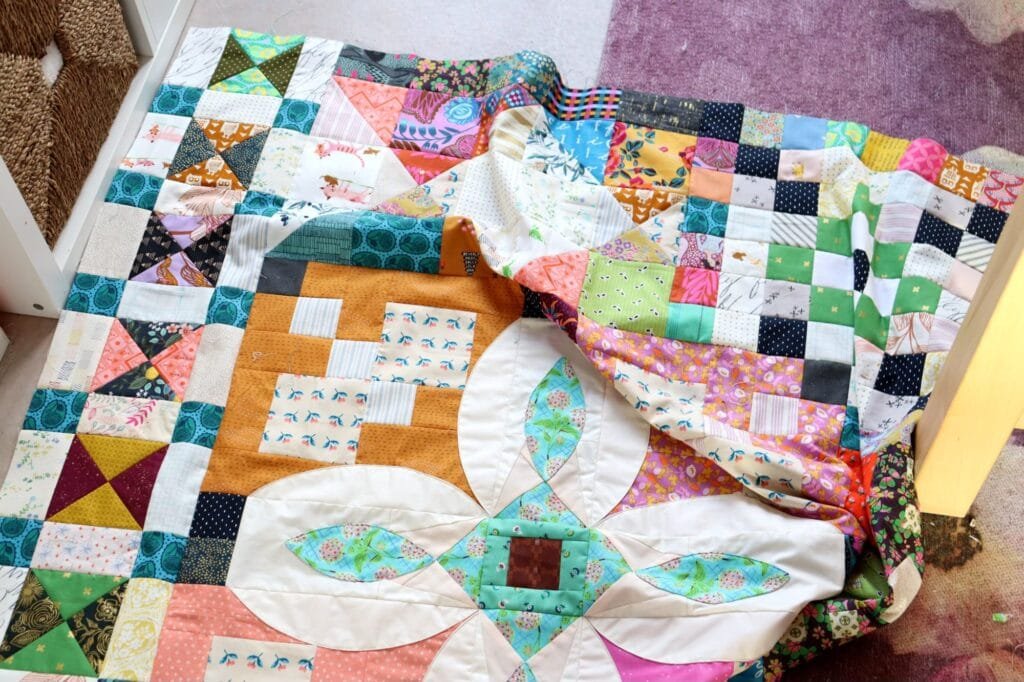
Rachel spent nearly three months creating Margaret’s first quilt as a birthday surprise. She carefully selected elegant floral fabrics in colors matching Margaret’s living room, hand-stitched decorative borders, and even embroidered the family surname in one corner. Daniel watched countless evenings disappear as Rachel worked until midnight, refusing to rush because she wanted every stitch to be perfect. When the birthday dinner finally arrived, Rachel proudly presented the wrapped quilt, hoping it might become the beginning of a warmer relationship with her mother-in-law.
Advertisement
Instead of expressing gratitude, Margaret unfolded the quilt, examined it for less than a minute, and casually laughed. “It’s… nice,” she said before adding, “although I usually prefer something from a proper store.” Several relatives chuckled awkwardly, unsure whether she was joking. Rachel forced a smile while quietly folding the quilt back together. Daniel immediately tried changing the subject, sensing how embarrassed his wife felt. Although Margaret eventually thanked Rachel, the damage had already been done. What should have been a heartfelt moment became one Rachel wished she could forget.
Unfortunately, that birthday wasn’t an isolated incident. Every holiday afterward seemed to include another dismissive remark. When Rachel gifted a handmade baby quilt to Daniel’s niece, Margaret loudly commented that children “outgrow homemade blankets anyway.” At Christmas, she praised expensive electronic gadgets while referring to Rachel’s sewing as “a cute little pastime.” Even when other relatives admired Rachel’s craftsmanship, Margaret found ways to minimize the effort involved, insisting that anyone with enough free time could learn to sew.

Advertisement
Daniel noticed every insult, but confronting his mother rarely accomplished anything. Margaret always claimed people were “too sensitive” or insisted everyone had misunderstood her humor. If Daniel defended Rachel, Margaret accused him of choosing his wife over his own family. To keep the peace, many relatives stayed silent, even though several privately admitted Margaret’s comments crossed the line. Rachel appreciated Daniel’s support, but she grew increasingly exhausted from pretending the insults didn’t bother her.
Everything changed during a large family Christmas gathering hosted at Margaret’s home. Rachel arrived carrying what she considered her greatest project yet—an elaborate memory quilt featuring embroidered family names, photographs transferred onto fabric, and patterns representing important milestones from Margaret’s life. It had taken nearly five months to complete. Rachel sincerely hoped that such a deeply personal gift might finally earn genuine appreciation and put years of tension behind them.
Margaret slowly unfolded the quilt while everyone gathered around to admire it. For a brief moment, Rachel thought she saw genuine surprise on her mother-in-law’s face. Then Margaret laughed and announced loudly, “Well… at least this will be useful when we repaint the guest room. No point risking my expensive blankets.” The room instantly fell silent. Rachel’s heart sank as she realized Margaret wasn’t joking. Months of work had been dismissed with a single careless sentence. Several relatives looked visibly uncomfortable, while Daniel stared at his mother in complete disbelief.
Rachel smiled politely, quietly took a sip of her coffee, and said nothing for the rest of the evening. However, during the drive home, she made a decision that surprised even Daniel. She wasn’t going to argue with Margaret anymore, nor would she demand an apology she knew would never come. Instead, she would simply stop investing her time, talent, and love in someone who clearly didn’t value any of it. At the same time, she began imagining a new tradition—one that would celebrate every relative who genuinely appreciated her handmade quilts. Margaret wouldn’t be criticized, confronted, or excluded publicly. She would simply… never receive another quilt again.
Over the following weeks, Rachel threw herself into planning what she privately called her “legacy quilt collection.” Instead of making gifts whenever someone requested one, she decided every quilt would celebrate an important milestone. Weddings, anniversaries, graduations, retirements, and the birth of a child would each receive a unique design that reflected the recipient’s personality and memories. She created a notebook filled with sketches, fabric samples, and handwritten ideas. Some quilts would include embroidered family recipes, while others would feature favorite vacation destinations or meaningful quotes stitched into the borders. Rachel wasn’t trying to prove anything to Margaret anymore. She simply wanted to spend her energy on people who truly appreciated the effort.
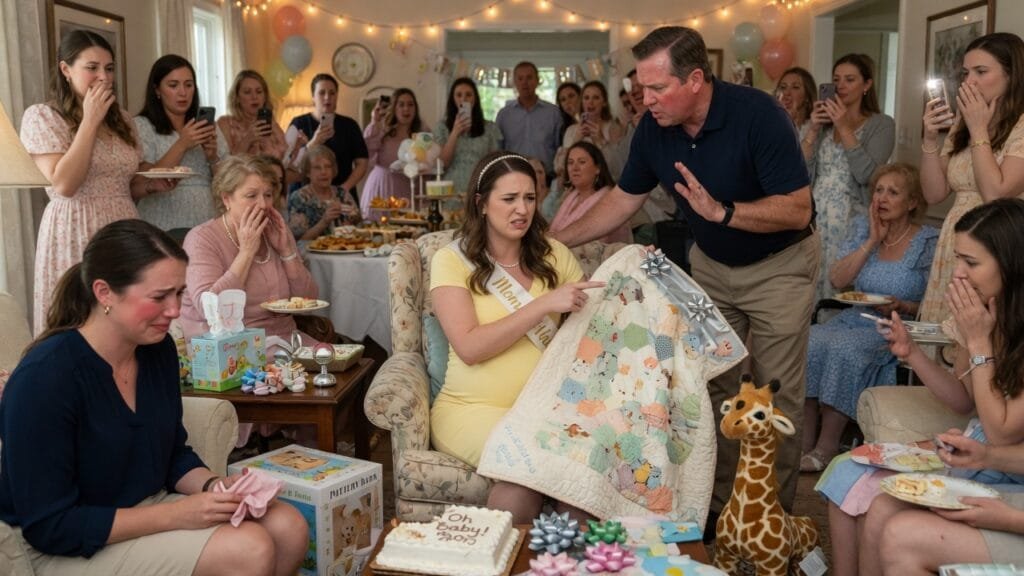
The first quilt under her new tradition went to Daniel’s younger sister, Olivia, who had recently welcomed her first baby. Rachel spent nearly two months creating a beautiful nursery quilt decorated with tiny woodland animals and the baby’s birth details embroidered in one corner. When Olivia opened the gift during the baby shower, tears immediately filled her eyes. She hugged Rachel tightly and admitted she had never received anything so thoughtful. The quilt was passed around the room as relatives admired the tiny stitches and personalized details. Even guests who barely knew Rachel commented that it belonged in a family museum rather than folded away in a closet.
Margaret noticed the attention Rachel received, but she remained unusually quiet. Later that evening, she made a sarcastic remark about handmade gifts being “fashionable again,” hoping to diminish everyone’s excitement. Instead of agreeing, several relatives defended Rachel’s work, pointing out how much time and talent went into every quilt. It was one of the first times family members openly challenged Margaret’s dismissive attitude. Rachel didn’t join the conversation. She simply smiled, packed away her sewing supplies after the party, and focused on her next project.
As the months passed, Rachel’s quilts began appearing throughout the extended family’s homes. One cousin proudly displayed hers across the guest bed. Another framed a section of the embroidered border because it featured handwritten signatures copied from old family letters. During video calls, relatives often angled their cameras so Rachel could see the quilts in use. Children wrapped themselves in them during movie nights, grandparents used them while reading, and newly married couples proudly placed them across the foot of their beds. Every quilt carried memories that money simply couldn’t buy.
Margaret couldn’t ignore what was happening. At nearly every family gathering, someone thanked Rachel for another beautiful creation or shared photos of a quilt being used at home. Guests constantly asked questions about the sewing process, how long each project required, and whether Rachel accepted commissions. Margaret gradually found herself sitting through conversations entirely focused on the handmade gifts she had once mocked. Although she rarely commented directly, the growing admiration clearly bothered her.
One afternoon, Daniel’s cousin announced she was expecting twins. Before anyone else could speak, she laughed and said, “I already know the best part—Rachel’s going to make two matching quilts!” Everyone smiled, including Daniel. Rachel laughed and admitted she had already started sketching ideas. Margaret forced a smile, but Rachel noticed something unusual. For the first time, her mother-in-law looked disappointed rather than dismissive. It wasn’t the quilts themselves that bothered her anymore—it was realizing she had quietly excluded herself from something the entire family had come to cherish.
Several months later, another birthday arrived—Margaret’s. The family gathered for dinner just as they had every year before. Rachel arrived carrying a neatly wrapped gift bag instead of the large package everyone had expected. Inside was an elegant scented candle, gourmet tea, and a bookstore gift card. They were thoughtful presents, but they were also ordinary. Margaret thanked her politely before glancing around the room, almost as if expecting someone to wheel in another handmade quilt. No one did.
After dinner, Daniel’s aunt innocently asked Rachel, “Are you saving your next quilt for Christmas?” Rachel smiled warmly before replying, “I’ve started making quilts only for major life milestones now. They take so much time that I have to be selective.” The explanation was completely truthful, yet everyone immediately noticed something else. Nearly every family member had already received, or was expecting, one of Rachel’s milestone quilts. Margaret was the only obvious exception. No one mentioned it aloud, but the realization quietly spread around the table.
Over the next year, the collection continued to grow. Rachel completed a retirement quilt for Daniel’s uncle using fabrics from old work shirts donated by his coworkers. She made a wedding quilt featuring embroidered vows for a cousin who had married overseas. She even surprised her father with a fishing-themed quilt stitched from pieces of his worn flannel shirts. Every project became another treasured family keepsake. At reunions, conversations often revolved around which relative might receive the next quilt and what special details Rachel would include.
Meanwhile, Margaret found herself watching the tradition unfold from the sidelines. She never asked Rachel directly why she hadn’t received another quilt, perhaps because doing so would require acknowledging how carelessly she had treated the first one. Rachel never criticized her, never reminded anyone of the Christmas insult, and never encouraged relatives to take sides. She simply continued sewing for those who appreciated the work. Yet with every new quilt presented to another smiling family member, Margaret’s absence from the tradition became harder and harder to ignore.
By the second year of Rachel’s new tradition, her quilts had become one of the family’s most anticipated gifts. Whenever someone announced an engagement, a pregnancy, or another major milestone, relatives would jokingly ask, “I wonder what Rachel’s quilt will look like.” Instead of feeling pressured, Rachel enjoyed the excitement. Each project challenged her creativity, and she loved watching people discover the tiny personalized details hidden throughout the designs. What had started as a quiet personal decision had gradually evolved into a cherished family tradition that everyone looked forward to.
Margaret, however, couldn’t escape the growing contrast. During family visits, she noticed handmade quilts draped over couches, guest beds, and rocking chairs. Some relatives proudly displayed framed photographs of themselves receiving Rachel’s gifts. Others shared stories about the hours Rachel had spent researching family history to include meaningful embroidery. Every compliment reminded Margaret of the quilt she had dismissed years earlier. Although she never admitted it aloud, she quietly wondered whether she had made a mistake that couldn’t be undone.
One afternoon, while helping Daniel’s aunt organize old family photo albums, Rachel overheard a conversation in the kitchen. Margaret was speaking to another relative, insisting that she had never intended to hurt Rachel’s feelings and that everyone had “taken one joke far too seriously.” The relative gently replied that jokes usually made everyone laugh, while Rachel had looked heartbroken that Christmas. Rachel paused for only a moment before walking away without listening further. She wasn’t interested in eavesdropping or proving anyone wrong. She had already made peace with her decision.
Later that summer, the family gathered for a reunion at a lakeside cabin. Nearly every bedroom featured one of Rachel’s quilts. Children built blanket forts using them, grandparents wrapped themselves in them during cool evenings, and several relatives shared stories about how carefully they stored the quilts whenever they weren’t being used. Visitors who weren’t part of the family assumed they had been purchased from an expensive boutique. Every time someone explained they were handmade by Rachel, the compliments only continued.
During the final evening of the reunion, one of Daniel’s cousins casually asked Rachel whether she had ever considered hosting a quilting workshop for the younger generation. Rachel smiled and admitted she would love to teach anyone interested. Several nieces immediately volunteered, excited by the idea of learning a skill that might someday become another family tradition. Margaret listened quietly from across the room. Years earlier, she had dismissed quilting as outdated and unimportant. Now she watched younger relatives eagerly asking to learn the very craft she had ridiculed.
A few weeks later, Margaret unexpectedly stopped by Rachel and Daniel’s house. She admired several finished quilts stacked neatly in Rachel’s sewing room before hesitantly asking whether Rachel was working on another family gift. Rachel explained she was finishing a retirement quilt for Daniel’s uncle. Margaret nodded slowly and looked around the room as if searching for something to say. For a brief moment, it seemed like an apology might finally come. Instead, she simply complimented the fabric colors and changed the subject before leaving.
After Margaret drove away, Daniel admitted he thought his mother had been trying to apologize but lost her nerve. Rachel shrugged. She wasn’t angry anymore, and she didn’t feel the need to force a conversation that Margaret clearly wasn’t ready to have. Whether an apology came tomorrow or years from now, it wouldn’t change how she chose to spend her time. Handmade gifts, in Rachel’s mind, represented appreciation, connection, and mutual respect. Those qualities couldn’t be demanded—they had to exist naturally.
As another holiday season approached, relatives once again gathered to exchange gifts. Several people unwrapped new quilts, filling the room with smiles, hugs, and emotional thank-you speeches. Margaret received thoughtful store-bought presents from various family members, including Rachel’s carefully selected gift, but there was no quilt waiting for her under the tree. She smiled politely throughout the evening, though more than once her eyes drifted toward the colorful handmade blankets everyone else proudly admired. No one mentioned the obvious difference, yet everyone seemed aware of it.
Months later, Rachel shared the story online after friends encouraged her to ask whether she had handled the situation appropriately. Some readers applauded her quiet approach, arguing that respect had to be earned and that she had every right to reserve months of hard work for people who genuinely appreciated it. Others believed she should have confronted Margaret directly years earlier instead of letting silent exclusion become its own message. A smaller group wondered whether Margaret’s recent behavior suggested she regretted her actions but simply didn’t know how to apologize. Rachel never posted an update explaining what happened next. Whether Margaret eventually found the courage to say she was sorry—or whether Rachel ever decided another quilt was possible—remained unanswered, leaving thousands of readers debating who, if anyone, should make the first move.