The Secret Room Behind Our Hayloft Wall Revealed a Side of My Late Father I Never Knew
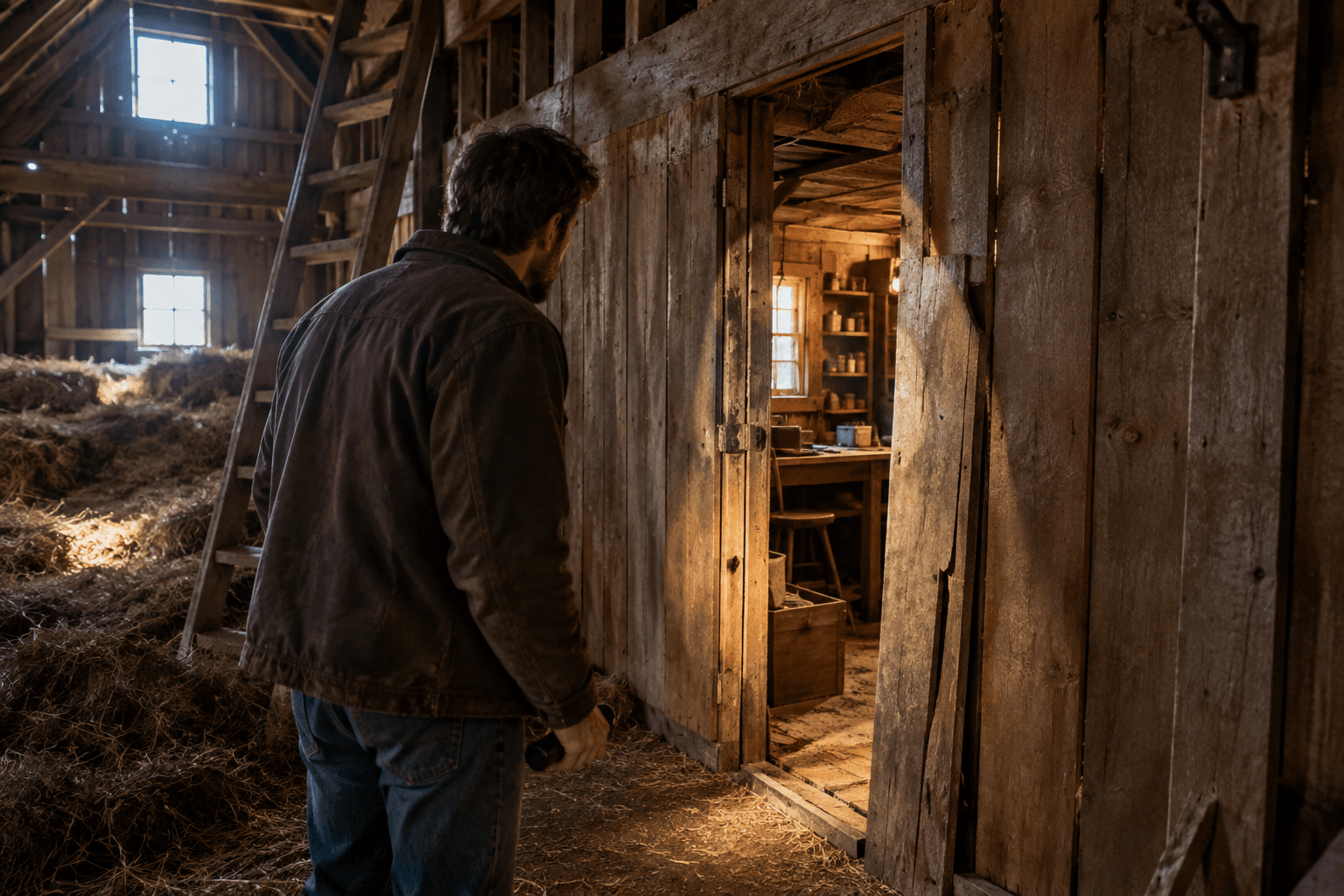
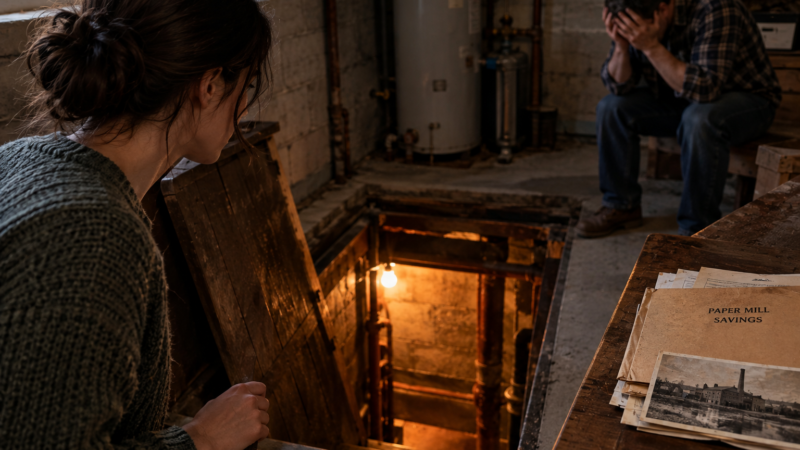
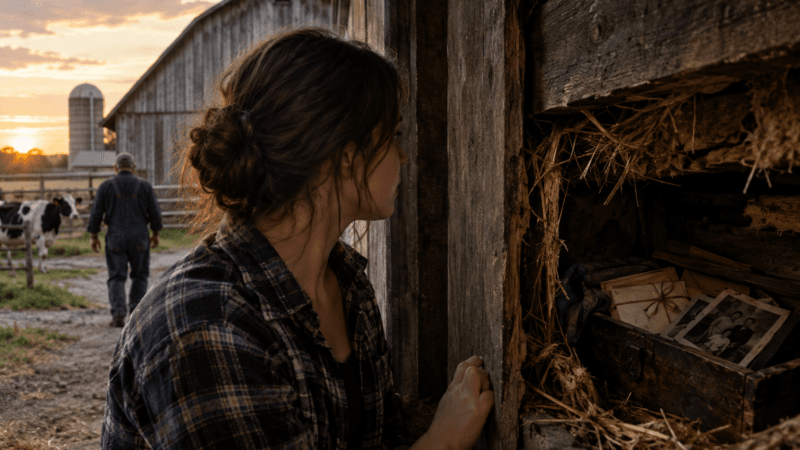
For most of my life, I thought I knew everything there was to know about my father. He had spent nearly his entire adult life running our dairy farm, waking before sunrise, feeding the cattle, repairing fences, maintaining equipment, and coming home every evening smelling of hay, soil, and fresh milk. He was a quiet man who rarely talked about his feelings or the years before I was born. After he passed away, I stayed on the farm because it was the only place that still made me feel close to him. One afternoon, while cleaning the old hayloft, I noticed that one section of the wooden wall sounded strangely hollow when I tapped it. At first, I assumed there was simply an empty space behind the boards, but after moving several old bales of hay, I discovered a narrow wooden door almost completely hidden by years of dust and cobwebs. There was no handle, only a small metal latch that looked as though it hadn’t been touched in decades. I stood there for several minutes, wondering why my father had never mentioned having a hidden room inside the barn.
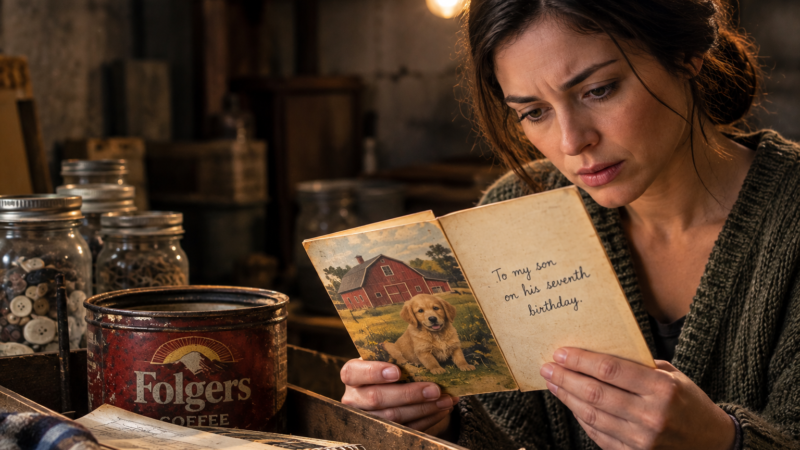
My curiosity eventually overcame my hesitation, and I opened the door. Behind it was a surprisingly clean little room that seemed completely disconnected from the rest of the dusty barn. There was a wooden desk, an old chair, several shelves, and a small window overlooking the fields. The room contained boxes filled with handwritten journals, photographs, letters, and documents that immediately caught my attention. Some of the photographs showed my father as a much younger man, standing beside the farm before the buildings had been expanded. Others showed people I didn’t recognize. I began reading through the journals and discovered that my father had been documenting far more than farm business. He had written about difficult years when the farm nearly failed, moments when he considered selling the property, and personal struggles he had never shared with our family. But the biggest surprise was discovering that he had secretly used the room as a place where local farmers could come to talk. There were notes about neighbors who had lost livestock, families struggling with medical expenses, and young farmers trying to keep their businesses alive. My father had apparently spent years quietly helping people without ever telling anyone.
As I continued searching through the room, I found something that changed the way I remembered my childhood. There were envelopes containing receipts and records showing that my father had regularly paid small amounts toward other people’s expenses. He had purchased feed for struggling farmers, helped cover veterinary bills, and occasionally given families money when their farms were in danger of being lost. Yet he had never mentioned any of this to me. I remembered how strict he had sometimes seemed about money when I was growing up. I remembered asking for things and being told that we had to be careful because farming was unpredictable. At the time, I thought he was simply being overly cautious. Now I realized that some of the money I had assumed he was saving for our family had actually been used to help people around us. One journal entry explained that he didn’t want anyone to feel embarrassed by receiving help, which was why he preferred to give it privately. He believed that kindness meant more when the person receiving it didn’t have to publicly thank you.
The discovery also explained several strange memories from my childhood that had never made sense. I remembered people occasionally arriving at the farm late in the evening and disappearing into the barn with my father. I had always assumed they were discussing cattle or farm equipment. I remembered my father sometimes returning home exhausted but strangely peaceful after those visits. I also remembered him telling me that everyone had problems they were trying to carry, even if we couldn’t see them. Reading his journals years later made those words feel completely different. The secret room wasn’t evidence of some dark family secret as I had initially feared. Instead, it was a place where my father had allowed himself to be more compassionate and vulnerable than he ever was at home. Among the papers, I even found a letter addressed to me but never sent. In it, he explained that he had always hoped I would eventually understand that farming wasn’t only about producing milk or making money. To him, the land represented responsibility, community, and the idea that people should help one another survive difficult seasons.
I spent the rest of that afternoon sitting alone in the secret room, surrounded by the things my father had kept hidden for so many years. Before that day, I had been carrying a complicated mixture of grief and regret. I had often wished I had asked him more questions while he was alive, especially about his younger years and the choices he had made. Finding the room couldn’t give me those conversations back, but it gave me something I hadn’t expected: peace. I finally understood that my father had been much more than the stern dairy farmer I remembered from childhood. He had simply chosen to express his kindness quietly, without seeking recognition. I decided not to destroy the room or remove everything from it. Instead, I cleaned it carefully and preserved the journals, photographs, and letters exactly as I had found them. Every time I walk into that old hayloft now, I think about the man behind the quiet exterior—the father I thought I knew, and the generous stranger I discovered after he was gone.
Read Story…
Behind the Hayloft Wall, I Discovered a Secret My Late Father Never Told Anyone
The coffee was still hot in the mug when I heard the third floor joist settle with that familiar, dry little crack that sounded just like a knuckle popping. I was standing at the kitchen counter of the old Holtz place, wiping down a greasy ring of laminate where the previous owner had left a tin of grease, trying not to think about the twenty-four hundred dollars I had just spent on well pump repairs. That was Tuesday morning, exactly four months after we closed on the forty-acre dairy farm outside Sheboygan.
The deed said $142,500, but the house and the big bank barn had made it clear right away that they intended to exact payment in sweat instead of greenbacks.
Walter Holtz had built this barn back in 1964, right before the federal milk price supports started wobbling like a top. People in these parts still remember Walter when they talk about the eighties crisis, though they usually lower their voices when they do it, the way folks talk about a bad well that everyone knew had surface runoff but kept drinking from anyway. He was a man who measured his worth by the straightness of his furrow and the weight of his milk checks, and when both of those things started going sideways around 1982, Walter didn’t adapt. He just pulled the traces tighter on everyone around him until something had to snap.
I didn’t know any of that history when I signed the papers in October.
All I knew was that the siding needed three coats of red barn paint and the hayloft was full of forty years of pigeon droppings and discarded twine. But on that Tuesday, with the wind off Lake Michigan rattling the single-pane windows in the mudroom, I grabbed a heavy crowbar and climbed the interior ladder to the loft to deal with a draft that smelled like damp oats and old cedar.
The hayloft was cavernous, smelling of dry timothy grass and thirty years of bird lime. I had my flashlight out because the small gable windows were caked in grime thick enough to stop a bullet. I was checking the north sill plate for rot where the foundation stones met the hemlock framing when I noticed something odd about the dimensions. The west wall didn’t match the east. There was a difference of about four feet, a dead space behind the vertical pine boarding that ran from the floor up to the collar ties.
I knocked on the wood with the heavy end of the crowbar, expecting the hollow boom of an empty stud bay. Instead, it gave a dull, leaden thud, like a coffin lid hitting wet clay.
I didn’t think much of it at first. Farmers block off corners for grain bins or old harness storage all the time. But when I got the flashlight down low and looked between the warped pine boards near the floor, I saw something that made me drop to my knees in the dust. Behind the gap, stacked knee-deep, were dozens of burlap feed sacks, and behind them sat a heavy wooden workbench covered in a thick, gray pelt of undisturbed dust.
I went back down to the kitchen, my boots heavy on the plank stairs, and called Mary. I had her number on a yellow sticky note from the title company because she was Walter’s eldest, the one who handled the estate paperwork after the bank took the parcel back in ninety-one.
She answered on the fourth ring, her voice dry and thin like dry corn husks.
“Mr. Miller,” she said before I could even get my name out. “What’s broken now?”
“Nothing’s broken, Mary,” I said, leaning against the doorframe while the refrigerator motor kicked on with a tired shudder. “I’m up in the hayloft. I found something behind the west partition. A room. There’s a workbench back there.”
The line went completely dead for five seconds. I could hear the faint hum of a long-distance wire and her breathing, shallow and sharp.
“You shouldn’t have gone behind that wall,” she said, her voice dropping an octave so I had to press the receiver harder against my ear. “Nobody was supposed to touch that. The bank took the land, but that part… that part wasn’t in the survey.”
“Mary, what are you talking about?” I asked, looking out the dirty kitchen window at the rusted machinery half-swallowed by thistle. “Who built a room inside a hayloft and walled it shut?”
“My father,” she whispered. “And you need to leave it alone.”
“I can’t leave it alone,” I told her, my own stubbornness flaring up because nobody likes being told what they can’t look at on their own property. “The sills are rotting against the west foundation. If there’s trapped moisture back there, the whole bents are going to shift by winter. I have to open it up.”
She didn’t speak for a long time. Then she let out a long, shuddering sigh that sounded like air escaping an old inner tube. “Is Daniel with you?”
“My brother,” she said, and her voice cracked just a little bit at the edge. “He left in the spring of eighty-four. He hasn’t set foot in that county since the day the sheriff served the foreclosure notice on the cattle. If you’re going to open that wall, Mr. Miller, you wait until Saturday. I’m bringing him home.”
The next four days dragged like a wet mule through clay. I went about my chores, patching the chicken coop roof, clearing out three pickup loads of rusted barbed wire from the ditch, but every time I looked up at the weathered red boards of the big barn, my eyes went straight to that west gable. The mystery of it sat in my stomach like an unboiled potato. I didn’t tell my wife much about it over the phone because she was still staying down in Milwaukee until the school term finished, but I found myself wandering up to the loft every evening just to run my hand over the rough-sawn pine boards of that false wall.
On Saturday morning, an old blue Buick sedan with Outagamie County plates kicked up a gray tail of dust on our gravel drive right at ten o’clock. Mary stepped out first, her coat buttoned tight against the damp October chill, her gray hair pinned back in a neat, severe bun. But it was the man who got out on the passenger side that made me lower my hammer. He was tall, thin as a dry lath, with deep-set eyes and hands that stayed tucked deep into the pockets of a worn canvas barn coat. He didn’t look at the house or the silo. He looked straight at the gable vent of the big barn, his jaw working like he was chewing on a bitter pill.
“Mr. Miller,” Mary said, her boots crunching sharply on the limestone gravel as she walked toward the porch. “This is Daniel.”
The man gave a stiff, jerky nod. He didn’t offer his hand. “You found the west bay,” he said. It wasn’t a question. His voice was raspy, the kind of voice that came from thirty years of working in a machine shop or a cabinet factory where the air was always thick with sawdust.
“Found it Tuesday,” I said, stepping aside to let them through the mudroom. “The boards were spiked in from the inside, mostly. Took some work to get a pry bar in without chewing up the adjacent framing.”
“Our father didn’t use nails,” Daniel said quietly, staring past me at the grain bin in the corner. “He used carriage bolts with the nuts countersunk so you couldn’t get a claw under them. He wanted it permanent.”
We didn’t waste time with coffee. Mary sat at the kitchen table with her hands folded tight in her lap, staring at the oilcloth tabletop, while Daniel and I walked out across the frozen ruts of the farmyard toward the big double doors of the dairy barn. The morning air smelled of wet manure and woodsmoke from the neighbor’s woodstove half a mile over the ridge.
Inside, the barn was dim, shafts of pale autumn light cutting through the dust like greasy ribbons. We climbed the ladder in silence, our boots squeaking on the rungs. When we reached the hayloft, I walked over to the section of wall I had partially unbolted earlier in the week.
“I didn’t take the whole thing down,” I told him, pointing with my flashlight. “Just enough to see what was in there.”
Daniel didn’t answer. He walked past me, his shoulders hunched, and pressed his palm flat against the weathered gray pine boards. He stood there for nearly a full minute, his eyes closed, his lips moving silently as if he were counting heartbeats or remembering an old prayer. Then he reached down, took the crowbar from where I had left it on a bale of old straw, and wedged the tip into the vertical seam.
“Here,” he muttered. “Help me lever this. The studs were oak. They don’t give easily.”
I put my weight behind him. The old iron bar groaned, and with a sharp, echoing *crack* that sounded like a rifle shot in the empty loft, the first three-inch cedar spike gave way. A cloud of fine, gray sawdust billowed out into the light, smelling intensely of dried linseed oil, old pine pitch, and something sweet like dried apples.
Daniel didn’t wait for me. He dropped the bar, grabbed the edge of the board with both hands, and ripped it away from the frame himself, his fingers scraping against the rough timber. Another board came loose, then another, until a jagged gap opened up between the studs, letting the pale morning sun flood into a space that hadn’t seen daylight in forty-four years.
We stepped through the opening into the narrow attic room.
It wasn’t a dungeon, and it wasn’t a place of crime. It was a workshop, frozen completely in time at the very moment the 1984 farm crisis broke the back of the Holtz family.
Along the west wall ran a sturdy workbench built from two-inch maple planks, scarred with chisel marks and stained dark with walnut oil. Above it, hanging from handmade wooden pegs, was a complete set of carving gouges, drawknives, and hand planes, each one cleaned and wiped down with a thin coat of oil that had kept the rust away for four decades. On the center of the bench sat a half-finished cedar decoy duck, its head carved with delicate, sweeping strokes, the pencil lines of the pattern still visible on the raw wood where Daniel had laid them down before he walked out the door for the last time.
Daniel walked over to the bench as if he were walking across thin ice. He reached out with one long, trembling finger and touched the handle of a small Japanese carving knife lying beside the duck.
“He told me I was wasting good timber,” Daniel whispered, his voice cracking so hard it hurt to listen. “He said a man who spends his days carving decoys on a dairy farm is a man who’s already given up on the mortgage.”
“He was scared, Daniel,” Mary called out from the other side of the broken wall, her voice shaking as she stood in the shadows of the hayloft. “The bank was calling every Tuesday. The herd had Bang’s disease. He didn’t know which way to turn.”
“He didn’t have to wall up my life,” Daniel said, and for the first time, the heat in his voice flared up like dry straw in a stove. He turned around, holding a stack of leather-bound sketchbooks covered in thick gray dust. He blew on the cover, and a small cloud of particulate rose into the light. “I left my tools here. I left my journals. I thought I lost them in the sheriff’s auction. I spent forty years thinking he burned them in the burn barrel out back.”
“He couldn’t burn them,” Mary said, stepping through the broken boards into the low-ceilinged room, her eyes wet with tears. She reached out and touched the corner of the workbench. “After you left… after the bank took the deed and Dad had that stroke in the milk house, I came up here every month while the place sat empty. I oiled the hinges on the door he put on the outside gable before he sealed the inside. I kept the oil on your tools so they wouldn’t pit. I couldn’t save the farm, Daniel. But I saved this.”
Daniel looked at his sister, his narrow shoulders dropping six inches as the rigid tension went out of him all at once. He didn’t say thank you. He just set the sketchbooks down on the dusty maple surface, reached out, and pulled his older sister into a stiff, awkward embrace that looked like it had been thirty years overdue.
I turned around and walked back out into the main hayloft, leaving them alone in the quiet dust.
They spent three hours in that room. I could hear the low murmur of their voices through the open studs, arguing softly about old uncles, dead neighbors, and the way the barn roof used to leak right over the maternity pen during the spring thaw of seventy-nine. When they finally came down the ladder around two o’clock, Daniel looked ten years younger, even with the gray hair and the deep lines around his eyes. He carried a cardboard box filled with his journals and three small wooden carvings wrapped in old flannel shirts.
“Mr. Miller,” Daniel said, standing by the open door of the blue Buick while Mary settled into the passenger seat. He held out his hand, and this time his grip was dry, firm, and steady. “You keep the barn. Restore it, tear it down, do whatever you need to do with the timber. But I want you to have this.”
He reached into the back seat and pulled out a heavy, foot-long cedar timber stamped with a small, square maker’s mark, *D.H. 1984*, burned into the grain with a hot iron.
“That was my bench leg,” he said quietly. “Dad cut it down when we remodeled the stanchions in eighty-two. I saved it because the grain was tight as fiddle-back maple.”
He laid it on the tailgate of my truck and closed his door without another word. Mary rolled down her window, gave me a small, tight smile that finally looked like peace, and waved as the old Buick backed down the gravel drive, sending up another gray cloud of dust that hung in the quiet afternoon air until the car turned south toward the highway.
That was three weeks ago. The county inspector came out yesterday to sign off on the structural repairs for the west gable, and we’ve already started shoring up the hemlock sills with new concrete footings.
Yesterday afternoon, I took Daniel’s cedar timber up to the hayloft. I climbed the ladder with a heavy bag of galvanized lag bolts and an electric impact driver, working alone in the quiet barn while the low autumn sun poured straight through the restored double doors. I bolted that weathered cedar beam permanently to the main oak collar tie right above the threshing floor, right where the light hits it first thing every morning.
You can still see the little *D.H. 1984* brand if you stand close enough to the hay track, dark and crisp against the silver-gray wood. The dairy farm still needs a ton of work, and the winter wind is already starting to whistle through the loose siding on the north lean-to. But when the afternoon sun hits that timber, the whole barn smells faintly of old cedar and linseed oil, and for the first time since we signed the papers, this place feels like it finally belongs to the land it’s standing on.
Buying the Farm Was Only the Beginning—Then the Old Barn Started Revealing Its Secrets
Four months after buying a forty-acre dairy farm outside Sheboygan, I was still discovering how much work the property needed. My husband and I had bought the place knowing it was old and needed repairs, but some problems were more immediate than others. One Tuesday morning, I was standing with a hot cup of coffee when I heard a familiar dry crack from one of the upper floor joists. The sound immediately caught my attention because the old barn had already given us plenty of reasons to worry. We had recently spent $2,400 repairing the well pump, and I knew the barn itself would eventually require serious attention.
Advertisement
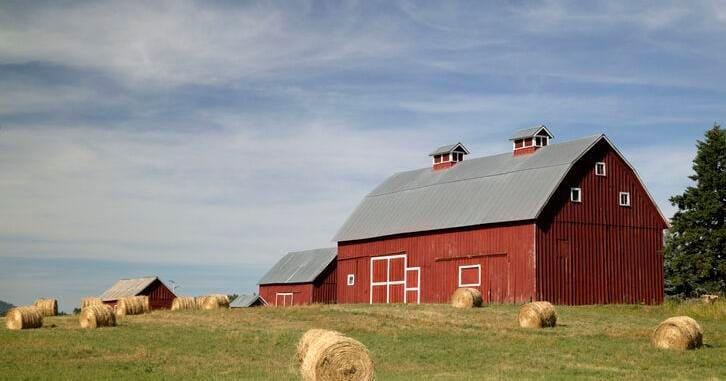
The property had once belonged to a man named Walter Holtz, who had built the large barn in 1964. By the time we purchased the farm, the place carried decades of wear and history. The deed listed the property at $142,500, and although we had walked through the buildings before buying, there was no way to understand everything that had happened there over the years. The barn siding needed several coats of red paint, and the hayloft was filled with pigeon droppings, old pieces of twine, and forgotten debris. I had assumed all of that was simply part of owning an old farm.
That morning, however, something about the barn felt different. A strong draft was coming from somewhere near the hayloft, carrying the smell of damp oats and old cedar. I grabbed a crowbar and climbed the ladder to investigate. The hayloft was enormous, with dry timothy grass scattered across parts of the floor and layers of bird lime covering the boards. Because the gable windows were so dirty, I had to use a flashlight even though it was daytime. As I inspected the structure, I noticed something strange about the western wall.
The western side didn’t seem to line up properly with the eastern side. At first, I thought it might simply be the result of the barn settling over the decades. But the more carefully I looked, the more obvious the difference became. Behind a row of vertical pine boards appeared to be a dead space nearly four feet wide. The space seemed to extend from the floor all the way toward the upper collar ties. I couldn’t understand why anyone would have built such a large empty section into the barn.
I knocked against one of the boards, expecting to hear the hollow sound of an empty wall. Instead, I heard a dull, heavy thud. It reminded me of the sound you might hear from a coffin lid. That strange noise immediately made me more curious. I moved closer and examined the boards. Some were warped, and the nails appeared much older than the repairs around them. Something clearly existed behind the wall, and it wasn’t simply an empty cavity.
Eventually, I began removing the warped pine boards carefully. Behind them, I discovered several old burlap feed sacks and a dusty workbench. The sight stopped me in my tracks. This wasn’t random storage. Someone had deliberately created a hidden area inside the barn. The workbench looked as though it had been left behind in a hurry, and everything was covered in decades of dust.
I decided to contact Mary, Walter Holtz’s eldest daughter. I figured she might know something about the strange construction. When I described what I had found, her reaction immediately changed the mood of the conversation. Instead of being surprised, she became quiet and told me that I shouldn’t have gone behind that wall. She explained that the bank had eventually taken the land, but she didn’t believe that particular section had ever appeared on the official survey.
Mary then told me something even stranger. Her father had built the hidden room himself. She didn’t know exactly why he had done it, but she clearly knew that the space wasn’t ordinary. I explained that I had discovered signs of moisture and wanted to inspect the structure because I didn’t want the barn to develop serious problems. Mary hesitated before asking me whether Daniel was with me.
I had no idea who Daniel was at the time. Mary explained that Daniel was her brother, and he had left the farm in the spring of 1984. According to her, he hadn’t returned since the sheriff had served the foreclosure papers. That information made the hidden room even more mysterious. Whatever had happened in that barn decades earlier had apparently affected the entire family.
Mary agreed to come to the farm with Daniel that Saturday. When they arrived, Daniel barely said anything at first. He stood in the hayloft and stared toward the western wall. Then he quietly said that I had found the west bay. His words made it clear that he remembered the space, even though it had been sealed for decades.
Daniel explained that their father had used carriage bolts when he built the hidden section. That meant the wall hadn’t been thrown together casually. Walter had intended the construction to last. The more we examined it, the more obvious it became that the room had been deliberately hidden and sealed away.
Together, we began opening the wall further. When the boards finally came away, the hidden space seemed almost frozen in time. It had not seen daylight in forty-four years. Dust covered nearly everything inside, but the objects were still arranged as though someone might return and use them again.
What we discovered was essentially a small workshop from the 1980s. There was an old workbench, carving tools, pieces of wood, and a half-finished cedar duck. The craftsmanship was surprisingly careful. It didn’t look like the work of someone who had simply been passing time. It looked like someone had cared deeply about what they were making.
Daniel immediately recognized the tools. He told us that their father had once carved wooden decoys. But according to Daniel, Walter had eventually told him that carving them was like giving up on the mortgage. The family had been struggling financially, and there was no room for hobbies when the farm was in danger.
Mary then began explaining what had happened during the farm crisis. Their father had been frightened. The bank had been calling, and the family was facing enormous pressure. To make matters worse, the herd had Bang’s disease, adding another devastating problem to an already difficult situation. The farm wasn’t simply struggling because of poor decisions. The family had been trapped in circumstances that were becoming increasingly difficult to control.
Daniel had apparently carried a different understanding of those years for decades. He had believed that his father had destroyed or burned his carving tools. He had also believed that leaving the farm meant leaving everything behind. Standing inside the hidden workshop, he was suddenly confronted with evidence that his father had kept those things instead.
Mary admitted that she had known more than Daniel realized. She had preserved some of his old tools and belongings because she couldn’t bring herself to throw them away. Daniel had assumed they were gone forever. The discovery inside the barn forced both siblings to confront memories they had carried separately for years.
For Daniel, the hidden room wasn’t simply an old storage space. It represented a part of his father that he had completely forgotten. Walter had been remembered mostly through the difficult years, the foreclosure, the debt, and the collapse of the family farm. But the workshop showed another side of him. He had been a man who could still sit down and patiently carve something beautiful, even while everything around him was falling apart.
The discovery also changed the relationship between Mary and Daniel. For years, Daniel had apparently carried resentment and sadness over what he believed his family had lost. Mary had carried her own memories and had quietly protected pieces of their shared past. Standing together in the hidden workshop gave them an opportunity to finally talk about what had happened.
At some point, Daniel gave me a piece of cedar timber from the old workshop. It had been stamped with the initials “D.H.” and the year 1984. The simple piece of wood suddenly felt incredibly meaningful. It connected the present farm to a moment nearly four decades earlier and to a family whose life had once revolved around the same barn.
The discovery also made me look differently at the property we had purchased. Before that day, I had seen the barn mostly as another expensive project that needed repairs. I worried about the roof, the siding, the moisture, and the endless list of things that come with owning an old farm. But after learning the story behind the hidden room, the building no longer felt like an anonymous structure.
We eventually had the county inspector examine the western gable and make the necessary repairs. I decided not to simply erase every trace of what we had found. Instead, I incorporated the old timber into the barn as part of the repair. It seemed like the right way to preserve something that had survived all those years.
The farm still had plenty of problems. The siding still needed paint, the old barn still required maintenance, and there were always more repairs waiting around the corner. But something about the property had changed for me. What had initially seemed like an old, neglected building now felt connected to a much larger story.
Most importantly, the hidden room revealed that Walter Holtz was more than the troubled farmer remembered through stories of debt and foreclosure. He had been a father, a craftsman, and a man who had tried to hold onto something meaningful during an incredibly difficult period of his life. The room had remained sealed for forty-four years, waiting for someone to open it.
In the end, the discovery didn’t just reveal a secret room behind an old hayloft wall. It revealed a forgotten part of a family and gave two siblings a chance to understand their father differently. For me, it also changed the way I saw the farm. I had bought an old property that needed work, but behind one of its walls I found a piece of history that had somehow survived. And knowing that story made the place finally feel like home.