“Forty Dollars a Week Is Plenty for a Woman Who Doesn’t Go Anywhere,” My Husband Said While Taking My Pension…

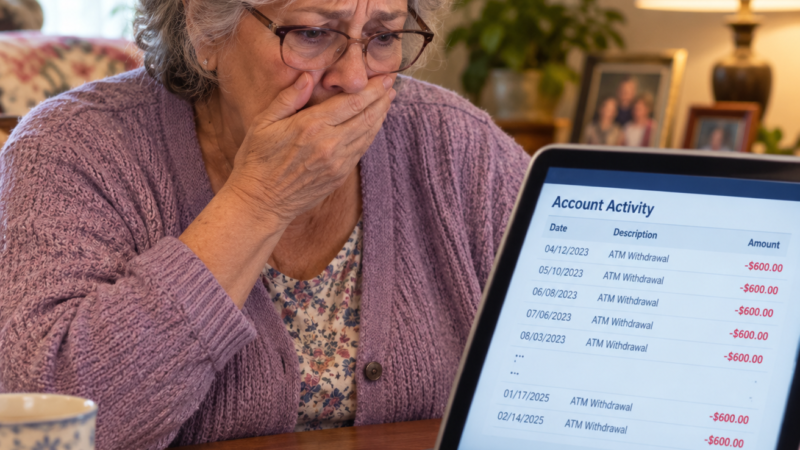
My husband, Douglas, had a way of saying cruel things as if they were perfectly reasonable. One gray Monday morning, while we sat across from each other eating scrambled eggs, he reminded me that I only needed forty dollars a week. “You’re retired,” he said. “You don’t go anywhere.” Then he reached for my pension card like it belonged to him. I didn’t argue. I simply looked down at my plate and nodded. What Douglas didn’t understand was that I had spent four years slowly becoming a stranger in my own home.
At first, it had seemed harmless. Douglas handled most of the bills, so I let him manage my pension deposits. He said we were a married couple and there was no reason to keep separate money. Soon, however, he started giving me a fixed amount every week. If I wanted to meet an old friend for lunch, I had to explain why. If I wanted to buy something for myself, he would ask whether I really needed it. Even small purchases became conversations I dreaded. Eventually, I stopped asking and stopped going out. My world became smaller, while Douglas became more comfortable controlling every part of it.
Then came the doctor’s appointment that changed everything. I had gone in for what I thought was a routine checkup, but the doctor’s questions made me realize how isolated I had become. He asked whether I had anyone I could call in an emergency, whether I had access to my own money, and whether I felt safe making decisions for myself. I gave simple answers, but I couldn’t stop thinking about them afterward. For the first time in years, I wondered what would happen if Douglas wasn’t there—or if I simply decided I didn’t want to live this way anymore.
Over the next six weeks, I quietly began preparing. I opened a private account, gathered copies of important documents, and started keeping track of the money that was actually mine. I also bought a cheap phone and kept it hidden where Douglas would never think to look. I didn’t tell my friends what I was planning because I wasn’t ready for anyone to talk me out of it. Every small step made me nervous, but it also gave me something I hadn’t felt in years: control over my own life.
Then Thursday arrived. Douglas had a cardiology appointment that morning, and while he was away, I stood in our bedroom looking at the life I had spent years building around someone else’s rules. I packed only what I could carry in one canvas bag. A few clothes, my important papers, my medication, eighty-seven dollars, and the secret phone went inside. I paused at the front door for a long moment, expecting guilt to stop me. It didn’t. I locked the door behind me and walked away before Douglas came home. For the first time in four years, I wasn’t asking permission to go anywhere.
Read Story…
“Forty Dollars A Week Is Plenty,” He Said While Taking My Pension. On Thursday, I Packed While He Was At The Doctor. When He Came Home… I Was Already Gone.
My husband told me forty dollars a week was more than enough because I was retired and “didn’t go anywhere.” For four years, I let him turn my pension, my routines, and even my friendships into things I needed permission to touch. Then one ordinary doctor’s appointment forced me to answer questions I had spent years avoiding. Six weeks later, while my husband sat in a cardiology waiting room, I walked out of our house carrying one canvas bag, eighty-seven dollars, and a secret phone he never knew existed.
My husband, Douglas, looked me straight in the eye and said, “Forty dollars a week is plenty for a woman who doesn’t go anywhere.” He said it over scrambled eggs on a gray Monday morning, as casually as if he were reminding me to pick up milk. There was no anger in his voice, no fist against the table, nothing dramatic enough for a neighbor to hear through the walls. That was what made it so easy for me to nod.
My name is Miriam Hale, and I was sixty-three years old when I finally understood that a prison does not need locks if someone can convince you that leaving would be unreasonable. I had been married to Douglas for forty-one years, and for most of those years I would have described him as dependable before I used any other word. He remembered oil changes, paid bills before they were due, kept batteries in the smoke detectors, and carried an umbrella even when the weather report promised sunshine. When my father died two years before our wedding, Douglas had been the man who made the world feel steady again.
We built a life in a small Ohio town where people still waved from pickup trucks and knew which church parking lot had the best Christmas tree sale. We bought a modest white house with a deep porch, raised two children there, and buried three pets beneath a maple tree at the edge of the backyard. Our daughter, Caroline, became a physical therapist and moved to Oregon with her husband and two daughters. Our son, Evan, moved to Nashville, where he played guitar at night and worked in a recording studio during the day.
I worked thirty-one years as a licensed practical nurse, most of them with children. My favorite part of the job was the tiredness afterward, that heavy feeling in my legs when I walked through the hospital parking lot knowing I had spent the day doing something useful. Douglas worked in logistics management for a manufacturing company, and between his retirement account, Social Security, my pension, and our savings, we had done better than many couples we knew. We were never rich, but retirement was not supposed to scare us.
Douglas retired at sixty-seven after his company offered him a package he called “too good to ignore.” A year later, I left nursing at sixty-two, partly because my feet hurt and partly because new management had turned every scheduling conversation into an argument. I remember my last shift clearly: the antiseptic smell of the hallway, a little boy waving at me from his mother’s arms, and the strange lightness I felt when I removed my badge. I thought retirement meant my life was finally becoming larger.
Instead, it began shrinking.
The first change involved groceries. Douglas sat across from me at the kitchen table one evening with his favorite yellow legal pad, his reading glasses halfway down his nose and a calculator beside his coffee. “We’re on a fixed income now,” he said. “We need discipline.”
That made sense. We agreed on a grocery budget, and I even felt proud of us for planning together. Then he started coming with me to the store, pushing the cart directly beside me and questioning nearly everything I picked up.
“Do we need blueberries this week?”
“They’re on sale.”
“We bought fruit already.”
“That was bananas.”
“Fruit is fruit, Miriam.”
He smiled when he said it, almost playfully, but I put the blueberries back.
Then came the credit cards. Douglas had read an article claiming people spent less when they used physical cash, so one evening we sat together and cut up both of our cards with kitchen scissors. He laughed when one plastic corner shot across the table, and I laughed too. I remember thinking we were being responsible.
Next came the bank accounts.
I had maintained my own checking account since I was twenty-five. Douglas never ordered me to close it, and that distinction became important later because for years I used it to defend him in my own mind. Instead, he suggested redirecting my pension into the account we used for household expenses, an account that had originally been his before we married.
“Why pay two maintenance fees?” he asked. “We’re married. We’re a team.”
It sounded sensible.
I called the pension office myself.
I gave them the routing number myself.
I signed the form myself.
Within two months, nearly every dollar entering our household flowed through an account Douglas managed online with a password I did not know.
He began giving me spending money every Monday. At first, it was forty dollars: four crisp ten-dollar bills laid beside my coffee mug.
“For whatever you want,” he said.
I laughed awkwardly. “My allowance?”
.
He smiled. “Don’t be dramatic.”
I should have heard something in that sentence. Instead, I folded the money into my wallet.
I told myself there was nothing wrong with it because Douglas paid the mortgage, utilities, insurance, groceries, gasoline, and every major household expense. Forty dollars was mine for lunches, birthday cards, shampoo I preferred instead of the cheaper brand he bought, or a coffee with my oldest friend, Joanie Mercer. I had spent decades making independent decisions, but within months I found myself counting ten-dollar bills before agreeing to meet Joanie for lunch.
Douglas also started asking where I was going.
Not demanding. Asking.
“What time will you be back?”
“Who’s going?”
“Which restaurant?”
“What do you need from the library?”
“What did Caroline want?”
Each question was ordinary by itself. Together they became a fence.
Caroline noticed before I did. She called one Sunday afternoon while Douglas watched a baseball game in the living room, close enough that I could hear the announcer through the kitchen doorway.
“You sound different lately,” she said.
“I’m retired,” I told her. “Maybe this is what relaxed sounds like.”
“No, Mom.”
.
I looked toward the living room. Douglas was staring at the television.
“I’m fine.”
There was a pause.
“Are you sure?”
“Yes.”
I changed the subject to my granddaughters.
A month later, Douglas reduced my weekly money to thirty-five dollars. He showed me columns on the yellow pad and explained that electricity and insurance had gone up.
“We all have to sacrifice,” he said.
I nodded as though there were two people sacrificing.
That spring, I canceled three lunches with Joanie. I stopped browsing the bookstore because buying a paperback meant explaining why I had spent fourteen dollars. I stopped driving across town to the garden center because Douglas asked why I needed more flowers when we already had flowers at home.
Soon, I realized I was measuring my days by how little explaining they required.
Then, on a Tuesday morning in March, I went to my doctor alone.
Douglas had golf.
That ninety-minute appointment became the first crack in everything.
My doctor, Dr. Anita Rao, had treated me for eleven years, which meant she had known me when I still arrived at appointments in hospital scrubs, complaining that my feet hurt because I had been standing for ten hours. She knew I hated being weighed, always forgot the date of my last tetanus shot, and exaggerated how often I exercised. That morning, however, she did not tease me about anything.
She sat on the rolling stool across from me and studied my chart.
“You’ve lost fourteen pounds.”
“I could stand to lose a few.”
“Not this way.”
I looked down at my hands.
My blood pressure was higher than it had ever been. I had been sleeping badly for months, waking at two or three in the morning with my jaw clenched and my shoulders aching. I had blamed retirement, aging, too much coffee, not enough exercise, and every explanation except the one sitting inside my chest.
Dr. Rao closed the exam-room door.
“Miriam, I want to ask you some specific questions.”
Something about her voice made my stomach tighten.
“Okay.”
“Do you have independent access to money?”
I almost laughed.
“Of course.”
“Could you withdraw five hundred dollars today without asking your husband?”
My mouth opened.
Nothing came out.
She waited.
“Well, why would I need five hundred dollars?”
“That isn’t what I asked.”
I stared at the paper covering the exam table.
She continued gently. “Can you make medical decisions without worrying about how Douglas will react?”
“Yes.”
Then I thought about the previous winter, when I delayed ordering orthopedic shoes because they cost more than Douglas thought shoes should cost.
“I mean… usually.”
“Can you leave your home whenever you want?”
I looked at her.
“Of course.”
“Do you?”
That was when I started crying.
Not graceful tears. Not one cinematic drop sliding down my cheek. I folded forward with both hands over my face and cried hard enough that my ribs hurt.
Dr. Rao did not interrupt me. She moved the tissue box closer and waited until I could breathe normally again.
Then she said, “What you’re describing can be financial abuse.”
I shook my head immediately.
“No. Douglas has never hit me.”
“I didn’t ask whether he had.”
“He isn’t violent.”
“Abuse isn’t limited to physical violence.”
I hated the word.
Abuse sounded like broken furniture and police lights. It sounded like bruises hidden beneath sleeves. It did not sound like yellow legal pads, grocery lists, golf on Tuesdays, and a husband who had remembered every anniversary for four decades.
“He handles the finances,” I said.
Dr. Rao nodded. “Does he handle them, or does he control your access to them?”
I did not answer.
She opened a drawer in her desk and took out a small card. It contained the number for a local support organization that worked with domestic abuse, including financial coercion among older adults.
“I’m not telling you what decision to make,” she said. “I’m telling you that you deserve accurate information about your options.”
I held the card like it might burn me.
“If he finds this…”
That sentence frightened me more than anything else I had said.
Dr. Rao heard it too.
She did not react dramatically. She simply asked, “Where could you keep it safely?”
After a minute, I slipped the card under the removable insole of my left shoe.
I drove home afterward with the radio off.
Douglas was already there, standing in the garage beside his golf bag.
“How’d the appointment go?”
“Fine.”
“What did she say about your blood pressure?”
“That I should watch it.”
“Probably because you salt everything.”
He kissed my forehead and went inside.
I stood beside the car for another few seconds.
Three days later, I told Douglas I needed to pick up a prescription. I drove to a drugstore fifteen minutes away, parked at the far edge of the lot, took the card from my shoe, and called the number.
My hand shook so badly I had to dial twice.
A woman answered.
I will not use her name because she asked me not to, but I still remember the first six words she said.
“Take your time. I’m listening.”
So I talked.
I told her about the pension. The weekly cash. The questions. The grocery store. The phone calls with my daughter. The way I had begun asking permission without realizing I was asking permission.
After nearly twenty minutes, I said, “I know this probably sounds ridiculous compared to what other women deal with.”
“No,” she said.
I waited.
“What you’re describing is real.”
Something loosened in my chest.
She explained that their organization could help me understand my finances, contact legal assistance, open a private bank account, make a safety plan, and arrange temporary housing if I eventually chose to leave.
“I don’t know if I’m leaving,” I whispered.
“You don’t have to know today.”
That sentence felt like oxygen.
Before driving home, I called Joanie.
She answered immediately.
“Hey, stranger.”
I could hear dishes clinking in her kitchen.
“Joanie, I think I need help.”
The line went silent.
Then she said, “I know.”
I closed my eyes.
“What?”
“I know something is wrong.”
“How?”
“Because I know you.”
I began crying again.
Joanie told me she had been quietly researching resources for nearly two months. Her daughter worked in law, and without using my name, Joanie had asked general questions about pensions, marital property, and financial control.
“I didn’t want to push you,” she said. “I thought if I pushed, you’d defend him and disappear from me completely.”
She was right.
“Why didn’t you tell me?”
“Because you needed to be the one who said you were ready.”
I looked through the windshield toward the pharmacy doors opening and closing beneath fluorescent lights.
“I don’t know what ready means.”
“It means you made this call.”
When I returned home, Douglas was at the kitchen table with the yellow legal pad.
“There you are,” he said.
I froze.
He tapped the paper with his pen.
“I went through the numbers again.”
My heartbeat climbed.
He smiled.
“I think we can get your weekly spending down to thirty.”
For the first time, instead of feeling ashamed, I felt angry.
And that anger frightened me less than obedience had.
For the next six weeks, I lived two lives.
In the first one, I was still Douglas Hale’s wife. I made coffee at seven, asked how he had slept, folded towels the way he liked them, watched television beside him, and listened to detailed accounts of his golf scores. I said things like “That’s nice” and “You’re probably right” while measuring every word before it left my mouth.
In the second life, I was building an exit.
The advocate taught me not to move faster than I could safely manage. She never used dramatic language or told me I had to leave immediately. Instead, she helped me make lists: identification, financial documents, medications, contact numbers, transportation, housing, and people Douglas could not easily manipulate.
The first thing I investigated was my pension.
I called the hospital retirement office from Joanie’s house while Douglas believed I was attending a library book sale. The representative verified my identity and explained that I could change my direct-deposit instructions whenever I wanted. My pension benefit was legally mine.
“Even though I redirected it to our household account?”
“Yes.”
“And my husband doesn’t have to approve anything?”
“No, ma’am.”
I gripped Joanie’s kitchen counter.
The answer was so simple that I almost felt embarrassed.
For years, I had assumed that because Douglas managed the money, he had some legal authority over money bearing my own name. No one had explicitly told me that. I had simply stopped questioning it.
The Social Security representative told me something similar two days later.
I opened a private checking account at a bank across town.
The branch manager, a woman young enough to be Caroline’s college roommate, never asked why I requested paperless statements and no promotional mail. She simply clicked boxes on her computer and said, “We can make sure nothing comes to your home address.”
I nearly cried from gratitude.
I redirected my pension and Social Security.
The changes would take several weeks.
That gave me a date.
Until then, I needed to prepare without changing anything Douglas might notice.
I began collecting documents.
Passport.
Social Security card.
Nursing license records.
Insurance information.
A copy of our marriage certificate.
My pension statements.
Photographs of recent bank records when Douglas left them on his desk.
I did not know what would matter later, so the advocate told me to preserve whatever I could safely access.
I used a canvas shopping bag hidden behind winter coats.
Every few days, I added something.
One blouse.
A pair of jeans.
Underwear.
My mother’s ring.
A framed photograph of Caroline and Evan when they were teenagers.
My good walking shoes.
I could not pack quickly because Douglas noticed everything.
One Thursday, he stood in our bedroom doorway while I reorganized a drawer.
“What are you doing?”
My heart slammed against my ribs.
“Looking for the blue scarf Caroline gave me.”
“You haven’t worn that in years.”
“I know.”
He watched me for several seconds before walking away.
Afterward, I sat on the edge of the bed until my hands stopped trembling.
Money was harder.
Douglas gave me thirty dollars each Monday now. I began saving tiny amounts by choosing the cheapest groceries I could without making the receipt look unusual.
Two dollars.
Three dollars.
Occasionally five.
I tucked the bills into an old eyeglass case inside the canvas bag.
By the beginning of May, I had eighty-seven dollars.
I stared at that number often.
Eighty-seven dollars.
I had worked more than three decades.
I had contributed to a mortgage, raised two children, paid taxes, funded retirement accounts, and cared for thousands of patients.
Yet the amount of money I could physically touch without my husband knowing was eighty-seven dollars.
Joanie arranged the final piece.
My older granddaughter had replaced her smartphone the previous Christmas. Caroline had kept the old one in a drawer because she always saved electronics “just in case.”
Joanie quietly contacted her.
She did not tell her everything.
She said only that I needed a backup phone and wanted it kept private for the moment.
Caroline apparently asked, “Is Mom in trouble?”
Joanie replied, “She’s working through something. Let her tell you when she can.”
The phone arrived through Joanie.
I kept it turned off inside a winter boot in the back of the coat closet.
I programmed four numbers into it.
The advocate.
Joanie.
Caroline.
Evan.
I did not call my children yet.
That was the part that hurt most.
Every night, I imagined Caroline learning what had happened and blaming herself for living across the country. I imagined Evan getting on the first flight to Ohio and showing up furious at his father’s door. Neither reaction would help me leave quietly.
So I waited.
Meanwhile, Douglas became strangely cheerful.
He started talking about summer trips.
“We should drive to Michigan in July.”
“Maybe.”
“We’ll stay somewhere cheap.”
“Okay.”
“And you don’t need to buy anything new. You have plenty of clothes.”
I looked at him across the kitchen.
For a moment, I saw our marriage as if I were standing outside it.
He still wore the same wedding band.
Still drank coffee from the mug Caroline gave him ten Christmases ago.
Still asked whether I wanted half his toast.
There was tenderness there.
That was the most confusing part.
Control had not erased every good memory.
It had simply made those memories insufficient.
The Thursday I planned to leave arrived quietly.
Douglas had a routine cardiology follow-up at ten-thirty. He usually spent at least ninety minutes between check-in, testing, and waiting.
He left at 9:42.
I watched his sedan disappear down the street.
Then I waited five minutes.
At 9:47, I stood.
At 9:48, I took the canvas bag from the closet.
At 9:50, I switched on the hidden phone.
At 9:52, I walked through every room of the house one last time.
In the kitchen, the yellow legal pad lay beside the fruit bowl.
A freshly written number was circled near the bottom.
“PERSONAL — M: $30.”
I stared at it.
Then I turned the page over and saw something underneath that stopped me cold.
A list of every recent place I had gone alone.
The doctor.
The pharmacy.
Joanie’s house.
The bank.
And beside the bank entry, Douglas had written a question mark.
For several seconds, I could hear nothing except the refrigerator humming.
Douglas knew I had gone to the bank.
Maybe he did not know why, but he knew enough to notice.
My careful six-week plan suddenly felt paper-thin.
I took a photograph of the page with the hidden phone and left it exactly where I found it.
Then I moved.
I added my reading glasses, medications, good sneakers, and the framed photograph of my children to the canvas bag. I stood in the bedroom doorway once, looking at the quilt I had chosen fifteen years earlier and the dent in Douglas’s pillow. I had imagined this moment many times, but now that it had arrived, grief hit me harder than fear.
I loved that house.
I had painted its hallway while pregnant with Evan.
I had washed chicken pox lotion out of its sheets.
I had decorated its porch every Christmas.
Leaving Douglas also meant leaving a version of myself I had spent forty-one years building.
I went to the kitchen and reached for a notepad.
For weeks, I had thought about leaving him a message.
I’m safe.
I need time.
Don’t contact me.
Instead, I remembered the question mark beside the bank entry.
I put the pen down.
At 10:04, I locked the back door.
At 10:05, I drove away.
Joanie was waiting on her porch with two travel mugs of coffee.
When I pulled into her driveway, she came down the steps before I had fully stopped the car.
“You did it.”
I stepped out.
“I think he knows something.”
Her expression changed.
“What?”
I showed her the photograph.
She studied it.
“He’s been tracking you?”
“I don’t know.”
“Did you tell him you went to the bank?”
“No.”
“Then how does he know?”
That question stayed with us as Joanie drove me to the resource center.
The building looked ordinary from the street, which strangely comforted me. No giant signs. No dramatic security gate. Just an older converted house with pale siding, a little parking area, flowerpots near the entrance, and curtains in the windows.
Inside, a woman at the front desk smiled.
“Miriam?”
I almost turned around.
Not because I wanted to return to Douglas.
Because hearing my name made everything real.
“Yes.”
“We’ve been expecting you.”
The advocate appeared a moment later.
She hugged me only after asking, “May I?”
That tiny request nearly broke me.
For years, someone had been making decisions for me because he believed his intentions were enough.
Now a near-stranger was asking permission before putting her arms around me.
I stayed at the center that night.
Douglas called my regular phone eleven times.
I had switched it off before leaving the house, but after the advocate explained how to protect my location, we turned it on briefly to document his messages.
At first, they sounded worried.
“Miriam, where are you?”
Then irritated.
“This isn’t funny.”
Then offended.
“You need to call me before the children hear some ridiculous version of whatever this is.”
The fourth voicemail made my stomach twist.
“I checked the accounts. We need to talk.”
I looked at my advocate.
“What does that mean?”
“Did your pension change?”
“It should have started redirecting this week.”
She nodded slowly.
“He may have noticed.”
The next morning, I called Caroline.
She answered before the second ring ended.
“Mom?”
The sound of her voice destroyed the careful speech I had rehearsed.
“Honey, I need to tell you something.”
“Where are you?”
“I’m safe.”
She began crying immediately.
I told her as much as I could.
Not every humiliating detail.
Not the first day.
But enough.
The money.
The monitoring.
The questions.
The allowance.
The bank account.
The fact that I had left.
Caroline was quiet for several seconds.
Then she said, “I knew something was wrong.”
“I’m sorry.”
“Don’t apologize to me.”
“I should have told you.”
“No. I should have come sooner.”
“That’s exactly why I didn’t tell you.”
She exhaled sharply.
“Mom, Dad called me yesterday.”
My entire body tightened.
“What did he say?”
“That you left after some kind of emotional episode.”
I closed my eyes.
“He said that?”
“He said you’ve been confused lately.”
A coldness moved through me.
“Confused?”
“He told me he was worried your doctor had changed your medication.”
There it was.
The red herring he was preparing before anyone had even challenged him.
Caroline continued. “I told him I’d spoken to you.”
“You hadn’t.”
“I know.”
Despite everything, I laughed once.
“What did he say?”
“He stopped talking for about five seconds. Then he asked where you were.”
“And?”
“I told him it wasn’t his business.”
I covered my mouth.
My daughter, three thousand miles away, had drawn a boundary in one sentence that I had failed to draw in four years.
“He called me four more times,” she said. “I blocked him.”
Later that morning, I called Evan.
He paced while we spoke. I could hear floorboards beneath his steps.
“He gave you thirty dollars a week?”
“Yes.”
“From money you earned?”
“Yes.”
“Mom.”
His voice went frighteningly quiet.
“Please don’t go there.”
“I’m not going anywhere.”
“Promise me.”
He hesitated.
“I promise.”
That afternoon, the advocate connected me with a family-law attorney named Rachel Sloane.
Rachel had silver-streaked hair, rectangular glasses, and the calm manner of someone who had already heard every threat Douglas might eventually make.
She reviewed the financial information I had brought.
Then she stopped at one statement.
“Miriam, what is this transfer?”
I leaned closer.
“I don’t know.”
Every month, for almost three years, money had been moved from our household account into another account ending in four digits I did not recognize.
Not enormous amounts.
Five hundred one month.
Eight hundred the next.
Sometimes twelve hundred.
Rachel added several figures on a legal pad.
Then she looked at me.
“Your husband hasn’t just been restricting your spending.”
My stomach turned.
“What has he been doing?”
“He’s been building an account you apparently didn’t know existed.”
And suddenly thirty dollars a week was no longer the whole story.
Rachel did not call it theft.
Not yet.
She was careful with legal language, which I appreciated because by then my emotions were swinging wildly enough without anyone feeding them dramatic conclusions. The account might still be marital property, she explained, and Douglas might have legitimate reasons for moving money into it.
“But we need full disclosure,” she said.
“How much is there?”
“We don’t know.”
The amounts we could see totaled more than forty thousand dollars over the statements I had photographed.
I felt physically sick.
For three years, Douglas had stood beside me in grocery stores asking whether we really needed blueberries while quietly transferring hundreds of dollars a month somewhere I could not see.
I thought about every small thing I had denied myself.
Birthday gifts mailed late because I waited for another Monday allowance.
A lunch with Joanie I canceled because thirty dollars needed to last the week.
A pair of supportive shoes I put back because Douglas called them “ridiculous.”
Forty thousand dollars.
Maybe more.
That evening, I sat in the center’s garden until the light faded.
One of the other women staying there, a seventy-year-old named Ruth, sat on the opposite end of the bench.
Neither of us shared much about our situations.
After a while, she said, “The quiet ones are hard to explain, aren’t they?”
I looked at her.
“What?”
“The marriages where everyone thinks he’s wonderful.”
My throat tightened.
“Yes.”
She nodded.
“My husband carried groceries for elderly neighbors.”
We sat silently after that.
For the first time, I understood that goodness performed in public did not erase cruelty practiced in private.
Douglas sent Caroline an email the next day.
She forwarded it to Rachel rather than replying.
He wrote that he was worried about my “recent instability,” believed people were “taking advantage” of me, and wanted our children to help “bring their mother home.”
Home.
I stared at that word.
For years, I had used it automatically.
Now it looked like a claim of ownership.
Rachel advised me not to communicate directly until we had formal arrangements in place.
Douglas apparently disliked silence.
He contacted Joanie.
She did not answer.
He contacted Evan.
Evan did.
I wished he had not, but afterward he told me exactly what happened.
Douglas began with concern.
“Your mother isn’t acting like herself.”
Evan replied, “Maybe she finally is.”
Then Douglas made the mistake that changed something permanently between them.
He said, “You don’t understand how much work it is managing her.”
Evan repeated the sentence to me slowly.
“Managing her.”
I sat on the edge of my temporary bed.
“Yes.”
“Like you’re a problem he has to supervise.”
I could hear him breathing.
“Mom, I’m sorry I didn’t see this.”
“You weren’t here.”
“I should have called more.”
“You were living your life.”
“That’s not an excuse.”
“No, but it’s the truth.”
I refused to let Douglas’s control become another chain, one that wrapped guilt around my children.
By the end of my first week away, my new bank account received its first pension deposit.
I opened the banking app three times just to look at it.
My money.
My name.
No approval needed.
I bought coffee from a shop near the center.
Four dollars and eighty cents.
I sat beside the window and cried over it.
Not because of the coffee.
Because I had chosen it without calculating what I would have to explain later.
The following Monday, Rachel called.
“We received preliminary disclosure from Douglas’s attorney.”
I sat upright.
“And?”
“The second account exists.”
“How much?”
“A little over sixty-three thousand dollars.”
I stopped breathing for a second.
“Sixty-three?”
“Yes.”
“Is it his?”
“His name is the only name currently attached to it.”
I closed my eyes.
Rachel continued carefully.
“That does not automatically mean it is separate property. If marital income funded it, the classification can be challenged.”
“Why would he hide it?”
“I can’t answer that.”
I could.
Control was easier when scarcity felt real.
Douglas had trained me to believe every purchase threatened our retirement.
He had made thirty dollars feel like generosity while building a five-figure cushion I did not know existed.
Rachel also discovered something else.
Several months earlier, Douglas had requested information from our mortgage lender about refinancing the house.
He had not completed the process.
But he had asked what documentation would be required if one spouse handled the application.
“When was this?” I asked.
Rachel gave me the date.
It was three days after Caroline had asked me, “Mom, are you okay?”
That coincidence chilled me.
Maybe it meant nothing.
Maybe Douglas had simply been exploring interest rates.
But the timing made me wonder whether he had sensed the same shift my daughter had sensed and begun thinking about tightening his grip.
I stayed at the center for eleven days.
Those days changed me in small, almost embarrassing ways.
I slept without listening for footsteps in the hallway.
I ate strawberries without anyone mentioning the price.
I spent an hour reading in the garden and did not check the clock.
On the tenth night, I caught myself humming while brushing my teeth.
I had not realized I had stopped.
The next afternoon, Caroline called.
“We’re coming.”
“You don’t need to.”
“Yes, we do.”
“Honey, it’s a twelve-hour drive.”
“Then it’s a twelve-hour drive.”
Her husband had already taken time off.
They arrived the following afternoon in their SUV, exhausted and carrying enough snacks to cross three states.
When Caroline saw me in the parking lot, she ran.
I had imagined what our reunion would look like.
I thought she might cry.
Instead, she wrapped both arms around me and whispered into my shoulder, “You’re never asking permission to call me again.”
That was when I cried.
As we loaded my canvas bag into the SUV, my advocate handed me an envelope containing copies of everything we had prepared.
I hugged her.
“I don’t know how to thank you.”
“Build a life you like.”
I smiled through tears.
Then she added, “And remember something: leaving is not the same as finishing.”
I did not understand what she meant until two weeks later, when Douglas finally stopped pretending he only wanted me home.
He wanted something else.
He wanted me to sign away my claim to the house.
Portland felt almost offensively green after Ohio.
Caroline’s neighborhood had enormous trees, damp sidewalks, and gardens that seemed determined to grow into the street. She and her husband had converted their sunroom into a bedroom for me before they left to pick me up, complete with a small desk, fresh sheets, and a lamp beside the bed. The first thing Caroline showed me was the lock on the door.
“You don’t need to use it,” she said quickly. “I just wanted you to know it’s yours.”
I touched the knob.
A lock.
A choice.
Something private.
“You thought of everything.”
“No,” she said. “I’m just trying to think of what you didn’t get to choose before.”
My granddaughters treated my arrival like a holiday.
Seven-year-old Lily climbed onto my bed and announced that she would personally teach me the walking route to her school. Her younger sister, Grace, brought me three stuffed animals “in case Ohio made Nana lonely.” I laughed harder that first evening than I had in months.
Then Rachel called.
Douglas’s attorney had sent a proposed temporary agreement.
Douglas wanted to keep possession of the Ohio house while the divorce proceeded.
That part was not unreasonable.
The unreasonable part came two pages later.
In exchange for what his attorney described as “financial stability and efficiency,” Douglas wanted me to waive any claim to funds in his private savings account and sign an acknowledgment that the majority of our household retirement planning had been funded by his earnings.
I read the sentence twice.
“My pension went into that household account for almost four years.”
“I know,” Rachel said.
“Does he think I’m stupid?”
“I’m not going to speculate about what he thinks.”
I appreciated her restraint because I had enough anger for both of us.
“Tell him no.”
“We will respond formally.”
“No, Rachel. Tell him no in whatever language lawyers use when they mean absolutely not.”
She almost laughed.
“I can manage that.”
Douglas tried another route.
He mailed a handwritten letter to Caroline’s house.
I recognized the envelope immediately.
His blocky handwriting had addressed every birthday card we sent for forty years.
Caroline asked if I wanted her to throw it away.
“No.”
I opened it at the kitchen table.
Miriam,
I don’t understand why you are doing this to us.
Those were the first words.
Not “I’m sorry.”
Not “I understand you were unhappy.”
You are doing this to us.
He wrote that our marriage had always required compromise. He said I had agreed to the financial system and was now “rewriting history” because outside people had filled my head with accusations.
Then came the sentence I had expected.
I never stopped you from doing anything.
Technically, he was right.
There had been no locked door.
No canceled driver’s license.
No chain on my wrist.
Just questions.
Disapproval.
Monitoring.
Money controlled so completely that every independent action had a cost.
At the bottom, he wrote:
Come home and we can fix this privately before you destroy what is left of our family.
I folded the letter.
Caroline sat across from me.
“What are you thinking?”
“I’m thinking he still believes the worst thing happening here is that other people might find out.”
She nodded.
I did not answer him.
Rachel’s financial review continued.
The sixty-three-thousand-dollar account had been funded almost entirely during our marriage, including during the years when my pension entered the shared household account. Douglas had apparently classified the transfers in his own spreadsheet as “reserve management.”
Reserve.
That word made me laugh.
My thirty-dollar allowance existed because we supposedly needed discipline.
Meanwhile, Douglas had sixty-three thousand dollars in reserve.
Rachel also found no evidence that our retirement situation had been anywhere near as fragile as Douglas had suggested.
We needed to be careful, yes.
We were retired people with finite resources.
But we had enough income to live comfortably within reason.
I could have bought blueberries.
I could have bought orthopedic shoes.
I could have flown to Oregon once a year.
I could have taken Joanie to lunch without calculating whether I would have enough cash left for shampoo.
That realization made me angrier than the hidden account.
He had not merely taken control of money.
He had stolen experiences by manufacturing fear.
A month after I arrived in Portland, Douglas asked through his attorney whether I would participate in marital counseling.
Rachel relayed the request neutrally.
I thought about it overnight.
Then I declined.
Not because I believed people never deserved forgiveness.
Not because forty-one years meant nothing.
Because counseling would require us both to agree on the basic reality of what had happened, and Douglas was still describing my escape as betrayal.
He did not want to understand why I left.
He wanted an opportunity to persuade me that leaving had been unnecessary.
My answer remained no.
Evan visited that summer.
He flew from Nashville carrying a guitar case and guilt he had not managed to put down.
One night after the girls were asleep, the three of us sat outside beneath string lights while rain tapped softly against the patio cover.
“I keep replaying calls with Dad,” Evan said. “Stuff he said about you.”
“Like what?”
“He’d say you didn’t like driving anymore.”
I frowned.
“I love driving.”
“I know.”
Caroline leaned forward.
“He told me Mom hated flying.”
“I hate middle seats.”
We all laughed.
Then the laughter faded.
Douglas had not only restricted my world.
He had explained my shrinking world to our children as preference.
Mom doesn’t like traveling.
Mom gets tired.
Mom prefers staying home.
Mom doesn’t need much.
He had turned my absence into personality.
Three months into the divorce, Rachel called me again.
“We’re ready to discuss the house.”
I looked around Caroline’s sunroom.
For decades, that Ohio house had been my definition of home.
Now I realized I did not want it back.
“What happens if Douglas buys out my share?”
“We obtain an appraisal, calculate equity, negotiate the amount, and protect your portion.”
“And the hidden account?”
“Still on the table.”
I smiled.
“Good.”
For the first time, I was not trying to escape with eighty-seven dollars.
I was asking for what was legally mine.
The divorce took longer than I wanted and less time than Douglas seemed to expect.
He delayed document requests twice. He disputed the first appraisal of the house. He argued that the private account represented prudent savings rather than concealment, which might have sounded convincing if he had ever once told me it existed.
Rachel never allowed me to become distracted by labels.
“We don’t have to prove what kind of man he is,” she said. “We establish facts.”
That sentence became my anchor.
The facts were enough.
My pension income had entered the household account.
Marital funds had been transferred into the private account.
The house belonged to both of us.
Our retirement assets had to be reviewed under state law.
I was not asking for revenge.
I was refusing disappearance.
Douglas eventually agreed to buy out my share of the house.
When Rachel told me the proposed amount, I sat silently for several seconds.
Years of equity.
Decades of mortgage payments.
A financial stake substantial enough to give me options I had forgotten existed.
“What do you want to do?” Rachel asked.
“I want to think.”
That evening, I walked Lily to the neighborhood park.
She stopped every few yards to inspect something.
A snail.
A feather.
A pink chalk drawing on the sidewalk.
At one point she looked up and asked, “Nana, are you going to live with us forever?”
“I don’t know.”
“Would that be bad?”
“No.”
“Would living by yourself be bad?”
I smiled.
“No.”
She considered this.
“So you have two good choices?”
I almost laughed.
“Yes.”
“Cool.”
Children can simplify a life without diminishing it.
I had two good choices.
Maybe more.
Six months earlier, I believed I had none.
I eventually rented a small one-bedroom apartment fifteen minutes from Caroline’s house.
It had cream-colored walls, an absurdly narrow kitchen, and a balcony just large enough for two chairs and three pots of herbs. The rent made me nervous until Rachel and Caroline helped me build a budget based on actual numbers instead of Douglas’s warnings.
I could afford it.
Comfortably.
The first furniture I bought was a blue armchair.
I did not compare six cheaper alternatives.
I did not ask whether blue matched anything.
I simply liked it.
When the delivery men carried it inside, I stood in the middle of my living room and grinned like an idiot.
Joanie visited in September.
She walked into the apartment carrying an overnight bag and immediately started crying.
“Oh, don’t do that,” I said.
“You have a blue chair.”
“Yes.”
“I don’t know why that’s making me emotional.”
“It was expensive.”
“How expensive?”
I told her.
Her eyebrows rose.
Then she laughed so hard she had to sit down.
We spent three days exploring Portland.
We drank coffee.
Bought books.
Walked beside the river.
Shared a restaurant dessert that Douglas would have called overpriced.
On our final evening, Joanie looked around my apartment and said, “You look different.”
“Older?”
“Annoyingly happier.”
I smiled.
The divorce agreement was finalized not long afterward.
Douglas kept the house.
I received my negotiated share of its equity.
The private account was included in the marital financial settlement.
Our retirement assets were divided according to the final agreement, and my own pension continued coming directly to me.
There was no dramatic courtroom speech.
No judge humiliating Douglas.
No crowd applauding me.
Just signatures.
Pages.
Numbers.
A pen in my hand.
When it was finished, Rachel closed the folder.
“You’re divorced.”
Forty-one years ended with three words.
I thought I would collapse.
Instead, I felt strangely still.
“Is that it?”
“That’s it.”
Outside, rain streaked the windows of Rachel’s office.
I stared at it.
“I loved him.”
Rachel nodded.
“You can love someone and still decide not to live under their control.”
“I keep thinking I should hate him.”
“You don’t have to feel anything on schedule.”
That helped.
Douglas wrote one final letter after the divorce became official.
I almost did not read it.
In the end, curiosity won.
He wrote that the house felt empty.
He said he missed our morning coffee.
He said he had not realized how lonely retirement could be.
Then, finally, he apologized.
But even the apology carried an escape hatch.
I am sorry you felt controlled.
I stopped reading for a moment.
Not “I controlled you.”
You felt controlled.
He wrote that he hoped time might soften things between us and suggested that perhaps we could “find our way back to friendship.”
I folded the letter.
For a long time, I sat in my blue chair with it resting in my lap.
There had been a time when those words would have been enough.
A time when I would have taken a partial apology and completed it myself.
A time when I would have translated “I’m sorry you felt controlled” into the apology I needed because I was desperate to preserve the man I thought I knew.
I did not do that anymore.
I mailed no reply.
Not because I wanted to punish him.
Because silence was sometimes the clearest boundary available.
A week later, I received my monthly pension deposit.
The notification appeared on my phone while I was walking Lily to school.
I looked at the number.
Then I put the phone back in my pocket.
I no longer needed to stare at it to prove the money belonged to me.
That was when I realized something else had changed.
Freedom was becoming ordinary.
I have been in Oregon for more than a year now.
My apartment smells like basil because I planted too much of it on the balcony, and apparently one woman can only eat so much pesto. I volunteer twice a week at a community clinic, not as a full-time nurse but as an extra pair of experienced hands helping families navigate appointments and paperwork. The first day I put on an identification badge again, I stood in the staff bathroom for several minutes looking at myself in the mirror.
I had missed being useful outside someone else’s definition of usefulness.
Caroline says my shoulders sit differently now.
I did not understand what she meant until I found an old photograph taken during my final year with Douglas. I was standing beside him at a holiday gathering, smiling for the camera, but my shoulders were pulled slightly upward, as if I were waiting for cold rain.
I do not stand that way anymore.
Evan calls every Sunday now.
Sometimes we talk for five minutes.
Sometimes an hour.
He still lives in Nashville, still makes music, still claims his band is “one good break away” from becoming famous even though I suspect they have been one good break away for ten years.
I tease him about it.
He says, “You sound like Mom again.”
The first time he said that, we both went quiet.
Then I asked, “Who did I sound like before?”
He answered carefully.
“Someone trying not to take up space.”
I thought about that sentence for days.
Douglas and I have not reconciled.
We are not friends.
I do not hate him.
That sometimes surprises people when they hear even a shortened version of what happened.
They expect a simple ending.
Villain exposed.
Woman escapes.
Door slammed.
Justice delivered.
Real life is less tidy.
Douglas was a man I loved deeply.
He sat beside me when my mother died.
He taught Caroline to ride a bicycle.
He drove through an ice storm when Evan broke his wrist at thirteen.
He held my hand through surgeries.
He also spent years reducing my independence while convincing both of us that he was merely being practical.
Both things are true.
Accepting the first truth does not require surrendering to the second.
I do not forgive what he did in the sense of pretending it was acceptable.
I also do not spend my mornings hoping he suffers.
He has his life.
I have mine.
That is enough distance for me.
Joanie still lives in Ohio.
We speak several times a week, and every few months she sends me a photograph of my old town.
The maple tree behind my former house turned brilliant orange last fall.
Douglas apparently replaced the porch railing.
Joanie asked whether seeing it made me sad.
“Yes,” I told her.
Then I added, “But sad doesn’t mean wrong.”
That distinction has become important to me.
Sometimes the correct decision hurts.
Sometimes freedom includes grief.
Sometimes you leave because staying would require the disappearance of too much of yourself.
My oldest granddaughter still asks me to walk her to school.
She is eight now and has developed strong opinions about nearly everything.
We walk slowly.
She points out worms after rainstorms, oddly shaped leaves, neighborhood cats, and clouds that look like dinosaurs.
One morning, we stopped because she wanted to watch a caterpillar inch across the sidewalk.
“Nana?”
“Yes?”
“Were you always this slow?”
I laughed.
“No.”
“Why are you slow now?”
“Because I have time.”
She accepted that answer immediately.
I almost cried.
I have time.
For years, retirement had supposedly given me unlimited time, yet I had never felt more rushed.
I rushed through phone calls before Douglas started listening.
Rushed through shopping before he questioned the receipt.
Rushed through lunches because I knew he would ask what took so long.
Rushed through decisions because disagreement created tension.
Now I can stand on a sidewalk for three minutes watching a caterpillar with an eight-year-old child because nobody is waiting at home to interrogate my schedule.
People sometimes ask what moment saved me.
They expect me to say leaving the house.
Or opening the secret bank account.
Or signing the divorce papers.
Those moments mattered.
But the real turning point happened in a medical exam room when Dr. Rao asked one question I could not dodge.
“Could you access five hundred dollars today without asking your husband?”
That question gave shape to something I had been trained not to see.
I had spent years thinking financial abuse required stolen checks, forged signatures, or someone physically taking money from your purse.
Sometimes it is quieter.
Sometimes it begins with one person saying, “I’ll handle the bills.”
Then, “We don’t need two accounts.”
Then, “Why do you need cash?”
Then, “Where are you going?”
Then, “Thirty dollars should be plenty.”
Sometimes there is no moment dramatic enough to make you run.
That does not mean nothing is happening.
If you slowly stop seeing friends because explaining where you are going feels exhausting, pay attention.
If money you earn becomes money someone else allows you to use, pay attention.
If you have technically been told you are free while every independent choice creates punishment, suspicion, guilt, or interrogation, pay attention.
If your world becomes smaller every year and the person beside you keeps explaining why that is sensible, pay attention.
I was sixty-three when I left.
I had eighty-seven dollars in an eyeglass case.
A phone hidden inside a winter boot.
A canvas bag containing part of my life.
A support number once hidden beneath the insole of my shoe.
I was terrified.
I also believed, for the first time in years, that fear might be something I could move through instead of something I had to obey.
Last month, I bought blueberries.
That sounds ridiculous as an ending, I know.
But I was standing in a grocery store when I saw them stacked beneath a handwritten sale sign.
For a second, I heard Douglas’s voice in my memory.
“Do we need those?”
My hand stopped above the carton.
Then I laughed.
A woman beside me glanced over.
I picked up two containers.
I bought fresh bread, a block of cheese I liked, flowers that were absolutely unnecessary, and coffee from the expensive local brand Caroline recommended.
At the register, I paid with my own debit card.
No permission.
No explanation.
No yellow legal pad waiting at home.
When I reached my apartment, I put the flowers in a glass vase and carried the blueberries onto the balcony.
The afternoon was cool and bright.
My phone buzzed with a message from Lily asking whether I could walk her to school the next morning.
I wrote back, “Of course.”
Then I sat in my blue chair, ate blueberries straight from the carton, and looked around at a life that was not large or glamorous or particularly remarkable.
It was simply mine.
And after forty-one years of marriage and four years of slowly asking permission to exist, mine was more than enough.
The Day My Husband Put a Price on My Freedom
My husband, Douglas, had a talent for making controlling behavior sound like ordinary household decisions. He never needed to shout or threaten me. Instead, he spoke calmly, confidently, and often with a small smile that made me question whether I was simply being too sensitive. One gray Monday morning, we were sitting at the kitchen table eating scrambled eggs when he looked at me and said, “Forty dollars a week is plenty for a woman who doesn’t go anywhere.” Then he casually reached for my pension card. I stared at him for a moment before lowering my eyes to my plate. I didn’t argue. I had learned that arguing with Douglas usually meant spending the rest of the day defending myself.
Four years earlier, things had been very different. When I first retired, I imagined having quiet mornings, meeting friends for coffee, visiting little shops, taking short trips, and finally having time for myself. Douglas told me we should simplify our finances because there was no reason for a married couple to keep separate accounts. I trusted him. My pension was deposited into the account he managed, and he promised that he would make sure all our bills were paid on time. At the beginning, I didn’t see anything wrong with it. We were husband and wife, and I believed marriage meant trusting each other completely.
Slowly, however, the arrangement changed. Douglas began deciding how much money I actually needed. He told me that because I was retired, my expenses were much lower than his. Every week, he gave me forty dollars and acted as though he were doing me a favor. If I asked for more, he wanted to know exactly what I needed it for. A trip to the grocery store required an explanation. Lunch with a friend became something he considered unnecessary. Even buying a new blouse could turn into a lecture about wasting money. Eventually, I stopped asking because it was easier than dealing with his questions.
My friendships disappeared one by one. My friend Helen used to call me every Friday and invite me for coffee. At first, I would go occasionally, but Douglas always asked how much I had spent. Then he started saying things like, “You don’t really need to keep meeting people every week.” I began making excuses to Helen. I told her I was tired, busy, or had something to do at home. She eventually stopped asking. Another friend moved away, and I never visited because Douglas said traveling for a friendship wasn’t worth the expense. Without realizing it, I had allowed my entire social life to shrink until almost nobody knew what was happening inside our house.
The strangest part was that Douglas didn’t consider himself controlling. Whenever I tried to explain how I felt, he insisted he was simply being responsible. “Someone has to think about the future,” he would say. “You’re retired. I’m only trying to protect us.” His words sounded reasonable when he said them, especially because he never raised his voice. But I started noticing that “protecting us” always meant controlling me. He had access to the money, the accounts, the bills, and the decisions. I had forty dollars a week.
Then something happened during an ordinary doctor’s appointment that I couldn’t forget. I went in expecting nothing more than a routine checkup. During the conversation, my doctor asked me several questions about my daily life. He asked whether I had access to my own money, whether I could make financial decisions independently, and whether I had someone I could contact if I ever needed help. I answered carefully. I didn’t tell him everything, but his questions stayed with me after I left the office.
That evening, I sat alone in my bedroom thinking about those questions. I realized I couldn’t remember the last time I had made a significant decision without worrying about Douglas’s reaction. I couldn’t even say exactly how much money was in my pension account. I didn’t know all the passwords to our financial accounts. I had no idea how much Douglas earned or how much he spent. Yet he knew exactly how much money I received every month. For the first time, the imbalance became impossible for me to ignore.
Over the next few days, I began quietly paying attention. I watched how Douglas handled the mail and noticed which financial statements came into the house. I remembered account numbers and wrote down information whenever I could. I wasn’t trying to hurt him or punish him. I simply wanted to understand my own financial situation. The more I learned, the more uncomfortable I became. My pension wasn’t some tiny amount that barely covered my existence. Douglas had been treating my money as part of his control over me while giving me only forty dollars each week.
I also realized that I had been protecting his feelings at the expense of my own life. Every time I stayed home to avoid an argument, I was choosing his comfort over my freedom. Every time I lied to a friend about why I couldn’t meet her, I was helping Douglas isolate me. Every time I accepted forty dollars without questioning where the rest of my pension went, I was telling myself that this was normal. But it wasn’t normal to be afraid of buying a cup of coffee with your own money.
Six weeks passed quietly. Douglas didn’t notice anything different because I made sure he didn’t. I opened a private bank account and arranged for some of my money to be accessible without his involvement. I gathered my identification documents, pension information, important papers, and a few personal items. I also purchased a cheap phone and kept it hidden in a place Douglas never checked. I didn’t use it often. I only needed to know that if I ever had to leave quickly, I had a way to contact someone without asking permission.
I considered telling Helen everything, but I couldn’t bring myself to do it. I was embarrassed that I had allowed things to become this bad. I worried she would ask why I had stayed for four years. The truth was that I didn’t have a simple answer. Nothing had happened all at once. There had been no single moment when everything suddenly became terrible. It had happened gradually—one decision, one restriction, one uncomfortable conversation at a time. By the time I realized what my life had become, I was already deeply trapped in the routine.
Then Thursday arrived. Douglas had an appointment with a cardiologist that morning. He complained about having to sit in the waiting room and reminded me several times that I needed to be home when he returned. I listened quietly. After he left, I stood in the hallway for several minutes, staring at the front door. I knew that if I waited another day, I might lose my courage.
I went into the bedroom and took out the canvas bag I had hidden in the closet. I packed only the things I truly needed. A few clothes, my identification, important documents, medication, some personal photographs, eighty-seven dollars in cash, and the secret phone. I looked around the room one last time. There were photographs of Douglas and me on the dresser, wedding pictures on the wall, and years of memories sitting inside drawers and closets. For a moment, I felt overwhelmed by sadness.
But then I remembered the sentence he had repeated so many times: “Forty dollars a week is plenty for a woman who doesn’t go anywhere.” I realized that he had been wrong about one very important thing. I wasn’t someone who didn’t want to go anywhere. I was someone who had been made to believe she couldn’t.
I carried the bag outside and closed the door behind me. My hands were shaking as I walked toward the car, but I didn’t turn around. Douglas believed he knew exactly where I would be when he came home. He believed I would still be sitting in the same house, following the same routine, waiting for the next forty dollars. Instead, while he sat in a cardiology waiting room, I was already gone. For the first time in four years, I was holding my own money, making my own decisions, and walking toward a life that belonged to me.