I Checked My Grandma’s Bank Account and Found 28 Months of Missing $600 Withdrawals
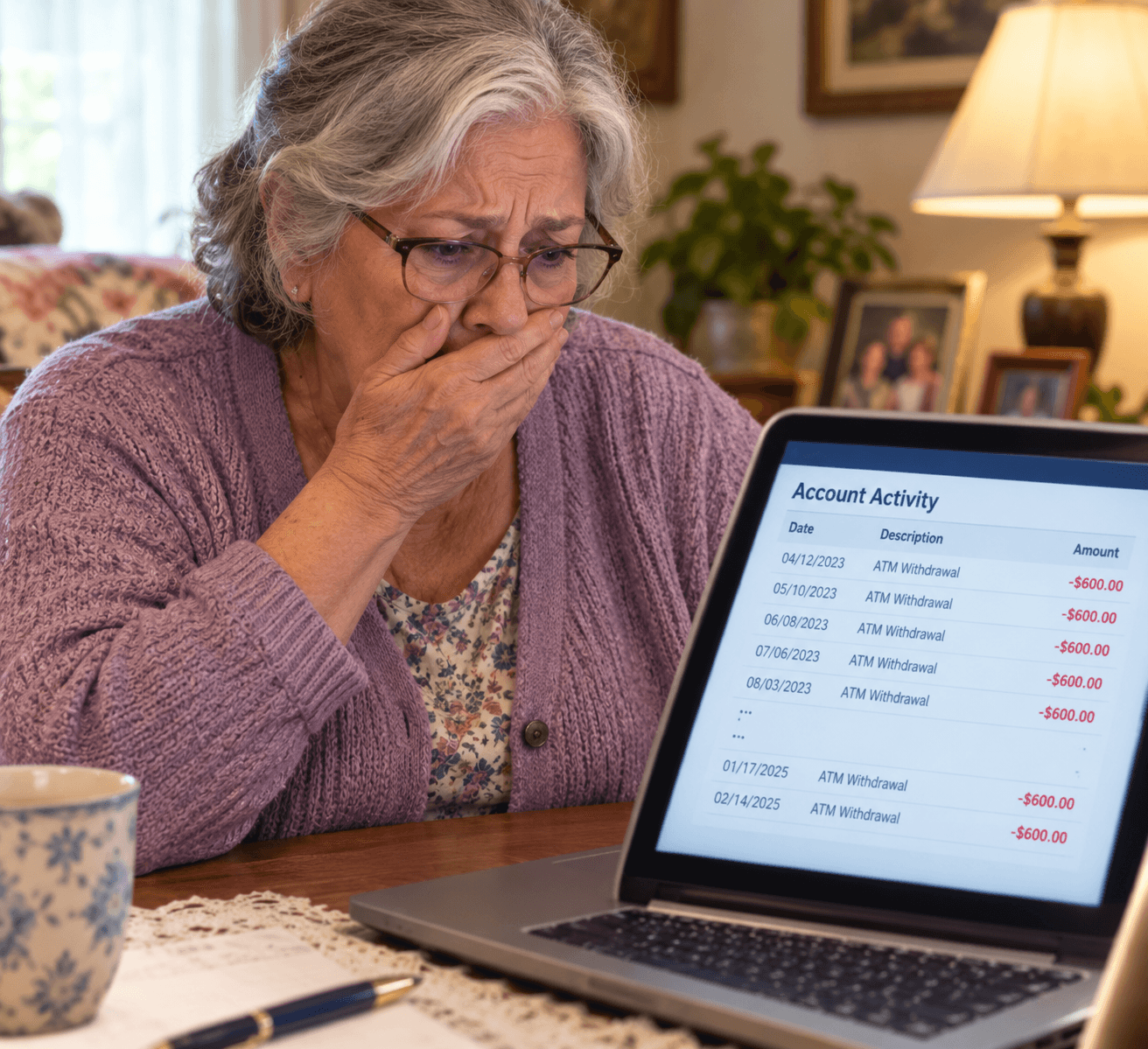
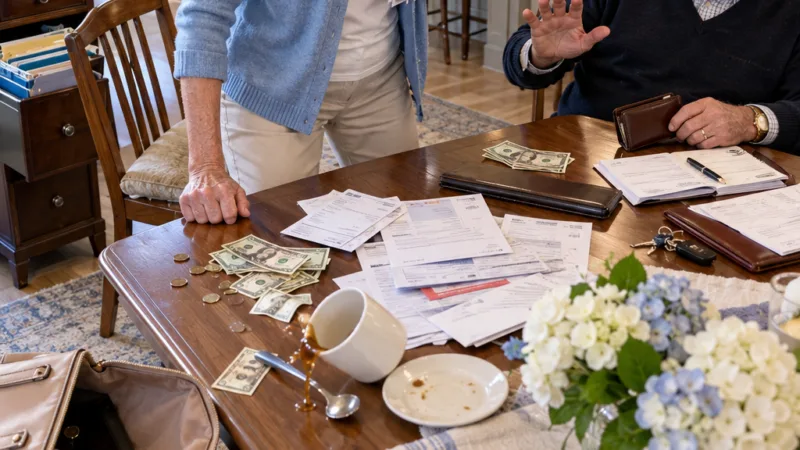
When I agreed to help my grandmother organize her finances, I expected to find the usual bills, grocery purchases, and medical expenses. She was eighty-two and had recently started forgetting small details, so I wanted to make sure everything was in order. While going through her bank statements, however, I noticed something strange. Every month, exactly $600 had been withdrawn from her account. The withdrawals had been happening for more than two years. At first, I assumed they were legitimate payments that Grandma had simply forgotten about. But when I asked her about them, she stared at me with a confused expression and quietly said, “I don’t remember taking that money.”
I went back through the statements carefully and discovered that the withdrawals had started twenty-eight months earlier. The timing was almost perfectly consistent, with only a few months showing slightly different dates. Altogether, nearly $17,000 had disappeared from my grandmother’s account. What bothered me most was that she had no idea where the money had gone. She insisted she had never authorized anyone to withdraw six hundred dollars every month. I asked whether she had given anyone access to her bank card or account, and she mentioned that several family members occasionally helped her with errands. That answer made me even more concerned.
The next morning, I contacted the bank with my grandmother beside me. Because the account belonged to her, she had to confirm her identity and authorize the investigation. The bank representative reviewed the transaction history and told us that the withdrawals were connected to a method of access that had been used repeatedly over the previous twenty-eight months. Grandma became visibly upset when she heard that. She kept saying that she trusted her family and couldn’t imagine anyone taking advantage of her. I didn’t want to accuse anyone without evidence, so I asked the bank for copies of the relevant records and began comparing the withdrawal dates with Grandma’s calendar, appointments, and old receipts.
Then I noticed something that changed everything. Almost every withdrawal happened within a day or two of someone visiting Grandma to “help” her with errands or paperwork. One name appeared more often than the others. It was someone Grandma trusted completely. When I asked Grandma about that person’s visits, she remembered them but couldn’t remember ever giving them money. I decided not to confront anyone yet. Instead, I gathered every document I could find and asked the bank what steps were available to protect her account. We changed her passwords, replaced her card, added additional security measures, and made sure Grandma understood every transaction going forward.
A few days later, the truth finally began to come together. The person involved had been taking advantage of Grandma’s trust for more than two years, believing that the regular $600 withdrawals would go unnoticed. But the bank records had created a clear pattern that was difficult to explain away. Grandma was heartbroken—not only because of the money, but because the person she trusted had taken advantage of her when she was most vulnerable. We reported the suspected withdrawals to the appropriate authorities and continued working with the bank to determine what could be recovered. The experience taught me something I’ll never forget: sometimes protecting an elderly family member isn’t about controlling their finances; it’s about making sure they understand what’s happening with their own money before someone else quietly takes control.
Read Story…
My Grandmother Had $69,000 in the Bank—Then I Discovered Someone Had Been Taking $600 Every Friday for 28 Months, and the Final Secret Was Even Worse
The overdraft notice came to my email on a Tuesday morning.
Wrong account.
Same last name.
At first, I almost deleted it.
My email address had been connected to several of my grandmother’s accounts for years because I helped her with paperwork.
She was eighty-four.
She had arthritis in both hands.
She hated computers.
And whenever something important arrived by email, she would call me and say,
“Sweetheart, what does this mean?”
So I was used to getting notices.
But this one wasn’t supposed to come to me.
The subject line read:
ACCOUNT BALANCE ALERT — ACTION REQUIRED
I opened it.
The account belonged to my grandmother.
I frowned.
She shouldn’t have been anywhere near overdraft.
She had received almost $69,000 in her checking account the previous year after selling a small property she had inherited from my grandfather.
We had talked about that money.
She had told me she wanted to keep most of it untouched.
“It’ll pay for my care if I ever need it,” she’d said.
She had been terrified of becoming a burden.
That was Grandma.
She’d rather go without something herself than ask anyone else to pay for it.
I opened the banking notification.
Her balance was $1,800.
I stared at the screen.
Then I checked the date.
The account had held more than $69,000 less than a year earlier.
I logged in.
The password hadn’t changed since 2019.
The transaction history loaded.
And I saw it.
$600.
Cash withdrawal.
Friday.
Another Friday.
Another Friday.
And another.
I kept scrolling.
Twenty-eight months.
Almost every Friday.
$600.
The same amount.
The same ATM.
Cedar Street.
I counted the withdrawals.
There were 112 of them.
$67,200.
My hands went cold.
I called the bank.
The representative asked me several questions.
Then she said,
“There’s a second debit card on the account.”
I stopped breathing.
“What?”
“A second card was issued.”
“When?”
“Approximately twenty-eight months ago.”
“Who authorized it?”
She paused.
“Tyler Mitchell.”
My nephew.
My grandmother’s grandson.
My cousin.
My little brother’s son.
I stared at the screen.
“No.”
The representative continued.
“There’s also an authorized-user record.”
“Tyler?”
“Yes.”
I looked at the withdrawal history again.
Every Friday.
6:45 a.m.
The exact time Grandma’s home aide arrived.
The exact time Grandma was usually in the bathroom.
Tyler knew the schedule because he had helped arrange it.
I called Grandma immediately.
She answered cheerfully.
“Good morning, sweetheart.”
“Grandma?”
“Yes?”
“Are you sitting down?”
There was a pause.
“Why?”
“I need to ask you something about your bank account.”
She became quiet.
“What about it?”
“Do you know about a second debit card?”
“Yes.”
I closed my eyes.
“Who has it?”
“Tyler.”
My heart dropped.
“Why?”
“He manages my money.”
I looked at the statement.
“Grandma…”
“What?”
“He’s been taking $600 every Friday.”
Silence.
Then I heard her breathe in sharply.
“What?”
“Every Friday.”
“No.”
“Yes.”
“How much?”
“Six hundred dollars.”
“For how long?”
“Twenty-eight months.”
Her voice became very small.
“That can’t be.”
“I have the records.”
She didn’t speak.
Then I heard something I had never heard from my grandmother before.
Her voice shaking.
“Sweetheart…”
“Yes?”
“Please come over.”
THE $1,800 BALANCE
I drove to Grandma’s house immediately.
She lived in the same little brick house she’d owned since 1987.
The front garden was full of roses.
There was a bird feeder near the kitchen window.
Her curtains were always open during the day.
She liked sunlight.
When I walked inside, she was sitting at the kitchen table wearing a blue cardigan.
The bank statement was in front of her.
She hadn’t touched her coffee.
That scared me more than anything.
Grandma always drank her coffee.
Even when she was sick.
Even when she was angry.
Even when someone had died.
Coffee first.
Questions later.
That morning, the cup was untouched.
She looked up.
“Show me.”
I sat beside her.
I opened my laptop.
The transaction history filled the screen.
Friday.
$600.
Friday.
$600.
Friday.
$600.
Her eyes followed the rows.
“How many?”
“One hundred twelve.”
She counted silently.
Then whispered,
“Sixty-seven thousand two hundred.”
“Yes.”
She shook her head.
“No.”
“Grandma…”
“No.”
She pressed her hand against her chest.
“Tyler wouldn’t.”
I didn’t say anything.
She looked at me.
“He’s my grandson.”
“I know.”
“He helped me after your grandfather died.”
“I know.”
“He took me to appointments.”
“I know.”
“He fixed things around the house.”
“I know.”
She looked at the screen again.
“Maybe there’s an explanation.”
“I hope there is.”
“Maybe those were payments.”
“For what?”
She didn’t answer.
Then I noticed something.
“Grandma.”
“What?”
“Did you ever ask Tyler for cash?”
“No.”
“Did you give him permission to withdraw money?”
She hesitated.
“I told him he could help me.”
“Help you how?”
“Bills.”
“Which bills?”
“I don’t know.”
I looked at her.
“What do you mean you don’t know?”
She looked ashamed.
“He said he’d handle it.”
My stomach tightened.
“Did you sign anything?”
“I don’t remember.”
“Did you give him your card?”
“No.”
“Did he ever ask you to sign something?”
She stared at the table.
“Sometimes.”
“What kind of things?”
“Bank forms.”
“Did you read them?”
“No.”
“Why?”
She gave me a tired smile.
“Because I trusted my grandson.”
I reached across the table.
She held my hand.
“I feel stupid.”
“You’re not stupid.”
“I should have known.”
“You trusted family.”
She looked at me.
“Sometimes that’s the most dangerous thing.”
I didn’t answer.
Because I knew she wasn’t talking about Tyler anymore.
She was talking about herself.
THE SECOND CARD
I called the bank again.
This time, Grandma sat beside me.
The representative confirmed there was a second debit card.
Issued twenty-eight months earlier.
The card was connected to Grandma’s checking account.
The authorized user was Tyler.
Grandma listened.
Then she asked,
“Did I authorize that?”
The representative said,
“Our records show authorization.”
Grandma looked at me.
“Do you remember signing?”
She shook her head.
“No.”
The representative said,
“There was also a signature on file.”
I asked,
“Can we get a copy?”
After some verification, they said they could send documentation.
While we waited, I asked about the withdrawals.
“Can you confirm the dates?”
“Yes.”
“Same ATM?”
“Most of them.”
“Cedar Street?”
“Yes.”
“Same time?”
“Approximately 6:45 a.m.”
Grandma frowned.
“Why would Tyler go there that early?”
I looked at her.
“Where are you at 6:45 on Fridays?”
She thought.
“The aide comes at six-thirty.”
“And?”
“She helps me shower.”
My stomach dropped.
“What time are you usually in the bathroom?”
“Between six-forty and seven.”
I stared at the screen.
Someone had chosen that time deliberately.
The withdrawals weren’t random.
They were scheduled around Grandma’s routine.
I asked the bank one more question.
“Who issued the second card?”
The representative checked.
“Justin Park.”
Grandma frowned.
“Do I know him?”
“No,” I said.
But I knew the name.
Justin Park.
Tyler’s college roommate.
I remembered meeting him once at Tyler’s graduation party.
He had been friendly.
Too friendly, perhaps.
But I couldn’t remember why.
Then the bank representative said,
“There’s something else.”
“What?”
“The original application was processed in person.”
“When?”
“Twenty-eight months ago.”
“By Tyler?”
“Yes.”
“Was Grandma there?”
The representative paused.
“No.”
I looked at Grandma.
Her face went pale.
“What?”
I said quietly,
“You weren’t there.”
She shook her head.
“No.”
The bank employee continued.
“There was a signature authorizing the card.”
Grandma whispered,
“That’s not mine.”
I asked for a copy.
The representative said it would be sent to us.
Then Grandma stood.
“I need air.”
I followed her outside.
She sat on the porch.
For several minutes, neither of us spoke.
Finally she said,
“I don’t want you to hate him.”
I sat beside her.
“Grandma…”
“He’s still family.”
“So are you.”
She looked at me.
“I know.”
“Then I’m going to protect you.”
She nodded.
But she looked frightened.
Not of Tyler.
Of what would happen when the truth came out.
TYLER’S VERSION
Tyler arrived that afternoon.
He didn’t knock.
He used his key.
He walked into the kitchen and saw the bank papers.
His expression changed immediately.
“Who called the bank?”
I stood.
“I did.”
He looked at Grandma.
“Why?”
She didn’t answer.
I said,
“Because there are 112 withdrawals.”
His face hardened.
“You had no right.”
I almost laughed.
“She had $1,800 left.”
He looked at Grandma.
“Grandma, tell her.”
Grandma’s hands trembled.
“Tell me what?”
Tyler stepped closer.
“I’ve been helping you.”
“With $67,200?”
He looked at me.
“You don’t understand.”
“Then explain.”
He grabbed the statement.
“These were expenses.”
“What expenses?”
“Things.”
“What things?”
“Medical.”
“Show me.”
“I don’t have to show you.”
Grandma looked up.
“Yes, you do.”
Tyler froze.
She had never spoken to him that way.
“Grandma…”
“Where did my money go?”
He looked at her.
“I handled it.”
“Where?”
He didn’t answer.
I said,
“Were you taking $600 every Friday?”
He stared at me.
“Yes.”
Grandma closed her eyes.
“Why?”
“I needed it.”
The room went silent.
Grandma looked at him.
“You needed my money?”
Tyler shook his head.
“No. Not like that.”
“Then what does that mean?”
He looked at me.
“You don’t know what happened.”
“What happened?”
He swallowed.
Then he said,
“I was paying for something you don’t know about.”
I looked at Grandma.
“What?”
Tyler shook his head.
“I can’t.”
Grandma whispered,
“Tyler, you have to.”
He walked toward the door.
I blocked him.
“Not until you explain.”
He looked at me.
And for the first time, I saw something in his eyes that wasn’t anger.
Fear.
He said,
“If I tell you, everything falls apart.”
Then he left.
THE FIRST LIE
The next morning, Tyler texted me.
Stop digging.
I replied:
You stole $67,200 from Grandma.
His response came immediately.
You don’t know the whole story.
I wrote:
Then tell me.
Nothing.
I called.
Voicemail.
I called again.
Nothing.
I started searching through Grandma’s files.
Insurance.
Medical.
Taxes.
Bills.
I found almost nothing unusual.
There was no record of $600 weekly expenses.
No nursing invoices.
No medical provider receiving those amounts.
No recurring payment matching the withdrawals.
Then I noticed something.
Grandma’s property taxes were fully paid.
Her utilities were current.
Her medical bills were current.
Her credit cards were current.
So where had the money gone?
I searched the bank statements again.
The withdrawals were cash.
No transfers.
No checks.
No electronic payments.
Cash.
Every Friday.
That meant someone was physically taking it.
I called the bank and asked for the ATM records.
They confirmed the withdrawals.
Cedar Street branch.
6:45 a.m.
Every Friday.
The bank also provided a security note.
The same card had been used.
The same PIN.
I stared at that sentence.
The PIN.
How had Tyler known it?
Then I remembered something.
Grandma’s PIN was her wedding anniversary.
Everyone in the family knew it.
I felt sick.
This wasn’t sophisticated.
It was worse.
It was family.
Someone had known exactly how little Grandma would question him.
Someone had known exactly when she would be distracted.
Someone had known exactly how to make the withdrawals disappear into the background.
Then I found the bank application.
The duplicate debit card request.
The signature.
I knew immediately.
It wasn’t Grandma’s handwriting.
I compared it with her driver’s license.
The signature was completely different.
Someone had copied her name.
I took the records to Grandma.
She stared at them.
Then she whispered,
“Tyler said I signed it.”
“Did you?”
“No.”
“Are you sure?”
She looked at me.
“I would remember.”
I believed her.
Then she said something that changed the direction of everything.
“There’s another account.”
“What?”
“My savings account.”
“How much?”
“I don’t know.”
I called the bank.
There was another account.
And it had been nearly empty for months.
But it hadn’t started that way.
It had held $18,400.
All of it had been transferred out.
To an account belonging to someone named—
Justin Park.
JUSTIN
Justin Park was Tyler’s old college roommate.
The same person who had processed the second debit card.
The same person who had apparently received $18,400 from Grandma’s savings.
I called the bank.
They wouldn’t discuss the recipient’s account.
But they confirmed the transfer.
It had occurred in three installments.
$5,000.
$7,000.
$6,400.
All during the same year the weekly withdrawals began.
I looked at Grandma.
“Did you ever give Justin money?”
“No.”
“Did you know him?”
She shook her head.
“Not really.”
“Did Tyler ever bring him here?”
She thought.
“Yes.”
“When?”
“Once.”
“Why?”
“He said Justin was helping with my paperwork.”
“What paperwork?”
“I don’t remember.”
I felt sick.
We needed a lawyer.
Not because I wanted revenge.
Because Grandma needed protection.
We contacted an attorney named Helen Morris.
She reviewed the records.
She didn’t say much at first.
Then she asked Grandma,
“Did you sign any power of attorney?”
Grandma looked confused.
“I don’t think so.”
Helen looked at me.
“Let’s find out.”
We requested copies of everything.
Within two days, we had them.
There was a power-of-attorney document.
It appeared to grant Tyler authority over Grandma’s finances.
Grandma’s signature was on it.
But it looked wrong.
Helen studied it.
“This needs to be examined.”
“Is it fake?”
“I can’t make that determination without a forensic review.”
“But you suspect it?”
“I suspect the signature requires investigation.”
Then she pointed to the date.
“This is important.”
“What?”
Grandma had been in the hospital that week.
She had pneumonia.
She couldn’t have signed the document at home.
I looked at Grandma.
“Do you remember signing this?”
“No.”
Helen asked,
“Who was visiting you?”
Grandma thought.
“Tyler.”
My stomach turned.
“He brought me flowers.”
“Anything else?”
“He said there were papers I needed to sign.”
“What did you do?”
“I told him I was too tired.”
Helen looked at the document.
“That may matter.”
Then she noticed another name.
A witness.
Justin Park.
The same Justin who had processed the debit card.
The same Justin who had received Grandma’s money.
Helen leaned back.
“This is no longer a simple family dispute.”
WHAT THE $67,200 WAS REALLY FOR
Tyler finally agreed to meet us.
He arrived at Helen’s office with his lawyer.
He looked older than he had a week earlier.
His lawyer spoke first.
“My client acknowledges receiving funds.”
I interrupted.
“Receiving?”
He looked at me.
“Don’t.”
I turned to Tyler.
“You took $67,200.”
He swallowed.
“Yes.”
“Why?”
His lawyer said,
“We’re not here to discuss details.”
Grandma looked at Tyler.
“I am.”
Tyler looked at her.
She said,
“Tell me.”
He lowered his head.
“I was trying to fix something.”
“What?”
He didn’t answer.
“Tyler.”
“I had debt.”
I stared at him.
“Debt?”
“Yes.”
“What kind?”
“Business.”
“What business?”
He had started a small contracting company.
It failed.
He owed money.
He was behind on taxes.
He was being threatened with lawsuits.
He needed cash.
But there was more.
He had been trying to keep his business alive because he believed it was his only chance to support his children.
Grandma listened.
Then she asked,
“Why didn’t you ask me?”
He looked at her.
“Because you would have said no.”
She nodded.
“Yes.”
“That’s why.”
“You stole it.”
“I was going to pay you back.”
“When?”
“I don’t know.”
“How much did you repay?”
He looked away.
“None.”
Grandma closed her eyes.
I expected anger.
Instead she looked devastated.
Not because of the money.
Because her grandson had been afraid to ask her.
Then Tyler said something none of us expected.
“The money wasn’t all for me.”
I looked at him.
“What does that mean?”
He looked at Grandma.
“There was another person.”
“Who?”
He swallowed.
“Dad.”
Grandma froze.
“Your father?”
Tyler nodded.
“My dad knew.”
“Your father knew you were taking my money?”
“Yes.”
“Why?”
Tyler looked at his lawyer.
Then back at us.
“Because he told me to.”
The room went silent.
My uncle.
Grandma’s son.
Tyler’s father.
He had known.
Maybe even encouraged it.
But why?
MY UNCLE’S SECRET
My uncle’s name was Michael.
He had always been the difficult one.
After Grandpa died, Michael moved away.
He called occasionally.
He sent cards.
But he rarely visited.
When Grandma needed help, he always had an excuse.
Work.
Money.
Travel.
Family problems.
I had never understood it.
Now I called him.
He didn’t answer.
I left a message.
Then another.
Finally, he called back.
“What happened?”
“Did you know Tyler was taking Grandma’s money?”
Silence.
“Yes.”
My stomach dropped.
“Why?”
“I was trying to help him.”
“With Grandma’s money?”
“I told him he’d have to repay it.”
“He didn’t.”
“I know.”
“Did you authorize the card?”
“No.”
“Did you know Justin was involved?”
Another silence.
Then he said,
“Justin was helping us.”
“Us?”
“Yes.”
“Who is us?”
He sighed.
“Your grandmother.”
I almost laughed.
“You’ve been stealing from your own mother and calling it help?”
“No.”
“Then explain.”
“I can’t.”
“Why?”
“Because if I tell you, you will hate me.”
I said,
“I already need an explanation.”
He hung up.
The next morning, he showed up at Grandma’s house.
He looked exhausted.
He sat at the kitchen table.
Grandma stared at him.
“Michael.”
“Mom.”
“You knew.”
He nodded.
“Yes.”
“Why?”
He looked at me.
Then said,
“Because I was trying to protect you from something you never knew.”
Grandma shook her head.
“Everyone keeps saying that.”
Michael looked down.
Then he finally told us.
Years earlier, before Grandpa died, there had been a business partnership.
Grandpa had invested money with a friend.
The investment went bad.
The friend disappeared.
Grandpa lost almost everything.
But there was one account.
A protected savings account Grandma didn’t know existed.
Grandpa had put money there for his family.
After his death, Michael found it.
There was a problem.
The account wasn’t in Grandma’s name.
It was in a family trust.
And the trust contained a clause.
If Grandma ever became unable to manage her finances, the money would be distributed among her children and grandchildren.
Michael had discovered the trust.
Then he discovered something else.
The trust was worth more than $100,000.
I stared at him.
“Where is it?”
He shook his head.
“Gone.”
“What?”
“It was liquidated.”
“By whom?”
He looked at Grandma.
“Tyler.”
Grandma’s face went pale.
“You used my money to replace money from the trust?”
Michael nodded.
“I thought we could restore it before Mom noticed.”
I stared at him.
“So the $67,200 was being used to cover a missing trust?”
“Yes.”
“Why was the trust missing?”
Michael looked away.
“Because I borrowed from it.”
THE REAL THEFT
Michael had taken money from the family trust years earlier.
He had lost it.
He tried to replace it.
He couldn’t.
Then Tyler discovered the problem.
Instead of telling Grandma, Michael convinced Tyler to help.
The $600 weekly withdrawals became a way to rebuild the missing money.
But the amount was never enough.
So Tyler took more.
Then Justin became involved.
The three of them created a system that was supposed to last only a few months.
It lasted more than two years.
I looked at Michael.
“How much did you take?”
He whispered,
“$31,000.”
Grandma closed her eyes.
“And Tyler?”
“$67,200.”
“And Justin?”
“$18,400.”
I looked at the numbers.
More than $116,000.
Gone.
Grandma’s savings.
Her trust.
Her security.
Her future.
All because three people had decided they could solve one bad decision with another.
I expected Grandma to scream.
She didn’t.
She simply asked,
“Why didn’t you tell me?”
Michael began crying.
“Because I was ashamed.”
She nodded.
“You should have been.”
He looked at her.
“I know.”
Then Grandma said something that none of us expected.
“I would have helped you.”
Michael shook his head.
“I didn’t deserve it.”
“No.”
Grandma’s voice was firm.
“You didn’t.”
He looked down.
“But you were still my son.”
He cried.
So did I.
Because that was Grandma.
She could be hurt without becoming cruel.
But then she turned toward Tyler.
“And you.”
He looked up.
“Yes?”
“You were my grandson.”
“I know.”
“You didn’t deserve my trust.”
He nodded.
“I know.”
“But you had it.”
He covered his face.
And Grandma whispered,
“You should have asked.”
THE SECOND SECRET
We thought everything was finally exposed.
It wasn’t.
Helen called us two days later.
“There is another account.”
I thought she was joking.
“Another one?”
“Yes.”
“Whose?”
“Your grandmother’s.”
“How much?”
“Approximately $42,000.”
I stared at her.
“Where?”
“A credit union.”
“Who has access?”
She hesitated.
“Your grandmother.”
“Anyone else?”
“One authorized representative.”
“Who?”
She looked at me.
“Laura.”
I froze.
“Me?”
“Yes.”
I had no memory of opening the account.
Helen handed me the paperwork.
My signature was there.
But it wasn’t my signature.
It had been copied.
The account had been opened eighteen months earlier.
And the deposits came from—
Grandma’s original account.
$1,200.
$2,000.
$4,500.
Small amounts.
Then larger ones.
Over time, $42,000.
I looked at Grandma.
“Did you know about this?”
She shook her head.
“No.”
We investigated.
The money had been transferred into the credit-union account and then withdrawn.
But there was one difference.
These withdrawals weren’t made by Tyler.
They were made by someone else.
The name was—
Michael Carter.
My uncle.
I looked at him.
He stared at the floor.
“Why?”
He said nothing.
“Michael.”
Finally he whispered,
“It wasn’t for me.”
“Then who?”
He looked at Grandma.
“For you.”
I didn’t understand.
“What?”
He reached into his pocket.
He pulled out a letter.
It was from my grandfather.
Dated before his death.
The letter said:
If anything happens to me, I want Michael to make sure Laura is protected.
I stared at it.
Michael explained.
The $42,000 wasn’t stolen.
It was an emergency fund Grandpa had created for me.
He had known that my marriage was unstable.
He had worried that I would someday need help.
But he didn’t trust my former husband.
So he created a protected fund.
Michael had been secretly maintaining it.
The forged signature was still wrong.
But the money itself had been intended for me.
I didn’t know whether to laugh or cry.
Everyone had been hiding money.
Everyone had been making promises.
Everyone thought secrecy was protection.
And somehow, all of it had tangled together.
But then I saw the final page.
There was a handwritten note.
Grandpa’s handwriting.
Laura must never be told until she is ready.
I stared at those words.
And suddenly I understood the deepest secret.
My family had been planning for me for decades.
Not because they thought I was weak.
Because they knew I would always try to carry everyone else.
THE FINAL $600
The next Friday arrived.
The account was frozen.
The second debit card was canceled.
The authorized users were removed.
The bank began an investigation.
Justin was suspended from his job pending review.
Michael admitted what he had done.
Tyler admitted everything.
But there was still one unresolved issue.
The next scheduled $600 withdrawal.
It was set for Friday morning.
The bank told us the card had been blocked.
Still, Grandma wanted to be there.
So Friday morning, we sat together.
6:30.
6:40.
6:45.
Nothing happened.
Grandma looked at me.
“Is that it?”
I smiled.
“Yes.”
She exhaled.
For the first time in twenty-eight months, no one was taking $600 from her account.
But then her phone rang.
Unknown number.
She answered.
“Hello?”
Silence.
Then a man’s voice said,
“You should have left things alone.”
Grandma handed me the phone.
I listened.
The voice continued.
“You have no idea what your family has been protecting.”
I asked,
“Who is this?”
The call ended.
I looked at Helen.
She said,
“Don’t call back.”
We didn’t.
But that afternoon, we discovered something.
The caller wasn’t Tyler.
It wasn’t Michael.
It wasn’t Justin.
It was someone none of us had considered.
The former business partner of my grandfather.
The man who had disappeared decades earlier.
His name was Daniel Mercer.
And he had been listed in the original trust documents.
He claimed the family had stolen money from him.
But the records showed something else.
My grandfather had actually protected Grandma’s money from him.
The trust had been created because Daniel had tried to seize part of the family business.
My grandfather had moved the money legally.
The trust existed to protect Grandma.
And the missing $100,000 Michael had borrowed from it?
It wasn’t the original amount.
The original trust had been worth nearly $300,000.
The remainder had been hidden.
Where?
In a safe-deposit box.
THE SAFE-DEPOSIT BOX
The box was in Grandma’s name.
Grandpa had opened it thirty-two years earlier.
Grandma had forgotten about it.
Inside was a folder.
A photograph.
And a handwritten ledger.
The ledger explained everything.
Grandpa had tracked every dollar.
Every payment.
Every investment.
Every debt.
And at the back was a note.
For my children:
If you’re reading this, you probably think the money is the important part.
It isn’t.
The important part is what you do when you discover it.
Underneath was another sentence.
Don’t let money turn family into enemies.
I cried when I read it.
Because that’s exactly what had happened.
Money had turned brothers against each other.
It had turned a grandson into someone capable of betrayal.
It had turned me against people I loved.
And it had made Grandma afraid to ask questions about her own life.
But the ledger contained one final number.
The amount remaining in the trust.
$214,600.
Enough to restore Grandma’s savings.
Enough to pay for her care.
Enough to make sure she never had to choose between dental work and groceries again.
We recovered the money legally.
The stolen amounts were repaid through settlements and the remaining trust assets.
Justin faced consequences for his role.
Tyler entered a repayment agreement.
Michael sold property to repay what he had taken.
Nobody walked away untouched.
But Grandma didn’t want revenge.
She wanted security.
She wanted honesty.
And she wanted her family to stop lying.
THE BIGGEST TWIST
Three months after everything ended, Grandma called me into her bedroom.
She was holding a small envelope.
“There’s one more thing.”
I laughed.
“Grandma, please.”
“I mean it.”
She smiled.
“I think we have finally found everything.”
She handed me the envelope.
It was addressed to me.
In Grandpa’s handwriting.
I opened it.
The letter was short.
Laura,
If you are reading this, then you have finally discovered what I spent years trying to protect.
You probably think I left money behind for you.
I didn’t.
I left choices.
I stared at the page.
Then I read the next line.
The money was never meant to belong to one person.
It was meant to make sure no one in this family ever had to choose between dignity and survival.
I started crying.
Then came the final paragraph.
And Laura, there is something your grandmother doesn’t know yet.
I looked at Grandma.
She frowned.
“What?”
I continued reading.
When you were a little girl, your grandmother asked me which of our children I trusted most.
I told her I trusted the one who would tell the truth even when it hurt.
That was you.
I stopped.
Grandma’s eyes filled with tears.
I continued.
But I was wrong about one thing.
You are not the only one who can tell the truth.
Your brother can learn.
Your nephew can learn.
And your grandmother deserves to hear it from all of you.
I looked at Grandma.
She was crying.
Then I realized the real inheritance wasn’t the money.
It was the responsibility.
The responsibility to stop repeating the same mistakes.
THE FAMILY DINNER
Six months later, we had dinner together.
Grandma sat at the head of the table.
I sat beside her.
Evan came.
Michael came.
Tyler came.
Even Noah, Grandma’s great-grandson, came.
Nobody wanted to be there at first.
It was awkward.
Quiet.
Then Grandma put down her fork.
“I have something to say.”
Everyone stopped.
She looked at Tyler.
“You stole from me.”
He nodded.
“Yes.”
“You lied to me.”
“Yes.”
“You broke my trust.”
“Yes.”
Then she looked at Michael.
“You did too.”
He nodded.
“Yes.”
Then she looked at me.
“And you.”
I froze.
“What?”
“You thought they didn’t love you.”
I couldn’t speak.
She smiled sadly.
“You thought I gave Tyler more because he was more important.”
I looked down.
She took my hand.
“You were wrong.”
Tears filled my eyes.
“I know.”
“No.”
She squeezed my hand.
“I want you to hear me.”
I looked at her.
“You were never less loved.”
I cried.
Then she looked around the table.
“None of you were.”
Everyone became quiet.
“Money made you afraid.”
She shook her head.
“But money is only money.”
She pointed to the table.
“This is family.”
Then she said the sentence I would remember forever.
“If you ever have to choose between money and a person you love, choose the person.”
Tyler looked at her.
“What if the person is wrong?”
Grandma smiled.
“Then tell them.”
“What if they hate you?”
“Tell them anyway.”
“What if you lose them?”
She took a breath.
“Then at least you didn’t lose yourself.”
Nobody spoke.
Then Tyler stood.
He walked around the table.
He knelt beside Grandma.
And he cried.
“I am sorry.”
Grandma put her hand on his head.
“I know.”
“I don’t deserve forgiveness.”
“Maybe not yet.”
He nodded.
“But you can earn trust again.”
He cried harder.
And Grandma hugged him.
TWO YEARS LATER
Grandma is eighty-six now.
Her money is protected.
Her bills are paid.
She gets her dental work done.
She has a new roof.
She has a home aide she trusts.
And every Friday morning at 6:45, I visit her.
Not because I think something will happen.
Because that’s when I used to imagine someone taking $600 from her.
Now I sit at the kitchen table with her.
We drink coffee.
We talk.
Sometimes she complains.
Sometimes I complain.
Sometimes we laugh.
And every once in a while, she asks,
“Do you remember the $600?”
I smile.
“Yes.”
She shakes her head.
“I can’t believe I didn’t notice.”
“You trusted family.”
She nods.
Then she says,
“I’ll never stop loving them.”
“I know.”
“But I’ll never stop checking my statements either.”
We laugh.
Tyler visits every Sunday now.
He has a different job.
He pays Grandma back every month.
Not because she demanded it.
Because he wanted to.
Michael visits too.
Their relationship is slowly healing.
Not perfectly.
But honestly.
And me?
I don’t think I’ll ever look at a bank statement the same way again.
But I’ve also learned something.
The most dangerous secrets aren’t always the ones involving money.
Sometimes they’re the secrets people keep because they think they’re protecting you.
Sometimes they’re the lies people tell because they’re ashamed.
Sometimes they’re the truths everyone knows except the person who deserves to know them most.
My grandmother thought she had lost $67,200.
In one sense, she had.
But she also gained something.
She discovered exactly who she could trust.
And we discovered something too.
Family doesn’t mean protecting each other from consequences.
It means helping each other face them.
That was the lesson Grandpa left behind.
Not money.
Not property.
Not a trust.
A choice.
And every day, we get to make it again.
THE LAST FRIDAY
Last month, Grandma handed me an envelope.
“What’s this?”
“Open it.”
Inside was a bank statement.
I looked at the balance.
It was healthy.
Secure.
Protected.
Then I saw a handwritten note attached.
$600 — Every Friday
I laughed.
“Grandma.”
She smiled.
“Read it.”
I turned the paper over.
On the back she’d written:
I used to think Friday was the day someone took something from me.
Now Friday is the day my granddaughter comes for coffee.
I looked at her.
She shrugged.
“Much better use of $600.”
I laughed so hard I started crying.
She reached across the table.
“You know what I learned?”
“What?”
“Money can disappear.”
I nodded.
“People can disappoint you.”
I nodded again.
“Families can make terrible mistakes.”
I smiled sadly.
“Yes.”
“But if you’re lucky…”
She squeezed my hand.
“You get another Friday.”
I looked at her.
“What does that mean?”
She smiled.
“It means there’s always another chance to do things differently.”
I cried.
She smiled.
And we sat there together.
The same kitchen.
The same coffee.
The same Friday morning.
Only now there was no secret debit card.
No hidden withdrawal.
No $600 disappearing from an account.
Just my grandmother.
Still here.
Still laughing.
Still telling me to eat more.
Still asking me if I had enough gas in my car.
Still keeping an eye on everyone.
And for the first time, I understood that the money had never been the real story.
The real story was an eighty-four-year-old woman who trusted the people she loved so completely that she never imagined she needed to protect herself from them.
It was a grandson who made a terrible choice and spent years trying to outrun it.
It was a son who buried his shame under another person’s money.
It was a granddaughter who mistook financial favoritism for love.
And it was a family that finally learned the difference between keeping a secret and keeping a promise.
Grandma’s balance once dropped from $69,000 to $1,800.
But somehow, the moment we stopped hiding things from each other, our family became richer than it had been in years.
Not financially.
Something better.
We became honest.
And honesty turned out to be the one thing none of us could steal from each other.
So now, every Friday at 6:45 a.m., I think about that old ATM on Cedar Street.
I think about the $600.
I think about the 112 withdrawals.
And I think about how close we came to losing something worth much more than money.
Trust.
Because money can be replaced.
Accounts can be restored.
Houses can be repaired.
Debts can be repaid.
But trust is different.
Once it breaks, you can’t simply deposit more into it.
You have to rebuild it.
One truthful conversation at a time.
One kept promise at a time.
One Friday at a time.
And Grandma?
She still checks her statements.
But she doesn’t check them alone anymore.
I Sat Down to Help Grandma With Her Finances—Then I Noticed Something Strange
When I offered to help my grandmother organize her finances, I expected to find nothing more than ordinary household expenses. Grandma was eighty-two, and lately she had been having trouble keeping track of small bills and appointments. She wasn’t helpless, but paperwork had become frustrating for her. One afternoon, she handed me a folder containing several bank statements and asked me to help sort them. I sat at her kitchen table with a cup of tea beside me and began going through the pages one by one.

Advertisement
At first, everything looked normal. There were grocery purchases, utility bills, pharmacy charges, insurance payments, and occasional restaurant transactions. Then I noticed a withdrawal for $600. I didn’t think much of it until I saw another one the following month. Then another. The amount was always around six hundred dollars, and the withdrawals had been happening with surprising consistency.
I went back through the statements and started counting. One month became six. Six became twelve. Then eighteen. Finally, I realized the withdrawals had been happening for twenty-eight months. Twenty-eight payments of roughly $600 meant that close to $17,000 had disappeared from my grandmother’s account.
I looked at Grandma and asked if she knew what the withdrawals were for. She frowned and leaned closer to the statement. She studied the dates for several seconds before shaking her head. “No,” she said quietly. “I don’t remember taking that money.” I asked whether she had been paying someone regularly for housekeeping, transportation, medical care, or anything else. She said no.
That answer immediately made me uncomfortable. Grandma wasn’t wealthy, and $600 a month was significant for her. I asked whether anyone else had access to her bank card, PIN, checks, or online banking. She hesitated before telling me that a family member sometimes helped her with groceries, appointments, and paperwork. She had trusted that person for years and had never thought there was a reason to question them.
I didn’t want to jump to conclusions. Family disagreements can become ugly very quickly, especially when money is involved. So instead of accusing anyone, I suggested that we contact the bank together. Grandma agreed. The next morning, we went to the branch and explained that she had discovered a series of withdrawals she did not recognize.
Because the account belonged to Grandma, the bank representative spoke directly with her and began reviewing the transaction history. The representative confirmed that the withdrawals were not ordinary automatic bill payments. They had been made through an account-access method that had been used repeatedly. The bank couldn’t simply tell us who was responsible, but they explained what documentation could be requested and what steps Grandma could take to protect the account.
As we looked through the records, I noticed another strange detail. The withdrawals weren’t completely random. Many of them happened within a day or two of someone visiting Grandma to “help” her. I compared the dates with an old calendar she kept near the refrigerator. Several dates matched visits from the same person.
My stomach dropped when I saw the pattern. I asked Grandma whether that person had ever asked her for money. She immediately shook her head. “They would never do that,” she said. “They’ve always been good to me.” I didn’t argue with her. I simply showed her the dates.
For the first time, Grandma became silent. She looked at the statements again and then at the calendar. She remembered the visits, but she couldn’t remember giving anyone permission to withdraw money. That was when I realized this wasn’t just about missing money anymore. It was about someone potentially taking advantage of her trust.
We decided not to confront the person immediately. Instead, we focused on protecting Grandma. With her permission, we changed her online banking password, replaced her bank card, reviewed the people who had access to her financial information, and asked the bank about additional security measures. We also gathered copies of the statements and transaction records so there would be a clear paper trail.
A few days later, we confronted the person with the records. At first, they denied knowing anything about the withdrawals. They said they had never taken Grandma’s money and suggested that the bank must have made a mistake. But when we showed them the repeated transactions and dates, their explanation began to change.
The conversation became emotional. Grandma sat quietly while the person tried to explain why the withdrawals had happened. Eventually, the explanation no longer sounded convincing. What had been presented as an innocent misunderstanding appeared to be something much more serious. Grandma was devastated—not simply because nearly $17,000 was missing, but because the person involved was someone she had trusted.
We reported the suspected financial abuse through the appropriate channels and continued working with the bank to determine whether any of the money could be recovered. The process was slower than we hoped, and there were no immediate answers. But Grandma finally had control over her account again. Every transaction was reviewed carefully, and she knew exactly where her money was going.
The experience changed the way I looked at helping elderly relatives with finances. Grandma didn’t need someone to take over her life. She needed someone willing to sit beside her, look at the numbers, and ask questions when something didn’t make sense. Twenty-eight months of $600 withdrawals had gone unnoticed because each individual transaction seemed small enough to ignore. Together, they represented thousands of dollars and a serious breach of trust.
Most importantly, Grandma learned that asking for help with her finances didn’t mean giving up her independence. And I learned that sometimes the biggest warning sign isn’t one suspicious transaction—it’s a pattern that continues quietly month after month. What started as a simple afternoon of organizing bank statements ended with us uncovering a financial mystery that had been hiding in plain sight for more than two years.