AITA for Letting My Niece Help Me Prepare Thanksgiving Dinner When Her Mom Got Upset?
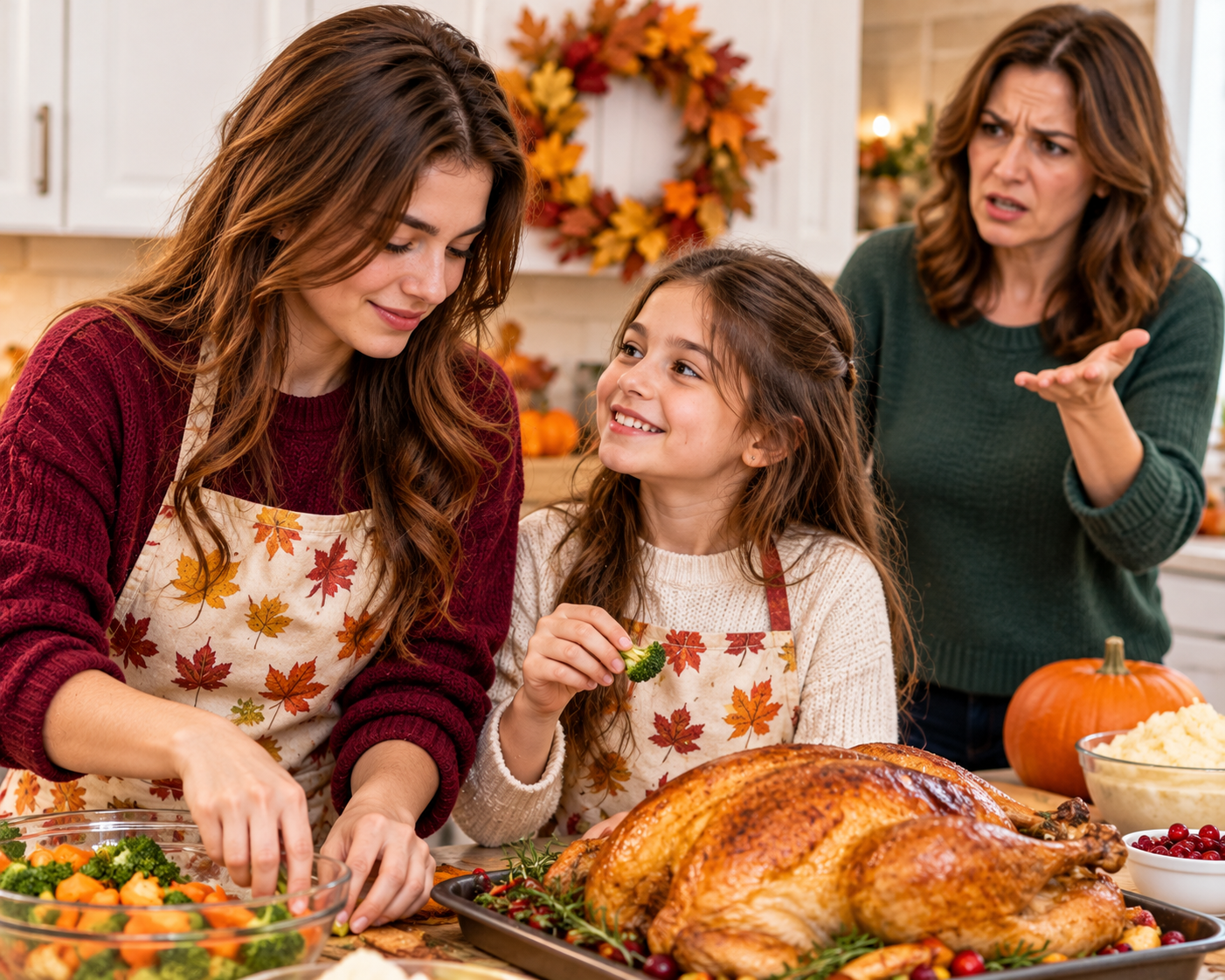
I’m a 36-year-old woman, and Thanksgiving has always been one of my favorite holidays. Every year, my family gathers at my house for a big dinner, and I usually take responsibility for preparing almost everything. I enjoy cooking, decorating the house, setting the table, and making sure everyone has a wonderful time. However, hosting Thanksgiving for a large family is a lot of work, especially when most people arrive shortly before dinner and expect everything to be ready. Over the years, I’ve learned to manage the stress, but this year I wanted to make the preparation a little more enjoyable instead of spending the entire morning rushing around the kitchen by myself.
My niece, Emily, is 14 years old and has recently developed a serious interest in cooking. Whenever she visits my house, she usually follows me into the kitchen and asks what I’m making. She loves watching cooking videos, collecting recipes, and trying simple dishes whenever she gets the opportunity. A few months ago, she told me that she wanted to learn how to prepare proper family meals instead of relying on frozen food and snacks. I thought it was great that she was interested in learning something practical at her age, so I started showing her basic cooking techniques whenever she visited. She was always enthusiastic, listened carefully, and seemed genuinely proud whenever she successfully prepared something.
A few days before Thanksgiving, Emily called me and asked whether she could come over early to help prepare dinner. She explained that she wanted to learn how to make some traditional Thanksgiving dishes and thought it would be fun to spend the morning cooking together. I agreed immediately because I knew she enjoyed it, and I also appreciated having someone around who was genuinely interested in helping. I told her that she could help with simple tasks like washing vegetables, mixing ingredients, preparing the mashed potatoes, and arranging desserts. I also made it clear that I would handle anything involving hot oil, sharp knives, or complicated equipment. She sounded incredibly excited and even asked whether she should bring her own apron.
On Thanksgiving morning, Emily arrived at my house around nine o’clock with her hair tied back and a notebook containing several recipes she had written down. She immediately asked what we were making first and whether she could help with the mashed potatoes. We spent the morning preparing different dishes, listening to music, and talking about school, friends, and her plans for the future. I showed her how to measure ingredients, season vegetables, prepare a casserole, and organize everything so that multiple dishes could be ready around the same time. She was surprisingly careful and responsible, and I could tell she was enjoying every minute. Instead of feeling exhausted and overwhelmed, I was actually having a wonderful time.
The situation changed when my sister, Emily’s mother, arrived with her husband and the rest of the family. She walked into the kitchen, saw Emily wearing an apron and helping me prepare food, and immediately asked what was going on. I explained that Emily had volunteered to help because she wanted to learn how to cook. My sister looked at her daughter and asked why she was working instead of relaxing like the other children. Emily smiled and explained that she had asked to come early because she wanted to help me. However, my sister didn’t seem happy with that answer. She told Emily to take off her apron and go spend time with her cousins because Thanksgiving wasn’t supposed to be a day for children to work.
I tried to keep the conversation calm and explained that Emily wasn’t being forced to do anything. She had specifically asked to help, and I was simply giving her an opportunity to learn some basic cooking skills. I also pointed out that she wasn’t preparing the entire meal or doing anything dangerous. She was helping with small tasks that she genuinely enjoyed. My sister responded that I should have asked her permission before involving her daughter in the kitchen. She then accused me of taking advantage of Emily because I didn’t want to do all the work myself. That comment honestly hurt because I had never pressured Emily to help, and she had been happier than ever that morning. I couldn’t understand why something she enjoyed was suddenly being treated like punishment.
My brother-in-law eventually joined the conversation and said that if I needed help with Thanksgiving dinner, I should have asked the adults instead of expecting a teenager to contribute. I reminded him that I had been hosting Thanksgiving for years, and nobody had offered to arrive early and help me prepare everything. Everyone seemed perfectly comfortable enjoying the food after I had spent hours cooking it. I also explained that there was a difference between forcing a child to work and allowing a teenager to participate in something she was interested in. Emily was old enough to express what she wanted to do, and she had repeatedly told me that she enjoyed learning new recipes. My sister insisted that I was missing the point and that parents should decide how their children spend their holidays.
What made the situation especially uncomfortable was seeing Emily become embarrassed. Earlier that morning, she had been laughing, asking questions, and proudly telling me how much she wanted everyone to try the dishes she had helped prepare. After her mother criticized her, she became quiet and stopped asking questions. I didn’t want her to feel as though she had done something wrong, so I told her she could go relax with her cousins if she wanted. She looked disappointed and quietly told me that she still wanted to finish making the dessert because she had been looking forward to it. I let her continue, but I made sure she understood that she didn’t have to do anything she didn’t want to do. She eventually finished the dessert and seemed happy again, although the argument had clearly affected her.
When everyone finally sat down for Thanksgiving dinner, my sister barely spoke to me. The rest of the family tried to ignore the tension, and we managed to get through the meal without another argument. However, after everyone went home, my sister sent me a lengthy message accusing me of using her daughter as unpaid help and making her feel obligated to work during a family holiday. She said that Emily should have been enjoying Thanksgiving instead of spending the morning in my kitchen. I responded that Emily had asked to help, had enjoyed the experience, and had learned several useful skills. I also told her that I would never force her daughter to do something she didn’t want to do. My sister wasn’t satisfied and said I should have respected her authority as a parent.
Now several relatives have become involved, and everyone seems to have a different opinion. Some believe my sister is being unreasonable because Emily genuinely wanted to learn how to cook, while others think I should have asked her parents before allowing her to participate. I honestly don’t believe I did anything wrong. I wasn’t making Emily responsible for preparing Thanksgiving dinner, and I wasn’t treating her like a kitchen assistant. I was spending time with my niece, teaching her something useful, and allowing her to enjoy an activity she had specifically requested. Still, my sister believes I crossed a parenting boundary, and I’m beginning to wonder whether I should have handled the situation differently. So, AITA for letting my niece help me prepare Thanksgiving dinner when her mom got upset, even though her daughter was the one who volunteered?
Read Story…
AITA for having my niece help make thanksgiving dinner
My niece (12) has autism. She really relies on her routine. She goes to ABA therapy 15 hours a week and regular therapy every Thursday.
Her school has been closed all week, her ABA clinic is closed Wednesday-Friday this week, and she obviously isn’t able to go to therapy today. She also has family staying at her house, so her routine has been severely disrupted. She’s been surviving off of dinosaur chicken nuggets and has been sleeping 3-4 hours a night max.
My sister has the biggest house so we do holidays at her house. She’s not much of a cook so I bring the kids first thing in the morning, she gets all of the kids out of the house all morning.
It’s 10 kids to 3 adults. The youngest is 4 and the oldest, other than niece is 10. Between the lack of routine and lack of sleep she wasn’t going to do well being out of the house all day with her parents attention being decided.
I told them to let her stay home with me and I had her help with dinner. She made mashed potatoes, buttered noodles, mac and cheese, biscuits, brownies, and cut up vegetables. She also managed to take a nap before dinner.
I really think giving her simple tasks with step by step instructions was able to keep her distracted from the fact that she can’t go to school or therapy. She was even willing to eat everything that she made.
When everyone got home and saw that she was cooking, my sister got mad that I was making her work and that she thought that when I said to leave her here, I’d let her play on her iPad or color at the kitchen table.
I told her that my niece was doing well. She worked hard and she was proud of herself. It also kept her distracted enough for her to not melt down and wore her out enough for her to take a nap.
I’m trying to give my sister some grace because I know my niece has been keeping her up but I really think she’s overreacting. Our other sister is saying I should apologize and now I’m wondering if I was wrong for having her help cook.
Thanksgiving Dinner Turned Into a Family Argument I Never Expected
I’m a 36-year-old woman, and Thanksgiving has always been one of my favorite holidays. Every year, my family gathers at my house for a traditional Thanksgiving dinner, and I usually take responsibility for preparing almost everything. I enjoy cooking, decorating the house, setting the table, and making sure everyone has a wonderful time. However, hosting a large family gathering is not as easy as it might look. It takes hours of preparation, and most of the time, everyone arrives when the food is already finished. I’ve never really complained because I love bringing my family together, but this year, something happened that turned a happy holiday into an uncomfortable family argument.
My husband and I usually start preparing Thanksgiving dinner early in the morning. We make turkey, mashed potatoes, gravy, roasted vegetables, stuffing, casseroles, and several desserts. I normally spend most of the day moving between the kitchen and dining room, trying to make sure everything is ready at the same time. My husband helps with a few things, but I handle most of the cooking because I have my own recipes and prefer doing things a certain way. Over the years, everyone has become used to this arrangement, and nobody really thinks about how much work goes into preparing the meal.
My niece, Emily, is 14 years old, and she has recently developed a strong interest in cooking. Whenever she visits my house, she usually follows me into the kitchen and asks what I’m preparing. She loves watching cooking videos, looking through recipe books, and experimenting with simple dishes whenever she gets the opportunity. A few months ago, she told me that she wanted to become better at cooking because she didn’t want to grow up depending on other people to prepare every meal for her. I thought that was a wonderful attitude, especially for someone her age.
Whenever Emily came over, I started teaching her small things. Sometimes I showed her how to measure ingredients, prepare vegetables, make simple sauces, or follow a recipe without skipping important steps. I never gave her anything dangerous to do, and I always stayed nearby when she was helping. She was surprisingly interested and remembered many of the things I taught her. She would often message me afterward to tell me that she had tried making something at home and wanted to know how she could improve it.
Emily’s mother is my older sister, Melissa. She has a completely different attitude toward cooking and household responsibilities. Melissa rarely cooks anything complicated and usually prefers ordering food or preparing something quick. She has never shown much interest in teaching Emily how to cook, although I don’t think there’s anything wrong with that. Every family has different routines, and I have never criticized her parenting choices. However, Emily has mentioned several times that she wishes she could learn more cooking skills, which is why I was always happy to help whenever she visited.
A few days before Thanksgiving, Emily called me and asked whether she could come over early on the holiday. She explained that she wanted to help me prepare dinner and learn how to make some traditional Thanksgiving dishes. She specifically mentioned the mashed potatoes, vegetable casserole, and apple pie. I thought it was a great idea because she genuinely enjoyed cooking, and I could use an extra pair of hands. I told her she was welcome to come over, but I made it clear that she would only be helping with simple tasks and wouldn’t be expected to spend the entire day working.
She sounded incredibly excited and asked whether she should bring an apron. I told her that I had an extra one at home, but she insisted on bringing her own because she wanted to feel like a proper cook. Before ending the call, she asked if I could teach her how to prepare the dessert from beginning to end. I agreed, and we decided that she would arrive around nine in the morning so we would have plenty of time before the other guests arrived.
On Thanksgiving morning, Emily arrived exactly when she said she would. She had her hair tied back, wore comfortable clothes, and carried a small notebook containing several recipes she had written down. She immediately came into the kitchen and asked what we were making first. I could tell she had been looking forward to the morning because she was smiling and asking questions before she had even put her bag down. I gave her an apron, showed her where everything was, and explained which tasks she could safely help with.
We started with the vegetables because they needed to be washed, prepared, and seasoned before going into the oven. Emily helped rinse everything, arrange the ingredients, and mix the seasonings. I showed her how different herbs and spices could change the flavor of a dish. She wrote down a few things in her notebook and asked why I preferred certain ingredients over others. I enjoyed explaining everything because she wasn’t simply following instructions. She genuinely wanted to understand what she was doing.
After that, we moved on to the mashed potatoes. Emily was particularly excited about this dish because she said it was one of her favorite parts of Thanksgiving dinner. I showed her how to prepare the potatoes and explained how to get the texture right without making them too dry or too watery. She helped with the safe preparation steps while I handled the boiling water and other hot equipment. When we finished, she tasted a small spoonful and proudly announced that they were better than the ones she usually ate at restaurants.
We spent the next hour preparing a vegetable casserole and organizing the ingredients for the remaining dishes. I also showed her how to keep the kitchen clean while cooking instead of leaving every bowl, spoon, and container scattered across the counters. Emily seemed to enjoy even the small details. She asked where I stored certain ingredients, how I organized my cooking schedule, and how I remembered which dishes needed different oven temperatures. I explained that preparation was often just as important as the actual cooking.
At one point, Emily asked whether she could help prepare the apple pie. I agreed because it was something she had specifically wanted to learn. We worked together on the filling and prepared the other ingredients. I showed her how to follow the recipe carefully and why certain steps mattered. She was very proud of how everything turned out and even took a picture of the pie before we placed it in the oven. She said she wanted to show her friends that she had helped make a real Thanksgiving dessert.
Honestly, the morning was going better than I expected. Emily was happy, I was enjoying myself, and the kitchen was more organized than it usually was when I handled everything alone. We listened to music, talked about her school activities, and laughed about a few cooking mistakes she had made in the past. She told me that she sometimes felt embarrassed asking her mother for cooking lessons because Melissa usually told her that cooking was boring and unnecessary for someone her age. I told her there was nothing embarrassing about wanting to learn something useful.
The situation changed when Melissa arrived with her husband and their other family members. She walked into the kitchen looking for something to drink, but as soon as she saw Emily wearing an apron and helping me prepare food, her expression changed. She looked at her daughter and asked why she was working instead of sitting with the other children. Emily smiled and explained that she had asked to come early because she wanted to help me cook. She even pointed toward the apple pie and told her mother that she had helped prepare it.
I expected Melissa to smile or at least acknowledge that Emily had learned something new. Instead, she looked annoyed and told Emily to take off her apron and go relax. She said Thanksgiving was supposed to be a holiday, not a day when children were expected to work in the kitchen. Emily looked confused and explained that nobody had forced her to do anything. She had actually wanted to help because she enjoyed cooking. Melissa ignored that explanation and repeated that her daughter should be spending time with her cousins instead.
I tried to keep the conversation friendly and explained that Emily had volunteered. I told Melissa that we were only doing simple tasks and that I was handling anything involving hot equipment or complicated cooking. I also pointed out that Emily seemed genuinely happy and had been asking me to teach her these things for months. I thought that would clear up the misunderstanding, but Melissa became even more upset. She accused me of using her daughter’s interest in cooking as an excuse to get free help with Thanksgiving dinner.
I was honestly shocked by that accusation. I had never demanded that Emily help me, and I hadn’t even asked her to come early. She was the one who called me and requested to participate. I reminded Melissa that Emily could have stayed home or arrived with everyone else if she wanted to. Instead, she had specifically asked for the opportunity to learn. I also explained that she wasn’t responsible for the meal and could stop whenever she wanted. Melissa responded that I should have asked her permission before involving her daughter in any household responsibilities.
At that point, my brother-in-law joined the conversation. He said that if I needed help preparing Thanksgiving dinner, I should have asked the adults instead of involving a teenager. I couldn’t help pointing out that nobody had offered to arrive early and help me. Everyone was perfectly comfortable showing up when the food was ready, but suddenly they had strong opinions about who should be allowed to help in the kitchen. I wasn’t trying to make a point about anyone’s contribution, but I found it frustrating that they were treating a voluntary learning activity as though I had forced Emily into unpaid work.
My brother-in-law said that Thanksgiving should be about family time, not responsibilities. I agreed with him in principle, but I explained that cooking together could also be family time. Some people enjoyed watching football, some enjoyed talking in the living room, and Emily enjoyed learning how to prepare food. There was no reason she couldn’t participate in something she liked. I also told him that I would never force a child to spend an entire holiday doing chores just because I needed help.
Melissa wasn’t interested in hearing any more explanations. She told Emily that she needed to stop helping immediately and go spend time with her cousins. Emily looked embarrassed and quietly said that she still wanted to finish the dessert because she had worked hard on it. Melissa responded that she could finish it another time and didn’t need to spend her holiday in my kitchen. I could see that Emily was becoming upset, so I decided not to continue arguing in front of everyone.
I told Emily that she could do whatever she wanted and that nobody expected her to finish anything. If she wanted to relax with her cousins, that was completely fine. However, I also told her that she hadn’t done anything wrong by wanting to learn how to cook. She looked at me and said she still wanted to finish preparing the pie because she had been excited about everyone trying it. I let her continue helping with the safe parts while I handled the oven and other equipment. I made sure she understood that she could stop whenever she wanted.
After a while, Emily seemed to regain some of her excitement. She helped me arrange the dessert table and proudly showed me how she wanted the apple pie displayed. We took a picture together beside the finished dishes, and she told me she wanted to keep the recipe notebook so she could practice everything again later. I was happy that she hadn’t completely lost interest because of the argument. However, I could still tell that her mother’s reaction had affected her confidence.
When the rest of the family sat down for Thanksgiving dinner, the atmosphere was noticeably uncomfortable. Melissa barely spoke to me, and her husband seemed irritated whenever I tried to start a conversation. Emily sat quietly for most of the meal, although she smiled when a few relatives complimented the apple pie. One of my cousins even asked who had made it, and Emily proudly admitted that she had helped. I noticed Melissa immediately change the subject, which made the situation even more awkward.
After dinner, several relatives thanked me for preparing everything. A few people also complimented Emily’s contribution and said it was nice that she was learning to cook at such a young age. Melissa didn’t respond positively to those comments. She simply said that Emily should have been enjoying her holiday instead of spending the morning working. I didn’t want another argument, so I let the conversation move on. However, I was beginning to feel frustrated because nobody seemed willing to accept that Emily had made her own decision.
The real argument happened later that evening after everyone had returned home. Melissa sent me a long message accusing me of crossing a parenting boundary. She said I had no right to involve her daughter in preparing a large family meal without asking her first. She also claimed that Emily might have felt pressured to help because I was hosting Thanksgiving and she didn’t want to disappoint me. I found that particularly unfair because Emily had contacted me herself and repeatedly expressed how excited she was to participate.
I responded calmly and explained everything again. I told Melissa that Emily had volunteered, that I had only given her age-appropriate tasks, and that she had been free to stop at any time. I also reminded her that I had spent months encouraging Emily’s interest in cooking, and this was simply another opportunity for her to learn. I wasn’t expecting her to replace an adult or take responsibility for the meal. I was spending time with my niece and teaching her something she genuinely wanted to know.
Melissa replied that I was making excuses because I didn’t want to admit that I had used her daughter to make my own holiday easier. She said that if I needed help, I should have asked her or another adult instead of involving Emily. I told her that I wasn’t going to apologize for teaching my niece a useful skill, especially when she had asked me to do it. I also said that if she wanted to discuss parenting boundaries, we could have that conversation respectfully, but she shouldn’t make Emily feel guilty for enjoying something.
Since then, the family has become divided. Some relatives agree with me and think Melissa overreacted. They believe Emily is old enough to express her interests and that learning to prepare food is a valuable skill. Others think I should have asked Melissa before allowing Emily to participate, regardless of whether she volunteered. My husband believes I handled everything reasonably but thinks I should avoid inviting Emily to help again until her mother and I settle the disagreement.
What bothers me most is that Emily has barely mentioned cooking since Thanksgiving. Before the holiday, she would regularly send me recipes and ask when we could try something new. Now she seems hesitant to bring it up, and I worry that the argument made her feel as though she did something wrong. I don’t want to create problems between her and her mother, but I also don’t think a teenager should be discouraged from learning practical skills simply because her parent doesn’t share the same interest.
I have no problem respecting Melissa’s role as Emily’s mother, and I understand that parents should have a say in what their children do. However, I also believe there is a difference between forcing a child to perform chores and allowing them to participate in an activity they genuinely enjoy. Emily wasn’t cleaning my entire house, preparing every dish, or being treated like my personal assistant. She was spending time with me, learning recipes, and enjoying the experience. I thought I was encouraging her confidence and independence, not taking advantage of her.
Now I’m questioning whether I should have handled the situation differently. Maybe I should have sent Melissa a message beforehand explaining that Emily wanted to come early and help. At the same time, I never imagined that allowing my niece to learn how to prepare Thanksgiving dishes would turn into such a serious argument. I still feel that Emily should be allowed to explore her interests, and I don’t want her to think that helping me was something shameful. So, AITA for letting my niece help me prepare Thanksgiving dinner when her mom got upset, even though Emily volunteered and genuinely wanted to learn?