Husband and Sister-in-Law Spend Time Alone, Wife Is Told She’s Overreacting
Marriage depends on trust, honesty, and mutual respect, but those qualities can be tested when personal boundaries become unclear. While it is healthy for spouses to build positive relationships with each other’s families, there is often an unspoken expectation that those relationships remain transparent and respectful.
For one woman, what started as a seemingly harmless friendship between her husband and her younger sister gradually became a source of constant anxiety. At first, she appreciated how well they got along and believed it would make family gatherings more enjoyable.

Advertisement
Her husband frequently joked with her sister during family dinners, and everyone laughed at their playful conversations. Nobody thought much of it because they appeared to be nothing more than friendly relatives enjoying each other’s company.
As the months passed, however, their friendship continued to grow. They exchanged text messages throughout the day, shared funny videos, and often communicated directly instead of going through the wife whenever family plans were being made.
Initially, she ignored the behavior. She reminded herself that mature adults should not feel threatened by harmless friendships and that jealousy could easily damage an otherwise healthy relationship.
Still, certain moments began to bother her. She noticed her husband smiling at his phone late at night, only to discover he had been chatting with her sister for hours about random topics that had nothing to do with family matters.
During family events, the pair naturally drifted toward each other. They often sat together, shared inside jokes, and seemed completely absorbed in conversation while everyone else socialized separately.
The wife slowly began feeling invisible. Instead of enjoying visits with her family, she found herself watching interactions that left her wondering whether she was imagining a problem that didn’t actually exist.

Advertisement
Things became even stranger when her sister started calling her husband directly whenever she needed advice, help with errands, or someone to accompany her while shopping. Rarely did she contact her own sister first.
One weekend, the wife learned that her husband and sister had spent several hours together while she was working. They explained they had simply grabbed lunch after running errands, insisting there was nothing unusual about it.
Although she wanted to believe them, she couldn’t understand why neither of them had thought to invite her or even mention the plans beforehand. The secrecy bothered her more than the outing itself.
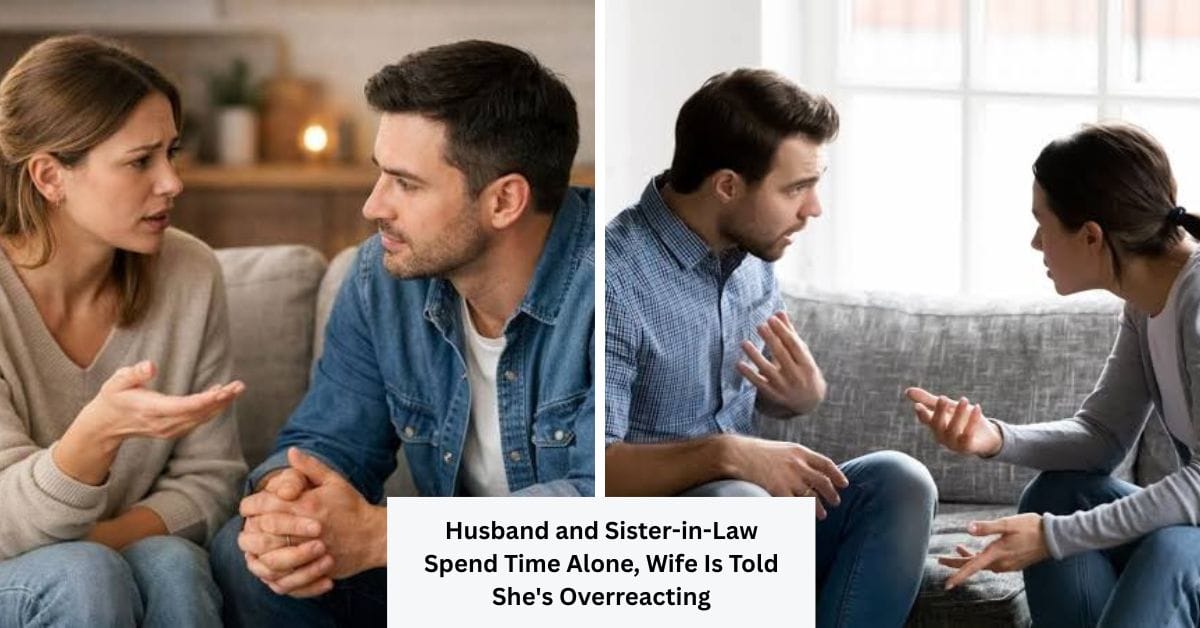
Eventually, she sat down with her husband and calmly explained how excluded she felt. She wasn’t accusing him of having an affair. She simply wanted reassurance that appropriate boundaries still existed.
Instead of comforting her, her husband became frustrated. He insisted she was being paranoid and argued that he shouldn’t have to limit perfectly innocent friendships just because she felt insecure.
Her sister reacted similarly. She laughed at the concern and suggested the wife had watched too many relationship dramas online. According to her, nothing inappropriate had ever happened between them.
Unfortunately, the conversation only made things worse. Rather than discussing possible compromises, everyone focused on convincing the wife that her feelings were irrational.
Feeling isolated, she turned to an online community for advice. She described the frequent texting, the private outings, and the way both her husband and sister dismissed her concerns whenever she tried to discuss them.
The responses were divided. Some readers believed there was no evidence of infidelity and warned against making accusations based solely on discomfort or suspicion.
Others argued that the issue wasn’t whether an affair was taking place. Instead, they believed emotional boundaries had already become blurred because the husband consistently prioritized a relationship that made his wife uncomfortable.
Many commenters emphasized that healthy marriages require transparency. If a friendship repeatedly causes pain, a caring spouse should be willing to discuss reasonable boundaries rather than dismiss those feelings outright.
Relationship experts often explain that emotional affairs rarely begin with romantic intentions. They sometimes develop gradually through excessive private communication, emotional dependence, and increasing secrecy, making open communication especially important.
Several readers suggested marriage counseling as a neutral environment where both partners could express their concerns without immediately becoming defensive. Professional guidance might help them define boundaries they both considered fair.
Others reminded the wife that trust and communication work both ways. While she deserved to have her feelings respected, she also needed to avoid making serious accusations without evidence and focus instead on how the situation affected her emotionally.
Ultimately, the debate highlighted a simple truth: every marriage has different expectations regarding friendships, privacy, and family relationships. What feels completely acceptable to one couple may feel deeply uncomfortable to another.
Whether the husband and sister-in-law were simply close friends or whether they had unintentionally crossed emotional boundaries, the real issue became the wife’s repeated attempts to communicate being met with dismissal. In any strong relationship, listening with empathy is often just as important as proving who is right. Respecting a partner’s emotional well-being is not a sign of weakness—it is one of the foundations of lasting trust.

Advertisement
AIO My sister and husband text privately and spend time together. Should I be concerned?
My husband and my sister have developed what I think is an unusually close relationship, and I’m trying to figure out if I’m overreacting.
My husband travels for work to the area where my sister lives, so they have opportunities to see each other when he is in town.
Some examples:
\- They text directly about travel plans, shopping, TV shows, and random family/life stuff.
\- My sister has gone shopping one-on-one with him before and bought clothes for him because she remembered his size.
\- She frequently sends me photos of outfits, earrings, dresses, etc. asking for my opinion, but often it feels more like she wants validation than advice.
\- Once she modeled a dress in front of me, my husband, and her husband. Her husband complimented her, but she immediately asked my husband what he thought.
\- She has privately texted my husband asking when he’ll be in town and told him when she would be away, seemingly so he wouldn’t visit when she was gone.
\- When my husband mentioned a possible birthday-week visit, she got very excited and immediately said she would start looking for reservations.
\- She often seems unusually interested in my husband’s reaction to clothes or style choices.
\- My husband says nothing inappropriate has happened and that it’s all harmless.
Am I overreacting, or does this sound like emotional flirtation / blurred boundaries? If you were in my shoes, would this bother you?
Marriage is built on trust, but trust also depends on healthy boundaries. When those boundaries become unclear, even innocent interactions can create confusion and emotional strain.
One woman recently shared a situation involving her husband and her sister that has left her questioning whether she is overreacting or noticing genuine warning signs. She stressed that she has no evidence of an affair, but she can’t ignore the growing discomfort she feels.
Her husband frequently travels for work to the city where her sister lives. Because of those trips, they naturally have opportunities to meet while he is in town.
According to the wife, they regularly text each other directly. Their conversations range from travel plans and shopping to television shows, family news, and everyday life, often without including her.
At first, she saw nothing wrong with it. She believed it was good that her husband got along with her family and didn’t want to discourage a friendly relationship.
Over time, however, the communication became much more frequent. She noticed they seemed to have their own ongoing conversations and inside jokes that she wasn’t part of.
One incident stood out in particular. During one of her husband’s visits, her sister went shopping alone with him and even helped buy clothes because she remembered his size.
The wife couldn’t understand why such a personal shopping trip happened without her. While it may have been innocent, it made her wonder whether normal family boundaries were beginning to blur.
She also explained that her sister often sends her photos of outfits, dresses, shoes, and earrings asking for her opinion. Yet sometimes those messages seem less about advice and more about seeking approval.
Another moment made her especially uncomfortable. While trying on a dress in front of both couples, her sister received a compliment from her own husband but immediately turned to ask the woman’s husband what he thought.
To the wife, that interaction felt unusual. She couldn’t understand why her sister seemed so interested in her husband’s opinion after already receiving praise from her own spouse.
There were other moments that added to her concerns. Her sister privately texted her husband asking when he would next be visiting and even informed him of dates when she would be away from town.
The wife questioned why those conversations weren’t taking place in a family group chat. The private communication made her feel excluded from discussions involving both her husband and her own sister.
When her husband casually mentioned he might visit during his birthday week, her sister reportedly became excited and immediately began talking about making restaurant reservations before any definite plans had even been made.
The wife also noticed that whenever her sister bought new clothes or changed her hairstyle, she appeared especially interested in how her husband reacted.
Despite these observations, her husband insisted there was nothing inappropriate happening. He described the relationship as completely harmless and believed his wife was reading too much into ordinary family interactions.
Even so, the wife found it difficult to ignore her instincts. She wasn’t necessarily worried about physical cheating, but she questioned whether emotional boundaries had slowly become less clear over time.
Feeling uncertain, she asked others whether she was being overly sensitive or whether most people would also feel uncomfortable in the same situation.
The responses were mixed. Some believed the friendship sounded innocent, while others felt the repeated private communication, one-on-one outings, and desire for validation from her husband created unnecessary emotional closeness.
Ultimately, the story sparked a broader discussion about trust, communication, and boundaries within marriage. Regardless of where people stood, many agreed that open conversations, mutual respect, and clear expectations are essential if couples want to prevent small concerns from growing into lasting relationship problems.





One thought on “Husband and Sister-in-Law Spend Time Alone, Wife Is Told She’s Overreacting”
Comments are closed.