My Grandpa Created A Reward System For His Grandchildren, But It Ended Up Hurting Their Feelings
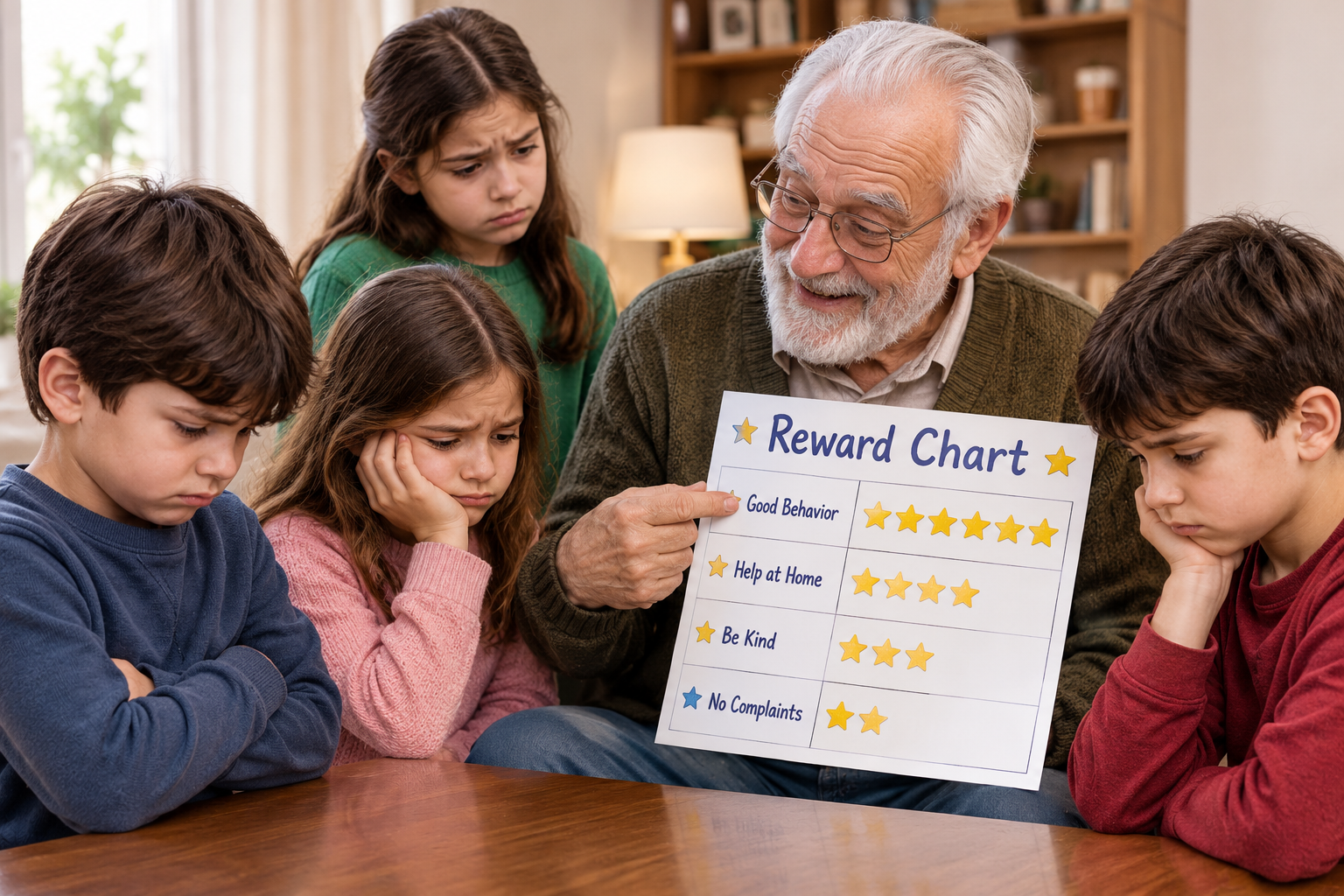
I never imagined that something as simple as a reward system could create so much tension within my family. My grandfather has always been someone who enjoys organizing family activities and finding ways to motivate his grandchildren. Whenever we visited him, he would come up with different games, challenges, and little competitions that were supposed to make everyone happy. At first, I thought it was just his way of keeping us entertained and encouraging us to spend more time together. However, over time, I started noticing that his idea of rewarding grandchildren was not as harmless as he believed. Some of us would leave his house feeling appreciated, while others would quietly feel disappointed and left out. What bothered me most was that nobody seemed willing to acknowledge how unfair the entire arrangement had become.
My grandfather introduced the reward system a few months ago, explaining that he wanted all his grandchildren to develop good habits and become more responsible. He created different tasks involving school performance, household responsibilities, personal achievements, and helping other family members. Whenever someone completed a task successfully, Grandpa would give them points that could eventually be exchanged for gifts or money. Initially, everyone seemed excited because it sounded like a fun family activity. The younger children especially enjoyed collecting points and discussing what they wanted to receive. However, the rules were never as clear as they should have been. Grandpa often changed his expectations depending on who was participating, and sometimes he would give extra points to certain grandchildren simply because he thought they deserved encouragement.
The biggest problem started when I noticed that my grandfather was not treating everyone equally. Some grandchildren received rewards for completing relatively simple tasks, while others had to work much harder to receive even a small amount of recognition. For example, one of my cousins could receive several points just for helping Grandpa carry groceries, while another cousin might spend an entire afternoon cleaning, organizing, and helping around the house without receiving anything special. Whenever someone questioned the difference, Grandpa would simply explain that he knew what each child needed and that his decisions were based on their individual personalities. I understand that every child is different, but that explanation did not make the situation feel any less unfair.
What made everything worse was the way Grandpa presented the rewards in front of everyone during family gatherings. He would sometimes announce who had earned the most points, who had been the most responsible, and who deserved a special gift that week. The grandchildren who received something would naturally become excited, but those who received nothing often sat quietly and tried not to show their disappointment. I noticed that some of the younger children had started comparing themselves to their cousins and asking why they never seemed good enough to earn the same rewards. It was heartbreaking because these children were supposed to be enjoying time with their grandfather, not worrying about whether they had earned enough points to receive his approval.
One particular family gathering made me realize that I could no longer ignore the situation. Grandpa had organized another reward announcement, and everyone was sitting together in the living room waiting to hear the results. He praised two of my cousins for their achievements and handed them expensive gifts. Another cousin, who had been trying extremely hard to earn points, received nothing. The child looked visibly disappointed and eventually moved away from everyone to sit quietly by themselves. When Grandpa noticed, he laughed and said that the child needed to work harder next time instead of expecting rewards without putting in enough effort. I could see how embarrassed and hurt the child felt, and I honestly thought Grandpa’s comment was unnecessary.
After that incident, I decided to speak up. I waited until the gathering became quieter and respectfully told Grandpa that his reward system was hurting people’s feelings instead of encouraging them. I explained that children should not feel as though their grandfather’s love and appreciation depend on how many points they collect or how well they perform certain tasks. I also mentioned that publicly comparing grandchildren was creating unnecessary competition and making some of them feel less important than others. I was careful with my words because I did not want to insult him or make him feel that his efforts were worthless. I simply wanted him to understand that his system was having the opposite effect from what he intended.
Unfortunately, Grandpa did not take my comments very well. He immediately became defensive and told me that I was misunderstanding his intentions. According to him, he was trying to teach us about responsibility, hard work, and the importance of earning things rather than expecting everything to be handed to us. He also argued that life was not fair and that children needed to learn how to handle disappointment. I agreed that those were important lessons, but I told him that there was a difference between teaching responsibility and making children feel that they were less deserving of attention. He responded by saying that I was being overly sensitive and interfering with something that had nothing to do with me. The conversation became uncomfortable, and some family members started looking at me as though I had unnecessarily ruined the gathering.
Later, I discovered that several relatives had different opinions about what happened. Some agreed with me privately and admitted that they had noticed the same favoritism but were afraid of upsetting Grandpa. Others believed I should have stayed quiet because he was spending his own money and had the right to decide how he wanted to reward his grandchildren. My parents also told me that although my concerns were understandable, confronting him in front of everyone might have embarrassed him. I can understand that perspective, but I still believe someone needed to explain how the children were feeling. Spending money on grandchildren does not automatically make every decision fair, especially when the rewards are being used to compare their behavior and achievements.
Since that day, things have been slightly awkward whenever the family gets together. Grandpa still uses his reward system, although he has become less enthusiastic about announcing everyone’s points publicly. I have also noticed that some of the younger grandchildren seem more comfortable now that the comparisons have become less frequent. I do not expect Grandpa to stop encouraging responsibility or giving gifts to his grandchildren. I only wish he would understand that children need encouragement, patience, and unconditional affection more than they need another competition. I never wanted to disrespect him or make him feel unappreciated, but I also do not think staying silent was the right choice. Now I keep wondering whether I was wrong for telling my grandfather that his reward system was hurtful, or whether I was simply the only person willing to say what everyone else had been thinking.
Read Story…
AITA for telling my grandpa his “reward” system is hurtful?
I (20M) recently attended a family gathering where something my cousins said made me realize that my grandfather had been treating some of his grandchildren very differently from others. I have always considered my family fairly close, and although we sometimes have disagreements, I never expected something as ordinary as getting a car serviced to become a reason for resentment.
My grandfather owns an automotive garage, and for as long as I can remember, family members have taken their vehicles there whenever they needed oil changes, repairs, or routine maintenance. Since he owns the business, I always assumed he would treat everyone in the family more or less equally. However, after a conversation with my cousins, I discovered that this was not actually the case.
During the family party, I was sitting with a few of my cousins when they started talking about how convenient it was to have a grandfather who owned a garage. They mentioned that they never had to worry about paying for oil changes, minor repairs, or other basic maintenance because Grandpa usually took care of everything without charging them. They were laughing about how much money they had saved over the years and how lucky they were to have someone in the family who could help them with their vehicles. I listened to their conversation without thinking too much about it because I had always paid for my own car maintenance. I simply assumed that perhaps Grandpa had recently started giving discounts to certain family members because his business was doing well.
I was honestly a little surprised when I realized that my cousins had been receiving these services for free for quite some time. I had never been told that there was any special arrangement, and nobody had ever mentioned that certain family members were entitled to free maintenance. Since I had not visited my grandfather’s garage in several months, I figured something might have changed while I was away. I did not want to make assumptions or immediately accuse anyone of receiving unfair treatment, so I decided to wait until my next visit and see how things went. At that point, I genuinely believed it might simply be a new family benefit that I had not heard about yet.
A few days later, I took my car to my grandfather’s garage because it needed an oil change and a little routine maintenance. I greeted him, handed over the keys, and waited while he and his employees worked on the vehicle. Everything seemed completely normal, and we had a friendly conversation while I was there.
After about an hour, the work was finished, and I went over to thank him. I had also brought him a pack of beer as a small gesture of appreciation because I thought it would be nice to show that I valued his help. I was not expecting anything particularly special, but I assumed that if he was offering family members free maintenance, he might simply accept the gift as a thank-you.
Instead, Grandpa laughed and told me that bringing beer was not how things worked at his garage. He said it was a nice gesture, but I still needed to pay the full amount for the service. I was a little confused because I had just heard my cousins talking about receiving the exact same services without paying anything. Still, I did not want to create an uncomfortable situation in front of his employees, so I simply handed him the money. I thanked him again, collected my keys, and left without arguing. I kept telling myself that perhaps there was some explanation I did not know about, and I did not want to turn a simple oil change into a family disagreement.
However, the situation continued bothering me after I got home. I could not understand why my cousins were receiving free maintenance while I was expected to pay the full price. I was not asking for special treatment, and I certainly did not expect my grandfather to give away his services to everyone if he could not afford to do so. I simply wanted to understand why there seemed to be different rules for different grandchildren. A few days later, I decided to talk to my grandmother about it because I thought she might know more about the arrangement. I casually asked her why some of my cousins never had to pay for their car maintenance while I was still being charged every time I visited the garage.
Her answer honestly caught me off guard. She explained that Grandpa had created his own system for deciding which grandchildren deserved free services. According to her, it was based on how much effort each of us put into our lives and whether we were working hard enough to become successful. She explained that the grandchildren who had established careers, earned good salaries, or achieved certain milestones were rewarded with free oil changes and repairs. Grandpa apparently believed that these individuals had demonstrated responsibility and dedication, so he wanted to show his appreciation by helping them save money. At first, I thought I had misunderstood her, but she continued explaining that this was something Grandpa had intentionally been doing for a while.
The more she explained, the more uncomfortable I became. Some of my cousins have excellent jobs, including careers in accounting and law enforcement, and they have been receiving free services because Grandpa considers them successful. Meanwhile, I am still studying at university and spending most of my time trying to complete my education and prepare for a stable career. Another cousin became a father at a very young age and has been struggling to rebuild his life while taking care of his responsibilities. One of my siblings works in a relatively modest trade job and is still trying to figure out what the future holds. According to Grandpa’s standards, people like us have not put enough effort into becoming successful, so we do not deserve the same benefits.
What bothered me most was that Grandpa seemed to be judging everyone’s worth based on their current circumstances rather than considering what they were actually doing with their lives. My cousin who became a father young has been working hard to support his child and improve his situation.
My sibling gets up every day and goes to work, even if the job does not come with a prestigious title or a large salary. I am investing years of my life into university because I want to build a better future. None of us are sitting around expecting everything to be handed to us. We are simply at different stages of life, and I do not think that should make us less deserving of kindness or family support.
I eventually decided that I needed to speak directly with my grandfather instead of continuing to discuss the situation with other relatives. I visited him and brought up what my grandmother had told me. I asked whether it was true that he was giving certain grandchildren free maintenance based on how successful he believed they were.
I explained that I was not demanding free services, but I wanted him to understand how hurtful that arrangement sounded.
I told him that university students, people working ordinary jobs, and relatives trying to recover from difficult situations were also putting effort into their lives. Just because someone had not reached the same financial or professional position as another person did not mean they were lazy or undeserving.
Unfortunately, he became extremely defensive almost immediately. He raised his voice and insisted that nobody was entitled to free car maintenance in the first place. He said that he was running a business, not a charity, and that he had every right to decide what benefits he wanted to give certain people.
He also argued that he was not taking anything away from me because I was still receiving exactly the same service as everyone else. According to him, he was simply rewarding the grandchildren who had worked hard, made something of themselves, and demonstrated that they were serious about their futures. He seemed to believe that there was absolutely nothing unfair about treating the family this way.
I tried explaining that the issue was not necessarily the money itself. If Grandpa wanted to charge everyone for their services, I would have no problem with that. If he wanted to occasionally help a family member who was struggling financially, I would understand that too. What I found hurtful was the idea that free maintenance was being used as a reward for people he considered successful while everyone else was effectively being told that they had not accomplished enough to deserve his generosity. I also pointed out that success is not something everyone achieves at the same age.
A 20-year-old university student cannot reasonably be expected to have the same career, income, or financial stability as someone who has already spent fifteen years working.
Grandpa did not seem interested in hearing that perspective. He repeated that life was about effort and that people who worked hard deserved better opportunities than those who did not. He even suggested that some of us were simply making excuses instead of taking responsibility for our futures.
That comment particularly upset me because he knows very little about the personal challenges some members of our family have faced. He does not see every difficult decision, financial struggle, or sacrifice that happens behind closed doors. He only sees the final results and decides who deserves recognition based on those results. I eventually stopped trying to convince him because the conversation was clearly going nowhere.
Since then, several relatives have contacted me and expressed their disappointment about the argument. Some believe I should have stayed out of Grandpa’s business because he owns the garage and can decide how he spends his money. Others say I embarrassed him by questioning his decisions and made the entire situation unnecessarily dramatic.
A few relatives have also pointed out that I am still young and should focus on my studies rather than worrying about whether my cousins receive free oil changes.
I understand that Grandpa has worked hard to build his business, and I am not trying to tell him what to do with his money. However, I also think that family members should be able to express their feelings when something genuinely hurts them.
What makes the situation even more complicated is that I do not actually want free car repairs anymore if they come with the expectation that I must prove my worth to receive them.
I would rather pay the normal price and know that I am being treated fairly than accept something that makes me feel like I am being compared with my cousins.
I also feel bad for the other grandchildren who are in similar situations because they might be dealing with the same disappointment but are afraid to speak up. I do not believe a person’s career, salary, or professional title should determine how much respect they receive from their own grandfather.
Now I am questioning whether I handled the situation badly. Perhaps I should have simply continued paying for my maintenance and ignored what other people were receiving. On the other hand, I feel that my grandfather’s reward system sends a terrible message to the younger members of our family. It suggests that people who are still studying, rebuilding their lives, or working ordinary jobs are somehow less deserving of appreciation.
I never expected special treatment, and I was not trying to take anything away from my cousins. I only wanted my grandfather to understand that his system was hurtful and that success should not be measured by someone’s current job or income. So, am I the asshole for confronting my grandfather about his reward system and telling him that the way he treats his grandchildren is unfair?
A Family Tradition That Made Grandchildren Question Their Grandfather’s Love
I never imagined that a simple family tradition could turn into something that would make several grandchildren question how much their grandfather valued them. Growing up, I always believed that grandparents were supposed to be the people who made everyone feel equally loved and appreciated. They were supposed to encourage us, celebrate our achievements, and support us when life became difficult. My grandfather, however, had a very different idea of how to motivate his grandchildren. He believed that rewards should be earned through achievements, hard work, and personal success. At first, nobody thought much about his approach because we assumed he was simply trying to teach us responsibility. Over time, though, his reward system became a source of frustration, jealousy, and disappointment within our family.
My grandfather has always been a hardworking man who built his business from almost nothing. He takes pride in his achievements and believes that people should never expect anything without putting in the necessary effort. Throughout his life, he has worked long hours, made sacrifices, and experienced financial difficulties. Because of that, he often talks about the importance of discipline, responsibility, and independence. Most of us respect him for what he has accomplished, and nobody denies that he has worked hard to provide for his family. However, his personal beliefs sometimes influence the way he treats other people, especially his grandchildren, who are still figuring out their lives.
A few months ago, Grandpa introduced a reward system that he claimed would encourage everyone to become more responsible and productive. He explained that he wanted his grandchildren to develop good habits instead of relying on their parents or expecting other people to solve their problems. His idea was to reward those who demonstrated effort, achieved personal goals, performed well academically, or made significant progress in their careers. He said that rewards would be different depending on the individual’s achievements, and he believed this would motivate everyone to work harder. Initially, most of us thought it sounded like a harmless family activity. We assumed it would involve small gifts, occasional money, or special treats for completing certain tasks.
At first, the system seemed relatively simple. Grandpa would ask about our studies, jobs, responsibilities, and personal goals whenever we visited him. If someone had achieved something impressive, he would congratulate them and sometimes give them a special reward. These rewards could include cash, expensive gifts, shopping money, or even help with certain expenses. He seemed particularly excited whenever someone received a promotion, graduated from university, purchased something important, or achieved a major personal milestone. Everyone naturally enjoyed receiving gifts, so nobody initially questioned the idea. We thought he was simply celebrating our successes and encouraging us to continue doing well.
However, things gradually became uncomfortable when Grandpa started comparing our achievements during family gatherings. Instead of privately congratulating someone, he would sometimes announce how much progress each grandchild had made and explain why certain people deserved rewards more than others. He would praise one person’s career, another person’s academic performance, and someone else’s financial independence. Meanwhile, those who had not achieved anything according to his standards would receive little attention. Even when someone was working hard behind the scenes, Grandpa rarely acknowledged their effort unless it resulted in something he considered impressive. This made family gatherings feel less like opportunities to spend time together and more like competitions where everyone was waiting to see who would be considered successful.
The first time I noticed how deeply this affected the younger grandchildren was during a birthday celebration. One of my cousins had recently received an expensive gift because of a professional achievement. Grandpa proudly presented it in front of everyone and explained how much the cousin deserved it. Another younger grandchild, who had recently improved their school grades after struggling for several months, expected at least some recognition. Instead, Grandpa simply said that improving grades was something everyone should do anyway. I noticed the child’s expression change immediately. They tried to smile and continue enjoying the celebration, but it was obvious that the comment had hurt. I wanted to say something, but I decided not to create an argument during someone’s birthday.
As time passed, more examples of this behavior started appearing. Grandpa seemed to have a very specific definition of success, and anyone who did not fit that definition was treated as though they were not trying hard enough. Having a high-paying job, owning property, receiving promotions, or achieving impressive academic results seemed to matter more than anything else. He rarely considered emotional struggles, personal circumstances, or the amount of effort someone had invested in reaching a smaller goal. If one grandchild had a successful career, they could receive generous rewards, while another who was struggling financially might receive nothing despite working extremely hard. The difference became increasingly obvious to everyone.
One of my cousins was particularly affected by this arrangement. They had experienced several difficult years and were trying to rebuild their life after making some mistakes when they were younger. They were working, taking care of responsibilities, and slowly improving their situation. I genuinely admired how determined they were because starting over is not easy. Unfortunately, Grandpa did not seem to appreciate that progress. Whenever the subject of achievements came up, he would remind the family about the cousin’s past mistakes and suggest that they needed to do much better before deserving any special recognition. Hearing those comments made me uncomfortable because I knew how hard my cousin was trying.
Another grandchild was still studying and had not started earning a full-time income. Grandpa often treated that person as though being a student meant they were not contributing anything meaningful to their future. He would ask why they had not found a proper job yet and compare their situation with cousins who were already financially independent. What he failed to understand was that education takes time, and not everyone has the opportunity to start earning money immediately. Some people need several years of studying before they can enter their chosen profession. Being financially dependent during that period does not automatically mean someone is lazy or irresponsible.
The situation also created tension between cousins who had previously been very close. Before Grandpa introduced his reward system, we rarely compared our achievements. Everyone had different interests, responsibilities, and ambitions, but that never affected our relationships. We could celebrate someone’s new job without feeling that our own accomplishments were being overlooked. After the reward system became a regular topic, however, people started paying attention to who received what. Some grandchildren became more interested in discussing their achievements, while others avoided talking about their personal lives because they did not want to be judged. A tradition that was supposed to bring motivation into the family was slowly creating unnecessary competition.
I also noticed that some grandchildren had started exaggerating their achievements whenever Grandpa asked about their lives. They wanted to appear more successful because they knew that impressive news could lead to rewards and praise. One cousin began talking constantly about their salary and professional responsibilities, even when nobody had asked. Another started mentioning every small achievement because they wanted Grandpa to recognize their progress. I do not think they were necessarily trying to show off. It seemed more like they had learned that attention and appreciation were connected to how impressive their lives appeared. That was probably one of the most disappointing consequences of the entire system.
What bothered me even more was that Grandpa rarely asked whether the grandchildren were actually happy. He focused almost entirely on measurable achievements. He wanted to know about grades, salaries, promotions, businesses, and financial independence. However, he rarely asked whether someone was struggling emotionally, feeling overwhelmed, dealing with difficult responsibilities, or simply trying to get through a challenging period. In his mind, progress had to look impressive from the outside. If someone was quietly working through personal difficulties without receiving recognition or earning much money, he often assumed they were not putting in enough effort.
My grandmother occasionally tried to explain that Grandpa did not intend to hurt anyone. She said he had grown up in a different environment where people were expected to work hard and prove themselves through their accomplishments. According to her, he believed that rewarding success was a way of showing love and encouraging independence. She also mentioned that he had always been competitive and that changing his mindset would probably be difficult. I understood her explanation, but I still felt that good intentions did not automatically make his behavior harmless. Someone can genuinely believe they are helping others while unknowingly making them feel inadequate.
One afternoon, I decided to ask my grandmother whether she had noticed how the younger grandchildren reacted whenever Grandpa announced his rewards. She admitted that she had noticed the disappointment but did not know how to approach him about it. She said that some children had complained privately about feeling overlooked, while others had simply stopped expecting anything from him. That response surprised me because I had assumed I was the only person who found the situation troubling. Apparently, several family members had noticed the same pattern, but nobody wanted to confront Grandpa because they knew how strongly he defended his beliefs.
The situation became especially uncomfortable during another family gathering when Grandpa decided to announce his latest rewards. Everyone was sitting together in the living room, enjoying food and conversation, when he started talking about how proud he was of certain grandchildren. He mentioned their careers, achievements, and financial progress before presenting them with gifts. Everyone congratulated them, and they were understandably happy. However, when another cousin mentioned completing a difficult personal goal, Grandpa barely reacted. He simply nodded and said that it was a good start. The difference between his reactions was so obvious that even some relatives exchanged uncomfortable looks.
After the announcement, I noticed one of my younger cousins sitting quietly near the dining table. I asked whether everything was okay, and they told me they felt as though nothing they did was ever good enough for Grandpa. They explained that they had been trying very hard to improve their grades and become more responsible, but Grandpa never seemed impressed because they had not achieved anything major yet. They were not expecting an expensive gift. They simply wanted him to acknowledge that they were making an effort. Hearing that made me realize that the problem was no longer about the rewards themselves. It was about how the system was affecting the children’s confidence and their relationship with their grandfather.
I tried to reassure my cousin that their achievements were important regardless of whether Grandpa recognized them. I explained that everyone develops at a different pace and that there was no reason to compare their journey with someone else’s. I also told them that receiving expensive gifts did not make another grandchild more valuable or deserving of love. They seemed a little more comfortable after our conversation, but I could tell that the situation had affected them more deeply than they wanted to admit. I started wondering how many other grandchildren had experienced similar feelings without discussing them with anyone.
Eventually, I decided that someone needed to speak directly with Grandpa. I did not want to attack him or accuse him of being a terrible grandfather. I knew he had worked hard throughout his life, and I appreciated the things he had done for our family. I simply wanted him to understand that his reward system was creating emotional consequences he probably had not considered. I thought that if I explained everything calmly, he might be willing to listen. I also hoped that because I was one of his older grandchildren, he might take my concerns seriously rather than dismissing them as childish complaints.
I waited until I had an opportunity to speak with him privately. I started by telling him that I respected his intentions and understood why he wanted to encourage responsibility. I acknowledged that rewarding achievements could be a positive thing when handled carefully. Then I explained that the way he announced and distributed rewards was making some grandchildren feel less important than others. I told him that children should not have to compete for their grandfather’s attention or feel that they needed to achieve something impressive before receiving appreciation. I also mentioned that people could be working extremely hard without having anything exciting to show for it yet.
Grandpa immediately looked annoyed and asked what exactly I was trying to accuse him of. I explained that I was not accusing him of deliberately hurting anyone, but I believed his system was creating unnecessary comparisons. I reminded him that some grandchildren were still studying, some were working through financial difficulties, and others were dealing with personal responsibilities that he might not fully understand. Their circumstances were different, but that did not mean they were making less effort. I suggested that he should consider recognizing personal progress rather than judging everyone according to the same definition of success.
His response was not what I expected. Instead of considering my concerns, he became defensive and told me that people needed to learn how the real world worked. He argued that nobody was entitled to rewards simply for existing or doing the bare minimum. According to him, life rewarded people who worked hard, made good decisions, and achieved something meaningful. He said that he was simply teaching his grandchildren an important lesson about responsibility. He also insisted that nobody was being forced to participate in his system, so anyone who disliked it could simply ignore it.
I tried explaining that the real world was already difficult enough without making family relationships feel like another competition. I told him that grandparents should be able to encourage their grandchildren without making them feel that their achievements determine how much affection they deserve. I also pointed out that some people face circumstances beyond their control. A person might be struggling financially because of an unexpected problem, supporting a family member, or dealing with responsibilities that prevent them from pursuing certain opportunities. Those situations do not mean they lack ambition or determination. Unfortunately, Grandpa seemed convinced that I was making excuses for people who had not worked hard enough.
The conversation became more heated when I mentioned that several grandchildren had privately expressed feeling hurt by his behavior. Grandpa immediately asked who had been complaining about him and why nobody had the courage to say it directly. I told him that the reason people were hesitant was probably because they did not want to upset him. He responded that he was tired of people criticizing him for trying to help the family. He said he had spent years building his business and earning his money, so he should be allowed to decide how he wanted to use it. I agreed that the money was his, but I explained that the emotional impact of his decisions was still worth considering.
At that point, Grandpa accused me of being jealous of the grandchildren who had received rewards. He suggested that I was only speaking up because I wanted the same gifts and recognition for myself. That comment genuinely upset me because I had never asked him for anything. I was not interested in competing with my cousins or receiving expensive presents. I would rather have an ordinary conversation with my grandfather without feeling that I needed to prove my worth. I told him that he was missing the entire point by turning a discussion about family relationships into an argument about money.
After our conversation, I noticed that Grandpa became distant whenever I visited. He still greeted me politely, but he no longer seemed interested in having the usual conversations we used to enjoy. I felt disappointed because I had hoped that speaking honestly would improve things rather than make them more uncomfortable. At the same time, I did not regret raising the issue. I knew that staying silent would not make the younger grandchildren feel any better, and I did not want them to believe that their feelings were unimportant simply because Grandpa was older and more experienced.
My parents had mixed reactions when they learned about the argument. One of them agreed that Grandpa’s reward system was unnecessarily harsh and that comparing grandchildren was not a healthy way to encourage them. The other believed that I should have handled the conversation more carefully because Grandpa had always been proud of his independence and did not appreciate being told how to manage his family. They both agreed that his money belonged to him, but they disagreed about whether his system was something I should have challenged. I understood their concerns, although I still believed the discussion was necessary.
Some of my relatives were much less understanding. They argued that Grandpa was doing something generous by offering rewards at all and that nobody had a right to complain about how he distributed them. One relative even suggested that the grandchildren who received nothing should simply work harder instead of expecting equal treatment. That response frustrated me because it completely ignored the different circumstances people were facing. Equal treatment does not always mean giving everyone identical gifts, but it should at least mean treating everyone with dignity and recognizing their efforts without humiliating or comparing them.
Interestingly, a few cousins privately thanked me for speaking up. One admitted that they had felt embarrassed during several family gatherings because Grandpa repeatedly compared their progress with that of more successful relatives. Another said they had stopped sharing personal achievements because they were afraid that Grandpa would find a way to criticize them. They explained that even when they accomplished something meaningful, they would sometimes leave family gatherings feeling disappointed because someone else had received more attention. Hearing these things confirmed that my concerns were not simply based on one uncomfortable incident.
I also started thinking about how the reward system might affect the younger children as they grew older. If they continued believing that affection and appreciation had to be earned through achievements, they might eventually develop unhealthy relationships with success. They could start measuring their self-worth through money, professional titles, or the approval of other people. They might become afraid of making mistakes because they would associate failure with losing attention and recognition. I do not think Grandpa intended to create that kind of environment, but I worried that his approach could have consequences long after the gifts themselves were forgotten.
My grandmother later told me that she had tried speaking with Grandpa about the issue as well. She suggested that he could continue rewarding achievements while making sure everyone felt appreciated. For example, he could celebrate small improvements, personal milestones, and acts of kindness instead of focusing only on major financial or professional accomplishments. She also encouraged him to stop announcing comparisons in front of the entire family. According to her, he listened but did not promise to change anything. He apparently still believed that his system was fair because he was rewarding people according to their results.
Over the following weeks, I noticed a few small changes. Grandpa became less enthusiastic about publicly announcing who had received rewards, and he occasionally praised grandchildren for smaller accomplishments. He also seemed more careful about making negative comments when someone discussed their struggles. I cannot say whether those changes happened because of my conversation or because other relatives had also expressed concerns. Whatever the reason, I was relieved to see that the situation was becoming slightly less uncomfortable. I did not expect him to completely abandon his beliefs, but I hoped he would eventually understand that encouragement should not come at the expense of someone else’s confidence.
Despite those improvements, the family is still divided about the entire situation. Some relatives believe Grandpa should be free to reward whoever he wants because he earned his money and built his business. Others think that his intentions do not excuse the way he makes certain grandchildren feel inferior. I personally believe both things can be true. Grandpa has every right to decide what he does with his money, but the rest of us also have the right to explain when his actions are hurting family relationships. Nobody is demanding that he provide expensive gifts or financial assistance to everyone. We simply want him to understand that people deserve kindness and respect even when they are not meeting his personal definition of success.
I have also realized that the most important thing is making sure the younger grandchildren do not internalize Grandpa’s opinions. I regularly remind them that their achievements matter, even when those achievements are not impressive to everyone else. Finishing a difficult semester, finding a job, learning a new skill, overcoming a personal challenge, or simply becoming more responsible are all meaningful accomplishments. Life is not a competition where everyone must reach the same milestone at the same age. Some people take longer to discover what they want, and others face obstacles that make their journey more complicated. That does not make their efforts any less valuable.
Looking back, I wish Grandpa had introduced his reward system differently. He could have used it to encourage positive behavior without creating a hierarchy among his grandchildren. He could have celebrated everyone’s progress privately and offered support when someone needed it. Instead, his approach made certain children feel like winners while others felt as though they were constantly falling behind. I understand that he believes rewards should be connected to hard work, but I wish he understood that not every important achievement comes with a high salary, an impressive career, or a public announcement.
At the end of the day, I do not want my grandfather to feel that his grandchildren are ungrateful for everything he has done. I know he loves his family, and I know his intentions were probably better than the results of his system. However, love and good intentions do not mean people should ignore the emotional consequences of someone’s actions. I would much rather see him spend time with all his grandchildren, ask about their lives, and celebrate their individual progress than watch everyone compete for his approval. I still hope he eventually understands that a person’s worth cannot be measured by how successful they appear to be.
For now, I am trying to keep things peaceful without pretending that nothing happened. I continue visiting Grandpa, treating him respectfully, and avoiding unnecessary arguments about his rewards. However, I will not tell the younger grandchildren that they are wrong for feeling disappointed, and I will not pretend that his system is harmless just because he is the person who created it. I believe families should be places where people feel accepted during both their successful and difficult moments. If someone only receives recognition when they are achieving something impressive, then the support being offered does not feel unconditional.
I never wanted to turn a family tradition into a major disagreement, but I also never wanted to watch my cousins quietly question their value because they were not receiving the same recognition as everyone else. Grandpa might believe he is teaching us how to succeed in life, but I think he is overlooking one of the most important lessons a family can teach: people deserve encouragement even when they are struggling, and their value does not disappear simply because they have not achieved everything yet. I still wonder whether I was wrong to challenge him or whether speaking up was necessary to protect the feelings of the grandchildren who were too afraid to say anything themselves.