My Neighbor Accused Me of Being Heartless After I Removed Their Child’s Old Swing Set
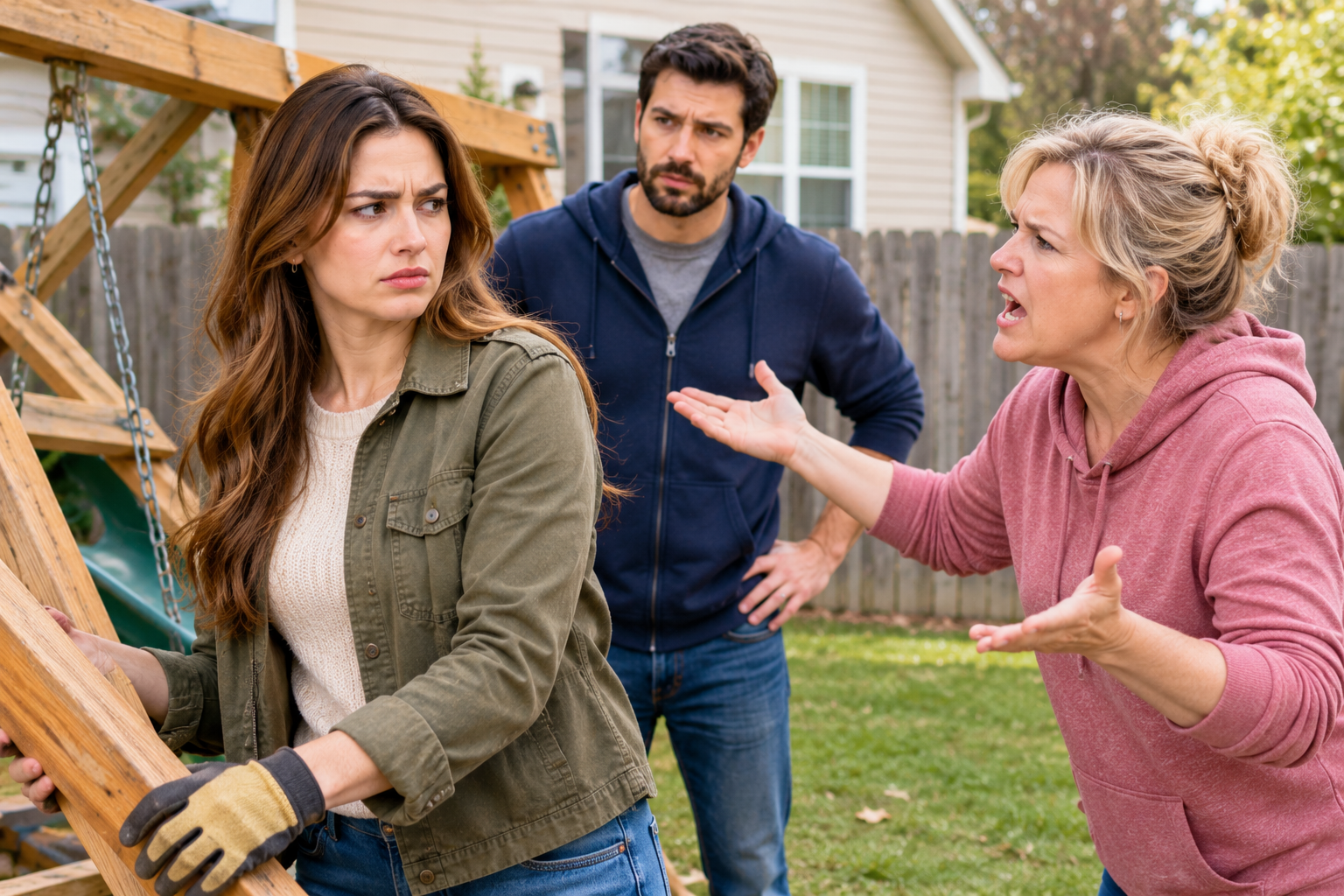
I never imagined that removing an old swing set from my property would turn into such an uncomfortable situation with my neighbor. I’m someone who generally tries to maintain a good relationship with the people living around me. I don’t enjoy arguments, unnecessary drama, or getting involved in other people’s personal matters. I believe everyone should be able to enjoy their own home without constantly worrying about what their neighbors think. However, a situation recently developed that made me question whether being considerate of someone else’s feelings means I should ignore my own rights and boundaries. It all started with an old swing set that had been sitting in my yard for a very long time. The equipment was no longer being used, had become worn down over the years, and was taking up space that I wanted to use for something else.
The swing set originally belonged to my neighbor’s family. They had children who used to play on it regularly, and for a long time, it was a normal part of the neighborhood. I remember seeing the children running around, laughing, and spending hours outside while their parents watched from the house. Unfortunately, the family experienced a heartbreaking loss, and the swing set eventually became connected to memories that were extremely painful for them. I don’t want to go into too many personal details because I understand that grief is deeply private, and I don’t want to make their situation sound like entertainment. What I can say is that after their loss, the swing set stopped being used. It remained outside, gradually deteriorating, while the family struggled with the emotional impact of what had happened.
Over time, the swing set became increasingly neglected. The paint started peeling, some of the metal parts became rusty, and the seats were no longer in particularly good condition. It wasn’t something that could safely be used without repairs. The equipment was also taking up a considerable amount of space, which became more frustrating as I started making plans to improve my outdoor area. I wanted to use that space for a small seating area and perhaps some gardening. I had been considering these changes for quite some time, but the old equipment was preventing me from properly organizing the yard. At first, I didn’t rush into doing anything because I knew the swing set had emotional significance for my neighbor. I didn’t want to appear insensitive or make their grieving process more difficult.
However, there was an important detail that eventually became impossible to ignore. The swing set was located on my property, not theirs. It had been left there years earlier with the understanding that it could remain temporarily, but nobody had discussed keeping it there permanently. As time passed, the situation became increasingly unclear. I wasn’t receiving any communication about it, and the equipment continued taking up space that belonged to me. I understood that the family had been through something terrible, but I also had my own responsibilities and plans for my property. I didn’t believe I should have to keep an unused, deteriorating structure in my yard indefinitely simply because removing it might bring back painful memories for someone else.
Before making a final decision, I tried to consider how my neighbor might feel. I understood that the swing set probably represented more than just a piece of playground equipment. It was connected to happier times, memories of children playing, and a period of their lives that they could never get back. I didn’t want to dismiss those feelings. At the same time, I couldn’t understand why nobody had made arrangements to preserve it, move it, or maintain it if it was so important to them. If they wanted to keep it as a memorial or a reminder of their child, I would have understood that. But leaving something outside on someone else’s property without discussing what should happen to it wasn’t a reasonable long-term arrangement. Eventually, I decided that I needed to reclaim the space.
I arranged to have the old swing set removed. My intention wasn’t to hurt anyone or deliberately erase something meaningful from my neighbor’s life. I simply wanted to clear my yard so I could move forward with the improvements I had planned. The structure was old, damaged, and no longer suitable for children to use safely. Once it was removed, I started preparing the area for the changes I had been wanting to make. I honestly thought that would be the end of the matter. I expected my neighbor might notice the difference, perhaps ask what happened, and understand that I had finally decided to use my own property differently. Unfortunately, their reaction was much stronger than I anticipated.
When my neighbor found out that the swing set had been removed, they approached me and immediately became upset. They accused me of being heartless and said I had no understanding of what that equipment meant to their family. They explained that the swing set was one of the few physical reminders of happier times and that seeing it there had helped them feel connected to memories they treasured. I listened and tried to explain that I wasn’t trying to disrespect their grief. I acknowledged that the loss must have been incredibly difficult and that I understood why the swing set had emotional importance. However, I also explained that it was on my property, had been deteriorating for years, and was preventing me from using my yard. My neighbor didn’t seem interested in hearing that explanation. They insisted that I should have understood the emotional significance and left it alone.
The conversation quickly became more personal than I expected. My neighbor suggested that I cared more about having a neat yard than respecting someone who had experienced a terrible tragedy. I found that accusation particularly unfair because I had deliberately avoided removing the swing set for a long time out of consideration for their feelings. I wasn’t trying to punish them, embarrass them, or make a statement about their family. I simply reached a point where I wanted to make use of my own space. I also pointed out that if the swing set was genuinely important to them, they could have discussed moving it somewhere they could preserve it. They had years to make arrangements, but nobody had approached me with a specific request or plan. My neighbor responded that I should never have expected a grieving parent to think about something like that.
Since the confrontation, the atmosphere between us has become noticeably uncomfortable. I have heard that my neighbor has discussed the situation with other people in the area, and some have apparently agreed that I should have handled things differently. A few people believe I should have spoken to the family one final time before arranging removal, while others think that my neighbor cannot reasonably expect someone to preserve an old structure on their property forever. I understand that grief can make ordinary decisions extremely difficult, and I don’t want to pretend that I know exactly what my neighbor is experiencing. However, I also don’t think their personal tragedy means I must permanently give up control over my own property. I am willing to acknowledge that a more sensitive conversation might have prevented some of the hurt feelings, but I struggle with the idea that removing something from my yard automatically makes me a heartless person. Now I’m wondering whether I should have handled the situation differently or whether I was justified in finally removing the old swing set. AITA?
Read Story…
AITA for taking down the old swing set of a grieving parent?
I bought a lovely house with a pretty front yard.
The story of how the previous owners came to sell it is sad, though: they had a child who tragically passed away. The couple ended up splitting after their kid’s death and the house was too big for either one of them.
The most important thing about the front yard was an oak tree which had a children’s diy swing set. The previous owner explained they did clean up most of their belongings, but they couldn’t bring themselves to take down the swing because of how much their kid liked it and of deep memories connected to it. At first I thought it was just a sad story.
Skip to us getting the house on paper, starting renovations and the changes we wanted and ofc taking down the swing set. I understand the previous owners had it for their kid but first of all, I don’t have kids, not even kid family relatives, second of all, even if I had, I considered the swing set unsafe as it was set up AND visually displeasing, third of all, it’s my property now. Not to mention I don’t want to be reminded of this family’s tragedy every time I look out the window.
I get it, it must be sad, but I have no connection to them. There was virtually no reason for me to keep the swing set. So I took it down.
A couple days later, the kid’s mother reached out, upset that I took down the swing set. I offered to check if no one threw it out yet and send it to them, but they said I “killed their kid again” when I took it down. That it was the last remaining thing that kept their kid alive. That along with some names.
I explained calmly that I meant no harm, but this is my house now and I cannot keep the swing set. They decided to leave the house without it. I tried to be empathic to her (hard when someone is cursing at you and accusing you of murdah) but she still didn’t have it. It then dawned on me: how could she know I took the swing set down?
She said she still drives around there. That creeped me out a little. I told her that the reaction is not ok, that I understand she is upset, but I have no fault and that they are the ones who agreed to sell the house precisely because it was too much and that they need to leave me alone.
She cussed me out some more and then hung up. I haven’t received any call from her but if she makes contact again other than apologize for her behavior I am ready to involve law enforcement. I’m still sorry for her, she’s just a grieving mother (probably, I hope she’s not gonna turn psycho…) and I don’t wanna be too harsh on her.
A neighbor said maybe I should’ve kept the swing up for longer. In all honesty, I didn’t want to hurt her so much, but I had no idea. I also don’t think I made any mistake and don’t deserve her harsh behavior.
I Bought a Beautiful House, but Its Previous Owner Left Behind a Heartbreaking Reminder of Their Child
I never imagined that removing an old swing set from my own front yard would turn into such an uncomfortable situation with my neighbors. I’m a 34-year-old homeowner, and a few months ago, I purchased a beautiful house in a quiet residential neighborhood. The house had everything I wanted, including a spacious living room, a comfortable kitchen, and a lovely front yard with a large oak tree. When I first saw the property, I immediately fell in love with it. I imagined spending peaceful evenings outside, enjoying my morning coffee, and eventually making the place feel like my own home.
However, there was something unusual about the front yard that I noticed during my first visit. Hanging from the large oak tree was an old homemade children’s swing set. It wasn’t one of those modern playground swings you see in parks. It was clearly built by someone who had put a lot of love and effort into making something special for a child. The wooden seat was worn, the ropes looked old, and the entire structure had clearly been exposed to years of weather. Despite its condition, it was obvious that someone had once taken great care of it.
When I asked the previous owner about the swing, his expression changed immediately. He explained that he and his wife had once lived in the house with their young child, who unfortunately passed away after a tragic illness. Their child had loved playing outside, especially on that particular swing. According to him, the oak tree had been one of the child’s favorite places in the entire neighborhood. The couple had spent countless afternoons watching their child swing beneath its branches, laughing and asking to be pushed higher.
After their child passed away, their marriage eventually fell apart. They struggled to deal with their grief together, and over time, they decided to separate. The house had become too large and painful for either of them to remain in, so they eventually decided to sell it. The previous owner told me that they had removed nearly all their belongings before leaving, but neither of them could bring themselves to take down the swing. It represented some of their happiest memories, and removing it felt like saying goodbye to the last physical reminder of their child.
I felt genuinely sorry for them when I heard the story. I couldn’t imagine losing a child or having to live with that kind of grief. I told the previous owner that I understood why the swing was important to them, and I didn’t make any negative comments about it. At the time, I assumed the swing would remain there for a while, at least until I decided what I wanted to do with the yard. I didn’t want to be disrespectful toward the memories of people who had experienced something so heartbreaking.
For the first few weeks after moving in, I barely paid attention to the swing. I was busy unpacking boxes, arranging furniture, fixing a few things around the house, and getting used to the neighborhood. The swing simply became part of the scenery. Whenever I looked outside, I could see it hanging from the oak tree, and occasionally I remembered the story behind it. I didn’t feel any particular need to remove it immediately, so I left it alone.
However, as time passed, I began noticing that the swing was in much worse condition than I had initially thought. The ropes were becoming weaker, the wooden seat had started cracking, and some of the metal connections were visibly rusted. Whenever the wind became strong, the entire structure moved around in a way that made me uncomfortable. I started worrying that one of the ropes might eventually snap or that a piece of the wooden seat could fall apart.
One afternoon, I was working in the front yard when a neighbor walked over and introduced herself. She was a woman in her late fifties who lived two houses away. She seemed friendly enough, and we had a pleasant conversation about the neighborhood. At some point, she noticed me looking at the swing and mentioned that she remembered the previous family very well. She told me how much their child had loved that swing and how heartbreaking it had been when the family moved away.
I listened politely and told her that I had heard the story from the previous owner. She then explained that several neighbors had known the family for years and that the child’s death had affected the entire street. Apparently, the parents had occasionally allowed neighborhood children to play in the yard, and many people remembered seeing the child happily swinging beneath the oak tree. I understood that the swing meant something to more people than just the former owners.
Still, I didn’t think that meant I was required to keep it forever. It was now my property, and I had plans to improve the front yard. I wanted to replace the old grass, add some flower beds, and create a small seating area where I could relax after work. The swing took up a significant amount of space, and its deteriorating condition made it difficult to imagine using that part of the yard for anything else.
I also started researching the safety issues associated with old outdoor swings. I discovered that worn ropes, damaged wood, and rusty hardware could create serious risks, especially if children attempted to use the structure. I had no intention of letting anyone get hurt on my property. Even if the swing had sentimental value, I couldn’t ignore the fact that it was becoming unsafe. I didn’t want a neighborhood child to see it and decide to climb onto it without understanding how damaged it was.
Before doing anything, I considered contacting the previous owners. I still had their contact information from the house sale, and I wondered whether they might want to take the swing with them. However, I also remembered how emotional the previous owner had become when explaining its significance. I didn’t want to reopen painful memories or make them feel pressured to deal with something they had struggled to leave behind. Since they had sold the property and moved away, I assumed they had accepted that the swing would eventually become part of the new owner’s plans.
Eventually, I decided that it was time to remove it. I didn’t do it out of anger, disrespect, or a desire to erase someone else’s memories. I simply wanted to make the yard safer and more functional. I hired someone who had experience with tree maintenance to help remove the old structure carefully. We inspected the ropes and wooden seat before taking everything down, and it became even clearer that the swing was no longer in a condition where anyone should use it.
When the swing was finally removed, I felt a strange mixture of relief and sadness. I knew there was a heartbreaking story attached to it, and I didn’t enjoy throwing away something that had once brought happiness to a child. At the same time, I felt that I had made a reasonable decision about my own property. I didn’t destroy anything valuable or intentionally disrespect the previous family. I simply removed an old, damaged structure that no longer served a practical purpose.
Over the following weekend, I started cleaning up the area beneath the oak tree. I removed the remaining pieces of rope, cleared away some dead branches, and began planning where I would put a small garden bench. I thought the yard looked much better already. It felt cleaner and more open, and I was excited about finally making some changes to the property.
Unfortunately, my neighbor noticed the missing swing almost immediately. She came over one afternoon while I was carrying gardening supplies and asked me what had happened to it. I explained that I had removed it because it was old, damaged, and potentially dangerous. I also told her that I wanted to use the space for landscaping. I expected her to understand, even if she personally felt attached to the swing.
Instead, she looked genuinely upset. She told me that I should have thought more carefully before removing something that carried so many memories. According to her, the swing was one of the last reminders of a child who had died far too young. She said the previous family had left it there for a reason and that removing it was an insensitive thing to do.
I was surprised by how strongly she reacted. I calmly explained that I understood the emotional history, but the previous owners had sold me the property. They had not included any agreement requiring me to preserve the swing forever. I also pointed out that it was deteriorating and could have become dangerous. I wasn’t trying to disrespect anyone’s grief. I was simply taking responsibility for maintaining the property I had purchased.
She didn’t seem interested in hearing my explanation. Instead, she said that some things were more important than property ownership and that I should have considered how the neighbors would feel. She even suggested that I could have left the swing alone and built my garden around it. I told her that I had considered keeping it, but the condition of the structure made that impractical. I wasn’t comfortable having a damaged children’s swing hanging from a tree in a yard where neighborhood children might see it.
The conversation became increasingly uncomfortable when she accused me of being heartless. She said that I had moved into a home with a tragic history and immediately removed something that had brought a grieving family comfort. I found that accusation particularly unfair because I had never mocked the family, dismissed their loss, or spoken negatively about their decision to leave the swing behind. I had treated the story with respect from the moment I heard it.
I tried to explain that removing the swing didn’t mean I was removing the memories associated with it. Those memories belonged to the parents and the people who had known their child. They didn’t depend on a wooden seat hanging from a tree in my front yard. The previous owners would still remember their child, their happy afternoons, and everything that swing had represented. Nothing I did to the property could take those memories away.
My neighbor responded by saying that I clearly didn’t understand what it meant to lose someone. I didn’t argue with her about that. I knew there was no point pretending I understood the pain of losing a child when I had never experienced anything like it. However, I also didn’t believe that someone’s grief gave the entire neighborhood permanent control over what I could do with my own yard.
After that conversation, things became noticeably awkward. A few days later, I noticed another neighbor looking toward my front yard while walking his dog. When I greeted him, he gave me a short response and continued walking. Another person who had previously waved at me stopped acknowledging me altogether. I couldn’t tell whether they had heard a distorted version of what happened or whether they simply shared the woman’s opinion.
I eventually learned that my neighbor had been discussing the situation with other residents. According to her version of events, I had purchased a house with a beautiful memorial to a deceased child and immediately removed it because I didn’t want anything old or unattractive in my yard. She apparently left out the fact that the swing was damaged and that I had removed it partly because I was concerned about safety.
That bothered me more than I expected. I didn’t mind if someone disagreed with my decision, but I didn’t appreciate being portrayed as a cruel person based on a situation they hadn’t fully understood. I had never met the child, and I had never known the previous family personally. I could only make decisions based on the information I had and the responsibilities that came with owning the property.
A week later, the same neighbor approached me again. This time, she wasn’t alone. Another woman from the neighborhood was standing beside her, and both seemed determined to convince me that I had made a terrible mistake. They suggested that I should have preserved the swing as a memorial, even if nobody ever used it. One of them even said that I could have put a small sign beside the tree explaining the story.
I told them that I understood their perspective, but I wasn’t interested in turning my front yard into a public memorial. I respected the former family’s experience, and I had no desire to erase their child’s memory. However, I had purchased the property to live in, maintain, and make comfortable for myself. I didn’t think I needed permission from the neighbors to make reasonable changes to it.
The conversation ended badly. My original neighbor shook her head and told me that she hoped I would never have to experience the kind of loss that family had endured. That comment stayed with me because it felt unnecessarily personal. I wasn’t trying to compare my situation with theirs, and I certainly wasn’t treating their tragedy casually. I simply didn’t believe that keeping an unsafe swing in place was the only way to show compassion.
Since then, I have continued improving the front yard. I planted flowers around the oak tree, added a small wooden bench, and created a neat garden area beneath its branches. I made sure not to damage the tree itself, and I chose plants that would grow well in the space. The yard now looks welcoming and peaceful, which is exactly what I wanted when I bought the house.
Interestingly, several people in the neighborhood have complimented the changes. One older resident even told me that the garden looked lovely and that the oak tree had always been one of the prettiest features on the street. That made me feel better because it reminded me that not everyone viewed the situation as an act of disrespect. Some people understood that a property could have a history while still allowing its new owner to make changes.
I have also thought about contacting the previous owners to explain what happened. I don’t want them to hear some exaggerated version of the story and believe that I removed the swing carelessly. If I ever speak to them again, I would like them to know that I treated the structure carefully and that my decision was based on its condition. I would never want them to think I made fun of something that had been so meaningful to their family.
At the same time, I don’t think I should have to justify every decision to people who don’t own the property. My neighbor may have known the previous family better than I did, and she may have her own memories of their child. I respect that. But her memories don’t automatically become rules that I am required to follow. I can feel sympathy for someone else’s loss without agreeing to preserve every object connected to it indefinitely.
The part I find most frustrating is that nobody seems to have considered the practical situation. The swing was old, damaged, and hanging from a tree in a residential front yard. If a child had climbed onto it and been injured, I would have been the person responsible for dealing with the consequences. I don’t believe I should have to take that risk simply because removing the structure makes someone uncomfortable.
I also don’t think the previous owners would necessarily have wanted their child’s swing to become a source of conflict between neighbors. From what they told me, it was something they had struggled to let go of because of their grief. I doubt they intended for strangers to argue over it years later or to make the new homeowner feel guilty for changing the property.
Now, whenever I sit on the bench beneath the oak tree, I sometimes think about the child who once played there. I imagine the happiness that must have filled the yard during those afternoons and how much the parents must miss those moments. I genuinely hope they have found some peace since leaving the house. Their story deserves compassion, but I don’t believe compassion requires me to freeze the property exactly as it was when they lived there.
My neighbor still seems unhappy with me, and I suspect she will continue believing that I did something wrong. I have no intention of arguing with her again, but I also don’t plan to apologize for making a decision that I believe was reasonable. I didn’t remove the swing because I lacked empathy. I removed it because it was unsafe, damaged, and no longer suitable for use.
So now I’m left wondering whether I should have handled the situation differently. Would it have been better to contact the previous owners before taking it down, even though they had already sold the house? Should I have considered preserving the swing as a memorial, regardless of its condition? Or is my neighbor simply expecting me to maintain something on my own property because of a painful history that I had no part in creating?
TL;DR: I bought a house that had an old children’s swing hanging from an oak tree. The previous owners had lost their child, and the swing held many painful but precious memories for them. After noticing that the swing was badly damaged and potentially dangerous, I had it removed so I could improve my front yard. A neighbor who knew the former family accused me of being heartless and disrespectful for removing it. I understand why the swing mattered, but I don’t believe I should be required to keep an unsafe structure on my property forever. Now some neighbors seem to think I’m a terrible person, and I’m wondering whether I was wrong.