Wife Breaks Hubby’s Heart By Using Open Marriage Card Just To Indulge In Infidelity Without Guilt
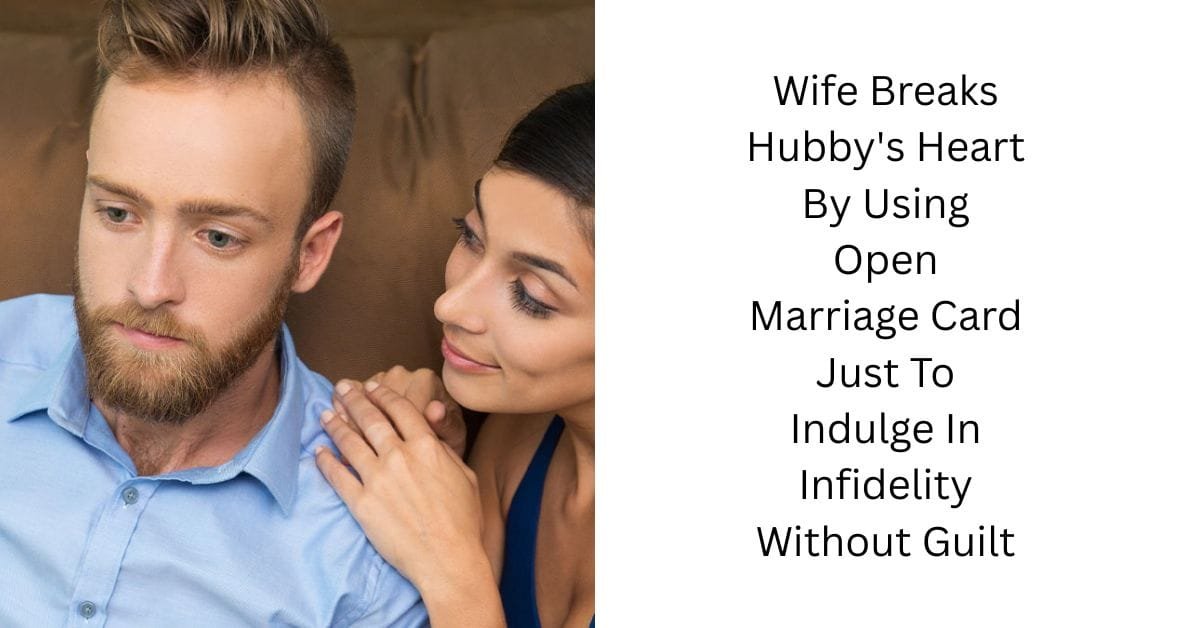
Thirty-seven-year-old Nathan had always believed that honesty and loyalty were the foundation of a successful marriage. He and his wife, Claire, had been together for nearly thirteen years after meeting in college and gradually building a comfortable life together. They had weathered financial struggles, career changes, and the challenges of raising two young children, always believing they could overcome difficulties as a team. Friends often described them as one of the strongest couples in their social circle because they rarely argued in public and seemed deeply supportive of one another. Nathan never imagined that the greatest challenge to their marriage would come not from financial stress or family problems, but from a conversation that completely changed the way he viewed their relationship.
One evening, Claire unexpectedly suggested that they consider an open marriage. She explained that she had been reading articles and listening to podcasts about couples who claimed non-monogamy had strengthened their relationships through greater honesty and personal freedom. Claire insisted that her request had nothing to do with being unhappy with Nathan and argued that love and physical attraction could exist separately. Nathan was shocked by the suggestion because he had always believed marriage meant choosing one partner for life. Although deeply uncomfortable, he tried to understand her perspective instead of dismissing it immediately, hoping it was simply a passing curiosity rather than a serious desire.
Over the following weeks, Claire continued bringing up the idea, insisting that modern relationships did not have to follow traditional rules. She reassured Nathan that he would have the same freedom if he ever wanted it, but he repeatedly explained that he had no interest in seeing other people. Eventually, feeling emotionally pressured and afraid that refusing might push Claire away, Nathan reluctantly agreed to try the arrangement under strict boundaries and complete honesty. However, it quickly became clear that Claire had already embraced the lifestyle long before their agreement. She spent increasing amounts of time away from home, constantly messaged someone on her phone, and seemed unusually prepared for a relationship she claimed had only recently become possible.
Nathan’s worst fears were confirmed when he accidentally discovered old messages showing that Claire had been emotionally involved with another man for several months before ever mentioning an open marriage. The conversations revealed flirtation, romantic plans, and discussions about waiting until Nathan finally agreed so they “wouldn’t have to feel guilty anymore.” Realizing that the open marriage proposal had been presented only after another relationship had already developed left Nathan devastated. To him, it no longer felt like an honest attempt to redefine their marriage—it felt like a way to legitimize behavior that had already crossed emotional boundaries.
Heartbroken and confused, Nathan turned to an online community for advice, asking whether he was wrong for believing his wife’s actions were less about ethical non-monogamy and more about avoiding responsibility for infidelity. Many readers responded that truly open relationships depend on mutual trust, enthusiastic consent, and complete transparency from the very beginning. They argued that introducing the idea only after secretly pursuing another person fundamentally undermined those principles. Although Nathan knew rebuilding trust would be incredibly difficult, the experience taught him that no relationship structure—traditional or open—can succeed without honesty, respect, and genuine agreement from both partners.

Advertisement
Read Story…
Opening up our marriage was the worst decision I have ever made
Sigh. Another sleepless night so here I am – venting it all out for you all to see.
Dinner
My partner does frequent this subreddit. So maybe let this also be an open letter to her.
We have been together for 15 years – married 10+. We had a romantic backstory where two people from the opposite ends of the world met while on international exchange in a foreign country, fell in love, did the long distance thing, and accidentally knocked her up so she moved to my country where we have built a life together with two kids.
Our marriage has been fairly stable. We get along fairly well and very rarely fight. There are definitely a lot of stresses from life – but I felt we were a team to face those challenges together. To be honest we have a really good life. We both make really good money, we own our own home and cars, really good life.
A while back – she asked if we should open the marriage. To be honest the idea kind of appealed to me, what guy doesn’t want to have the chance to try with new partners?! I thought about it for a bit and agreed we can try. But my idea of it was we would try swininging.
A few weeks later – I went on a trip and when I returned – she told me she had done the deed and had sex with an older colleague who she has been taking to for a while.
I was really shocked that it happened so quickly – and it was a mixed rollercoaster emotion of jealousy but also insecurity – I was having a really hard time digesting this. So I had a heart to heart with her that while I’m okay it happened (with my permission so it’s not cheating) that I don’t want it to happen again.
She didn’t take it well – she said this experience opened up a new dimension for her – and she doesn’t think she can go back to being monogamous. And that was I was “changing my mind and taking away her fun”.
I suggested we start couples therapy – and we have had a few sessions. I felt like we were getting better. It uncovered she has a lot of trauma and some of her behaviour are from these traumatic upbringing. In a way – she doesn’t feel like she deserves happiness – so she’s trying to sabotage it.
But I definitely noticed she’s different – she doesn’t act affectionate to me as she used to, and shes hot and cold on a dime. She reluctantly has sex with me, basically saying she feels bad that while she doesn’t really want it – she felt like it’s her duty to let me release. This was a complete 180 with our dynamic before the affair where we had a lot of physical affection and a great bedroom.
She outlined a few things she didn’t like about how I treat her in therapy , and I have been trying my best to be mindful to change so I can be a better husband. But I don’t think she cares, at least she does not show any appreciation for me trying.
By the way – all the session so far has focused on her. How I have not met her emotional needs. How my criticism reinforced her trauma, how she has issues with certain things I do. I have not gotten to say any of the things I hoped she can work on. She took the sessions and made them all about herself and justifying how everything we have going wrong stems from my actions. When the triggering event for all this is her stepping out of the marriage!
I find out she’s continuing to sext with her fling – even when our couples therapist strongly suggests we stop the open marriage for now as we work through our issues.
The breaking point was tonight – she came home and I broke down and asked her to stop any contact with the men she has been talking to. She refused and left to sleep on the couch.
I am now crying and typing this out.
I don’t smoke, I don’t drink, I spoil her to bits and I’m a good father and family man. I have a good career. I do not sleep around and my life is work and home. I don’t understand how my marriage has unraveled so quickly and how we ended up here.
I am not sure where to go from here. I feel like I need to stop being here – trying to make her happy just so she can continue to hurt me. But it’s also hard to not try to save a relationship of over 15 years. I also have to think for the kids too they are at an impressionable age
I don’t think I can trust her anymore. Because she has said that “maybe I shouldn’t have told you and we would have been fine”. I’m not sure if she respects me or our marriage enough not to cheat again.
I’m trying to hide my sadness with everyone in my life but in reality I’m spiraling as I grieve the potential death of our marriage. It fucking hurts so much.
If she’s grieving – she’s hiding it really well because she’s her jolly old self. Not a care in the world even though I’m not just visibly sad all the time, I tell her all the time how this is all affecting me. She does not seem to care at all. Did she ever care about me, about us?
I will continue to do therapy individually and couples counseling but Im feeling less and less confident it will make her change.
It helps to vent and I think I already know what most are going to say. Thanks for reading this long and winded post. I will try to get some sleep…
Edit 1: many of you are saying she had this premeditated – and yes she indeed did (she told me after). My original read on this situation was we were going to be swinging so we both experience sex with other people. But alas we didn’t set boundaries and of course she did what she did with the hall pass. I already figured this out myself – you can all tell me I’m stupid for not seeing it earlier – but maybe I’m just too trusting of a person I built a life with the past 15 years.
Update 322am: she woke up and saw me sitting there sighing and looking at my phone at all this. She said “I can’t sleep when you are like this crazy” got up and drove away. I can’t even make this up.
If that’s not a sign Our marriage is dead like many of you pointed out I don’t know what is. I’m devastated but now that I know – I can figure out a path to move on. She doesn’t deserve me and my love and I need to do the right thing and protect myself and my kids.
The Marriage He Believed Would Last Forever
Thirty-eight-year-old Nathan had always believed that trust was the single most important part of a successful marriage. He and his wife, Claire, had been together for nearly fourteen years after meeting during their final year of college. Over time, they built a comfortable life filled with shared responsibilities, weekend family outings, and countless memories with their two children. Although no marriage was perfect, Nathan genuinely believed they had created something strong enough to survive life’s challenges. Friends often described them as one of the happiest couples they knew because they rarely argued in public and always appeared supportive of one another. Nathan never imagined that a single conversation would eventually make him question everything about the life they had built together.
Advertisement
Their marriage had settled into a predictable routine over the years. Nathan worked as a project manager for a construction company, while Claire managed a successful marketing career that often allowed her to work remotely. Evenings usually consisted of family dinners, helping the children with homework, and watching television together before bed. While romance wasn’t as exciting as it had been during their twenties, Nathan believed they had simply entered a more mature stage of marriage. He never suspected that Claire viewed their relationship very differently.
Everything changed one Friday evening after the children had gone to bed. Claire told Nathan she wanted to discuss something important that had been on her mind for several months. Expecting a conversation about finances or work, Nathan listened calmly. Instead, Claire surprised him by suggesting that they consider opening their marriage. She explained that she had recently read books and listened to podcasts claiming that many modern couples maintained healthy relationships while dating other people. According to her, emotional commitment and physical exclusivity were not necessarily the same thing.
Advertisement
Nathan was completely stunned. At first, he laughed awkwardly because he honestly believed Claire was joking. When he realized she was serious, his expression quickly changed. He asked whether he had done something wrong or whether she was unhappy in their marriage. Claire immediately insisted that wasn’t the case. She claimed she still loved him deeply and wanted to spend the rest of her life with him. According to her, exploring relationships with other people wasn’t about replacing him—it was simply about experiencing greater personal freedom while remaining emotionally committed to one another.
The conversation lasted for nearly three hours. Nathan explained that marriage meant exclusivity to him and that he had never imagined sharing his wife with anyone else. Claire responded by saying society placed unrealistic expectations on long-term relationships and argued that people shouldn’t feel guilty for finding others attractive. She repeatedly emphasized that she wasn’t asking because she had already met someone else. Instead, she described it as a philosophical discussion about building a more honest relationship. Although Nathan listened respectfully, he left the conversation feeling emotionally shaken.
Over the following weeks, the topic resurfaced repeatedly. Claire continued sending Nathan articles about ethical non-monogamy and interviews with couples who claimed open marriages had improved communication and strengthened trust. Nathan read everything she shared because he genuinely wanted to understand her perspective. However, every article left him feeling more uncomfortable rather than reassured. While he respected that other couples could choose different lifestyles, he couldn’t imagine himself feeling secure in that kind of relationship.
As the discussions continued, Nathan noticed subtle changes in Claire’s behavior. She became unusually protective of her phone, smiled frequently while replying to messages, and occasionally stepped outside to answer calls she claimed were work-related. She also began paying much more attention to her appearance before supposedly meeting clients or attending networking events. None of these changes proved anything on their own, but together they created a growing feeling of unease that Nathan struggled to ignore.
Despite his doubts, Nathan loved Claire deeply and feared losing his family. After several emotional conversations, she gently suggested that refusing even to consider an open marriage might mean he didn’t fully trust her. Nathan felt trapped between protecting his own values and preserving the relationship he had spent nearly fourteen years building. Wanting desperately to avoid divorce and believing compromise might save their marriage, he reluctantly agreed to continue discussing the possibility—even though every instinct told him that something about the situation didn’t feel right.
A month later, Nathan reluctantly agreed to try the arrangement under very clear conditions. They promised each other that there would be complete honesty, no secrets, no emotional relationships with other people, and immediate communication before either of them pursued anyone outside the marriage. Nathan made it clear that he wasn’t excited about the idea and was agreeing only because he hoped it would save their relationship. Claire happily accepted every condition without hesitation, telling him she appreciated his willingness to trust her. Looking back, Nathan would later realize how quickly she had accepted rules she already seemed prepared to follow.
Almost immediately after their agreement, Claire’s behavior changed in ways Nathan hadn’t expected. She began spending several evenings each week away from home, claiming she was meeting new people through social events and networking groups. Weekend errands suddenly lasted for hours, and she frequently returned home smiling while refusing to discuss the details of her day. Whenever Nathan asked simple questions, she reminded him that they had agreed to respect each other’s privacy. Although he tried to honor their arrangement, he couldn’t ignore the growing distance between them.
Nathan, meanwhile, never acted on the agreement. Despite technically having the same freedom, he found himself completely uninterested in dating anyone else. Every time he considered it, he felt guilty and emotionally exhausted. Instead of downloading dating apps or meeting new people, he spent more time with his children, focused on work, and tried convincing himself that his discomfort would eventually fade. Unfortunately, the more Claire embraced the new lifestyle, the lonelier Nathan felt inside his own marriage.
One evening, while helping Claire troubleshoot an issue with her laptop before an online presentation, Nathan noticed that one of her messaging applications was still open. He hadn’t intended to invade her privacy, but a notification appeared on the screen before she returned to the room. The preview contained a message from an unfamiliar man that read, “I can’t believe we don’t have to hide anymore.” Those few words immediately caught Nathan’s attention and filled him with an overwhelming sense of dread.
Unable to ignore what he had seen, Nathan later confronted Claire about the message. At first, she dismissed it as a harmless joke between friends. However, her explanation didn’t make sense. After a long and emotional discussion, she finally admitted that she had been talking to the man for several months. She insisted that nothing physical had happened before they agreed to open the marriage, but Nathan struggled to believe her. The timeline simply raised too many questions.
The following weekend, Nathan accidentally discovered something that shattered whatever trust he still had. While searching for an old family photo on their shared cloud account, he came across screenshots Claire had forgotten to delete. The conversations revealed weeks of flirtatious messages, romantic compliments, and discussions about waiting until Nathan agreed to an open marriage so they “wouldn’t technically be cheating.” Reading those words felt like having the air knocked out of his lungs. It became painfully clear that the idea of an open marriage hadn’t appeared out of nowhere.
Nathan realized that Claire hadn’t suggested changing the rules of their marriage because she suddenly believed in ethical non-monogamy. Instead, she had already formed an emotional attachment to someone else and simply wanted permission to continue without feeling guilty. To Nathan, the proposal no longer seemed like an honest conversation about relationship styles—it felt like a carefully planned strategy to legitimize a relationship that had already crossed emotional boundaries long before he had ever been asked for his opinion.
Heartbroken, Nathan confronted Claire with the screenshots. This time she couldn’t deny what had happened. Through tears, she admitted that she had developed feelings for the other man months earlier but insisted she had never intended to hurt Nathan. She claimed asking for an open marriage had seemed like the most honest way to handle the situation instead of having a secret affair. Nathan quietly replied that honesty begins before feelings are acted upon—not after another relationship has already begun. Those words marked the beginning of the most painful chapter of their marriage.
The days that followed were filled with painful silence. Nathan and Claire continued living under the same roof for the sake of their children, but their conversations became brief and emotionally distant. Every shared meal felt awkward, and every glance reminded Nathan of the messages he had read. He found himself questioning years of memories, wondering whether the marriage he had cherished had begun falling apart long before he noticed. The uncertainty hurt almost as much as the betrayal itself.
Claire repeatedly apologized and insisted she had never planned to leave Nathan. She claimed that her feelings for the other man had developed unexpectedly and that suggesting an open marriage seemed like a way to avoid lying or sneaking around. Nathan listened quietly but struggled to accept that explanation. From his perspective, the dishonesty had started the moment she pursued another emotional connection before discussing it with him. By the time she introduced the idea of an open marriage, she had already made decisions that affected both of them without his knowledge.
Desperate for clarity, Nathan shared his story anonymously on an online discussion forum and asked whether he was being unreasonable. He explained that he had no objection to adults choosing consensual non-monogamy if both partners genuinely wanted it. His problem was that Claire seemed to have used the concept only after she had already become emotionally invested in someone else. He wanted to know whether others saw a difference between ethical non-monogamy and using it to justify an existing relationship.
Thousands of responses poured in over the next several days. Many readers expressed sympathy for Nathan and argued that successful open relationships depend on enthusiastic mutual consent, honesty from the beginning, and equal participation by both partners. They pointed out that introducing the idea only after developing feelings for another person fundamentally changed the situation. Several commenters wrote that the issue wasn’t the concept of an open marriage—it was the timing and lack of transparency that had destroyed trust.
Some commenters shared their own experiences with healthy open relationships, explaining that they had spent months discussing boundaries, expectations, and emotional risks before anyone dated another person. Those readers emphasized that ethical non-monogamy cannot function when one partner feels pressured or agrees only to prevent the relationship from ending. Nathan realized that even people who personally supported open marriages believed Claire’s approach had ignored the principles that make such arrangements work.
After reading the overwhelming responses, Nathan asked Claire to attend marriage counseling with him. During several emotional sessions, they discussed not only the messages and broken trust but also the deeper communication problems that had slowly developed over the years. Claire admitted that she should have talked openly about her changing feelings before becoming emotionally attached to someone else. Although she accepted responsibility for her choices, both of them understood that admitting mistakes was far easier than repairing the damage those mistakes had caused.
In the months that followed, Nathan carefully considered what kind of future he wanted for himself and his family. Whether their marriage ultimately survived or ended, he came away with one important realization: no relationship structure—traditional, open, or anything in between—can succeed without complete honesty, mutual respect, and freely given consent. An open marriage cannot erase betrayal that has already occurred, nor can it transform secrecy into trust. Nathan’s experience became a painful reminder that changing the rules of a relationship only works when both people begin from a place of truth rather than trying to justify choices that have already been made.