Woman Snaps At Taxidermy-Loving Roommate Who Keeps Putting Dead Animals In Shared Fridge
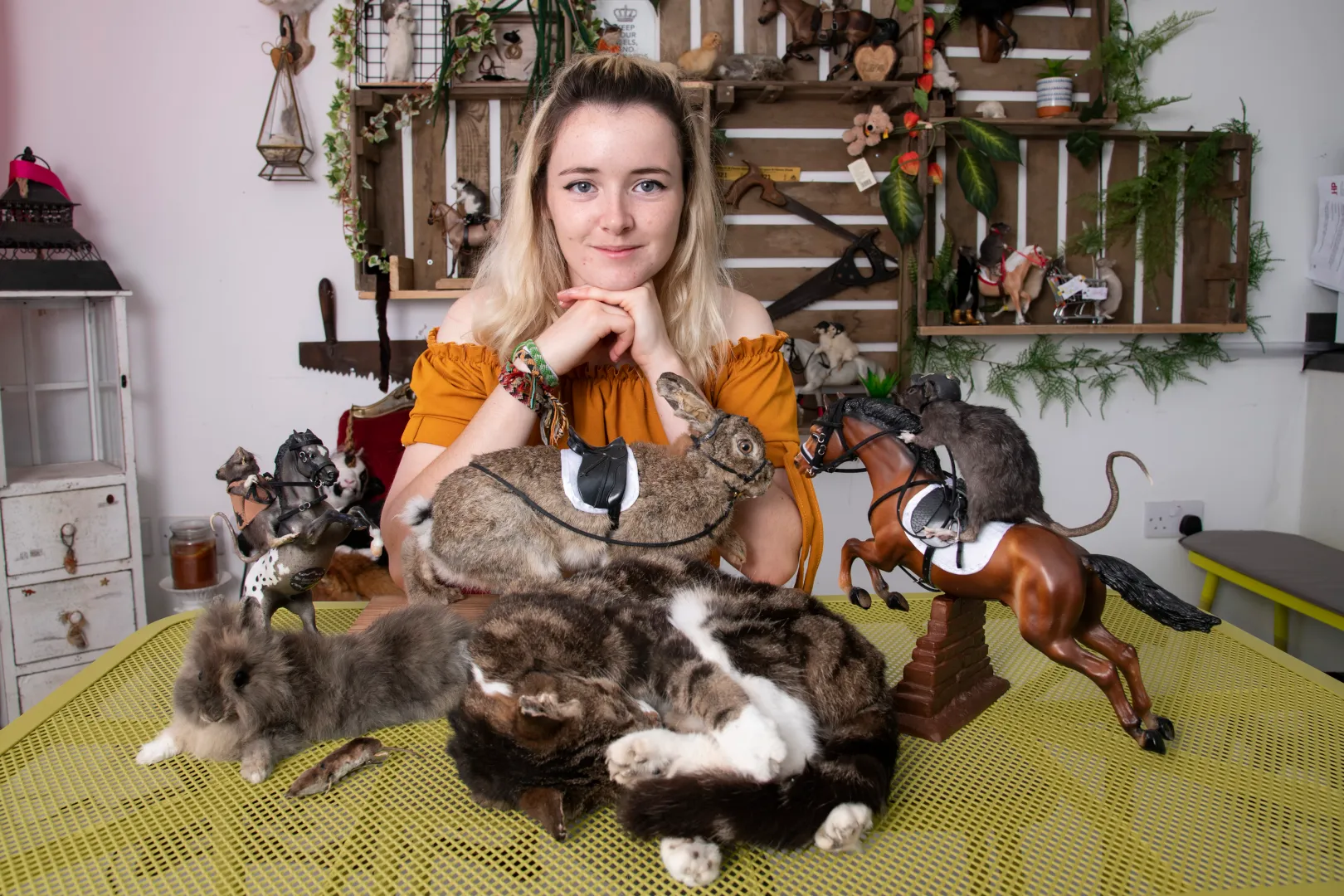
A 26-year-old woman became increasingly frustrated with her roommate after discovering that the roommate had started storing dead animals inside their shared refrigerator. The two women had been living together for around eight months, and for the most part, they had managed to respect each other’s personal space. The roommate worked at a wildlife rehabilitation center and also enjoyed taxidermy as a hobby. The woman had no problem with the unusual hobby as long as it stayed inside her roommate’s private room. The situation changed when the roommate began bringing various dead birds and small animals into the kitchen and placing them in the same refrigerator where they kept their everyday food.
The woman’s first encounter with one of the specimens was particularly disturbing. She opened the refrigerator expecting to grab what she thought was leftover chicken, only to discover a dead bird wrapped in plastic. A sticky note attached to it read, “DO NOT EAT. DAY 3.” She was shocked and nearly became sick from the discovery. She immediately told her roommate that the specimens needed to be stored somewhere else, preferably in the mini fridge inside her room. Her roommate disagreed, explaining that the mini fridge was not cold enough for what she described as proper preservation before the tanning process. She also argued that the specimens were sealed inside bags, so there was no reason for her roommate to be concerned.
For a few days, the woman tried to tolerate the situation, hoping her roommate would understand how uncomfortable the shared refrigerator arrangement was. However, the problem did not stop. One day, while reaching into the refrigerator to get milk for her coffee, she noticed another dead-animal specimen sitting directly beside the milk and other food items. At that point, she felt that her roommate had completely ignored her concerns. She confronted her again and told her that all of the specimens needed to be removed from the shared refrigerator by the end of the day. She also warned that if they were not removed, she would contact the landlord and report what she believed was a serious health and sanitation concern.
The roommate became furious and accused her of ruining weeks of careful preservation work. She insisted that some of the animals she had collected were rare finds that could not simply be replaced. From her perspective, the refrigerator was an important part of her taxidermy process, and she felt that her roommate was interfering with her hobby. The woman, however, believed there was a clear difference between respecting someone’s hobby and being expected to store dead animals next to food in a refrigerator used by the entire household. She did not think sealed plastic bags automatically made the situation acceptable, especially after repeatedly finding specimens beside things she intended to eat and drink.
When the woman later discussed the situation with a friend, she received some criticism for the way she handled the confrontation. Her friend believed she should have had another calm conversation with the roommate instead of giving her a deadline and threatening to involve the landlord. The friend pointed out that the roommate worked with dead animals professionally and might not see them as disturbing in the same way other people do. Still, the woman felt that the issue was not about judging her roommate’s career or hobby. It was about shared living space, food storage, and basic boundaries. She believed she had already expressed her concerns clearly and had given her roommate an opportunity to change the arrangement, but the specimens continued appearing in the communal refrigerator.
Read Story…
“”AITA for throwing out my roommate’s ‘collection’ after she kept putting it in our shared fridge?”
The Original Poster (OP) explained:
“I (26 F[emale]) have lived with my roommate (27 F) for about 8 months. “
“She works at a wildlife rehab and is into taxidermy as a hobby, and it’s fine cuz I don’t care what she does in her own room.”
“The issue is she started keeping ‘specimens,’ various birds and small animals she would find, in Ziploc bags in our shared fridge, the same place I keep all my food, condiments, and whatnot.”
“I first found out about this when I opened the fridge and grabbed out what I thought was leftover chicken.”
“I nearly threw up before I even processed what I was looking at.”
“It was a dead bird, wrapped in plastic, with a sticky note on it that said ‘DO NOT EAT. DAY 3.’ “
“I told her to keep all her corpses in the mini fridge in her room and away from my food. “
“She said the fridge in her room isn’t cold enough for ‘proper preservation before the tanning process,’ and that the bags were sealed, so I’m just overreacting over nothing.”
“A few days go by.”
“I was pulling some milk out of the fridge to brew some coffee when I saw one of her ‘specimens’ right next to the milk.”
“That was it.”
“I told her that I want all her ‘specimens’ out of the fridge by the end of the day, or I’m calling the landlord and reporting a health code violation.”
“She was furious, said I ruined ‘weeks of curing work’ and that some of those finds were irreplaceable.”
“I spoke to one of my friends, and she thinks I should’ve just spoken to my roommate about it more, rather than force her to empty the fridge cuz she works with dead animals for a living.”
The OP was left to wonder:
“So am I the a**hole?”
Redditors shared their thoughts on this matter and weighed in on some options to the question, AITA:
- NTA – Not The A**hole
- YTA – You’re The A**hole
- NAH – No A**holes Here
- ESH – Everyone Sucks Here
- INFO – More Information Needed
Many Redditors declared that OP was NOT the A**hole.
“NTA, she can buy another fridge.”
“Would you keep hazardous chemicals in the fridge with your food just because they are sealed? No?”
“Then why dead animals?” ~ goofy-goober890
“Your friend says you should’ve talked to her first, but you literally did.”
“She just didn’t like your answer and continued doing it anyway. NTA.” ~ OfficialBroccoliRob
“You can tell her that it’s a rule/regulation in science that no food is ever stored in the same fridge as specimens.”
“We have signs everywhere and regular inspections.”
“Her specimens should be treated the same way.” ~ dorsalhippocampus
“NTA -Dead dove, do not eat.” ~ ineverbot
“I run an animal rescue from my house.”
“We keep any and all animal-related items in a designated fridge/freezer.”
“It’s just not sanitary to have that kind of stuff next to your food.” ~ raptor_love
“NTA. Also, I’m a biologist.”
“The Migratory Bird Treaty Act in the US prohibits possession of most native birds and their parts.”
“There are similar laws in other countries.”
“At best, she’s creating a safety hazard (specimens should not be kept where food is stored).”
“At worst, she’s committing a crime against federal law.” ~ derberner90
“NTA. Look up the Migratory Bird Treaty Act (if in the US).”
“It’s very likely she is NOT allowed to possess these birds.”
“Not to discount what you’re going through, but it’s beyond birds in your fridge.” ~ xANTJx
“Dear Lord.”
“She’s finding, presumably not killing them herself, dead things.”
“Bringing them into a shared living space and forcing you to deal with them.”
“Not to yuk her yum, but that’s a hobby for someone living alone.”
“I bet you don’t even notice the smell anymore.”
“Because it’s there.” ~ Fromdustcomesdreams
“Hey there, OP. I would make a phone call to her superiors at the wildlife rehab where she works – or even pay them a visit – and discuss with them exactly what is taking place in your refrigerator so that they may have a conversation with her about animal law, appropriate licensure, and animal respect.”
“What your roommate is doing is wrong on a very large scale.” ~ _bufflehead
“NTA. You did talk; she tried to convince you to keep the status quo that worked for her.”
“She can get a colder fridge for her room and keep specimens out of communal spaces where they risk a health and safety hazard.” ~ lemon_charlie
“OMG NTA.”
“I am a collector of a similar variety, and I also live in a shared house.”
“I never even bring dead things inside (!!) until they are sealed in a bucket with their chemical bath for whitening (which means they are clean or all soft tissue).”
“ALL of the other steps are handled OUTSIDE and away from the windows.”
“I’m a weirdo, and I know it; I completely understand that not everyone has my comfort with dead stuff.”
“And even with that, I would NEVER bring dead things into my kitchen, let alone store them in my fridge.”
“That is so, so gross.” ~ magicmavenhart
“I guarantee you the place she works/volunteers would fire her a** if they caught her putting specimens in the break room fridge.”
“That is so unsanitary and disgusting.”
“All you did was clean the fridge.”
“If she needs to keep specimens cold, she should buy a separate fridge for her room.”
“So disgusting. NTA.” ~ Cabanna1968
“NTA. If she is serious about her hobby, she can purchase the correct tools/materials for said hobby.”
“A small deep freeze or better mini fridge is not a huge investment.”
“This is such a crazy health risk.”
“I promise you won’t find lunch meat in a professional taxidermist’s specimen fridge.” ~ 2old2bThisDumb
“NTA. I say this as a person who also dabbled in taxidermy.”
“We never keep our specimens in the same fridge as food.”
“It’s a serious health risk, and one of the most basic rules of the hobby.” ~ Nocitae
“NTA. Every lab has a separate fridge for specimens, away from kitchen and food fridges.”
“It’s a health hazard.”
“Tell her if she wants to be serious in her chosen field, then she can update her fridge for colder preservation but still needs to adhere to proper safety protocols.” ~ marieskis
“NTA!!! Legit taxidermists do not keep their work in the same fridge as their/others’ personal food.”
“That’s a biohazard and just plain gross.”
“Also, is she doing the taxidermy in your apartment???”
“Cause, ya, no?”
“That needs to stop if so.”
“If not, and she has a space she works out of, then she needs to get a fridge for there.” ~ here_kitkittkitty
“NTA. She needs to get her own fridge to store outside or in a garage or something.”
“One of my housemates also collects dead animals and stuff, and he keeps them in his own fridge outside.” ~ 4lienviking
“NTA. NoNoNoNo.”
“I know plenty of folks who’d have specimens to articulate or taxidermy or study.”
“Specimens Do Not Ever go in the Food fridge.”
“Especially specimens of animals that may carry pests and pathogens.”
“No science in the food fridge.”
“She can buy a dorm fridge for her hobby.”
“Also, if you’re in the US, the birds are illegal unless they’re domesticated.” ~ Meghanshadow
“NTA. The Department of Health would probably have a sh*t fit if this was done in your local restaurant.”
“So why should the average person have to put up with it at home?” ~ PartyPlay5056
“NTA, and I’d also go as far as to report her to her workplace.”
“There is no chance she is supposed to be bringing home dead animals, especially given the callous and irresponsible way in which she has done so.”
“As other commenters have mentioned, she is very likely committing federal crimes.” ~ wvlftooth
“NTA. I worked in a biology lab and a zoo, and you do not put specimens and food in the same fridge or freezer, ever.”
“If they were ‘irreplaceable,’ she should have taken better care of them and put them someplace safe — which would not be the same fridge where you are storing food.”
“Her actions are putting your health and hers at risk.” ~ matchy_blacks
“As another person who works in rehab and has an oddities hobby, I would never keep my specimens in a shared room. NTA.”
“She needs to replace her wonky fridge and stop overfilling it if it’s not keeping things cold enough.” ~ RPG_add1ct
“Not only hell no, but aw hell naw!”
“That sh*t ain’t staying near the food I pay for to eat daily!”
“No, no no, not only no, hell f**king no.”
“I’m so grossed out by this, I feel the need to take a scalding hot shower… just… ewww!
“NTA, emphatically NTA.” ~ XRaiderV1
“You’re NTA for refusing to share fridge space with dead animals next to your food after she ignored your clear request to keep them out.” ~ LacyFawnnie
“NTA: animals for taxidermy should not be in the same fridge as good food.”
“That is absolutely unacceptable.” ~ IGotOverGreta
Reddit is with you, OP.
Your roommate’s behavior is not sanitary and rude.
You have every right to stand up for yourself.
Good Luck.
Roommates Get Along Until A Taxidermy Hobby Starts Crossing Boundaries
Living with a roommate usually requires both people to respect each other’s habits, hobbies, and personal boundaries. A 26-year-old woman had been sharing an apartment with her 27-year-old roommate for about eight months. For the most part, they had managed to live together without major problems. The roommate worked at a wildlife rehabilitation center and also enjoyed taxidermy as a hobby. The woman didn’t personally understand or enjoy the hobby, but she had never tried to stop her roommate from doing it. As long as the taxidermy work stayed inside her roommate’s private room, she was perfectly willing to mind her own business.
Advertisement
The problem began when the roommate started storing animal remains in the refrigerator they both used for food. She would collect various birds and small animals and place them inside sealed ziplock bags before keeping them in the shared fridge. The refrigerator was also where the woman stored her leftovers, milk, condiments, groceries, and other everyday food. At first, she tried not to make a huge issue out of it because she assumed the specimens were temporary and that her roommate had a reason for keeping them cold.
Her feelings changed dramatically one day when she opened the refrigerator expecting to find leftover chicken. Instead, she discovered a dead bird wrapped in plastic. She was shocked and nearly threw up before realizing exactly what she was looking at. A sticky note attached to the bag said, “DO NOT EAT. DAY 3.” Although the warning made it obvious that the roommate did not want anyone accidentally eating it, the woman was still horrified that a dead animal was sitting inside the same refrigerator where she kept her food.
She immediately confronted her roommate and explained that she was uncomfortable with the arrangement. Importantly, she did not tell her roommate to stop doing taxidermy. She simply asked her to move the specimens somewhere else, preferably into the mini fridge in her bedroom. The roommate refused, explaining that the mini fridge was not cold enough for the proper preservation process before tanning. She also argued that the specimens were sealed inside bags, so there was no reason for her roommate to be concerned.
The woman tried to tolerate the situation despite how uncomfortable it made her. She understood that her roommate worked with dead animals professionally and probably viewed the specimens very differently than she did. Still, she believed there was a clear difference between respecting someone’s hobby and being expected to share a food refrigerator with dead wildlife. She hoped that after their conversation, her roommate would find another solution that would allow her to continue her hobby without making their shared kitchen uncomfortable.
Unfortunately, a few days later, the woman opened the refrigerator to get some milk for her coffee and noticed another specimen sitting right beside it. Seeing another dead animal in the same place where she kept food was the final straw. She felt that her roommate had ignored the boundary she had already clearly communicated. Instead of having another long discussion, she told her roommate that all of the specimens needed to be removed from the shared refrigerator by the end of the day.
When her roommate objected, the woman became even more serious. She told her that if the specimens were not removed, she would contact the landlord and report the situation as a possible health-code violation. From her perspective, the issue was no longer about whether taxidermy was a strange hobby. It was about the fact that the shared refrigerator was being used to store dead animals alongside groceries. She felt that both roommates should be able to use the kitchen and refrigerator without feeling uncomfortable or worried about what they might find.
Her roommate was furious. She argued that the woman was completely overreacting and failing to understand that the specimens were part of a careful preservation process. She said that the bags were sealed and that she knew how to handle animal remains because of her work. She was especially upset because moving the specimens could potentially ruin weeks of curing work. Some of the animals she had collected were also difficult to replace, making the woman’s demand feel even more unreasonable from her perspective.
The woman, however, felt that the importance of the specimens did not change the situation. She wasn’t asking her roommate to throw away her hobby materials or stop collecting animals. She only wanted those items kept away from the shared food-storage area. In her mind, the refrigerator was a common household space, and both roommates should have equal say in what was stored there. She felt that her roommate’s hobby should not automatically take priority over her comfort and ability to store food normally.
After the argument, the woman spoke to one of her friends about everything that had happened. Her friend understood why seeing dead animals next to groceries would be upsetting, but she questioned whether the woman had handled the situation too aggressively. She suggested that another calm conversation might have been better than immediately threatening to contact the landlord. Since the roommate worked around dead animals for a living, the friend believed she might genuinely not understand how disturbing the situation was to someone who wasn’t accustomed to it.
The woman still believed she had been reasonable. She had already spoken to her roommate after the first incident and had offered a specific alternative by suggesting the mini fridge in her room. She had not demanded that the roommate abandon taxidermy or stop bringing specimens home. What bothered her most was seeing another specimen in the shared refrigerator only days after she had explained how uncomfortable she was. To her, that showed that her original request had not been taken seriously.
The situation also made her realize that respecting a roommate’s personal interests does not mean accepting everything that affects the shared home. She could respect her roommate’s job and hobby while still having a boundary about where dead animals should be stored. The woman believed that private hobbies should remain private when possible, especially when they involve something that another person finds disturbing. She felt that there should be a reasonable compromise that allowed her roommate to continue her preservation work without using the refrigerator for both food and animal specimens.
Now the woman is questioning whether she went too far by threatening to involve the landlord or whether her reaction was justified. Her roommate believes the specimens were safely sealed and necessary for her preservation process, while the woman believes a shared food refrigerator should be reserved for food and drinks. She never objected to the taxidermy itself and had allowed her roommate to pursue the hobby in her own space. Her frustration came from the hobby crossing into a shared area and continuing even after she expressed her discomfort. The disagreement has left both roommates feeling that their boundaries were being ignored, and the woman wants to know whether she was wrong for finally putting her foot down.