Woman Stops Hosting Mom’s Birthday After 5 Years, Fam Says She “Ruined” The Tradition
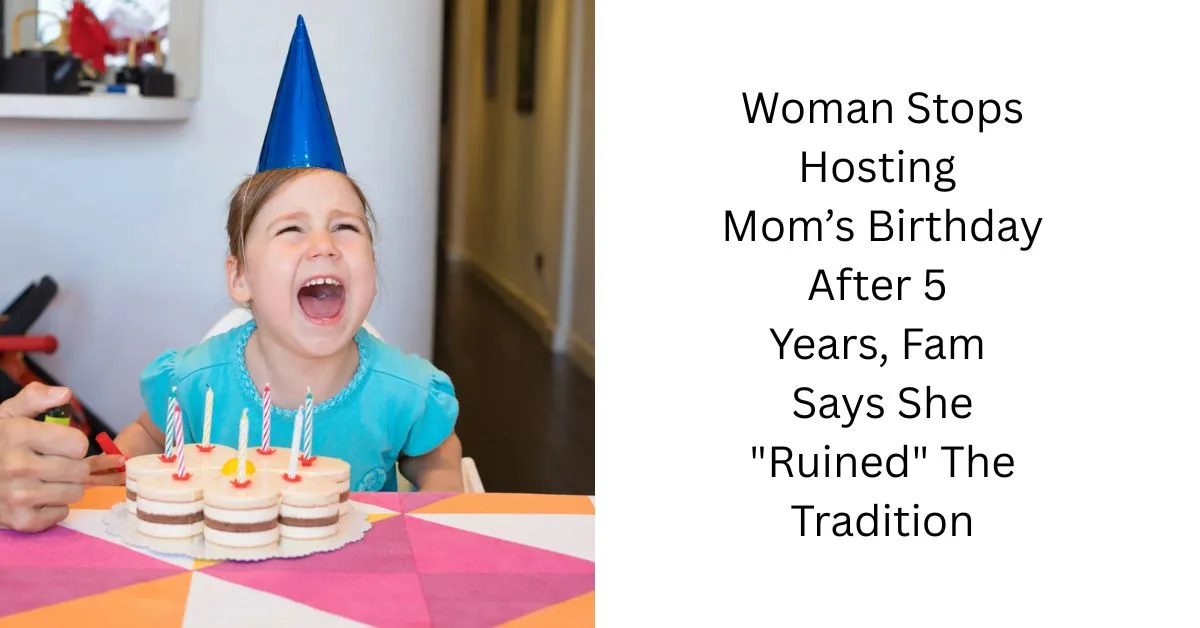
For five consecutive years, the woman had taken full responsibility for organizing her mother’s birthday celebration. She handled everything herself, from choosing the venue and decorating the space to preparing food, coordinating schedules, and making sure every family member felt included. Although the gatherings always appeared effortless to the guests, they required weeks of planning, countless phone calls, and significant personal expense. She never complained because seeing her mother happy made the hard work feel worthwhile. Over time, however, she began noticing that while everyone enjoyed the celebration, very few people offered to help or even acknowledged the effort she invested behind the scenes.
As each birthday passed, the workload only became heavier. Family members started assuming she would automatically host every year, often making special requests without asking whether she had the time, budget, or energy to accommodate them. Some expected elaborate decorations, favorite meals, and entertainment, yet rarely contributed financially or volunteered to share the responsibilities. Instead of feeling appreciated, she increasingly felt taken for granted. The tradition that had once been a heartfelt gift for her mother slowly turned into an obligation that left her exhausted, stressed, and unable to enjoy the celebration herself.
Before her mother’s next birthday arrived, she made a decision she had been considering for months. She announced that she would no longer be hosting the annual celebration and encouraged other family members to organize it if they wanted the tradition to continue. Rather than understanding her reasons, several relatives accused her of being selfish and claimed she had “ruined” a cherished family tradition. They argued that everyone looked forward to the parties she planned and believed she should continue hosting because she had always done such a wonderful job. Their reaction left her wondering whether they truly valued her efforts—or had simply become comfortable expecting her to carry the entire responsibility alone.
Read Story…
AITA for refusing to make my mom’s birthday dinner after my family called it “our tradition”?
I’m 27F. For the last five years, I’ve hosted my mom’s birthday dinner.
Not just “ordered food and put out plates.” I mean I clean my apartment, borrow chairs, plan the menu, cook, bake the cake, remind everyone what time to show up, make sure my grandma has a ride, and then clean everything after people leave.
I didn’t mind at first. I love my mom.
But somewhere along the way, it stopped being something I did and became something that apparently just magically happened.
My brother shows up with flowers, takes pictures, posts “another great birthday for Mom,” and everyone tells him he’s thoughtful. My dad sits down and says, “You always make it look easy.” Then everyone leaves while I’m scraping dishes alone at midnight.
This year, in the family group chat, I said I’d love to come, but I wasn’t hosting or cooking. I suggested we pick a restaurant or everyone bring one dish.
Nobody replied for two days.
Then my brother texted, “Wait, so you’re just not doing Mom’s birthday?”
I said, “No, I’m not doing everyone’s job for Mom’s birthday.”
Now my dad says I made her birthday about myself. My brother says I’m punishing Mom because I want attention. My mom said she was hurt because she thought this was “our little tradition.”
That part got to me, because it was never really “our” tradition. It was my labor with everyone else’s name on it.
I still went. I brought flowers. I hugged my mom. I sat down like everyone else.
I just didn’t bring a cake, six trays of food, extra chairs, paper plates, or a backup plan.
Now my family says I embarrassed them and ruined something sweet.
AITA?
She Took Charge of Every Birthday Celebration
For five consecutive years, the woman had been the driving force behind her mother’s birthday celebrations. Every detail, from choosing a theme to sending invitations, decorating the venue, preparing food, and coordinating everyone’s schedules, rested on her shoulders. Although family members praised the finished event every year, very few realized the amount of planning, money, and time required to make everything come together. She gladly accepted the responsibility at first because seeing her mother surrounded by loved ones made every late night and stressful moment feel worthwhile.

Advertisement
How the Birthday Tradition Began
The tradition began shortly after her father passed away, when the family worried her mother would struggle with birthdays that once held so many cherished memories. Wanting to bring joy back into those occasions, the woman volunteered to organize a surprise gathering. The celebration exceeded everyone’s expectations, and her mother was deeply touched by the effort. After that first success, the family naturally assumed she would continue planning every birthday in the years that followed.
Advertisement
The Celebrations Grew Bigger Every Year
Each year the celebrations became bigger than the last. What started as a simple family dinner gradually evolved into larger gatherings with extended relatives, themed decorations, customized cakes, party favors, and entertainment for children. Guests often complimented how beautiful everything looked, posting photos online and praising the atmosphere, yet almost no one saw the weeks of preparation that happened before the first guest even arrived.

Advertisement
As expectations grew, so did the expenses. She found herself paying for decorations, catering supplies, gifts, and last-minute purchases that no one else offered to cover. Although some relatives occasionally brought a dessert or bouquet of flowers, the overwhelming majority simply arrived ready to celebrate. She rarely asked anyone for money because she disliked making family gatherings feel transactional, but privately the financial burden became increasingly difficult to manage.
The workload was just as exhausting as the cost. She spent days cleaning her home before hosting, planned menus that accommodated everyone’s dietary preferences, and carefully organized seating so relatives with strained relationships wouldn’t be placed together. Every year she worried about forgetting something important, knowing that even a small mistake could affect the entire event.
Despite all the effort, appreciation often faded as soon as the celebration ended. Guests complimented the food and decorations before heading home, but few stayed afterward to help clean or pack everything away. While everyone else returned to their normal routines the next morning, she was left washing dishes, putting away decorations, and recovering from days of nonstop work.
Her husband noticed the pattern long before she openly discussed it. He admired her generosity but worried she was sacrificing too much of her own time and energy. More than once he suggested asking siblings or cousins to share the responsibilities, reminding her that family traditions should be supported by everyone rather than resting on one person’s shoulders.
Encouraged by his advice, she gently mentioned the idea of sharing responsibilities during a family conversation months before the next birthday. Several relatives smiled politely and agreed it sounded reasonable, but no one volunteered to take on specific tasks. The discussion ended with vague promises to “help however needed,” leaving her with little confidence that anything would actually change.
As planning season approached once again, messages from relatives began arriving as usual. Some suggested a larger venue, while others requested favorite dishes or specific desserts. A few even asked whether she planned to hire entertainment for the younger children this time. Reading the messages made her realize everyone was comfortable making requests while assuming she would once again handle every detail.
That realization forced her to confront an uncomfortable truth. The celebration no longer felt like a gift she chose to give—it felt like an obligation everyone expected her to fulfill. Instead of looking forward to her mother’s birthday, she found herself feeling anxious weeks in advance, dreading the amount of work waiting for her.
She spent several evenings thinking about what to do. She loved her mother deeply and didn’t want her decision to be interpreted as a lack of love. At the same time, she knew continuing the tradition exactly as it had been would only increase her stress and resentment. She realized something needed to change before those negative feelings affected her relationships with the rest of the family.
Eventually, she made a difficult decision. She informed everyone several months in advance that she would not be hosting the birthday celebration that year. She explained that after five years of organizing every event herself, she needed a break and hoped someone else would take the opportunity to continue the tradition in their own way.
She expected a few relatives to volunteer almost immediately, believing someone would surely step forward once they understood she was serious. Instead, the family chat became unusually quiet. Days passed without anyone offering to organize the event or suggesting an alternative plan, leaving her disappointed but not entirely surprised.
When family members finally responded, many expressed frustration rather than understanding. Some insisted the celebrations had become a cherished tradition and argued that changing anything would disappoint their mother. Others claimed she was overreacting because she had “always enjoyed” planning the parties, assuming her previous willingness meant she would happily continue forever.
One relative bluntly accused her of ruining the family’s favorite annual tradition. According to them, everyone looked forward to the birthdays because she consistently organized such memorable events. They argued that if she stopped hosting, future celebrations would never feel the same. Hearing those comments hurt because they focused entirely on losing the party rather than understanding why she needed to step away.
She calmly explained that traditions only remain meaningful when they are shared responsibilities instead of one-sided expectations. She reminded everyone that she had never demanded recognition or repayment, but she could no longer continue carrying the entire burden alone. Her goal wasn’t to end the celebrations—it was to encourage the family to contribute together.
Her mother eventually learned about the disagreement and asked to speak with her privately. Nervous about disappointing her, the woman carefully explained how overwhelming the responsibility had become over the years. To her surprise, her mother listened patiently and admitted she had never realized how much work happened behind the scenes before each birthday.
Rather than criticizing her daughter, her mother thanked her for everything she had done over the past five years. She apologized for unintentionally allowing the family to depend so heavily on one person and insisted that no birthday celebration was worth her daughter’s exhaustion or financial stress. Those words immediately lifted a weight from the woman’s shoulders.
Inspired by the conversation, her mother suggested celebrating differently that year. Instead of hosting a large party, she proposed a simple dinner where everyone would contribute something, whether it was food, decorations, or simply helping with setup and cleanup. She believed the celebration should focus on spending time together rather than impressing guests.
Once other relatives realized the mother supported the decision, attitudes gradually began to change. A sibling offered to reserve a restaurant, another volunteered to organize invitations, while cousins agreed to bring desserts and decorate the space. For the first time in years, planning became a shared effort instead of a one-person project.
She Finally Got to Enjoy the Celebration
The birthday itself turned out to be one of the most relaxed and enjoyable celebrations the family had experienced. Without the pressure of handling every detail, the woman was finally able to sit beside her mother, laugh with relatives, and participate as a guest instead of constantly solving problems. She realized how much she had missed simply enjoying the occasion.
Advertisement
Looking back, many family members admitted they had unintentionally taken her efforts for granted. Because every previous celebration had seemed so organized and effortless, they had underestimated the amount of work required. The experience reminded everyone that meaningful family traditions survive not because one person sacrifices endlessly, but because everyone contributes in ways they can.
In the end, the woman hadn’t ruined a beloved family tradition—she had transformed it into something healthier and more sustainable. By stepping away after five years, she encouraged her relatives to recognize the value of shared responsibility and genuine appreciation. The celebrations continued, but they no longer depended on one exhausted family member carrying the entire load alone. Instead, each birthday became a reminder that the strongest traditions are built on cooperation, gratitude, and the willingness of everyone to help create lasting memories together.