AITA for Choosing My Wedding Day Over My Father’s Ultimatum About His Wife?
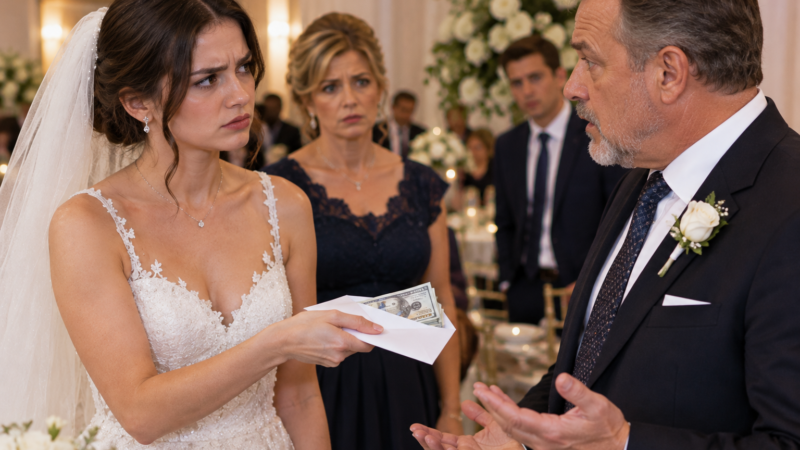
I never imagined that planning my wedding would turn into a painful family conflict, especially with the one person I had always hoped would stand beside me on such an important day: my father. I am a woman in my late twenties, and I am getting married to my fiancé after being together for several years. We have spent months planning everything, from the venue and decorations to the guest list and ceremony details. We wanted our wedding to be a happy, peaceful celebration surrounded by the people who genuinely love and support us. However, things became complicated when I decided not to invite my father’s new wife. My father immediately took it personally and told me that if she was not welcome, he would not attend either. Suddenly, what should have been one of the happiest times of my life became a situation where I felt forced to choose between protecting my peace and disappointing my own father.
My relationship with my father has never been particularly simple, especially since my parents separated several years ago. Their divorce was difficult for our entire family, and it took me a long time to accept that my childhood home would never feel the same again. After the separation, my father eventually met another woman and married her. I understand that he deserves happiness and the opportunity to move forward with his life, and I have never expected him to remain alone forever. However, accepting his new relationship does not mean that I automatically have to develop a close relationship with his wife. There have been several uncomfortable situations involving her over the years, and some of her comments and behavior have made it difficult for me to feel comfortable around her. I have tried to remain respectful for my father’s sake, but I do not feel that we have the kind of relationship where I would genuinely want her present during such an emotional and personal milestone.
When my fiancé and I started preparing our wedding guest list, I made the decision that I wanted to keep the celebration limited to people with whom I shared a meaningful connection. I knew that excluding my father’s wife might upset him, but I also knew that inviting someone simply because I was afraid of the consequences would leave me feeling uncomfortable on my own wedding day. I did not want to create a public argument or embarrass anyone, so I planned to explain my decision privately and respectfully. When I finally spoke to my father, I told him that I loved him and wanted him to attend the wedding, but I was not comfortable inviting his wife. I explained that this was my wedding, and I wanted to feel relaxed and happy rather than worrying about family tension throughout the celebration. I expected him to be disappointed, and I was prepared to have a difficult conversation, but I was not prepared for the reaction I received.
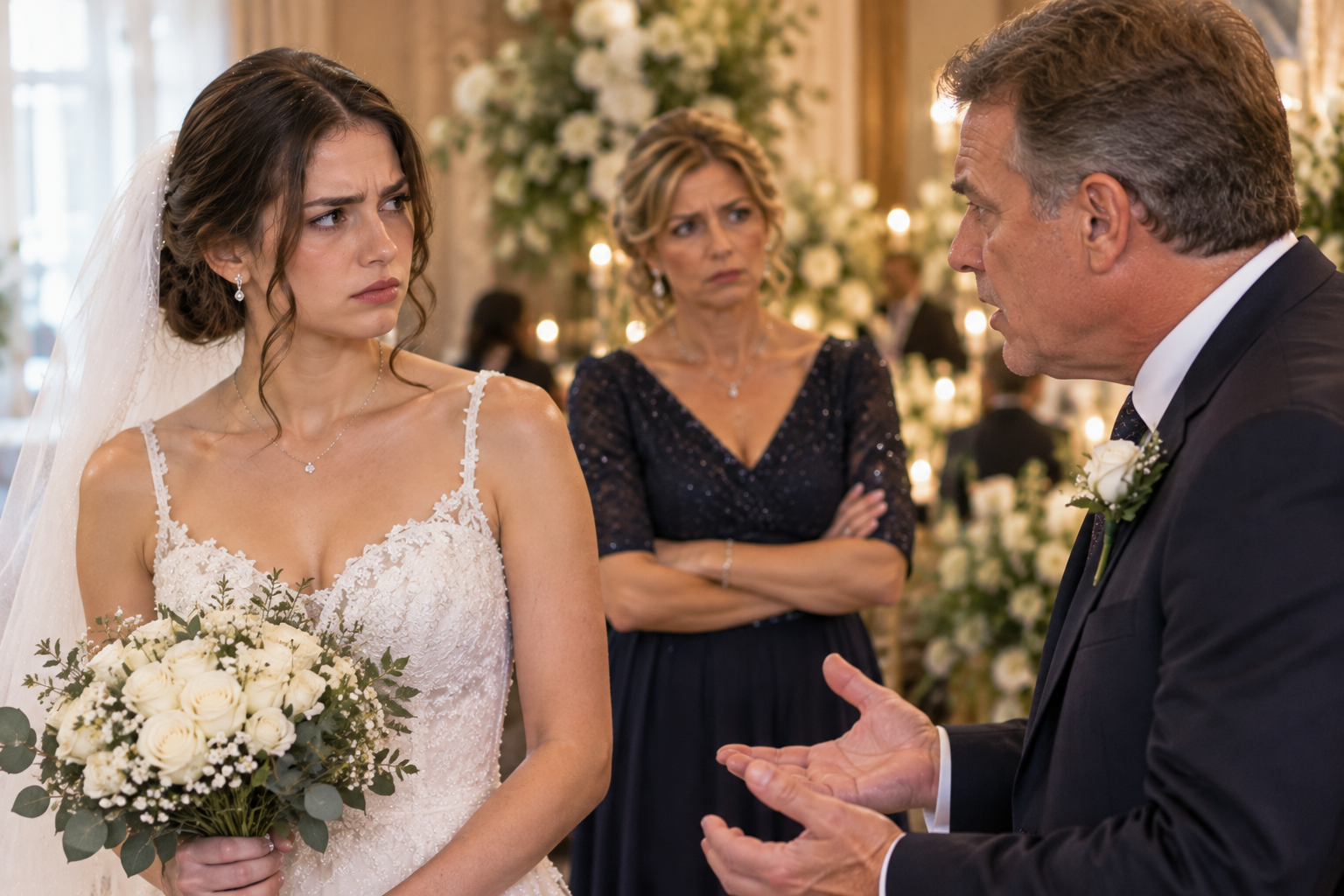
My father became extremely upset and accused me of deliberately disrespecting his marriage. He said that I was treating his wife as though she did not matter and that refusing to invite her was an insult to him as well. I tried to explain that I was not asking him to end his marriage or choose who he could spend his life with. I was simply making a decision about my own wedding guest list. However, he refused to accept that distinction. He told me that he would not attend the ceremony unless his wife was invited, insisting that they were a married couple and should not be expected to attend events separately. He also said that I would regret excluding her and that I was allowing old feelings to ruin my relationship with him. His ultimatum hurt more than I expected because I had always imagined looking out into the audience on my wedding day and seeing my father there. Instead of trying to understand why I felt uncomfortable, he made his attendance conditional on my changing my mind.
Now I feel completely torn. Part of me wonders whether I should simply invite his wife to avoid losing my father on such an important day. I know that weddings are emotional events, and I understand that he wants his partner included in his life. At the same time, I cannot shake the feeling that I am being pressured into making a decision about my own celebration just to prevent him from getting upset. My fiancé supports me and believes that my father should respect my boundaries, but some relatives have told me that I should compromise because family relationships are more important than a guest list. Others believe that my father is the one turning this into an ultimatum when he could attend the wedding and celebrate with me without demanding that his wife be included. I love my father, and I do not want his absence to become a permanent wound in our relationship. But I also do not want to begin my marriage by feeling that I had to surrender my own wishes to satisfy someone else’s demands. So, AITA for choosing my wedding day and my own comfort over my father’s ultimatum about his wife, even if it means he might not attend my wedding?
Read Story…
AITA for refusing to invite my father’s new wife to my wedding, even though he says he won’t come without her?
I’m 26F and getting married in about three months. My parents divorced four years ago after a pretty rough marriage, and while it wasn’t an easy time for me, I’ve always tried to stay on good terms with both of them. My dad (55M) remarried about ten months ago to a woman I’ll call Vanessa (48F). They’ve been together for a little over two years, and from what I understand, their relationship started before my parents’ divorce was officially finalized.
My dad insists his marriage to my mom was already over by that point, but finding out about the overlap definitely changed how I felt about Vanessa.
I’ve never been openly hostile toward her. I understand that my dad has a right to move on, and I haven’t expected him to stay single forever. I’ve attended family dinners with them, congratulated them on their marriage, and tried to be polite even when things felt awkward.
The problem is that Vanessa has made several comments about my mom that I find unnecessary and disrespectful. For example, when my mom asked if she could bring a family photo album to my engagement party, Vanessa made a comment about how my dad needed to stop living in the past. Another time, she said my mom needed to accept that the marriage was over instead of expecting everyone to keep accommodating her feelings.
My mom never said anything back.
She usually just changes the subject, which honestly makes me feel worse because I know the divorce was difficult for her.
Now that I’m planning my wedding, I don’t want to spend the day worrying about whether Vanessa will make another comment or create an uncomfortable situation between my parents. I decided to invite my dad but not Vanessa. I haven’t sent the invitations yet, but I called him to explain my decision because I didn’t want him to find out through the mail. I told him I wasn’t trying to punish him for getting remarried,
but I wasn’t comfortable having Vanessa at the wedding given the way she’s spoken about my mom. He was furious. He said he and Vanessa are married, and excluding her means I’m treating his marriage as less legitimate than mine. He also said Vanessa hasn’t actually done anything to me, so I’m holding a grudge over comments that weren’t even directed at me.
I pointed out that the comments were about my mother, who will be there, and that I don’t want unnecessary tension on my wedding day.
He said he would make sure Vanessa behaved herself, but I honestly don’t think that’s the point. I don’t want to spend the entire day wondering whether she’s going to make another remark or whether my dad will expect me to defend her if my mom gets upset. Then he gave me an ultimatum: either Vanessa gets an invitation, or he won’t attend.
I was upset, but I told him I wasn’t going to change my decision just because he threatened not to come. He said I was forcing him to choose between his daughter and his wife, and that he never thought I’d be so petty about his new marriage. After that conversation, I spoke to my mom. I expected her to understand why I didn’t want Vanessa there, but she surprised me by saying she thinks I should invite her.
My mom said she doesn’t want to be the reason my dad misses my wedding. She told me she can handle being in the same room as Vanessa for a few hours and that she doesn’t want my wedding to become another battleground over the divorce. That made me feel guilty because I thought I was protecting my mom, but she doesn’t even want me to do that at the cost of my relationship with my dad.
My fiancé also thinks I should reconsider. He agrees that Vanessa’s comments were inappropriate, but he thinks inviting her might be the easiest way to avoid a bigger family conflict. He says we can always keep the seating arrangements separate and ask everyone to be civil.
I understand their points. Vanessa hasn’t directly insulted me, and it’s possible I’m letting my feelings about how their relationship started influence my decision more than I realize.
I also know that if my dad doesn’t attend, I’ll be heartbroken. At the same time, this is my wedding, and I don’t think I should have to invite someone I’m uncomfortable with just to prove I accept my father’s marriage.
I’m not asking him to divorce her or stop seeing her. I’m simply deciding who I want at my wedding.
I haven’t sent the invitations yet, and my dad and I haven’t spoken since our argument. Some relatives have already told me I’m being immature and that I need to accept Vanessa as part of the family.
So, AITA for refusing to invite my father’s new wife to my wedding, even though my dad says he won’t attend without her and my own mom thinks I should let it go?
My Wedding Plans Turned Into a Family Nightmare When I Refused to Invite My Father’s New Wife
I never imagined that planning my wedding would turn into one of the most painful experiences of my life. I always pictured my wedding day as a beautiful celebration surrounded by the people who had supported me, loved me, and watched me grow into the person I am today. I wanted to look back on that day with happiness rather than regret, knowing that I had married the person I loved and shared the moment with the people who mattered most to me. However, things have become incredibly complicated because of my father and his new wife. What started as a personal decision about my wedding guest list has turned into a major family conflict, and now I am being accused of destroying my relationship with my father simply because I do not want his wife at my wedding.
Advertisement
For some background, I am in my late twenties, and my fiancé and I have been together for several years. Our relationship has been wonderful, and after everything we have experienced together, we finally decided that we were ready to get married. We spent a considerable amount of time discussing what kind of wedding we wanted. Neither of us wanted an extravagant event filled with unnecessary drama or people we barely knew. Instead, we wanted something meaningful, intimate, and comfortable. We wanted to celebrate our commitment with close friends and family members who genuinely supported our relationship. Planning the wedding has been exciting, but it has also required us to make difficult decisions about the guest list, the budget, and how to handle complicated family relationships.
My parents divorced several years ago, and their separation was not an easy experience for me. Although I was old enough to understand that relationships sometimes end and that people have the right to leave unhappy marriages, accepting the changes in my own family took time. My childhood had always involved having both parents around, and even though they had their disagreements, I never expected that they would eventually go their separate ways. After the divorce, holidays became complicated, family gatherings felt different, and I had to adjust to the reality that my parents would no longer share the same home or the same life. I eventually learned to accept the situation, but the emotional effects of the divorce never completely disappeared.
My father eventually started dating another woman, and after some time, they decided to get married. I understood that he wanted companionship and happiness, and I never believed that his divorce meant he should spend the rest of his life alone. I genuinely wanted him to find someone who made him happy. However, accepting that he had a new partner was different from developing a personal relationship with her. I did not automatically feel connected to her simply because she had become his wife. I tried to remain polite and respectful whenever we were around each other, but there was never a natural bond between us. Over time, certain interactions made me increasingly uncomfortable, and I began to realize that our relationship was unlikely to become close.
I want to make it clear that I have never expected my father to choose between his marriage and his relationship with me. I understand that his wife is an important part of his life, and I have never demanded that he divorce her or stop spending time with her. I have accepted that they are married and that she will probably remain part of family gatherings for as long as their relationship continues. However, I do not believe that accepting someone’s place in my father’s life means I must automatically include that person in every important moment of my own life. I can respect their marriage without pretending that I have a close relationship with his wife. Unfortunately, my father seems to believe that those two things are inseparable.
Over the years, there have been several uncomfortable moments involving my father’s wife. I do not want to turn this post into a detailed list of every disagreement we have ever had, but there have been situations in which I felt dismissed, judged, or treated as though my feelings were less important than hers. Sometimes, I felt that she expected me to accept her opinions without question simply because she was married to my father. On other occasions, I felt that my father immediately defended her without allowing me to explain my side of the situation. These experiences gradually created distance between us. I tried to move past them because I did not want every family gathering to become an argument, but the lack of a genuine connection remained.
Whenever I attempted to discuss these issues with my father, he usually told me that I needed to give his wife more time. He said that she was trying to become part of the family and that I should make an effort to get along with her. I understood his perspective to a certain extent, but I also felt that he was ignoring the fact that relationships cannot be forced. I could be polite, attend family gatherings, and have ordinary conversations with her, but I could not manufacture affection that I did not feel. I did not want to pretend that we were close simply to make him happy. Over time, I stopped trying to convince him that my feelings were valid and instead focused on maintaining a respectful distance.
When my fiancé and I became engaged, I hoped that the wedding planning process would be a fresh start. I imagined that my father would be excited about the next chapter of my life and that we could put some of our differences aside for the celebration. I was looking forward to sharing the news with him, discussing the ceremony, and allowing him to feel included in an important milestone. For a while, things seemed relatively normal. He congratulated us, asked a few questions about the plans, and appeared happy that I was getting married. I genuinely believed that he would attend the wedding and that we could enjoy the day together without revisiting our old disagreements.
As the planning continued, my fiancé and I began discussing our guest list more seriously. We had to consider the size of the venue, the cost of catering, and the atmosphere we wanted to create. We both agreed that we did not want to invite people merely because of social expectations. We wanted our wedding to feel personal rather than like an event where everyone was present simply to avoid offending someone. This was especially important to me because I knew that weddings could bring complicated family dynamics to the surface. I wanted to minimize the possibility of arguments and uncomfortable interactions so that we could focus on celebrating our marriage.
When it came to my father’s wife, I spent a long time thinking about what I should do. I knew that not inviting her could create tension, and I did not make the decision casually. I considered whether it would be easier to invite her, smile throughout the day, and simply avoid spending much time with her. I also wondered whether excluding her would make my father feel that I was rejecting an important part of his life. Those concerns made the decision difficult because I did not want to hurt him. However, whenever I imagined the wedding day, I felt uncomfortable with the idea of having someone present with whom I had unresolved tension and no meaningful relationship.
Eventually, I decided that I did not want to invite her. My decision was not intended to punish my father or publicly humiliate his wife. I simply wanted to make choices about my wedding that felt right to me. I knew that I could not control how everyone would react, but I believed that I had the right to decide who would attend an event that my fiancé and I were organizing. I also knew that I was not asking my father to abandon his wife or pretend that their marriage did not exist. I wanted him to attend because he was my father, not because I had agreed to invite every person connected to him.
Before speaking to my father, I tried to prepare myself for the conversation. I knew that he might be disappointed, and I wanted to explain my decision without making the situation worse. I thought carefully about my words because I did not want him to feel that I was attacking his marriage. I planned to emphasize that I loved him, valued our relationship, and genuinely wanted him to be present on my wedding day. I also wanted him to understand that my relationship with his wife was separate from my relationship with him. I hoped that if I approached the conversation calmly, he might not agree with my decision but would at least respect it.
When I finally spoke to him, I explained that I had been thinking carefully about the guest list and that I had decided not to invite his wife. I told him that I understood this might upset him, but I wanted to be honest rather than invite her while secretly feeling uncomfortable about the situation. I explained that I did not feel we had the kind of relationship that made her presence necessary for me. I also reassured him that I was not asking him to change his marriage or choose between the two of us in his everyday life. I simply wanted to make a decision about my own wedding without feeling pressured into something that did not feel right to me.
My father did not react the way I had hoped. Instead of asking me why I felt this way or trying to understand my perspective, he immediately became defensive. He said that my decision was disrespectful and that I was treating his wife as though she did not matter. He insisted that she was his family and that excluding her meant I was refusing to acknowledge his marriage. I tried to explain that I was not denying their relationship, but he seemed unwilling to separate my personal feelings from his expectations as a husband. The conversation quickly became an argument, and I felt that everything I said was being interpreted as a personal attack.
I reminded him that I had never demanded that he exclude his wife from his life. I had never told him that he could not bring her to his home, attend events with her, or celebrate important occasions with her. I had simply made a decision about my own wedding. I explained that there was a difference between respecting his marriage and being obligated to invite his wife to every event I organized. I hoped that he would understand that distinction, but he continued insisting that I was treating her unfairly. At that point, I started to feel that the conversation was no longer about the wedding guest list. It had become a test of whether I would prioritize his expectations over my own comfort.
Then my father gave me an ultimatum that I had never expected to hear. He told me that if his wife was not invited, he would not attend the wedding either. He said that they were married and that he would not go somewhere his wife was unwelcome. According to him, attending without her would make him look foolish and would suggest that he accepted my decision. He made it clear that he considered their attendance as a couple nonnegotiable. I was stunned because I had never told him that I did not want him there. In fact, I had specifically explained that I wanted him to attend. Yet he was now threatening to miss the wedding unless I changed my decision.
I honestly did not know what to say at first. Hearing my father threaten to stay away from my wedding was much more painful than hearing him disagree with me. I had imagined him being present during the ceremony, watching me marry the person I loved, and sharing that moment with me. I had pictured looking toward the guests and seeing him there, knowing that despite everything our family had experienced, we could still celebrate something beautiful together. Now, the possibility of his absence was becoming real. I felt as though the situation was being taken out of my hands, and I was being forced to choose between my own wishes and the relationship I had always hoped to maintain with him.
Part of me immediately wanted to give in. I wondered whether inviting his wife would be a small price to pay for having my father at the wedding. I could imagine the relief that might come from avoiding the argument altogether. I could send her an invitation, let them attend together, and tell myself that the day was about my marriage rather than my disagreements with her. I knew that I would probably be able to behave politely, even if I felt uncomfortable. However, I also worried that agreeing under pressure would leave me feeling resentful. I did not want to spend the days leading up to my wedding believing that my father had forced me to change a personal decision by threatening to withhold his presence.
My fiancé has been incredibly supportive throughout this situation. He has listened to me talk through my feelings, including the moments when I wondered whether I was being unreasonable. He has never demanded that I exclude my father’s wife simply because he dislikes the conflict. Instead, he has encouraged me to think about what would make me feel comfortable and respected on our wedding day. He believes that we should be able to establish reasonable boundaries without being punished for them. He has also reminded me that our wedding is the beginning of our life together, and that we should not feel obligated to make every decision according to the expectations of extended family members.
At the same time, I know that my fiancé does not have the same emotional history with my father that I do. He can look at the situation from the outside and recognize the pressure I am experiencing, but I am the person who has to live with the consequences of my father’s absence. If my father refuses to attend, I will be the one looking at his empty seat. I will be the one remembering that he chose not to be present during a major milestone in my life. Even if I believe that his decision is unfair, that will not automatically make the pain disappear. I am struggling with the possibility that protecting my boundaries could result in a memory that I will carry for years.
After our conversation, my father apparently discussed the situation with other family members. I began receiving messages from relatives who wanted to know what had happened. Some asked why I was excluding his wife, while others suggested that I should simply invite her to keep the peace. A few relatives said that my father had every right to expect his wife to be included because they were married. They argued that inviting her would demonstrate maturity and show that I was willing to move beyond the disagreements of the past. Their comments made me question myself because I did not want to be viewed as someone who was intentionally creating problems within the family.
Other relatives, however, seemed to understand my perspective. They pointed out that my father was the one threatening to miss the wedding, even though I had made it clear that I wanted him there. They said that he could attend the ceremony without his wife and discuss his concerns with me privately rather than making his attendance conditional on my decision. They also reminded me that a wedding invitation was not something I owed every person connected to my family. Hearing their opinions was comforting, but it did not completely resolve my doubts. I realized that people were interpreting the situation according to their own beliefs about marriage, family loyalty, and the responsibilities adult children have toward their parents.
One of the hardest parts of this situation is that I do not want my father’s wife to feel publicly humiliated. I understand that receiving no invitation while her husband is invited could be upsetting. I can imagine how she might interpret the decision as a rejection of their marriage, especially if my father has described the situation to her in those terms. I am not trying to pretend that her feelings do not matter. However, I also believe that my feelings matter, particularly when it comes to an event that is deeply personal to me. I do not know how to respect everyone’s emotions when the expectations being placed on me seem to require that I ignore my own.
I have also wondered whether I should reconsider my decision because weddings are temporary events, while family relationships can last for decades. Perhaps inviting her would make the day easier, and perhaps the discomfort I feel would be manageable once the ceremony began. I have asked myself whether I am allowing old frustrations to influence a decision that could have long-term consequences. I do not want to look back years from now and regret creating unnecessary distance between my father and me. At the same time, I am afraid that changing my mind solely because of his ultimatum would establish a pattern in which he can pressure me whenever I make a decision he dislikes.
What makes the situation especially confusing is that I have never asked my father to stop loving his wife or to pretend she is not important to him. I have not told him that he must choose me over her in his marriage. I am not demanding that he change his life to accommodate my feelings. I simply hoped that he could recognize that our relationships are different. He is my father, and I want him to be part of my life. His wife is someone I have tried to get along with, but I do not share the same connection with her. I wish he could accept that distinction without interpreting it as an attack on his happiness.
I also worry about what will happen if I invite her and the tension becomes obvious during the wedding. I do not want guests to notice uncomfortable interactions or become involved in disagreements that have nothing to do with my marriage. I do not want to spend the morning worrying about whether my father and his wife are upset with me or whether someone has made an inappropriate comment. I want to focus on getting ready, enjoying time with my friends, and sharing an emotional moment with my fiancé. The thought of managing unresolved family tension during the celebration makes me anxious, especially because I have spent so much time trying to keep the wedding peaceful.
My father has continued to insist that he will not attend unless his wife receives an invitation. He seems convinced that this is a matter of principle and that attending alone would mean accepting disrespect toward his marriage. I understand that he wants to stand by his wife, and I am not asking him to pretend that he has no responsibilities toward her. However, I wish he would also recognize that he has a relationship with me that deserves consideration. My wedding is not a general family gathering where every guest must arrive as part of a couple. It is a celebration of my marriage, and I hoped that my father would want to be there because he loves me and wants to support my future.
I have considered offering a compromise, such as inviting her to the reception but not the ceremony, or arranging for them to attend only part of the event. However, I am not sure whether that would actually solve anything. My father might interpret a partial invitation as another insult, and his wife might understandably feel uncomfortable knowing that she was only included in certain parts of the celebration. I do not want to create a complicated arrangement simply to avoid having an honest conversation about the underlying problem. At the same time, I am reluctant to abandon every possible compromise because I know how much it would mean to me to have my father present.
Another possibility is to have one final conversation with my father and ask him to explain exactly what he expects from me. I would like to tell him that I understand his wife is important to him, but I need him to understand that I am not trying to destroy their relationship. I want to ask whether he is genuinely willing to miss his daughter’s wedding because he does not agree with her guest list. I also want to make it clear that I am not going to continue arguing about this indefinitely. I can listen to his concerns, acknowledge his feelings, and discuss possible solutions, but I do not want to be pressured into changing my mind through threats or guilt.
The problem is that I am afraid this conversation will end the same way as the previous one. Whenever I try to explain my perspective, my father seems to hear only the fact that I do not want his wife at the wedding. He does not appear interested in understanding the reasons behind my decision or acknowledging that our relationship has been complicated for years. I worry that he will repeat his ultimatum and accuse me of being selfish. If that happens, I will have to decide whether to maintain my boundary and accept that he may not attend. I never wanted to face that choice, and I wish he had not made it necessary.
Some people might argue that I should invite his wife because she is married to my father and because excluding her could create unnecessary tension. I understand that argument, especially for people who believe that married couples should always be invited together. I also understand that weddings often require compromise, and that not every guest will be someone the couple is equally close to. However, I believe there is a difference between making a compromise that both sides willingly accept and making a decision because someone threatens to withdraw their support. If I choose to invite her, I want that decision to come from a genuine willingness to make room for her, not from fear that my father will punish me by staying away.
I have also wondered whether I am being unfair by treating my wedding as a place where my personal feelings should take priority. After all, my father has supported me throughout different stages of my life, and I do not want to dismiss everything he has done for me because of one disagreement. He has been an important person in my life, and there are many memories of him that I cherish. I know that our relationship is more complicated than this single argument, and I do not want to reduce him to the role of a father who issued an ultimatum. Part of me hopes that he will eventually calm down, reconsider his position, and realize that attending my wedding does not have to mean rejecting his wife.
At the moment, I feel as though I am grieving a situation that has not even happened yet. My wedding day is approaching, and instead of feeling completely excited, I keep thinking about whether my father will be there. I imagine the ceremony beginning, the music playing, and everyone taking their places. Then I picture the possibility of looking toward the seats reserved for my family and realizing that he is absent. That thought hurts because I never wanted my wedding to become a symbol of the conflict between us. I wanted it to be a happy day that brought people together, but now I am worried that it could become another painful chapter in our family history.
Despite everything, I still want a relationship with my father after the wedding. I do not want this disagreement to mean that we never speak again or that every future family event becomes another argument about his wife. If he chooses not to attend, I will be deeply hurt, but I do not want to make a permanent decision about our relationship while emotions are running high. I hope that we can eventually have an honest conversation in which both of us feel heard. I am willing to acknowledge that my decision has hurt him, but I also want him to acknowledge that his ultimatum has hurt me. I believe that rebuilding our relationship will require both of us to respect each other’s feelings rather than expecting one person to give in completely.
Now I am left wondering whether I am making a reasonable decision or allowing my personal feelings to create a situation that could have been avoided. I love my father, and I genuinely want him to be part of my wedding day. I do not want to punish him for finding happiness after his divorce, and I am not asking him to abandon his wife. However, I also do not want to feel that I must invite someone I am uncomfortable with simply because my father has decided that his attendance depends on it. My fiancé believes I should stand by my decision, while some relatives think I should compromise for the sake of family harmony. I can see why people disagree, but I am the one who will have to live with whatever choice I make. So, AITA for choosing my wedding day and my own comfort over my father’s ultimatum about his wife, even if it means he might refuse to attend my wedding?