AITA for Refusing to Buy a New Dress After the Bride Changed the Dress Code at the Last Minute?
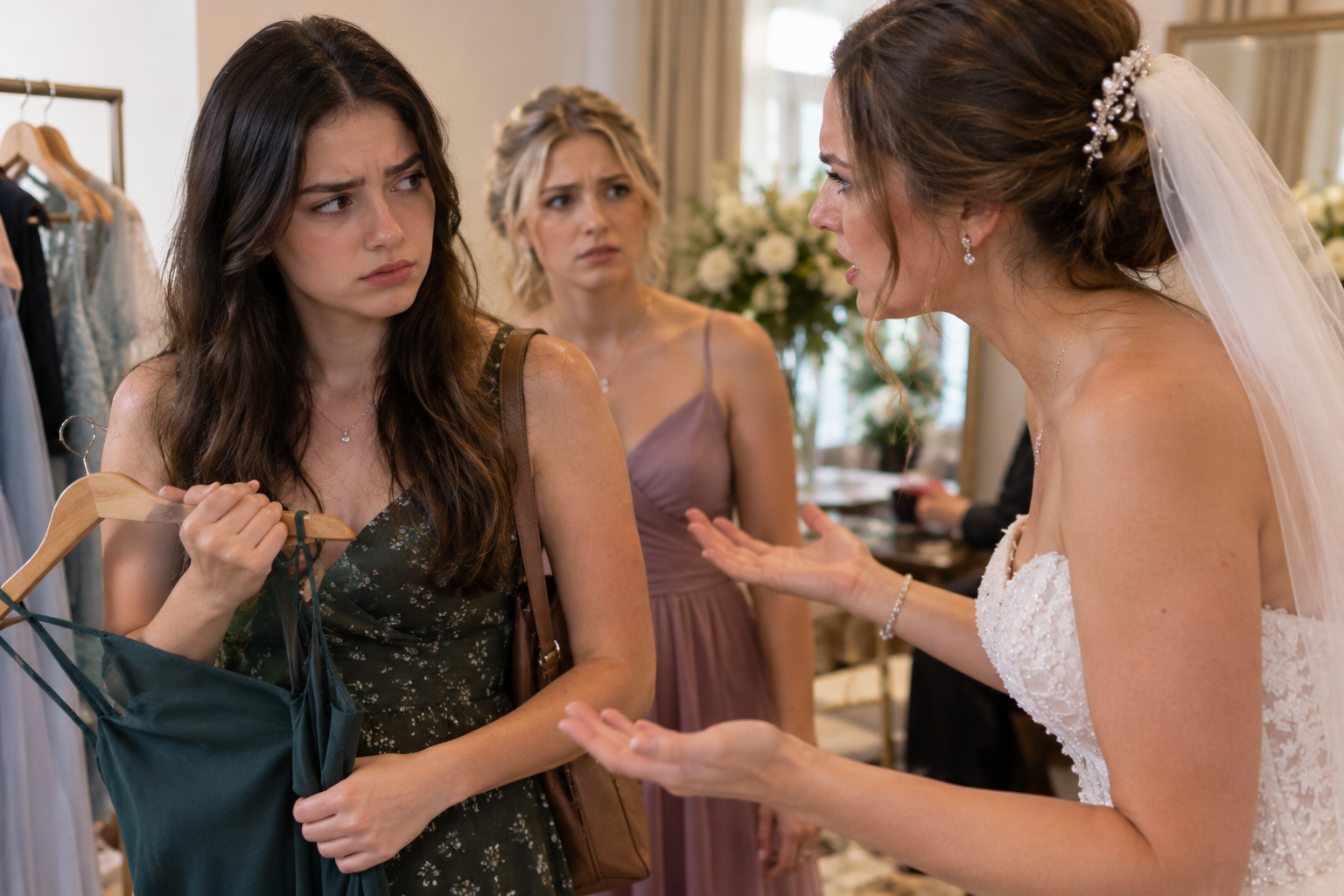
I never expected a disagreement over a wedding dress to create so much tension between me and one of my closest friends, but that is exactly what happened when the bride suddenly changed her wedding color code just twelve days before the ceremony. I have been friends with her for several years, and when she announced her wedding date, I was genuinely excited for her. I wanted to support her special day and make sure everything went smoothly. A few months ago, she sent all her guests the wedding details, including the dress code and the specific colors she wanted everyone to wear. I followed her instructions carefully and bought a beautiful dress in the requested color. It was not cheap, but I thought it was worth it because I wanted to look appropriate and respect her wishes. I had already purchased my shoes and accessories to match the dress, so as far as I was concerned, everything was ready well in advance.
Everything seemed fine until twelve days before the wedding, when the bride sent a message in our group chat announcing that she had changed her mind about the wedding color scheme. She explained that she had recently decided on a completely different aesthetic and now wanted everyone to wear a new color. At first, I assumed she was joking because the wedding was less than two weeks away, and most people had already bought their outfits. However, she quickly clarified that the change was serious and that she expected everyone to follow the updated dress code. Several guests immediately started asking questions about whether their original outfits would still be acceptable. The bride responded that she really wanted the wedding photographs to look coordinated and that everyone needed to make an effort to match her new vision. I understood that it was her wedding and that she wanted everything to look beautiful, but I was frustrated that she had made such a significant change so close to the event.
I politely messaged her privately and explained that I had already spent money on the dress she originally requested, along with matching accessories. I told her that buying another dress on such short notice was not something I wanted to do, especially when the first dress had been purchased specifically to meet her original requirements. I was not refusing to attend the wedding, and I was not trying to ruin her plans. I simply wanted to wear the dress I had already bought. I even offered to check whether I had anything else in my wardrobe that might fit her new color scheme, but unfortunately, I did not own anything suitable. I thought she would understand because changing an entire wedding color code twelve days before the ceremony seemed unreasonable to me. Instead, she became upset and said that I was making her wedding about myself. She argued that the least I could do was buy another dress to support her on one of the most important days of her life.
What bothered me most was the way she spoke to me after I explained my situation. She knew I had other expenses to manage, and I had never promised to buy multiple outfits for her wedding. I had followed the original instructions, spent my own money, and prepared everything according to the information she provided. I did not believe it was fair for her to expect me to spend even more simply because she had changed her mind at the last minute. When I repeated that I would still attend the wedding but would wear the dress I had already purchased, she accused me of being difficult and said that other guests were willing to make sacrifices for her. A few mutual friends also became involved, with some saying that weddings were special occasions and that I should just buy a new dress to avoid unnecessary drama. Others agreed that the bride should have considered the time and money everyone had already invested before changing the requirements. I felt caught between wanting to support my friend and not wanting to be pressured into spending money on something I did not need.
Now, the wedding is approaching, and the situation has become much more uncomfortable than I ever imagined. The bride has barely spoken to me, and I have heard through mutual friends that she believes I am deliberately refusing to cooperate because I do not care enough about her happiness. That is not how I see it at all. I am happy for her, and I genuinely want her wedding to be wonderful, but I also believe that supporting a friend should not mean automatically agreeing to every last-minute demand. If she had asked everyone to wear the new color months in advance, I would have had plenty of time to plan accordingly. Instead, she changed the requirements when people had already spent their money and expected everyone to deal with the consequences. I am now wondering whether I am being stubborn over something relatively small or whether it is reasonable to stick with the original dress code after making a purchase in good faith. AITA for refusing to buy a new dress after the bride changed the dress code at the last minute, even though she says I am ruining her wedding vision?
Read Story…
UPDATE: AITA for refusing to buy a new dress after the bride changed the color code 12 days before her wedding?
I wanted to give everyone an update because things have gotten a little more complicated.
After reading the comments, I decided to reach out to Danielle one last time.
I genuinely didn’t want to lose a friendship over a dress.
I explained that I wasn’t trying to disrespect her wedding or ruin her pictures.
I reminded her that I’d bought the peach dress after she personally approved it, and that I’d already spent $260 on the hotel, plus my flight and her wedding gift.
I even told her I’d be happy to borrow something in sage or dusty blue if I could find it.
Unfortunately, her response really hurt me.
She said she appreciated me trying, but that she was disappointed I was making such a big deal out of spending a little extra money for her special day.
That honestly made me feel terrible.
I’m not struggling because I don’t care about her.
I’m struggling because I have bills to pay, and another $120 isn’t a small amount of money to me.
What upset me most was realizing that I’d spent so much time worrying about hurting her feelings that I hadn’t really considered my own.
I finally told her that I love her and genuinely want her wedding to be beautiful, but I can’t justify buying another dress at the last minute.
I said I’d completely understand if she’d rather I didn’t attend.
She hasn’t responded yet.
I’m honestly heartbroken because I was looking forward to celebrating with someone who used to be such an important part of my life.
I never imagined that a dress she originally approved would make me question whether I’m even welcome at her wedding.
For now, I’m not buying another dress.
If that means I can’t attend, I’ll have to accept it.
Thank you to everyone who reminded me that having financial boundaries doesn’t mean I don’t care about my friend.
tl;dr: I tried talking to the bride again and even offered to borrow a dress in the new colors.
She still thinks I’m making a big deal over $120.
I explained my financial situation and told her I’d understand if she didn’t want me there. She hasn’t responded, and I’m honestly hurt.
My Friend Changed Her Wedding Dress Code Just 12 Days Before the Ceremony
I never imagined that a disagreement over a wedding dress would turn into such a big problem between me and one of my closest friends, but that is exactly what happened when the bride changed her wedding color code just twelve days before the ceremony. I have known Danielle for several years, and when she announced that she was getting married, I was genuinely happy for her. We have shared plenty of important moments over the years, and I wanted to be there for her on one of the happiest days of her life. I never expected to become part of a wedding-related argument, especially over something as simple as the color of my dress.
Advertisement
When Danielle first sent out the wedding details, she included a specific dress code for the guests. She explained that she wanted everyone to wear soft, pastel colors because she was planning a romantic garden-style wedding. She also mentioned that she wanted the photographs to have a coordinated appearance, so she asked guests to avoid certain dark or overly bright colors. I did not have a problem with this request because it was clearly communicated well in advance. I started looking for a suitable outfit and eventually found a beautiful peach-colored dress that matched the original requirements perfectly.
The dress was not something I purchased casually. It cost more than I would normally spend on an outfit for a single event, but I considered it a worthwhile expense because Danielle was an important friend. I wanted to look nice, respect her wishes, and avoid creating any unnecessary stress for her during the wedding preparations. Before purchasing it, I even sent Danielle a photograph of the dress and asked whether she thought it would be appropriate. She replied enthusiastically, saying that the color was beautiful and that it would fit the wedding theme perfectly. That message made me feel confident about my choice, so I went ahead and bought it.
Once I had purchased the dress, I began arranging the rest of my plans for the wedding. I bought matching shoes and accessories, made sure I had everything I needed, and booked my travel arrangements. Since the wedding was taking place outside my city, attending required more planning than simply getting dressed and driving to a nearby venue. I had to purchase a flight, reserve a hotel room, and arrange my schedule around the wedding weekend. I was excited about the trip and had no reason to believe that anything about my outfit would become an issue.
Over the following weeks, Danielle occasionally shared updates about the wedding preparations in our group chat. She discussed flowers, decorations, table settings, and the general atmosphere she wanted to create. I listened to her ideas and offered encouragement whenever she seemed stressed. I understood that planning a wedding could be overwhelming, especially when so many different details had to come together. Although I was not involved in making the major decisions, I tried to be supportive because I knew how much this day meant to her.
Everything seemed perfectly normal until twelve days before the wedding, when Danielle suddenly announced that she had changed her mind about the color scheme. Instead of the original pastel palette, she now wanted everyone to wear sage green or dusty blue. She explained that she had recently seen some wedding photographs online and had fallen in love with the combination. According to her, those colors would look much better with the flowers and decorations she had chosen. She said she wanted the wedding to have a more elegant and sophisticated appearance, so the original color instructions were no longer valid.
At first, I assumed she was simply sharing her new ideas rather than announcing an official change. I thought perhaps she had decided to adjust the decorations while allowing guests to wear the outfits they had already purchased. However, when several people asked whether their original clothes were still acceptable, Danielle clarified that she expected everyone to follow the new color code. She said she wanted the wedding photographs to look coordinated and that guests should make an effort to match the updated vision. That was when I realized she was serious.
I immediately checked the message where Danielle had originally approved my peach dress. I wanted to make sure I had not misunderstood anything or accidentally missed an earlier announcement. There was no confusion. She had specifically told me that the dress was perfect for the wedding, and I had purchased it based on that approval. Now, with less than two weeks remaining, she expected me to find another outfit in a completely different color. I felt frustrated because the change was not something I could have anticipated when I made the purchase.
I understood that people sometimes change their minds about wedding plans. A bride might discover a new decoration style she prefers, decide to rearrange the seating plan, or change the flowers because something else becomes available. I was not angry simply because Danielle had developed a new preference. What bothered me was that she appeared to expect everyone else to accommodate that preference without considering the money, time, and effort people had already invested. Twelve days might be enough time for someone to make a small adjustment, but it could also be an expensive and stressful deadline for people who had already completed their preparations.
After thinking about it for a while, I decided to message Danielle privately rather than challenge her in the group chat. I did not want to embarrass her in front of our mutual friends or make the situation more uncomfortable than necessary. I explained that I had already bought the peach dress after she personally approved it. I also told her that I had purchased matching accessories and had made my arrangements according to the original wedding information. I politely asked whether she would consider allowing guests who had already purchased their outfits to keep their original choices.
Danielle’s response was not what I expected. She said that the new color scheme was important to her and that she had put a lot of thought into making the wedding beautiful. She explained that she did not want random colors appearing in the photographs because the pictures would be something she kept for the rest of her life. I understood that wedding photographs mattered to her, but I felt that she was treating my dress as though it were a deliberate attempt to ruin her plans. I had not chosen a bright, inappropriate outfit. I had purchased exactly what she had originally requested.
I tried to explain that I was not refusing to support her. I was still planning to attend the wedding, celebrate her marriage, and enjoy the occasion with everyone else. I had already committed money to the trip and bought her a wedding gift. The only thing I was questioning was whether it was reasonable to expect me to purchase an entirely new dress because of a decision made twelve days before the ceremony. I thought a reasonable conversation would help us find a compromise, but instead, the discussion became increasingly tense.
Danielle eventually told me that if I truly cared about her happiness, I would make the effort to buy something in the new colors. She said that weddings were once-in-a-lifetime events and that asking guests to follow a dress code was not an unreasonable request. She also mentioned that other people were willing to make adjustments without complaining. Her words hurt because I had already made several efforts to accommodate her plans. I had bought the dress she approved, arranged travel, booked accommodation, and set aside time to attend her special day.
I did not immediately respond because I was angry and did not want to say something that might damage our friendship permanently. Instead, I took some time to think about the situation. I considered whether I could afford another dress, whether I could find one quickly enough, and whether it was worth spending additional money just to avoid an argument. Technically, I could probably find something if I searched enough stores or ordered online, although delivery times would be uncertain. However, I did not like the idea of spending more money on an outfit that I might never wear again simply because the original requirements had changed.
There was also the question of fairness. If Danielle had announced the sage green and dusty blue color scheme months earlier, I would have had no reason to complain. I could have chosen an outfit accordingly and planned my accessories around it. The problem was not that she wanted specific colors. The problem was the timing and the expectation that everyone should immediately adjust without considering their circumstances. I wondered whether other guests were quietly feeling the same frustration but were afraid to speak up because they did not want to upset the bride.
A few hours later, I mentioned the situation to one of our mutual friends. I was careful not to present Danielle as a terrible person or suggest that she had no right to make decisions about her own wedding. I simply explained what had happened and asked whether I was being unreasonable. My friend said she could understand both sides. She acknowledged that Danielle wanted the wedding to look beautiful, but she also agreed that changing a dress code less than two weeks before the event was likely to create unnecessary expenses for guests.
Another friend had a completely different opinion. She told me that a wedding was an important event and that I should just buy another dress if I could afford it. According to her, the additional cost was not worth risking a friendship. She argued that the bride would probably remember the photographs forever, whereas I could wear the peach dress to another occasion. Although I understood her point, I did not think the issue was quite that simple. It was not only about whether I could purchase another dress. It was also about whether I should be expected to do so after following the original instructions.
The more I discussed it with people, the more divided the opinions became. Some thought Danielle was being unreasonable, while others believed I should prioritize her feelings over the inconvenience of buying another outfit. A few people suggested that I could wear the peach dress and simply stay away from the main photographs. Others recommended that I borrow something in sage green or dusty blue. I appreciated the suggestions, but I felt uncomfortable with the idea of being treated as though I had done something wrong when I had originally followed the bride’s wishes.
Eventually, I decided that borrowing a dress might be a reasonable compromise. I checked my wardrobe and contacted a couple of friends who lived nearby, asking whether they had anything in the requested colors that might fit me. Unfortunately, neither of them had a suitable outfit available. One had a sage green dress, but it was several sizes too small, while the other owned a dusty blue dress that was not appropriate for the type of wedding Danielle was planning. I also looked online, but many of the options I liked would not arrive before the wedding.
I then contacted Danielle again because I genuinely did not want to lose our friendship over this disagreement. I explained that I was not trying to disrespect her wedding or ruin her photographs. I reminded her that I had bought the peach dress after she personally approved it, and I had already spent $260 on the hotel, in addition to my flight and wedding gift. I even offered to borrow something in sage green or dusty blue if I could find a suitable outfit. I hoped she would recognize that I was trying to meet her halfway rather than simply refusing to cooperate.
Unfortunately, her response really hurt me. She told me that she was disappointed in my attitude and that she had expected more support from someone she considered a close friend. She said other guests were finding ways to follow the new dress code, so she did not understand why I was making such a big deal about it. What hurt most was that she seemed to ignore the fact that I had already followed her original instructions. It felt as though my effort and willingness to attend were being dismissed simply because I did not want to spend additional money.
I asked her whether she would be willing to reimburse me for the original dress or contribute toward a replacement, since the change had come from her side. I did not demand that she pay for everything, but I thought it was a fair question. After all, I had purchased the peach dress specifically for her wedding and only after receiving her approval. Danielle immediately rejected the idea. She said that she was already spending a considerable amount on the wedding and that guests were responsible for their own clothing. She argued that she had not forced me to buy an expensive dress in the first place.
That response left me feeling even more frustrated. I had not expected Danielle to pay for my entire outfit, and I had not complained about the original cost. I had made a choice based on the information she gave me. The problem was that she had changed the requirements after I had already spent the money. I knew she was paying for many wedding expenses, but so were the people attending. Flights, hotels, gifts, transportation, and time away from work could add up quickly. Guests were already making sacrifices to be there, and I felt that she was overlooking those contributions.
A few days later, I discovered that the disagreement had spread beyond our private messages. One of our mutual friends told me that Danielle had mentioned the dress issue to several people and described me as someone who was refusing to support her wedding vision. I was embarrassed because I had deliberately tried to keep the conversation private. I did not want our friendship to become a topic of discussion among the other guests, and I certainly did not want people choosing sides over a dress. At the same time, I felt that Danielle was telling the story in a way that left out the original approval and the timing of the change.
I considered contacting the other guests to explain my side, but I decided against it. I did not want to turn the wedding into a bigger conflict or make Danielle feel as though I was organizing people against her. Instead, I focused on preparing for the trip and making sure everything else was ready. I checked my flight details, confirmed my hotel reservation, and wrapped her wedding gift. I still intended to attend because I cared about our friendship and wanted to celebrate her marriage, even though the situation had left me feeling disappointed.
As the wedding date approached, Danielle became increasingly distant. She stopped sending me the usual messages and rarely responded when I contacted her. I understood that she was probably busy and stressed, but I could not help wondering whether our friendship would ever return to normal. We had known each other for years, and it was painful to think that one disagreement could change the way she viewed me. I was not expecting her to abandon her color scheme or redesign the wedding around my preferences. I simply wanted her to acknowledge that I had made a reasonable decision based on the original information.
My family also became involved after I explained why I was upset. One family member told me that I should stop worrying about the money and purchase a new dress because maintaining a friendship was more important than being right. Another said that Danielle was being controlling and that I should not feel obligated to follow a last-minute demand. Their opinions did not make the decision any easier. I knew that a dress was not the most important thing in the world, but I also believed that friendships should allow people to express reasonable boundaries without being accused of not caring.
I am now facing a decision about what to wear when I attend the wedding. Part of me wants to simply wear the peach dress, smile for the photographs, and move on with my life. Another part of me worries that doing so will create an uncomfortable scene and make Danielle feel that I deliberately ignored her wishes. I have also considered finding a simple, inexpensive dress in one of the new colors, but I resent feeling pressured into spending more money just to prove that I care about her. I want to make a decision that respects her wedding while also respecting my own financial choices.
What makes this situation particularly difficult is that I genuinely love Danielle as a friend. I do not want to punish her for changing her mind, and I do not believe that a wedding has to be planned perfectly for the couple to have a wonderful day. I know she is probably dealing with stress, expectations, and countless details that I cannot fully understand. However, I also think that stress does not automatically make every demand reasonable. She had approved my original dress, and I had spent my money based on that approval. I wish she could see that I am not trying to make her day about myself.
I have tried to consider the situation from her perspective as well. If I were planning a wedding, I might feel disappointed if something did not match the vision I had imagined. I might even wish I had made certain decisions differently before sending invitations or communicating with guests. But I would hope that I could recognize when a change would inconvenience other people, especially when it involved additional expenses and very little time to prepare. I would probably ask whether guests could accommodate the new colors rather than insist that everyone must do so. I would also understand that someone who had already followed my original instructions was not deliberately being disrespectful.
So now I am asking for an outside perspective because I genuinely do not know whether I am being unreasonable. I purchased a peach dress after Danielle personally approved it, made my travel arrangements, booked a hotel, and bought her a wedding gift. Twelve days before the wedding, she changed the dress code to sage green or dusty blue and expected everyone to follow the new requirements. I offered to borrow a suitable outfit, but I have not been able to find one, and I do not want to spend more money on another dress simply because she changed her mind. I still intend to attend her wedding and celebrate with her, but she believes that refusing to buy a new dress means I do not care about her happiness. AITA for refusing to buy a new dress after the bride changed the dress code at the last minute, or should I put my feelings aside and purchase another outfit to avoid damaging our friendship?
Files, images, and data analysis are unavailable until usage resets at 2:11 PM. Continue chatting with text only, or upgrade for more access.
Try Plus free