My Husband Keeps Getting Physically Affectionate With His Ex-Wife, and It Makes Me Uncomfortable
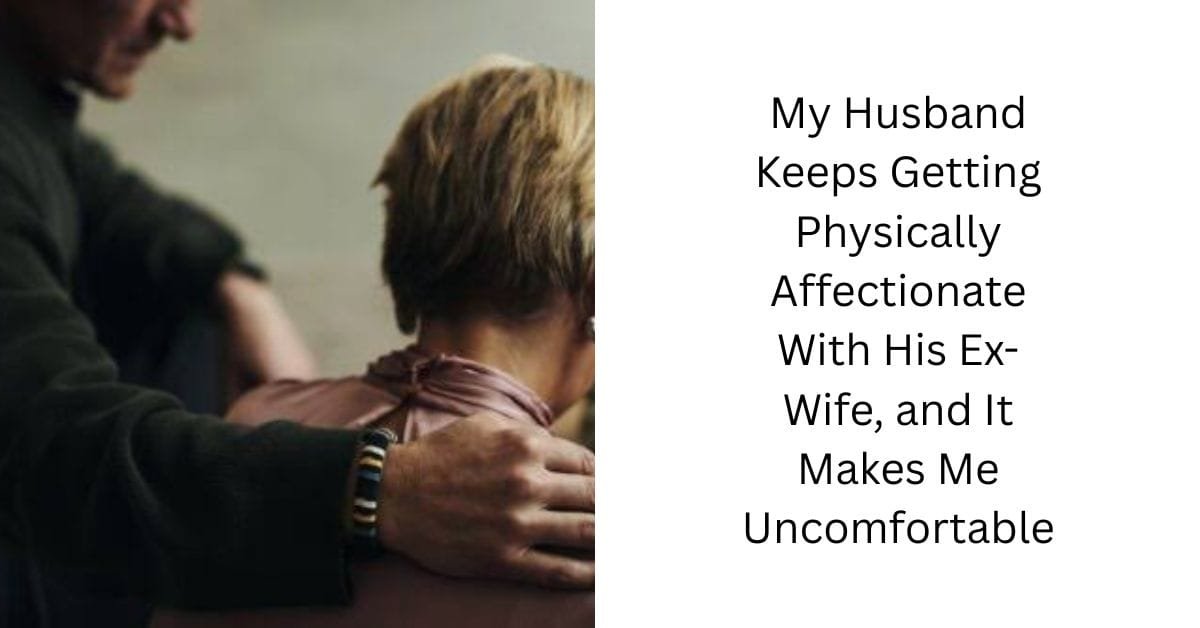
Marriage can become complicated when past relationships remain part of the present, especially when an ex-spouse is still involved in the family. One woman recently found herself increasingly uncomfortable with the way her husband interacts with his ex-wife. She understands that they share history and may need to communicate, particularly because of family responsibilities, but she feels that his physical affection toward his former wife has crossed a line. What makes the situation even more difficult is that her husband insists there is nothing inappropriate about his behavior, leaving her wondering whether she is being overly jealous or whether her concerns are completely justified.
The woman explained that her husband and his ex-wife have remained on relatively good terms since their divorce. They attend some family events together, communicate regularly, and occasionally help each other when necessary. At first, she appreciated the fact that her husband had a mature relationship with his ex. She did not want to be the kind of partner who demanded that he completely erase someone who had been an important part of his life. However, over time, she began noticing that his interactions with his ex-wife seemed more physically affectionate than she considered appropriate.
According to her, he often touches his ex-wife’s arm, hugs her for long periods, puts his hand on her back, or stands unusually close to her during family gatherings. None of these actions might seem significant individually, but seeing them repeatedly has made the woman uncomfortable. She says she has tried to explain that the issue is not simply jealousy. She believes physical affection can communicate intimacy, and watching her husband behave that way toward another woman—especially someone he used to be married to—makes her feel disrespected. Her husband, however, tells her that she is reading too much into harmless gestures.
The situation became more serious after the woman finally told her husband that she needed him to establish clearer boundaries with his ex-wife. She said she was not asking him to stop communicating with her or to be hostile toward her. She simply wanted him to recognize that certain types of physical contact were inappropriate now that they were married. Her husband became defensive and accused her of being insecure. He argued that he had known his ex-wife for years and that their relationship had changed after the divorce. To him, a hug or a hand on someone’s shoulder did not automatically have a romantic meaning.
Now the woman is struggling to decide how to approach the issue without turning it into a constant argument. She does not want to control her husband’s friendships or create unnecessary conflict with his ex-wife, but she also does not believe she should have to ignore behavior that makes her uncomfortable. She feels that her husband should care about how his actions affect her, even if he personally sees nothing wrong with them. At the same time, she wonders whether she is allowing jealousy to influence her judgment. The real question for her is whether her husband’s physical affection toward his ex-wife is simply a harmless part of their long history or whether it represents a boundary that should have been respected once he entered a new marriage.
Read Story…
“My Husband is Always Touching His Ex-Wife”
I have been with my husband for 18 years. We are both senior citizens and between us we have five adult children from previous relationships. I have two sons who are 38 and 41, and my husband has two daughters and a son, all in their thirties. My husband and his ex split up 21 years ago and yet, they are always touching on each other when they meet which is quite often since we go to the same church. This is always initiated by her, and it’s a problem for me.
My husband’s ex-wife is always rubbing on his back and hugging him. She doesn’t hug me and far as I can see, she’s not a particularly affectionate person. Just with my husband. I don’t think it makes a difference but she left him. And while I appreciate they were married about 21 years I feel the rubbing and hugging is inappropriate. Their children are grown. An occasional hug would be one thing but it’s constant.
I spoke to my husband about it, attempting to let him know how I feel. At first, he said he was onboard but it happened at church again today. And we had a big fight about it on the way home. He says she’s a nice person and the mother of his children. She’s not friendly to me, by the way. I say it’s fine to be friendly but if you aren’t hugging other people, which neither of them do, then please stop. He says no. I don’t know where I go from here but I’ve put up with this for way too long. And he refuses to go to counseling. We went once and as soon as the therapist said I had a point, he quit going. I feel like I’m not important to him. — Beaten down and Frustrated
I don’t know what else is going on in your marriage, but if the ex-spouse hug-a-thon is enough to drive you to therapy, and your husband refuses to go after the first appointment, he doesn’t modify the behavior you have repeatedly says hurts you, and you feel like you aren’t important to him, then it’s probably time to leave him. At the very least, switch churches so you don’t have to see the ex-wife anymore. But that’s just a band-aid for the larger wound, which is that your husband doesn’t prioritize you and you don’t feel like you matter to him. Unfortunately, there’s nowhere really to go from there – especially when therapy is refused. You deserve better!
My friend became pregnant and her boyfriend, whom she and I went to high school with years ago, didn’t stick around to be in the baby’s life. While I was out at a bar, I ran into him, and now my friend is mad at me for saying hello to him. She thought I should have ignored him or given him a dirty look, but that’s not me. She made me the godmother of her five-month old baby, and now she has said she never wants to talk to me or see me again. I know she’s bitter, but I feel her action was a little extreme. What should I do? — Godmother No More?
While I normally wouldn’t think saying hello to someone is reason for anyone else to lose their shit, I can understand why your friend would feel betrayed by your not only acting friendly toward the guy who abandoned her and their baby (whom you are godmother of), but then apparently relaying the interaction to her later. What was the point in telling her that? I say apologize to your friend for being insensitive, reaffirm for her that you’re on her side and you think that what her boyfriend did is the worst of the worst, and that you’ve got her back through what you know is an incredibly challenging, but hopefully also rewarding, time in her life.
Woman Frustrated as Her Husband Keeps Hugging His Ex-Wife Despite Knowing It Hurts Her
Marriage can become complicated when a spouse remains close to an ex-partner, especially when children connect those two people for life. One woman says she has reached her limit because her husband continues to show physical affection toward his ex-wife, despite knowing how uncomfortable it makes her feel. She understands that his former wife is the mother of his children and believes they should maintain a respectful relationship. What she cannot understand is why he continues hugging her when he does not behave that way with other people.

Advertisement
When the woman first married her husband, she knew his ex-wife would remain part of their lives. They had children together, so she never expected him to completely cut contact with her. In fact, she believed that maintaining a civil relationship was healthy for everyone involved. She never wanted to interfere with their parenting arrangement or create unnecessary tension between them.
At first, she tried not to pay attention to their interactions. If her husband spoke with his ex-wife at family events, she considered it normal. If they discussed their children, she understood that communication was necessary. She told herself that the past was the past and that she should focus on her own marriage.
Over time, however, she began noticing something that bothered her more and more.
Her husband would hug his ex-wife.
At first, the woman tried to dismiss it. She told herself that a hug did not automatically mean anything romantic. People sometimes hug friends, relatives, or people they have known for years. She did not want to become overly suspicious or controlling.
But she noticed that her husband did not generally hug other people that way.
That detail changed how she viewed the situation.
According to her, neither her husband nor his ex-wife regularly hugged other people at social gatherings. Yet when they saw each other, physical affection seemed almost automatic. Sometimes it happened at church, sometimes during family events, and sometimes when they were saying goodbye.
The woman began feeling uncomfortable every time she saw it.
She eventually spoke to her husband about it.
She tried to approach the conversation calmly rather than accusing him of having feelings for his ex-wife. She explained that she understood the history between them and respected the fact that they shared children. She told him that she was not asking him to stop communicating with his ex-wife.
What she wanted was a boundary.
She asked him to stop hugging his ex-wife because it made her feel disrespected and uncomfortable.
At first, her husband appeared to understand.
He told her that he would try to be more aware of her feelings.
That gave her hope.
She thought the issue might finally be resolved.
Unfortunately, it happened again.
The next time they were at church, the woman watched as her husband hugged his ex-wife once more. She immediately felt hurt because she believed they had already discussed the issue.
She did not understand why his promise had apparently meant so little.
On the way home, the couple had a major argument.
Her husband defended his behavior by saying that his ex-wife was a nice person and the mother of his children. He believed there was nothing wrong with showing her basic affection.
The woman agreed that his ex-wife was the mother of his children.
She never argued otherwise.
Her point was that being friendly and being physically affectionate were not necessarily the same thing.
She told him that she would have no problem with him saying hello, asking how she was doing, or discussing the children. She simply did not understand why he needed to hug her when he did not hug other people.
Her husband accused her of being insecure.
That hurt her deeply.
She did not believe she was being unreasonable.
She was not asking him to erase his ex-wife from his life. She was not asking him to stop co-parenting. She was asking him to consider a boundary that mattered to his current wife.
The situation became even more painful because the ex-wife was not particularly friendly toward her.
The woman says that her husband’s ex does not make much effort to include her or build a relationship with her. This makes the physical affection between her husband and his ex-wife feel even more uncomfortable.
She wonders why her husband is willing to prioritize his ex-wife’s comfort while seemingly dismissing his wife’s feelings.
Eventually, she suggested marriage counseling.
She hoped that having a neutral third person involved might help them understand each other’s perspectives. She did not want the counseling session to become an opportunity to attack her husband or his ex-wife.
She simply wanted help communicating.
Unfortunately, counseling did not go as planned.
The couple attended one session.
During that session, the therapist apparently told her husband that her feelings were understandable and that she had a legitimate point about boundaries.
Instead of continuing with counseling, her husband stopped going.
That decision made the woman feel even more defeated.
She had hoped counseling would give them a way forward, but instead it became another example of her husband refusing to address something that was hurting her.
She now feels as though she has been asking for the same thing repeatedly without being taken seriously.
She has started questioning her place in the marriage.
She says she feels like she is not important to her husband.
That may be the deepest issue behind the entire conflict.
For her, the problem is no longer simply a hug.
It is what the repeated behavior represents.
She feels that her husband knows the behavior hurts her, understands that she is uncomfortable with it, and still chooses to continue doing it.
Her husband, meanwhile, seems to believe that she is asking him to give up something harmless simply because she feels insecure.
Neither side seems willing to completely understand the other.
Some people might argue that a hug between former spouses is completely innocent, especially when they share children.
They may say that the woman needs to trust her husband and accept that his relationship with his children’s mother will never disappear.
Others may argue that once a spouse clearly communicates that a particular behavior makes them uncomfortable, the other spouse should at least be willing to discuss a reasonable compromise.
The woman says she is not trying to control her husband.
She simply wants to feel respected.
She also does not want to spend the rest of her marriage watching the same interaction and wondering why her feelings seem to matter less than her husband’s desire to maintain his usual behavior with his ex.
At this point, she is unsure what to do next.
She has considered avoiding events where her husband’s ex-wife will be present, but she knows that would only solve the problem temporarily.
She has even considered changing churches so she does not have to witness the interactions.
But she recognizes that changing churches would not fix the deeper issue.
Her husband would still have a relationship with his ex-wife.
He would still have to communicate with her because of their children.
And most importantly, they would still have unresolved problems in their marriage.
The woman now realizes that the biggest question is not whether her husband is romantically interested in his ex-wife.
It is whether he is willing to take his current wife’s feelings seriously.
She knows she cannot force him to change.
She also knows she cannot control how he interacts with another adult.
But she can decide what she is willing to accept in her own marriage.
For now, she is considering her options carefully.
She does not want to make a life-changing decision based solely on a disagreement about hugging.
At the same time, she does not want to ignore the larger pattern of feeling dismissed, unheard, and unimportant.
She believes marriage requires both people to care about each other’s boundaries.
Her husband may genuinely believe the hugs are innocent.
But she believes that even innocent behavior can become a serious relationship issue when one spouse repeatedly explains that it causes emotional pain and the other refuses to compromise.
She is now asking herself whether she is being unreasonable or whether her husband should be doing more to protect the trust and security of their marriage.
She knows that his ex-wife will always be part of their lives because of their children.
She does not want to change that.
She simply wants to know that she is still his priority.
And after everything that has happened, she is left wondering whether the real problem was ever the hugs at all—or whether those hugs simply revealed a much deeper problem in her marriage: she no longer feels heard, respected, or important to the person she married.