The HOA Tried to Force My Neighbors to Pay an Illegal Fee, So I Fought Back
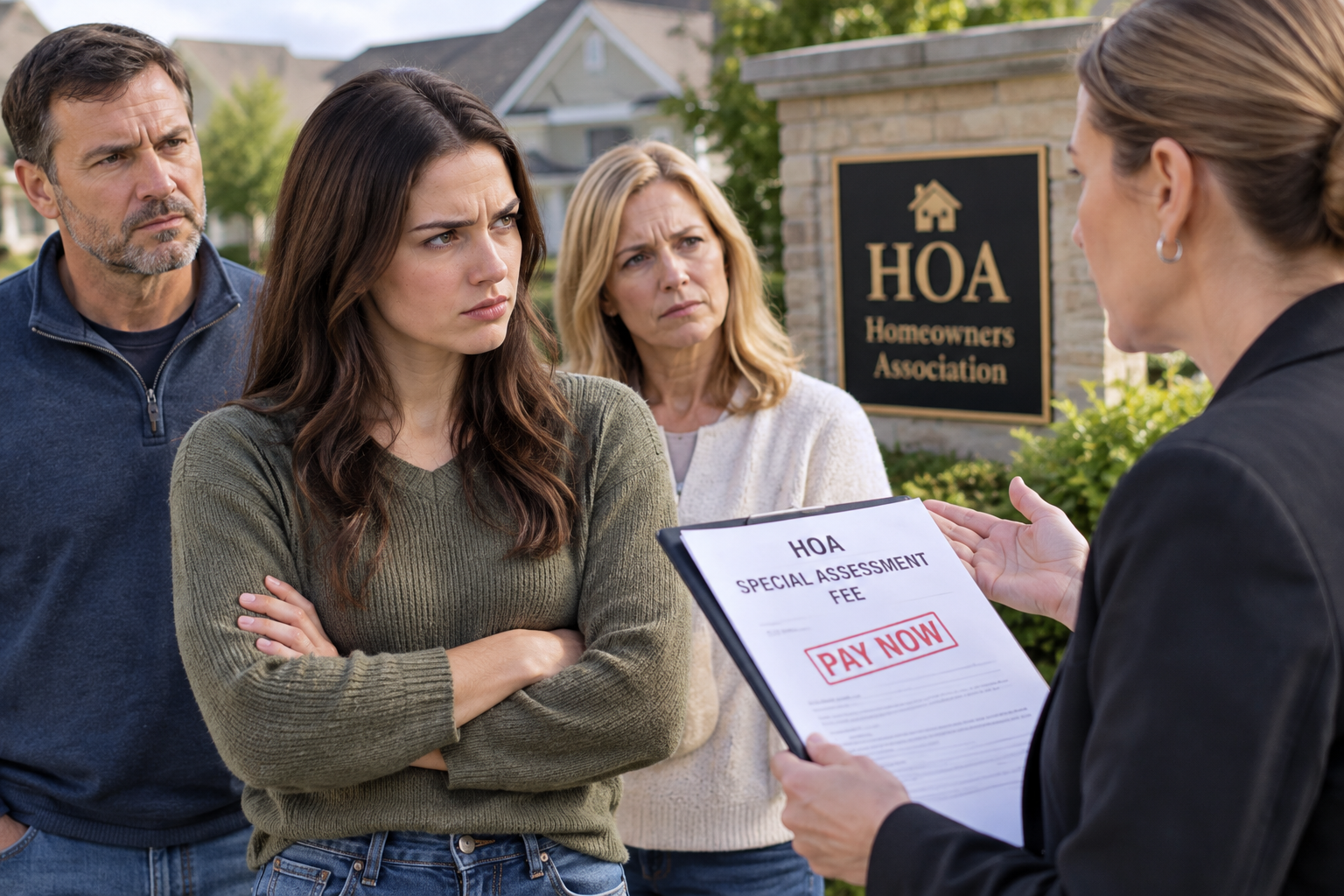
I never imagined that a dispute over a homeowners association fee would turn into one of the biggest battles in my neighborhood, but that is exactly what happened. I live in a relatively quiet residential community where most people simply want to enjoy their homes, maintain their properties, and live without unnecessary drama. Like many neighborhoods in the United States, ours has a homeowners association, commonly known as an HOA, that manages shared spaces, enforces community rules, and collects fees from residents. For the most part, I had never paid much attention to its activities as long as everything seemed reasonable. However, that changed when the HOA announced a special assessment that several homeowners believed was unauthorized. The amount was significant enough to create financial problems for some families, and when the HOA began threatening legal action against those who could not pay, I realized that something was seriously wrong.
The trouble started when homeowners received a notice informing them that they were required to pay an additional assessment on top of their regular HOA dues. According to the notice, the money was supposedly needed for major improvements and maintenance throughout the community. The problem was that the HOA had provided very little information explaining how the amount had been calculated, why the assessment was necessary, or whether the board had followed the proper procedures to approve it. Several residents asked for financial records, copies of meeting minutes, and documentation showing that the assessment had been authorized under the association’s governing documents. Instead of providing clear answers, the board responded with vague explanations and insisted that every homeowner was obligated to pay. Some residents were understandably worried about challenging the association because they feared fines, legal expenses, or problems when they eventually tried to sell their homes. Others simply could not afford the unexpected expense.
One of the families affected by the assessment lived just a few houses away from me. They were hardworking people who had always maintained their property and paid their regular dues on time. They were not refusing to contribute to legitimate community expenses; they simply wanted proof that the new assessment had been properly approved before handing over a large amount of money. When they explained their concerns to the HOA, the response was surprisingly aggressive. The board warned them that failing to pay could result in additional penalties and eventually a lien against their property. For anyone unfamiliar with the term, a lien is a legal claim against property that can create serious complications for its owner. In some circumstances, an HOA can legally place a lien for unpaid assessments, but whether it can do so depends on applicable law, the association’s governing documents, and whether the charge itself is valid. I watched my neighbors become increasingly stressed as the HOA continued sending threatening letters instead of answering their questions.
That was the point when I decided I could no longer sit back and pretend the situation had nothing to do with me. I began reviewing the HOA’s governing documents, meeting minutes, assessment notices, and relevant state laws. I wanted to understand whether the board had the authority to impose the fee and what procedures it was required to follow. The more information I gathered, the more questions I had about the assessment’s approval process and the lack of transparency surrounding the money. I encouraged my neighbors to preserve every letter and email they had received and to request the association’s records in writing. I also suggested that they consult a qualified attorney familiar with HOA disputes before making decisions that could affect their homes. I was careful not to promise anyone that the assessment was definitely illegal before the facts had been properly reviewed, but I believed the board needed to provide convincing evidence that it had acted within its authority. If the association was threatening liens against homeowners, it should at least be prepared to explain exactly why those threats were justified.
The situation became even more frustrating when I discovered that the people making these demands appeared to live very different financial lives from the residents they were threatening. The HOA’s leadership included influential property owners who seemed accustomed to getting their way, and rumors circulated about an extraordinarily expensive mansion associated with one of the people involved. I did not believe that anyone’s wealth automatically made them guilty of wrongdoing, but I found it difficult to accept the idea that ordinary homeowners could face serious consequences over a disputed charge while the board refused to provide straightforward answers. I decided that my next step would be to challenge the association through the proper channels rather than respond with empty threats of my own. I began organizing the available evidence, communicating with other concerned residents, and looking into the formal complaint and dispute-resolution options available in our state. My goal was not to punish someone simply for being wealthy; it was to make sure that the same rules applied to everyone and that no homeowner was pressured into paying an unauthorized fee. I knew that standing up to an HOA could become expensive and exhausting, but I was determined to find out whether the board had crossed a legal line—and, if it had, to make sure the affected homeowners had a fair chance to fight back.
Read Story…
Put a lien on my neighbors for not being able to pay an illegal special assessment? I’ll put a lien on your $20m mansion!
This may be the most petty thing I have ever done in my life. I’m a pretty petty person, and I also believe in malicious compliance, but this takes the cake.
So I bought a condo in a building in a large city in the US about 2.5 years ago. The building has an HOA that we all pay into monthly. Since I’ve lived here, the building has rapidly deteriorated and we have all hired an attorney for a class action style lawsuit. I’m talking broken elevators, broken rooftop AC units, the pool was empty for four months during the summer, etc.
The people in the building are great though, and we are a friendly bunch.
Last year, I took the HOA to Small Claims court because they failed to provide financial documents that show us how our fees are being spent. As this is a legal requirement for all HOAs in my state, I won the case and was awarded the $30 filing fee plus $1, symbolic (I sued for documents, not money).
The fact that they can’t provide the docs as they are legally required to do is a separate issue among others including possible criming that we’ve hired the attorneys for. I have asked the HOA to pay the $31 to me, and the president of the HOA wants to either meet me somewhere private to give it to me, or he wants to mail me a Satisfaction of Judgement form, have me sign it, and mail it back to him and then he will mail me a check. No to both!
Three days after I won the case, the HOA announced that they were going to charge us all a special assessment of about $1000 each and an increase in our monthly dues of 10%. In my state, a membership vote gets triggered if you charge a special assessment that brings the building more than 5% its yearly income, which means 51% of the owners must approve of the assessment for it to take effect. As this $$$$ is about 20% of our yearly income, a vote should have taken place.
When we asked about this vote, the HOA said that it was being made under an emergency clause, which means that the membership vote doesn’t have to take place. The emergency? Fixing the elevator that broke on Dec 24, 2021.
The spirit of the emergency clause is for things like fire, earthquake, flood, etc, not a broken elevator that has been broken for a year already.
When there was understandable pushback, the HOA sent out a little email stating that anyone who didn’t pay the assessment would have a lien put on their unit.
The liens came down yesterday to those that couldn’t pay $1000 on short notice (our attorneys told us that even though the money is in dispute, we still have to pay it, and I did pay mine, but we also have a lot of retirees/lower income people in the building).
The HOA president’s house is currently on the market for $20m. I just got back from the courthouse where I filed a $31 lien against it for $140, clouding its title. It’s a matter of principle, not money.
Now the title can’t change hands until he pays me my $31 and I am perfectly within my rights to collect on a judgement owed 🙂
EDIT: I will for sure keep you guys updated after the attorneys do their thing. That might be a story for prorevenge tho.
EDIT 2: Some confusion here. I initially filed the small claim with the HOA as defendant.
The small claim judge determined that was incorrect and said I should sue the individual as the president of the HOA and made me amend the case, therefore, the defendant in the whole case was the one individual person, and therefore he is responsible for the $31 and I can exercise my right to put a lien on his home in my effort to collect.
I CAN ONLY PUT A LIEN AGAINST THE DEFENDANT, AND THE DEFENDANT IS A PERSON. I CANNOT PUT A LIEN AGAINST THE HOA BECAUSE THEY WERE NOT THE DEFENDANT IN THE CASE. THE COURTS ALREADY DETERMINED THAT THE PERSON OWES ME MONEY. I DONT NEED TO CONTINUE TO ARGUE A CASE IVE ALREADY WON.
EDIT 3: Wow this blew up, and with that so many ppl accusing me of lying because they don’t understand our legal system. Thank you to all who are supporting my efforts, we hope to have these ppl overthrown and in prison hopefully by the end of the year. We’ve turned over all we have to our attorneys who are the best HOA attorneys in LA. We will get these people! Further reading on what else these slumlords are dealing with: https://globalpropertyinc.com/2022/08/10/lawsuit-barry-shy-didnt-disclose-defects-in-400m-deal/
Final edit I hope: If you live in Los Angeles county and have a money judgement against someone, learn how to collect here: https://selfhelp.courts.ca.gov/small-claims/after-trial/collect-money. If you scroll down and choose FROM THEIR PROPERTY, all you have to do is fill out the Abstract of Judgement, get it filed at the courthouse ($40), then get it recorded ($100) for a lien against a property to take effect.
Final final edit: Got this email this morning. https://imageshack.com/i/pnaXtKp2j Sorry my first link to it was bad.
Edit 3/3: A YouTuber named Hellfreezer reached out and asked if he could do a reading. I said yes. Mine is story #2, listen here: https://www.youtube.com/watch?v=YsnEcjxmNEo
The HOA’s Illegal Assessment Turned Our Peaceful Neighborhood Into a Legal Battle
I never imagined that a homeowners association dispute would turn into one of the biggest battles in my neighborhood, but that is exactly what happened. I live in a quiet residential community where most people simply want to enjoy their homes, maintain their properties, and live without unnecessary drama. Like many American neighborhoods, ours has a homeowners association, commonly known as an HOA, that manages shared spaces, enforces community rules, and collects fees from residents. For years, I had mostly ignored the HOA’s activities because everything seemed relatively normal. I paid my regular dues, followed the rules, and expected the board to do its job fairly. However, that changed when the HOA announced a special assessment that several homeowners believed had not been properly authorized. What initially looked like an ordinary financial disagreement quickly developed into a serious conflict that threatened to affect people’s homes.
The trouble began when homeowners received an official notice informing them that they were required to pay an additional assessment on top of their regular HOA dues. The notice claimed that the money was necessary for major community improvements, including repairs to shared facilities and other maintenance expenses. The amount was substantial enough to create financial difficulties for several residents, particularly those living on fixed incomes or managing tight household budgets. People naturally wanted to know why the assessment was necessary and how the board had calculated the amount. Unfortunately, the notice provided very little meaningful information. There was no detailed breakdown of the projected expenses, no clear explanation of the approval process, and no straightforward answer about why the money had to be collected immediately.
At first, most homeowners assumed the board had made an administrative mistake. A few residents emailed the HOA requesting additional documentation, including meeting minutes, financial statements, and the relevant provisions in the association’s governing documents. They wanted to confirm that the board had followed the correct procedures before demanding such a large payment. Instead of responding with detailed explanations, the board sent generic messages stating that the assessment was mandatory. Residents were told that everyone had to contribute and that failure to pay could result in penalties. The more questions people asked, the more defensive the board seemed to become. I found that behavior concerning because a legitimate financial decision should be supported by records and clear communication, especially when the decision could impose a significant burden on homeowners.
One of the families affected by the assessment lived just a few houses away from me. They were hardworking people who had lived in the community for years and consistently paid their regular HOA dues. They maintained their property, followed the neighborhood rules, and rarely complained about anything. When the assessment notice arrived, they were understandably worried because the unexpected expense would interfere with their household budget. They were not refusing to pay legitimate expenses or trying to avoid their responsibilities. They simply wanted proof that the additional charge had been approved correctly. The husband approached the HOA board with questions, expecting a reasonable discussion. Instead, he returned home frustrated because the board had treated his request for documentation as though he were deliberately challenging its authority.
A few days later, the family received another letter warning them that the unpaid assessment could lead to additional charges and possible legal action. The letter mentioned the possibility of placing a lien against their property if the balance remained unpaid. For anyone unfamiliar with the term, a lien is a legal claim against property that can create serious complications for its owner. Depending on the applicable law and circumstances, an HOA may have the right to place a lien for certain unpaid assessments. However, the association must have a valid legal basis for the charge and follow the required procedures. My neighbors were frightened by the letter because they had never faced anything like this before. They worried that a disputed fee could eventually interfere with refinancing or selling their home.
When I heard what had happened, I asked them to show me the notice and the correspondence they had received. I wanted to understand exactly what the HOA was demanding and how the family had responded. After reading the documents, I noticed that several important questions remained unanswered. The association had stated that the assessment was mandatory, but the paperwork did not clearly explain which provision authorized it or what voting procedure, if any, had been used. I was not prepared to declare the charge illegal based on incomplete information, but I believed the board should provide evidence supporting its decision. The threat of a lien made the situation especially serious because the consequences could extend far beyond the original amount being disputed.
I decided to investigate the issue instead of relying on neighborhood gossip. I obtained a copy of the HOA’s governing documents and began reading the sections concerning special assessments, board authority, homeowner voting rights, and financial obligations. The language was not always easy to understand, but I gradually developed a clearer picture of what the association was permitted to do. I also reviewed the most recent meeting minutes available to residents. I wanted to see whether the board had discussed the assessment, approved it through a proper vote, or documented the reasons behind the expense. I knew that the rules could vary depending on state law and the association’s specific documents, so I avoided jumping to conclusions. My goal was to identify the facts that could establish whether the assessment had been properly authorized.
As I continued researching, I discovered that I was not the only person concerned about the assessment. Several other homeowners had questioned the charge, but many were reluctant to speak publicly. Some worried that the board might retaliate by scrutinizing their properties for minor violations. Others feared the cost of hiring a lawyer if the dispute escalated. One resident told me that she had considered paying the assessment simply because she did not want to deal with the stress. Another said he was worried that questioning the board would make him a target for future complaints. I understood their concerns. An HOA can have significant influence over everyday life in a planned community, and challenging its decisions can feel intimidating when you are unsure of your legal rights.
I suggested that the concerned homeowners begin keeping organized records of every notice, email, payment demand, and conversation related to the assessment. I also encouraged them to submit requests for relevant association records in writing rather than relying on informal discussions. Written communication would create a clear timeline and help establish which questions had been asked and whether the board had answered them. I reminded everyone to remain respectful and avoid making accusations they could not support. It would be easy to turn the situation into a personal fight, but that would not help us determine whether the assessment was valid. If the board had made a procedural mistake, we needed evidence. If the charge was lawful, we needed to understand the basis for it.
The HOA board did not appear pleased that residents were asking more detailed questions. Instead of addressing the concerns individually, it circulated another message emphasizing that homeowners were expected to comply with the assessment. The message warned that failure to pay could have financial consequences and implied that continued resistance would not change the board’s position. There was still no comprehensive explanation of the amount being collected or the process through which the assessment had been approved. To me, that was the wrong approach. A board responsible for managing a community’s finances should welcome reasonable requests for accountability. Even when an assessment is entirely legitimate, residents deserve to understand what they are paying for and how the decision was made.
The family living near me became increasingly anxious after receiving the second warning. They asked whether they should pay the assessment temporarily and challenge it later. I told them that I could not provide legal advice and did not want to make that decision for them. Depending on local law and the circumstances, paying, withholding payment, or formally disputing a charge can have different consequences. I encouraged them to consult an attorney who understood HOA law before taking an action that could affect their property. I also suggested contacting a local homeowner advocacy organization, if one was available, to learn about possible dispute-resolution options. The important thing was to understand their rights and avoid making a rushed decision because the board had frightened them.
Around that time, I learned that the HOA was connected to a particularly wealthy property owner in the community. The person was associated with an enormous mansion that residents estimated was worth around twenty million dollars. The property was unlike most homes in the neighborhood, with extensive landscaping, a long driveway, and features that made it stand out from the surrounding houses. I had no problem with someone being wealthy or owning an expensive home. People are entitled to spend their money as they choose, provided they follow the law. What bothered me was the contrast between the financial power of the people involved in the dispute and the pressure being placed on ordinary families who were simply asking for documentation.
Rumors began circulating that the wealthy homeowner had considerable influence over the association’s leadership. Some residents believed that the board was more interested in protecting influential people than treating everyone equally. I did not want to repeat those claims as facts because neighborhood rumors can easily become exaggerated. However, the possibility that certain individuals had undue influence made transparency even more important. I wanted to know who had proposed the assessment, who had approved it, what expenses it was intended to cover, and whether any potential conflicts of interest had been disclosed. These were reasonable questions about the association’s governance, not personal attacks against anyone’s wealth or status.
I eventually organized a small meeting with several residents who were concerned about the assessment. We met in a neighbor’s living room and compared the notices and responses we had received. Everyone had a slightly different experience, but the central problem was the same: people wanted clear information, and the HOA was not providing enough of it. One homeowner had received a warning about late charges, while another had been told that the board would not reconsider the matter. The family living near me showed us the letter mentioning a possible lien. Seeing the documents together helped us recognize that this was not merely a misunderstanding between one homeowner and the board. It was a community-wide issue that deserved a formal response.
During the meeting, we agreed that our next step should be to request a complete explanation of the assessment and the records supporting it. We prepared a list of questions covering the total amount being collected, the intended expenses, the relevant authorization in the governing documents, the date of approval, and any required homeowner vote. We also requested copies of the minutes from meetings where the assessment had been discussed. We made sure to keep the language professional and factual. We did not threaten anyone or accuse the board of criminal conduct. We simply asked the association to demonstrate that it had followed the rules governing its own decisions.
When the request was sent, we expected at least a partial response within a reasonable period. Instead, the HOA sent a short message repeating that the assessment had been approved and that homeowners were responsible for paying it. The message did not directly address several of our questions. It also reminded residents that unpaid amounts could lead to further action under the association’s enforcement procedures. That response made people even more frustrated. We were not asking the board to abandon its responsibilities or ignore legitimate expenses. We were asking it to provide the records necessary to verify the charge. The refusal to engage meaningfully with those questions made it difficult to trust the process.
I decided that the dispute needed a more formal approach. I researched the procedures available in our state for challenging HOA assessments and requesting association records. I learned that the options could depend on the type of association, the relevant governing documents, and the laws that applied to the community. Some disputes could be addressed through internal hearings or mediation, while others might require assistance from an attorney or a court. I did not assume that any particular procedure would automatically resolve our situation. Instead, I gathered the information and shared it with the residents so they could make informed decisions. I also encouraged the family facing the lien threat to obtain independent legal advice before allowing the deadline to pass.
The possibility of legal action made the dispute feel much more serious. For many homeowners, their house represents the largest investment they will ever make. Even a threatened lien can cause considerable stress, particularly when the owner believes the underlying charge is invalid. The family near me had spent years maintaining their home and building financial security. They did not want to risk that stability because they had asked the HOA to explain an assessment. I felt strongly that residents should not be intimidated into surrendering their rights, but I also knew that ignoring official notices could make the situation worse. We needed to respond carefully, follow the proper procedures, and build a documented record of what had happened.
As more residents became involved, the HOA’s leadership appeared to recognize that the dispute would not disappear simply because it repeated its demands. A board representative eventually agreed to attend a meeting where homeowners could ask questions. Many people arrived expecting a constructive discussion. We prepared our documents and made a point of staying calm, even though several residents were angry. At the beginning, the representative insisted that the assessment was necessary and that the board had acted in the community’s best interests. When homeowners asked for the specific records supporting the decision, however, the answers became less direct. The representative promised to review the questions and provide further information later.
That meeting did not resolve the dispute, but it helped establish an important point: homeowners were willing to cooperate if the board treated them fairly. We were not demanding that every community improvement be canceled or that the HOA operate without collecting money. Shared facilities require maintenance, and legitimate expenses must be funded somehow. What we objected to was the lack of clear documentation and the apparent assumption that residents should pay first and ask questions later. The board’s authority was not unlimited simply because it had been elected or appointed to manage the association. It still had to operate within the applicable law and its governing documents.
After the meeting, I helped the concerned residents prepare a written summary of the issues that remained unresolved. We listed the documents requested, the answers received, and the questions that still needed clarification. We also recorded the dates of the lien warnings and any payment deadlines mentioned in the correspondence. This was important because memories can become unreliable during a prolonged dispute, and written records are more useful than recollections if the matter eventually reaches a lawyer, mediator, or court. We shared copies among the residents involved so that everyone could keep their own files. I wanted the process to remain organized and factual rather than becoming a collection of angry conversations and conflicting stories.
Meanwhile, the family near me continued facing pressure to pay. They were worried that if they refused, the HOA might add charges or pursue a lien before the validity of the assessment had been resolved. I reminded them that the existence of a dispute did not automatically mean they could safely ignore the demand. They needed advice specific to their circumstances. I helped them locate information about legal assistance and encouraged them to ask an attorney what steps would protect their interests. The decision about whether and how to contest the assessment was ultimately theirs. My role was to help them understand the questions involved and make sure they did not feel they had to face the situation alone.
The dispute also changed the way I viewed our neighborhood. Before this happened, I assumed the HOA’s decisions were generally routine and that serious disagreements were rare exceptions. Now I realized how much power an association could exercise over residents’ daily lives. Rules about landscaping, parking, shared facilities, and assessments might seem minor when everything was going smoothly, but they could become significant when enforcement threatened someone’s finances or property. I began paying closer attention to meeting notices, budgets, and community announcements. I also realized that residents had a responsibility to participate in the association’s governance rather than assuming someone else would always make the right decisions.
A few weeks later, the HOA sent another communication stating that it intended to continue collecting the assessment. However, it also acknowledged that residents had requested additional information and said that some documents would be made available for review. That was a small step forward, although it did not answer every question. We carefully examined the material that became available and compared it with the association’s governing documents. Some details still required clarification, and we were not prepared to declare the dispute settled. Nevertheless, the fact that the board had finally begun addressing the requests suggested that organized, written communication was more effective than individual complaints.
The documents raised additional questions about the process used to authorize the assessment. We noticed that certain explanations in the board’s correspondence did not clearly match the information contained in the available meeting records. That did not automatically prove that the assessment was illegal, but it meant the board needed to explain the apparent inconsistencies. We documented the questions and sent them through the appropriate channel. I was careful to avoid presenting assumptions as established facts. If the board had followed the correct process, it should have been able to demonstrate that. If it had failed to do so, the residents needed to know what options were available to challenge the decision.
The wealthy homeowner associated with the mansion eventually became a more visible part of the neighborhood conversation. Some residents wanted to focus on the value of the property and the person’s financial influence, arguing that someone with so much money should have no trouble paying the disputed assessment. I disagreed with that approach. Wealth alone was not the issue, and I did not want our complaint to become a personal attack. The same legal standards should apply regardless of whether someone owns a modest home or a twenty-million-dollar mansion. Our strongest argument was not that a wealthy person deserved to be punished. It was that the HOA needed to establish its legal authority and treat homeowners consistently.
Still, I could understand why people were angry. The residents facing financial pressure were ordinary families who wanted to protect their homes, while the association’s representatives appeared comfortable sending letters that threatened serious consequences. The contrast made the dispute feel unfair, even before every legal question had been answered. I kept reminding people that our objective was accountability, not revenge. If the assessment was valid, the board needed to show why. If it was not valid, the association needed to correct the problem and stop pursuing money it was not entitled to collect. Either outcome required evidence, clear communication, and a fair process.
Eventually, several homeowners agreed that the best way forward was to seek professional guidance together. They explored whether a shared consultation with an attorney could help clarify the legal issues while keeping individual costs manageable. The attorney would need to review the governing documents, the assessment notice, the meeting records, and the relevant state law before reaching a conclusion. We understood that legal disputes could take time and that there was no guarantee of an immediate victory. Nevertheless, getting qualified advice seemed far better than relying on rumors or making decisions based solely on fear. We wanted to know which arguments were supported by the law and which actions might expose homeowners to unnecessary risk.
The HOA continued insisting that the assessment was necessary, but the growing number of documented questions made it harder for the board to dismiss the residents’ concerns as simple refusal to pay. More homeowners began attending meetings and requesting access to financial information. They asked how the money would be spent, what alternatives had been considered, and whether the board had complied with all required approval procedures. These were ordinary governance questions, yet they had become the center of a major neighborhood dispute. I was proud that people who had initially been too nervous to speak up were beginning to participate. They were learning that respectful questions and organized records could help residents hold an association accountable.
For me, the most important part of the entire situation was the family that had originally brought the problem to my attention. They were not trying to avoid their responsibilities or create conflict. They simply wanted to protect their home from a charge they believed had not been properly authorized. Watching them struggle with the uncertainty made the issue personal. I knew that a lien could create serious complications even if the homeowner ultimately succeeded in disputing the underlying charge. That was why I encouraged them to get legal advice early, keep every document, and respond to the HOA through the appropriate channels. I could help organize information and support them as neighbors, but I could not promise a particular legal outcome.
The experience also taught me that fighting an HOA does not necessarily mean refusing every demand it makes. Sometimes an association has a legitimate reason to collect an assessment, and homeowners have obligations under their governing documents. The real question is whether the association has acted within its authority and followed the required procedures. Residents should be able to challenge questionable decisions without automatically being treated as troublemakers. At the same time, homeowners need to understand the consequences of withholding payment and should seek qualified advice when their property is at risk. A strong position is built on evidence and knowledge of the rules, not simply on anger at the people enforcing them.
As the dispute continued, I began thinking about what would happen if the association refused to provide a satisfactory explanation. Depending on the legal advice we received, the residents might pursue mediation, a formal internal appeal, a complaint through an appropriate state agency, or court proceedings if those options were available. We would need to consider the potential costs, deadlines, and risks before choosing a path. I did not want anyone to spend thousands of dollars on a legal fight without understanding the likely consequences. However, I also believed that allowing an association to impose questionable charges without scrutiny could create problems for the entire community. The residents deserved a fair opportunity to have their concerns reviewed.
I never intended to become the person organizing meetings, reviewing documents, and helping neighbors navigate an HOA dispute. I had originally expected to live quietly in my home and deal with the ordinary responsibilities of property ownership. But once I saw people being frightened by threats that had not been adequately explained, I felt compelled to help. I could not guarantee that the board had acted unlawfully, and I could not personally force it to change its position. What I could do was help residents ask better questions, preserve evidence, and seek the right advice. Sometimes standing up for people means making sure they have the information and support necessary to challenge a decision fairly.
Looking back, I believe the HOA could have prevented much of this conflict by communicating openly from the beginning. A detailed explanation of the proposed assessment, access to relevant financial records, and a clear description of the approval process would have helped residents understand the decision. If the charge had been properly authorized, transparency could have reduced suspicion and encouraged cooperation. If there had been a procedural mistake, addressing it early could have prevented the situation from escalating. Instead, repeated warnings and vague responses created fear and distrust. An association exists to manage a community, not to make residents feel powerless whenever they ask how their money is being used.
I still do not know exactly how this dispute will end, but I know that I do not regret helping my neighbors stand up for themselves. I am not interested in targeting someone simply because they own an expensive mansion, and I have no desire to turn a financial disagreement into a personal vendetta. What I want is simple: if the HOA expects residents to pay a special assessment, it should be able to demonstrate that the charge is lawful, properly approved, and supported by the association’s records. If it threatens liens against homeowners, those threats should have a valid legal basis and comply with the rules that protect property owners. My neighbors deserve the same transparency and fairness as everyone else in the community. We are continuing to document what happens, obtain appropriate guidance, and pursue the options available to us. If the assessment is legitimate, the evidence should establish that. If it is not, then the HOA should be held accountable through the proper legal process. I started this fight because I believed my neighbors deserved answers, and I am determined to help them seek those answers without allowing intimidation or financial pressure to replace fairness.
What do you think? Were we right to challenge the HOA’s assessment, or should the homeowners have paid first and disputed it afterward?