Man Likes How He Can Control His Wife, Makes A Mistake That Opens Her Eyes To It
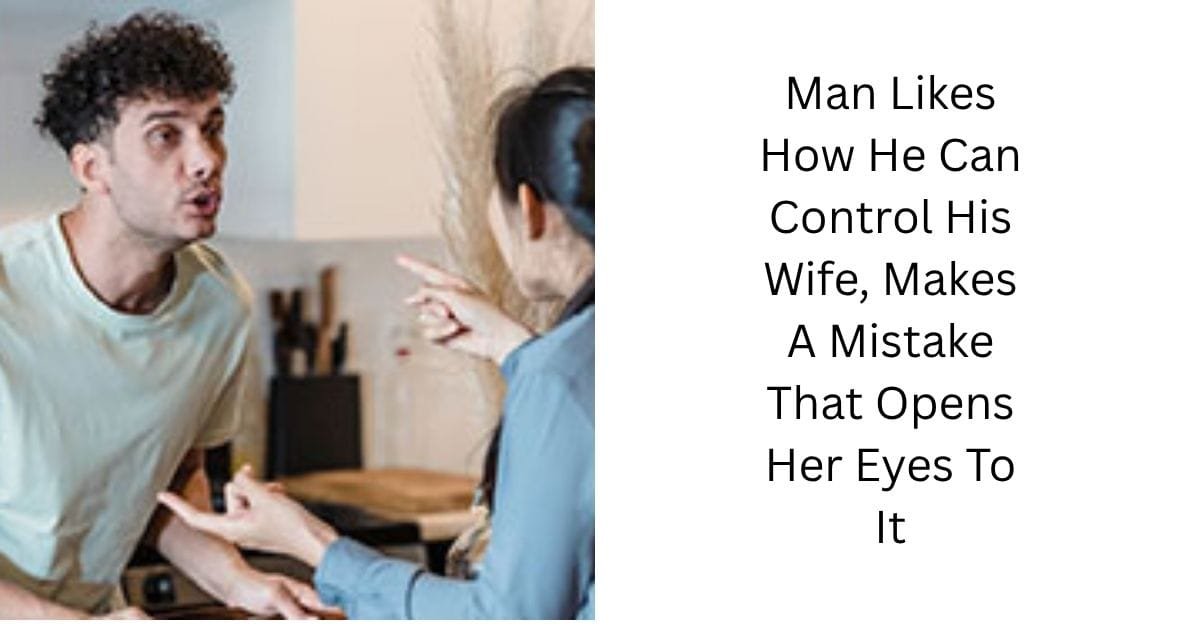
When this woman first married her husband, she believed their relationship was built on love, trust, and mutual respect. During the early years of their marriage, he often presented himself as someone who simply wanted to protect her and help her make good decisions. He would offer opinions about her clothing, question certain friendships, and suggest how she should spend her free time, but he always had an explanation ready. He said he was only concerned about her, that he knew what was best for them, and that couples were supposed to make decisions together. At first, she didn’t recognize his behavior as controlling. She interpreted his constant involvement in her choices as affection. Over time, however, his suggestions gradually became expectations, and those expectations became rules. He began questioning where she was going, who she was talking to, and why she wanted to make certain decisions without consulting him first. What she didn’t realize was that her husband had become comfortable with having control over her life. He liked knowing that she would change her plans if he objected, avoid certain people if he disapproved, and often choose the option that kept him happy simply to avoid another argument.
As the years passed, the woman slowly became accustomed to giving in. She stopped wearing certain clothes because she knew her husband would criticize them. She became more careful about which friends she spent time with because he frequently complained about people he didn’t like. Even simple decisions began requiring consideration of how he might react. If she wanted to go somewhere, she often found herself explaining why she needed to go and when she would return. If she wanted to spend money on something for herself, she worried about whether he would approve. Her husband rarely had to force her directly because he had learned that disapproval was enough. A disappointed expression, a cold response, or a long argument could make her reconsider almost anything. He apparently enjoyed this dynamic because he believed it proved that she respected him. He saw her willingness to change her behavior as evidence that he had influence, without recognizing how unhealthy that influence had become. Meanwhile, she gradually lost confidence in her own judgment. She began asking herself whether she was being unreasonable whenever she wanted something that didn’t fit his preferences.
The turning point came when her husband made a mistake that unexpectedly revealed just how intentional his behavior had been. He apparently said something during an argument that he hadn’t realized would expose his true attitude. Instead of claiming that he was worried about her or trying to protect their relationship, he reportedly admitted that he liked knowing he could get her to do what he wanted. The comment stunned her. Until that moment, she had spent years believing that his controlling behavior came from insecurity, concern, jealousy, or even love. Hearing him describe it as something he enjoyed made her look back at their entire relationship differently. Suddenly, countless moments that she had previously dismissed became connected. The arguments over her clothes, the questions about her friends, the pressure surrounding her choices, and the expectation that she would always prioritize his preferences no longer looked like isolated incidents. They looked like parts of a pattern. What shocked her most was realizing that he wasn’t simply unaware of what he was doing. He understood that she was changing herself to avoid conflict, and he apparently liked having that level of power over her.
Once her eyes were opened, the woman began paying attention in a way she never had before. She stopped automatically accepting his explanations and started observing what happened whenever she disagreed with him. She noticed how quickly he became irritated when she made plans without asking permission, how he tried to make her feel guilty when she spent time with people he disliked, and how he often framed obedience as proof of love. She also began talking privately with trusted people who helped her understand that a healthy marriage should not require one person to constantly surrender their independence to keep the other person happy. The more she reflected on her experiences, the more she realized how much of herself she had gradually given up. She had mistaken avoiding conflict for maintaining peace, when in reality she had been shrinking her world to accommodate her husband’s expectations. Her husband seemed confused when she stopped responding to his pressure the way she used to. For the first time, she questioned his demands instead of immediately accepting them. She started making small decisions for herself again, and each one reminded her that she was capable of trusting her own judgment.
The woman’s biggest realization was that the problem wasn’t one particular argument or one offensive comment. It was the pattern that had developed throughout their marriage. Her husband had become comfortable making decisions for both of them because she had spent years allowing him to believe that his preferences mattered more than hers. His mistake had finally exposed the truth behind that dynamic, and once she saw it clearly, she couldn’t pretend not to notice it anymore. She reportedly began setting boundaries and making it clear that love did not mean giving another person control over her choices. Whether the marriage could survive those changes remained uncertain, because her husband now had to face a reality he had never expected: the woman he believed he could control had started thinking for herself again. What he considered a sign of power turned out to be the very thing that opened her eyes. Sometimes a single careless comment can reveal years of behavior that someone has worked hard to normalize, and once the truth becomes visible, it can be almost impossible to go back to the way things were.
Read Story…
Am I Overreacting? My fiancé refused a vasectomy for “biblical reasons” after everything my body has gone through, and I don’t think I can see him the same anymore
I am 34, and my fiancé and I have two children. We aren’t married, although we’ve been engaged for years.
My body has gone through so much to have the two children we have. During my first pregnancy, I ended up having an unplanned C-section. Afterward, I had a CKC procedure for precancerous cervical changes, which required anesthesia. During my second pregnancy, my cervix was much shorter because of the previous procedure, and at 18 weeks pregnant, I had to undergo another procedure under anesthesia to have a cerclage placed.
A month ago, I gave birth to our second child at 33 weeks and 3 days. I developed chorioamnionitis during labor, and both my baby and I developed fevers while I was pushing. She was my first VBAC, was born premature, and is currently in the NICU.
I genuinely feel like my body has been through hell to have the two children we both wanted. I already had CPTSD before these pregnancies, and now I feel like I have significant medical trauma from everything that happened. I was terrified during labor and genuinely felt like something terrible could happen to me.
Because I know I cannot emotionally handle another pregnancy and am terrified of going through another high-risk pregnancy or birth, I asked my fiancé to get a vasectomy.
He said no. His reason is that, biblically, he believes he cannot get one and considers it mutilation.
I want to be clear: I know I cannot force him to have a vasectomy, and I don’t believe I have the right to control his body. He says he is willing to use condoms 100% of the time permanently.
But something about his refusal has completely changed how I see him. I don’t want to have sex anymore because I am no longer willing to accept even the possibility of another pregnancy. I understand condoms are effective when used correctly, but that risk is still more than I personally can emotionally accept. That is my boundary, not a punishment.
The problem is that this issue is also bringing up years of things I have tried to forgive.
I stayed home for more than three years with our first child so he could work while I took care of our child. Despite being financially dependent on him for years, I don’t have independent access to money or even access to see our finances. If I need or want something, I am expected to ask.
I also don’t have a car. If I need to go somewhere, I have to wait for him to get home or wake up from a nap. He has actually told me he likes that I don’t have a car because then I can’t leave. I moved here five years ago and never developed a real support system, and he has also said he likes that because I don’t really have anywhere to run.
For two years, we lived with his mother so he could save money. When we argued, she would sometimes involve herself and tell me I was a horrible person. There were times I wanted to take our baby and go to my mother’s house, only about 35 minutes away. I was told that if I took the baby there without telling him, it would be kidnapping. He would message his mother telling her not to let me leave and to keep me in the house with our baby. If I wanted to leave, I was told to make sure the baby stayed there.
There have also been years of online affairs, paid OnlyFans accounts, and cheating. He cheated during my first pregnancy and continued throughout our relationship. Eventually, I became so angry and lonely that I also talked to men online because I felt isolated and wanted someone to talk to while he was spending money and sexual energy on other women online.
I have forgiven so much over the years. Maybe too much.
And now I feel like the vasectomy was the last straw—not because I think he is obligated to get surgery, but because after everything my body has physically gone through, I asked him to do something that would make me feel safer about never risking another pregnancy. He refused.
He keeps reminding me that he works hard, pays the bills, provides food, and takes us to the NICU every day so we can see our baby. And yes, I appreciate those things. But I can’t stop thinking that providing financially and driving us to see our baby does not erase everything else.
He also told me that he made his own Reddit post and that everyone agreed with him. According to him, both men and women told him he was a great guy and encouraged him to stand firm in his decision not to get a vasectomy.
And honestly, maybe they’re right that he shouldn’t get surgery he doesn’t want. But that doesn’t mean I am required to keep having sex with him, accept the risk of pregnancy, or feel the same way about him afterward.
I think that’s what hurts so much. He seems focused on proving that he has the right to say no, while I am grieving what his no means to me after everything my body has gone through. Strangers on Reddit may have been responding to one question without knowing the entire context of our relationship. They don’t know about the years of cheating, my financial dependence, my lack of transportation, him telling me he likes that I can’t leave, my isolation from friends and family, or everything I have repeatedly forgiven.
Maybe that’s what I am finally realizing: I gave two children to the wrong man.
Not because he owes me a vasectomy. He doesn’t. But because I am starting to see the entire relationship differently. I have spent years forgiving, sacrificing, depending on him, and giving my body to pregnancy and childbirth. Now, when I look at everything as a whole, I don’t know if I can ever see him the same way again.
Am I wrong for feeling that this was the final straw? And am I wrong for thinking the bigger pattern here is about much more than a vasectomy?
Woman Thinks Her Husband’s Constant Attention Is Love, Until She Realizes He’s Been Controlling Her All Along
When this woman first met her future husband, she believed she had finally found someone who genuinely cared about her. He was attentive, confident, and always seemed interested in making sure she was comfortable. During the early stages of their relationship, his constant concern felt flattering rather than controlling. He would ask where she was going, who she would be spending time with, and when she expected to return home. She interpreted those questions as signs that he cared about her safety. Whenever he offered an opinion about her clothes, friends, or plans, she assumed he was simply trying to help. Nothing seemed serious enough at the time to make her question the relationship.

Advertisement
After they got married, however, his behavior slowly began to change. What had once sounded like suggestions gradually became expectations. He started telling her which friends he thought were a bad influence and questioning why she needed to spend so much time with them. If she wanted to go somewhere without him, he wanted to know exactly where she was going and who would be there. When she bought something for herself, he sometimes questioned whether she really needed it. None of these incidents seemed enormous on their own, but together they created a pattern. The woman slowly became aware that she was spending more time thinking about her husband’s reaction than thinking about what she actually wanted.
Her husband also developed a habit of presenting his opinions as if they were decisions they had already made together. If she disagreed, he would remind her that marriage required compromise. The problem was that the compromise almost always seemed to happen on her side. She was expected to change her plans, adjust her behavior, or give up something she wanted, while he rarely made similar sacrifices. Whenever she pointed this out, he accused her of being difficult or overly sensitive. Eventually, she began wondering whether she was actually the problem.
One of the easiest ways he maintained control was through emotional reactions. He didn’t necessarily need to shout or make dramatic threats. Sometimes a cold expression or a sudden change in his mood was enough to make her reconsider her decision. She learned that certain topics would lead to arguments, so she started avoiding them. She stopped telling him about some plans until the last minute because she knew he might object. She even began changing her choices before he had a chance to complain. In her mind, she was simply trying to keep the peace.
Her husband seemed to enjoy the fact that she had become so predictable. He knew which arguments would make her back down and which comments would make her feel guilty. He had learned that he didn’t need to physically force her to do anything because she had already started adjusting herself to avoid his disapproval. Over time, this became normal inside their marriage. He believed he was simply being a strong husband, while she was gradually losing confidence in her own decisions.
Friends and family occasionally noticed that she had changed. Someone might ask why she no longer joined certain outings or why she always checked with her husband before making plans. She usually had an explanation. Sometimes she said they were trying to save money. Other times she claimed that her husband didn’t feel comfortable with a particular person. She rarely admitted how often she was changing her behavior simply to prevent an argument.
The woman herself didn’t fully understand what was happening. She still loved her husband, and there were plenty of good moments in their marriage. He could be affectionate, funny, generous, and supportive in other areas. Those positive moments made it difficult for her to recognize the unhealthy parts of the relationship. She kept telling herself that every couple had disagreements and that perhaps she simply needed to become better at compromise.
Then one ordinary disagreement changed everything.
The couple were reportedly discussing one of her personal plans when the husband became frustrated because she wanted to make a decision without following his preference. During the conversation, he made an offhand comment that he probably never expected her to take seriously. Instead of saying that he was worried about her or that he believed his advice was better, he admitted that he liked being able to get her to change her mind.
The comment stopped her completely.
She asked him what he meant, hoping she had misunderstood him. Instead of immediately recognizing how disturbing the statement sounded, he reportedly explained that he liked knowing she would eventually listen to him. He treated it almost like a compliment to himself. To him, her willingness to change her choices meant that he had influence over her.
For the first time, she realized that his behavior wasn’t accidental.
He knew she changed her plans because she didn’t want conflict. He knew she avoided certain people because he disapproved of them. He knew she sometimes abandoned things she wanted because she didn’t want to deal with his reaction. And instead of being concerned about that, he apparently enjoyed it.
That realization completely changed the way she viewed her marriage.
She began remembering conversations from years earlier. She thought about the friends she had slowly stopped seeing, the clothes she stopped wearing, the hobbies she abandoned, and the decisions she made simply because she knew her husband would object. Things that once seemed unrelated suddenly looked connected.
She also began questioning how often she had called his behavior “care.”
When he asked where she was, was it concern or control? When he criticized one of her friends, was he protecting her or isolating her? When he questioned her spending, was he trying to help financially or deciding what she was allowed to do? These questions were uncomfortable because there were no easy answers.
The husband noticed that something had changed.
The woman no longer automatically accepted his opinions. When he told her that something wasn’t a good idea, she began asking why. When he questioned her plans, she calmly explained that she had already made her decision. When he attempted to use guilt to change her mind, she refused to engage in the same pattern.
This frustrated him.
He was accustomed to getting his way eventually. Even when she initially disagreed, he believed that enough pressure would make her reconsider. Now that strategy wasn’t working. The more confident she became, the more uncomfortable he appeared to be.
She also started reconnecting with people she had distanced herself from.
Some friends were surprised to hear from her again. They had assumed she was simply busy or had moved on to a different stage of life. When she cautiously explained what had been happening, several people told her that they had noticed changes in her but had been afraid to interfere in her marriage.
Hearing that was painful.
She realized that other people had seen pieces of the problem before she had. What she had considered normal marital behavior had looked concerning from the outside. That didn’t automatically mean every decision her husband had made was malicious, but it confirmed that the pattern had become visible.
The woman began setting boundaries slowly rather than trying to change everything overnight.
She made small decisions independently. She spent time with friends without asking for permission. She started choosing what she wanted to wear without worrying about whether her husband approved. She also became more comfortable saying no when she disagreed.
Each of those small choices gave her a little more confidence.
Her husband reportedly tried several different approaches. Sometimes he became angry. Other times he acted hurt and accused her of changing. He occasionally reminded her of how things used to be, apparently hoping she would return to the version of herself who rarely challenged him.
But she wasn’t willing to go back.
The biggest difference was that she no longer believed setting boundaries meant she didn’t love him. She understood that a healthy relationship could contain disagreement without requiring one person to surrender their independence. She could care about her husband while still having her own opinions, friendships, interests, and decisions.
Eventually, she confronted him about his earlier comment.
She told him that what he considered amusing or satisfying had actually been deeply disturbing to her. Knowing that he enjoyed controlling her made her question whether he respected her as an equal partner. She explained that she didn’t want a marriage where one person felt powerful because the other person was afraid of conflict.
Her husband reportedly struggled to understand why the comment had affected her so deeply.
From his perspective, he hadn’t necessarily intended to hurt her. But intention didn’t erase the pattern. Whether he had viewed his behavior as harmless leadership or something more serious, the result was the same: she had gradually become less confident in herself.
The woman eventually realized that the most important change had happened inside her.
She no longer needed her husband’s approval to know whether a decision was right for her. She no longer automatically assumed that disagreement meant she was being selfish. Most importantly, she stopped confusing peace with silence. A marriage without arguments isn’t necessarily healthy if one person avoids disagreement because they are afraid of the other’s reaction.
Whether the couple ultimately remained together was still uncertain.
The woman reportedly wanted to see whether her husband was capable of recognizing the problem and changing his behavior. She understood that one conversation wouldn’t repair years of unhealthy dynamics. Real change would require him to accept responsibility rather than blaming her for becoming more independent.
For her, the accidental comment had become a turning point.
Her husband had believed he was revealing something that made him feel powerful. Instead, he accidentally showed her exactly how he viewed their relationship. Once she understood that he enjoyed having control over her, she could no longer pretend that the behavior was simply ordinary marital disagreement.
The experience taught her that control doesn’t always look dramatic.
Sometimes it appears as constant questioning, guilt, criticism, pressure, or subtle manipulation. Sometimes it becomes so normal that the person experiencing it doesn’t recognize what is happening until something forces them to step back and look at the entire pattern.
In the end, the husband’s mistake didn’t immediately destroy the marriage, but it destroyed something else: her willingness to ignore what had been happening. She finally understood that being a loving wife didn’t require giving up her independence. And once that realization took hold, the balance of their relationship began to change.
The man had spent years believing that his ability to influence his wife proved how much control he had. He never expected that one careless comment would make her question everything. But that single moment gave her something she had been slowly losing for years: the confidence to see her marriage clearly and decide for herself what kind of relationship she was willing to accept.