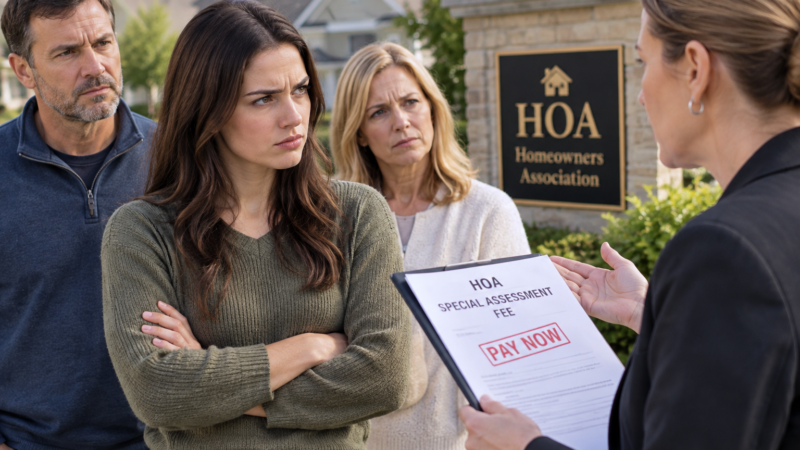
Man Interrupts Paramedic Saving A Patient, But His HOA Status Can’t Protect Him
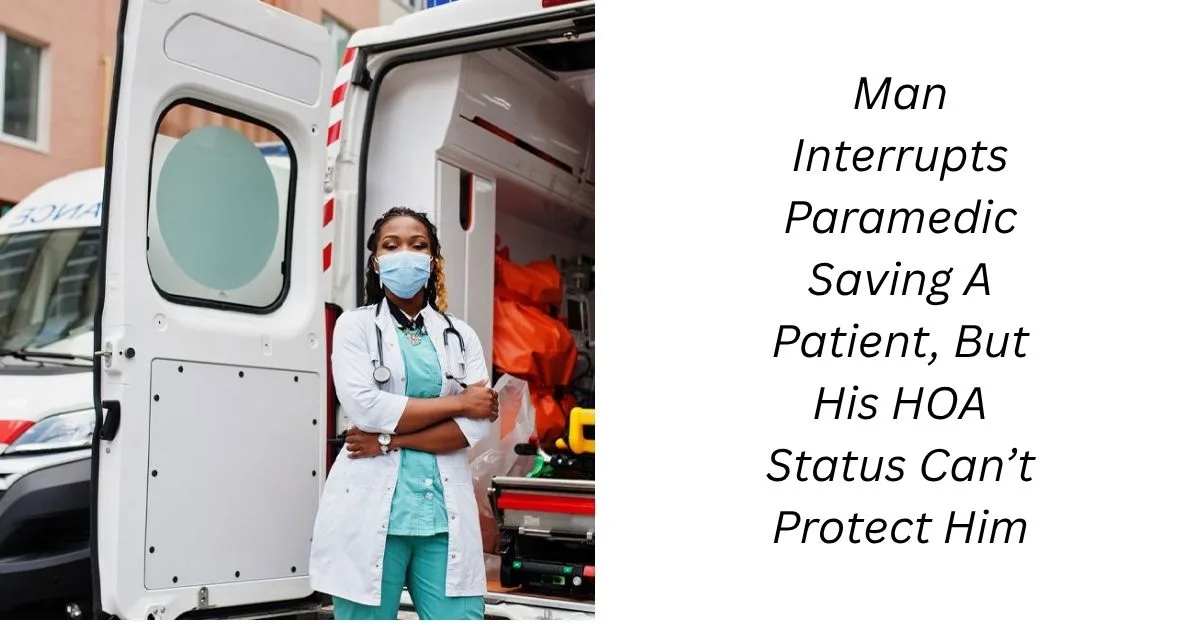
When this paramedic arrived at the scene of a medical emergency, he had one priority: keeping the patient alive. There was no time to worry about neighborhood politics, property rules, or whether anyone nearby was unhappy about what was happening. The patient was in serious distress and needed immediate medical attention, so the paramedic quickly assessed the situation, prepared the necessary equipment, and began treatment. Emergency responders are trained to work under pressure, and in moments like this, every second can matter. Unfortunately, while the paramedic was trying to stabilize the patient, a man from the surrounding neighborhood decided that the emergency response was interfering with his personal expectations. Instead of recognizing the seriousness of the situation and giving the medical professional room to work, he began complaining about the activity outside. He apparently believed that his position within the homeowners association gave him some authority over what could happen in the neighborhood. What started as an ordinary emergency response quickly turned into a confrontation, with the man attempting to interfere with the paramedic while the patient was still receiving care.
The paramedic tried to remain focused, understanding that arguing with someone was the last thing he needed to do. He explained that the situation was an active medical emergency and that he needed space to work. Normally, that would have been enough. Most reasonable people understand that when an ambulance or emergency crew arrives, their role is to save lives, not create unnecessary inconvenience. The man, however, reportedly continued insisting that the responders were violating neighborhood expectations and behaving in a way he considered unacceptable. He seemed more concerned about the disruption than the person lying in need of treatment. His confidence appeared to come from his involvement with the HOA, as though having a position within the neighborhood organization somehow gave him control over emergency personnel. The paramedic eventually made it clear that an HOA could establish community rules for residents, but it could not override emergency medical procedures or give a private resident the authority to interfere with a professional treating a patient. The more the man pushed, the clearer it became that this was no longer simply a disagreement about noise, parking, or access. He was actively getting in the way of someone performing an essential medical duty.
As the confrontation continued, other people nearby began noticing what was happening. Some were reportedly shocked that anyone would choose such a moment to argue with a paramedic. The emergency crew was not there for a neighborhood dispute or a routine service call. They had been called because someone needed urgent medical attention. Several witnesses understood that delaying treatment could potentially make the patient’s condition worse, and they became increasingly frustrated with the man’s behavior. The paramedic continued doing his job while attempting to keep the situation under control, but eventually the man’s actions crossed a line. Emergency responders cannot simply allow bystanders to interfere with patient care, regardless of how important those individuals believe themselves to be. The man may have been accustomed to enforcing HOA rules and dealing with residents who violated neighborhood policies, but the emergency scene was not his jurisdiction. An HOA board cannot dictate how paramedics perform medical treatment, nor can a resident demand that emergency personnel stop what they are doing because their presence is inconvenient. Once authorities became involved, the man’s supposed HOA influence suddenly seemed far less impressive. Whatever status he believed he had inside the neighborhood did not give him special protection from the consequences of interfering with an emergency.
The situation ultimately became an uncomfortable lesson about the difference between having authority and simply believing you have authority. Being an HOA board member, committee member, neighborhood volunteer, or even the person residents usually turn to when there is a dispute does not mean someone has control over every situation. There are boundaries that cannot reasonably be crossed, especially when someone’s health or safety is at stake. The paramedic was operating under professional responsibilities that had nothing to do with the HOA’s rules, and the patient deserved uninterrupted medical care. If the man had a legitimate concern about parking, noise, blocked access, or another neighborhood issue, there were appropriate channels for addressing it later. Interrupting emergency treatment was not one of them. What made the incident especially frustrating was that the man apparently could not recognize that the circumstances were far more important than his personal complaints. His HOA position might have given him some influence over community matters, but it did not make him untouchable.
In the end, the biggest takeaway was that emergencies are not the time to assert neighborhood authority or demand that everything operate according to ordinary rules. There are situations in which normal community regulations have to take a back seat to safety, and a medical emergency is obviously one of them. The paramedic’s responsibility was to the patient, not to an HOA board or an individual resident who believed he had special standing. The man’s attempt to use his HOA status as leverage ultimately accomplished little except drawing more attention to his behavior and potentially creating serious consequences for himself. People in the community reportedly came away from the incident with a simple lesson: having a title does not automatically give someone power over situations outside their authority. More importantly, basic human decency should come before neighborhood politics. When someone’s life may depend on a medical professional being able to work without interruption, the only appropriate response is to step aside, stay out of the way, and let the professionals do their jobs.
Read Story…
I don’t care what you are you can’t park in my spot.
I am a paramedic in a place that has some HOA’s and apartment complexes. We hate responding to the apartment complexes because there is nothing but assigned parking and no fire zones. Basically if we can’t find a space to fit in we have to block the road. My agency also uses first responder vehicles and ambulances. The First responder as implied usually arrives first so we do our best to leave room for the ambulance to fit in.
We get a call at the apartment complex I am in the first responder. As I pull up to the address by some miracle their is a spot only 2 apartments away. Great I can leave the road clear for the Ambulance. As soon as I park out comes this guy screaming I can’t park there. I do the “are you serious look” and just say medical emergency.
He says he doesn’t care I can’t park there. Keep in mind my Vehicle has enough lights to make a Xmas tree jealous. I just grab my stuff lock the vehicle and keep going.
He is screaming he is going to call the cops, I tell him they are already on the way (they respond to medical emergencies).
Cop gets there while I am in with the patent and tells him basically to pound salt. The cop enters the apartment and then this guy really goes full blown Entitled.
He enters the apartment comes into the room where I am treating the patient. He starts ranting and raving how I have to move my vehicle. I look at the cop and say “get him outta here” The cop then seals his fate. She asks the patient if she wants this person removed from the apartment and did she ever give consent for him to enter.
The patients response, “Get him the F*** out, he’s trespassing”
Boom the all clear.
The cop gives him one last chance and tells him to leave or he will be arrested.
He doubles down, “I AM ON THE HOA BOARD I CAN GO WHERE I PLEASE”
At this point back up is called, the cop at least manhandles him out of the room.
The ambulance arrives with PD backup and they get him out of the apartment so we can safely remove the patient.
Not entirely sure what happened next as I was in the back of the ambulance, but when I got out one of the officers approaches and says “sorry but we need another bus. we had to taze him”
Policy for PD is if they taze someone they have to be transported to the hospital by ambulance to the hospital as the tazer spikes have to be surgically removed due to the barbs on them.
Wait for the 2nd ambulance they take him I go back in service.
Found out a few weeks later he was charged with Trespassing, Assaulting’s an officer, resisting arrest, interference with Government administration (AKA interfering with the scene of an emergency. All over a parking space that I would have been in for all of 20 min if he hadn’t created problems.
I can only assume he took a plea deal as I was never called to testify.
TLDR: Entiled HOA board member goes nuts because an Emergency Vehicle took his parking space for an Emergency. Ends up going to the Hospital and jail.
EDIT: sorry for some reason this submitted before I was done writing.
Upvote5.4KDownvote201Go to comments1RepostShare
Paramedic Rushes to Save a Patient, But a Neighbor Interrupts the Emergency Response
When this paramedic arrived at a residential neighborhood to respond to a medical emergency, he expected the situation to be serious but manageable. His attention was immediately focused on the patient, who needed urgent medical assistance and could not afford unnecessary delays. The paramedic quickly gathered his equipment, assessed the patient’s condition, and began providing care. He had no reason to expect that someone from the neighborhood would attempt to interfere with him while he was working. Emergency responders are trained to remain calm in stressful situations, but that does not mean they can simply ignore people who deliberately get in their way. Unfortunately, one man in the neighborhood seemed to believe that the emergency response was causing an unacceptable disruption.
Advertisement
The man was apparently connected to the local homeowners association and seemed accustomed to having a certain amount of influence within the community. HOA rules can cover many ordinary aspects of neighborhood life, such as property maintenance, parking, landscaping, exterior changes, and other community standards. Because the man had some involvement with the HOA, he apparently believed that residents and visitors were expected to follow the rules he helped enforce. What he failed to recognize was that an active medical emergency was completely different from an ordinary neighborhood dispute. The paramedic was not there as a resident trying to park illegally or violate a community regulation. He was there because someone had called for emergency medical assistance.
At first, the man reportedly approached the paramedic and questioned what was happening. He seemed frustrated by the emergency activity taking place near the neighborhood. There may have been concerns about where vehicles were positioned or how much space the emergency crew was using, but none of those issues were more important than the patient receiving treatment. The paramedic attempted to explain that he was responding to a medical emergency and needed to concentrate. He expected the man to understand and move away. Instead, the man’s behavior reportedly became more persistent, creating a distraction at precisely the moment when the paramedic needed to remain focused.
The paramedic tried not to escalate the situation. Anyone working in emergency medicine knows that unexpected complications can happen quickly, and maintaining concentration is essential. He continued checking the patient while calmly telling the man that the emergency crew needed room to work. The man apparently did not appreciate being told to step back. Because of his involvement with the HOA, he seemed to think his concerns deserved immediate attention. From his perspective, the neighborhood had rules and standards, and he believed everyone should respect them. From the paramedic’s perspective, however, there was a patient whose health was the only priority at that moment.
What made the situation particularly troubling was the timing. The man was not approaching the paramedic after the emergency had ended or submitting a complaint through an appropriate channel. He was interrupting the medical response while treatment was actively taking place. There is a major difference between raising a legitimate concern after an incident and physically or verbally interfering while a medical professional is attempting to help someone. Emergency responders often work in unpredictable environments, and unnecessary interference can make an already difficult situation even more dangerous. The paramedic needed to monitor the patient, communicate with his team, and potentially prepare for transportation, all while dealing with an increasingly frustrated resident.
The man’s HOA status appeared to give him a sense of authority that did not actually extend to the situation. Being part of an HOA can give someone responsibilities within a neighborhood, but it does not give that person control over police officers, firefighters, paramedics, doctors, or other emergency professionals. An HOA is not a government emergency authority, and its rules do not supersede medical necessity. The paramedic was operating under professional protocols and responsibilities that had nothing to do with the neighborhood’s private regulations. The man seemed to discover this distinction only after his attempts to assert control failed.
Other residents began noticing the confrontation. Some were reportedly confused about why anyone would challenge a paramedic during an active emergency. People could see that the emergency crew was not there casually or unnecessarily. Their equipment and actions made it obvious that someone needed immediate medical care. For many witnesses, the situation was difficult to understand because most people would instinctively give emergency responders as much space as possible. Watching someone instead demand their attention over neighborhood concerns made the man’s behavior seem even more unreasonable.
The paramedic eventually had to become firmer. He explained that the patient’s medical care had to come first and that the man needed to stay clear of the treatment area. The tone may have remained professional, but the message was no longer negotiable. There was simply no time to debate HOA policies while someone’s health was potentially at risk. The man reportedly continued trying to make his point, apparently convinced that his position gave him some leverage. Unfortunately for him, the presence of an emergency medical crew meant that the situation had moved far beyond the ordinary authority of an HOA.
The incident also raised questions about why some people become overly attached to positions of authority. An HOA role can be useful when residents need someone to help maintain community standards, but it can also create problems when someone starts believing that the title makes them more important than everyone else. There is nothing inherently wrong with enforcing reasonable neighborhood rules. The problem begins when someone fails to recognize the limits of their authority. In this case, the man’s HOA involvement apparently caused him to approach an emergency situation as though it were another community dispute that he could control.
Meanwhile, the patient’s condition remained the central concern. The paramedic could not afford to become distracted by a prolonged argument. Every moment spent dealing with unnecessary interference was a moment that could have been spent monitoring the patient or preparing for the next stage of treatment. Even when a patient’s condition appears stable, emergency responders have to be prepared for sudden changes. A person who requires an ambulance may deteriorate quickly, which is why responders take these situations seriously. The paramedic’s job was to anticipate those possibilities, not to negotiate with a neighborhood representative.
Eventually, the situation became serious enough that additional authorities or responsible personnel had to become involved. Once someone outside the emergency crew became aware that a resident was interfering with medical treatment, the man’s HOA status became largely irrelevant. Whatever influence he had in neighborhood meetings did not translate into immunity from consequences. If his behavior crossed legal or professional boundaries, he could potentially be held accountable like anyone else. A title within a private organization cannot protect someone from the basic rules that apply to the public.
This was likely the moment when the man realized that his HOA position did not carry the power he had imagined. An HOA can enforce community agreements, but it cannot order paramedics to stop treating a patient. It cannot demand that an ambulance leave because its presence is inconvenient. It cannot prevent emergency responders from doing their jobs. Most importantly, it cannot transform a private resident into an authority over medical professionals. The man’s confidence seemed to disappear once it became clear that other authorities were not going to treat his HOA role as a special privilege.
The incident also highlighted how important it is for emergency responders to have clear boundaries. Paramedics regularly deal with frightened family members, curious bystanders, traffic problems, and other distractions. Most people understand that responders need space, but there will always be situations in which someone refuses to cooperate. Professionals are trained to handle those circumstances, yet that does not make the interference harmless. When a patient is vulnerable, even a short disruption can create additional stress and complications. The paramedic therefore had every reason to insist that the man step away.
Some people in the neighborhood reportedly felt embarrassed by the entire situation. An HOA exists to help communities function smoothly, and residents generally expect board members or representatives to act responsibly. Seeing someone associated with the HOA interrupt an emergency response could make the organization look unnecessarily controlling. It was one thing to care about neighborhood standards. It was another thing entirely to prioritize those standards over someone’s immediate medical needs. The incident may have caused residents to question whether the man understood the purpose and limitations of his position.
There was also an important distinction between inconvenience and danger. Emergency vehicles can block driveways, occupy parking spaces, make noise, and temporarily disrupt normal neighborhood activity. Those inconveniences are sometimes unavoidable. A medical emergency does not happen according to an HOA schedule. Ambulances cannot wait until a convenient parking space becomes available, and paramedics cannot delay treatment because a resident dislikes where equipment has been placed. In emergencies, temporary disruption is often necessary to protect someone’s health.
The man could have handled his concerns completely differently. If he believed the emergency crew had violated a legitimate neighborhood rule, he could have waited until the situation was over and then raised the issue through the proper channels. He could have contacted the HOA, spoken with the property manager, or submitted a formal complaint if there were actually something worth investigating. Instead, he chose to confront the paramedic while the patient was still being treated. That decision turned what might have been a minor neighborhood complaint into a much more serious confrontation.
The paramedic, meanwhile, continued doing what he had been called to do. He did not allow the man’s behavior to completely derail the medical response. His focus remained on the patient, and that was exactly where it belonged. Emergency workers cannot control how every bystander behaves, but they can control how they respond to distractions. By remaining professional and continuing treatment, the paramedic demonstrated why emergency personnel are trusted to operate under pressure. The man’s behavior may have been frustrating, but the paramedic’s responsibility remained clear.
As the patient was eventually prepared for the next stage of care, the immediate emergency began to move forward. The attention then shifted toward what should happen with the man who had interfered. At that point, the details of his HOA position mattered very little. Authorities could evaluate his actions based on what he actually did rather than what title he claimed to have. This was an important reality check. People cannot simply declare themselves exempt from consequences because they belong to a committee, board, organization, or neighborhood association.
The situation also became a lesson for the other residents watching. Many communities have disagreements over HOA rules, and some residents strongly dislike the way associations operate. But regardless of someone’s opinion about HOAs, there are still appropriate times and places to address those disagreements. An emergency scene is not one of them. If someone’s house, driveway, parking area, or property is temporarily affected by emergency responders, the reasonable response is to cooperate and wait until the emergency has been handled. Complaints can be addressed afterward.
Online discussions about situations like this often focus on one simple question: who was actually responsible for creating the problem? In this case, the answer seemed obvious to many people. The paramedic was doing his job, the patient needed help, and the man chose to interfere. The HOA connection did not change those basic facts. If anything, his attempt to invoke his position made the situation look worse because it suggested that he believed neighborhood authority mattered more than a medical emergency.
The incident also demonstrated why respect for professional boundaries matters. A paramedic has specialized training and responsibilities that an HOA representative does not. Likewise, an HOA representative may understand neighborhood policies that a paramedic does not. Each person has a different role. Problems arise when someone assumes their role gives them authority over areas where they have no expertise or jurisdiction. The man’s mistake was not simply being concerned about the neighborhood. It was failing to recognize when his role ended and the emergency responder’s role began.
There was perhaps an even larger lesson about common sense. Most people do not need a written rule to understand that someone receiving emergency medical treatment should be left alone. Compassion and basic judgment should be enough. When an ambulance arrives, the appropriate reaction is usually to move aside, stay clear, and allow the professionals to work. No neighborhood policy should be necessary to explain something so fundamental. The man’s behavior therefore appeared especially unreasonable because he had every opportunity to recognize what was happening and simply chose not to.
For the paramedic, the incident may have been frustrating, but it was also another example of the unpredictable challenges emergency workers face. Their job is already demanding enough without having to argue with people who misunderstand their authority. Still, the paramedic remained focused on the patient and did not let the confrontation become the center of the response. That professionalism likely mattered more than anything the man said during the incident. The patient’s needs came first, and everything else had to wait.
For the man, the consequences of the confrontation may have extended beyond whatever immediate response occurred that day. His actions could affect how neighbors viewed him and how much credibility he had within the HOA. Someone who expects others to respect his authority also has to demonstrate that he understands responsibility. If residents believe an HOA representative cannot distinguish between a routine rule violation and a genuine emergency, they may become less willing to trust that person’s judgment. Authority depends not only on having a title but also on using that position responsibly.
Ultimately, the biggest lesson was that an HOA title is not a universal badge of authority. It may give someone responsibilities within a community, but it does not place them above emergency workers, medical professionals, or the law. When a person is receiving urgent medical treatment, the priority should be safety and care, not neighborhood politics. The paramedic was there to help someone who needed him, and the man’s attempt to interfere only made an already stressful situation more difficult. In the end, his HOA status could not protect him from the consequences of crossing a line he never had the authority to cross.
What made the story so memorable was the contrast between the man’s confidence and the reality of the situation. He apparently entered the confrontation believing that his neighborhood position gave him power, only to discover that there were limits to what he could control. The paramedic did not need permission from the HOA to treat a patient, and the emergency response did not have to conform to the man’s personal expectations. Sometimes the most important lesson is simply knowing when to step back. In this case, the man could have avoided the entire confrontation by doing exactly that. Instead, he turned a medical emergency into a dispute about authority and ultimately learned that some situations are far bigger than an HOA rulebook.