Woman Sells SUV To Family Members At Discount Price Then Gets Asked To Pay For Engine Failure Almost 3 Months After Purchase
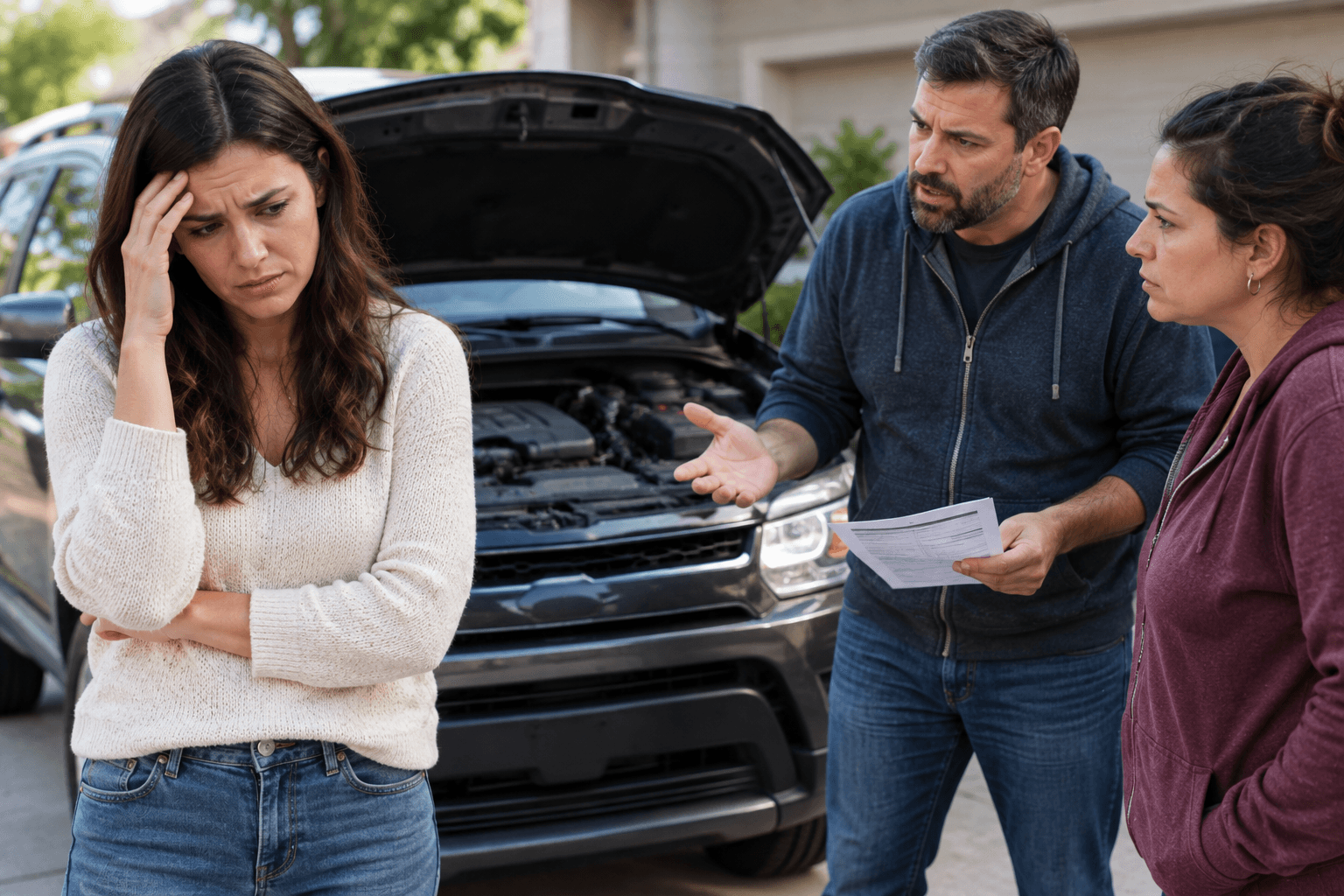
I never expected selling my old SUV to a family member would turn into a situation where I was being asked to pay thousands of dollars almost three months after the sale. I had owned the SUV for several years, and although it wasn’t brand new, I had taken reasonably good care of it. I kept up with regular oil changes, maintenance, inspections, and repairs whenever something needed attention. Eventually, I decided it was time for me to get a newer vehicle, so I planned to sell the SUV. One of my family members heard about it and asked if I would sell it to them instead. Because we were related, I agreed to give them a significant discount compared with what I could have asked from a stranger. I was also completely honest about the vehicle’s age, mileage, condition, and anything I knew had been repaired or replaced. They looked at the SUV themselves, drove it, asked questions, and ultimately decided they wanted to buy it. We agreed on a price that was fair to both of us, completed the paperwork, and I handed over the keys.
For the first couple of months, I heard nothing negative about the SUV. In fact, whenever the family member mentioned it, they seemed happy with the purchase. They told me it was running well and that they were glad they had gotten it at such a good price. I assumed everything was fine and moved on with my life. I didn’t consider myself responsible for the vehicle anymore because the sale had been completed and they had taken possession of it. Then, almost three months after the purchase, I received a message saying the SUV had developed a serious engine problem. They told me that the engine had failed and that the repair was going to cost a significant amount of money. I immediately felt terrible hearing that because I obviously didn’t want anyone to lose money, especially someone in my family. I asked what had happened and whether the vehicle had shown any warning signs before the failure. They said it had started making strange noises and eventually stopped running. Then came the part I wasn’t expecting: they said that because I had sold them the SUV, I should pay for the repair.
I reminded them that the SUV had been sold at a discounted price specifically because it was an older used vehicle. I had never promised them that it would be trouble-free forever, and I certainly hadn’t offered a three-month warranty. Before buying it, they had inspected it, driven it, and had every opportunity to take it to a mechanic if they wanted an independent opinion. I had also told them everything I knew about its history. As far as I was aware when I sold it, the engine was working normally. There had been no indication that it was about to fail. They argued that because I had owned it for years, I must have known something was wrong. I told them that wasn’t true. If I had known the engine was failing, I would never have knowingly sold them the vehicle without disclosing it. They seemed convinced that because I was family, I should take responsibility for anything that went wrong with it.
The conversation quickly became more uncomfortable than I expected. They said they had trusted me because I was family and that they never would have bought the SUV if it had come from a stranger. I understood that, but I explained that trust worked both ways. I had trusted them enough to give them a substantial discount instead of selling it for full market value to someone else. I also pointed out that almost three months had passed since the purchase. During that time, I had no control over how the SUV was driven, maintained, or used. I didn’t know how many miles they had put on it or whether anything had happened to the vehicle after they bought it. They insisted that none of that mattered because the engine had failed “too soon.” They said I should at least contribute toward the repair as a gesture of goodwill. I told them I was sorry the engine had failed, but I wasn’t comfortable paying for a repair on a vehicle I no longer owned.
They became angry and started telling other relatives about the situation. Suddenly, I was hearing from family members who hadn’t even been involved in the sale. Some said I should just help pay because keeping peace in the family was more important than the money. Others told me that I had gotten rid of the SUV because I knew it was going to have problems, which was completely false. I explained repeatedly that I had decided to buy a newer vehicle long before the sale and that the SUV had been reliable enough for me to keep driving. I also reminded everyone that the buyer had agreed to the price after seeing and driving the vehicle. I hadn’t pressured them into buying it. If anything, I had gone out of my way to make the sale easier because we were related. The fact that something expensive had gone wrong later didn’t magically change the agreement we had made.
What frustrated me most was that I probably could have sold the SUV for more money if I had listed it publicly. I chose not to because I thought selling it to someone in the family would be easier and would give them a good deal. Now I was being treated as though I had deliberately passed a defective vehicle onto them. I asked whether they had gotten a mechanic to determine what actually caused the engine failure. They hadn’t given me a clear answer. They simply knew that the engine needed major work and assumed the problem must have existed before the sale. I told them that assumption wasn’t enough for me to accept financial responsibility. An engine can fail for many reasons, and without knowing exactly what happened, neither of us could honestly say when or why the underlying problem developed. I offered to look at the mechanic’s report if they wanted to share it, but I still made it clear that I wasn’t agreeing to pay the bill.
At this point, I’m realizing that the biggest mistake I made may not have been selling the SUV. It may have been assuming that selling something to family would make the transaction simpler. I wanted to help someone get a reliable used vehicle at a lower price, and now I’m being pressured to pay for a major repair nearly three months later. I don’t want this to destroy family relationships, but I also don’t think being related means I should become responsible for every mechanical problem that happens after a sale. I sold the SUV honestly, disclosed what I knew, allowed them to inspect and test-drive it, and gave them a discounted price. I genuinely feel bad that the engine failed, and I understand why they’re upset, but feeling sorry for them doesn’t mean I caused the problem. What makes this especially frustrating is that if I had sold the vehicle to a stranger, nobody would expect me to suddenly pay for an engine failure months later. Because we’re family, however, I’m apparently expected to accept a responsibility that was never part of the deal.
Read Story…
WIBTAH for refusing to give money back after selling my car at a major discount to a family friend’s son?
A few months ago, my cousin’s son (I’m very, very close with his mother) crashed his vehicle while visiting home. He has a young family and money is tight. Around that time, I had been considering selling my 10-year-old vehicle. I’ve owned it since new. Most maintenance was done at the dealership, recalls were addressed whenever I was notified, and at my last service I was told some larger maintenance would likely be coming in 6–12 months, but nothing urgent or unsafe. I disclosed that at the time of sale.
I checked comparables on Kijiji and Facebook Marketplace and could have sold it for $4–8k more than what I accepted. He didn’t have enough for market value, so he made an offer and his parents added some money to help him. I agreed to the significantly reduced price because of the relationship and because I knew he was in a tough spot. It was significantly below what I could have received selling privately to a stranger.
Now, about 2.5 months later, he’s telling me the engine developed a knocking noise. After inspection, there were bronze shavings in the oil filter and he was told it may be a bearing failure. He also found information online about a potential recall related to connecting rod bearings for that model year. I was never notified of any outstanding recall beyond what had already been completed, and I had no knowledge of an engine issue at the time of sale. The car was running normally when it left me, aside from a minor ticking I had been told previously was not urgent.
He reached out respectfully and is asking if we can “find a solution that feels fair.”
Here’s where I’m conflicted:
I sold it as a private sale, no warranty.
I disclosed known upcoming maintenance.
I heavily discounted the price because of his situation.
I did not know of any engine defect.
I could financially help a bit if I chose to.
I feel terrible about his circumstances. I also feel like I already extended significant generosity by selling far under market value. If this had been a stranger-to-stranger sale, there would be zero expectation of compensation.
Would I be the asshole if I declined to give money toward the repair?
Any other thoughts or possible solutions I’m open to because I don’t want to lose my friendship over this.
Edit:
I could technically offer to buy the vehicle back and resell it myself. However, he lives about ten hours away, I don’t have a buyer lined up in his area, and I won’t be able to travel there again until July to then still get it repaired and resell.
The vehicle is a 2016 Acura MDX. It was not a lemon, it was my daily driver for 9 years. I genuinely liked it and only accelerated the sale of it because he was in a difficult situation. I had been planning to purchase a new Subaru within the next year or so, but there was no urgency for me to sell until I heard about his situation and then I offered it to him and really didn’t haggle.
Before purchasing, he test drove the vehicle with his mother and brothers.
At this point, he has not obtained a clear professional diagnosis. He appears to be relying on partial information, opinions from his brother who I believe works on vehicles as a hobby/backyard mechanic type situation (I could be wrong), and online research, rather than a confirmed mechanical assessment.
When Selling My SUV To Family Turned Into A Major Dispute
I never expected selling my old SUV to a family member would eventually create one of the biggest arguments my family has ever had. I had owned the SUV for several years, and during that time, I had taken pretty good care of it. It wasn’t a new vehicle, and I never pretended that it was, but it had been reliable for me. I kept up with regular oil changes, inspections, tire replacements, and other routine maintenance. Eventually, I decided that I wanted something newer and more dependable for my daily commute, so I started thinking about selling it. I was prepared to list it publicly, but before I could do that, a family member found out that I was planning to sell it and asked whether I would sell it to them instead.
I wasn’t against the idea. In fact, I thought selling it to family might be easier than dealing with random buyers. We already knew each other, and I believed there would be a certain level of trust between us. They were looking for an affordable SUV, and mine seemed like it could work for them. I told them exactly how old it was, how many miles were on it, what maintenance I had done, and what issues I knew about. I didn’t tell them it was perfect because obviously it wasn’t. It was a used vehicle with years of mileage on it.
They came over to look at it themselves. They opened the hood, checked the interior, looked at the tires, and took it for a test drive. I answered every question they asked. I also told them that if they wanted to take it to a mechanic for an independent inspection, I had absolutely no problem with that. I actually encouraged them to do so because I didn’t want there to be any misunderstanding later. They said they trusted me and didn’t think a separate inspection was necessary.
We eventually agreed on a price that was significantly lower than what I could have reasonably asked from a stranger. I gave them the family discount because I wanted to help them out. I could have listed the SUV online and probably gotten more money, but I wasn’t interested in squeezing every possible dollar out of someone I knew. We completed the sale, transferred the necessary paperwork, and I handed over the keys. At that point, I considered the transaction finished.
For the first several weeks, everything seemed completely normal. They drove the SUV regularly, and whenever I saw them, they didn’t mention having any problems. In fact, they told me a couple of times that they were happy with it. They said it was driving well and that they were especially pleased with how much they had saved by buying it from me.
I was relieved to hear that because I had worried slightly about selling an older vehicle to someone I knew. I didn’t want a mechanical problem to create tension between us. But after hearing that everything was fine, I stopped worrying about it. The SUV wasn’t mine anymore, and I assumed they understood that it was a used vehicle and that future maintenance would be their responsibility.
Almost three months after the sale, I received a message from them that immediately changed the situation. They told me the SUV had developed a major engine problem. According to them, the vehicle had started making strange noises and then eventually stopped running properly. They had taken it to a mechanic, and they were told that the engine needed a significant repair.
I felt genuinely bad when I read the message. Nobody wants to suddenly face a huge repair bill, especially on a vehicle they recently purchased. My first response wasn’t anger. I asked whether everyone was okay and what exactly the mechanic had said.
They explained that the repair was going to cost several thousand dollars. Then they told me that they believed I should pay for it.
I honestly thought they were joking at first. I asked why they believed the repair was my responsibility. They said the SUV had been fine when I owned it, so they assumed something must have been wrong with it before I sold it. I told them that if I had known about a serious engine problem, I would have disclosed it. As far as I knew, the SUV had been running normally when I sold it.
They didn’t seem convinced. They told me that an engine doesn’t simply fail for no reason after someone buys a vehicle, especially after only a few months. I explained that used vehicles could develop problems at any time, particularly when they already had significant mileage. I wasn’t a mechanic, and I couldn’t predict when a mechanical component would fail.
They then reminded me that they were family and said they had trusted me because of that relationship. I told them I understood their frustration, but being family was exactly why I had given them the discount and been completely transparent about the SUV’s condition.
They responded that the discount didn’t matter because they believed they had purchased the vehicle under the assumption that it was mechanically sound. I asked them what specifically I had told them that gave them that impression. They couldn’t provide an answer beyond saying that I had told them it was reliable.
I explained that “reliable” didn’t mean “guaranteed never to break down.” It was reliable based on my experience owning it. I had driven it for years without a major engine failure. That didn’t give me the ability to guarantee what would happen months later.
The conversation became more tense when they said they wouldn’t have purchased the SUV if they had known they might have to pay for an engine repair. I told them that nobody buying an older used vehicle can reasonably assume there is zero possibility of a major repair.
I also reminded them that they had been given the opportunity to have the vehicle inspected before buying it. They had declined because they said they trusted me. I didn’t force them to skip the inspection. If anything, I had encouraged them to get one.
They said that because I was family, they shouldn’t have needed to spend money on an inspection. That statement made me uncomfortable. I told them that family trust doesn’t replace an independent mechanical inspection when you’re buying a used vehicle.
They then asked whether I would at least split the repair bill with them. I said I needed more information before even considering that. I asked to see the mechanic’s written diagnosis so I could understand exactly what had failed.
They didn’t send me anything immediately. Instead, they started talking to other relatives about the situation. Within a few days, I began receiving messages from people asking me why I had sold them a “bad SUV.”
I was shocked by how quickly the story had changed. I hadn’t sold them a bad vehicle. I had sold them an older used vehicle that had been functioning normally when I owned it. I had disclosed what I knew, allowed them to inspect it, and sold it at a discount.
One relative told me that I should simply pay for the repair because it would be embarrassing if the family relationship was damaged over money. Another said that since I had owned the SUV for so long, I should have known something was eventually going to go wrong.
I found that argument particularly frustrating. If I had known the engine was failing, why would I have sold the SUV to someone in my own family? I could have listed it anonymously online and avoided the entire situation. The fact that I gave them a discount should have demonstrated that I wasn’t trying to make the maximum amount of money.
I also started wondering whether something had happened after the sale that I didn’t know about. I had no idea how many miles they had driven in those three months. I didn’t know whether the vehicle had been serviced, whether the oil had been changed, whether it had overheated, or whether there had been another incident that contributed to the failure.
I asked them for the mechanic’s report again. Eventually, they sent me some information, but it still didn’t establish that the problem existed when I sold the SUV. The mechanic could identify what had failed, but that didn’t necessarily mean they could determine exactly when the underlying problem began.
That distinction became very important to me. I wasn’t trying to avoid responsibility for something I had knowingly done wrong. I simply didn’t want to accept responsibility for a mechanical failure that occurred nearly three months after I no longer owned the vehicle.
The more I thought about it, the more I realized how different the situation might have been if they had contacted me immediately after buying it. If they had discovered a serious undisclosed problem within a few days, I would have taken the situation much more seriously. But nearly three months had passed, during which they had possession and control of the vehicle.
I finally told them that I was sorry the engine had failed, but I wasn’t going to automatically pay for the repair. I offered to review any documentation they had and discuss the situation calmly, but I wouldn’t accept blame simply because they were unhappy with the timing of the breakdown.
They became upset and accused me of hiding behind technicalities. They said family should take care of family. I told them that I agreed with that principle, which was exactly why I had given them the SUV for less than I could have received elsewhere. Helping family didn’t mean accepting an unlimited warranty on something that had already been sold.
What hurts most is that I never intended for this to become a family conflict. I thought I was doing someone a favor. I gave them a vehicle at a discounted price, answered their questions honestly, and gave them every opportunity to inspect it before purchasing it. Now I’m being treated like I deliberately sold them something defective.
I’ve started keeping copies of all our messages and the paperwork from the sale because I don’t want the facts to become even more distorted as more relatives get involved. I don’t know whether they are actually planning to take any legal action or whether this is simply family pressure, but I’m trying to protect myself rather than react emotionally.
The entire experience has taught me a lesson I honestly wish I had learned another way. Selling a used vehicle to a stranger might feel impersonal, but at least everyone understands that a used vehicle is a used vehicle. When family is involved, people sometimes expect personal relationships to cover responsibilities that were never agreed upon. I genuinely feel sorry that their engine failed, and I hope they can get the SUV repaired without putting themselves into financial trouble. But I also don’t believe that makes me responsible for the bill. I sold the vehicle honestly, gave them a substantial discount, and allowed them to make their own decision after seeing and driving it. I thought I was helping a family member get a good deal. Instead, nearly three months later, I’m being asked to pay thousands of dollars for something that happened after the keys were no longer mine—and I’m starting to wonder whether giving a family discount was the biggest mistake I made.