My Friends Got Upset Because I Wouldn’t Let Their Kids Touch My Expensive LEGO Set
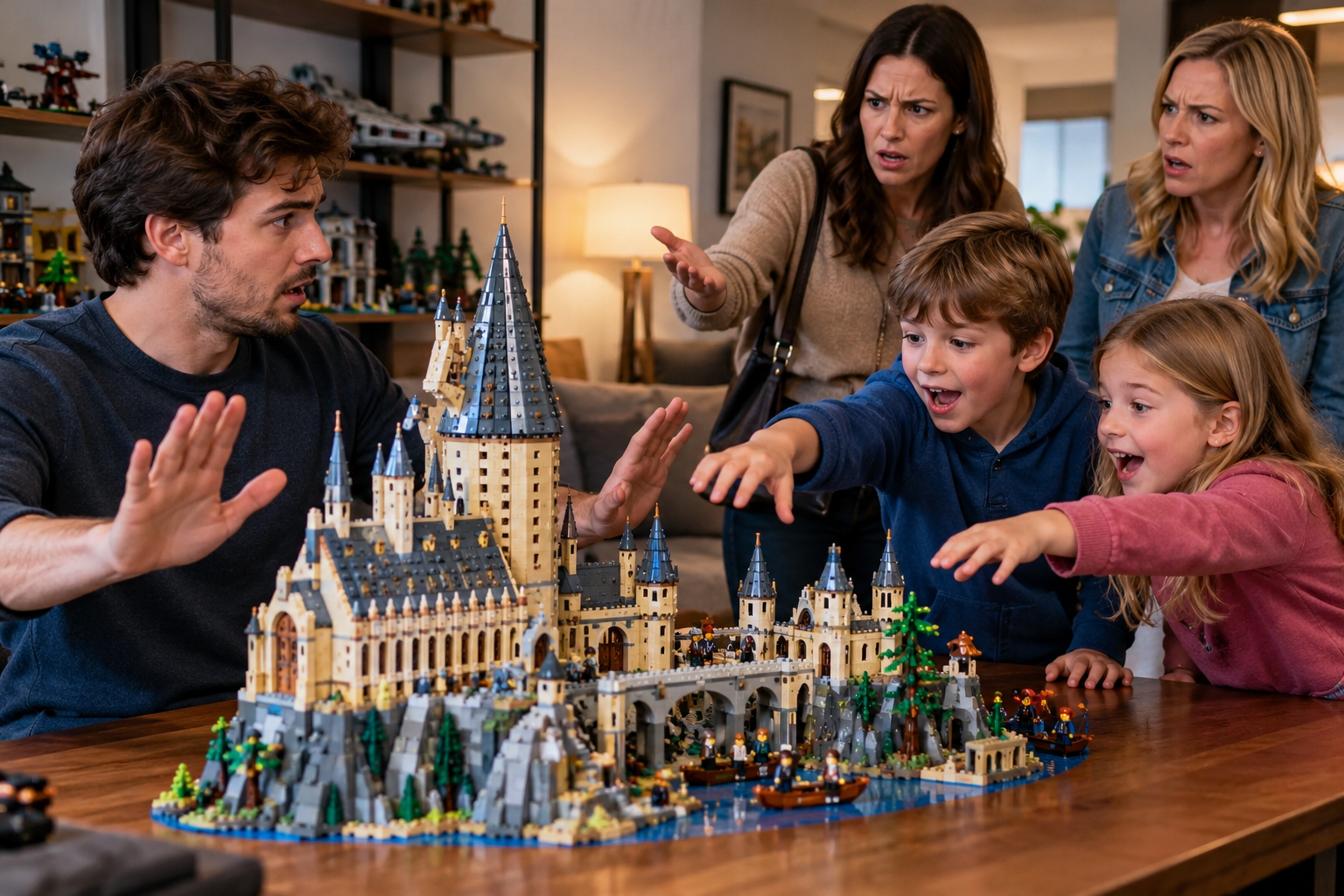
I never imagined that buying a LEGO set for myself would turn into such a ridiculous argument with my friends. I have always enjoyed building LEGO sets, even as an adult, because it gives me a chance to relax, focus on something creative, and temporarily forget about the stress of everyday life. Some people spend their money on video games, expensive sneakers, or collectibles, while LEGO happens to be my hobby. I don’t think there is anything wrong with that. Recently, I decided to treat myself to a particularly expensive LEGO set that I had wanted for a long time. It wasn’t an impulse purchase, either. I had been saving up for it, researching different versions, and waiting for the right opportunity to buy it. When I finally brought it home, I was genuinely excited because I knew how much time and effort would go into putting it together. I planned to build it slowly, enjoy the experience, and eventually display it somewhere safe in my home.
The LEGO set wasn’t just an ordinary collection of colorful plastic bricks. It was a detailed collector’s edition with hundreds, possibly thousands, of individual pieces, and it cost me a considerable amount of money. I know LEGO is technically designed for building and playing, but certain sets are specifically made for adult collectors and hobbyists. That was exactly the kind of set I had purchased. I had no intention of letting anyone randomly handle the pieces, especially children who might not understand how easily small components could get lost or damaged. I wasn’t trying to be arrogant or act as though my belongings were more important than everyone else’s. I simply wanted to enjoy something I had purchased with my own money. I even cleared a space on my desk so I could work on it comfortably without worrying about other people disturbing the pieces.
A few days later, some of my friends came over to my house to hang out. They brought their children along, which wasn’t unusual because we had spent time together as a group many times before. Everything was going perfectly fine until one of the kids noticed the unopened LEGO box sitting on my desk. His eyes immediately lit up, and he started asking questions about what was inside. I explained that it was a special LEGO set I had recently purchased and that I was planning to build it myself. Naturally, the children became interested, and one of them asked whether they could open the box and start putting the pieces together. I politely smiled and told them that I wasn’t ready to open it yet. I thought that would be the end of the conversation, but apparently, I was mistaken.
One of the parents immediately suggested that I should let the children build it because they loved LEGO and would have so much fun. I explained that the set was expensive and that I had specifically purchased it for my own collection. I wasn’t comfortable handing it over to several young children who might accidentally lose pieces, break something, or mix up the instructions. I offered to show them some pictures of the finished model and even mentioned that I had a few smaller LEGO pieces they could look at if they were interested. However, I wasn’t willing to let them open my new collector’s set. At first, I thought my explanation was reasonable enough, but one of my friends gave me a strange look and said that I was being overly protective of a toy. That comment immediately made the situation uncomfortable.
Another parent joined the conversation and said that children should be encouraged to explore their creativity instead of being told no all the time. I completely agreed with that general idea, but I didn’t understand why encouraging creativity meant I had to hand over something that belonged to me. I calmly explained that there was nothing stopping them from buying their children their own LEGO sets. I wasn’t responsible for providing entertainment every time their kids visited my home. I also pointed out that this particular set was not cheap, and replacing missing pieces or repairing damaged sections would be a frustrating experience. Instead of understanding my point, they started acting as though I was deliberately disappointing the children. One of them even said that I was making a big deal out of something that was supposed to be fun.
The situation became even more uncomfortable when one of the children started looking upset. I felt bad because I hadn’t wanted anyone to feel disappointed, especially a child who was simply excited about something interesting. However, I also knew that giving in would establish an expectation that anything visible in my home was automatically available for everyone to use. I tried explaining that adults are allowed to have hobbies and personal belongings that they don’t want other people touching. I wouldn’t walk into someone else’s house and demand access to their expensive electronics, collectibles, or personal possessions, so I didn’t understand why the same basic respect wasn’t being extended to me. My friends seemed completely focused on how disappointed their children were, rather than considering why I had purchased the set in the first place.
What bothered me most was that these friends knew I was careful with my belongings. They had seen my other collectibles and understood that I genuinely enjoyed building and displaying LEGO models. I had never criticized their parenting, complained about their children playing with toys, or demanded that they change their behavior whenever they visited. Yet somehow, the moment I established one simple boundary, I became the unreasonable person in the room. One friend even joked that I should grow up and stop treating LEGO like some priceless museum artifact. I found that comment particularly insulting because I wasn’t asking anyone to admire my hobby or agree with my purchasing decisions. I was simply asking them to respect something that belonged to me. I eventually moved the box into another room because I didn’t want the conversation to continue.
After everyone left, I started wondering whether I had handled the situation incorrectly. Part of me felt guilty because the children were genuinely excited, and I could have potentially made their visit more enjoyable by allowing them to participate. At the same time, I couldn’t shake the feeling that my friends had completely ignored my right to decide what happened to my own belongings. If something had been damaged or pieces had gone missing, I seriously doubted that everyone would have been equally enthusiastic about paying for replacements. It is easy to tell someone to share when you aren’t the person taking the financial risk. I also wondered whether these parents would have reacted the same way if I had refused to let their children use an expensive laptop, camera, or gaming console. Somehow, I suspect the answer would have been very different.
Now, a couple of my friends are still making comments about how I apparently care more about plastic bricks than making children happy. I haven’t apologized because I honestly don’t believe I did anything wrong. I understand that sharing is important, and I have absolutely no problem letting children enjoy toys that are meant to be played with. However, I don’t believe owning something expensive automatically creates an obligation to share it with other people’s children. I worked for my money, purchased the set because I wanted it, and had every intention of building it myself. I don’t think being an adult means giving up the right to enjoy personal hobbies simply because someone else might want to participate. So now I’m left wondering whether I was genuinely being unreasonable or whether my friends simply expected me to sacrifice something I cared about to avoid disappointing their children. AITAH for refusing to let my friends’ kids touch my expensive new LEGO set?
Read Story…
AITAH FOR REFUSING THAT THE KIDS OF FRIENDS BUILD MY NEW LEGO SET?
I want to start by saying that I genuinely enjoy having friends over. I like hosting dinner parties, preparing food, having conversations, laughing, and spending quality time with people I care about. My apartment is a place where I feel comfortable, and I enjoy sharing that space with friends. However, I also expect people to respect my home and the things I own, especially when they are guests. Unfortunately, a recent dinner party turned into an incredibly frustrating experience because one couple decided to bring their three children along, even though the invitation was specifically intended for adults.
I don’t have children myself, so I understand that there might be certain things about parenting that I don’t fully understand. I’m not claiming to know what it’s like to raise three boys or deal with energetic children all day. I also don’t expect children to behave perfectly every second. Kids get excited, become bored, make noise, and sometimes struggle to sit still for long periods. I understand all of that. However, I don’t think being a parent automatically means everyone else has to tolerate disruptive behavior or allow children to do whatever they want inside their homes.
The dinner party was planned several weeks in advance. I had invited a small group of friends, all adults, and everyone knew it was supposed to be an evening where we could relax, enjoy dinner, have drinks, and catch up without distractions. I had spent quite a bit of time preparing everything. I cleaned my apartment, arranged the dining table, prepared the food, and made sure there was enough space for everyone to sit comfortably. I was genuinely looking forward to the evening because I hadn’t hosted everyone together in quite some time.
When the guests started arriving, everything seemed perfectly normal. People brought drinks, complimented the food, and started chatting. The atmosphere was pleasant, and I was enjoying myself. Then one couple arrived with their three boys. I was immediately surprised because I hadn’t invited any children, and nobody had mentioned that they would be bringing them. I didn’t want to make a scene at the door, so I welcomed everyone inside and assumed the parents had some arrangement to keep the boys occupied.
Unfortunately, that assumption turned out to be completely wrong.
The boys were clearly bored almost immediately. While the adults were sitting together and talking, the children started running around the apartment, shouting, making loud noises, and interrupting conversations. At first, I tried to ignore it because I didn’t want to become the person who constantly complained about children. I reminded myself that they were young, probably excited to be somewhere new, and might eventually settle down.
But they didn’t settle down.
Instead, their behavior became increasingly disruptive as the evening continued. They ran from one room to another, shouted over people who were trying to have conversations, and treated my apartment like a playground. I politely asked them to lower their voices several times. I wasn’t yelling at them or being aggressive. I simply told them that people were trying to talk and that they needed to stop running around.
I must have asked them to quiet down at least ten times throughout the evening. Every time, they would stop briefly, look at me, and then start doing exactly the same thing again a few minutes later. Their parents were sitting with the other adults, enjoying their dinner and conversations, and barely seemed interested in controlling them. I honestly couldn’t understand why they thought it was acceptable to let their children behave that way in someone else’s home.
Eventually, the boys wandered away from the living room and started exploring the rest of my apartment. I noticed them disappearing down the hallway, but I didn’t immediately think much of it. I assumed they were just looking around or perhaps trying to find something interesting to occupy themselves with. I was still trying to be a good host and didn’t want to spend the entire evening following three children around.
Then I heard an excited noise coming from the room where I keep my LEGO collection.
For anyone who doesn’t know, LEGO isn’t just a random childhood toy to me. I’m a huge fan of building bricks, and collecting and building complicated sets is one of my favorite hobbies. I have spent a considerable amount of money and time building my collection. Some sets are displayed carefully, while others are still waiting to be assembled. I take good care of them because I genuinely enjoy the entire experience, from opening the packaging to sorting the pieces and following the instructions.
I walked into the room and immediately saw all three boys gathered around one of my biggest LEGO boxes.
It was a brand-new set that I had been waiting a long time to purchase. It had cost me approximately $250, and I had specifically saved it for the Christmas holidays. My plan was to spend some peaceful evenings building it, enjoying the process without rushing, and finally displaying the finished model. I had been looking forward to that experience for weeks.
The boys, however, had completely different plans.
They were incredibly excited. One of them had already pulled the box out, while another was trying to open the packaging. The third was standing beside them, eagerly looking at everything inside. They were treating the set as though someone had brought out a box of inexpensive toys specifically for them to play with.
I immediately stepped forward and told them to stop.
I explained that the LEGO set wasn’t theirs, that it was brand-new, and that they weren’t allowed to open it. I took the box away from them and placed it somewhere they couldn’t reach. I wasn’t trying to be cruel or embarrass anyone. I simply didn’t want three children opening a $250 collectible set that belonged to me.
One boy started whining, another began crying, and the third became visibly upset. They were acting as though I had taken away something that belonged to them. One of them even started having what looked like a full tantrum because I wouldn’t let him play with the set.
I stood there feeling completely uncomfortable. I wasn’t expecting such a dramatic reaction over something that wasn’t even theirs in the first place.
Then one of the boys ran back to his mother and complained that I wouldn’t let him play with my LEGO.
His mother apparently thought this was a perfectly reasonable request because she told him that he could play with it, but that he needed to ask me first.
A few moments later, the boy returned.
He approached me and asked whether he could play with the LEGO set. I looked at him and calmly repeated what I had already told the other children. No, he couldn’t play with it. It was a new set, it was expensive, and I wanted to build it myself.
I thought that would be the end of the conversation.
Instead, his mother approached me looking visibly annoyed. She asked what my problem was and why I was refusing to let her son play with something that was just sitting there.
I was honestly stunned by the question.
I explained that the set wasn’t just some random box of toys. It was a $250 LEGO set that I had purchased for myself, and I had been waiting for a long time to open it and build it. I told her that I was a huge fan of LEGO and building bricks, and that opening the packaging, sorting the pieces, and assembling the model were all part of the experience I was looking forward to.
I also explained that I didn’t want anyone else opening it, especially children who had already spent the evening running around my apartment and ignoring repeated requests to behave.
She didn’t seem particularly interested in my explanation.
Instead, she gave me an irritated look and said something along the lines of, “You’re the grown-up here. You shouldn’t be behaving like a child.”
That comment genuinely irritated me.
Apparently, because I was an adult, I was supposed to hand over something expensive that belonged to me simply because a child wanted it. I was expected to ignore my own interests, disregard the money I had spent, and allow someone else’s children to interfere with a hobby that I had been looking forward to enjoying.
I asked her why she thought I was obligated to let her children play with my personal belongings. I reminded her that this was my apartment, my collection, and my property. I hadn’t invited the children in the first place, and even if I had, that wouldn’t automatically mean they were entitled to touch everything they found interesting.
She responded by saying that they were only children and that I should be more understanding.
I told her that I was perfectly capable of understanding that children get excited. What I didn’t understand was why she thought their excitement gave them permission to open someone else’s belongings. There was a difference between being patient with children and allowing them to do whatever they wanted.
At this point, the boys were still upset. One was crying, another was complaining loudly, and the third kept looking at the LEGO box as though he was waiting for me to change my mind. Their mother continued acting as though I was the unreasonable person in the situation.
I could feel the atmosphere becoming increasingly uncomfortable. Some of the other guests had noticed the argument, and the conversation in the living room had practically stopped. I hated that the evening had turned into this because I had refused to let someone else’s children play with my expensive LEGO set.
What bothered me most was that I had never expected to have to defend such a basic boundary.
If someone visits my home and sees something expensive, personal, or important to me, I shouldn’t have to explain why they aren’t allowed to touch it. The same principle applies whether the guest is an adult or a child. Parents should teach their children that other people’s belongings are not automatically available for them to use.
I also couldn’t stop thinking about the fact that the parents hadn’t even asked me before bringing their children. The entire evening had been planned as an adults-only gathering. I had prepared everything with that expectation, and suddenly I was dealing with three bored children who were running through my apartment while their parents enjoyed themselves.
I wasn’t angry because children existed or because they wanted to play with LEGO. I was angry because their parents seemed to believe that everyone else should accommodate their decisions without complaint.
The mother eventually hissed another comment about how I was being childish and making a big deal out of nothing. I simply told her that she was welcome to buy her children their own LEGO sets if she wanted them to play with something. I wasn’t going to sacrifice my own set to avoid disappointing them.
I made it very clear that the box was staying where I had put it and that nobody was going to open it.
I didn’t give in.
Eventually, the children moved away from the room, although they continued looking unhappy. Their mother was still visibly annoyed with me, and the rest of the evening felt awkward. I tried to return to my guests and enjoy the dinner party, but I couldn’t shake the frustration.
I kept thinking about how easily the entire situation could have been avoided. If the parents had respected the adults-only invitation, none of this would have happened. If they had supervised their children instead of allowing them to run around my apartment, I wouldn’t have had to repeatedly tell them to quiet down. And if they had simply accepted my answer when I said no, there wouldn’t have been an argument at all.
The $250 price tag is obviously significant, but even if the set had cost $20, I would still have had every right to refuse. The point isn’t that children should never touch LEGO or that expensive toys should be kept away from everyone. The point is that people should be allowed to decide what happens to their own belongings.
I bought that set for myself. I didn’t buy it to entertain guests, and I certainly didn’t buy it as an unexpected present for someone else’s children.
I also don’t think being an adult means giving up the things you enjoy just because a child wants them. Adults are allowed to have hobbies, collect things, enjoy toys, build models, and protect their personal belongings. There is nothing inherently childish about enjoying LEGO, regardless of how old you are.
What makes the situation even more frustrating is that I was actually looking forward to building the set over Christmas. I had imagined sitting down with some music, opening the box, sorting the pieces, and spending several peaceful hours putting everything together. That was something I had planned for myself, and it was one of the little things I was genuinely excited about.
Instead, I ended up spending part of my dinner party arguing with another adult about why her children couldn’t have my property.
I haven’t decided whether I want to invite that couple over again. I don’t necessarily want to end a friendship over one unpleasant evening, but I also don’t want to repeat the experience. If they cannot respect the boundaries of my home, then perhaps hosting them isn’t something I should continue doing.
I understand that parenting can be difficult, and I don’t expect children to behave like perfectly disciplined adults. But I do expect their parents to take responsibility for them, especially when they bring them somewhere they weren’t originally invited.
I don’t think I did anything wrong by saying no. I didn’t insult the children, shout at them, or punish them. I simply protected something that belonged to me.
Still, the mother’s comments have made me wonder whether I was being unnecessarily strict. A few friends have suggested that I could have handled the situation more gently, while others agree that the parents were completely out of line.
So, am I really being childish for refusing to let three children open and play with my $250 LEGO set, or were their parents simply expecting too much from someone who was kind enough to host them in the first place?
My Expensive LEGO Hobby Became a Problem With My Friends
I never thought that something as simple as buying a LEGO set for myself would create tension between me and people I had considered good friends for years. I have always enjoyed collecting and building LEGO sets, and I honestly don’t see anything strange about an adult having a hobby that makes them happy. Everyone has something they enjoy spending their free time and money on. Some people collect watches, others spend hundreds of dollars on gaming equipment, sneakers, or expensive electronics, while I happen to enjoy LEGO. It helps me relax after a long day, keeps my mind occupied, and gives me a sense of satisfaction when I finally complete a complicated model. I don’t expect everyone to understand my interest, but I do expect people to respect it. Recently, I purchased a particularly expensive LEGO set that I had been wanting for months. I had spent a considerable amount of time researching it, watching reviews, comparing prices, and deciding whether it was worth the money. When I finally ordered it, I was genuinely excited because it was something I had been looking forward to for a long time.
The set was not one of those small LEGO boxes designed for young children to play with for an afternoon. It was a large collector’s edition with an incredible amount of detail, hundreds of individual building steps, and a finished model that looked absolutely amazing. It was also considerably more expensive than the average LEGO set. I had saved money specifically for this purchase, so I wasn’t going to treat it like an ordinary toy that could be thrown around or taken apart without a second thought. My intention was to build it carefully, follow the instructions, and eventually display the completed model somewhere in my home. I enjoy the entire building process, including sorting the pieces, finding the correct components, and watching the structure gradually come together. For me, that is the actual fun of collecting LEGO. I wasn’t buying it to entertain other people’s children, and I certainly wasn’t expecting anyone to demand access to it.
When the package finally arrived, I was almost like a child waiting for Christmas morning. I carefully opened the shipping box, checked that everything was included, and placed the LEGO box on my desk. I hadn’t started building it immediately because I wanted to organize my workspace first. I also wanted to make sure I had enough free time to enjoy the project without rushing through it. I took a few pictures of the unopened box because I was excited about the purchase and wanted to share it with a couple of friends who also appreciated LEGO. One of my friends responded enthusiastically, while another made a joke about how expensive my hobby was becoming. I didn’t take the joke seriously because I understood that not everyone would spend that much money on something like this. As long as I could afford it and it made me happy, I didn’t see a problem.
A few days later, I invited some friends over to my house for a casual get-together. We had known each other for quite some time, and it was common for everyone to bring their partners and children when we arranged these gatherings. I didn’t mind having children around, and I usually tried to make sure they had something to keep them occupied. I would put out snacks, make space for them to sit comfortably, and sometimes let them play with a few things that were appropriate for their age. I wasn’t against children enjoying themselves in my home. However, I also believed that parents should understand that not everything in someone else’s house is automatically available for their children. Most of my belongings were ordinary household items, but I also had several personal collectibles that I preferred people not to touch. My new LEGO set was one of those things.
When my friends arrived, everything started normally. We spent some time talking about work, family, and random things that had happened recently. The children were running around, watching television, and occasionally asking their parents for snacks. I had placed my new LEGO set on a desk in a room where I usually kept my hobbies and personal belongings. I honestly didn’t think anyone would pay much attention to it because the box was closed and there were plenty of other things around the house. Unfortunately, one of the children eventually wandered into that room and noticed the colorful LEGO packaging. He immediately became interested and called his siblings over to look at it. Within a few seconds, all three children were standing around the desk, asking what was inside the box and whether it was something they could play with.
I walked over and explained that it was a new LEGO set I had purchased for myself. I showed them a picture of the finished model on the packaging and told them that I was planning to build it over the next few weeks. The children seemed genuinely impressed by how complicated it looked. One of them asked whether they could open it and start building. I politely told them that I wasn’t ready to open it yet and that it was a collector’s set I wanted to assemble myself. I thought that was a perfectly reasonable answer. I didn’t shout, raise my voice, or make anyone feel unwelcome. I simply explained that this particular item wasn’t available for playing with. The children looked a little disappointed, but I assumed they would move on to something else.
Instead, one of the parents overheard the conversation and immediately suggested that I should let the children build it together. She said they loved LEGO and that it would be a wonderful activity for them. I smiled and explained that I understood their interest, but the set was expensive, and I wanted to keep it in good condition. I also mentioned that it had a complicated building process and contained many small pieces that could easily get lost. I wasn’t comfortable handing over the entire box to several young children. I expected her to understand because I thought most adults would appreciate that people have certain belongings they want to keep for themselves. However, she laughed and said that LEGO was made to be played with, so there was no reason to keep it sitting in a box.
I tried explaining that different LEGO sets serve different purposes. Some are specifically designed for younger children, while others are marketed toward adult collectors and experienced builders. This particular model was something I had wanted for a long time, and I wasn’t interested in letting several children take it apart or build it without supervision. I wasn’t saying children shouldn’t enjoy LEGO. I was saying they couldn’t use my personal set. I even suggested that if they wanted something similar, their parents could purchase a smaller set for them. There were plenty of affordable options available, and I would have been happy to help them choose something appropriate. Unfortunately, my suggestion didn’t seem to improve the situation. One of the parents looked offended and said that I was acting as though their children were going to destroy everything they touched.
That wasn’t what I had said at all. I wasn’t accusing their children of being careless or irresponsible. Children are naturally curious, and they don’t always understand the value of expensive collectibles. Even older children can accidentally lose pieces or damage something while playing. That is completely normal, and I don’t blame them for it. However, knowing that something could happen is exactly why I didn’t want to take the risk. I would rather avoid a problem than spend the next several days feeling frustrated because something I had saved for was damaged. I tried to explain this calmly, but the conversation was already becoming uncomfortable. The parents seemed determined to interpret my refusal as a personal criticism of their children rather than a simple boundary concerning my property.
One of the other parents then joined the conversation and said that I should be more generous. According to her, the children were guests in my home, and making them feel included should be more important than protecting a LEGO box. I found that argument particularly strange because I had never excluded them from the gathering. They had access to the television, snacks, games, and several other things around the house. I had even prepared a separate space where they could sit and play. The only thing I had refused was access to one expensive personal possession. I asked whether they would expect me to hand over my laptop, phone, or expensive camera if their children became interested in those items. She responded that those things were different because LEGO was supposed to be fun. I honestly couldn’t understand why the category of the object changed the basic principle of ownership.
The children continued asking questions, and one of them eventually asked whether they could at least open the box and look at the pieces. I told him that I would show him some pictures, but I wasn’t going to open it just for that purpose. I didn’t want hundreds of small pieces spread across the floor while several children were moving around. I also didn’t want the box damaged before I had even started building the model. The child looked disappointed and walked back toward his mother. She immediately noticed his expression and gave me a look that made me feel as though I had done something terrible. I felt bad that he was disappointed, but I also knew that I couldn’t make every child happy by giving them whatever they wanted. Sometimes the answer is simply no, and that should be acceptable.
A few minutes later, one of my friends made a comment that really irritated me. He said that I was too old to be treating LEGO like some priceless treasure and that I should stop acting like a child. I asked him what exactly was childish about enjoying a hobby. He laughed and said that adults should know how to share instead of guarding toys. I reminded him that I had paid for the set with my own money and that I wasn’t stopping anyone from buying their own. He then said that money wasn’t the issue because I clearly had enough to afford expensive collectibles. I pointed out that just because I could afford something didn’t mean I was obligated to let other people use it. If anything, spending my own money on something should give me the right to decide how it is used.
The discussion became increasingly frustrating because everyone seemed to have a different explanation for why I should change my mind. One person said I was being selfish. Another suggested that I was making the children feel unwelcome. Someone else joked that I would probably lock the LEGO set in a safe if they visited again. I tried ignoring the comments because I didn’t want a friendly gathering to turn into an argument. However, it was difficult to enjoy myself when several adults were openly criticizing me over something that should have been a very simple decision. I hadn’t insulted anyone, refused to let the children enter my home, or demanded that their parents control every movement. I had simply said they couldn’t touch one particular item.
Eventually, I decided to move the LEGO box into another room. I didn’t want it sitting there while everyone continued discussing it, and I thought removing the temptation would end the conversation. I carefully picked up the box, took it to my bedroom, and placed it somewhere safe. When I returned, one of my friends asked why I was making such a big deal out of it. I told him that I wasn’t making a big deal out of anything. I was simply putting away something I didn’t want other people handling. He responded that I was being dramatic and that the children had already lost interest. I told him that was fine, but I still preferred to keep my belongings where I wanted them. I didn’t understand why my decision needed to be approved by everyone else.
What surprised me most was that the parents never seemed to consider offering their children an alternative. They could have easily brought a board game, a coloring book, a smaller LEGO set, or another activity. Instead, they focused entirely on convincing me to surrender something I had specifically purchased for myself. It almost felt as though they believed that because I didn’t have children of my own, my personal belongings were somehow less important. I don’t know if that was actually their intention, but the way they approached the situation made me uncomfortable. I shouldn’t have to justify every purchase I make or explain why I don’t want someone else’s children using my expensive possessions. Being a guest in someone’s home doesn’t mean having unlimited access to everything inside it.
One of the parents eventually said that if I didn’t want children touching my belongings, I shouldn’t invite families with children over. That comment honestly made me laugh because it was such an unreasonable conclusion. I have no problem inviting families to my home. I enjoy spending time with my friends, and I don’t expect children to sit silently in a corner for the entire visit. However, there is a difference between welcoming children into your home and allowing them to use everything they find interesting. Parents should be teaching their children that other people’s belongings deserve respect. If a child sees an expensive phone on a table, they shouldn’t automatically assume they can pick it up. The same principle should apply to a LEGO set, regardless of whether someone considers it a toy or a collectible.
I also started thinking about what would have happened if I had actually allowed them to build it. There were three children, and none of them had experience with this particular model. They would probably have opened the box, spread the pieces everywhere, and started building whatever looked interesting. That might have been fun for them, but it would have completely ruined the experience I had planned for myself. If pieces went missing, I would have spent hours trying to identify what was absent. If something broke, I would have had to find replacement components. If the children lost interest halfway through, I might have been left with a half-built model and a messy collection of pieces. Their parents could simply take them home afterward, but I would be the person dealing with the consequences.
I understand that accidents happen, especially when children are involved. I don’t expect parents to guarantee that their kids will never make a mistake. However, I also don’t believe I should knowingly put my expensive belongings in a situation where damage is a possibility simply because refusing might hurt someone’s feelings. If I had a fragile glass decoration, nobody would expect me to hand it to a five-year-old just because the child wanted to examine it. If I owned an expensive collectible figure, I wouldn’t be expected to let children take it apart because they thought it looked interesting. So why was this LEGO set suddenly different? The fact that it was made from plastic bricks didn’t make it less valuable to me.
After the gathering ended, I received a message from one of the friends who had been particularly vocal about the situation. She said that she thought I had embarrassed the children and made everyone uncomfortable. She also mentioned that her kids had been looking forward to building something together and that I had ruined their excitement. I read the message several times because I honestly wasn’t sure how to respond. I wanted to explain that I hadn’t intended to embarrass anyone, but I also didn’t want to apologize for something I didn’t believe was wrong. I eventually replied that I was sorry the children had been disappointed, but I wasn’t comfortable letting them use my personal collector’s set. I added that I would happily help them find a smaller set they could build themselves if they were interested.
Her response wasn’t particularly friendly. She said that I was missing the point and that the issue wasn’t really about the LEGO set anymore. According to her, it was about my attitude toward sharing and how I seemed to value material possessions over relationships. I found that statement unfair because I don’t believe setting a boundary automatically means someone values objects more than people. I can care about my friends and still refuse to lend them something expensive. I can enjoy spending time with their children without allowing them to touch every item in my house. Those things aren’t mutually exclusive. If our friendship depends on me agreeing to every request, then perhaps the problem isn’t my attitude toward sharing.
I decided to talk to another friend who had attended the gathering but hadn’t participated in the argument. I wanted an honest opinion because I knew he wouldn’t automatically agree with me just to make me feel better. He told me that he understood why the parents were disappointed, but he also thought they had overreacted. He said that if someone invited me into their home and politely told me not to touch something, I would respect that without turning it into a debate. He also pointed out that the children weren’t entitled to the LEGO set simply because they were excited about it. Hearing that made me feel a little less unreasonable, although I still wondered whether I could have handled the conversation differently.
I also considered whether I should have moved the LEGO set before my friends arrived. Perhaps keeping the box somewhere private would have prevented the entire situation. On the other hand, I don’t think I should have to hide every interesting or expensive possession just because someone might bring children to my house. My friends knew I enjoyed collecting LEGO, and the box wasn’t deliberately placed somewhere the children were expected to play. It was on my personal desk, in a room where I usually kept my belongings. I hadn’t left it on the floor or placed it among their toys. The children noticed it because they were curious, which is completely understandable. But curiosity doesn’t create permission.
A few days after the gathering, I decided to start building the set. I opened the box, carefully organized the pieces, and began following the instructions. Honestly, it was exactly the relaxing experience I had been looking forward to. I spent several hours working on the first sections, and I was already impressed by how detailed the model was. Every time I found the correct piece and connected another section, I felt that familiar satisfaction that makes the hobby enjoyable. I posted a picture of my progress online, and several people commented that the set looked amazing. A couple of them even asked where I had purchased it. I didn’t mention the argument with my friends because I didn’t want to turn a hobby post into another discussion about sharing.
Unfortunately, one of the friends who had criticized me saw the picture and sent another message. She said it was interesting that I had finally started building the set after refusing to let her children touch it. I wasn’t sure whether she was being sarcastic, but I responded that building it myself had been the plan from the beginning. She replied that her children would have enjoyed helping me and that I had missed an opportunity to create a nice memory with them. I told her that I understood, but I didn’t want to turn my personal project into a group activity. She then said that I was being unnecessarily stubborn. At that point, I decided to stop discussing the subject because it was clear we weren’t going to agree.
The more I thought about everything, the more I realized that the actual argument wasn’t really about LEGO. It was about expectations and boundaries. My friends seemed to believe that because their children wanted something, I should make an exception and allow them to have it. I believed that parents should respect the word no, especially when someone was talking about their own property. Neither side was going to change the other’s opinion through a pointless argument. However, I didn’t think it was reasonable for them to make me feel guilty for protecting something I had purchased with my own money. I wasn’t asking them to pay for it, admire it, or even understand why I enjoyed collecting it. I only wanted them to respect my decision.
I have also started thinking about future visits. I don’t want to become the person who refuses to invite friends over because they have children. That would be unfair to the people I genuinely enjoy spending time with. However, I might be more careful about where I keep my collectibles when families visit. I can put certain items away, make sure the children have suitable activities, and avoid unnecessary situations. At the same time, I don’t want to feel like I have to hide everything I enjoy simply because someone might ask to use it. I believe there should be a reasonable balance between being a welcoming host and protecting personal belongings. A guest should feel comfortable in someone’s home, but the homeowner should also feel comfortable setting boundaries.
Some of my friends have suggested that I should just buy a cheap LEGO set for the children so they can build something when they visit. I don’t necessarily think that is a bad idea, but I don’t like the implication that I am responsible for purchasing entertainment for other people’s children. If I decide to buy them something as a gift, that should be my choice, not an expectation created by an argument. I already make an effort to be welcoming whenever they visit, and I don’t mind sharing snacks, games, or other ordinary things. But I don’t think every hobby or possession needs to become a shared family activity. There is nothing wrong with having something that belongs exclusively to you.
My family has also had mixed reactions. One person told me that I should have allowed the children to participate because it would have made them happy. Another said that the parents were being entitled and should have taught their children to respect other people’s property. I can understand both perspectives to some extent. I know the children weren’t trying to cause problems, and I don’t hold anything against them. They saw something interesting and wanted to experience it. That’s normal childhood behavior. The adults, however, should have understood that the answer could be no. It wasn’t the children’s responsibility to understand the financial and sentimental value of my collection. It was their parents’ responsibility to explain why they couldn’t use something that didn’t belong to them.
I also don’t think the price alone is the most important part of this situation. Even if the LEGO set had been inexpensive, I would still have had the right to decide who could touch it. People sometimes assume that something only deserves protection if it costs a lot of money, but that isn’t how personal belongings work. A person might have an old notebook, a handmade decoration, a collection of photographs, or a simple item with sentimental value. Other people don’t need to understand why it matters. They just need to respect that it belongs to someone else. My LEGO set happened to be expensive, but the basic principle would have been exactly the same if it had cost a fraction of the price.
I haven’t completely fallen out with these friends, but things have been slightly awkward since the incident. We still communicate occasionally, although I haven’t invited them over again yet. I don’t want one disagreement to destroy friendships that have existed for years, but I also don’t want to pretend that I was wrong just to make everyone comfortable. If they visit again, I will make sure the LEGO set is somewhere safe, but I will also expect them to respect my home and my boundaries. I don’t think that is an unreasonable condition for anyone visiting another person’s house. I would follow the same rules if I were visiting them.
At this point, I am genuinely curious whether other people think I went too far. I know some people believe that adults should be more willing to share their hobbies with children, especially when those children are part of their friends’ families. I can appreciate that perspective, and I would probably enjoy building a smaller LEGO set with children if I had purchased it specifically for that purpose. But this was a personal collector’s edition that I had spent months wanting and saving for. I wanted to build it myself, and I don’t believe I needed to provide a detailed justification beyond that. My friends could have accepted my answer, changed the subject, and continued enjoying the visit.
Instead, they turned a simple refusal into a discussion about my personality, generosity, and priorities. They made me feel as though I had committed some terrible offense by not allowing their children to handle something expensive that belonged to me. I still don’t understand why the responsibility for keeping the children happy was placed entirely on me. Their parents could have brought another activity, purchased a suitable LEGO set, or simply explained that this particular box wasn’t available for playing with. None of those options would have required anyone to argue.
So, am I really the bad guy for refusing to let my friends’ kids build or even touch my expensive new LEGO set? Was I being selfish by choosing to protect something I had purchased for my own enjoyment, or were my friends being unreasonable by expecting me to share it just because their children wanted to play with it? I genuinely want to know whether other adults would have handled the situation differently, because I don’t think owning something you love should automatically mean you have to share it with everyone who asks.