AITAH for Not Buying a Little Girl a Dress After Her Mother Asked Me for Money?
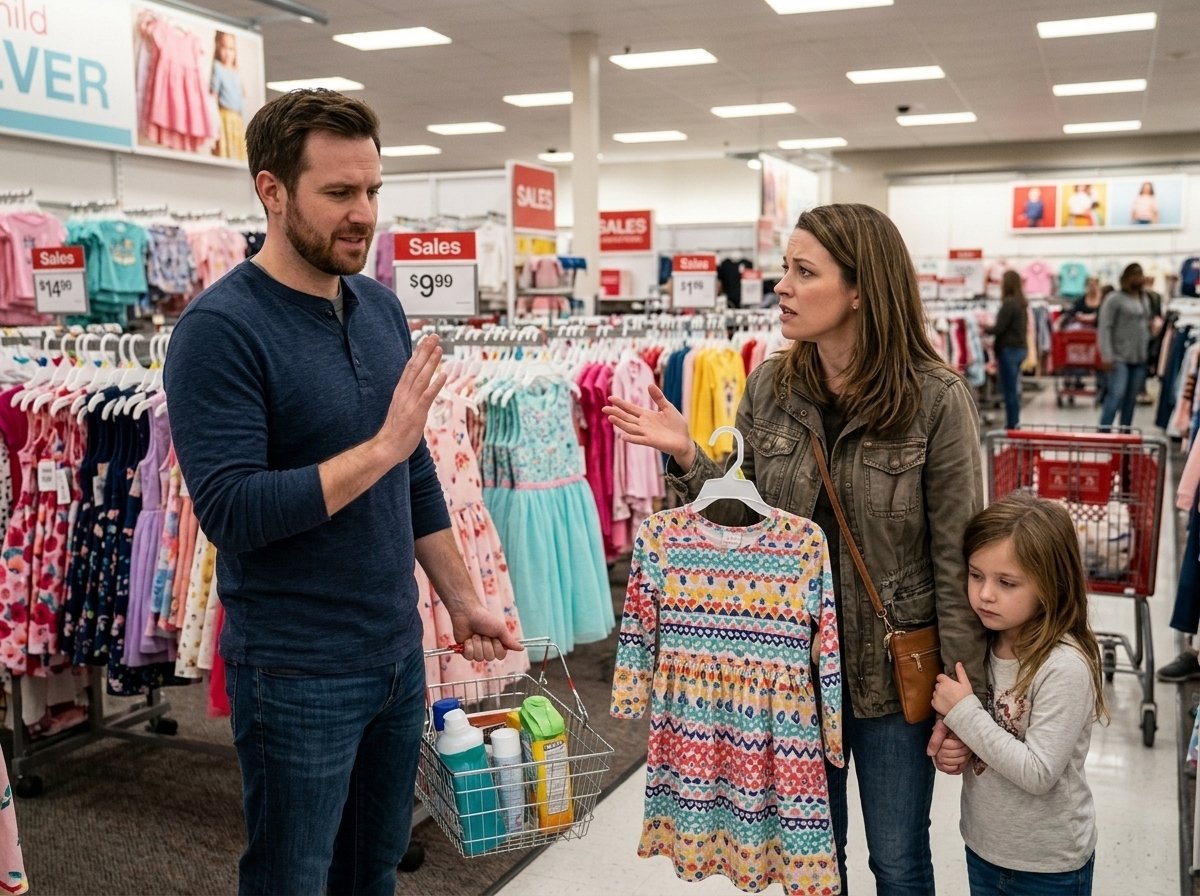
I never expected to find myself in the middle of a family argument over a little girl’s dress, but somehow that is exactly what happened. I have always tried to be a kind and considerate person, especially when children are involved, because I know they are not responsible for the financial decisions their parents make. However, I also believe there is a difference between helping someone because you genuinely want to and being pressured into spending your money because someone else expects you to. What started as a simple request eventually turned into an uncomfortable situation that left me questioning whether I had been selfish or whether I had simply refused to let someone take advantage of my kindness.
A little background about me: I am an adult with my own responsibilities, bills, and financial goals. I work hard for the money I earn, and although I am not struggling to survive, I am certainly not in a position where I can casually pay for everyone else’s expenses. I budget carefully, think before making unnecessary purchases, and try to save whenever possible. I am happy to buy gifts for people I care about, especially children, but I prefer those gifts to be something I choose freely rather than something someone demands from me. I have never believed that being financially stable automatically makes me responsible for supporting other people’s families.
The situation involves a woman I know through our social circle. For the sake of this story, I will call her Sarah. Sarah has a young daughter who is around six years old. The little girl is sweet, energetic, and generally well-behaved whenever I see her. I have nothing against her, and I want to make that clear because I do not want anyone thinking that my decision had anything to do with disliking a child. My issue has always been with the expectations some adults develop when they realize another person might be able to afford something they cannot. Sarah and I have never been particularly close friends, but we have known each other long enough to have conversations at gatherings and occasionally help each other with small things.
A few weeks ago, Sarah mentioned that her daughter had an upcoming special event and needed a new dress. From what I understood, the event was something important to the family, and Sarah wanted her daughter to look beautiful for the occasion. She showed me pictures of several dresses she had been considering and talked about how excited her little girl was about wearing something special. At first, I thought she was simply sharing her plans with me. I even complimented one of the dresses because it looked adorable, and the little girl seemed genuinely excited about the possibility of wearing it. I had no reason to believe the conversation was about to turn into a request for money.
Then Sarah casually asked whether I would be willing to pay for the dress. I was caught off guard because I had never offered to buy it, and we had not discussed me contributing to the cost. She explained that money was tight at the moment and that she was having difficulty covering all the expenses associated with the event. According to her, buying the dress would make things much easier for her, and since I was doing relatively well financially, she thought I might be able to help. She made it sound like a small favor that should not be a big deal for me. I felt uncomfortable because I did not know how to respond without sounding unkind, but I also knew that agreeing simply because I felt pressured would not be the right decision for me.
I politely told Sarah that I was sorry she was dealing with financial difficulties, but I could not commit to paying for the dress. I did not criticize her parenting, question her financial situation, or tell her that her daughter did not deserve something nice. I simply explained that I had my own expenses and responsibilities, and I was not comfortable taking on an expense I had never planned for. I assumed she would accept my answer, even if she was disappointed. Instead, her entire attitude changed. She looked offended and began asking why I would refuse to do something so simple for a little girl. She pointed out that the child had done nothing wrong and that the dress would mean a lot to her. I understood that the little girl was innocent, but I did not understand why that made me financially responsible for purchasing something her mother wanted.
Sarah continued explaining how upset her daughter would be if she could not wear the dress she wanted. She said that children only get to experience certain special moments once, and she felt that I was in a position to make one of those moments happier. The more she spoke, the more guilty I began to feel, because nobody wants to imagine a child feeling disappointed. However, I also felt that Sarah was using her daughter’s feelings to pressure me into changing my answer. I never promised the child anything, and I had not encouraged her to believe that I would buy the dress. The decision about what she could afford for the event was something her mother needed to work out. I could sympathize with their circumstances without automatically agreeing to pay for everything they wanted.
What made the situation worse was that Sarah apparently discussed our conversation with other people. A mutual acquaintance later approached me and asked why I was refusing to help a little girl when I could easily afford to do so. Someone else suggested that I should stop being so focused on money and remember that helping a child was more important than buying myself something unnecessary. I was frustrated because these people knew almost nothing about my financial commitments, yet they felt entitled to decide how I should spend my income. Just because someone sees me buying something occasionally or assumes that I earn a decent living does not mean they know what I have planned for my money. I also found it unfair that nobody seemed to question why Sarah had expected me to pay for the dress without discussing it with me beforehand.
I have thought about the situation quite a lot since then. Part of me feels sorry for the little girl because she may not understand why the adults are arguing, and I genuinely hope she still gets to enjoy her special event. I would never want a child to feel unwanted or believe that my refusal was a personal rejection of her. At the same time, I do not think it is fair to make me responsible for preventing every disappointment in someone else’s child’s life. If I had offered to buy the dress and then changed my mind, I could understand why Sarah would be upset. But that is not what happened. She asked me for money, I said no, and she decided that my refusal meant I did not care about her daughter. I believe generosity should come from the heart, not from guilt, public pressure, or the fear of being called selfish.
Now Sarah is barely speaking to me, and some people in our social circle seem to think I should apologize and reconsider my decision. Others have told me that I did nothing wrong because the dress was never my responsibility in the first place. I do not want this disagreement to become a bigger conflict, but I also do not want to apologize for setting a reasonable financial boundary. I can be compassionate without agreeing to every request, and I can care about a child without becoming responsible for buying her clothes. So, AITAH for refusing to buy a little girl a dress after her mother asked me for money, even though I could potentially afford it and knew the child would be disappointed if she did not get it?
Read Story…
AITAH for not wanting to pay for this little girl’s dress?
A couple of weeks ago, I organized a special birthday party for my daughter, who recently turned seven. She had been excited about celebrating with her friends, and I wanted to make the day memorable for her. Instead of hosting a traditional birthday party at home, I decided to book a small local play place in our town. It was a lovely little venue that was perfect for younger children, and the owner was one of the sweetest people I had ever met. I invited approximately eighteen of my daughter’s friends, hoping they would have a wonderful afternoon filled with laughter, games, and activities.
Everything was planned carefully, and I thought the party would be a happy memory for everyone involved. I never imagined that something as simple as a children’s painting activity would eventually turn into an argument about money, damaged clothing, and who should be held responsible.
When I sent out the invitations, I made sure to include all the important details about the party so that parents would know what to expect. The theme was a little tea party, and each child was encouraged to bring a favorite doll or stuffed animal as an honored guest. I thought this would be adorable because the children could arrange little tea parties for their toys and include them in the celebration. In addition to the tea party activities, we had planned a toy painting activity where the children could decorate their toys and get creative.
The painting activity was clearly mentioned on the invitation, so parents had advance notice that their children would be working with paint. I wanted everyone to know what the party involved rather than surprising them with an activity that might not be suitable for their child or their clothing.
The owner of the play place was incredibly helpful throughout the planning process. She was a lovely mother herself and seemed to understand exactly how stressful organizing a birthday party could be. She offered to handle most of the arrangements, helped prepare the activities, and made sure everything was ready before the guests arrived. Her kindness allowed me to relax and enjoy my daughter’s special day instead of spending the entire time worrying about decorations, supplies, and keeping eighteen children entertained. I was genuinely grateful for her help, and I thought the party would be a wonderful opportunity to support a small local business that clearly cared about families in the community.
Before the party began, I did have one concern about the painting activity. Children can be messy, especially when they are excited and surrounded by colorful paint, so I wondered whether the activity might result in stained clothing or furniture. I mentioned this concern to the owner, and she reassured me that the paint should come out easily if anything accidentally got stained. Her response made me feel more comfortable about proceeding with the activity.
I was not trying to create a situation where children would ruin their belongings, and I certainly did not want any parent to go home upset. At the same time, I assumed parents would use their own judgment when choosing what their children should wear to a party that included painting.
One of the invited mothers contacted me before the event because she would be away on a trip. She asked whether her five-year-old daughter could attend the birthday party with her eighty-year-old grandfather bringing her instead. I had no problem with this arrangement. I understood that the mother could not attend personally and wanted her daughter to enjoy the celebration with her friends. I replied that it was absolutely fine and that there was no problem at all. I did not think much more about it because I assumed the grandfather would bring the child, stay for whatever arrangements were necessary, and make sure she could participate in the activities. I had no reason to believe that this particular guest would become the source of a dispute after the party.
The birthday party itself went well, and my daughter had a wonderful time with her friends. The children enjoyed the tea party theme, introduced their dolls and stuffed animals to one another, and participated in the planned activities. The painting activity was particularly exciting for them because they could use their imaginations and create something of their own. As expected, there was some mess, but nothing seemed unusual for a gathering of young children. I was focused on making sure my daughter enjoyed her birthday, and I did not notice any major problems involving the guests or their belongings. When the party ended, I was happy that everything had gone relatively smoothly and that the children had been able to enjoy themselves.
Six days later, however, I received a message from the mother who had been away on her trip. She was upset because her daughter’s expensive dress had apparently been stained by paint during the birthday party. She explained that the dress was ruined and seemed to expect me to take responsibility for the damage. I was surprised by the message because I had not heard anything about the incident at the time of the party. I also had not been told that the child was wearing particularly expensive clothing or that her mother was concerned about the possibility of stains. The mother had received an invitation that specifically mentioned the painting activity, so I had assumed she understood that her daughter would be participating in something that involved paint.
I responded by pointing out that the painting activity had been clearly advertised on the invitation. I was not trying to dismiss her frustration or suggest that she had no reason to be disappointed about the dress. I understand that expensive clothing can be difficult to replace, and I would also be upset if something I owned were damaged unexpectedly. However, I questioned why she had chosen to send her five-year-old daughter to a painting activity wearing an expensive dress if she was particularly concerned about keeping it clean. Young children do not always have the coordination to keep paint off their clothes, even when they are trying their best. That is one of the reasons parents often choose practical clothing for messy activities. I felt that the decision about what the child wore should have been made with the advertised activity in mind.
The mother did not accept my explanation. She argued that the host or the business owner should have provided protective smocks for the children and should therefore be responsible for the damage. I can understand her point about smocks to some extent.
They might have reduced the chances of clothing getting stained, and perhaps the venue could consider providing them for future activities. However, I do not think the absence of smocks automatically means that the host must pay for every item of clothing that gets stained during a clearly advertised painting activity.
There were no promises that the children would remain completely clean, and I had never guaranteed that expensive outfits would be protected from every possible accident. The party was designed for children, and painting was one of the activities their parents had been told about in advance.
What shocked me most was what happened next. Instead of discussing the matter further with me or simply deciding how she wanted to handle the stained dress, the mother contacted the owner of the play place directly. She apparently demanded that the owner pay for the dress because the painting activity had taken place at her business.
I was stunned when I heard about this. The owner had already been extremely accommodating, helping me organize the party and making sure everything ran smoothly. She had not forced anyone to participate in the painting activity, and the children had been invited to attend with their parents’ knowledge of what was planned.
Yet she was suddenly being pressured to pay for an expensive dress because a young child had gotten paint on it.
The owner eventually offered to pay half the cost of the dress. From what I understand, she did this because we live in a small town where people know one another, and she did not want the situation to turn into a bigger public argument that might affect her business. I felt terrible for her because she had been so kind and helpful, and now she was being put in an uncomfortable position over something that happened during a children’s party.
I do not know whether she genuinely believed she was responsible or whether she simply wanted to end the disagreement as quickly as possible. Either way, I felt that the mother had put unfair pressure on someone who had gone out of her way to help us.
After speaking with the owner, the mother apparently indicated that she would contact me next and ask me to pay the remaining half of the cost. The owner kindly warned me about this possibility so that I would not be caught off guard if the mother reached out. When I heard that, I honestly could not believe the situation had escalated this far.
I had organized the party for my daughter’s birthday, sent invitations explaining the activities, and agreed to let the woman’s daughter attend even though the mother herself would be away.
I had never offered to cover clothing damage, and I had certainly never agreed to purchase or replace anyone’s expensive outfit. Now I was potentially expected to pay for half of a dress because the mother had decided that someone else should be responsible for the risk.
For context, I barely know this woman. Our daughters are friendly with one another because they sometimes play together at the playground, and they also participate in local sports teams. We are not close friends, and we do not regularly spend time together outside those activities. I invited her daughter partly because the girls know each other and because I wanted my daughter to celebrate with her friends. It was a polite invitation, not a promise that I would cover every expense or accept responsibility for anything that might happen during the party.
Had I known that this woman would approach the situation this way, I probably would have thought much more carefully before inviting her daughter. I never expected a simple birthday celebration to create this much tension between families who are likely to keep seeing one another around town.
I also feel uncomfortable because I do not want the little girl to become caught in the middle of an argument between adults. She is only five years old, and she did not choose the dress herself or decide how the adults would respond to the stain. I have nothing against her, and I hope she enjoyed the party despite what happened. My frustration is entirely with her mother and the expectation that other people should pay for the dress. I do not want the child to feel excluded from future playground activities or sports events because her mother and I disagree. At the same time, I do not think I should have to accept financial responsibility simply to avoid awkwardness whenever I see the family again.
I keep returning to the same question: if a parent knowingly sends a young child to an advertised painting activity wearing expensive clothing, how much responsibility should the host reasonably have if the clothing gets stained? I understand that the venue owner might have been able to offer smocks, and perhaps that would be a sensible improvement for future parties. But the fact remains that the activity was clearly listed on the invitation, the child was old enough to participate in a supervised painting activity, and nobody had promised that the children would remain completely free of paint. I think parents have a responsibility to consider those details when choosing what their children wear. If the mother was worried about the dress, she could have chosen a less expensive outfit or asked about protective clothing before the party.
Now I am worried about what will happen when the mother contacts me directly. I do not want to get dragged into a lengthy argument or make the situation worse by responding angrily. However, I also do not want to agree to pay for something that I do not believe is my responsibility.
The owner has already offered to pay half, apparently to keep the peace, and I feel that the mother should consider accepting that offer rather than trying to make me cover the rest.
I would prefer to handle the matter calmly, but I am not willing to let someone pressure me into paying for an expensive dress simply because refusing might make future encounters uncomfortable.
I have spoken to a couple of people about the situation, and opinions seem to differ. Some believe that as the person who organized the party, I should take responsibility for making sure the activities were safe and that children’s belongings were protected. Others agree with me that the mother knew painting was part of the event and should have considered that before choosing her daughter’s outfit.
I can understand why people might have different views about the responsibilities of a party host, especially when a business is involved. Still, I do not think the host should automatically become responsible for every accidental stain or damaged item, particularly when the activity was disclosed in advance.
I feel bad that the owner has been put in this position because she was genuinely wonderful throughout the planning process. She made the party easier for me, helped ensure the children had fun, and created a welcoming environment for everyone.
I would hate for her to lose business or develop a bad reputation because one parent was unhappy about a dress.
At the same time, I do not believe it is fair for her to pay half the cost merely because she wants to avoid drama.
I hope the mother will reconsider her approach and recognize that not every unfortunate accident means another person must pay for it.
As for me, I want to make it clear that I am not refusing because I dislike the little girl or because I do not care about her feelings. I am refusing because I do not believe I made a promise to replace her clothing, and I do not think the circumstances make me financially responsible for the stain.
I would never intentionally put a child in a situation where their belongings might be damaged, but children participate in messy activities all the time, and accidents can happen even when everyone is trying to be careful. I do not think it is reasonable to expect someone else to cover the cost of an expensive outfit when the activity that caused the stain was openly advertised beforehand.
So now I am asking for an outside perspective. If the mother contacts me and demands that I pay for the remaining half of the dress, would I be unreasonable to decline? Should I contribute something just to keep the peace in our small town, or should I stand by my position and explain that I never agreed to take responsibility for clothing damage?
I feel sorry that the dress was stained, and I appreciate that the owner tried to find a compromise,
but I do not believe that automatically makes the remaining cost my responsibility. AITAH for refusing to pay for a little girl’s expensive dress after it was stained during my daughter’s advertised painting activity?
I Refused to Buy a Little Girl a Dress, and Now Everyone Calls Me Selfish
I never thought I would end up being called selfish and heartless because I refused to buy a little girl a dress, but that is exactly what happened. I am a 32-year-old woman, and I have always believed that helping people is a good thing, especially when children are involved. However, I also believe that there is a difference between being kind and being expected to pay for someone else’s responsibilities. Recently, a situation involving a woman I know and her six-year-old daughter left me questioning whether I had been too harsh or whether people had simply become too comfortable asking others to solve their problems.
The woman, whom I will call Sarah, is someone I have known for a few years. We are not particularly close friends, but we have several mutual friends and occasionally attend the same gatherings. Sarah is generally friendly when things are going her way, although I have noticed that she sometimes expects people to accommodate her needs without considering whether it is convenient for them. I never had a serious problem with her before this incident, so I had no reason to believe that our relationship would eventually become uncomfortable over something as simple as a dress.
Sarah has a six-year-old daughter named Lily, who is a sweet and energetic little girl. I have met Lily several times at birthday parties, family gatherings, and other social events. She is usually polite, playful, and full of questions, and I have always treated her kindly. Whenever I see her, I make an effort to speak to her, ask about school, and include her in conversations when appropriate. I have absolutely nothing against the child, and I want to make that clear because Sarah’s reaction later made it seem as though refusing her request meant I disliked her daughter.
A few weeks ago, Sarah contacted me unexpectedly. She began the conversation by asking how I was doing and telling me that she hoped everything was going well with my family. We exchanged a few ordinary messages, and I assumed she wanted to discuss something related to our mutual friends. Then she mentioned that Lily had been invited to a special event and needed a new dress to wear. According to Sarah, the dress she originally planned to use was no longer suitable, and she had not managed to purchase another one.
At first, I thought she was simply telling me about the situation because she was frustrated about having to shop at the last minute. I sympathized with her and said that finding the right outfit for a child could sometimes be difficult, especially when there was a specific occasion involved. I also mentioned a few stores where she might find something affordable. I assumed that would be the end of the conversation, but Sarah had something else in mind.
After a little more discussion, Sarah asked whether I would be willing to buy Lily a dress. She explained that she had seen a beautiful one online and believed it would be perfect for her daughter. The dress was more expensive than I expected, and when I asked how much it cost, she gave me a price that immediately made me hesitate. It was not an outrageous amount for someone with plenty of disposable income, but it was certainly more than I would normally spend on a gift for a child who was not a close relative.
I asked Sarah why she could not purchase the dress herself or choose a less expensive option. She explained that money was tight at the moment and that she had several other expenses to deal with. I understood that financial difficulties could happen to anyone, and I did not judge her for struggling. However, I also had my own financial responsibilities, including household bills, groceries, savings, and other expenses that could not simply be ignored because somebody else needed something.
Sarah then explained that Lily had her heart set on the particular dress. Apparently, her daughter had seen it and was very excited about wearing it to the event. Sarah said she did not want to disappoint her little girl and thought I might be able to help because I was doing relatively well financially. I found that comment uncomfortable because it suggested that my financial situation automatically made me responsible for providing something her daughter wanted.
I told Sarah gently that I was sorry she was having a difficult time, but I would not be able to buy the dress. I explained that I had my own budget to manage and did not feel comfortable spending that much money on something that was not a necessary expense for me. I suggested that she look for a similar dress at a cheaper store, check secondhand shops, or consider borrowing an outfit from a family member. There were several possible alternatives, and I believed she could find something suitable without spending so much.
Sarah did not respond well to my answer. She asked whether I was seriously refusing to help a little girl over the cost of a dress. Her tone changed almost immediately, and the friendly conversation we had been having became tense. I repeated that I was not refusing because I disliked Lily. I simply did not want to purchase an expensive item that I had not planned to buy.
She then said that I was making the situation unnecessarily difficult. According to her, the dress was not just an ordinary piece of clothing because Lily had become emotionally attached to it. Sarah argued that disappointing a child over something like this would be cruel, especially when the solution was apparently within my reach. I thought it was unfair that she was placing the responsibility for managing her daughter’s expectations on me rather than considering what she could realistically afford.
I tried to explain that children sometimes want things their parents cannot provide, and learning to handle disappointment is part of growing up. I did not say that Lily should be punished or that she did not deserve a nice dress. I simply believed that Sarah could explain the situation to her daughter and help her find another option. A child’s disappointment does not automatically mean another adult must spend money to prevent it.
Sarah then brought up the fact that I had bought gifts for other children in the past. She mentioned a birthday present I had purchased for a friend’s son and suggested that my refusal to help Lily showed that I was being selective about whom I wanted to support. I found this comparison particularly frustrating because those gifts had been given on special occasions, when I had chosen what to buy and how much to spend. There is a considerable difference between voluntarily giving someone a present and being pressured into purchasing an item because they demand it.
I pointed out that I had never promised to buy Lily anything and that Sarah had contacted me specifically to ask for money or a purchase. I also explained that the gifts I gave other children were based on my own choices, not obligations imposed by their parents. Sarah responded that she had not expected me to make such a big deal out of a simple request. In her opinion, she had merely asked for help, and my refusal was what had turned an ordinary conversation into an argument.
I decided to end the discussion before it became even more unpleasant. I told her that I hoped she would find a suitable dress for Lily and that I genuinely wished them well at the event. I thought that was a reasonable way to close the conversation without insulting her or making the situation worse. Unfortunately, Sarah did not seem interested in leaving the matter alone.
Later that evening, one of our mutual friends messaged me and asked what had happened between Sarah and me. I was surprised because I had not told anyone about our conversation. The friend explained that Sarah had mentioned the situation and was upset that I had refused to help her daughter. Apparently, Sarah had described the dress as something Lily desperately needed rather than something she wanted for a special occasion.
I explained my side of the story and told my friend that I had suggested several affordable alternatives. I also clarified that I had never promised to purchase anything for Lily. My friend listened but seemed to believe that I could have handled the situation more generously. She said that, because the dress was for a child, I could have considered helping even if the amount was higher than I usually spent on gifts.
I asked whether she would feel the same way if another parent contacted her and demanded that she purchase an expensive item for their child. She replied that it would depend on the circumstances and whether she could afford it. I told her that I could afford the dress in the technical sense, but that did not mean buying it was a reasonable choice for me. Having enough money to purchase something is not the same as being obligated to spend it whenever someone asks.
Over the next couple of days, I heard that Sarah had discussed the situation with several other people. Some apparently agreed with her that I was being unnecessarily stingy, while others thought she was asking too much. I tried not to involve myself in the gossip because I did not want a disagreement about a dress to become a major conflict within our social circle. Still, it bothered me that a private conversation was being presented as evidence that I was an uncaring person.
A few days later, Sarah contacted me again. This time, she sounded less angry and more disappointed. She said she had thought about our conversation and wanted me to understand why the dress mattered so much to her. She explained that she wanted Lily to feel special at the event and believed the dress would help make the occasion memorable. She also said that she had been under a lot of pressure recently and had hoped someone would offer support without making her feel embarrassed.
I could understand that explanation better than her earlier accusations. Parenting can be expensive, and financial stress can make even small problems feel overwhelming. I felt sorry that Sarah was struggling, and I did not want her to feel ashamed of having money problems. However, I still did not believe those difficulties made me responsible for buying the particular dress she had chosen.
I told her that I understood why she wanted Lily to have a lovely outfit and that I was sorry she was experiencing financial pressure. I also explained that my refusal was not intended to embarrass her. I simply did not think it was appropriate for her to expect me to purchase an expensive item for her daughter. I suggested again that she consider a more affordable dress, and I offered to help her look for inexpensive options if she wanted assistance finding one.
Instead of accepting that offer, Sarah said that finding a cheaper dress was not the point. She believed that I had made her feel as though her daughter was not worth spending money on. I was genuinely taken aback by that statement because I had never said anything remotely like it. My decision was about my own finances and boundaries, not Lily’s value as a person. A child can be wonderful and deserving of kindness without every adult around her being expected to buy whatever she wants.
I tried to make that distinction clear, but Sarah continued to interpret my refusal as a personal judgment. She said that if I truly cared about children, I would understand why helping Lily mattered. I replied that caring about children does not mean agreeing to every request made by their parents. There are many ways to show kindness, including spending time with a child, treating them respectfully, and offering practical advice. Buying an expensive dress is not the only way to demonstrate compassion.
The conversation eventually ended without either of us changing our position. I felt frustrated but also relieved that I had not given in simply to avoid an argument. If I had purchased the dress after being pressured and criticized, I worried that Sarah might believe that pushing harder was an effective way to get people to do what she wanted. I did not want to establish that kind of expectation in our relationship.
What bothered me most was how quickly a simple refusal had turned into a judgment about my character. I had not insulted Sarah, criticized her parenting, or said that Lily did not deserve nice things. I had only declined a request to spend my money on something I had not agreed to buy. Yet somehow, I had become the selfish person in the story because I would not solve a problem that was not mine to solve.
I also wondered whether I could have communicated my answer more gently. Perhaps I should have avoided discussing the price or explaining my financial priorities in detail. Maybe a simple statement that I was unable to help would have prevented Sarah from feeling that I was judging her. At the same time, I knew that no matter how carefully I phrased my refusal, she might still have been disappointed because the answer was not what she wanted to hear.
My family members were divided when I explained what had happened. Some said I had every right to refuse and that Sarah should not have asked someone who was not particularly close to her to purchase an expensive dress. Others thought that, because I could technically afford it, buying the dress would have been a small gesture that might have preserved the friendship. One relative even suggested that I could have purchased it as a one-time favor and then made it clear that I would not do so again.
I understood their reasoning, but I did not agree that avoiding conflict was a good enough reason to spend money I had chosen not to spend. If I wanted to give Lily a gift, I would have been happy to choose something within my budget. What I objected to was being told that I was a bad person because I did not want to purchase the exact item Sarah had selected. A gift should be freely given, not extracted through guilt.
I have no desire to make Lily feel bad about the situation. She is a child, and as far as I know, she has no idea about the disagreement between her mother and me. If I see her at another gathering, I will treat her exactly as I always have. I will not mention the dress or allow an adult disagreement to affect my relationship with her. She deserves to enjoy her childhood without being pulled into a conflict she did not create.
As for Sarah, I am keeping a little more distance for now. I do not hate her, and I am not trying to punish her for asking for help. However, the way she reacted has made me reconsider how comfortable I feel discussing money or personal matters with her. I want relationships in which people can ask for favors without assuming that the other person must agree, and in which a respectful refusal does not become an accusation of selfishness.
Looking back, I think the biggest issue was never really the dress itself. It was the assumption that my ability to pay meant I should pay, and that refusing would make me responsible for a child’s disappointment. I believe generosity is meaningful precisely because it is voluntary. When someone turns generosity into an obligation, it stops feeling like kindness and starts feeling like pressure.
I know that children sometimes need things their parents cannot afford, and I do not judge anyone for struggling financially. If Sarah had asked whether I could help her find a reasonably priced dress or had explained her situation without pressuring me, I might have approached the conversation differently. I would have been willing to explore options and perhaps even contribute a small amount if I genuinely wanted to. But being asked to buy an expensive dress and then criticized for declining did not make me feel more generous; it made me feel that my boundaries were not being respected.
Now I am left wondering whether I was too firm in my response. I could have bought the dress, and doing so might have prevented all this drama. On the other hand, I do not think it is fair to measure someone’s kindness by whether they agree to spend money when asked. I treated Sarah respectfully, offered alternatives, and never blamed Lily for the situation. I simply said no to a purchase I did not want to make.
So, AITAH for refusing to buy a little girl a dress after her mother asked me for money, even though I could technically afford it? Was I being selfish by standing my ground, or was Sarah being unreasonable by treating my refusal as a personal attack? I genuinely want to know whether I should have handled this differently, because I do care about being a kind person. I just do not believe kindness should mean giving up the right to decide how I spend my own money.