Entitled Boyfriend Acts Like He Owns Girlfriend’s Home, She Finally Chooses Peace

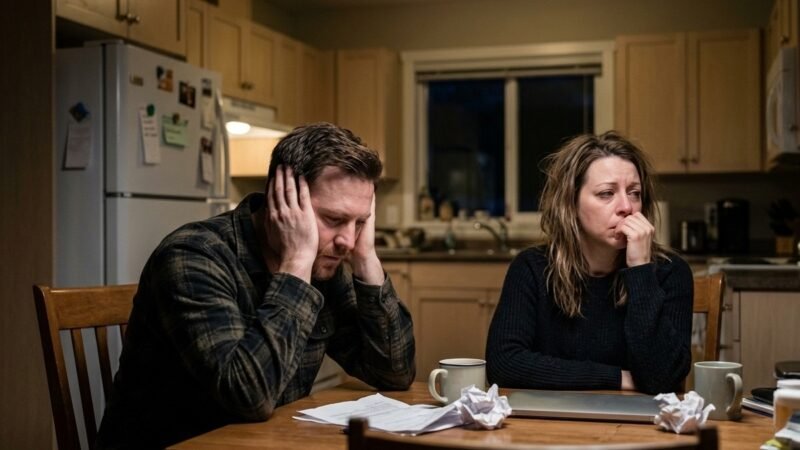
Twenty-nine-year-old Emma had always considered her home her safest place. She had worked hard for years to save enough money for a small but comfortable house, and after finally buying it, she took great pride in creating a peaceful environment where she could relax after work. When she started dating thirty-one-year-old Jake, she was happy to share that space with him. At first, his visits felt exciting and natural. He would bring dinner, help with small household tasks, and spend quiet evenings watching movies with her. However, as their relationship became more serious, Emma began noticing a troubling change in Jake’s behavior. He gradually stopped acting like a guest and started behaving as though the house belonged to him. He would leave his belongings everywhere, rearrange furniture without asking, complain about Emma’s choices, and even invite friends over without discussing it with her first. Whenever Emma reminded him that it was her home, Jake would laugh and tell her that they were a couple and that she needed to stop being “so possessive.” Emma tried to ignore the small incidents because she cared about him and did not want every disagreement to become an argument.
Over the following months, Jake’s behavior became increasingly controlling. He began criticizing Emma whenever she made plans without him and questioned why she needed time alone. If she wanted to meet friends after work, he would accuse her of avoiding him. If she wanted to spend a quiet weekend at home, he would complain that she was being selfish. His attitude toward the house became especially frustrating. Jake started using Emma’s things without asking, complained about the groceries she purchased, and once replaced several decorations because he said they made the house look “cheap.” When Emma confronted him, Jake insisted that he was only trying to improve their shared living environment. The problem was that Emma had never agreed to share ownership of her home with him. She eventually explained calmly that she welcomed him into her space but expected him to respect her boundaries. Instead of listening, Jake became defensive and accused her of treating him like a stranger. He argued that if she truly loved him, she would allow him to feel completely comfortable in the house. Emma began realizing that Jake was using their relationship as an excuse to ignore boundaries that should have been obvious.
The situation reached a breaking point one Saturday when Emma had planned a quiet evening for herself. She had spent the afternoon cleaning the house and wanted to relax with a book and a movie. Without telling her, Jake invited several friends over. When Emma returned from buying groceries, she found people sitting in her living room, drinking, eating the food she had purchased, and treating the house like a party venue. Jake greeted her casually and told her not to make a big deal about it because everyone was already having fun. Emma was shocked. She reminded him that he had not asked permission and that she had specifically wanted a quiet evening. Jake rolled his eyes and told her she was embarrassing him in front of his friends. He then said something that completely changed the way Emma viewed their relationship: he told her that because they were together, he should not have to ask permission every time he wanted to use the house. Emma looked around at the mess and suddenly understood that this was no longer about a few annoying habits. Jake genuinely believed that being her boyfriend gave him authority over her home.
That night, after Jake’s friends finally left, Emma refused to argue. Instead, she calmly told Jake that she could no longer continue the relationship under those circumstances. Jake initially thought she was bluffing. He accused her of overreacting and said that every couple had disagreements about living arrangements. Emma explained that this was not simply a disagreement about furniture, parties, or groceries. It was about respect. She had repeatedly communicated her boundaries, and instead of respecting them, Jake had treated them as obstacles he could eventually overcome. When he realized she was serious, his attitude changed. He apologized, promised that he would behave differently, and even offered to “give her space” for a while. But Emma had heard similar promises before. She finally understood that peace in her own home was more valuable than maintaining a relationship that constantly made her feel uncomfortable. She asked Jake to collect his belongings and leave. Although the conversation was emotional, she remained firm and did not allow guilt to change her decision.

Advertisement
In the weeks that followed, Emma experienced a sense of relief she had not expected. Her house became quiet again, and she could make decisions without worrying about someone criticizing or overriding her. She rearranged her living room exactly the way she liked, invited friends over when she wanted, and enjoyed evenings alone without feeling guilty. Jake continued sending messages, saying he had changed and asking for another chance, but Emma chose not to return to the same cycle. She realized that love should never require someone to surrender their boundaries, independence, or peace just to keep another person happy. Her experience taught her that sharing a home with someone should be based on mutual respect, not entitlement. Jake had mistaken access for ownership, and affection for authority. Emma eventually understood that choosing herself did not make her selfish or uncaring. It simply meant she was no longer willing to sacrifice her peace for a relationship that made her feel like a stranger in her own home.

Advertisement
Read Story…
Me [23F] with my boyfriend [24M] of 2 years. Says I ruined his best friend’s party.
tl;dr My boyfriend says I ruined his friend’s party. Was I wrong?
I have been dating David (24m) for 2 years. He lives about 20 minutes away.
He has told me he resents the fact my parents paid for my schooling. Which is partially true, they cut me a check after I graduated. I worked long hours and got scholarships/loans to help pay for it. I didn’t even know they had a college fund for me.
He also has said he hates how “spoiled” I can be.
I moved into my grandmother’s house three years ago. My mom hates the house and since it is not the prettiest home she let me live there. She then signed the house over to me when she moved across country for work.
I have a full time job, with good benefits, and have worked my ass off to pay my bills, save money, and fix up the house. Most of my spare time is done making the house as nice as possible. I even installed a wood floor myself.
David says I don’t know how to work hard, but I have 40-50 hour weeks and have a high energy job. I have told him the comments were not appreciated and he stopped, but he has made snarky comments a few times.
I do love David, but sometimes he can get carried away trying to be the life of the party.
David asked if he could have some friends over to my house. It was supposed to be a surprise gathering for his friend Mike. It was a cake, some pizza, a few beers, and presents, so pretty casual. I knew all the people he was inviting and he told me he would clean up.
Then he asked if I would go out for the night, so he could have the house to himself. I told him I was not comfortable with that, and I didn’t want to leave my own home. I asked why I couldn’t be there. He didn’t have a real answer and said he just wanted to feel like he had his own place. It was a pretty sketchy reply and I told him I wanted to socialize with Mike as well. I like beer. I like pizza. I love cake.
David acted like he had the right to think about it. I told him that I was either going to be included or he could find somewhere else to party. He told me I was being controlling. He said I should trust him. I said “my house, my rules.” Which might have been pretty bitchy to say, but I didn’t see why I had to vacate my own home on a Friday and go somewhere, when there would be people I liked and who liked me at my house.
I knew Mike before I knew David, and we are still good friends. Plus, there were going to be other girls there, so it was not like he wanted a guys night. (Even then, I didn’t think I needed to leave. He could do it at his own apartment.)
I then told him that I wanted everyone to leave by 10pm. The gathering started at 5pm, so I thought that was plenty of time. David got so upset he left the room. But he eventually told me that he would “respect” my rules. Even though I was acting like his mom.
He told me he resents that I have to remind him to be an adult.
Friday comes and it is a fun time. We shoot the shit. There are 8 people total. Everyone (minus Mike and his wife) leave at 9:30-10:00pm. Everyone pitches in to clean up. Mike thanks me for the party and his wife is asking if I want to hang out another day.
David’s phone rings and he answers it. He starts talking like “sure man” and “come on in.” I hear what sounds like a horn honking and then a car pulling up. I have a gravel drive, so you can hear the rocks crunching. And the lights flash into the living room.
I ask David if he is going somewhere, and he sort of looks guilty. He tells me he invited some guys over and that they were just going to chill for like an hour or two. I told him that I didn’t want more people in the house, that he needed to ask me to invite people over.
He snapped, “I pretty much live here. I have a right to invite people over.”
Pretty much live here is two days a month when he can spend the night. The other times I visit him between work and classes. Or we go on late dates. But I usually spend the night at his apartment. It is closer to work.
Someone knocked and I told David not to answer the door.
I told David he needed to get his friends out of here and leave. I was done playing host.
David ended up calling me a selfish bitch and got his things, leaving.
I got a call at 3 am from David asking me to pick him up at his friend’s, because he was too drunk to drive home. I told him to sleep it off.
So David came by (Sat) around noon and proceeded to tell me I ruined his night and he didn’t know how he could forgive me for this. He said I was a terrible person for embarrassing everyone like that and Mike had called to say he was upset. How could I do that to him? How could i be so selfish?
Then he told me, We will live here one day, so you should get used to having my friend’s over.
I told my friend and she said I probably ruined a good time, and said I had overreacted. But I don’t think I did. I didn’t want them there, I had shit to do in the morning and I didn’t want people crashing on my couch, using my house as their whiskey hotel.
I am tempted to break up with him over this. Is it a stupid reason? Did I act like a “bitch”? I am pretty bad as socializing, and am pretty shy. So I could have been wrong. But I don’t feel like I was.
A Dream Home Turns Into a Nightmare
Twenty-nine-year-old Emma had always dreamed of having a home that truly belonged to her. She had spent years working, saving money, and carefully planning her finances before finally purchasing a modest but beautiful house in a quiet neighborhood. To Emma, the house represented independence, stability, and everything she had accomplished on her own. She decorated each room according to her taste and took great pride in maintaining a peaceful environment. After a difficult day at work, she loved coming home, making herself a cup of tea, and enjoying the quiet. She never expected that the person she eventually invited into that peaceful space would become the biggest source of stress in her life.

Advertisement
Emma met thirty-one-year-old Jake through mutual friends, and their relationship started beautifully. Jake was charming, confident, and attentive during the early months of their romance. He often brought her favorite snacks, remembered small details about her life, and made her laugh whenever they spent time together. Emma appreciated how comfortable she felt around him. Because she owned her home and had enough space, she naturally began inviting Jake over more frequently. At first, his visits were occasional and respectful. He would ask where he could put his jacket, whether he could use something in the kitchen, and if it was okay to invite someone over. Emma saw these little gestures as signs that he respected her space.

Advertisement
As their relationship became more serious, Jake started spending more nights at Emma’s house. Eventually, he kept a few clothes there, followed by toiletries, shoes, electronics, and other personal belongings. Emma did not mind because she believed they were gradually building a future together. She even cleared a drawer for him and gave him a key because she trusted him. However, Emma soon noticed that Jake’s behavior changed once he became more comfortable. The man who had once politely asked permission started assuming that he could do whatever he wanted. At first, these changes seemed minor, so Emma tried not to make a big issue out of them.
Jake began leaving his belongings wherever he wanted. His shoes were constantly blocking the hallway, his clothes appeared on furniture, and his dishes were often left in the sink. When Emma asked him to clean up after himself, he would laugh and say that he was basically living there anyway. Emma would remind him that they had never officially agreed to move in together, but Jake treated the comment like a joke. He told her that she was being too formal about their relationship. According to him, couples were supposed to share everything, and having rules about her own home made their relationship feel less serious.
Advertisement
The first major argument happened when Jake rearranged the living room without asking Emma. He moved several pieces of furniture and replaced a decoration she had received from her late grandmother with something he preferred. When Emma came home and saw what he had done, she was upset. She asked why he had changed the room without discussing it with her. Jake responded that he was only making the house look better. Emma explained that it was her home and that she wanted decisions about it to be made together if he was going to make suggestions. Instead of apologizing, Jake accused her of being controlling and said she should appreciate his effort.
Advertisement
Emma tried to explain that the issue was not the furniture itself. She wanted Jake to understand that respect mattered more than the decoration. She told him that she was happy to hear his opinions, but she did not want him making decisions about her property without asking. Jake eventually apologized, but his apology was followed by a statement that made Emma uncomfortable. He told her that if they were planning to spend their lives together, he should not have to ask permission for everything. Emma responded that being in a relationship did not automatically give either person ownership over the other person’s property. Jake became quiet, but Emma could tell that he disagreed.
After that conversation, Jake started criticizing Emma’s spending habits. Even though the house belonged to her and she paid the mortgage herself, Jake began making comments about her purchases. If she bought new furniture, he questioned whether she really needed it. If she ordered food instead of cooking, he complained about wasting money. When Emma purchased a new television for the bedroom, Jake said she should have consulted him first. Emma was increasingly confused. She could understand discussing major financial decisions if they were married or sharing expenses, but Jake was not contributing to the mortgage or household bills in any meaningful way.
The situation became even more uncomfortable when Jake started inviting his friends to Emma’s house. The first time, he invited two friends over while Emma was at work. When she returned, she found them sitting in the living room watching television and eating food from her kitchen. Jake acted as though nothing unusual had happened. Emma politely asked why he had not told her. He said his friends were already nearby and he did not think she would care. Emma reminded him that she would have appreciated being asked, especially because it was her home. Jake laughed and said she was making a simple visit sound like a major event.
Over the next few weeks, the visits became more frequent. Jake started treating Emma’s house as the default gathering place for himself and his friends. He would text people while sitting in the living room and casually tell them to come over. Emma found herself cleaning up after people she barely knew. She also noticed that groceries she had purchased for the week were disappearing quickly. When she mentioned this to Jake, he said that friends were supposed to feel welcome. Emma agreed with that idea but explained that welcoming people did not mean she had to host them without notice.
One evening, Emma finally told Jake that she needed him to stop inviting people over without asking. She expected him to understand, but instead he became defensive. He told her that she was making him feel like a guest in their relationship. Emma corrected him immediately, saying that he was her boyfriend and was welcome in her home, but that did not mean he owned the home. Jake became angry and accused her of treating him as though he had no importance. Emma tried to calm the conversation, but he walked away and refused to speak to her for the rest of the evening.
Despite everything, Emma still hoped things would improve. She loved Jake and remembered the caring person he had been when they first met. She wondered whether the problems were simply growing pains caused by their relationship becoming more serious. She even suggested that they discuss boundaries and expectations so they could avoid future arguments. Jake agreed, but the conversation never happened properly. Whenever Emma tried to bring it up, he changed the subject or accused her of overthinking things. Gradually, Emma realized that she was doing all the work to solve a problem Jake did not believe existed.
The final incident happened on a Saturday afternoon. Emma had been exhausted after a stressful week at work and had planned a quiet evening at home. She wanted to take a long shower, order dinner, watch a movie, and go to bed early. She specifically told Jake that she needed some alone time. Jake said he understood and left for a few hours. Emma believed that he was going to spend the evening with his friends somewhere else. She had no idea that he had already made completely different plans.
Around seven o’clock, Emma heard loud voices outside her house. When she looked through the window, she saw several cars parked along the street. Within minutes, Jake and a group of his friends entered the house carrying drinks, food, and speakers. Emma was stunned. She asked Jake what was happening, and he casually told her that everyone was coming over for a small party. He said he had mentioned it to his friends earlier and assumed she would be fine with it. Emma reminded him that she had specifically told him she wanted a quiet evening.
Instead of apologizing, Jake told her not to ruin the mood. His friends were already laughing and talking, and Emma felt as though she had suddenly become an outsider in her own home. She asked Jake to take the gathering somewhere else, but he refused. He said the party had already started and moving everyone would be embarrassing. Emma looked around at the people sitting on her furniture, eating her food, and using her home as though it belonged to them. For the first time, she stopped wondering whether she was being too sensitive. She realized that Jake had completely ignored her wishes.
When Emma insisted that she had not agreed to host the party, Jake became angry. He accused her of embarrassing him in front of his friends and claimed she was ruining an important evening. According to him, she should have smiled, welcomed everyone, and allowed them to enjoy themselves. Emma calmly replied that he was the one who had created the situation. She had already told him that she wanted a quiet night, and he had deliberately ignored her. Jake responded that because they were a couple, he should not need permission to invite friends into the house.
That statement changed everything for Emma. She realized that Jake did not see the house as hers anymore. In his mind, being her boyfriend gave him the authority to make decisions about the property. He believed that because he spent so much time there, he had earned the right to use it however he wanted. Emma suddenly understood why all of their previous arguments had gone nowhere. They were not really arguing about furniture, food, friends, or parties. They were arguing about whether Jake respected her right to control her own life and property.
Emma asked Jake to end the party and have everyone leave. He initially refused, but when he realized she was completely serious, he finally asked his friends to go. The atmosphere became extremely uncomfortable. Some of his friends apologized to Emma before leaving, while others avoided eye contact. Jake remained angry and insisted that she had humiliated him. Emma did not argue with him. She simply told him that she was tired of defending the basic boundaries of her own home.
After everyone left, Jake tried to convince Emma that she had overreacted. He said that couples sometimes disagreed and that she should not throw away a relationship over one party. Emma reminded him that the party was not the reason she was ending things. It was simply the final example of a pattern that had continued for months. She had asked him repeatedly to respect her space, and each time he had ignored her. He had treated her boundaries as inconveniences instead of legitimate requests.
Jake then changed his approach. He apologized and promised that he would become more respectful. He told Emma that he had been acting entitled without realizing it. He promised that he would never invite anyone over without asking again. For a moment, Emma considered giving him another chance. She still cared about him deeply, and ending a relationship was not easy. But she also remembered every previous promise and every previous argument. She knew that accepting another apology without seeing real change would probably lead her right back to the same situation.
Emma finally told Jake that she needed peace more than she needed the relationship. She asked him to take his belongings and return the key. Jake was shocked. He accused her of giving up too easily and told her that she would regret losing someone who loved her. Emma quietly replied that love without respect was not enough. She did not want to spend the rest of her life explaining why her boundaries mattered. She wanted a partner who understood them without being repeatedly asked.
The breakup was painful, but Emma immediately noticed something she had not expected: she felt relieved. For the first time in months, she could walk through her front door without wondering what Jake had changed or who he might have invited over. Her home became peaceful again. She cleaned the living room, moved the furniture back to its original position, and put her grandmother’s decoration exactly where it had always been. The simple act made her emotional because it reminded her that the house had always been a place where she should have felt safe.
In the following weeks, Emma slowly rebuilt her routine. She invited her friends over for dinner, spent quiet evenings reading, and enjoyed being able to make decisions without having to justify them. She also became more confident about setting boundaries in every part of her life. She realized that she had spent too much time worrying about whether other people thought she was difficult. In reality, she had simply been asking for basic respect. Her experience taught her that saying no does not make someone selfish, especially when they are protecting their own home and peace.
Jake continued reaching out for several weeks. His messages ranged from apologies to promises that he had finally understood what he had done wrong. He even suggested that they could start over and establish clearer rules. Emma appreciated the apology but decided not to return to the relationship. She had learned that promises were easy to make after someone lost access to something they had taken for granted. What mattered was consistent behavior, and she no longer wanted to wait around hoping Jake would become the person she needed him to be.
Emma eventually understood that her biggest mistake had not been allowing Jake into her home. Trusting someone was not something she regretted. Her mistake had been ignoring her own discomfort because she was afraid of appearing unreasonable. She had noticed the warning signs early but kept convincing herself that things would improve. By the time she finally acted, she had already spent months feeling like a guest in her own home. Choosing peace meant recognizing that she deserved better.
Looking back, Emma no longer viewed the breakup as a failure. She saw it as a decision that protected her independence and emotional well-being. A relationship should make a person feel supported, respected, and valued—not controlled or pushed aside. Sharing a home, even temporarily, should always involve communication and mutual agreement. Jake had confused closeness with ownership, and Emma had finally realized that loving someone did not mean giving them unlimited access to her life.
Her experience also changed the way she approached future relationships. Emma decided that she would never again ignore small boundary violations simply because she loved someone. She would communicate clearly from the beginning and pay attention to whether the other person respected her answers. She understood that healthy relationships did not require one person to constantly surrender while the other person continued demanding more. Real partnership meant listening, compromising, and recognizing that both people remained individuals.
In the end, Emma did not choose revenge, public humiliation, or a dramatic confrontation. She simply chose herself. She protected the home she had worked so hard to build and walked away from a relationship that had slowly taken away her sense of peace. The experience taught her that sometimes the strongest response to entitlement is not anger but a firm boundary. Jake may have believed that being her boyfriend gave him ownership over her home, but Emma knew the truth: access is not ownership, love is not control, and a relationship should never cost someone their peace.