Every Guy Who Sent Me an Inappropriate Message Got the Same Unexpected Response
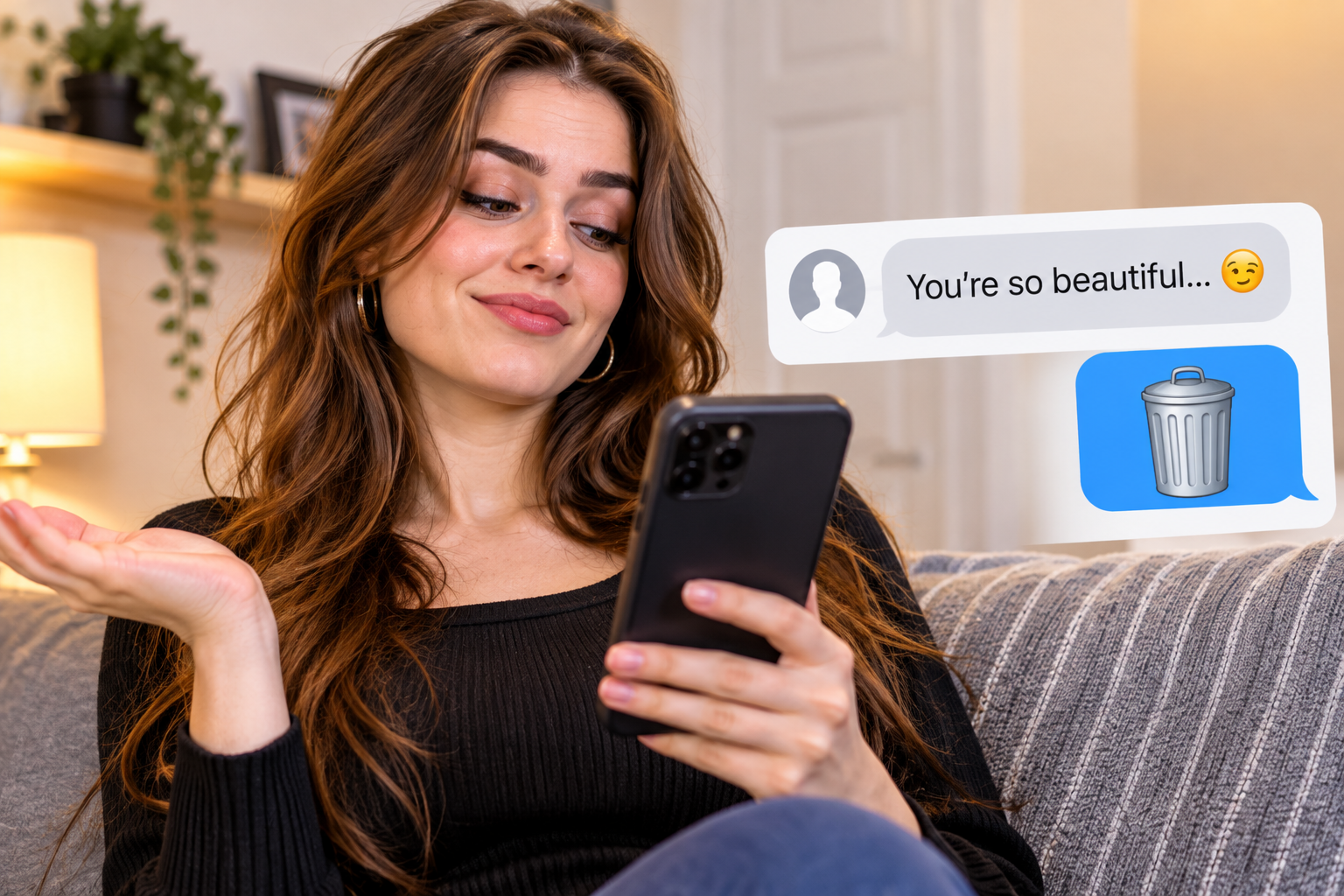
I’m a woman in my late twenties, and for as long as I can remember, I’ve received some of the most ridiculous messages from men online. I’m not talking about normal greetings, friendly conversations, or someone politely asking me out. I’m talking about men who send a message without even saying hello and immediately jump into asking whether I want to hook up. Sometimes their first message is literally, “Wanna fuck?” Other times, they send something equally inappropriate, as if we’re already in some kind of relationship. I used to get genuinely annoyed whenever this happened. I would block them, report their accounts, or sometimes send a long message explaining why approaching a complete stranger like that was disrespectful. But eventually, I realized that most of these men didn’t care about my explanation. They would either laugh, argue, or send another inappropriate message.
At first, I tried ignoring them completely. I thought that if I didn’t respond, they would eventually get bored and move on. Unfortunately, that wasn’t always the case. Some would send multiple messages, asking why I wasn’t replying. Others would become rude when I didn’t give them the attention they wanted. A few even acted offended, as if I owed them a conversation simply because they had decided to message me. It was exhausting, especially because I used social media to relax, talk to friends, and meet interesting people. I didn’t want every notification from an unknown man to become another uncomfortable experience. After dealing with the same behavior repeatedly, I decided I was done wasting my energy getting angry over messages from strangers.
One evening, I received another message from a guy whose profile picture showed him posing in front of an expensive-looking car. There was no introduction, no friendly greeting, and absolutely no effort to start a normal conversation. His entire opening message was, “Wanna come over tonight?” I stared at my screen for a few seconds and almost blocked him immediately. Then I had a different idea. Instead of getting angry, I decided to respond as if I had misunderstood his intentions. I told him that I knew someone who was looking for a person to meet at a particular public location. I made it sound like I was arranging something completely different from what he expected. He became interested immediately and started asking questions. I wasn’t actually arranging a hookup or involving another person. I was simply making him realize how ridiculous it was to approach strangers with such confidence.
After that first interaction, I started noticing a pattern. The men who sent these messages often expected an immediate response and assumed that I would either agree, flirt with them, or become offended. They rarely expected me to turn the conversation around. So I began using a similar playful response whenever another stranger opened with an inappropriate message. I would give them an obviously unusual suggestion, send them on a harmless fictional wild-goose chase, or tell them that they had contacted the wrong person. Some immediately understood that I wasn’t interested and disappeared. Others continued asking questions, apparently believing that something exciting was about to happen. Their reactions were often so dramatic that I couldn’t help laughing at how seriously they took a conversation they had started so disrespectfully.
Of course, I never gave anyone a real person’s address, private information, or instructions to visit a stranger. I wasn’t interested in putting innocent people at risk just because some men couldn’t behave themselves online. My little responses were meant to end uncomfortable conversations, not create dangerous situations. Sometimes I would tell a guy that he had mistaken me for someone else. Other times, I would suggest that he should try introducing himself like a normal human being before asking strangers personal questions. One man actually replied that he didn’t have time for introductions. I told him that was perfectly fine because I didn’t have time for his nonsense either. He blocked me almost immediately, which honestly felt like the easiest ending to a conversation I never wanted in the first place.
The funniest part was how differently these men reacted when they realized they weren’t getting the response they expected. One guy started the conversation by asking whether I was alone at home. When I responded with a completely unrelated question about his favorite cooking recipe, he became confused. He asked why I was talking about food when he was trying to flirt. I told him that if he wanted a meaningful conversation, he could start by asking something respectful. Instead, he sent another inappropriate message and then complained that women were impossible to understand. I couldn’t believe the irony. He had approached a complete stranger with no effort, no manners, and no respect, yet somehow he believed I was the unreasonable one.
Eventually, I started sharing some of these ridiculous interactions with my closest friends. They found the messages hilarious and began asking me to show them whenever another stranger sent something inappropriate. One of my friends suggested that I should create a collection of the most ridiculous opening messages and the responses they received. We started joking about how some men seemed to believe that sending one sentence was enough to convince a woman to meet them. It became an ongoing joke between us. Whenever someone sent an especially outrageous message, I would screenshot it, hide their personal information, and send it to our group chat. My friends would come up with even funnier responses, and we would spend hours laughing at the unbelievable confidence of strangers who couldn’t even manage a basic introduction.
However, the experience also made me think more seriously about online boundaries. I understood that not every man who wanted something casual was automatically a bad person. Adults can have different dating preferences, and there’s nothing wrong with being honest about what they’re looking for. The problem was the entitlement, the aggressive language, and the assumption that I should be interested simply because they had decided to approach me. There is a huge difference between respectfully expressing your intentions and treating another person like they exist only to satisfy yours. I didn’t mind someone being direct, but I expected basic courtesy. If a stranger couldn’t manage that, I had no reason to continue the conversation.
Now, whenever a man sends me an inappropriate first message, I don’t automatically get angry anymore. I either ignore him, block him, or give him a harmless response that makes it clear I’m not playing along. I no longer feel responsible for educating every stranger who appears in my inbox, and I certainly don’t owe anyone my time or attention. Some people might think my approach is immature, while others might say these men deserve much worse. Personally, I think the best response is to protect my peace and refuse to reward disrespectful behavior. After all, if someone cannot even begin a conversation with basic manners, why should I give them the opportunity to continue it? And honestly, the funniest part is that some of these men still seem genuinely surprised when their opening message doesn’t get the reaction they imagined.
Read Story…
I stopped getting mad at guys whose first message is wanna fuck and started sending them on fake hookups instead
I am sure this is relatable for a lot of women and probably some men too: someone starts a conversation, and their very first message is something along the lines of lets fuck or wanna have some fun.
I used to immediately block these people, or I would get genuinely mad at how disrespectful it was. I even tried trolling them for a while, but no matter how funny I thought I was being, they would just ignore it and keep repeating lets fuck.
So nowadays, I have changed my strategy. I just reply with: Sure, send me the address.
And they actually do! Once they send it, I check on Google Maps how long the drive would take and tell them I will be there within that exact timeframe. Halfway through, I will even send a just left, on my way text to really sell it.
Honestly, I just sit at home giggling and kicking my feet, imagining them frantically taking a quick shower, panic cleaning their room, and maybe even bragging to their friends that they are about to get laid.
The funniest part? More than 50 percent of the guys end up blocking me before the time is up.
They were not even genuinely looking for a hookup, I guess they just wanted to be obnoxious or talk dirty to a woman without expecting her to actually say yes. Imagine if I had genuinely driven all the way there just to get blocked?!
As for the remaining guys who actually wait and end up texting where are you?
I just tell them, Oh sorry, I found someone else to fuck. Nobody ever gets mad, lol. Some of them even message me the next day asking if I want to come over then.
And if they insist on coming over to my place instead? I just go online, find a listing for a brand new, empty apartment or house that is currently for sale, and give them that address.
TLDR: Instead of blocking guys who open with wanna fuck, I pretend to agree, check the travel time on Maps, and let them get ready for a hookup that is never happening, or send them to an empty house for sale.
My Online Dating Experience Took a Turn After Men Started Sending Me Inappropriate First Messages
I’m a woman in my late twenties, and I’ve been using social media and dating apps for several years. Like most people, I originally joined these platforms to meet interesting people, make new friends, and possibly find someone I could build a meaningful relationship with. I enjoy having conversations, learning about different people, and sometimes going on dates when I meet someone who genuinely interests me. However, there is one thing I have never understood: men who believe the best way to introduce themselves to a complete stranger is by sending an extremely inappropriate message. I’m not talking about someone politely expressing interest in something casual. I’m talking about messages that immediately jump into sexual questions without even attempting to introduce themselves.
At first, I used to get genuinely angry whenever I received one of these messages. I would open my phone, see a notification from someone I had never spoken to before, and find something like, “Wanna fuck?” waiting in my inbox. Sometimes it was even worse. There would be no greeting, no introduction, and no attempt to have a normal conversation. Just one inappropriate sentence from a stranger who somehow believed I would be interested. I couldn’t understand how these men thought that was an acceptable way to approach someone. I would usually block them immediately, but the same thing kept happening with different accounts.
After a while, I started feeling exhausted by the entire situation. It seemed like every time I opened a dating app, there was another stranger sending an inappropriate message. Some men would send several messages if I didn’t respond immediately. Others would become rude and insulting when I ignored them. A few would even accuse me of being stuck-up because I wasn’t interested in their opening line. The funniest part was that they often seemed genuinely offended when I didn’t give them attention. Apparently, they believed sending me a disrespectful message was enough to earn a conversation.
For a long time, I thought the only reasonable response was to get angry, explain why their behavior was inappropriate, and then block them. I would sometimes write several paragraphs explaining that women were not obligated to respond to random sexual messages. But eventually, I realized that most of these men weren’t interested in understanding anything I said. They weren’t looking for a meaningful discussion about boundaries or respect. They wanted attention, and even an angry response gave them exactly what they wanted. So I decided to stop wasting my energy arguing with strangers who clearly didn’t care.
The idea for my new approach came one evening when I received another message from a man whose profile picture showed him standing beside a sports car. His profile described him as confident, adventurous, and someone who enjoyed meeting new people. I expected a normal introduction, but his first message was simply, “Wanna come over tonight?” I stared at the screen for a moment, shook my head, and almost blocked him. Then I started laughing because I realized how predictable the situation had become. Instead of getting angry, I decided to give him an unexpected response.
I replied by telling him that he had probably contacted the wrong person because I was helping a friend organize a completely different kind of meetup. I kept the conversation harmless and deliberately confusing, without giving him any real address or involving another person. He immediately started asking questions because he thought I was arranging something interesting. I eventually explained that if he wanted to meet someone, he should probably start by speaking to them like a normal human being. He responded with an annoyed emoji and stopped messaging me. I found the entire exchange much more entertaining than another pointless argument.
That interaction gave me an idea. What if I stopped treating every inappropriate message like a personal insult and started responding in a way these men would never expect? I wasn’t interested in hurting anyone, exposing private information, or creating dangerous situations. I simply wanted to stop rewarding disrespectful messages with my time and emotional energy. So I decided that whenever someone approached me with an especially ridiculous opening line, I would respond with something unexpected, humorous, or completely unrelated to what they were asking.
The next opportunity arrived only a few days later. A man messaged me late at night and immediately asked whether I was alone. I hadn’t even seen his profile before, and he hadn’t introduced himself. I replied by asking whether he knew how to make homemade lasagna because I was trying to improve my cooking skills. He seemed confused and asked why I was talking about food. I told him that I preferred conversations involving people who could offer something useful. He sent a laughing emoji and tried to return to his original question, but I simply wished him good luck with his search and ended the conversation.
Another man sent me a message saying that he was looking for something casual and didn’t want to waste time talking. I actually respected the honesty of his statement more than the men who pretended to want a relationship before revealing their intentions. However, his next message was unnecessarily aggressive, and he seemed to expect me to agree immediately. I replied that I also didn’t want to waste time, so perhaps he should spend a few minutes learning how to introduce himself properly. He told me I was taking things too seriously. I answered that he was free to find someone who shared his approach, but it wasn’t going to be me.
Some men reacted with humor, which I appreciated. One guy sent an inappropriate opening message, and I responded by asking whether he had any experience assembling furniture. He replied that he didn’t understand what furniture had to do with anything. I told him that if he couldn’t successfully build a conversation, perhaps he could start with a bookshelf. Surprisingly, he laughed and admitted that it was probably the worst introduction he had ever sent. We exchanged a few normal messages after that, and although nothing romantic happened, the conversation ended much more pleasantly than it had started.
However, not everyone took the responses lightly. Some men became angry because I wasn’t reacting the way they expected. One particularly arrogant guy sent me a message asking whether I was interested in meeting that night. When I responded with a joke about him needing to pass a basic manners test first, he immediately called me difficult. He then sent several messages explaining that women always complained about men being too direct but rejected them when they were direct. I told him there was a difference between being direct and being disrespectful. He didn’t seem interested in understanding that distinction, so I blocked him.
The more these conversations happened, the more I noticed how predictable certain reactions were. Some men would laugh and move on. Others would become defensive and try to convince me that I was the problem. A few would suddenly become polite after realizing their original approach hadn’t worked. It was almost as if basic manners were something they only remembered when they wanted something. I found that particularly frustrating because being respectful shouldn’t depend on whether someone is interested in dating you.
I also began discussing these experiences with my closest friends. We had a group chat where we regularly shared funny things that happened during our daily lives. One evening, I mentioned the strange messages I had been receiving, and my friends immediately wanted to see some examples. I shared a few screenshots after hiding the usernames and personal details. Within minutes, everyone was laughing. One friend said she couldn’t understand how some men managed to send the most ridiculous messages with complete confidence. Another said she had received almost identical messages herself.
After that, the group chat became a place where we occasionally shared our funniest online interactions. We started joking about the different categories of men who appeared in our inboxes. There were the ones who couldn’t say hello, the ones who believed every woman wanted to meet immediately, and the ones who became offended when someone declined their invitation. We also noticed that many of them used almost identical opening lines. It sometimes felt as though they were copying messages from the same imaginary handbook.
One afternoon, a friend suggested that I should create a list of funny responses for the next time someone sent an inappropriate message. I laughed because it sounded ridiculous, but I decided to play along. We came up with harmless replies that would either confuse the sender or make it clear that I wasn’t interested. Some involved asking about their favorite books, others involved imaginary cooking competitions, and a few simply redirected the conversation toward something completely ordinary. The goal wasn’t to trick anyone into traveling somewhere or meeting a stranger. We just wanted to stop giving disrespectful people the reactions they were trying to get.
A few days later, I received another message from a man who immediately asked whether I wanted to come over. His profile suggested that he was in his early thirties, and his pictures showed him enjoying expensive restaurants and weekend trips. I replied by asking whether he had ever considered joining a book club. He answered, “What?” I explained that I was looking for someone who could recommend a good mystery novel. He told me he wasn’t interested in books. I responded that was unfortunate because I wasn’t interested in his invitation either. He never replied.
Another man tried a slightly different approach. He began with a compliment, which was perfectly normal, but quickly turned the conversation into something inappropriate. When I didn’t respond the way he expected, he sent another message asking whether I was shy. I told him I wasn’t shy; I simply didn’t feel comfortable discussing personal things with someone I had known for approximately thirty seconds. He replied that I needed to relax. I told him that he needed to understand boundaries. After that, he disappeared from my inbox.
The most ridiculous interaction happened when a man sent me a message claiming that he was different from everyone else. He said he was honest, confident, and didn’t believe in wasting time with small talk. I asked him what he enjoyed doing outside work. He replied that he had already told me what he wanted. I told him that confidence was attractive, but treating a stranger like an instant appointment was not. He responded by saying that I clearly didn’t know what I wanted. I laughed because he had somehow reached that conclusion without knowing anything about me.
Sometimes I wondered whether these men approached every woman the same way. Did they send identical messages to dozens of accounts and simply wait for someone to respond? Did they genuinely believe that this approach worked? I couldn’t know for certain, but their behavior made it seem as though they treated online dating like a numbers game. Instead of trying to connect with one person, they appeared to send the same message repeatedly and hope that someone would agree. It was difficult to imagine how they expected that strategy to create anything meaningful.
I didn’t believe every man had to be interested in a serious relationship. People have different preferences, and adults should be able to communicate honestly about what they want. If someone is looking for something casual, they can say so respectfully. There is nothing inherently wrong with being upfront about intentions. My problem was with the men who believed that being honest gave them permission to be rude, pushy, or sexually aggressive toward complete strangers. Honesty and basic courtesy are not opposites.
One evening, I received a message from someone who simply wrote, “You look good. Want to meet sometime?” I actually appreciated the difference. It was direct, but it wasn’t demanding or inappropriate. I replied that I appreciated the message but wasn’t interested. He responded with, “No worries. Have a nice evening.” That was the entire conversation. I remember thinking how refreshing it was to interact with someone who could accept a simple rejection without turning it into an argument. It proved that approaching someone respectfully wasn’t complicated.
Unfortunately, the aggressive messages continued. Another man told me that I was wasting his time because I refused to answer his personal questions. I asked him why he believed my time was less valuable than his. He didn’t answer that question. Instead, he sent another message accusing me of being rude. I told him that I wasn’t interested in continuing the conversation and blocked him. In the past, I might have spent twenty minutes explaining myself. This time, I simply moved on with my evening.
My friends began recognizing the pattern before I even showed them the messages. Whenever I said that someone had sent me another strange opening line, they would immediately ask what my response had been. Sometimes they suggested funny replies, and sometimes they simply told me to block the person. We laughed about the absurdity of it all, but there was also a serious side to those conversations. Every one of us had experienced unwanted messages, uncomfortable comments, or strangers who refused to accept rejection.
One of my friends shared an experience that was much worse than anything I had received. A man had continued messaging her after she clearly told him she wasn’t interested. He created another account after she blocked him and tried to contact her again. That stopped being funny immediately. We encouraged her to save the messages, report the accounts, adjust her privacy settings, and avoid engaging with him further. It reminded me that unwanted attention could sometimes become harassment, and joking around wasn’t always the appropriate response.
That experience changed how I approached certain situations. I still enjoyed responding humorously to harmless nonsense, but I stopped treating every message like an opportunity for entertainment. If someone was threatening, repeatedly contacting me, or ignoring a clear request to stop, I blocked and reported them. I didn’t owe anyone a clever response. I didn’t need to prove that I was funny, confident, or capable of winning an argument. My safety and peace of mind were more important than getting the last word.
A few weeks later, I received a message from a man who started with the usual inappropriate question. I decided to give him one final unexpected response. I told him that before asking strangers for anything personal, he should try introducing himself and asking about their interests. He replied that he wasn’t interested in wasting time. I answered that neither was I, so we had something in common. He sent a laughing emoji and said that he deserved that response. At least he understood the joke.
There were also moments when someone genuinely apologized. One man admitted that he had been sending the same opening message to several women because he thought being direct would save time. When I explained that his approach came across as disrespectful, he said he hadn’t considered how uncomfortable it might make someone feel. I appreciated that he didn’t argue or blame me. We didn’t become a couple or anything like that, but I respected the fact that he was willing to listen. Sometimes people make mistakes, and a sincere willingness to change is worth more than a hundred excuses.
I started realizing that the real difference wasn’t between men who wanted casual relationships and men who wanted serious relationships. It was between people who respected others and people who felt entitled to their attention. Someone could be looking for something casual and still be polite. Someone could want a serious relationship and still behave badly. A person’s intentions didn’t automatically make their behavior acceptable. The way they treated someone who could easily reject them revealed much more about their character.
The funniest part was that some men seemed unable to understand why I wouldn’t immediately agree to meet them. One guy told me that I was making dating unnecessarily complicated. I asked him whether he would walk up to a woman in a supermarket and immediately ask her an extremely personal question without introducing himself. He replied that online dating was different. I told him that being behind a screen didn’t magically remove the need for manners. He didn’t have an answer, so the conversation ended there.
Another man tried to convince me that women secretly enjoyed receiving inappropriate messages because it made them feel attractive. I told him that attention wasn’t automatically a compliment. He responded that I was overthinking everything. I explained that a compliment was something someone could appreciate, while an unwanted sexual message from a stranger could simply feel uncomfortable. He continued arguing, so I stopped replying. I wasn’t interested in debating my own boundaries with someone who had already decided they didn’t matter.
Eventually, I became much more comfortable with simply saying no. I didn’t feel the need to soften every rejection, apologize for not being interested, or provide a detailed explanation. If someone sent a respectful invitation and I wasn’t interested, I could decline politely. If someone sent an inappropriate message, I could ignore it or block them. If someone tried to argue with my decision, I could end the conversation. I realized that being polite didn’t mean allowing someone to cross my boundaries.
My friends noticed the change in me too. They said I seemed much less stressed about online dating than before. I told them it was because I had stopped treating every stranger’s behavior as something I needed to fix. I couldn’t control what people sent me, but I could control how much attention I gave them. Some people were going to be disrespectful no matter how carefully I explained things. Spending my evening arguing with them wouldn’t suddenly make them considerate.
One night, I was scrolling through my messages when I found a particularly ridiculous conversation from several months earlier. I read the opening message again and laughed at how seriously I had taken it at the time. Back then, I would have spent ages wondering why someone thought it was acceptable to speak to me that way. Now I simply recognized it as an unwanted message from a stranger. It didn’t define my worth, affect my confidence, or deserve control over my mood.
I also became more careful about what I shared publicly. I stopped posting personal details that strangers could use to find me, and I avoided sharing screenshots that might expose someone’s private information. Even when a message was ridiculous, I didn’t believe that humiliating a stranger publicly was necessary. My goal was to protect my boundaries and enjoy my time online, not turn every interaction into a public fight. There were plenty of ways to make a point without putting anyone at risk.
Some people might say that my humorous responses were immature. Others might argue that I should simply block every man who sent an inappropriate message instead of responding at all. Honestly, I think both approaches can be reasonable depending on the situation. Sometimes ignoring someone is the best option. Sometimes a harmless joke can make an uncomfortable interaction less stressful. What matters is recognizing when a conversation is no longer safe or worth continuing. Nobody should feel obligated to entertain a stranger who refuses to respect them.
The biggest lesson I learned was that being direct doesn’t require being disrespectful. If someone wants a casual connection, they can communicate that honestly. If they want to ask someone out, they can do it without making the other person uncomfortable. And if the answer is no, they can accept it and move on. None of those things requires complicated rules or perfect wording. It simply requires treating another person like a human being rather than an opportunity.
These days, whenever I receive a message that begins with something inappropriate, I don’t automatically get angry. I look at the situation, decide whether it’s harmless or concerning, and respond accordingly. Sometimes I laugh and send an unexpected reply. Sometimes I leave the message unopened. Sometimes I block the account immediately. The important thing is that I no longer feel responsible for giving every stranger a lesson in basic manners. My time is valuable, and I would rather spend it talking to people who actually want to have a respectful conversation.
My friends still ask me about the funniest messages I receive, and occasionally we have another group-chat discussion about the latest ridiculous opening line. We still laugh, but we’ve also become much better at recognizing when something crosses the line. What started as a way to avoid getting angry has turned into a reminder that we don’t have to accept uncomfortable behavior just because it happens online. We can set boundaries, walk away, and refuse to give disrespectful people the attention they are looking for.
Looking back, I wish I had understood this earlier. I used to believe that every inappropriate message deserved an explanation, as if the person sending it had a genuine interest in learning why their behavior was wrong. Now I understand that I don’t have to convince everyone to respect me. I can simply choose not to interact with people who don’t. And honestly, that has made my online experience much more peaceful. So whenever another stranger opens with, “Wanna fuck?” I know I have several options. But one thing is certain: he isn’t automatically getting the reaction he expected.