I Sang My Go-To Karaoke Song, and My Sister-in-Law Accused Me of Ruining Her Birthday

I’m a 30-year-old woman, and I recently found myself in an awkward situation with my sister-in-law after attending her birthday party. I’ve been married to my husband for four years, and his family usually gets along with me reasonably well. We don’t always agree on everything, but I’ve never considered myself someone who creates unnecessary drama. My sister-in-law, whom I’ll call Lauren, is 28 and has always enjoyed being the center of attention during family gatherings. Her birthday celebrations are especially important to her, and I have always tried to make sure she feels appreciated. However, this year, something as simple as singing my favorite karaoke song turned into a major argument that I honestly didn’t see coming.
Lauren decided to celebrate her birthday at a restaurant that had a private karaoke room. She invited around twenty family members and friends, including my husband and me. Everyone was excited because karaoke was something most of us enjoyed, and Lauren had planned an entire evening around singing, eating, and having fun. I knew she loved music, so I thought it would be a great way to celebrate. I even bought her a thoughtful birthday present and helped my husband choose a card for her. Before the party, there was absolutely no indication that anyone had a problem with my participation in the karaoke activities.
For some background, I have one particular karaoke song that I always sing whenever I get the opportunity. It’s an upbeat, popular song that I know all the lyrics to, and it has become something my friends and family associate with me. Whenever we attend karaoke nights, people usually encourage me to sing it because they know how much I enjoy performing it. I’m not a professional singer, and I don’t pretend to be one. I simply enjoy music, and singing that particular song always puts me in a good mood. I have sung it at several family gatherings before, including occasions attended by Lauren, and she never complained about it.
When we arrived at the birthday party, everything seemed perfectly normal. Lauren looked beautiful, everyone wished her a happy birthday, and we spent the first hour eating, talking, and taking pictures. After dinner, the staff invited everyone into the private karaoke room. Lauren started by choosing a few songs, and then some of her friends took turns singing. People were laughing, clapping, and enjoying themselves. Eventually, someone asked me to choose a song, so I picked my usual karaoke favorite. I didn’t think it was a big deal because everyone was taking turns, and nobody had established any special rules about which songs people could sing.
As soon as the music started, a few people recognized the song and began cheering. My husband laughed because he knew exactly what I had chosen. I sang along, danced a little, and encouraged everyone to join in during the chorus. It was nothing unusual, and I wasn’t trying to steal attention from Lauren. In fact, I thought she was enjoying herself because she was smiling and clapping while I performed. When I finished, several people applauded, and someone joked that I had finally performed my signature song again. I laughed and returned to my seat, expecting the evening to continue normally.
However, I noticed that Lauren’s expression had changed. At first, I assumed she was tired or perhaps overwhelmed by hosting so many people. I didn’t want to make assumptions, so I continued talking with the other guests. A little later, when I went to get a drink, Lauren approached me and asked why I had chosen that particular song. I was confused and told her it was my usual karaoke song. She responded that it was her birthday and that I should have chosen something else instead of singing a song everyone already associated with me. I explained that I hadn’t realized there was a problem and that I was simply participating like everyone else.
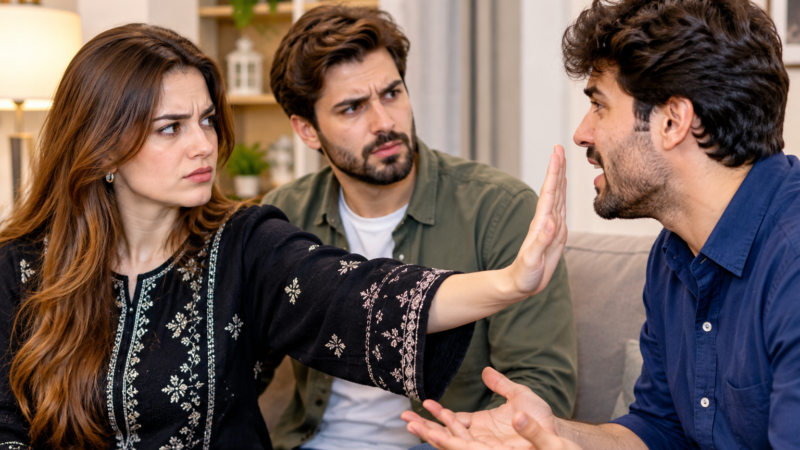
Lauren then told me that she felt I had taken attention away from her during her own birthday celebration. According to her, several guests had been cheering for me, and she didn’t like that everyone was talking about my performance afterward. I reminded her that people had been cheering for everyone who sang, and I hadn’t asked anyone to make a big deal out of it. I also pointed out that she had plenty of opportunities to sing her favorite songs and that nobody had stopped her from enjoying her own party. She rolled her eyes and said I should have known better than to make myself the center of attention.
I was honestly offended because I had never intended to compete with her or take anything away from her birthday. I had brought her a present, attended her celebration, and spent the evening supporting her. I told her that if she wanted me to avoid a particular song, she could have mentioned it beforehand instead of getting angry afterward. She said I shouldn’t need instructions to understand that her birthday was supposed to be about her. The conversation became uncomfortable, and my husband eventually noticed that something was wrong. When I explained what happened, he said Lauren was probably being overly sensitive and that I hadn’t done anything inappropriate.
The rest of the evening felt awkward. Lauren barely spoke to me, and a few of her friends seemed to notice the tension. The next morning, she sent me a message accusing me of ruining her birthday and embarrassing her in front of everyone. She claimed I knew my song would get people excited and that I deliberately chose it because I wanted attention. I told her that wasn’t true and that I had simply sung the same song I always sing at karaoke. Now my husband thinks I should ignore the situation, while some family members believe I should apologize to keep the peace. I don’t want to apologize for something I genuinely didn’t do to hurt her, but I also don’t want a silly karaoke disagreement to damage our family relationships. So, AITA for singing my go-to karaoke song at my sister-in-law’s birthday party?
Read Story…
AITA for singing my go-to karaoke song at my SIL birthday?
My SIL’s birthday was last month and she decided to go to a karaoke bar. There was about 20 ppl there for her and the vibe was great. We’ve known eachother for 7 years, and we used to be quite close at the start of her and my brother’s relationship.
I used to work at a karaoke bar about 3 years ago, so I have a few songs up my sleeve that I know I can perform and ones that will get the crowd going.
I started with Teenage Dirtbag by Wheatus, Hand In My Pocket by Alanis Morrisette, and then I sang F*ck You by Ceelo Green (a big crowd fav), as well as You’re So Vain by Carly Simon (one of my top songs). These songs have been my go-to karaoke songs for about 3 years, since I worked in that karaoke bar.
She then goes from texting me once a week to not at all.
Fast forward to a month later, my brother comes to visit me at my house for some sibling time, and F*ck You by Ceelo Green comes on while we were listening to music. He tells me that my SIL was very upset at my choice in songs for her karaoke bar birthday (the Ceelo Green song as well as You’re So Vain) because she thought they were a dig at her.
My brother defended me because “they’re just songs” and “she used to work in a karaoke bar”. My SIL then tells him that I am no longer her friend because they were inappropriate songs for her birthday celebration.
She never expressed a concern for me while at the karaoke bar, or the next morning when we were all having breakfast together.
Now I feel conflicted because they’re my go-to karaoke songs and had no malicious intention singing them. But I lost a friend over them? And she won’t talk to me now.
Idk what to do
EDIT: there’s been some talk about my SIL and my relationship. In the 7 years she and my brother have been together, I moved countries for 3 years. They also got married during that time (and was a bridezilla but that’s another story) AND my brother and I lost our mother and that affected my relationships with people close to me. Naturally people grow apart when people move countries
Edit 2: There’s questions about how many songs everyone sang. We were there from open -> close. Which was about 6 hours. Everyone who wanted to sing did sing, especially cause my SIL and her friends are all die-hard musical theatre people. The DJ was also very good at making sure everyone had a turn. So I don’t think my 4 songs in 6 hours was too much.
My brother sang Dragula which is about burning witches and dragging them through the dirt. My SIL was a self-proclaimed witch (Crystals and spell jars and tarot). She didn’t have a problem with that song. Why my songs
A Family Birthday Celebration Turns Into an Unexpected Karaoke Dispute
I’m a 30-year-old woman, and I recently found myself in an uncomfortable situation with my sister-in-law after attending her birthday party. I’ve been married to my husband for four years, and although his family and I don’t always agree on everything, I generally have a good relationship with them. I try to be respectful, attend family gatherings, and avoid unnecessary arguments. However, my sister-in-law, whom I’ll call Lauren, recently accused me of ruining her birthday simply because I sang my usual karaoke song. What started as an ordinary evening of music and celebration has somehow turned into a family disagreement that I never expected.
Lauren is 28 years old and has always enjoyed being the center of attention during celebrations. She loves birthdays, parties, decorations, photographs, and anything that makes an occasion feel special. I don’t have a problem with that because everyone enjoys celebrating differently. Whenever her birthday comes around, the family usually makes an effort to organize something nice for her. I’ve always participated, bought her presents, and made sure she felt appreciated.
This year, Lauren decided to celebrate her birthday at a restaurant with a private karaoke room. She invited around twenty people, including family members, close friends, and a few coworkers. My husband and I received the invitation several weeks in advance. She explained that she wanted everyone to enjoy dinner, sing their favorite songs, and have a fun evening together. I thought it sounded like a great idea because most of us enjoy karaoke.
I started preparing for the celebration a few days before the event. My husband and I went shopping for a birthday present, and we eventually chose something we thought Lauren would genuinely enjoy. I also bought a birthday card and wrote a thoughtful message inside. I wanted her to feel special, and I had no reason to believe there would be any problems between us that evening.
For some background, I have one particular karaoke song that I almost always sing whenever I get the opportunity. It’s an upbeat, popular song that I know all the lyrics to, and it has become something my friends and family associate with me. Whenever we attend karaoke nights, people usually encourage me to sing it because they know how much I enjoy performing it.
I’m not a professional singer, and I have never claimed to be particularly talented. I simply enjoy music and like making people laugh. My favorite song is energetic, easy to sing along with, and usually gets everyone involved. It has become a little tradition whenever I attend karaoke events with friends or family.
I have sung this same song at several previous gatherings, including events where Lauren was present. She had never complained about it before. In fact, there were occasions when she laughed, danced along, and even joined me during the chorus. That’s why I never imagined that choosing the same song at her birthday party would become such a serious issue.
When the evening finally arrived, my husband and I reached the restaurant a little after the scheduled time. Lauren was already there with a few friends, greeting everyone and taking pictures. She looked excited and seemed pleased with the decorations. We wished her a happy birthday, gave her a hug, and handed over our present.
The first part of the evening went smoothly. Everyone sat around a large table, ordered food, shared stories, and talked about work and family. Lauren received several compliments on her outfit and the restaurant choice. People took pictures with her, and she seemed to be enjoying all the attention.
After dinner, the restaurant staff guided everyone into the private karaoke room. There was a large screen, a microphone, comfortable seating, and enough space for people to stand and dance. Lauren immediately started choosing songs from the karaoke system. She sang a couple of her favorite tracks while everyone clapped and cheered.
After Lauren finished, some of her friends took turns performing. One person sang an old rock song, another chose a romantic ballad, and someone else picked a popular dance track. Everyone was laughing and having fun. Nobody seemed concerned about who was getting more attention because the whole point was to enjoy ourselves.
Eventually, one of Lauren’s friends asked me to choose a song. I initially hesitated because I didn’t want to interrupt anyone, but she insisted that everyone wanted to hear me sing. My husband smiled and told me to go ahead because he knew exactly what I was going to choose.
I selected my usual karaoke favorite. I didn’t think twice about it because it was the song I always sang, and nobody had established any special rules about what people could or couldn’t perform. I also didn’t believe that singing one familiar song would somehow take anything away from Lauren’s birthday.
As soon as the music started, a few people recognized the introduction. They began cheering and laughing because they knew it was my signature song. I smiled, picked up the microphone, and started singing. A few guests joined in during the chorus, while others clapped along with the music.
I danced a little and encouraged everyone to sing with me. It was a lighthearted performance, and I wasn’t trying to impress anyone. I wasn’t even standing in front of the room for very long. I simply wanted to participate in the activity Lauren had organized for everyone.
When the song ended, several people applauded. One of Lauren’s friends joked that I had finally performed my famous song again. Everyone laughed, including me. I returned to my seat, took a drink, and assumed the evening would continue as normal.
However, I noticed that Lauren wasn’t smiling anymore. Her expression seemed different, and she was no longer participating as enthusiastically as before. At first, I thought she might be tired or perhaps overwhelmed by hosting so many people. I didn’t want to assume that her mood had anything to do with me.
A little later, I went to the side of the room to get some water. Lauren approached me and asked why I had chosen that particular song. I was confused and told her it was my usual karaoke song. She looked annoyed and said that I should have chosen something different because it was her birthday.
I asked her what she meant. She explained that she didn’t like everyone cheering for me and talking about my performance during her celebration. According to her, the song was too recognizable as my signature song, and singing it had made the evening feel more about me than about her.
I honestly didn’t know how to respond. I reminded her that everyone had been taking turns singing and that people had cheered for several other performances too. I also pointed out that she had been the first person to sing and had received plenty of attention throughout the evening.
Lauren said that wasn’t the point. She believed that because it was her birthday, I should have chosen something less noticeable. She also claimed that I knew people would react when I sang my usual song, so choosing it was apparently a deliberate attempt to draw attention to myself.
I told her that I hadn’t planned anything like that. I had chosen the song because I enjoyed it, just as everyone else had selected music they liked. I wasn’t trying to compete with her, embarrass her, or become the main attraction at her birthday party.
She responded that I should have considered her feelings before making my choice. I explained that if she had wanted everyone to sing specific songs or avoid certain performances, she could have mentioned that before the party. Nobody had told me that guests were expected to choose songs based on how much attention they might receive.
The conversation became increasingly uncomfortable. Lauren said I was being defensive instead of simply admitting that I had made a mistake. I told her I was sorry she felt upset, but I wasn’t going to apologize for intentionally hurting her because that had never been my intention.
My husband eventually noticed that something was wrong and came over to ask what was happening. Lauren immediately told him that I had ruined her birthday by choosing a song that made everyone focus on me. My husband looked confused and asked why singing one karaoke song was such a serious issue.
He explained that everyone had been taking turns and that nobody had done anything inappropriate. Lauren became even more irritated and said he was only defending me because I was his wife. She then walked away and returned to her friends.
After that conversation, the atmosphere felt different. Lauren barely spoke to me for the rest of the evening. Whenever I tried joining a conversation, she seemed distracted or gave short responses. I decided not to approach her again because I didn’t want to turn her birthday celebration into an even bigger argument.
I stayed until the cake was served, joined everyone in singing happy birthday, and took a few family pictures. I didn’t want to leave early and make the situation more obvious. However, I could tell that Lauren was still upset, and I felt uncomfortable being there.
The following morning, I received a long message from her. She accused me of deliberately stealing the spotlight and said I had embarrassed her in front of her friends. She also claimed that I always wanted people to notice me and that choosing my signature karaoke song at her birthday was another example of my attention-seeking behavior.
I was genuinely surprised by how strongly she felt about the situation. I replied that I hadn’t intended to take attention away from her and that I had simply participated in the karaoke activity like everyone else. I reminded her that I had attended to celebrate her birthday, brought her a present, and spent the evening supporting her.
Lauren wasn’t satisfied with my explanation. She said I should have known that birthdays were important to her and that I should have allowed her to enjoy the attention without making the evening about myself. I told her I understood that birthdays mattered to her, but I didn’t believe singing one song meant I had taken over her celebration.
She then brought up previous family gatherings and claimed that I often attracted attention whenever I attended parties. I asked her to give me an example, but she didn’t provide anything specific. Instead, she said I always acted innocent whenever someone confronted me about my behavior.
I showed the messages to my husband because I wanted his opinion. He said Lauren was being unreasonable and that I shouldn’t feel guilty for participating in an activity everyone had been invited to enjoy. He also mentioned that she had encouraged people to sing whatever they wanted, so it made little sense to blame me for choosing a familiar song.
A few days later, my mother-in-law contacted me. She said Lauren was still upset and suggested that I apologize to keep the peace. She explained that Lauren had been looking forward to her birthday for weeks and didn’t want anything to overshadow it. I told her I understood, but I didn’t think I had done anything wrong.
My mother-in-law suggested that perhaps I could have chosen a different song simply to make Lauren happy. I agreed that choosing another song wouldn’t have been difficult, but I didn’t know that my usual song would upset anyone. I also didn’t think guests should have to guess which performances might make the birthday person uncomfortable.
Since then, the family has been divided. A few people believe I should apologize because it was Lauren’s special day, while others think she overreacted to something harmless. I don’t want this disagreement to damage my relationship with my husband’s family, but I also don’t want to accept blame for something I never intended to do.
What confuses me most is that Lauren had never expressed any problem with my karaoke song before. She had heard me sing it several times and had even joined me during previous performances. I don’t understand why it suddenly became offensive just because it happened at her birthday party.
I genuinely wanted Lauren to have a wonderful birthday. I wasn’t trying to compete with her, steal her spotlight, or make anyone forget whose celebration it was. I simply sang a song I enjoy during an activity that was organized for everyone. Now I’m being treated as though I deliberately ruined an important occasion, and I’m starting to wonder whether I missed something obvious.
So, AITA for singing my go-to karaoke song at my sister-in-law’s birthday party, even though she believes I took attention away from her?