My Friend Chose the Name Lana for Her Daughter, but I Noticed Something Awkward
I’m a 29-year-old woman, and I recently found myself in an uncomfortable situation with one of my closest friends. We’ve known each other for almost ten years, and we’ve always been comfortable being honest with each other. We have shared personal experiences, supported each other through difficult times, and celebrated important milestones together. I never thought something as simple as a baby name would create tension between us, but apparently, I underestimated how sensitive this subject could become.
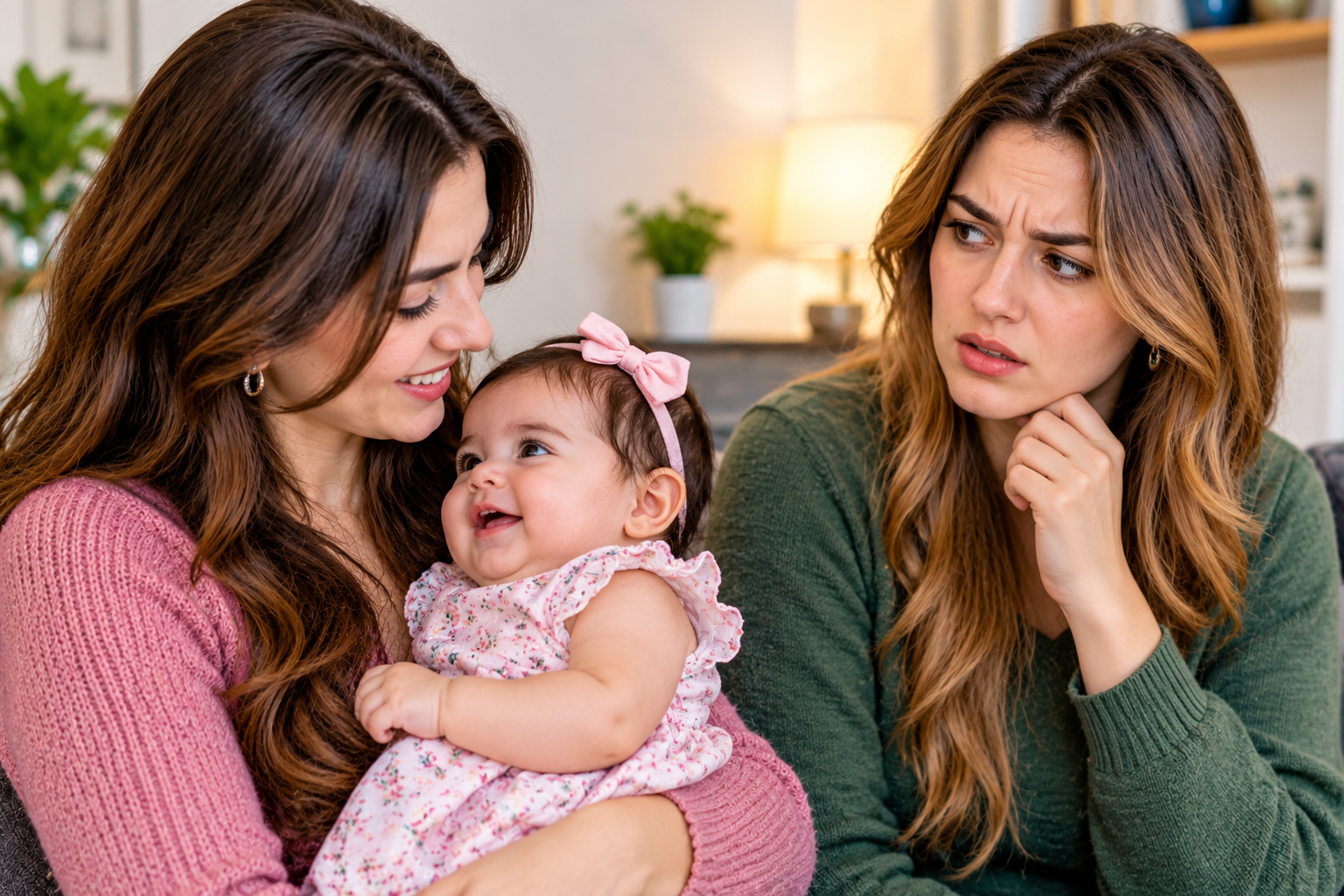
My friend is currently expecting her first child, a baby girl, and she’s been extremely excited about becoming a mother. She and her husband have been discussing names for months, and they’ve asked several friends and family members for suggestions. They’ve considered traditional names, modern names, and even names inspired by family members. Whenever we meet, she usually brings up the subject because choosing the perfect name has become one of the most exciting parts of her pregnancy.
A few weeks ago, she finally announced that she and her husband had made their decision. They were going to name their daughter Lana. She told me that she loved how short, simple, and beautiful it sounded. She also liked that it was easy to pronounce and spell. Her husband apparently loved it too, so they had agreed that this would be their daughter’s name. Everyone in our friend group congratulated them, and most people said it was a lovely choice.
At first, I didn’t think there was anything unusual about the name. Lana is a perfectly normal name, and I understand why someone would find it beautiful. However, while looking at the name written on her pregnancy announcement, I suddenly noticed something that immediately caught my attention. When you spell Lana backwards, it becomes a word that has a sexual meaning in English. I wondered whether my friend had already noticed this or whether it had completely escaped her attention.
I didn’t want to embarrass her, especially because she was clearly excited about the name. I initially considered saying nothing because parents have the right to choose whatever names they like for their children. However, I kept thinking about how children can be cruel, especially when they discover something unusual about another child’s name. I imagined her daughter growing up, meeting classmates who might notice the spelling, and potentially becoming the target of immature jokes.
Eventually, I decided to bring it up privately. We were talking on the phone about her pregnancy preparations when she mentioned ordering personalized baby items with the name Lana printed on them. I told her that I thought the name sounded pretty, but there was something she might want to consider before finalizing everything. She immediately became curious and asked what I meant. I explained that if someone spelled Lana backwards, it would create an awkward word with an adult meaning. I wasn’t trying to insult her choice, but I thought she deserved to know before her daughter started using the name publicly.
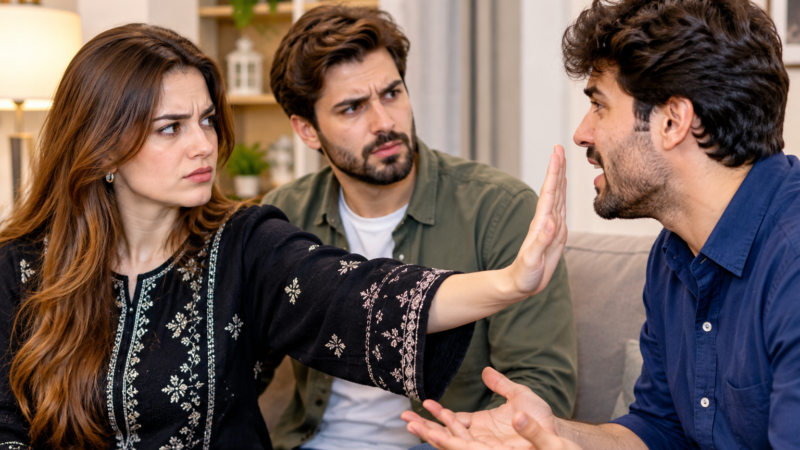
Unfortunately, she didn’t react the way I expected. Instead of laughing or considering what I had said, she became defensive and asked why I was looking for problems with a perfectly normal name. She told me that nobody would seriously spell her daughter’s name backwards and that I was making an innocent name sound inappropriate. I explained that I wasn’t saying the name itself was inappropriate, but children sometimes notice unusual things and turn them into jokes. She responded that children could make fun of absolutely any name, so that wasn’t a good reason to reject something she loved.
The conversation became more uncomfortable when she accused me of trying to ruin one of the happiest moments of her pregnancy. She said she had already told everyone about the name, ordered decorations, and started planning personalized items. She also mentioned that her husband loved the name and that neither of them intended to change their decision because of a silly observation. I told her that it was completely their choice, and I wasn’t expecting them to follow my suggestion. I simply thought it was better to mention it privately rather than allow her to discover it later through an embarrassing situation.
After our conversation, she became noticeably distant. She stopped discussing baby names with me and eventually told another friend that I had made her feel uncomfortable about her daughter’s name. Some people think I was being helpful by pointing out something the parents might not have considered, while others believe I should have kept my opinion to myself because Lana is a perfectly legitimate name. I genuinely don’t think there’s anything wrong with the name itself, and I understand that parents shouldn’t have to change their choices because of every possible joke. But I also believe that warning a close friend about something potentially embarrassing isn’t necessarily an insult. Now I’m wondering whether I should have stayed quiet instead of mentioning it at all. Was I wrong for pointing out the awkward spelling, or was I simply trying to help my friend avoid a problem in the future?
Read Story…
AITAH for telling my friend I think naming her daughter “Lana” is weird because of what it spells backwards?
I want to preface this by saying that I genuinely like the name Lana. I have never understood why people make such a big deal about the fact that it spells something inappropriate when written backwards. I think it’s a pretty name, and honestly, if someone likes it, they should be able to use it without having to worry about what other people might think. However, in this particular situation, I feel like there is a little more to consider.
My friend already has one daughter, and her name is Nevaeh. For anyone who doesn’t know, Nevaeh is simply the word “heaven” spelled backwards. That is the entire appeal of the name for a lot of people, and it’s something most people recognize as soon as they hear it. I’m not saying there’s anything wrong with the name itself, but when you choose a name specifically because of its unusual spelling and meaning, I think it’s reasonable for people to notice that detail.
Now she’s expecting her second child, and she’s seriously considering naming her Lana. Again, I actually like the name Lana on its own. If she had chosen it for her first child, I probably wouldn’t have thought twice about it. But when you put the two names together, Nevaeh and Lana, it creates a combination that I can’t help but find a little awkward. One name is heaven spelled backwards, while the other is anal spelled backwards. I know that might sound childish to some people, but I feel like once someone points it out, it’s difficult not to notice.
The thing that makes this situation even stranger to me is that she doesn’t have several other children with completely unrelated names. These would be her only two children, and their names would always be associated with each other as siblings. I can easily imagine people eventually noticing the connection and making jokes about it, especially when the girls are introduced together. I wasn’t trying to say that her daughter shouldn’t be named Lana, but I did think it was something worth considering before making the decision permanent.
So I brought it up to my friend. I tried to explain that I wasn’t against the name Lana itself, and I wasn’t trying to insult her taste in names. I simply thought that because her first daughter’s name was Nevaeh, choosing Lana for her second daughter might create an unintended connection that she hadn’t considered. I honestly thought she might laugh about it or at least understand why I found the combination a little unfortunate.
Instead, she got extremely upset. She told me that she chose Nevaeh because she genuinely loves the way it sounds and that the backward spelling of heaven had absolutely nothing to do with her decision. According to her, people are focusing too much on something meaningless, and she doesn’t want to spend her pregnancy worrying about what strangers might think of her children’s names. She also said that I was being negative and hurtful over something that shouldn’t matter.
I tried to explain that I wasn’t judging her or trying to ruin something she was excited about. I just thought I was pointing out a potential issue that she might not have noticed. But she wasn’t interested in hearing my explanation and seemed to take the whole thing as a personal attack.
Eventually, I realized that continuing the conversation wasn’t going to help anything, so I apologized for hurting her feelings and dropped the subject. I figured that was the end of it, and she could choose whatever name she wanted. After all, it’s her child, her pregnancy, and ultimately her decision. I have no intention of telling her what she can or cannot name her daughter.
However, things have been noticeably different between us ever since. She’s barely responding to my texts, and when she does reply, she’s unusually short with me. I can tell she’s still upset, even though I already apologized. It’s making me wonder whether I crossed a line by bringing it up in the first place.
Now I’m questioning whether I’m making a bigger deal out of this than necessary. Maybe most people really won’t notice the connection between the two names. Maybe Nevaeh doesn’t automatically make everyone think about backward spelling, and maybe I’m the only person who immediately made the connection when I heard Lana.
I still feel like it was something worth mentioning once, especially because I thought I was looking out for her and potentially saving her daughters from some unwanted teasing in the future. But I also understand that pregnancy can be an emotional time, and choosing a name is a deeply personal decision. Perhaps she just wanted support and excitement rather than someone pointing out a possible problem with a name she already loved.
I don’t regret liking the name Lana, and I don’t think there’s anything inherently wrong with it. I just can’t help thinking that Nevaeh and Lana together create an unfortunate little coincidence.
So, am I actually wrong for bringing this up to my friend? Was it a reasonable observation that she should at least have considered, or was I being unnecessarily judgmental about something that ultimately has nothing to do with me? Should I have kept my opinion to myself instead of potentially making her feel bad about a name she loves?
A Decade of Friendship Tested by One Unexpected Baby Name Disagreement
I’m a 29-year-old woman, and I recently found myself in an uncomfortable situation with one of my closest friends. We’ve known each other for almost ten years, and throughout that time, we’ve shared countless experiences. We’ve supported each other through breakups, career changes, family problems, and major life decisions. Our friendship has always been built on honesty, and we’ve never been the type of people who pretend to agree with each other just to avoid an uncomfortable conversation. That’s why I never expected something as simple as a baby name to create such a big disagreement between us.
My friend is 28 years old and is currently expecting her first child. She’s having a baby girl, and she’s been incredibly excited about becoming a mother. She and her husband have been preparing for the arrival of their daughter for several months. They’ve already started decorating the nursery, buying baby clothes, researching parenting products, and discussing everything they need before the birth. Whenever we meet, she usually talks about her pregnancy and shares the latest updates. I genuinely enjoy seeing how happy she is, especially because becoming a mother has been something she’s wanted for years.
One topic that has occupied a lot of her attention is choosing the perfect name for her daughter. She and her husband have discussed dozens of possibilities, but they haven’t been able to agree on many of them. Sometimes she likes a name that her husband dislikes, and other times he suggests something she thinks sounds outdated. They’ve looked through baby-name websites, discussed family names, and asked friends for suggestions. She even created a small list of her favorite names and occasionally shared it with me to get my opinion.
I’ve always tried to be supportive whenever she asks for my thoughts. I understand that choosing a child’s name is a personal decision, and parents should ultimately choose something they genuinely love. I also know that not everyone has the same taste. Some people prefer traditional names, while others like modern or unusual ones. I’ve never believed that my personal preferences should determine what another family names their child.
A few weeks ago, my friend finally announced that she and her husband had reached a decision. They had chosen the name Lana for their daughter. She sent a message to our group chat announcing their choice, along with a cute little picture showing the baby’s name written in decorative lettering. Everyone immediately started congratulating them. Several people said the name was beautiful, and others mentioned that it sounded elegant, simple, and timeless.
I also congratulated her because I genuinely thought it was a pretty name. It was short, easy to pronounce, and didn’t sound overly complicated. I understood why she and her husband liked it. At that point, I didn’t intend to criticize their decision or suggest that they should choose something else. I assumed the discussion was finished and that they were finally happy after spending so much time searching for the perfect name.
However, later that evening, I noticed something I hadn’t thought about before. While looking at the name on her announcement, I casually read the letters backward. That’s when I realized that Lana spelled backward becomes the word “anal.” It’s an English word with a sexual and medical meaning, depending on the context, and I immediately wondered whether my friend had considered that possibility.
At first, I laughed a little because the observation caught me off guard. Then I started thinking about how children can sometimes be unnecessarily cruel. Kids notice unusual details about names, spellings, pronunciations, and anything else they think might be funny. Even completely normal names can become the subject of jokes when children decide to tease someone.
I wasn’t suggesting that every child would notice the spelling or that her daughter would automatically experience bullying. I simply thought it was something worth considering before permanently choosing a name. My friend was expecting her first child, and I imagined that she probably hadn’t thought about every possible situation her daughter might encounter at school.
I also considered whether I should say anything at all. Part of me thought that it wasn’t my responsibility to point out something that could potentially upset her. She had already announced the name, and she seemed genuinely happy with her decision. I didn’t want to be the person who turned an exciting pregnancy milestone into an unnecessary discussion about an awkward spelling.
On the other hand, we’ve been friends for almost a decade, and I thought honesty was an important part of our relationship. If I noticed something that might become an issue later, wouldn’t it be better to mention it privately? I imagined that she might appreciate knowing before ordering personalized blankets, decorations, clothing, and other items with her daughter’s name printed on them.
I eventually decided to bring it up during a private conversation. A few days later, we were talking on the phone about her pregnancy preparations. She mentioned that she had found a company that made personalized baby blankets and was considering ordering one with the name Lana embroidered on it. She sounded excited, and I could tell she was enjoying every little detail of preparing for her daughter’s arrival.
I waited for a moment before telling her that I had noticed something about the name. I started by saying that I genuinely thought Lana was beautiful, but there was one small thing she might want to consider. She asked what I meant, so I explained that when the name was spelled backward, it created an English word with an adult meaning.
There was a brief silence before she asked me to repeat what I had said. I spelled the word for her and explained why I thought it might become an issue among children. I told her that I wasn’t saying she had chosen a bad name or that she needed to change it. I simply wanted her to be aware of something she might not have noticed.
Unfortunately, her reaction was very different from what I expected. Instead of laughing or acknowledging the observation, she immediately became defensive. She asked why I was deliberately trying to find something wrong with a perfectly normal name. She said that Lana was a beautiful name and that she wasn’t going to let an immature joke influence such an important decision.
I tried to explain that I wasn’t making fun of her daughter or criticizing her parenting choices. I wasn’t even suggesting that the name itself was inappropriate. I was only thinking about how other children might react if they discovered the spelling. I reminded her that children sometimes make jokes about almost anything, and I thought it was better for parents to consider those possibilities beforehand.
She responded that children could make fun of absolutely any name. According to her, someone could find an embarrassing rhyme, nickname, or alternative spelling for practically every name in existence. She said that if parents started avoiding every possible joke, nobody would ever be able to choose a name they actually liked.
I understood her argument, and I couldn’t completely disagree with it. Children can be creative when it comes to teasing others, and avoiding every possible source of embarrassment is impossible. However, I still felt that this particular observation was unusual enough to mention. There was a difference between a random rhyme and a word that appeared directly when the name was reversed.
The conversation became even more uncomfortable when she asked whether I had told anyone else about it. I said I hadn’t because I thought it was a private matter between us. She then accused me of making her feel embarrassed about a name she had already proudly shared with friends and family. She said she had spent months choosing it and didn’t appreciate someone turning something meaningful into an inappropriate joke.
I told her that I wasn’t trying to embarrass her. In fact, that was exactly why I had brought it up privately rather than mentioning it in the group chat. I didn’t want anyone else making jokes about the name, and I certainly didn’t want her discovering the issue through an insensitive comment from someone else.
She then told me that she and her husband had already started making plans around the name. They had ordered some personalized items, discussed the name with both sides of the family, and even started referring to the baby as Lana during conversations. Changing it now would feel unnecessary and frustrating to her.
I responded that she didn’t have to change anything. I wasn’t asking her to abandon a name she loved, and I wasn’t trying to make the decision for her. I simply believed parents should know about possible concerns before making a final decision. Whether she considered the observation important or completely irrelevant was entirely up to her.
She became upset and said I was making her second-guess something that had previously made her happy. She explained that pregnancy already came with enough stress and that she didn’t need another person creating doubts about every decision she made. I felt bad hearing that because I genuinely hadn’t intended to make her pregnancy more difficult.
I eventually told her that I respected her decision and that I wouldn’t bring up the subject again. She responded with a short goodbye and ended the call. I thought that would be the end of the disagreement, but things became noticeably different afterward.
Over the next few days, she stopped sending me her usual pregnancy updates. Normally, she would send pictures of baby clothes, nursery decorations, and things she had purchased. She also used to ask for my opinion about different products and preparations. Suddenly, our conversations became shorter, and she seemed less interested in talking to me.
I initially assumed she was simply busy, but then another friend mentioned that she had been discussing our conversation with people in our social circle. Apparently, she told them that I had made an inappropriate comment about her unborn daughter’s name and had suggested that the name would make her a target for bullying.
Some of our mutual friends thought I was being unnecessarily negative. One person said that parents already receive too many opinions about their children and that I should have kept my observation to myself. Another friend said there was nothing wrong with warning someone privately about something they might not have noticed.
I was especially surprised when one mutual friend told me that my pregnant friend had described my comment as disrespectful. According to her, I had taken a beautiful name and deliberately connected it to something sexual. I found that description unfair because I hadn’t invented the connection. I had simply noticed how the spelling worked backward.
A few days later, I received a message from another friend who asked whether I genuinely believed the name Lana was inappropriate. I explained that I didn’t. I thought it was a perfectly normal and attractive name. My only concern was that someone might reverse the letters and turn it into an immature joke. I also said that I would never judge a child because of the name her parents chose.
The friend understood my explanation but suggested that I should apologize anyway. She said my pregnant friend was probably feeling emotional and vulnerable, and the last thing she needed was someone questioning her daughter’s name. I considered that possibility, especially because I knew how much becoming a mother meant to her.
At the same time, I wondered why being honest with someone privately had suddenly become such a terrible thing. If I had noticed something potentially embarrassing about a business name, a tattoo, or even an outfit before an important event, I would have mentioned it to a close friend. I didn’t understand why a baby name had to be treated differently simply because the subject was emotional.
I also spoke with my husband about the situation. He thought my intentions were understandable but admitted that I might have underestimated how attached my friend already was to the name. He said that once parents announce a baby’s name, they often begin emotionally connecting it to their child. Hearing criticism at that stage can feel much more personal than receiving suggestions during the early stages of choosing.
I told him that I understood that, but I hadn’t actually criticized the name. I had even told her several times that it was beautiful. My intention was to give her information, not force her to make a different decision. He agreed that I hadn’t done anything deliberately cruel, although he suggested that I should let the subject rest.
A week later, I decided to send my friend a message. I told her that I was sorry our conversation had upset her and that I never intended to make her feel bad about her daughter’s name. I explained once again that I thought Lana was lovely and that I only wanted to point out something she might not have considered.
I also made it clear that I respected whatever decision she and her husband made. If they still wanted to name their daughter Lana, I would happily use that name and celebrate their choice. I wasn’t going to continue questioning them or making jokes about it.
She eventually replied, saying she appreciated the message but still felt that I should never have brought up the issue. She said she wanted to enjoy her pregnancy without worrying about hypothetical problems that might never happen. I understood her feelings, although I still didn’t completely agree with her position.
Since then, things between us have slowly become less awkward, but our friendship isn’t quite the same. We still talk occasionally, and I continue asking how she’s doing, but I no longer offer opinions unless she specifically requests them. I don’t want another innocent conversation to turn into a disagreement.
Her daughter hasn’t been born yet, and as far as I know, she and her husband are still planning to use the name Lana. I genuinely hope their daughter grows up happy, confident, and surrounded by people who love her. I also hope nobody ever uses her name to make her uncomfortable because of something as silly as spelling it backward.
Looking back, I can understand both sides of this situation. My friend has every right to choose a name she loves, and she shouldn’t have to change it because someone might make an immature joke. At the same time, I don’t believe mentioning a possible concern privately is automatically disrespectful or malicious.
I never said her daughter would definitely be bullied, and I never suggested that the name was unsuitable. I simply noticed an unusual spelling connection and thought my friend might want to know before making everything permanent.
Now I’m wondering whether I should have stayed completely silent. Was my observation genuinely helpful, or did I create unnecessary stress during an already emotional time? I love my friend and don’t want her to think I was judging her choices. I just thought honesty between close friends was supposed to be a good thing.
So, AITAH for telling my friend that I thought naming her daughter Lana was a little awkward because of what it spells backward, or should I have kept that observation to myself?