Fashion Show Winner Left Stunned After BFF Demands Half Her Winnings For ‘Styling’ Her During Competition
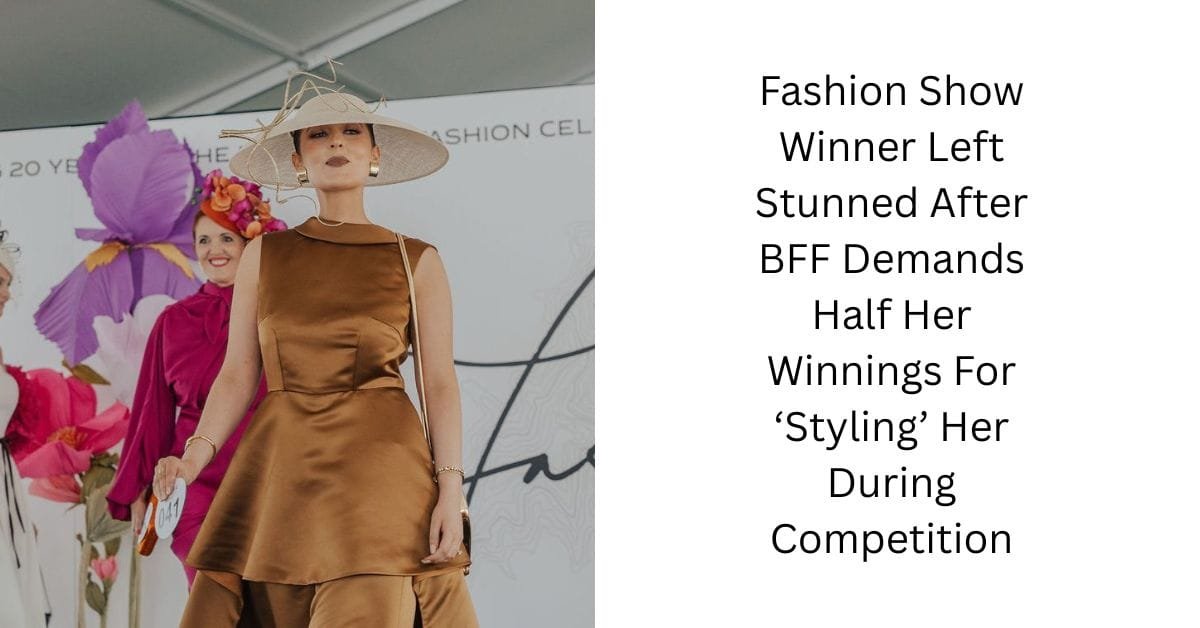
Winning a fashion competition should have been one of the happiest and most exciting moments of this woman’s life. She had worked hard to prepare for the event, put together her outfits, practiced her presentation, and stepped onto the stage hoping her effort would be recognized. What she never expected was that her victory would create a serious conflict with her best friend. After the competition, the friend demanded half of the prize money, claiming she deserved compensation because she had helped style the winner throughout the event.
The woman explained that she had never considered herself an expert in fashion competitions. She enjoyed clothing and putting outfits together, but she had never participated in a major competition before. Her best friend, on the other hand, had much more experience with fashion, styling, and competition etiquette. Because of that, the woman asked her friend for advice while preparing for the event. She appreciated having someone she trusted to help her avoid mistakes.
The friend became heavily involved in the preparation process. She suggested certain outfits, helped choose accessories, gave advice about hair and makeup, and offered opinions about how the woman should present herself on competition day. The woman welcomed the assistance because she believed her friend genuinely wanted to see her succeed. At no point, she says, did her friend tell her that the help was being provided as a paid service or that she expected a percentage of the prize money if they won.
The competition went better than either woman expected. When the final results were announced, the woman was shocked to hear her name called as the winner. She was overwhelmed with happiness and immediately thanked everyone who had supported her. Her best friend was among the first people she hugged because she believed her friend’s encouragement and advice had helped her feel confident enough to compete.
The celebration continued after the event, but the mood changed when the friend brought up the prize money. She told the winner that she believed she deserved half because she had essentially been her stylist throughout the competition. The winner initially thought she was joking. When she realized her friend was serious, she was stunned. She reminded her that she had asked for advice as a friend and that they had never discussed payment or a percentage of the winnings.
The friend disagreed. She argued that her contribution had been a major reason the woman won. According to her, she had spent hours helping choose outfits, coordinating accessories, and making sure the winner looked appropriate for every stage of the competition. She believed that without her expertise, the woman might not have performed as well. Because the prize was substantial, the friend felt that receiving half was a fair reward for the work she had done.
The winner felt deeply uncomfortable with that argument. She appreciated everything her friend had done, but she believed the final victory belonged to her. She had also spent time preparing, practicing, competing, and putting herself on stage. Her friend had offered advice, but she had been the person who wore the outfits, faced the judges, answered questions, and competed against the other participants. She could not understand why her friend was suddenly treating their friendship as a business arrangement after the fact.
The disagreement quickly became emotional. The friend accused her of being ungrateful and claimed that she would never have won without her help. The winner responded that she had never promised her any money and would have happily discussed payment if the friend had asked before the competition. She even offered to buy her dinner, give her a thoughtful gift, or pay a reasonable amount for professional styling advice. What she refused to do was hand over half of her prize money based on an agreement that had never existed.
Now the friendship is strained, and the winner is questioning whether she should have handled the situation differently. She does not want to dismiss the role her friend played, and she genuinely appreciates the advice and encouragement she received. However, she believes expectations about money should be discussed before someone provides a service, not after a person wins a large prize. What began as two friends supporting each other has now become a dispute over whether friendship, styling assistance, and financial expectations can be separated. The winner is left wondering whether she is being unfair by keeping the prize money or whether her best friend crossed a line by demanding half of her winnings after the fact.
Read Story…
AITA: An elderly friend wants half of my prize money I won….9 months ago.
Backstory; I had never been to the races, I was unaware of any dress code or what to expect. This elderly lady and I became really close based on her extensive knowledge of fashions on the fields and race day etiquette and my eagerness to learn and share in this with her.
This lady friend lent me a hat and purse for a huge Horse racing day. I was very grateful.
I spontaneously entered into the fashions on the fields and ended up winning the day and was invited back for the chance to compete in the top 10.
Whilst I didn’t win $40,000 top prize, I did win $1,500.
Since then she has been invited to my wedding, our growing love of horse racing and fashion, coffee dates, drinks nights and the like.
Fast forward 9 months later, she brings up that she thought I was upset with her all this time because I didn’t give her half my winnings ($750) for her being my “stylist”.
Just a highlight my previous point, she had “lent” me her hat and purse – to which I returned to her. I had purchased my entire outfit, hair and make up on my own. We had zero conversation of “styling fee” or expectation of an exchange of monies. In no way did I agree that this would be a business transaction.
I genuinely thought we were bonding and building such a close relationship based on a common interest. To say that I’m gutted and blindsided and frankly, very sad about all of this, is an understatement. I feel so weirded out by this whole conversation and awkward about our friendship now.
AITA for not paying her what she is asking 9 months after the fact?
How do I tell her that I will not be paying but I don’t want to lose her friendship?
UPDATE: we are no longer friends. This absolute abomination of a woman had the audacity to demand her wedding present she had gifted us after I declined to pay her $750. She says she can longer trust me.
A few months on she’s still dragging my name through the mud and gossiping about me in the very small town we live in. How do I know? Because I’ve been told and given the heads up by multiple people she’s gossiped to.
This really was a tough loss at the beginning. Like, super hard. But now, months on after the events and her carrying on like a pork chop – I have no time or energy left to pour into fixing this.
Fashion Competition Winner Shocked When Her Best Friend Demands Half Her Prize Money After Helping Style Her
Winning a fashion competition was supposed to be one of the happiest moments of my life. I had spent weeks preparing, choosing outfits, practicing how I would present myself, and trying to overcome my nerves. I never expected that the person who had supported me throughout the competition would later demand half of my prize money. What made the situation even more painful was that the person making the demand was my best friend, someone I had trusted completely.
I had never considered myself a professional fashion competitor.
I loved clothes, accessories, and putting outfits together, but I had never participated in anything on this scale before. When I found out about the competition, I was excited but also nervous because I knew there would be many experienced contestants.
My best friend, whom I will call Emma, was much more confident when it came to fashion.
She had always been interested in styling and had an excellent eye for colors, accessories, and presentation. Whenever we went shopping together, she could immediately tell which outfits worked and which ones did not.
Because of that, I naturally turned to her for advice.
I asked her what she thought I should wear.
She helped me look through different outfits and suggested combinations that I would never have considered on my own.
She also helped me choose accessories.
Sometimes she would suggest changing a pair of shoes or adding a particular piece of jewelry.
I appreciated everything she did.
At no point, however, did we discuss money.
I never hired her as a professional stylist.
She never gave me a price.
She never said that she expected a percentage of my winnings.
From my perspective, this was simply what best friends did for each other.
She was excited about the competition too.
She came with me while I prepared and encouraged me whenever I started doubting myself.
She told me I looked great.
She reminded me not to panic.
She helped me decide what to wear on different days of the competition.
I honestly believed she was helping because she wanted me to succeed.
The competition itself was much more stressful than I expected.
There were several rounds, and every contestant had to be prepared for different appearances.
I was nervous before the first round.
Emma kept telling me to relax.
She reminded me that I had worked hard and deserved to be there.
Her support helped me tremendously.
Eventually, the final round arrived.
I walked onto the stage feeling nervous but excited.
I tried to remember everything I had practiced.
When the judges announced the winner, I was completely shocked when they called my name.
For a few seconds, I could not even process what had happened.
Then everyone around me started congratulating me.
Emma was one of the first people I hugged.
I thanked her for helping me prepare.
She told me she was proud of me.
At that moment, I thought we were sharing a wonderful memory together.
The prize money was significant.
It was enough to make a meaningful difference in my life, so naturally I was thrilled.
I had plans for how I wanted to use it, although I had not made any final decisions.
I wanted to save most of it and perhaps use part of it for something special.
That was when things suddenly became uncomfortable.
After the celebration, Emma approached me and said we needed to talk about the prize.
I assumed she wanted to congratulate me again.
Instead, she told me she expected half of the money.
I honestly thought she was joking.
I laughed and asked her what she meant.
She said she was serious.
According to Emma, she had been my stylist throughout the competition.
She said that without her help, I probably would not have won.
I was completely stunned.
I reminded her that I had asked for her advice as a friend.
She said that did not change the amount of work she had put into helping me.
She told me that she had spent hours choosing outfits, discussing accessories, helping me prepare, and making sure I looked appropriate for each stage.
I agreed that she had helped me.
I never denied that.
But I told her that we had never discussed payment.
She said that the lack of a formal agreement did not mean her work had no value.
That argument made me uncomfortable.
If she had told me before the competition that she wanted to be paid for styling me, I would have considered it.
If she had said, “I’ll help you, but I want 20% of the prize if you win,” then I could have accepted or rejected the arrangement before we started.
But that never happened.
She had presented everything as friendship.
Now that I had won, she was suddenly treating our relationship like a business contract.
I asked her why she had waited until after the competition.
She said she did not want to discuss money before we knew whether I would win.
That made even less sense to me.
If she expected compensation regardless of the result, then the conversation should have happened beforehand.
If she expected a percentage only if I won, then that still should have been clearly explained.
Instead, she waited until the money was in my hands.
I told her I was grateful for everything she had done.
I even offered to give her a generous gift as a thank-you.
She rejected that idea.
She said she did not want a gift.
She wanted half.
Half of the entire prize.
That felt excessive to me.
I was the person who entered the competition.
I was the one who completed the application.
I was the one who paid the entry-related expenses.
I was the one who stood on stage.
I was the one who answered the judges’ questions.
I was the one who competed against everyone else.
Emma had helped me prepare, but she had not actually competed.
I told her that I could understand her wanting recognition for her contribution, but I could not agree to giving her half of my winnings.
She became angry.
She accused me of being ungrateful.
She said that I was acting as though she had done nothing.
I told her that was not true.
I repeatedly acknowledged that her help had been valuable.
But valuable help does not automatically equal half of a prize.
She then said something that really hurt me.
She told me that if I had not listened to her advice, I probably would have lost.
That made me wonder whether she had been supporting me because she genuinely cared or because she expected something in return.
I asked her directly whether she would have wanted half if I had lost.
She did not give me a clear answer.
Instead, she said that the fact I won proved that her strategy worked.
That argument made me even more uncomfortable.
Winning was not solely the result of clothing.
There were many factors involved.
My preparation mattered.
My confidence mattered.
My performance mattered.
The judges’ preferences mattered.
And honestly, there were other people who helped me too.
My family encouraged me.
Friends helped me practice.
I spent countless hours preparing myself.
If everyone involved in my preparation demanded a percentage of the prize, there would barely be anything left.
I eventually told Emma that I was willing to compensate her in a reasonable way if she believed she had provided professional-level styling services.
I suggested paying her a fair amount for the time she had spent helping me.
She rejected that completely.
She said half was the only amount she would accept.
At that point, our conversation ended badly.
She walked away angry.
I went home feeling confused and betrayed.
I kept thinking about all the times we had talked about the competition.
She had never once mentioned payment.
She had never said she considered herself my hired stylist.
She had always called herself my friend.
Now she was saying that I owed her thousands of dollars.
The situation has also affected how I feel about the victory.
Instead of simply celebrating, I now feel guilty.
Part of me wonders whether I should give her something just to preserve our friendship.
Another part of me feels that doing so would establish a terrible precedent.
If I give her half now, it would essentially validate an agreement that never existed.
What happens the next time she helps me with something?
Would I owe her money again?
Would our friendship become transactional?
That is not the kind of friendship I thought we had.
I have talked to a few people about the situation.
Some believe I should give Emma something because she clearly contributed to my success.
Others think her demand is completely unreasonable.
One person suggested giving her a smaller percentage as a compromise.
Another said I should simply explain that there was never a financial agreement and leave it at that.
I am still undecided about whether to offer anything.
I want to be fair.
I also want to acknowledge that her help mattered.
But I do not want to be pressured into surrendering half of something I earned because someone decided after the fact that they deserved it.
There is also a larger issue here.
Friendship should involve generosity without hidden expectations.
If someone is doing something as a friend but secretly expects payment, they should communicate that before providing the help.
Otherwise, the other person has no opportunity to make an informed decision.
I would have treated the situation completely differently if Emma had approached me before the competition.
Maybe I would have hired her.
Maybe I would have negotiated a different percentage.
Maybe I would have decided to handle the styling myself.
But at least I would have known what I was agreeing to.
Instead, she helped me as a friend and then changed the terms after I succeeded.
That does not feel fair.
I also wonder whether winning changed her perception of our friendship.
Perhaps she always believed she deserved something.
Perhaps she simply became caught up in the excitement of seeing how much money I had won.
I cannot know what was in her mind.
What I do know is that her demand has changed the way I see our relationship.
We are no longer speaking normally.
She has told mutual friends that I am taking advantage of her.
I have tried not to respond publicly because I do not want the situation to become an even bigger fight.
But it hurts to hear that someone I considered my closest friend believes I intentionally used her.
That was never my intention.
I never asked her to work for free.
I asked my friend for advice.
There is a significant difference between those two things.
Now I am left trying to figure out whether there is any way to repair the friendship.
I would still like to sit down with Emma and have a calm conversation.
I would tell her again that I appreciate everything she did.
I would also tell her that I cannot agree to an after-the-fact demand for half my winnings.
If she wants to discuss a reasonable amount for her time, I am willing to listen.
But if she insists that half is the only acceptable answer, I may have to accept that our friendship cannot continue the way it once did.
The strangest part is that I originally thought winning would bring us closer.
I imagined celebrating together, looking back at the competition, and laughing about all the stressful moments.
Instead, I am now wondering whether the person cheering for me was also keeping track of what she believed I owed her.
I wish we had discussed money before any of this happened.
Maybe then none of this would have become a problem.
For now, I am keeping the prize money untouched while I decide what to do.
I do not want to make an emotional decision.
I also do not want to reward a demand simply because I feel guilty about disappointing my friend.
The experience has taught me an important lesson about boundaries.
Even among close friends, assumptions about money can create serious problems.
If someone expects compensation, especially a percentage of a future prize, that expectation needs to be discussed clearly before the work begins.
Otherwise, resentment can develop on both sides.
Emma believes she played a major role in my victory.
I believe she did help me, and I am grateful.
But I also believe the victory was mine.
I was the contestant.
I took the risks.
I faced the judges.
I accepted the criticism.
I stood on the stage when the result was announced.
And I believe I should be able to enjoy the reward without feeling like I secretly owe half of it to someone who never mentioned payment.
At the same time, I do not want to minimize the contribution of people who support us.
Maybe there is a reasonable middle ground somewhere between giving her nothing and giving her half.
The problem is that we now have to figure out whether our friendship is strong enough to survive this disagreement.
What began as styling advice from a best friend has turned into a conflict over money, recognition, expectations, and trust.
I never expected a fashion competition to teach me so much about boundaries.
I certainly never expected my biggest argument after winning would be with the person who had been standing beside me throughout the entire competition.
Now I am left with a difficult question: Was I wrong for refusing to give my best friend half of my prize money after she helped style me, or was her demand unreasonable because we never agreed that her help would be paid or tied to my winnings?