My Friend Screams at Every Little Scary Thing, and Now She Thinks I’m a Terrible Friend
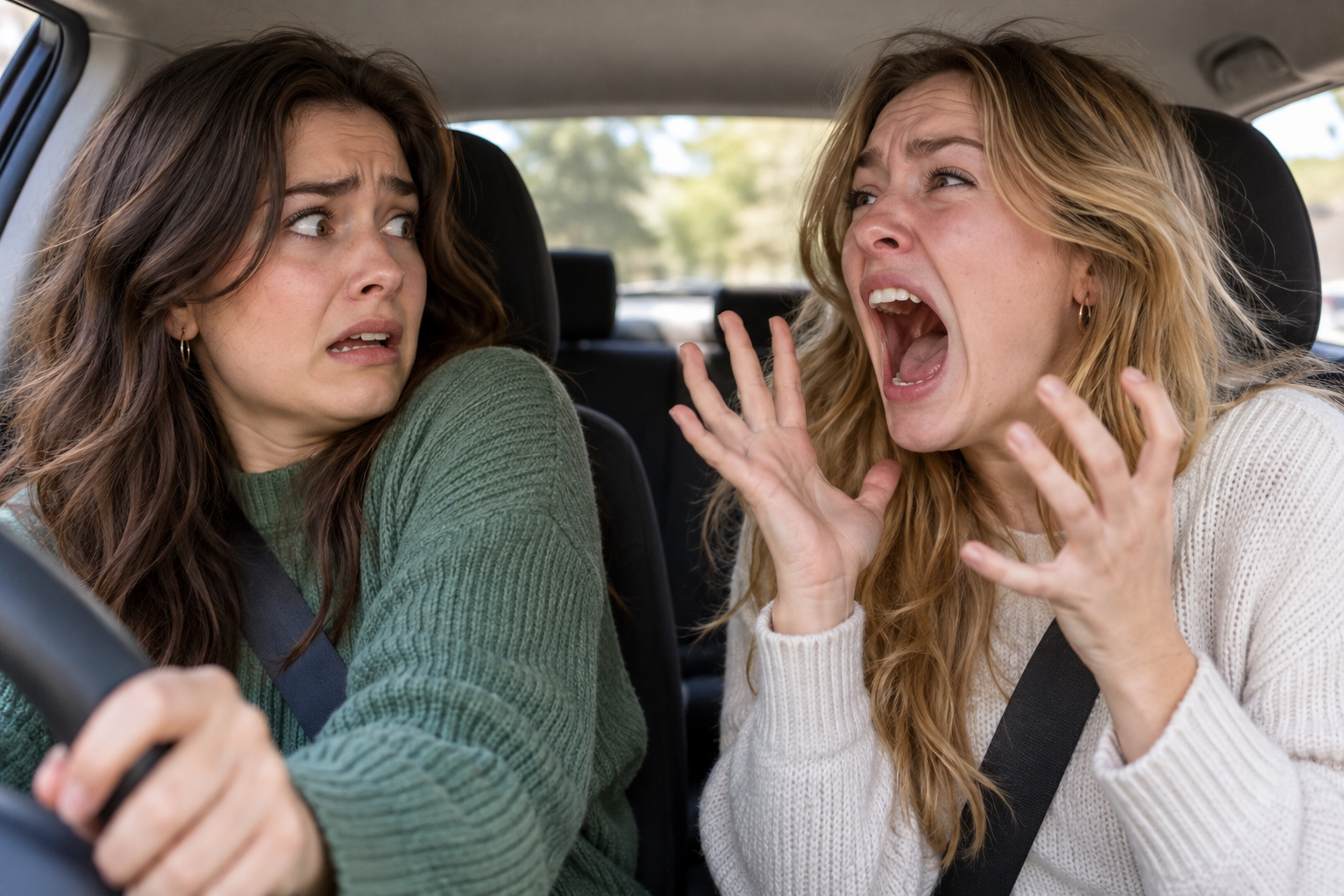
I’m a 23-year-old guy, and I’ve recently found myself in an uncomfortable situation with one of my closest friends, a 22-year-old girl. We’ve known each other for a couple of years, and for the most part, we’ve always gotten along well. She’s funny, outgoing, and usually great to be around. However, there’s one habit of hers that has become a serious problem for me, especially whenever we’re in a car together. She screams at the absolute top of her lungs whenever something scares her, even if it’s something relatively minor. At first, I thought it was just a funny personality quirk, but after experiencing it repeatedly, I’ve started to dread driving anywhere with her.
The first time I really noticed how bad it was happened when I offered to drive her to a friend’s house one evening. We were traveling along a quiet road when a cat suddenly ran across the street. I saw it and slowed down immediately, but before I could even react properly, she let out an incredibly loud scream right beside my ear. I nearly jerked the steering wheel because the noise startled me so badly. Thankfully, nothing happened, and we continued driving after I told her that screaming like that could distract me. She apologized and said she couldn’t help it because she got scared easily. I accepted her explanation and didn’t think much more about it.
Unfortunately, that wasn’t an isolated incident. Over the following weeks, I experienced the same thing several more times. Sometimes it happened when another car changed lanes nearby, when we drove past a dog, or when she noticed something unexpected outside the window. Even when I was driving carefully and there was no real danger, she would suddenly scream loudly enough to make me jump. I’m not someone who gets easily distracted, but having someone suddenly yell directly beside you while you’re concentrating on the road is genuinely unsettling. Every time it happened, I had to fight the urge to react suddenly while keeping my attention on the traffic around us.
I tried talking to her about it in a calm and friendly way. I explained that I understood she couldn’t always control her initial reaction to being frightened, but I needed her to understand how dangerous it could be when I was behind the wheel. I told her that even a split-second distraction could cause an accident, especially on busy roads. She laughed at first and said I was being dramatic. According to her, I should simply get used to it because screaming was an automatic response whenever she got startled. I reminded her that I wasn’t asking her to stop feeling scared; I was asking her to understand that her reactions could affect my ability to drive safely.
Things became more frustrating when we went on another drive with a couple of mutual friends. We were traveling on a highway when a motorcycle passed us a little closer than I expected. I was already aware of the motorcycle and had plenty of room, but my friend suddenly screamed so loudly that I instinctively tightened my grip on the steering wheel. For a moment, I felt my heart racing, and I had to concentrate even harder to keep the car steady. The other passengers looked startled too. After we reached our destination, one of them quietly told her that she really needed to stop screaming like that in the car. Instead of taking the comment seriously, she laughed and said everyone was too sensitive.
That was the point when I decided I couldn’t keep pretending this was harmless. I told her that from now on, I wasn’t comfortable being responsible for driving her anywhere. I made it clear that I wasn’t ending our friendship or refusing to spend time with her. I was simply setting a boundary because I didn’t want to risk getting into an accident. I offered to meet her at places instead of picking her up, and I said she could arrange another ride whenever we planned something together. I thought this was a reasonable compromise because it allowed us to remain friends without putting me in a situation that made me uncomfortable.
She didn’t take it well at all. She accused me of treating her like a child and making her feel embarrassed about something she couldn’t control. She said a real friend would understand her fears instead of punishing her for them. I explained again that I wasn’t punishing her and that I understood she might not be able to prevent every scream. However, I could decide whether I felt comfortable driving with someone whose reactions repeatedly startled me. She insisted that I was exaggerating the danger and making a big deal out of nothing. Eventually, the conversation turned into an argument, and she told me I was being selfish and abandoning her over a minor issue.
Since then, things have been awkward between us. She has complained to some of our mutual friends, telling them that I refuse to help her anymore because I can’t tolerate one of her natural reactions. A few people agree with her and think I should be more understanding, while others say that nobody should be expected to drive under conditions that make them feel unsafe. I don’t want her to feel ashamed of being easily frightened, and I certainly don’t want to make her feel like there’s something wrong with her. At the same time, I don’t think being friends with someone means I have to ignore a legitimate safety concern just to avoid hurting their feelings.
Now I’m questioning whether I handled the situation too harshly. I could have continued driving her and hoped that things would improve, but I don’t want to wait until something genuinely dangerous happens before taking the issue seriously. I still value our friendship, and I’m willing to spend time with her in other ways. I just don’t want to be responsible for a vehicle when I’m worried that a sudden scream might distract me at the worst possible moment. Am I the asshole for refusing to drive with my friend because she screams whenever she’s scared, even though she believes I’m being a terrible friend?
Read Story…
AITA I (23m) refuse to drive with my friend (22f) in the car because she screams at full volume when scared.
We just had this huge fight. I have a friend who just screams bloody murder at ear shattering volumes when she is startled. It is annoying at random times but there have been three separate incidents where I have been driving and someone cuts us off or something and she will let out these ear shattering screams. Not quick either, like goes on for a solid 4-5 full seconds.
I also can’t stress just how loud it is either. My ears are literally ringing for several minutes after she has one of her episodes. Its bad. People stare at us in public. Its not just me, our entire friend group hates it and have talked about it.
However, other than that, she is a good friend and awesome person.
At some point though, you are being a drama queen. I am convinced that she does it on purpose. Even if she is not doing this on purpose, it makes my blood boil. Its insanely jarring and honestly enough that I fear of getting into an accident because I am so distracted by her jump scaring me. Inside of a car, its that much louder because we are in an enclosed space.
After this third time she screamed while I was driving, we had plans to go to a mutual friends house who lives about a half hour away, while we live within a few minutes of each other. She wanted to carpool and I tried to make up excuses but then just was honest with her, I don’t want her in my car while I am driving. She lost it. I even said if she drove,
I would pay for gas, but I am not driving with her. I tried to be gentle but was just firm and told her that its a safety issue. She knows its because of her insane screams.
Am I in the wrong? If so, what should have I done instead? Also what should I do now?
I don’t want to lose the friendship but honestly, her blood curdling screams piss me the F off and I can’t deal with it.
Quick edit:
Before anyone comments, I also want to add that about 2 years ago, I had a really bad health issue, and I am on meds to keep blood pressure down and have been prescribed anxiety meds. Every time she screams my blood pressure rises and I can feel my heart beating out of my chest. I don’t need that kind of jarring stress on my body.
My Friend’s One Habit Has Turned Every Car Ride Into a Nightmare
I’m a 23-year-old guy, and I’m currently dealing with a situation involving one of my closest friends, a 22-year-old girl. We’ve known each other for a couple of years, and until recently, I would have described our friendship as pretty solid. We hang out regularly, go out to eat, watch movies, and occasionally take short trips together. She’s funny, outgoing, and usually a genuinely enjoyable person to be around. However, there’s one habit of hers that has slowly turned something as simple as giving her a ride into a stressful experience.
My friend screams whenever something scares her. I don’t mean a little gasp or a quick startled noise. I’m talking about an incredibly loud, full-volume scream that sounds like someone has just witnessed something genuinely terrifying. Sometimes it happens because an animal runs across the road, another car passes unexpectedly, or she notices something moving outside the window. Other times, it’s something so minor that I barely even notice it myself. At first, I thought it was just an amusing quirk, but after experiencing it repeatedly, I began to realize how much it affected me whenever I was driving.
The first incident happened a few months ago when I offered to drive her to a mutual friend’s house. It was early evening, and the roads weren’t particularly busy. We were having a normal conversation when a cat suddenly ran across the street in front of my car. I immediately noticed it, slowed down, and allowed it to get safely out of the way. Before I could finish reacting to the situation, my friend let out an ear-piercing scream directly beside me.
I was so startled that my hands tightened around the steering wheel, and the car briefly moved closer to the edge of our lane. I corrected it immediately, and fortunately, nothing happened. The cat was fine, neither of us was injured, and we continued driving. However, my heart was pounding, partly because of the unexpected scream and partly because I realized how easily the situation could have become dangerous. I looked at her and asked why she had screamed so loudly when I had already slowed down.
She apologized and explained that she had always been easily frightened. According to her, the scream happened automatically before she had time to think about it. I accepted that explanation because I understood that people react differently when startled. I wasn’t angry with her, and I didn’t want to make her feel embarrassed about something she might not be able to control. I simply asked her to try to be more mindful when we were in the car together. She promised she would, and I assumed that would be the end of it.
Unfortunately, it wasn’t. Over the next several weeks, the same thing happened again and again. Sometimes we would be driving through a neighborhood when a dog suddenly appeared on the sidewalk, and she would scream as if it were attacking the car. Other times, another vehicle would change lanes nearby, even when there was plenty of space between us, and she would react with the same deafening noise. Once, she screamed because a plastic bag was blowing across the road.
The problem wasn’t that she felt frightened. I could understand that, and I never expected her to become completely fearless just because she was sitting in my car. The problem was that her reactions startled me while I was responsible for controlling a moving vehicle. Driving requires concentration, awareness, and the ability to react calmly when something unexpected happens. Having someone suddenly scream directly into your ear can interrupt that concentration, even when you are an experienced and careful driver.
I tried to explain this to her several times without turning it into an argument. Whenever we reached our destination, I would calmly tell her that the screaming made it harder for me to concentrate. I asked whether she could try taking a deep breath or simply telling me that something had frightened her instead of immediately screaming at full volume. I wasn’t asking her to suppress every emotion or pretend she wasn’t scared. I just wanted her to understand that her reactions had consequences when I was driving.
Her usual response was to laugh and tell me I was being dramatic. She said that she couldn’t control her reactions and that I should stop taking them so seriously. Sometimes she would apologize, but the apology usually came with a joke about how sensitive I was. She would say things like, “Sorry my fear is so terrifying to you,” before laughing and changing the subject. I didn’t want to make every outing uncomfortable, so I usually let it go.
At one point, I even started turning the music down whenever she got into my car because I thought perhaps unexpected sounds were making her more nervous. I also tried explaining our route before we left so she would know when we were approaching busy intersections or unfamiliar roads. I thought these small adjustments might help her feel more comfortable. However, none of them made much difference. She continued screaming whenever something caught her attention unexpectedly, and I continued getting startled.
Things became particularly uncomfortable during a drive we took with two mutual friends. We were heading to a restaurant on the other side of town, and I had offered to drive because the four of us wanted to arrive together. Traffic was moving steadily, and I was maintaining a safe distance from the vehicles ahead of me. Suddenly, a motorcycle passed us in the neighboring lane. It wasn’t especially close, and I had already noticed it in my side mirror.
My friend screamed so loudly that one of the passengers in the back actually jumped in their seat. I flinched instinctively, tightened my grip on the steering wheel, and had to focus hard on maintaining my position in the lane. Nothing happened, but I was shaken enough that I became completely quiet for the next few minutes. I wasn’t trying to punish her with silence. I was simply trying to calm myself down and concentrate on driving safely.
When we finally arrived at the restaurant, one of our friends asked her whether she could please stop screaming like that while someone else was driving. The comment was made in a fairly lighthearted way, but it clearly embarrassed her. She immediately defended herself, saying that she couldn’t help being scared and that everyone was acting as though she had committed some terrible offense. Our other friend pointed out that nobody was criticizing her for feeling afraid. They were concerned about how startling it could be for the person driving.
She didn’t appreciate that explanation. Instead, she said that if we knew she was easily frightened, we should simply expect her to react that way. She argued that she shouldn’t have to change her personality to make other people comfortable. I didn’t respond because I didn’t want to turn dinner into a confrontation. However, I couldn’t stop thinking about what she had said. There was a difference between accepting someone’s personality and being expected to tolerate behavior that could create a safety risk.
After that evening, I began avoiding situations where I would have to drive her. If we planned to meet somewhere, I would suggest that we meet directly at the location rather than offering to pick her up. If she asked whether I could give her a ride, I would sometimes say that I already had other plans or that it would be easier for her to arrange her own transportation. I admit that I wasn’t completely honest about my reasons at first because I didn’t want another argument.
Eventually, she noticed the pattern. One afternoon, she messaged me asking why I had suddenly stopped offering her rides. She pointed out that I used to pick her up regularly and that I had recently started making excuses whenever she needed transportation. I knew I couldn’t keep avoiding the conversation, so I decided to explain the situation directly. I told her that I valued our friendship but no longer felt comfortable driving with her because the screaming repeatedly startled me.
She immediately became defensive. She said I was making her feel like some kind of dangerous person and that she couldn’t believe I would refuse to help her over something so insignificant. I explained that I wasn’t calling her a bad person or blaming her for feeling scared. I was simply telling her that I didn’t feel comfortable being responsible for driving when I knew I might be startled unexpectedly. I also reminded her that I had already raised the issue several times and that nothing had changed.
She responded by saying that I should be more understanding because she wasn’t screaming intentionally. She compared it to someone having a natural reflex and argued that I was effectively punishing her for something beyond her control. I could understand why she might feel that way, but I didn’t agree with her conclusion. Even if she couldn’t completely control her initial reaction, I could still decide whether I wanted to continue driving her. Setting a boundary about my own actions didn’t mean I was demanding that she change who she was.
I offered a compromise. I told her that I was still happy to meet her at restaurants, movie theaters, shopping centers, or anywhere else we planned to go together. We could arrange separate transportation, ask another friend to drive, or use a taxi service if that worked better. I wasn’t ending the friendship, refusing to speak to her, or telling other people to avoid her. I was simply no longer willing to be the driver in a situation that repeatedly made me feel distracted and uncomfortable.
For a moment, I thought she might understand. Instead, she told me that my compromise was insulting because it made her feel as though she was a burden. She said that real friends helped each other without keeping track of every little inconvenience. According to her, I was choosing my own comfort over our friendship. I reminded her that driving wasn’t a small favor when I was genuinely concerned about safety. She insisted that I was exaggerating and that nothing bad had ever happened because of her screaming.
That argument frustrated me more than anything else. The fact that we hadn’t experienced an accident didn’t mean there was no risk. I had already felt myself flinch while driving, and on one occasion, the car had briefly moved toward the edge of our lane after she startled me. I didn’t want to wait until someone was injured before deciding the situation needed to change. I told her that I would rather disappoint her now than continue doing something I believed could eventually lead to a serious problem.
She became upset and accused me of acting as though I were a perfect driver who never made mistakes. I admitted that I wasn’t perfect and that I could also get startled by unexpected things. However, I explained that I tried to remain calm because reacting unpredictably behind the wheel could put people at risk. I wasn’t expecting her to have complete control over every emotion. I was asking her to recognize that screaming suddenly beside a driver could have an effect she might not intend.
The conversation ended badly. She told me that she needed some space from me and that she couldn’t believe I would treat her this way after everything we had done together. I told her I was sorry that the situation had hurt her feelings, but I wasn’t going to change my decision about driving. I didn’t want to keep arguing, so I ended the conversation and gave her time to cool down. For the next few days, we barely spoke.
A few days later, I discovered that she had discussed the situation with several of our mutual friends. According to what one friend told me, she had described me as selfish and overly sensitive. She said I had suddenly refused to help her because she was naturally jumpy and that I had made her feel ashamed of herself. Some of our friends agreed that I should be more patient with her because she wasn’t screaming on purpose. Others thought she was ignoring a reasonable concern and expecting me to tolerate something that made driving more difficult.
I tried not to turn the situation into a competition over who could convince more people to take their side. I explained my perspective when someone asked, but I didn’t want to embarrass her publicly or share private messages just to prove that I was right. I also didn’t want our entire friendship group to become divided over something that should have been a private conversation between two friends. All I wanted was for people to understand that my decision wasn’t motivated by hatred or a desire to punish her.
One friend suggested that I should simply wear earplugs or turn up the music so that her screaming wouldn’t bother me as much. I thought that was a terrible solution because I needed to hear traffic, emergency vehicles, horns, and other important sounds while driving. Another person suggested that I should just learn to ignore the screaming. I explained that ignoring a sudden, extremely loud noise isn’t always something a person can do instantly, especially when they are operating a vehicle. Neither suggestion addressed the actual issue.
Someone else asked whether I would refuse to drive with a friend who cried whenever they were frightened. I said that it would depend on the circumstances and whether their reactions interfered with my ability to drive safely. I wasn’t trying to establish a rule that anyone who made an unexpected noise could never ride in my car. My concern was specifically about repeated, extremely loud screams that startled me despite several conversations about the problem. I believed there was a reasonable difference between an occasional startled reaction and a recurring situation that made me nervous about driving.
I also began wondering whether I had made the situation worse by avoiding the conversation for so long. Perhaps I should have been more direct after the first or second incident instead of repeatedly hoping she would change. Maybe my decision to make excuses about giving her rides had made her feel rejected before she even understood what was happening. I could acknowledge that I hadn’t handled every part of the situation perfectly without believing that my ultimate decision was wrong.
At the same time, I couldn’t ignore how she had responded whenever I tried to explain my concerns. Instead of acknowledging that her screaming affected other people, she repeatedly dismissed my feelings as an overreaction. She seemed to believe that because her behavior was unintentional, nobody else had the right to be uncomfortable with it. I didn’t think that was a fair expectation in any friendship. People can have understandable reasons for behaving a certain way while still needing to consider how their actions affect those around them.
I started thinking about what I would do if the situation were reversed. If I had a habit that repeatedly startled someone while they were driving, I would hope they would tell me honestly rather than silently putting themselves in an uncomfortable position. Even if I couldn’t stop the reaction immediately, I would at least acknowledge their concern and work with them to find another arrangement. I wouldn’t expect them to continue driving me simply because I felt hurt by their decision.
A week later, she messaged me asking whether I was still refusing to drive her. Her tone was less angry than before, and for a moment, I thought we might finally be able to talk calmly. I told her that my decision hadn’t changed, but I was still willing to spend time together. I said I missed our usual conversations and didn’t want one disagreement to destroy a friendship that had otherwise meant a lot to me. I also made it clear that I wasn’t asking her to apologize for being frightened.
She replied that she still thought I was being unfair, but she didn’t want us to stop being friends either. She said she would try to be more aware of how she reacted when she got scared. I appreciated that she was at least willing to discuss the issue, although I didn’t immediately agree to start driving her again. I told her that I hoped things would improve, but I needed to feel comfortable and safe before reconsidering that arrangement. We agreed to meet at a café the following weekend, with each of us arranging our own transportation.
The meeting went reasonably well. We talked about ordinary things for most of the afternoon, and neither of us brought up the argument until we were getting ready to leave. She admitted that she hadn’t realized how much her screaming startled me because she was usually focused on whatever had frightened her. I told her I understood that her experience was different from mine, but I hoped she could understand why I was concerned. We didn’t completely agree, but the conversation felt more respectful than our earlier arguments.
However, I still haven’t decided whether I would ever feel comfortable driving her regularly again. I don’t want to hold a grudge or make her feel that she has to prove herself to earn my friendship back. At the same time, I don’t think I should ignore my concerns simply because she is upset with my decision. Friendship matters to me, but so does being able to concentrate when I’m responsible for a vehicle carrying other people.
The part that bothers me most is being described as a terrible friend when I genuinely believe I have tried to handle this situation reasonably. I listened to her explanation, gave her several opportunities to understand my concerns, suggested alternatives, and made it clear that I still wanted to spend time with her. I haven’t insulted her, mocked her fears, or told her that she is a bad person. I’ve simply drawn a line around something I am no longer comfortable doing.
I understand that she might feel hurt because she interprets my decision as a rejection of her personally. I can sympathize with that feeling without agreeing that I owe her rides. I also recognize that being easily frightened isn’t something she necessarily chose, and I don’t believe she deserves to be ridiculed for it. But I don’t think compassion requires me to keep putting myself in a situation that makes me uncomfortable, especially when that situation involves road safety.
So now I’m turning to other people for an outside perspective. Am I being unreasonable by refusing to drive my friend because she screams at every little thing that scares her? Should I be more understanding because she says she can’t control her reactions, or is it fair to maintain this boundary after repeatedly explaining my concerns? I still care about her and would genuinely like our friendship to recover, but I don’t believe being a good friend means ignoring every concern just to keep someone happy. Am I the asshole for choosing not to drive with her anymore, even though she believes I’m being selfish and treating her like a terrible friend?