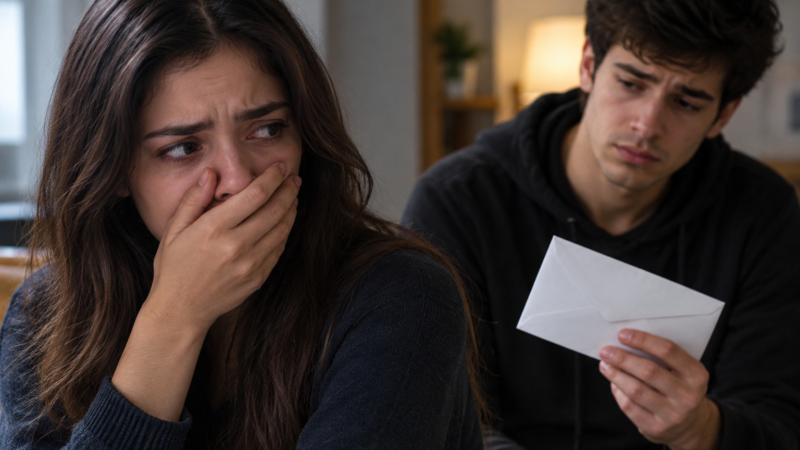
Our First Anniversary Took an Unexpected Turn After One Small Joke

I never imagined that something as small as a playful joke could turn one of the most meaningful evenings in my relationship into an uncomfortable and emotional experience. My boyfriend and I had been together for a year, and I was genuinely excited about celebrating our first anniversary. I thought it would be a lovely evening filled with good food, laughter, and memories that we would look back on fondly. I had no idea that a brief moment on the drive home would leave me questioning how we communicated with each other and whether we understood each other’s boundaries as well as I had believed.
Yesterday, my boyfriend and I went out for dinner to celebrate our anniversary. The evening itself was pleasant, and I was happy to spend time with him. We had been together long enough to develop our own sense of humor, inside jokes, and little habits that made our relationship feel comfortable. I felt that I could be playful around him without worrying that every small gesture would turn into a serious conversation. After dinner, we got into the car and began driving back to his place. We were talking casually, and at one point, I made a joke that he understood. We both knew what I meant, and I reacted naturally by giving his arm a light, playful tap with the back of my relaxed, open hand.
To me, the gesture was completely harmless. I did not clench my fist, use force, or intend to hurt him in any way. It was simply one of those playful gestures people sometimes make when laughing or joking with someone they love. However, my boyfriend’s reaction was so sudden and stern that I barely knew how to respond. In a serious voice, he said, “Don’t you ever punch me!” His tone sounded less like a partner expressing discomfort and more like a parent reprimanding a child who had repeatedly disobeyed a rule. I was immediately taken aback because I had never experienced that kind of response from him before.
I tried to explain that I had not punched him. I wanted to clarify that I had only given him a light tap and had no intention of hurting him. Before I could finish explaining myself, however, he interrupted me and repeated the same sentence in exactly the same stern voice. “Don’t you ever punch me!” That second response hurt more than the first because it made me feel as though he had already decided what had happened and was unwilling to listen to my explanation. I was shocked by how quickly an ordinary moment had turned into a confrontation. Since he had never spoken to me that way before, I did not know whether to defend myself, ask him why he was so upset, or simply remain quiet.
For the rest of the drive, I found myself struggling to process what had just happened. I was not upset simply because he had asked me not to touch him that way. I understand that everyone has physical boundaries, and I would never want my partner to feel uncomfortable or unsafe around me. What bothered me was the way he had communicated his feelings. He could have calmly said that he did not like being tapped on the arm, and I would have listened. Instead, he used an accusatory word and repeated his warning without allowing me to explain. I felt embarrassed, hurt, and confused. The evening that had started with a celebration suddenly felt tense, and I no longer had the desire to continue our conversation.
When we arrived at his place, I decided that I needed to tell him how his behavior had affected me. I explained that I was not okay with the way he had spoken to me in the car. From my perspective, I had made a playful gesture once, and his response had been unnecessarily harsh. I wanted him to understand that I was not dismissing his right to set boundaries. My concern was that he had treated me as though I had deliberately hurt him, even though that had never been my intention. I expected us to discuss the misunderstanding calmly and perhaps discover that we had interpreted the same moment differently. Instead, he brought up something that had happened much earlier in our relationship.
According to him, during Memorial Day weekend in May 2023, we had been joking around while cooking together, and I had tapped his arm in the same manner three times. He said that the first time had surprised him because I had never done that before. When it happened a second and third time, he began wondering why I was doing it. He admitted that he had not said anything about it that weekend. Instead, he had silently decided that if I ever did it again, he would tell me to stop. In his mind, the incident during our anniversary drive was the fourth time it had happened, and he believed he was finally addressing something that had bothered him for a long time. Hearing this explanation surprised me because I had no idea that those earlier playful gestures had remained in his mind as a problem.
I could understand that he might have remembered those moments differently from me. Something that feels affectionate or playful to one person may feel uncomfortable to another, and I did not want to assume that my intentions automatically made his feelings irrelevant. At the same time, I found it difficult to accept that he had allowed the discomfort to build silently instead of communicating it when it first happened. If he had told me during that weekend that he disliked being tapped on the arm, I could have adjusted my behavior immediately. There would have been no reason for either of us to carry frustration into the future. Instead, he waited until our first anniversary to express his feelings in a way that left me feeling accused and reprimanded.
I told him that I thought his reaction was unfair because I had not known that this was something he disliked. I also explained that there was a difference between setting a boundary and speaking to someone in a harsh, condescending manner. I would have respected a straightforward request not to touch him that way, but I wanted the same respect in return when he addressed me. I did not believe that being in a relationship meant either of us had to tolerate physical contact that made us uncomfortable. However, I also believed that we should be able to talk about such things without immediately assuming the worst about each other’s intentions. The disagreement was no longer just about a light tap on the arm. It had become a conversation about communication, trust, and the way we handled uncomfortable feelings.
What continues to bother me is how easily the situation could have been avoided. My boyfriend could have mentioned his discomfort the first time it happened, and I could have listened without feeling accused. I could also have been more attentive to the possibility that a gesture I considered harmless might not have felt the same to him. I recognize that both people’s experiences matter in a relationship, and neither person should have to ignore their own boundaries to keep the peace. Still, I cannot help wondering why he chose such a stern approach instead of simply explaining himself. Our first anniversary was supposed to be a chance to celebrate the year we had spent together, but instead, I went home feeling hurt and uncertain. I want us to be able to disagree without making each other feel small. More than anything, I hope we can learn to express our boundaries earlier, listen before reacting, and remember that being partners means treating each other with patience and respect, even when something unexpected goes wrong.
Read Story…
Me (33F) and my boyfriend’s (36M) first anniversary date turned sour
I (33F) have been with my boyfriend (36M) for a year.
Yesterday, we went out to dinner to celebrate our anniversary. On the way home, I had made a joke and my boyfriend got it, and I gave him, what I considered, a love tap on the arm with the back of my open, relaxed hand.
My boyfriend, in a very stern voice (think mother reprimanding a child after telling them not to do something multiple times, but the child still does it) says, “Don’t you ever punch me!” I reply that I didn’t punch him and go to explain the love tap, but he interrupts me by restating, in the same stern voice, “Don’t you ever punch me!”
I was taken a back/shocked. My boyfriend has never talked to me like this before. I was too upset to talk the rest of the car ride back to his place’.
When we got to his place, I let him know that I was not okay with the way he had talked to me in the car for something I did, to my recollection, once. He brings up that during Memorial Day weekend 2023, while we were joking around with each other while cooking, I had “hit” him in the same manner (love taps) three times.
He explained he was shocked by the first one (because I had not “hit” him before) and started to question the reason for the second and third “hits”.
He didn’t say anything that weekend and decided that if I “hit” him again, then he would say something. Tonight just happened to be number four.
I replied that I felt it was unfair for him to react in such an extreme way for doing something for the first time in a while (9 months) and for me doing something I had no idea that he didn’t like. I also stated I did not like that he didn’t tell me about not liking those kinds of touches from me the first time it happened. If he had told me, tonight would have never happened.
My boyfriend has an old shoulder injury that has been more painful than usual recently. He says I “hit” him in a spot that was especially sensitive, which is why he reacted the way he did, justifying he had every right to say what he said and the way he said it.He also stated that seconds after he said what he said in the car, he was cooled down and over it and ready to move on. He also shared that he hoped I wasn’t upset.
I shared that this discussion was me letting him know I was upset. We continued to go back and forth, essentially saying the same things, just in different ways.
When I noticed we were talking in circles, I said we may have to agree to disagree. However, my boyfriend kept trying to justify himself; this was the 4th time I “hit” him, his shoulder injury, he was driving, and the sternness in his voice was more from the surprise pain from my “hit” than directed towards me in anger.
I decided to let him know that what I really wanted was an apology for the way he spoke to me. After some more back and forth about the same things, my boyfriend apologized for the way he spoke to me. I accepted his apology. My boyfriend gave me a look like he was waiting for me to say something.
When I didn’t say anything, he asked if I was going to apologize for “hitting” him tonight and in the past. I was floored. I didn’t believe I should have to apologize. It was our anniversary, so I apologized.
However, his apology has not made me feel better. I am still upset about last night and the way it played out (especially with it being our first anniversary). I honestly don’t know what it is going to take at this time to make me feel better.
My questions are: Does anyone else give their friends and/or significant others “love taps”? Is my boyfriend overreacting by saying I “hit” him? Am I overreacting?
Tl/dr: I (33F) gave my boyfriend (36M) a “love tap” with the back of my open, relaxed hand in the car on the way home from our anniversary dinner. He responded with, “Don’t you ever punch me!” in an extremely stern voice twice. When I confronted him about how he talked to me, he brought up three times I previously “hit” him (love taps) months ago (but didn’t say anything until last night) and believes he had every right to say what he said and the way he said it. I believe his reaction was extreme considering this was my first time hearing that he did not like those kinds of touches.
We apologized. My boyfriend is over it, but I’m not.
Does anyone else give their friends and/or significant others “love taps”? Is my boyfriend overreacting by saying I “hit” him? Am I overreacting?
Our First Anniversary Started Perfectly but Ended in an Unexpected Argument
I never imagined that my first anniversary with my boyfriend would turn into an evening filled with confusion, hurt feelings, and an unexpected argument. We had been together for a year, and I genuinely believed that our relationship was in a good place. Like any couple, we had our differences, but I had never experienced a moment that made me question our communication in this way. I was excited about celebrating our anniversary and spending some quality time together. Instead, one small joke and a playful gesture became the reason we ended our special evening feeling completely disconnected from each other.
My boyfriend is 36 years old, and I am 33. We have been dating for a year, and during that time, I had grown comfortable around him. I believed we understood each other’s personalities, humor, and general ways of expressing affection. We could joke around, laugh at silly things, and enjoy ordinary moments without overthinking everything. That comfort was one of the things I appreciated most about our relationship. I never thought a gesture that seemed so natural to me could be interpreted so differently by him, especially when we were celebrating an occasion that was supposed to bring us closer together.
Yesterday, we decided to go out for dinner to celebrate our first anniversary. I was looking forward to the evening because anniversaries are meaningful to me. They offer an opportunity to reflect on the time two people have spent together and appreciate the experiences they have shared. I wanted us to enjoy ourselves without worrying about work, responsibilities, or other everyday concerns. We went to dinner, talked about different things, and spent time together. As far as I was concerned, the evening was going well, and I had no reason to believe that anything would happen to ruin the mood.
After dinner, we got into the car and started driving back to his place. We were talking casually, and the conversation was lighthearted. At one point, I made a joke that he understood. It was one of those little moments when two people share a sense of humor and naturally react to each other. I laughed, and in response, I gave his arm a light tap with the back of my open, relaxed hand. I did not intend to hurt him, and I certainly did not think I was doing anything aggressive. To me, it was simply a playful gesture between two people who were comfortable with each other.
The moment I touched his arm, his entire attitude seemed to change. In a very stern voice, he said, “Don’t you ever punch me!” I was so surprised that I initially struggled to understand why he was reacting that way. His tone was not playful or mildly annoyed. It sounded like someone delivering a serious warning to a person who had repeatedly ignored an instruction. I had never heard him speak to me in that manner before, so the sudden change caught me completely off guard. I looked at him, wondering whether he was genuinely angry or whether I had misunderstood the seriousness of his reaction.
I immediately tried to explain that I had not punched him. I told him that I had only given him a light tap with the back of my hand. I thought that once I explained what I meant, he would understand that I had not intended to hurt him. I was not trying to argue about his feelings or tell him that he had no right to dislike the gesture. I simply wanted him to recognize that there was a difference between a playful tap and a deliberate punch. Unfortunately, he did not give me the opportunity to finish explaining myself.
Before I could complete my explanation, he interrupted me and repeated the same sentence in the same stern voice. “Don’t you ever punch me!” His repetition made the situation feel much more serious than it had initially seemed. I felt as though he had already decided that I had done something unacceptable and was not interested in hearing my side of the story. I was shocked because this was not how our disagreements usually worked. I had expected a conversation between two adults who cared about each other, not a situation in which I felt as though I was being reprimanded and denied the chance to speak.
What hurt me most was not simply that he asked me not to touch him that way. I understand that every person has physical boundaries, and I believe those boundaries should be respected in a relationship. If my boyfriend had calmly told me that he disliked being tapped on the arm, I would have listened and taken his request seriously. What upset me was the way he communicated his discomfort. His words made it sound as though I had deliberately punched him, even though that was not what I believed had happened. I wanted him to explain his feelings without making assumptions about my intentions.
After that exchange, I became too upset to continue talking. The rest of the drive back to his place was uncomfortable and quiet. I kept replaying the interaction in my mind, trying to understand why such a small moment had caused such a strong reaction. I wondered whether he had been hiding his frustration about something else or whether this particular issue had bothered him more than I realized. I also felt embarrassed because the evening had started so pleasantly, and now I was sitting beside someone I loved while feeling as though I had done something terrible. I did not know what to say without risking another argument.
When we finally arrived at his place, I decided that I needed to address what had happened. I did not want to pretend everything was fine when I was clearly upset. I told him that I was not okay with the way he had spoken to me in the car. I explained that his tone had felt unnecessarily harsh and that I was hurt by the way he interrupted me instead of allowing me to clarify the situation. I wanted him to understand that I was willing to discuss any concerns he had, but I also expected him to communicate with me respectfully, especially when we were dealing with a misunderstanding.
I thought he might acknowledge that his reaction had been intense, but instead, he brought up an incident from the past. He reminded me of Memorial Day weekend in May 2023, when we had been joking around while cooking together. According to him, I had tapped his arm in the same manner three times during that weekend. I had not remembered those moments as anything significant, so hearing him describe them as a series of incidents surprised me. He explained that the first tap had caught him off guard because I had never done that to him before. The second and third taps made him question why I was doing it.
He told me that he had not said anything during that weekend because he did not know how to respond at the time. Instead, he apparently kept the experience in his mind and decided that if I ever did it again, he would finally say something. From his perspective, the gesture during our anniversary drive was the fourth time I had crossed a boundary that he had never clearly communicated to me. He seemed to believe that because the behavior had happened before, his stern response was justified. I could understand that he had remembered those moments, but I struggled to understand why he had waited so long to tell me how he felt.
I was particularly surprised that something from an earlier period in our relationship had remained such a significant concern for him. When we were cooking together, I thought we were simply enjoying ourselves and joking around. I had no idea that he was uncomfortable with the way I touched his arm. If he had told me at the time, I would have had the opportunity to understand his boundary and adjust my behavior. Instead, he chose to remain silent and apparently wait for another incident. I felt that this decision had created an unnecessary problem because I could not reasonably respond to a boundary that I did not know existed.
I told him that I felt his reaction was unfair. I was not saying that he had to accept physical contact simply because I considered it playful. His comfort mattered, and I did not want him to feel that his personal boundaries were unimportant to me. However, I also believed that a healthy relationship required clear communication. If something bothered him, he needed to tell me rather than silently building frustration and then responding as though I had knowingly ignored his wishes. I wanted us to approach problems as partners instead of treating each other like opponents in an argument.
One of the most difficult parts of the situation was that we seemed to be describing the same action in completely different ways. I considered it a light, affectionate tap made during a joke. He described it as punching and appeared to associate it with a more serious form of physical contact. I did not want to dismiss his experience, but I also did not feel comfortable accepting a description that did not match my intention or my recollection of the gesture. I wondered whether we were reacting not only to the physical action itself but also to the meanings we attached to it.
I also began thinking about how much difference timing can make when someone expresses a boundary. If my boyfriend had told me during that earlier cooking incident that he disliked being tapped, the conversation would probably have been simple. I could have apologized for making him uncomfortable, and we could have moved on. Instead, the issue remained unspoken until our anniversary. By then, he had apparently remembered several incidents and had already decided how he would respond if it happened again. I felt that I had been placed in a situation where I was expected to understand a rule that had never been explained to me.
At the same time, I tried to consider whether I had overlooked something important. Sometimes people assume that because they feel comfortable with a partner, the other person will interpret their actions in the same way. I had made that assumption when I gave him the playful tap. I did not stop to consider that he might dislike that kind of contact, even if it was gentle and intended affectionately. Recognizing that possibility helped me understand why he might have wanted the behavior to stop. However, it did not completely resolve my concern about how he had spoken to me or why he had waited so long to raise the issue.
I wanted him to understand that respecting his boundaries and expressing my own feelings were not mutually exclusive. I could accept that he did not like being touched in that manner while still feeling hurt by his tone. Those two things could both be true. I did not want our disagreement to become a contest over whose feelings mattered more. I wanted us to acknowledge that the situation had affected each of us differently and then work toward a better way of communicating. For me, the most important question was whether we could disagree about something without making the other person feel dismissed or disrespected.
The argument also made me reflect on how we had handled disagreements during the rest of our relationship. Before this incident, I had generally felt comfortable speaking openly with him. That was part of why his reaction surprised me so much. I had not expected a simple misunderstanding to turn into such a tense exchange. I began wondering whether there were other concerns he had kept to himself instead of discussing them when they first arose. I did not want to assume that this one incident revealed a larger problem, but I could not ignore the possibility that we needed to improve the way we communicated uncomfortable feelings.
I kept thinking about the fact that we had been celebrating our first anniversary. I had imagined that we would return home feeling happy and connected after enjoying dinner together. Instead, I found myself trying to explain why his words had hurt me. It felt especially disappointing because an anniversary is often a moment when couples reflect on what they appreciate about each other. I was not expecting a perfect evening, and I understood that disagreements could happen at any time. Still, I had not anticipated that one small joke would lead to a conversation about an incident he had apparently been thinking about for months.
I also questioned whether my own reaction had been influenced by the surprise of hearing him speak so sternly. If he had calmly explained that the tap made him uncomfortable, I probably would not have felt nearly as hurt. I might have been surprised, but I would have understood what he was asking and adjusted my behavior. Instead, the sharp tone and repeated warning made me feel accused. It was difficult to focus on his underlying concern when I was still processing the way he had addressed me. I wanted to listen to him, but I also needed him to recognize why his approach had made the conversation harder.
I tried to explain that I did not believe either of us should have to tolerate behavior that makes us uncomfortable. If he did not want me to touch his arm in that way, I could respect that request going forward. In return, I wanted us to agree that concerns should be expressed directly and calmly whenever possible. I did not think either person benefited from silently keeping track of small incidents and then bringing them up later in a moment of frustration. I believed that honest communication would have prevented the misunderstanding from becoming so emotionally charged.
What I wanted most was reassurance that we could learn from the situation instead of allowing it to damage our relationship. I cared about my boyfriend, and I did not want one argument to erase the good experiences we had shared during the previous year. However, I also did not want to dismiss my own feelings simply because the disagreement began with something small. The way people handle minor conflicts can reveal important differences in communication styles. I wanted to know whether we could recognize those differences and work through them without turning every misunderstanding into a major confrontation.
I thought about how I would respond if the roles were reversed. If my boyfriend made a playful gesture that I disliked, I would want to tell him clearly that I was uncomfortable. I would expect him to respect that request, but I would also understand that he might not have known he was upsetting me. I would try to explain my feelings without assuming that he had deliberately intended to hurt me. That was the kind of response I had hoped for from him. I did not need him to agree that the gesture was harmless; I needed him to understand that my intention had not been to hurt him.
The more I reflected on the disagreement, the more I realized that we needed to separate the physical boundary from the communication problem. The boundary itself was straightforward: if he did not like being tapped on the arm, I could stop doing it. There was no reason for me to continue a gesture that made him uncomfortable. The communication problem was more complicated because it involved the way he had interpreted my actions, the frustration he had kept to himself, and the stern way he finally expressed it. Addressing both issues would require us to listen to each other rather than focusing only on proving who was right.
I also hoped he would understand that silence does not always solve a problem. He may have believed that waiting until the behavior happened again was the easiest way to handle his discomfort, but that decision left both of us frustrated. He carried a concern that I did not know existed, while I was suddenly confronted with a strong reaction that seemed disproportionate to the moment. If he had communicated earlier, we could have avoided much of the confusion. I wanted us to learn that speaking up respectfully is often kinder and more effective than allowing resentment to accumulate.
I am still trying to make sense of everything that happened. I can acknowledge that my boyfriend has a right to decide what kind of physical contact he is comfortable with, and I am prepared to respect that boundary. At the same time, I believe I deserve to be spoken to with consideration, even when I have unintentionally done something that bothers him. I do not want either of us to feel that expressing discomfort means attacking the other person. A relationship should offer room for honest conversations, apologies, and adjustments without unnecessary hostility. I hope we can reach a point where both of us feel heard.
Looking back, the evening did not become upsetting because of the tap alone. It became upsetting because we approached the situation from very different perspectives. He saw a repeated behavior that he had disliked for some time, while I saw a harmless gesture that I had never been told was unwelcome. He believed he was finally enforcing a boundary, while I felt that I was being reprimanded for something I had not known was a problem. Understanding those differences may help us move forward, but only if we are both willing to acknowledge our part in the misunderstanding. I do not want this incident to become another unresolved issue that quietly follows us into the future.
Ultimately, our first anniversary turned into a reminder that affection, comfort, and communication do not always mean the same thing to two people. I still care about my boyfriend, and I want our relationship to succeed, but I also want us to handle disagreements in a healthier way. I am willing to respect his physical boundaries, and I hope he can respect my need to be treated as an equal partner during difficult conversations. A simple explanation could have prevented much of the hurt we experienced that evening. Now I am left wondering how we can rebuild the comfortable communication I thought we already had. I would like to hear how others would handle this situation: was his reaction understandable because he had been uncomfortable for a long time, or was the real problem the way he chose to communicate that discomfort?