Refusing To Pay For Expensive Dinner Leads To Breakup After Boyfriend’s Sudden Demand For Splitting The Bill

Twenty-eight-year-old Emma had always believed that money should be discussed openly in a relationship, especially when it came to expensive plans. She and her boyfriend, Daniel, had been together for nearly two years, and for most of their relationship, they had developed a comfortable routine when going out. Sometimes Daniel paid for dinner, sometimes Emma did, and occasionally they split the bill when they had agreed on it beforehand. Emma never expected him to pay for everything, nor did she believe that one person should constantly carry the financial responsibility. What bothered her was the idea of being surprised with a huge expense after someone else had already made the decision. That became especially important one Friday evening when Daniel told her he had made reservations at an upscale restaurant to celebrate their anniversary. Emma was excited because she thought he had planned the evening as a special surprise. She knew the restaurant was expensive, but Daniel had specifically chosen it and told her not to worry about anything.
When they arrived, Emma immediately noticed that the restaurant was far more luxurious than the places they normally visited. The menu prices were much higher than she expected, with some dishes costing more than she would normally spend on an entire dinner for two. Daniel seemed completely comfortable with the prices, ordering several appetizers, an expensive main course, and a bottle of wine. Since he had organized the evening and never mentioned splitting the cost, Emma assumed he was treating her as part of their anniversary celebration. She ordered a reasonably priced meal and tried to enjoy the evening rather than focus on the bill. For the first hour, everything seemed perfect. They talked about their relationship, laughed about old memories, and discussed plans they had for the future. Emma thought Daniel had gone all out because he wanted to make their anniversary memorable. She had no reason to believe that the evening would suddenly turn into an argument over money.
The problem began when the waiter placed the bill on the table. Daniel picked it up, looked at the total, and then casually told Emma that they should split it fifty-fifty. Emma was stunned because the bill was much higher than she had anticipated, largely because of the expensive items Daniel had personally chosen. She reminded him that she had never agreed to a dinner at that price and that he had been the one who selected the restaurant. Daniel immediately became defensive. He argued that they were both adults and that it was unfair for him to pay for the entire meal simply because he had made the reservation. Emma explained that she was willing to pay for what she had ordered, but she did not feel comfortable paying half of a bill that included food and drinks she had never requested. She also pointed out that if Daniel had told her beforehand that they would split everything equally, she could have decided whether the restaurant fit her budget. Instead, she felt as though the rules had changed only after the meal was finished.

Advertisement
Daniel did not accept her explanation. He accused Emma of being cheap and said that couples should not behave like strangers counting every dollar. That comment hurt her because she had never refused to contribute financially in their relationship. In fact, Emma reminded him that she had paid for several expensive dates in the past without making an issue out of it. She simply believed that both partners deserved to know what they were agreeing to before spending a significant amount of money. Daniel then suggested that Emma was trying to take advantage of him by expecting him to pay simply because he was her boyfriend. Emma insisted that was not what she wanted. She offered to pay the full cost of her own meal and even offered to cover half of the shared appetizer, but she refused to pay for the expensive bottle of wine and additional dishes Daniel had ordered without discussing them with her. The argument became increasingly uncomfortable, and other diners began noticing the tension at their table.
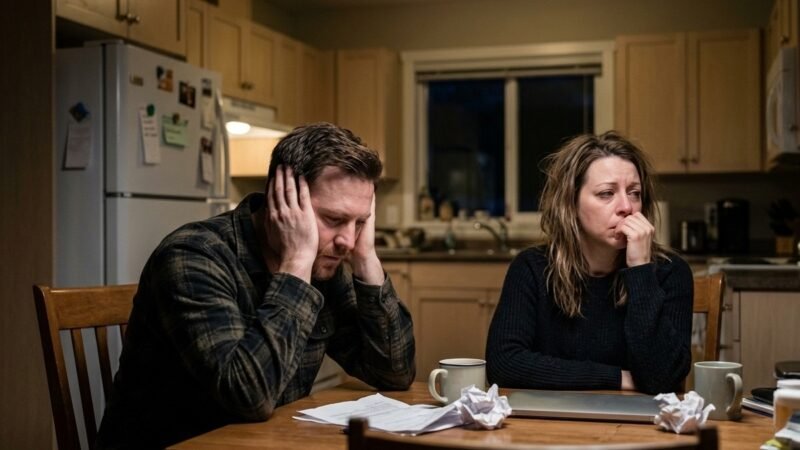
Eventually, Daniel paid the entire bill, but he did so angrily and made it clear that he expected Emma to reimburse him later. The ride home was almost completely silent. Emma felt embarrassed, disappointed, and confused because what had started as an anniversary celebration had ended with her boyfriend accusing her of being selfish. The next morning, Daniel sent her a message saying that he had been thinking about their argument and believed it revealed a serious problem in their relationship. According to him, Emma’s refusal to split the bill showed that she did not understand partnership. Emma responded that the real issue was not the money itself but the lack of communication. She said she would have happily agreed to split an expensive dinner if they had discussed the budget beforehand. What she could not accept was being presented with a large bill after Daniel had chosen the restaurant, ordered the most expensive items, and allowed her to believe he was treating her for their anniversary.
The disagreement continued for several days, and eventually Daniel told Emma that he did not think they were financially compatible. Emma was surprised by how quickly he was willing to end their nearly two-year relationship over one dinner. She asked him whether the relationship was really ending because she would not pay half of one expensive meal. Daniel said the dinner was only the event that exposed deeper differences between them. He wanted a partner who would automatically split expenses without questioning individual choices, while Emma wanted financial decisions to be discussed before they were made. Neither seemed willing to compromise. Emma eventually realized that continuing the relationship would likely mean having similar arguments in the future. If Daniel could surprise her with a costly dinner and then become angry when she questioned the bill, she worried about what might happen with larger financial decisions such as vacations, rent, cars, or major purchases. Although she was heartbroken, she agreed to end the relationship rather than continue fighting over money.
Looking back, Emma said the breakup taught her that financial compatibility was about much more than who paid for dinner. She did not believe couples needed to divide every expense perfectly down the middle, but she believed both people should understand what they were agreeing to before spending money. She also felt that generosity should be genuine rather than something used later as ammunition during an argument. Emma admitted that some people might consider her unreasonable for refusing to split the bill, while others believed Daniel was wrong for choosing an expensive restaurant and ordering costly items without discussing the budget first. For her, the biggest lesson was simple: the problem was never the dinner bill—it was the expectation that she should accept a financial decision she had never agreed to. Now single, Emma says she would rather have an honest conversation about money before a date than discover afterward that an enjoyable evening came with completely different expectations.
Read Story…
AITA for not helping pay for an expensive dinner?
Yesterday, my (ex) boyfriend and I, who have been dating for a bit over 7 months, had plans to hang out. We planned to go bowling, so I got a Groupon and paid ahead. Before bowling, my bf decided he wanted to go to a wine and cheese place. I pointed out how expensive it is, as I had just paid rent and my student loan payment so I could not afford it. He assured me he wanted to go and he would pay for it. This was confirmed several other times.
When we got there, I decided I wanted a little food because I hadn’t eaten in a while after working all day. I said I wanted to get the $13 Mac & cheese and I’d pay for it myself, but he said not to worry about it. He then proceeds to order a bottle of wine and two cheeseboards, without my input on how much we should order.
We proceed to have a really nice and enjoyable time together, I thought at least. At the end, when we get the bill, he tells me (does not ask, tells me) to send him $60. I am a bit shocked and ask if he’s serious. I point out that he insisted several times that he wanted to go here and he would pay, as I don’t have the money right now to spend on something like this. He gets very angry and says that this “shows him who I really am.” He continues saying that and says “what if I couldn’t afford the tab? You wouldn’t help me?” I told him I obviously would help in a case like that, but he insisted on going here and paying and didn’t even ask me to help. I pointed out that it was essentially a command, and he told me that if he tells me to do something, I should do it.
My bf pays, gets up and leaves, and I get up to follow and trail behind. He turned around as I was on my phone behind him and asked if I was ordering an Uber for myself. I said no, and he told me “I wish you were.” This immediately makes me start crying, and I turn around and walk across the street to the nearest bench to sit down. He continues walking away and disappears. I get a call five minutes later, and he asks where I am. I told him I went across the street to sit on the bench, and he said he doesn’t see me, then immediately goes back into the argument. I try to explain my perspective again and he ends up hanging up on me. He does not come back and does not contact me again.
It was dark at this time, and he left me alone, drunk and crying, on the street. We both live in a highly populated area. He didn’t even check to see if I got home safe or anything. I texted him one time to point out how he completely ditched me and didn’t even care to see if I got home safe, so he has made it clear that he doesn’t care about me (perhaps a bit dramatic? I don’t think so though). He just answers after a bit “that’s crazy. Ok”
I have since blocked him. AITA for not helping to pay when he told me to?
I know he will very likely see this. He told me a few times in the past to post our arguments on Reddit so that I’d see that I’m wrong. So alright, let’s see this time.
Emma Believed Money Should Always Be Discussed Openly
Twenty-eight-year-old Emma had always believed that money should be discussed openly in a serious relationship. She was not someone who expected her boyfriend to pay for everything, nor did she believe that couples needed to divide every expense down to the last dollar. What mattered to her was communication and fairness. During her nearly two-year relationship with Daniel, they had developed a fairly relaxed approach to dating expenses. Sometimes he paid, sometimes she paid, and sometimes they split the cost. Neither of them had ever treated money as a major source of conflict.
Emma thought their approach worked because they usually talked about expensive plans before making them. If one of them suggested a costly restaurant or weekend trip, they would discuss the price and decide together whether it fit their budgets. That was why she never expected an ordinary anniversary dinner to become the event that ended their relationship.
Daniel had planned the anniversary dinner several weeks in advance. He told Emma that he had found a beautiful restaurant and had already made reservations. He described the evening as a surprise and encouraged her to dress nicely because he wanted to make their anniversary special. Emma was excited and appreciated the effort he had put into planning everything.
Although Emma knew the restaurant had a good reputation, Daniel did not tell her how expensive it actually was. She assumed the prices were somewhat higher than their usual restaurants, but she did not expect them to be dramatically different. Since Daniel had selected the place and presented it as his anniversary surprise, Emma believed he had already considered the cost.
When they arrived, Emma immediately realized that the restaurant was extremely upscale. The atmosphere was elegant, the staff were dressed formally, and the menu contained dishes that cost significantly more than anything they normally ordered. Emma quietly looked through the menu and chose one of the less expensive meals because she did not want to overspend.
Daniel, however, seemed completely comfortable with the prices. He ordered several appetizers, an expensive main course, and a bottle of wine. Emma did not object because she assumed he had planned the evening as a special treat. She also did not want to ruin their anniversary by constantly discussing the cost of every item.
For most of the evening, everything seemed wonderful. They talked about their favorite memories together, laughed about embarrassing moments from the beginning of their relationship, and discussed their plans for the following year. Emma felt grateful that Daniel had put so much effort into making the evening memorable.
The situation changed when the waiter placed the bill on the table. Daniel picked it up and studied the total for several seconds. Then, almost casually, he told Emma that they should split the entire bill equally. Emma initially thought he was joking because she had never been told that they would be splitting the cost of such an expensive dinner.
She looked at the total and realized that half of the bill was much more than she had planned to spend. Her own meal had been reasonably priced, but Daniel had ordered several expensive items that significantly increased the total. She calmly explained that she was willing to pay for her own meal, but she did not think it was fair to suddenly divide the entire bill equally.
Daniel immediately became defensive. He asked why Emma was making such a big deal about money during their anniversary. He said they were a couple and should be able to share expenses without calculating who ate what. Emma reminded him that she had no problem contributing financially, but she had never agreed to pay half of a bill that included expensive food and drinks he had chosen.
Daniel argued that he had never explicitly promised to pay for the dinner. Emma acknowledged that he had not technically said those exact words, but she explained that he had planned the restaurant, made the reservation, called it an anniversary surprise, and never mentioned that the dinner would cost hundreds of dollars.
According to Emma, the problem was not simply the amount of money. She felt uncomfortable with the way Daniel handled the situation. If he had told her beforehand that they would be splitting the bill, she could have chosen something within her budget or suggested another restaurant. Instead, she had been placed in a position where refusing to pay made her look selfish.
Daniel accused her of being cheap. He said that he had expected Emma to be more generous and that couples should not behave like business partners when it comes to dinner. His words surprised her because Emma had never considered herself stingy. She had paid for numerous dates during their relationship and had never demanded that Daniel reimburse her for every expense.
Emma reminded him of several occasions when she had paid for expensive dinners and activities without asking him to repay her. She said she had never used those moments against him because she considered them part of being in a relationship. Daniel responded that those situations were different because he had never asked her to pay.
That response made Emma realize that they might have completely different ideas about financial fairness. To her, generosity meant willingly doing something nice for someone without expecting a future debt. To Daniel, it seemed that expenses should automatically be divided unless one person clearly stated otherwise.
The argument became increasingly uncomfortable as they sat at the restaurant. Emma offered to pay for her own meal and contribute toward the shared appetizer. She even said she was willing to pay a little extra to avoid an argument. But she refused to pay half of the wine and expensive dishes that Daniel had ordered without discussing them with her.
Daniel eventually paid the entire bill, but he did so angrily. He told Emma that she should reimburse him later for the portion he believed she owed. Emma agreed to pay for the food she had personally ordered, but she refused to accept responsibility for the entire half of the bill.
The ride home was extremely tense. Neither of them knew what to say, and Emma kept thinking about how quickly their romantic anniversary had turned into an argument about money. She wondered whether she had handled the situation badly or whether Daniel had created an unfair expectation.
The next morning, Daniel sent her a long message. He said that he had spent the night thinking about their argument and believed it revealed a deeper problem in their relationship. He told Emma that he wanted a partner who was comfortable sharing expenses equally and who would not make him feel guilty for expecting financial contribution.
Emma responded that she was completely comfortable sharing expenses. What she was not comfortable with was being surprised by an expensive bill after someone else had chosen the restaurant and ordered costly items. She told Daniel that the issue could have been avoided with one simple conversation before the dinner.
Daniel disagreed. He said Emma should have known that an anniversary dinner at an upscale restaurant might be expensive. He believed that being in a relationship meant accepting some financial uncertainty and trusting that both partners would contribute when necessary.
Emma thought that argument ignored the main issue. She explained that she was not asking him to pay for everything. She simply wanted both of them to have a chance to make an informed decision before committing to an expensive plan.
Over the next few days, their conversations became increasingly tense. What started as an argument over one dinner turned into a broader discussion about vacations, rent, gifts, entertainment, and future financial responsibilities. Emma realized that they had never seriously discussed how they would handle money if they eventually lived together or got married.
Daniel eventually told Emma that he did not think they were financially compatible. He said he wanted someone who naturally viewed shared expenses differently. Emma was hurt by the statement because she had believed their relationship was strong enough to handle a disagreement.
She asked him whether he was really willing to end nearly two years together because she refused to split one expensive restaurant bill. Daniel said the dinner itself was not the only reason. In his view, the disagreement had exposed a fundamental difference in their attitudes toward money.
Emma eventually accepted that explanation. She realized that even if they stayed together, the same disagreement might happen again. A vacation could become an argument over hotel costs, a grocery bill could become a fight about contributions, and a future household budget could become even more complicated.
Although Emma was heartbroken, she decided that ending the relationship might be healthier than continuing with unresolved financial expectations. She did not want to spend years wondering whether every expensive invitation came with an unspoken obligation.
Looking back, Emma said she did not believe Daniel was automatically wrong for wanting to split the bill. She understood that couples can choose whatever financial arrangement works for them. Her biggest problem was that he changed the expectation after the meal had already happened.
She also admitted that she could have asked more questions before going to the restaurant. If she had researched the menu or directly asked Daniel about the budget, perhaps the disagreement could have been avoided. However, she still believed that responsibility for communicating the plan belonged to both of them.
Friends who heard the story had mixed opinions. Some believed Emma should have simply paid half because she was in a serious relationship and could afford the dinner. Others felt Daniel was unreasonable for ordering expensive items and then expecting her to share the cost without discussing it beforehand.
For Emma, the experience became a lesson about financial compatibility. She learned that two people can agree on almost everything emotionally while having completely different expectations about money. She now believes couples should discuss finances openly before major disagreements force those conversations.
Ultimately, Emma says the breakup was not really about a restaurant bill. It was about trust, communication, expectations, and whether both partners felt respected when making financial decisions. She believes that if Daniel had discussed the cost before the dinner, the entire situation could have been handled differently.
Emma has since decided that in future relationships, she will ask more direct questions about expensive plans rather than making assumptions. She also wants a partner who can discuss money without turning a disagreement into an accusation about character. For her, the biggest lesson was simple: splitting a bill is not necessarily unfair, but expecting someone to accept an expensive financial decision they never agreed to can quickly damage a relationship.