Widow Refuses To Honor Promise To Name Baby After Husband, Grieving MIL Livid And Confronts Her
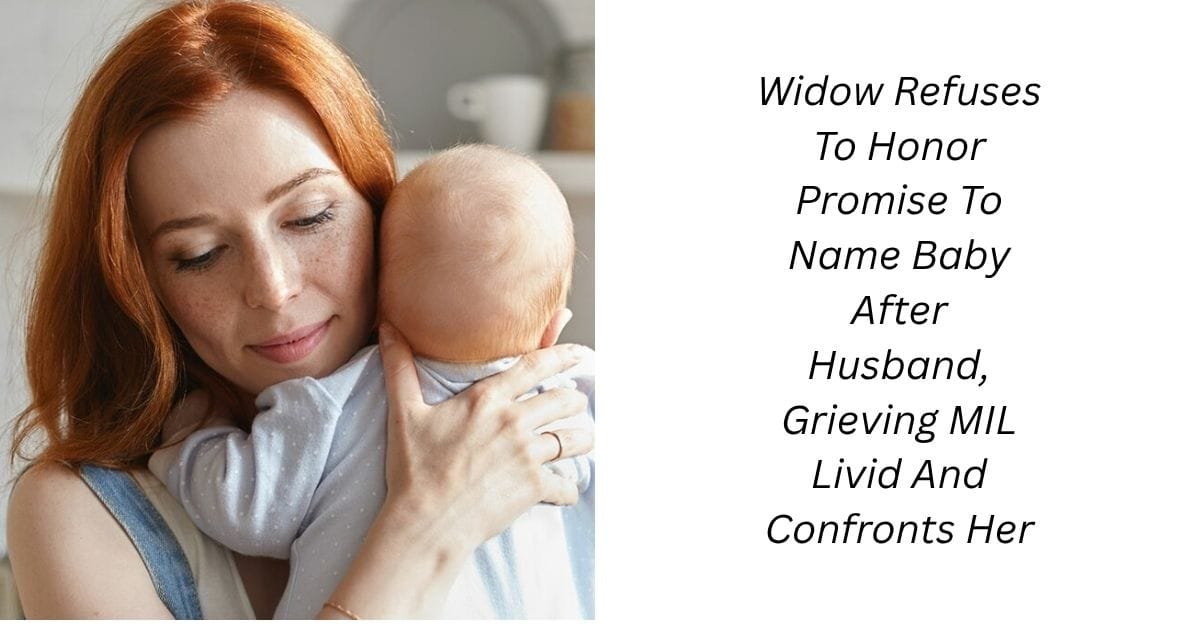
When this widow first discovered she was pregnant, the news brought a complicated mix of emotions. She was still grieving the loss of her husband, who had passed away before they could welcome their child together. During their marriage, they had talked about becoming parents and had even discussed possible names for a future baby. Before his death, they had made a promise that if they ever had a child, they would honor him by giving the baby his name. At the time, that promise had felt natural and comforting. She never imagined she would one day have to make such a painful decision on her own. But after losing her husband, pregnancy became emotionally overwhelming. Every appointment reminded her of the future they were supposed to experience together. She wanted to honor his memory, but she also began questioning whether following an old promise was truly what she wanted for the child.
The situation became more complicated because her mother-in-law was deeply invested in the promise. She had lost her son and was struggling with grief of her own, so the unborn baby had quickly become one of the most important connections she had left to him. She repeatedly talked about how special it would be to hear her son’s name carried by his child. Whenever they discussed the pregnancy, she referred to the baby by the name they had once chosen. At first, the widow did not correct her because she understood where the excitement was coming from. She knew her mother-in-law was hurting and did not want to make her grief worse. However, privately, she had begun reconsidering the name. She wanted her child to have an identity that belonged to them rather than feeling as though the baby had been given the responsibility of replacing a man who was no longer alive.
Eventually, the widow decided that she could not go through with the original promise. She chose a different name, one that had personal meaning to her but was not her late husband’s name. When she finally told her mother-in-law, the reaction was far more intense than she expected. Her mother-in-law became furious and accused her of breaking the promise she had made to her son. She argued that the widow had no right to change something they had agreed upon while he was alive. According to her, naming the baby after her son was one of the last ways they could preserve his memory. The widow tried to explain that she still loved her husband and would always honor him, but she did not believe a child’s name should be decided solely by a promise made under completely different circumstances. She reminded her mother-in-law that she was the one who would be raising the baby and living with the decision every day.
The confrontation became emotional as both women struggled to express what they were feeling. The mother-in-law saw the name as a final connection to the son she had lost, while the widow saw the decision as part of creating a future for herself and her child after an unimaginable loss. Neither woman was necessarily trying to erase the deceased husband from the family. They were simply experiencing grief in very different ways. The widow eventually told her mother-in-law that she could respect her feelings without allowing those feelings to control her decision. She said that her husband’s memory would remain part of their child’s life through stories, photographs, traditions, and the love everyone had for him. But she did not want her baby to grow up feeling as though their entire identity was connected to someone they never had the opportunity to meet.
In the end, the widow stood by her decision despite knowing that it would probably create lasting tension with her mother-in-law. She understood why the grieving woman was devastated, but she also believed that becoming a mother meant making difficult choices for her child rather than constantly trying to protect everyone else’s emotions. The promise she had made years earlier came from a place of love, but circumstances had changed dramatically since then. Her husband was gone, she was facing motherhood alone, and she needed the freedom to make decisions based on the life she and her baby would actually have. Whether her mother-in-law would eventually accept the new name remained uncertain. For the widow, however, honoring her late husband did not require giving his exact name to their child. She believed she could keep his memory alive while still allowing her baby to have a name—and a future—that belonged entirely to them.
Read Story…
AITA for changing my babies name despite promising my dead husband’s family I’d name the child after him?
I lost my husband due to covid a when I was about 3 months pregnant. Don’t let that affect your judgment against me though. After he died my MIL thought it would be a great idea to name the baby after him (if it was a boy), which I agreed with at the time because I was just so overwhelmed with emotion. She said it would be like he’s still there in a way.
When my son got here, even though I still wanted to honor him, I’m not so sure I wanted to name the baby after my husband. I feel like that’s just sticking to the past, and that my baby should be his own person. So I gave him a different name on his birth certificate.
When I made the announcement on Facebook that baby “Lucas” had arrived, I started getting confused comments from my mil. She called me a few hours later, asking why I had broken the promise. I told her my reasoning, and that I just wanted to move on in a healthy way. That I felt like calling my husband’s name when referring to my son would hurt me and make the process harder.
Now, she didn’t yell at me. But she did say how disrespectful it was to my husband to not include him in my sons life in some way. She also brought up the fact that I had not even told her or his extended family that I was changing my mind. I told her personally that I felt like I didn’t need to, as she was just my mil, not my husband.
Thats when she raised her voice. Said she had been waiting all this time to meet her grandson and now she doesn’t even want to see him. I said that was fine and hung up. I do feel bad that I didn’t honor the promise but I feel like I don’t owe her or anyone anything. AITA?
Again, please judge bluntly and honestly despite my loss.
Edit: I did not go months without telling her I changed my mind as some of you are implying. I changed my mind a little bit after he was born.
Some of you guys are truly terrible. Telling me my husband must’ve regretted marrying me, and that I deserved to lose him? When I said be blunt, that’s not a pass to be rude to me. I hope you get whatever sorted in your lives that makes you want to talk to strangers in such a way.
Widow Faces Pregnancy Alone After Losing Her Husband Before Their Baby’s Birth
When this widow discovered she was pregnant, she expected the experience to be filled with happiness, but instead, every moment was accompanied by grief. Her husband had passed away before they could welcome their child into the world, leaving her to face pregnancy and the future without the person she had expected to stand beside her. They had been married for several years and had talked openly about having children. They had imagined doctor appointments, choosing a nursery, arguing playfully about baby names, and eventually holding their newborn together. Now, she was experiencing those milestones alone. The pregnancy was something she desperately wanted to celebrate, but it also reminded her of everything she had lost.
Advertisement
Before her husband died, the couple had discussed what they would name their future child. During one of those conversations, they agreed that if they ever had a baby, they would name the child after him. At the time, neither of them could have imagined that the decision would someday become a source of conflict. It was simply a promise between two people who loved each other and expected to have many years together. She remembered the conversation clearly because it had happened during a happy period in their marriage. They had laughed about possible names, talked about family traditions, and imagined what their future children might be like. The promise felt meaningful then, but after his death, it began to feel much more complicated.
Her husband’s death changed everything. Suddenly, the future they had planned together no longer existed in the same way. She had to make decisions he was supposed to help make. She had to attend appointments without him, prepare for the baby without him, and think about raising a child who would never know their father personally. Some days she felt grateful that she was carrying a piece of their shared future, while other days the pregnancy made her grief almost unbearable. She often wondered what her husband would say if he could see her now. She wondered whether he would still insist on the name they had chosen or whether he would understand why she was struggling with the promise.
Her mother-in-law was grieving too. Losing her son had devastated her, and the pregnancy became an emotional connection to the child she had lost. She began talking about the baby as though the naming decision had already been finalized. She would mention how wonderful it would be to hear her son’s name again and how special it would feel to know that his child carried it. At first, the widow did not object. She understood that her mother-in-law needed something positive to focus on. She did not want to take away the excitement surrounding the pregnancy, especially because she knew how painful the loss had been for everyone.
As the pregnancy progressed, however, the mother-in-law became increasingly attached to the idea. She referred to the baby by the late husband’s name even before the child was born. Whenever relatives asked about the name, she confidently told them that the baby would be named after her son. The widow began feeling uncomfortable but did not correct her. She kept hoping that the subject would somehow resolve itself later. Part of her was still grieving, and another part of her simply did not have the emotional strength to start a family argument while preparing for motherhood.
The more she thought about it, the more uncertain she became. She still loved her husband deeply and wanted his memory to remain part of their child’s life. But she began questioning whether naming the baby after him was truly the right decision. Her concerns were not about disliking his name. Instead, she worried about the emotional expectations that could come with it. She did not want her child to grow up feeling like they had been given the responsibility of carrying on their father’s identity. She wanted the baby to have a name that represented a new beginning rather than only a connection to a painful loss.
She also realized that the circumstances under which the promise had been made were completely different from the circumstances she was facing now. When she and her husband made the agreement, they assumed they would raise the child together. They never imagined she would become a single mother before the baby was born. They never discussed what should happen if one parent died before the child arrived. The promise had been made by two people planning a shared future, but now she was the only parent who could make the decision. That realization made her question whether she was morally obligated to keep a promise that circumstances had completely transformed.
One evening, she found herself looking through old photographs of her husband. She remembered his laugh, the way he spoke about their future, and the excitement he had shown whenever they discussed becoming parents. Looking at those memories made her cry. She wanted to honor him, but she also knew that honoring someone did not necessarily require following every plan they had made while they were alive. People make promises based on the information and circumstances they have at the time. Sometimes life changes so dramatically that keeping an old promise no longer feels right.
She eventually decided that she wanted to choose a different name. The new name still had meaning for her and represented hope, strength, and a fresh beginning. She planned to give the baby a middle name connected to her husband’s family, allowing his memory to remain part of the child’s identity without making his exact name the baby’s first name. She believed this was a compromise that would honor the family while also allowing her child to have an identity of their own.
Before announcing the decision publicly, she spoke privately with her mother-in-law. She knew the conversation would be difficult, but she wanted her to hear it directly rather than through another relative. She carefully explained that she had changed her mind about the name. She emphasized that she was not trying to erase her husband’s memory or break the connection between him and their child. She simply wanted to choose a name that felt right for the life they were now going to have.
Her mother-in-law immediately became upset. She reminded the widow of the promise she and her son had made. She said that her son had wanted the child to carry his name, and she could not understand how the widow could simply change her mind after his death. To her, the promise was sacred. It was one of the last things connecting her to her son, and changing it felt like taking away another piece of him.
The widow tried to remain calm. She told her mother-in-law that she understood why the promise meant so much to her. She acknowledged that everyone was grieving and that the baby had become an important symbol of the family’s future. But she also explained that she was the one carrying the pregnancy and preparing to raise the child. She needed to make the decision based on what she believed was best for the baby, not solely on what would make grieving relatives feel better.
That response made the mother-in-law even angrier. She accused the widow of disrespecting her late husband. She said that if the widow truly loved her son, she would keep the promise they had made. The widow was deeply hurt by the accusation because she had spent months grieving, dealing with pregnancy, and preparing for motherhood without her husband. She felt that nobody could question how much she loved him simply because she had chosen a different name.
The argument became emotional. The mother-in-law insisted that the baby deserved to carry the father’s name. She talked about family tradition, legacy, and the importance of preserving her son’s memory. The widow listened but eventually told her that a child was not a memorial. The baby was a person who would grow up with their own personality, dreams, and life. She did not want the child to feel as though their primary purpose was to replace or represent someone who had died.
That statement deeply offended the mother-in-law. She accused the widow of turning her back on the family. She claimed that the new name was evidence that the widow was already moving on from her son. The widow found that accusation especially painful. Moving forward with her life did not mean forgetting her husband. Becoming a mother did not mean she had stopped loving him. If anything, she wanted to make sure their child grew up knowing exactly who their father was.
The widow explained that she planned to tell her child stories about their father. She would keep photographs, letters, and memories. She wanted the child to know what kind of person he had been, what he loved, what made him laugh, and how excited he had been about becoming a father. She believed those things would create a much deeper connection than simply giving the child his name.
Her mother-in-law disagreed. She believed the name itself carried enormous significance. To her, hearing her son’s name spoken every day would make his absence slightly easier to bear. She admitted that she knew the baby was not actually her son, but she wanted something that reminded her of him. The widow understood that pain, but she also felt that her baby should not become responsible for managing someone else’s grief.
The conversation ended without an agreement. Both women were emotional, and the widow decided it would be better to take some time apart rather than continue arguing. She spent the next few days questioning her decision. She wondered whether she was being selfish. She wondered whether keeping the original promise would have been easier for everyone. But whenever she imagined looking at her child and knowing that the name had been chosen primarily because she was afraid of upsetting others, she felt certain that she needed to stand by her decision.
Her own family supported her, although some relatives encouraged her to reconsider because they feared a permanent conflict with her husband’s family. They reminded her that the mother-in-law was grieving and might eventually calm down. The widow agreed that grief could explain her reaction, but she did not believe grief should determine every decision about the baby. She wanted to show compassion without surrendering her own judgment.
As the due date approached, the disagreement became a subject of wider family discussion. Some relatives took the mother-in-law’s side and argued that promises should be kept, especially promises made to someone who had passed away. Others believed the widow had every right to change her mind. The woman hated being at the center of the conflict. She had never wanted the baby’s arrival to become a family debate. She wanted to focus on preparing for motherhood and creating a peaceful environment for her child.
At one point, her mother-in-law confronted her again and demanded that she reconsider. She said she could not accept a grandchild who did not carry her son’s name. The widow was shocked by how far the disagreement had gone. She told her that the baby was still her grandchild regardless of the name on the birth certificate. She also reminded her that a name could never determine how much someone was loved.
The mother-in-law responded that she would always feel betrayed if the promise was broken. The widow finally told her that she was sorry for the pain the decision caused, but she could not make a lifelong parenting decision based solely on another person’s grief. She said that she hoped her mother-in-law would eventually understand that choosing a different name was not an attack on her son’s memory.
After the confrontation, the widow felt emotionally drained. She spent the evening alone thinking about her husband. She wondered what he would actually think if he were alive. Perhaps he would be disappointed. Perhaps he would understand. She knew she could never get a definitive answer, and that uncertainty was one of the hardest parts of losing someone. She could only make the decision she believed was right with the information and circumstances she had.
Eventually, the widow finalized the baby’s name. She chose the name she had been considering and kept the meaningful middle name connected to her husband’s family. For her, that combination represented both remembrance and renewal. It acknowledged where the child came from without making the child responsible for carrying someone else’s identity.
When the baby was finally born, the widow experienced an overwhelming mixture of joy and sadness. Holding her child for the first time was beautiful, but she immediately thought about how much she wished her husband could have been there. She whispered to the baby about their father and promised that they would grow up knowing how deeply he had been loved.
The mother-in-law initially refused to accept the name. She was distant for a while and struggled to hide her disappointment. Other relatives tried to encourage her to focus on the baby rather than the naming dispute. Eventually, she agreed to meet her grandchild. Although the relationship remained tense, seeing the baby softened some of her anger.
Over time, the widow began telling her mother-in-law that she wanted the child to have a relationship with her father’s family. She did not want the disagreement over the name to destroy those connections. She encouraged her mother-in-law to share stories about her son and promised that she would never prevent the child from learning about their father. She hoped those memories could become a bridge between them.
The mother-in-law slowly began to understand that the widow had never intended to erase her son. The baby was growing up surrounded by photographs and stories about him. His name appeared in family traditions, and his memory was openly discussed. Although the child had a different first name, everyone knew exactly whose child they were.
The widow also came to understand her mother-in-law’s perspective more clearly. Losing a child was a pain she could never fully understand, and the promise about the name had become something emotionally sacred to her. While that did not change the widow’s decision, it helped her approach the situation with more compassion. She stopped seeing her mother-in-law simply as an angry relative and started seeing her as another person struggling with an unbearable loss.
Still, the widow remained firm that the final decision had to be hers. She believed that promises made before tragedy should not automatically override the realities created by tragedy. She had to build a future for herself and her child, and part of that future involved allowing the baby to become their own person.
Years later, the widow hoped her child would understand why she chose the name she did. She wanted them to know that their father had been deeply loved and that his memory was never forgotten. At the same time, she wanted them to know that they were never expected to live as a replacement for him. They were their own person, with their own future and their own story to create.
In the end, the conflict taught the widow an important lesson about grief, promises, and family expectations. She realized that honoring someone who has died does not always mean following every wish they expressed while alive. Sometimes honoring their memory means creating a healthy future for the people they left behind. Her mother-in-law may never completely agree with her decision, but the widow believes she made it with love rather than disrespect. The baby now has a name chosen for them, not simply for the grief surrounding them. And while the late husband’s memory will always remain part of their family story, the child will have the freedom to grow into someone entirely their own.