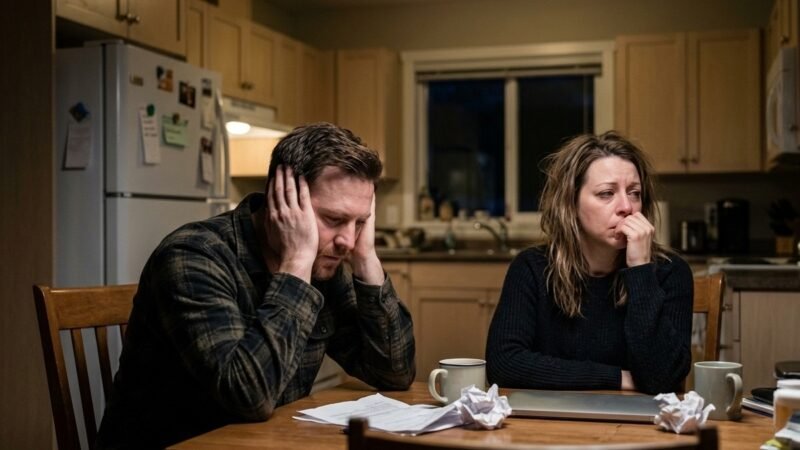
Wife Sees Hubby’s Ex, Decides He’s Not Attracted To Her, He’s Aghast As Therapist Agrees With Her

Thirty-four-year-old Emily had always believed that her husband, Daniel, was attracted to her and loved her for exactly who she was. They had been married for six years, and although their relationship was no longer filled with the constant excitement of their early dating days, Emily still felt that they had a strong emotional connection. Daniel was affectionate in his own quiet way, often kissing her goodbye before work, asking about her day, and making plans for their future together. Emily had never considered herself exceptionally insecure about her appearance, but like many people, she occasionally compared herself to other women. That insecurity became much stronger after she unexpectedly saw Daniel’s ex-girlfriend, Rachel, at a mutual friend’s gathering. Rachel was confident, stylish, and noticeably different from Emily. She was tall, athletic, and dressed in a way that immediately caught everyone’s attention. Emily watched Daniel greet her and noticed that his expression changed for a brief moment. To Emily, that tiny reaction seemed significant. She began wondering whether Daniel had once been attracted to women like Rachel and had simply settled for someone like her. Daniel immediately noticed that something was wrong, but Emily refused to explain. Later that night, she finally admitted what was bothering her. She asked him whether Rachel was more his “type” than she was. Daniel was shocked by the question and insisted that his relationship with Rachel had ended years before he met Emily. He told her that he loved her and was attracted to her, but Emily could not stop thinking about the differences between them.
Over the next several days, Emily became increasingly focused on Daniel’s past relationship. She began asking questions she had never cared about before. She wanted to know what Rachel looked like when they dated, what Daniel had found attractive about her, and why their relationship ended. Daniel answered some questions but eventually told Emily that constantly discussing his ex was becoming unhealthy. He explained that Rachel was part of his past and that Emily was his wife and the person he had chosen to build a life with. Instead of making Emily feel reassured, his response made her even more suspicious. She interpreted his reluctance to discuss Rachel as evidence that he still had some kind of attraction toward her. Emily began comparing herself to Rachel in small ways. She looked at photographs online and criticized her own body, hair, clothes, and personality. She wondered whether Daniel secretly wished she looked more like his former girlfriend. Daniel repeatedly told her that he did not compare them, but Emily said she could not understand how he could be genuinely attracted to her if his previous partner looked so different. What Daniel saw as a normal difference between two people became, in Emily’s mind, proof that something was wrong with their marriage.
Advertisement
Eventually, the situation became so tense that Emily suggested they see a therapist together. Daniel agreed because he believed counseling could help Emily feel more secure and help them communicate better. He entered the first session expecting the therapist to help them understand why Emily was struggling with jealousy. Instead, the conversation quickly became uncomfortable. Emily explained that she believed Daniel was not truly attracted to her and that seeing Rachel had made her realize it. She told the therapist that Daniel’s behavior toward her did not feel passionate enough and that she suspected he was simply comfortable with her. Daniel immediately objected. He explained that he had never told Emily that he was unattracted to her and insisted that he regularly expressed affection. He admitted that he was not the type of person who constantly complimented someone’s appearance, but he said that did not mean he lacked attraction. The therapist listened carefully and asked Emily what specific evidence she had that Daniel was not attracted to her. Emily mentioned his reaction when he saw Rachel, the differences between their appearances, and moments when Daniel seemed distracted or emotionally distant. Daniel was visibly frustrated because, from his perspective, none of those things proved what Emily was claiming. He told the therapist that he felt like he was being forced to defend feelings that he knew were genuine.

Advertisement
The session became even more uncomfortable when the therapist suggested that Emily’s concerns might not be entirely irrational. Rather than saying Daniel was secretly attracted to Rachel, the therapist explained that Emily appeared to be responding to a genuine emotional gap in the marriage. According to the therapist, Emily was not simply asking whether Daniel found her physically attractive. She was asking whether she felt desired, appreciated, and emotionally chosen by her husband. The therapist pointed out that there was a difference between technically loving someone and making that person feel loved and wanted. Emily immediately connected with that explanation. Daniel, however, looked stunned. He felt that the therapist was taking Emily’s assumptions and turning them into a criticism of him. He argued that he had worked hard for their family, supported Emily during difficult periods, and remained faithful throughout their marriage. He could not understand how those things could somehow be interpreted as evidence that he was not attracted to his wife. The therapist clarified that Daniel’s intentions might be good, but Emily’s emotional experience still mattered. Daniel left the session feeling as though he had somehow become the villain in a story he did not recognize.
After that appointment, Daniel became determined to prove to Emily that she was wrong about his feelings. He started giving her more compliments, planning dates, sending affectionate messages during the day, and making an effort to initiate intimacy more often. At first, Emily appreciated the changes, but eventually another problem appeared. She began wondering whether Daniel was only doing those things because the therapist had told him to. If he complimented her, she wondered whether he actually meant it. If he initiated affection, she wondered whether he was simply trying to convince her. Daniel became exhausted by the constant questioning. He told her that no amount of reassurance would ever be enough if she had already decided what he felt inside. Emily insisted that she was not trying to punish him. She simply wanted to feel certain that her husband genuinely desired her. Daniel finally asked her whether she understood how painful it was to repeatedly hear that she believed he had settled for her. Emily became emotional and admitted that she was afraid she was not enough. She said seeing Rachel had made her realize how easily she could compare herself to someone who represented a different version of womanhood in Daniel’s past.
Eventually, Daniel realized that the problem was not really Rachel. Rachel had simply triggered an insecurity that had probably existed beneath the surface for years. Emily admitted that she had sometimes felt less attractive than other women even before seeing Daniel’s ex. She had never talked openly about those feelings because she was embarrassed to admit that she needed reassurance. Daniel also admitted that he had become complacent. He loved Emily deeply, but he had assumed that she already knew how he felt and therefore stopped making an effort to communicate his attraction in ways she could recognize. He told her that he had never viewed her as someone he had “settled for.” In fact, he said that one of the reasons he loved her was because she was completely different from the women he had dated before. He had not chosen her because she resembled Rachel. He had chosen her because she was Emily. Hearing this finally allowed Emily to understand that attraction did not have to follow a single physical template. Daniel could have once been attracted to Rachel and still genuinely find Emily beautiful. His past did not automatically diminish their present.
The couple continued therapy, but their focus gradually shifted from Daniel’s ex to their own marriage. The therapist encouraged them to stop treating attraction like a competition and instead examine how they made each other feel. Emily worked on separating her self-worth from comparisons with other women, while Daniel learned that love could not simply be assumed; sometimes it needed to be expressed clearly and consistently. Daniel eventually told Emily that he had been aghast when the therapist initially appeared to agree with her because he felt misunderstood and accused of secretly feeling something he did not feel. However, he later realized that the therapist had not necessarily been agreeing that he was unattracted to Emily. Instead, the therapist was acknowledging that Emily genuinely felt undesirable within the relationship. That distinction changed everything. Emily stopped asking Daniel whether she was prettier than Rachel, and Daniel stopped treating her questions as ridiculous. They began rebuilding trust through honest conversations rather than constant reassurance. In the end, Emily realized that seeing her husband’s ex had not revealed some hidden truth about Daniel’s feelings. It had revealed an insecurity within herself and a communication problem within their marriage. And rather than allowing one uncomfortable encounter to destroy their relationship, the couple chose to use it as a reason to understand each other better.

Advertisement
Read Story…
My(M36) wife (F43) thinks I couldn’t be attracted to her and therapist agreed?
Background:
Married a little over two years, after dating a very short time around 3 months.
We meet at a work event and I was immediately smitten with my wife. It was like out of a movie I saw her chatting with a group of people and in my head I heard “oh there she is”. She was newly devorced and took some convincing on my part but we have been together from that night on and get along extremely well.
Now for clarity I am extreamly attracted to my wife, we may just still be in the honeymoon stage but I’ve never felt this way about another women. And becasue it’s pertains to the conversation we had today with her therapist I would say the majority of the population would find her attractive and not in a niche way. She is objectively attractive. I feel we are evenly matched in looks, very few people have notice the slight age difference. She however wins in personality (outgoing and charming) and she makes about 3X as much money as I do.
A couple months ago we ran into an ex of mine, and by ex we literally dated for maybe a month and never exclusive. After my wife mentioned how different they were (age/hair color/body type etc) and it ended in a pretty heated argument. We have had 3/4 conversations since, all of which I was trying to convince my wife I’m not going to leave her for a women I “dated” years ago.
Last week she asked if I would go to her therapist with her today and I agreed. She has been seeing her for about 8 years for anxiety and a bout of depression that happed before we meet.
Today:
Started normal enough and I had figured why we were there so I just jumped into it thinking the therapist would be on my side and would help me calm my wife’s fears. That’s not what happed.
The therapist did very little talking although their long silences and knowing glances started to piss me off right away.
The thing that stood out to me the most was how my wife reiterated how she doesn’t see how I would be attracted to her and the therapist didn’t even disagree. Like I felt like a crazy person, my wife is beautiful, charming, funny, it feels like I wished her into existence.
She brought up the age difference (7 years?!?), my looks, and how quickly I wanted to get married as all reasons for why I am basically a gold digger.
First off we both wanted to get married quickly, I asked and figured she would want a long engagement but she didn’t so we got married. Second I never even discussed money with her until after we were married and never dreamed she made so much more than I do. She said she doesn’t think I’m after her money but enjoy the lifestyle while I’m with her and it makes it easier to pretend I’m attracted to her. Sorry more attracted to her, like I play it up.
I’m completely blind sided and don’t really want to talk to my family or friends, it’s humiliating being accused of marrying someone for a lifestyle.
For clarity: I moved into her house, I rent out my old home but that income just covers the mortgage and the company that manages it. All our money goes into a joint checking with automatic transfers into savings etc. Our bills are paid from that account, I looked at our bank account and I spend significantly less than she does each month on average.
After leaving I’m in a complete panic that she is going to leave me, even though I feel humiliated and love her so much. I immediately wanted to offer to sign a prenup or separate bank accounts or both but I just froze.
My wife seem so sad and I’m so frustrated, I didn’t even do anything wrong. The women I’ve dated in my past don’t have a similar type and to be honest I didn’t really date, more like hook up for a few months then moved on. I love my wife, she is the first women I have ever met that I have had a real partnership with, like we were a team and now that’s all gone.
I don’t feel like I have the strength to leave her, it scares me that I can’t even envision a scenario where I would leave. She is my most favorite person.
How do I rebuild trust when I don’t feel I ever did anything to lose it.
Edit: My wife didn’t come home last night but I texted her this morning. First apologizing for leaving the session and then asking her to come home so we could formulate a plan. No word back yet but I doubt she will check her phone before lunch if she went to work.
Thanks for letting me vent, I’ve already asked my insurance company to send a list of counselors for me to call later today. Hopefully I will find a good fit as I don’t even know how to go about picking one.
Edit 2: I need a referral from my general doctor before insurance will cover a therapist/psychologist, I have an emergency phone appointment Monday and will being seeing someone by myself.
My wife didn’t return my text but did come home about an hour later. Honestly I cried for the first time in a long time, but was able to get across how seriously I take her concerns. I haven’t mentioned anything about her therapist or my feelings about things just apologized and asked for another chance to hear her out completely.
She said she was really drained and is taking a nap, I don’t think she made it in to work and am actually looking forward to having the weekend to talk. I’m not going to ask for couples counseling until I talk to my own therapist.
This is probably it unless I fuck things up this weekend. Thanks for letting me type out my feelings and being honest even the hard comments were helpful.
Emily Believed Her Marriage Was Built on Love and Attraction
Thirty-four-year-old Emily had always believed that her marriage to Daniel was built on love, trust, and genuine attraction. They had been together for almost nine years, including six years of marriage, and over time they had created the kind of comfortable life many couples hoped for. They had routines, shared responsibilities, inside jokes, and plans for the future. Daniel was not the most romantic man in the world, but Emily had always believed that he loved her deeply. He was dependable, supportive, and affectionate in his own quiet way. Still, Emily occasionally struggled with her appearance and wondered whether she was as attractive as she had been when they first met. She usually managed to push those thoughts aside because Daniel had never given her an obvious reason to doubt his attraction. That changed after one unexpected encounter with someone from his past.

Advertisement
The incident happened at a friend’s gathering where Emily and Daniel were both invited. Emily knew that several people from Daniel’s social circle would be there, but she had no idea that his former girlfriend, Rachel, would also attend. When Rachel walked into the room, Emily immediately recognized her from old photographs she had once accidentally seen on Daniel’s phone. Rachel was confident, fashionable, and physically striking. She had a completely different appearance from Emily, with long dark hair, an athletic figure, and a very outgoing personality. Emily initially tried not to pay attention to her. She reminded herself that Rachel was simply someone from Daniel’s past and that there was no reason to feel threatened by her presence. But then she noticed Daniel’s reaction when Rachel approached.

Advertisement
Daniel looked surprised for a moment before greeting Rachel politely. The interaction lasted less than a minute, but Emily noticed that his face seemed to change when he saw her. To Daniel, it was nothing more than the natural surprise of seeing someone he had not expected to encounter. To Emily, however, that brief reaction felt enormous. She started wondering whether Daniel was remembering his past relationship or noticing how attractive Rachel still was. She watched them from across the room and became increasingly uncomfortable. Daniel eventually returned to Emily and asked whether she was okay. She smiled and said yes, but internally she was already comparing herself to Rachel. She wondered why Rachel seemed so confident while she herself suddenly felt invisible.
On the drive home, Emily became unusually quiet. Daniel noticed almost immediately and asked what was wrong. At first, she insisted that she was tired, but after several minutes of silence she finally asked him whether he still found Rachel attractive. Daniel was caught completely off guard. He told her that he had not even been thinking about Rachel in that way. He explained that he had been surprised to see her because they had not crossed paths in years. Emily asked whether he thought Rachel was beautiful. Daniel hesitated, mostly because he did not understand why the answer mattered. He eventually said that Rachel was obviously an attractive woman, but that did not mean he wanted her or still had feelings for her. Emily focused on the first part of his answer and ignored the second.

Advertisement
That night, Emily found herself staring at herself in the bathroom mirror. She began noticing every feature she disliked. She compared her body to Rachel’s, her hair to Rachel’s, and even her clothing choices. She wondered whether Daniel had secretly preferred women who looked more like Rachel. She knew the comparison was unfair, but she could not stop herself. The more she thought about it, the more she convinced herself that Daniel had chosen her for emotional compatibility rather than physical attraction. She began asking herself whether he had simply settled down with someone who made a good wife while secretly being attracted to a completely different type of woman.

Advertisement
Over the next few days, Emily’s insecurity grew stronger. She began asking Daniel questions about his relationship with Rachel that she had never cared about before. She wanted to know how long they had dated, what he had liked about her, why they had broken up, and whether he had ever considered marrying her. Daniel answered some of the questions but eventually became frustrated. He reminded Emily that Rachel had been part of his life long before Emily came into it. Their relationship had ended years ago, and he had moved on. Daniel told her that comparing herself to Rachel was pointless because he was not looking for Rachel when he met Emily. He had fallen in love with Emily because of who she was.
Emily did not find that answer reassuring. Instead, she told him that he was avoiding the real question. She wanted to know whether he was physically more attracted to Rachel than he was to her. Daniel became uncomfortable because he felt there was no honest answer that would satisfy her. He could acknowledge that Rachel was attractive without saying that he preferred her. He could tell Emily that she was beautiful without pretending that he was incapable of recognizing another woman’s beauty. But Emily interpreted his hesitation as evidence that he was hiding something. Daniel eventually told her that he loved her, desired her, and had never wished she looked like anyone else. Emily responded that if that were true, she should not have felt so invisible standing beside Rachel.
The argument became a recurring issue in their marriage. Emily started noticing every small moment when Daniel failed to compliment her. If he came home and did not immediately notice her new hairstyle, she wondered whether he found her attractive anymore. If they went to a restaurant and Daniel glanced in another woman’s direction, Emily worried that he was comparing them. Daniel began feeling as though he could not behave normally without being accused of secretly finding other women more attractive. He reassured her repeatedly, but the reassurance never seemed to last. Eventually, he suggested that they talk to a professional because he believed they were stuck in a cycle that neither of them could break on their own.
Emily agreed to couples therapy, although she secretly hoped the therapist would confirm her concerns. During the first session, she explained the entire situation from her perspective. She described seeing Rachel, noticing Daniel’s reaction, and feeling as though she had suddenly discovered something important about her husband’s attraction. She told the therapist that Daniel’s affection had always seemed genuine but that she now wondered whether it was simply the affection someone gives a spouse after years of marriage. She said she feared Daniel no longer looked at her with desire. Daniel listened quietly before explaining that he was shocked by the conclusion she had drawn from such a brief interaction.
Daniel told the therapist that he had never hidden his past from Emily. He acknowledged dating Rachel and admitted that he had once found her attractive, but he insisted that those feelings belonged to a completely different period of his life. He said Rachel had nothing to do with the woman he had chosen to marry. Daniel explained that Emily was not his second choice or a compromise. She was the person he had built a life with because he loved her. He said he was frustrated that one unexpected meeting had suddenly caused Emily to question nearly a decade of their relationship.
The therapist listened carefully and then asked Emily what she believed Daniel’s attraction should look like. Emily struggled to answer. She said she wanted him to look at her the way she imagined he had looked at Rachel. She wanted to feel desired without having to ask for reassurance. She wanted spontaneous compliments, physical affection, and signs that he still found her exciting. Daniel admitted that he could probably do more to express those things. He had become comfortable in the marriage and assumed Emily already knew how he felt. He did not realize that his quiet personality could sometimes make her feel unwanted.
Then the therapist said something that completely changed the atmosphere in the room. The therapist explained that Emily’s conclusion might not be as irrational as Daniel believed. The therapist did not say that Daniel was secretly attracted to Rachel or that he did not love Emily. Instead, the therapist suggested that Emily’s feelings of being undesirable could be rooted in a real emotional problem within the marriage. Daniel looked stunned. He felt as though the therapist had just validated a conclusion that he believed was completely false. He immediately asked how the therapist could agree with Emily when there was no evidence that he was not attracted to her.
The therapist clarified that attraction and the experience of feeling attractive were two different things. Daniel could genuinely desire Emily while still failing to communicate that desire in a way she could recognize. Emily might not be imagining her emotional loneliness, even if she was wrong about its cause. That distinction initially made Daniel uncomfortable. He felt that his character was being questioned because he had never intentionally made Emily feel undesirable. The therapist explained that intention and impact were not always the same. Daniel could have good intentions while Emily still experienced a lack of reassurance and affection.
After the session, Daniel was upset. He told Emily that he felt as though he had been placed on trial for something he had never done. He said it was unfair to suggest that his attraction to her was questionable simply because he was not constantly expressing it. Emily responded that she did not want him to feel accused. She wanted him to understand how painful it had been to suddenly feel like she could never compete with his past. Daniel told her that there was no competition because Rachel was irrelevant to his current life. Emily said that she understood that logically, but emotionally she could not make herself believe it yet.
Daniel decided to make a greater effort. He began complimenting Emily more frequently and initiating affection without waiting for her to ask. He planned date nights and reminded her of the qualities he had always loved about her. He told her that he still found her beautiful and that his attraction had not disappeared simply because they had been married for years. At first, Emily appreciated the effort. But eventually another insecurity appeared. She started wondering whether Daniel was only behaving differently because the therapist had told him to. If he complimented her, she wondered whether he meant it. If he initiated intimacy, she questioned whether he was doing it out of obligation.
Daniel became exhausted. He told Emily that he could not constantly prove a feeling that he knew existed inside him. He said it was painful to hear that every affectionate gesture might be fake simply because it came after their therapy sessions. Emily cried and admitted that she was terrified of discovering that she was not enough for him. She explained that seeing Rachel had triggered fears she had carried for years. She had always worried that Daniel might eventually realize he could have chosen someone more attractive. The encounter had simply brought those fears to the surface.
Daniel finally understood that the problem was much deeper than one ex-girlfriend. Emily had been measuring her worth against other women without telling him how deeply it affected her. Daniel also recognized his own contribution to the situation. He had assumed that because he loved Emily, she automatically knew she was desirable to him. He rarely gave compliments unless there was a specific reason. He had stopped planning romantic surprises because life had become busy and predictable. He had not stopped loving her, but he had stopped actively demonstrating some of the feelings that mattered most to her.
During another therapy session, the couple began discussing the difference between attraction and comparison. The therapist explained that Daniel could have found Rachel attractive in the past without that attraction having any relevance to his feelings for Emily today. Human beings could appreciate beauty without wanting a relationship with everyone they found attractive. Emily slowly began accepting that. She also realized that she had created an imaginary version of Rachel in her mind. She had taken a woman she barely knew and turned her into the perfect representation of everything she believed Daniel wanted.
Daniel told Emily that Rachel had not been perfect and that their relationship had ended for many reasons. He said that looking back, he could clearly see why they had not worked. He explained that what he valued most about Emily had never been limited to physical appearance. He loved her sense of humor, her patience, her intelligence, and the way she supported him when life became difficult. He told her that he had not married a body or a hairstyle. He had married a person he genuinely wanted to spend his life with.
Emily’s perspective gradually began changing. She still had moments of insecurity, especially when she saw women she considered more attractive than herself, but she stopped automatically connecting those moments to Daniel. Instead of asking whether he found someone else beautiful, she began asking herself why another woman’s appearance made her feel threatened. She started working on her own confidence and stopped using Rachel as a measuring stick. She also began communicating directly when she needed affection instead of expecting Daniel to guess what she wanted.
Daniel changed as well. He realized that being a good husband was not only about paying bills, staying faithful, and being dependable. Emotional reassurance mattered too. He began expressing his feelings more openly and making a conscious effort to keep romance alive. He told Emily that he wanted her to feel desired rather than simply assuming she already knew she was. Their relationship did not transform overnight, but the conversations became healthier. They were no longer arguing about whether Rachel was prettier or whether Daniel had once been attracted to her. They were discussing what Emily needed to feel secure and what Daniel needed to feel trusted.
Eventually, Emily admitted that she had misunderstood the therapist’s comment during their first session. She had initially heard the therapist as saying, “Yes, your husband is not attracted to you.” But that was never actually what the therapist meant. The therapist had been validating Emily’s emotional experience rather than confirming her conclusion about Daniel’s private feelings. Daniel was relieved when Emily finally understood the distinction. He explained that he had been aghast because he believed the therapist was declaring him guilty of something without evidence. Once they understood what had actually been said, the tension surrounding therapy began to disappear.
The couple also learned that relationships could become vulnerable when people stopped talking about their emotional needs. Emily had spent years quietly hoping Daniel would notice when she needed reassurance, while Daniel had spent years assuming his actions were enough to communicate his love. Neither person had intentionally created the problem, but both had contributed to it. Seeing Rachel had simply exposed the weakness in their communication. Instead of allowing that moment to destroy their marriage, they decided to use it as an opportunity to rebuild something stronger.
Months later, Emily said she no longer thought about Rachel nearly as often. The woman who had once seemed like a threat had become almost irrelevant. Emily realized that she had been comparing her real life to an imagined version of Daniel’s past. She had no idea what Rachel’s relationship with Daniel had actually been like, and she had no reason to believe that Rachel represented his ideal woman. Daniel had chosen to build a life with Emily, and that choice mattered far more than a brief facial expression at a party.
Daniel, meanwhile, said the experience had taught him an important lesson about marriage. He realized that assuming someone knows they are loved can sometimes create distance. People need to hear and feel affection in different ways. He had always believed that providing stability was enough to demonstrate his love, but Emily needed verbal and physical reassurance as well. Once he understood that, expressing those feelings no longer felt like an obligation. It became another way of caring for the woman he loved.
In the end, the couple did not solve their problems by proving whether Emily was more attractive than Daniel’s ex. They solved them by recognizing that attraction is not a competition and marriage is not a comparison between past and present partners. Emily learned that her worth could not depend on whether another woman was beautiful. Daniel learned that love needed to be communicated rather than assumed. Their therapist’s controversial comment ultimately helped them see the real issue: Emily’s feelings were real, even though her conclusion about Daniel’s attraction was not necessarily correct.
The experience left Emily with a healthier understanding of insecurity, while Daniel gained a better understanding of emotional reassurance. They continued working on their marriage and eventually reached a place where Rachel’s name no longer caused tension between them. Emily could see an attractive woman without immediately wondering whether Daniel preferred her. Daniel could express affection without feeling as though he was being tested. What began with one uncomfortable encounter with an ex ultimately forced both of them to confront problems they had ignored for years. And although the therapist’s words initially left Daniel aghast, they ultimately became the starting point for a much more honest conversation about love, attraction, insecurity, and what it really means to make a partner feel chosen.