Woman Admits She’s Happy Toxic Sis Is Infertile, Says She Would Damage The Kid Like She Did With Her
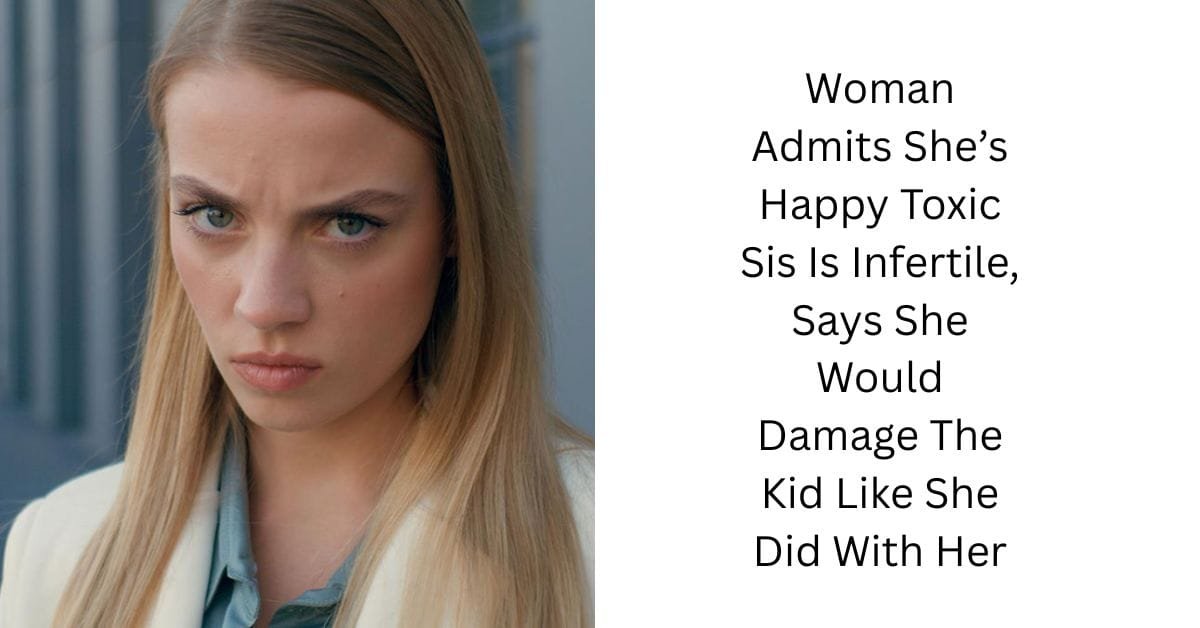
For years, Rachel had carried complicated feelings toward her older sister, Melissa, and their relationship had become increasingly distant as they grew older. To outsiders, they appeared to be ordinary sisters who simply had different personalities, but behind closed doors, Rachel remembered a childhood filled with criticism, manipulation, and constant competition. Melissa had always been treated as the more confident and successful sister, while Rachel often felt that she was expected to tolerate whatever Melissa said or did. Whenever Rachel tried to establish boundaries, Melissa accused her of being sensitive or jealous. As adults, those old patterns continued, with Melissa frequently criticizing Rachel’s choices and reminding her of mistakes she had made years earlier. Eventually, Rachel stopped trying to maintain a close relationship with her. She began to believe that distance was the only way to protect her peace.
The situation became especially complicated when Rachel learned that Melissa was struggling with infertility. The news initially brought mixed emotions. Rachel understood that infertility could be deeply painful, and she did not want to celebrate another person’s suffering. At the same time, she privately recognized that she did not feel the sympathy she expected herself to feel. Years of resentment had changed the way she viewed her sister’s situation. During a private conversation with a relative, Rachel admitted that part of her was relieved Melissa would not become a mother. She explained that she remembered how Melissa had treated her throughout childhood and worried about what kind of parent she might become. Rachel’s words shocked the relative, particularly because Rachel went further and said that if Melissa ever had a child, she feared the same unhealthy behavior that had affected her would eventually be passed down to the next generation.
The comment eventually reached Melissa, turning an already complicated family relationship into an explosive argument. Melissa accused Rachel of being cruel and said that infertility was already an emotionally difficult experience without having her own sister express satisfaction about it. Rachel did not deny what she had said, but she explained that her reaction came from years of unresolved pain rather than a desire to hurt Melissa. She described incidents from their childhood in which she had felt constantly belittled and controlled. According to Rachel, Melissa had rarely acknowledged the effect her behavior had on her. Melissa rejected much of Rachel’s account and accused her of rewriting the past to justify her bitterness. Other family members became divided, with some believing Rachel had crossed a line while others understood why years of mistreatment had created such intense resentment.
Advertisement
As the argument continued, Rachel realized that her anger toward Melissa had become deeper than she had previously admitted. She had spent years telling herself that she had moved on, yet a single conversation about motherhood had brought all of those old emotions back. She recognized that she was not actually celebrating infertility itself; she was reacting to the possibility that someone who had hurt her might never have the opportunity to repeat those patterns with another vulnerable person. That realization did not make her comments kind or appropriate, but it helped Rachel understand where they had come from. Instead of continuing the argument, she decided to step away from the family conflict and seek professional support for herself. She wanted to process her childhood experiences without allowing resentment to control her adult life.
In the months that followed, Rachel maintained her distance from Melissa while working on her own emotional boundaries. She eventually realized that healing did not require her to forgive everything immediately, nor did it require her to pretend that the past had never happened. She could acknowledge the harm she believed Melissa had caused while refusing to wish suffering on her. Rachel later apologized for expressing happiness about her sister’s infertility, explaining that she regretted turning years of personal pain into words that could deepen someone else’s suffering. However, she remained firm that she did not want a close relationship with Melissa unless Melissa was willing to acknowledge the problems between them. The experience taught Rachel that unresolved family trauma can produce emotions that are difficult to admit, but recognizing those emotions is different from allowing them to determine how you treat others.
Read Story…
My sister is infertile and I’m glad
My sister is infertile and I’m glad
I (28F) have an older sister, Angela (30f), whom I have never liked. She always had to compete with me, but never in a normal sibling rivalry way. Our entire life she always seemed resentful of my existence as the spotlight couldn’t perpetually shine on her, so she had to step on everything I enjoyed. Per se, if I learned piano, she had to learn piano, if I excelled at a subject she suddenly became a scholar in it, if I told my mom I had a crush, Angela would be dating that boy in a week. I would always tell my parents when she did this but I was disregarded, because ‘’sisters copy each other” and I can’t ‘’gate-keep what she likes.’’
She always monitored what activities I did, and the clothes I wore, so she could out-do me. If I wore a flannel, Angela would come to school wearing an all flannel dress. (it was 2010 and that was peak fashion in our school lmao.)
There was also more praise that followed Angela, even if I took the initiative to begin the activity first, she was praised because she was better. My parents would miss work to attend her dance recitals, going to every. single. one, because the world would stop if they missed it. However, I remember maybe two of mine they attended because they were ‘stuck at work’ or were otherwise preoccupied. Angela reveled in this. She would make comments under her breath around our parents. Whenever our parents weren’t around she’d tell me how much she hated me and how I should stop trying because I would always come second to her. She also physically bullied me in school. Angela purposely tripped me, threw things at me, and hit me in the hallways on a nearly daily basis.
The school had gotten involved multiple times, threatening Angela with suspension and my parents fought it every time. My parents repeatedly told administration that this was a family matter and we were just bickering like normal sisters. She was never once reprimanded by either parent. (Once Angela was caught impaling a cat on the school fence and my parents still defended her saying this was normal teenage behavior.) I often was in trouble as Angela would start crying, saying how she was being targeted by the school when I had antagonized her. After one of these occasions Angela cut and bruised herself to prove to Dad that I was the aggressor.
I became a pariah due to Angela’s malicious rumors about me, so it was difficult for me to make friends, I resorted to only befriending people from other districts. Angela eventually made sure I had nobody by stalking them, befriending them, telling all my friends lies about how I was favored by our parents and I constantly bullied and belittled her.
She even stole boyfriends of mine doing this. Convincing them I was horribly mean and an awful person that copied her every move. Once she catfished me on Myspace for 4 months, and baited me into sending her nudes, which she proceeded to send my parents and everyone in school, including teachers. Later on, she told one of the boys I liked that those were actually her pictures and I had catfished her.
The day of my high school graduation my Mom sat me down and told me Angela revealed the horrid abuse she’d suffered at my hand and I was no longer welcome in their home. After moving out the next day, my parents made very few attempts to communicate with me, only the occasional holiday and birthday text. All financial aide was also abruptly ended as soon as I stepped foot on campus.
I met my now-husband shortly after this, and we were married within a year. They did not feel inclined to attend my wedding or even congratulate me. I informed my parents when I had my first child 8 years ago as an opening but they have made no attempt to contact or meet any of my 3 children.
Best I know of Angela now from what I’ve heard, is that she got married to one of the boyfriends she stole from me in high school and she’s been posting about her infertility issues and how she can’t offer my parents their ‘first grand baby’.
After years of silence, I received an text at 8 this morning from my mother that I will copy and paste below; “Hey (name) , it’s me your mama! We haven’t talked in a while and I surely Miss you terrible. I wanted to let you know you’re sister just had a miscarriage earlier this week. Angie and Justin are struggling a lot right now. Send something a little sweet her way, I’m sure she’d appreciate it. Get Back to me I love You.”
I hate to say it but I’m glad she’s suffering. I’m glad she doesn’t get to be a mother. If she tormented me for years, what would she do to a child? Especially a girl? I don’t wish death on any baby, but I know in my heart that child would be damaged by her. I’m angry at my parents expecting me to have any sense of obligation to her. I don’t even have any sense of obligation to them. They always believed her and dismissed me. I was always the problem child, and it’s strange how my mother can be so warm to me when asking me to do something for my sister. Also the fact they cared more about my sisters now dead fetus than my actual children, who wonder why they only have one set of grandparents. I feel some sort of guilt for it but I refuse to offer any condolences to my destructive narcissistic sister who has been justified in her bad behavior since birth. Maybe this will change her, help her develop empathy or any type of emotion that isn’t hate or vindictiveness.
If that happens I would be more than willing to offer support but until then I feel nothing but a small inkling of happiness that she’s hurt. Am I awful for this?
Update 3 days later in the comments
Hey I’m back with an update, I wanted to thank all of y’all sincerely for the comments, awards, and personal messages I’ve received. I feel very emotional knowing that my account of my childhood is finally being believed and met with warmth and support. It’s been hard for me to talk about as many believe I’m being disingenuous or overdramatic. It’s hard to believe so I get it. So really thank you all from the bottom of my heart.
I decided not to respond to my mother. I blocked both of my parents and I thought it would end there, but when does it ever? Wednesday morning, my Messenger was being flooded with texts from my parents siblings. Most of the messages consisted of me being told I need to answer my mother’s calls and how callous I was being. I proceeded to block all of them as well.
My cousin heard this from her younger sister, who is subject to being around my parents and Angela for family dinners. (My mother and her siblings all live within a couple blocks from each other and eat together most nights.)
I don’t know if I can post the screenshot so I’ll type out the messages. (Aunt Kathy = my mom, I hope that makes this easier to understand.)
“angela kept calling (Op) an “abusive ingrate” because she wouldn’t talk to aunt kathy. aunt kathy said they need to start inviting (Op) to family sh*t so she comes around to being a surrogate. it got weird rq because angela said she wants to use (my husband’s) SPERM so her kid is tall and has blue eyes. then kathy was sayin how they just need to be around her for like a year then they can cut her off again or wtv. angela kept saying (Op) is the only way she can have kids because she doesn’t wanna raise “someone’s trash baby.”
Reading those messages made me want to hurl. Do they think my uterus is some fish hatchery that can be bought with some kind words and casserole?? It’s nice to know Angela is too much of a narcissistic ass to adopt though.
I’m officially done with every single one of them. If they try to come around me I will get a restraining order before they can even darken my doorstep. Between the weak conspiracy they’ve come up with to try to use me like a baby bargain bin and the nasty words they continue to speak about me, I will no longer claim to have a family outside of the one I’ve created. I’m sorry if this is difficult to read but reading that again just got me so worked up. But y’all finally got the update you asked for, so that’s the silver lining of this I guess. Anyways thank you guys again.
Rachel’s Complicated Relationship With Her Sister
Rachel had spent most of her adult life trying to convince herself that her relationship with her older sister, Melissa, was simply complicated rather than deeply unhealthy. From the outside, the two women looked like ordinary sisters who had grown apart with age. They occasionally exchanged messages, attended the same family gatherings, and tried to remain polite around relatives. But Rachel carried memories from childhood that made it difficult for her to feel genuinely close to Melissa. She remembered being criticized, compared, embarrassed, and frequently made to feel as though her feelings were less important. Melissa had always been confident and outspoken, while Rachel was quieter and more sensitive. Whenever Rachel objected to the way Melissa treated her, Melissa usually dismissed her concerns as jealousy or oversensitivity.

Advertisement
Their parents often made the situation worse without realizing it. Melissa was frequently described as the strong one who knew what she wanted, while Rachel was expected to be the understanding sister. If the two argued, Rachel was often encouraged to apologize first because Melissa was considered more difficult to deal with. Over time, Rachel learned that keeping quiet was easier than defending herself. She became skilled at hiding her emotions and avoiding situations that might lead to another confrontation. By the time the sisters reached adulthood, Rachel had developed a strong desire for independence. She moved away, built her own life, and deliberately created distance from Melissa. Even then, however, the memories of their childhood remained with her.
Melissa’s behavior did not completely change as they became adults. She continued making comments about Rachel’s appearance, career, relationships, and personal decisions. Whenever Rachel achieved something, Melissa often found a way to minimize it or compare it with one of her own accomplishments. If Rachel expressed an opinion, Melissa sometimes treated it as though she were being unreasonable. Family members occasionally noticed the tension but usually encouraged the sisters to “just get along.” Rachel tried repeatedly. She attended birthdays, holidays, and family dinners despite knowing that Melissa might make a comment that ruined her mood. She kept telling herself that they were adults now and that she should be able to let the past go.

Advertisement
The relationship became particularly painful when Rachel began thinking about the possibility of having children herself. She had always wondered what kind of mother she would be and whether she could create the kind of safe family environment she had wanted as a child. The idea of raising a child also made her think more deeply about Melissa. Rachel sometimes wondered whether the way Melissa had treated her was simply the result of their childhood circumstances or whether it reflected something fundamental about her sister’s personality. She did not want to believe that someone who had been hurt could automatically hurt another person, but she also knew that unresolved behavior could continue across generations.
Then Rachel learned that Melissa was struggling with infertility. The news reached her through another family member, who explained that Melissa and her husband had been trying to have a child and were experiencing difficulties. Rachel’s first reaction was complicated. She understood that infertility could be painful and emotionally exhausting, and she knew that Melissa had every right to grieve the possibility of becoming a mother. Yet Rachel also discovered something uncomfortable about herself: she did not feel the sadness she thought she was supposed to feel.
Instead, Rachel felt a sense of relief.
The realization frightened her. She immediately questioned what kind of person she was for having such a reaction. She knew that infertility was not a punishment and that nobody deserved to experience it. She also knew that Melissa’s ability or inability to have children had nothing to do with the way she had treated Rachel. Still, years of resentment had created emotions that Rachel could not simply switch off. Part of her was relieved because she believed that a child might otherwise have been exposed to the same kind of criticism and emotional pressure she had experienced growing up.
Rachel did not initially tell Melissa how she felt. She kept the thoughts private because she understood how cruel they could sound. Instead, she discussed them with someone in the family whom she trusted. During that conversation, Rachel admitted that she was struggling to feel sympathy for Melissa. She explained that whenever she imagined Melissa raising a child, she remembered her own childhood and became afraid that the same patterns would be repeated. Rachel said that she was relieved because she did not want another child to grow up experiencing the kind of emotional damage she believed Melissa had caused her.
The relative was shocked by Rachel’s honesty. They told her that her feelings were understandable given the history between the sisters but warned her that saying she was happy about Melissa’s infertility could cause enormous pain if the comment ever reached her. Rachel agreed. She said she knew the words were harsh, but she also felt that pretending to feel compassion when she did not would be dishonest. She emphasized that she was not celebrating suffering. She was reacting to her own memories and to the fear that another vulnerable person might experience something similar.
Unfortunately, the conversation did not remain private. Someone repeated Rachel’s comments to another family member, and eventually the information reached Melissa. When Melissa confronted Rachel, she was furious. She accused her sister of being heartless and said that nobody should be happy about another person’s infertility. Rachel initially tried to explain that her feelings were connected to their history, but Melissa interrupted her. She said that whatever problems they had experienced as children, Rachel had no right to use infertility as evidence that she was unfit to become a mother.
Rachel knew Melissa had a point. She also knew that the conversation was much bigger than infertility. Years of unresolved resentment were suddenly being discussed in one explosive argument. Rachel told Melissa that she had never forgotten the way she had been treated as a child. Melissa responded that Rachel was exaggerating old disagreements and using them to justify her cruelty. According to Melissa, siblings argued growing up, and Rachel was turning ordinary childhood conflict into something much more serious.
That response hurt Rachel more than she expected. She had spent years hoping Melissa might eventually acknowledge that some of her behavior had crossed a line. Instead, Melissa seemed to believe that nothing significant had happened. Rachel began listing examples of moments she remembered clearly, including times when Melissa had mocked her in front of relatives, undermined her confidence, and made her feel responsible for keeping the peace. Melissa rejected some of the details and said that she remembered their childhood differently.
The disagreement soon divided members of the extended family. Some relatives believed Rachel had been unnecessarily cruel and should have kept her feelings private. Others understood why she had developed such strong resentment. A few family members admitted that they had noticed the sisters’ unhealthy dynamic years earlier but had never wanted to get involved. They remembered how often Rachel stayed quiet during family gatherings while Melissa dominated conversations. They also recalled situations in which Rachel was expected to forgive quickly without receiving an apology.
For Rachel, hearing those admissions was both validating and painful. She had spent years wondering whether she had imagined the problem. Knowing that other people had noticed the same behavior made her feel less alone, but it also forced her to confront how long she had tolerated it. She realized that she had often confused avoiding conflict with healing. She had stopped arguing with Melissa, but she had never actually processed the anger she carried.
The infertility issue became the trigger that exposed all of those unresolved emotions. Rachel admitted that she was not truly celebrating infertility itself. What she felt was relief from the possibility that a child might be exposed to behavior she believed could be harmful. She recognized that this distinction did not make her comments harmless, but it helped her understand herself. She had spent so many years feeling powerless as a younger sister that the idea of preventing another person from experiencing the same pain had become emotionally significant to her.
Melissa, however, did not see it that way. She believed Rachel had crossed an unforgivable line. She told relatives that Rachel had revealed her true character and that she no longer wanted a relationship with her. Rachel did not chase after her. For once, she decided that she did not need to convince Melissa to understand her perspective. She could acknowledge that her words had been hurtful while still maintaining distance from a relationship that had caused her pain.
A few weeks later, Rachel began speaking with a therapist. She wanted to understand why her sister’s situation had triggered such intense emotions. During those conversations, she began recognizing that resentment could survive for years even when people believed they had moved on. She also learned that acknowledging painful emotions did not mean acting on them. Rachel could feel anger without using that anger to hurt Melissa. She could remember her childhood without allowing it to dictate every decision she made as an adult.
One of the hardest lessons for Rachel was accepting that she might never receive the apology she wanted. She had always imagined that one day Melissa would admit that she had been cruel and that their parents had failed to intervene. Instead, Melissa continued to defend her own version of events. Rachel eventually understood that closure did not necessarily have to come from the person who caused the pain. Sometimes it came from accepting that the past could not be rewritten.
Rachel also reconsidered what she wanted her relationship with Melissa to look like. She did not necessarily need complete reconciliation. She wanted peace more than closeness. She decided that future interactions would be limited and respectful. If they attended the same family gathering, Rachel would be polite but would not allow herself to be pulled into old arguments. She also stopped discussing deeply personal matters with Melissa because she no longer trusted that vulnerable information would remain safe.
Meanwhile, Melissa continued dealing with the emotional consequences of infertility. Rachel did not contact her to discuss the issue again. Despite everything, she recognized that Melissa’s pain was real. Rachel could dislike the way her sister had treated her and still acknowledge that infertility could be devastating. This was an important distinction for Rachel because she did not want her anger to turn her into someone who intentionally enjoyed another person’s suffering.
The family eventually stopped discussing the sisters’ argument as frequently. Some relatives remained uncomfortable around both women, while others tried to encourage reconciliation. Rachel politely declined pressure to return to the relationship they once had. She explained that forgiveness, if it ever came, would not automatically mean giving Melissa the same level of access to her life. She needed boundaries regardless of whether Melissa agreed with them.
Over time, Rachel began feeling less consumed by the situation. She no longer woke up thinking about what Melissa had done years earlier. She focused on her own relationships, career, and future. She also became more aware of the kind of person she wanted to be. Her childhood had taught her what emotional cruelty felt like, and she did not want to repeat those patterns with anyone else.
Eventually, Rachel sent Melissa a short message acknowledging that some of the things she had said had been unnecessarily harsh. She did not apologize for having painful memories or for maintaining boundaries, but she apologized for expressing relief about Melissa’s infertility in a way that could deepen her suffering. Melissa did not immediately respond. Rachel accepted that she could not control what happened next.
The apology did not magically repair their relationship. There was still too much history between them, and neither woman was ready to forget everything that had happened. But Rachel felt lighter after sending it. For the first time, she had separated her own healing from Melissa’s choices. She no longer needed Melissa to admit she had been wrong in order for Rachel to move forward.
The experience also changed how Rachel viewed family loyalty. She realized that being related to someone did not mean being required to tolerate harmful behavior. At the same time, setting boundaries did not require cruelty. She could protect herself without wishing suffering on someone else. That balance was difficult, but it became one of the most important lessons she learned from the conflict.
Rachel eventually understood that her strongest response to her sister’s behavior was not revenge. It was refusing to let the past define the rest of her life. She could acknowledge that Melissa had hurt her while choosing not to become consumed by anger. She could protect herself while still recognizing another person’s pain. Most importantly, she could break the cycle that had affected her for so many years.
In the end, the conflict was never truly about infertility. It was about two sisters carrying very different memories of the same childhood and an old pattern of hurt that had never been properly addressed. Rachel’s shocking admission forced her to confront emotions she had buried for years, while Melissa was forced to hear how deeply her behavior had affected her sister. Neither woman received the simple resolution the family had hoped for, but Rachel gained something more valuable: a clearer understanding of her own boundaries, her own emotions, and the kind of person she wanted to become. She learned that healing did not mean pretending the past never happened. It meant refusing to let that past control the future.