Woman Complains About Having To Be Around Her Own Grandkids, Gets A Reality Check From Her Son

Fifty-eight-year-old Linda had always imagined that becoming a grandmother would be one of the happiest chapters of her life. When her son Daniel and his wife, Emily, had their first child, Linda was excited to be involved. She bought tiny clothes, prepared a room in her house for sleepovers, and constantly talked about how wonderful it would be to watch her grandchildren grow up. But as the years passed and Daniel and Emily welcomed another child, Linda’s excitement slowly turned into frustration. She began complaining about how often she was expected to be around the children. According to Linda, family gatherings had become exhausting because her grandchildren were always running around, asking questions, making noise, and demanding attention. She started telling relatives that she felt as though her entire life now revolved around children she had never agreed to raise. Daniel initially tried to understand his mother’s feelings, assuming she simply needed more personal space. However, Linda’s complaints became more frequent and increasingly hurtful, especially when she began acting as though spending time with her grandchildren was an unfair burden rather than an opportunity.
Things came to a head during a weekend family dinner at Daniel and Emily’s home. The children had been excited because their grandmother was visiting, and they repeatedly asked Linda to play games with them and show her the drawings they had made earlier that day. Instead of responding warmly, Linda became visibly irritated. She complained that she could barely enjoy a meal without being interrupted and said that she was tired of constantly being surrounded by grandchildren whenever she visited her son. Daniel heard the comment and decided he could no longer remain silent. He reminded his mother that nobody was forcing her to spend every weekend at their house. If she needed quiet time or wanted to maintain her own routine, she was completely entitled to do so. What bothered him, however, was the way she spoke about his children as though their existence had somehow become an inconvenience to her. Daniel explained that his children were not asking their grandmother to become their parent. They simply wanted to know that she loved them and enjoyed having them in her life. Linda responded that she had already raised her son and believed she deserved to enjoy her life without being expected to constantly participate in family activities.

Advertisement
Daniel then gave his mother a reality check that she had not expected. He told her that she absolutely had the right to choose how much time she wanted to spend with her grandchildren, but she also needed to understand that her choices would have consequences. He said that children remember how adults make them feel, even when they are too young to explain those feelings. If Linda continued acting annoyed every time they approached her, eventually they would stop approaching her altogether. Daniel reminded her that his children would grow up quickly, and one day they might no longer care whether their grandmother wanted to visit them. He also pointed out that being a grandparent was not an obligation, but neither was having a close relationship with adult children and grandchildren something that could be taken for granted. Linda became defensive and accused Daniel of trying to make her feel guilty. But Daniel calmly explained that guilt was not his intention. He simply wanted his mother to be honest with herself. If she genuinely did not enjoy spending time with her grandchildren, she should stop pretending otherwise and then blaming everyone else for the situation.
The conversation became emotional when Daniel explained how different Linda’s behavior looked from his children’s perspective. His older daughter had recently asked him why Grandma seemed happier when the grandchildren were not around. That question had stayed with him because he realized his daughter was beginning to notice the rejection. Daniel told Linda that he could accept her wanting boundaries, but he would not allow his children to grow up believing that they were unwanted or annoying simply because their grandmother preferred a quieter lifestyle. He also made it clear that Emily and he had never expected Linda to provide free childcare. They had never demanded that she babysit, cancel her plans, or give up her personal life for them. Most of the time, all they wanted was for her to participate in family occasions when she genuinely wanted to. Linda finally admitted that she had been imagining motherhood and grandmotherhood differently. She wanted the title of grandmother, but she had not realized how much energy and patience children required. Daniel told her that there was nothing wrong with admitting that. What mattered was treating everyone honestly and respectfully instead of repeatedly making the children feel like a burden.
After the discussion, Linda took some time to think about what her son had said. She eventually apologized to Daniel and, more importantly, apologized to her grandchildren for making them feel unwanted. She decided that she needed to create healthier boundaries instead of simply complaining whenever family life became overwhelming. She began visiting less frequently but making those visits more meaningful. When she was with her grandchildren, she tried to put her frustrations aside and actually enjoy the time instead of constantly watching the clock. Daniel also agreed that his mother should never be pressured into babysitting or attending every family event. The situation ultimately taught both of them an important lesson: family relationships cannot survive on expectations alone. Linda had every right to protect her independence, but her son had every right to protect his children’s feelings as well. Grandparents do not have to sacrifice their entire lives for their grandchildren, but if they choose to build a relationship with them, they need to understand that children deserve affection, patience, and consistency. Sometimes a reality check is not about forcing someone to change—it is about helping them understand what they stand to lose if they refuse to.
Read Story…
Hey MIL, don’t let the door hit ya where the good Lord spit ya!
Ok guys, my last post was an update & things had seemed to end well at the time. If you haven’t read it basically we (me, DH, BIL & SIL) sat MIL down & told her that we loved her but unless she could fix her constant attitude issues there would be consequences.
In reality her good behavior only lasted 17 days after my update. This all stems from the same issue as before. Babysitting niece & nephew 2 days a week. At first they were coming to my house after school but MIL was tiring of having kids over & instead of speaking up to SIL about it not working for her she was passive aggressive with the kids & saying negative things about SIL in front of them like “SIL should be home with her children” (says the lady who claims to have had 2 jobs when she was younger, “I worked from 5am to 8pm!”, where were your kids MIL???) So I started babysitting at SILs house over the summer. The kids would have a backyard, swingset & pool so it’s a win for them anyway. BIL works nights too but for some reason it’s just SILs schedule that is an issue.
So the day the negative behavior started back I was suppose to watch the kids at SILs but DH needed to keep the car that day. SIL dropped the kids off at my house since I didn’t have the car & DH was gunna take us to SILs later that day. MIL facetimed to say hi to the kids & seen we were at home & asked why. I told her why & our plans for the day. Well it took DH longer than expected to run his errands so we decided it wasn’t worth it to drop us off just to have to pick me & our kids back up in a couple hours. MIL gets home from work & sees us all still here. Kids have ate dinner & are all sitting on the couch with popcorn watching a movie. She doesn’t even say hi.
MIL- I thought you guys were going to SILs? Me- Yeah but change of plans DH still isn’t done. MIL- Well he can still take y’all. They are gunna get popcorn all over the couch. Me- Nah he’s gunna be tired it’s his day off no sense in it & it’s ok it’s nothing that can’t be cleaned but you know they are pretty good about being careful. MIL- Well you told me y’all were going & still food crumbs lead to roaches!! Me- Ok? Now we aren’t, not a big deal. MIL- Ugh well I’m tired too, guess I’ll have to watch TV in my room. Me- If that’s what you wanna do.
I knew it wouldn’t last lol.
So school started here on August 8th. Id still watch the kids 2 days a week after school but it would have to be at my house now for a couple reasons. Reasons that really don’t matter since it’s mine & DHs house & I can do as I please.
So the 2nd day they are here after school MIL starts the complaining. She is sitting at the table & keeps telling the kids to calm down & quiet down. I speak up & say nicely to just let them play they are having a good time they aren’t that loud (they really weren’t just laughing). She goes to her room. Clean up time comes & she comes out of her room. MIL- Omg I just can’t believe this bedroom! The girls always make it a disaster! Girls pick this up, pick that up. Me- MIL they are cleaning it just fine. MIL – Well if they were my kids you can bet the room wouldn’t get like this to begin with.
Gosh I swear this lady never had kids before. Let them be kids!! DH said he was not allowed to play in the house as a kid, only outside. Makes sense. I tell him that night that MIL is starting up again, that I don’t think shes learned her lesson. We talk to her the next morning about it & DH reminds her that she’s got to watch the attitude the kids dont need to be around it. She swears she hasn’t had one & that I must be reading her energy all wrong. Ok? Whatever. I remind her that things between her & SIL are just now getting better does she really want to mess it up again? I also remind her that a few years ago she didn’t want SIL to hire a babysitter because she didn’t want a “stranger” watching her grandkids.
Now, the straw that broke DH’s back.
SIL calls me last week.
She reminds me that her birthday is coming up & her best friend just surprised her with tickets to see one of her favorite bands. She wants to know if I can watch the kids after school next Thursday & them possibility stay the night since she won’t be back until 1am. BIL has no license (past legal issues) & DH gets off work at 11pm so it’s the logical thing to do. I remind her that I love watching the kids & I’ll just fill DH & MIL in on her plans & get back to her. Of course I wanna keep the kids for her. SIL works really hard (she had 2 Jobs until her recent promotion at her current job) She never does anything for herself, has worked 60 hour weeks before. (She is working her way up the ladder & needs to work hard now so she can reap the benefits later) She deserves a night out 100%.
At this point the kids had only come over to our house 5 times. 5 times in 3 weeks
DH & MIL are both home so I fill them in. MIL reacts horribly. DH basically says what I said above, she works hard af & never does anything for herself of course it’s no problem for the kids to stay. MIL says she doesn’t understand why they have to come here. Why can’t SILs mom watch them or her brother? Well actually SIL did ask her mom & brother first since we already watch the kids twice a week for but neither could do it. In the past year SIL had only asked once for an extra night of babysitting & when SIL first asked about me watching them 2 days a week MIL was all for it.
MIL says that she needs to be with her kids not at some concert, she is away from them 2 nights already. DH speaks up, tells her that’s rude of her. That it’s 2019 & not everyone is lucky enough to have a job like MIL, that 9-5 isn’t the norm for everyone anymore. He tells her she needs to stop saying that about SIL cause she is with her kids all the time besides those 2 nights. He asks her to explain why it’s such a personal issue for her that SIL works nights twice a week. She can’t come up with a good reason so instead she says she is getting too old to handle all these kids. I speak up & say well they aren’t just any kids they are your grandkids & they aren’t even bad kids (they are super well behaved & polite).
Before my mom passed away she would of given anything to be able to see her grandkids twice a week. It might not be fair to compare but it bothers me alittle.
DH reminds MIL that when she needed somewhere to live she didn’t mind this being a child friendly home. They argue for a while & most is just a blur & this post is getting long enough but DH says something that I applaud. He says “Well if it comes down to you or my niece & nephew I’ll pick them.” She says she just can’t believe she lives somewhere where no one respects her. DH tells her that she gets what she gives around here & if anything she doesn’t respect us. Tells her that if she wants to talk about respect then we can talk about the lack of respect she shows his wife in her own home.
Then he stands up & says this living situation isn’t gunna work out anymore. She wants to keep arguing but he just stands here. When she pauses he says “like I said Mom, this living situation isn’t gunna work anymore.” In a calm voice, almost scary lol. She asks what that means & he says she needs to immediately look for somewhere to move because he is DONE. She asks him how he expects her to find something on short notice & that she can’t move into her apartment yet. He says there’s plenty of month by month places that snowbirds rent & says “I suggest you find one asap.”
Well I’ll skip the rest of the details since this is so long already but as of today around 1pm we have a MIL free home!!!!! She & DH fought some more the day after their arguing but he stuck to his guns. She found a place with a co-worker of hers, a little 1 bed 1 bath guest house type place behind the ladies house. It has a kitchen & she can even use the pool any time she wants so good for her. Meanwhile this Monday me & the kids will be doing finger paint at the kitchen table without the prying eyes of a MIL who won’t let kids have fun or get messy.
Toodles MIL, not sad to see you go.
Linda’s New Life as a Grandmother
Fifty-eight-year-old Linda had always considered herself an independent woman. After spending decades raising her son Daniel, building a career, and maintaining her own household, she had reached a stage in life where she valued peace, quiet, and personal freedom more than anything else. When Daniel became a father, however, Linda’s life began changing in ways she had not expected. At first, she was thrilled about becoming a grandmother. She proudly showed pictures of her grandson to friends, bought toys and clothes, and frequently told everyone how excited she was about watching him grow up. She genuinely believed that having grandchildren would bring a new kind of happiness into her life. What she did not anticipate was how much time and attention would be involved in maintaining a close relationship with them.
Advertisement
Daniel and his wife, Emily, were both hardworking parents who tried their best to balance their careers with raising their children. Their first child was energetic, curious, and constantly looking for something new to explore. A few years later, they welcomed a second child, and the family became even busier. Daniel and Emily never expected Linda to become a babysitter or take responsibility for raising their children. They simply wanted their mother to remain a loving presence in their children’s lives. Family dinners, birthday celebrations, weekend visits, and occasional holidays naturally included Linda because she was an important member of the family. In the beginning, she seemed happy to participate. She enjoyed taking pictures with the children and telling stories about Daniel when he was young.

Advertisement
Over time, however, Linda’s attitude began to change. She started complaining that every family gathering seemed to revolve around the children. She said conversations were constantly interrupted, meals were never peaceful, and she could not enjoy herself without someone asking her to play, help, or pay attention. Daniel initially dismissed her comments as ordinary frustration. He understood that spending time around young children could be tiring, especially for someone who had already raised her own family. He assumed his mother simply needed occasional breaks. But Linda’s complaints gradually became more serious, and she began speaking about her grandchildren as though they were an unwanted responsibility.
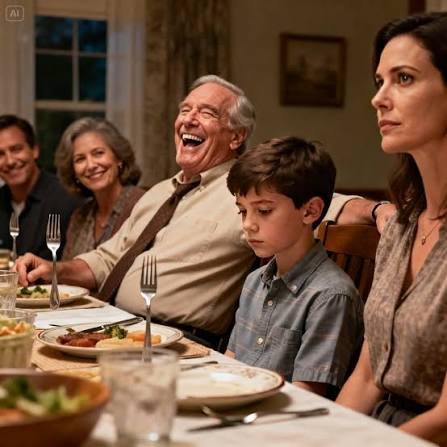
During one family dinner, Linda finally expressed her frustration openly. The children were sitting nearby, excitedly showing her drawings they had made at school. Instead of smiling and encouraging them, Linda sighed and said that she was tired of having to be around her grandchildren every time she visited her son. The room suddenly became quiet. Daniel immediately noticed the children’s expressions change. His daughter lowered her drawing and stopped talking, while his younger son looked at his mother as if trying to understand what had happened. Linda did not seem to realize how deeply her words could affect them. She continued explaining that she had already raised her children and did not want to spend the rest of her life surrounded by young kids.
Advertisement
Daniel tried to remain calm because he did not want to turn the family dinner into an argument. He asked his mother what exactly she expected from him and Emily. Linda replied that she wanted more freedom and fewer expectations. She claimed that whenever she visited, everyone seemed to assume she wanted to entertain the children. Daniel reminded her that nobody had ever demanded that she babysit. Nobody had asked her to cancel plans or dedicate her weekends to childcare. In fact, he and Emily had always respected her independence. What they had expected was much simpler: kindness, affection, and a genuine relationship between their children and their grandmother.

Advertisement
Linda insisted that she should not be made to feel guilty for wanting her own life. Daniel agreed with her on that point. He told her that she had every right to establish boundaries and decide how frequently she wanted to visit. However, he said there was an important difference between setting boundaries and making children feel unwanted. His mother became defensive and said that she was simply being honest. Daniel replied that honesty was important, but so was understanding the impact of one’s words. He explained that children might not understand complicated adult emotions, but they were very good at recognizing when someone did not want them around.
That conversation made Daniel realize that the problem was bigger than his mother’s occasional complaints. His daughter had already started noticing Linda’s behavior. A few days earlier, she had quietly asked Daniel why Grandma always seemed happier when the children were not around. The question had broken his heart because his daughter was still young enough to believe that adults’ reactions reflected something about her own worth. Daniel knew that if Linda continued making negative comments, the children might eventually begin avoiding her altogether. He did not want them growing up believing that they were difficult to love simply because their grandmother preferred a quieter lifestyle.
Daniel decided that he needed to have a private conversation with Linda. He visited her home and calmly explained that he was not asking her to become someone she was not. He understood that she enjoyed traveling, meeting friends, reading, and spending time alone. He also understood that being around energetic children could be exhausting. What he could not accept was the idea that his children should feel guilty for existing. Daniel told her that she was free to say no to visits, babysitting requests, or family activities. But if she chose to be around them, she needed to treat them with warmth and respect.
Linda listened but remained frustrated. She argued that grandparents were often expected to sacrifice their freedom and become unpaid childcare providers. Daniel immediately told her that he agreed such expectations were unfair. He had never expected her to raise his children. He and Emily were responsible for their children, and they accepted that responsibility. The problem was not that Linda wanted boundaries. The problem was that she seemed to want the benefits of being a grandmother without accepting that a meaningful relationship required some time, patience, and emotional investment.
Daniel then reminded Linda of something from his own childhood. When he was young, his grandmother had always made him feel welcome. She remembered small details about his interests, attended important events, and made him feel that his presence mattered. Daniel said he had never forgotten those moments. He wanted his own children to experience that same sense of belonging. He was not demanding that Linda copy his grandmother or become available every day. He simply wanted her to understand that the relationship she built with her grandchildren now could influence how they remembered her years later.
Linda responded that Daniel was making the situation more dramatic than necessary. She said the children were young and would eventually forget the comments she had made. Daniel disagreed. He explained that children might forget specific conversations, but they often remembered patterns. They remembered who hugged them, who listened to them, who celebrated their achievements, and who seemed irritated whenever they entered the room. He told his mother that emotional memories could last much longer than adults realized. If she wanted a close relationship with her grandchildren, she needed to think about the experience from their perspective rather than only her own.
The conversation became especially emotional when Daniel told Linda that he would no longer force his children to spend time with her. If she did not want to visit, he would not pressure her. If she wanted fewer family gatherings, he would respect that. But he would also stop encouraging the children to chase her attention. He said that they deserved relationships where affection was mutual. Linda was shocked because she had assumed Daniel would always encourage the grandchildren to maintain a connection with her. For the first time, she realized that her son was not threatening her. He was simply allowing her choices to have natural consequences.
Linda became quiet after hearing that. She had always assumed that being Daniel’s mother automatically guaranteed her an important place in his family. She had never considered that her relationship with her grandchildren could change if she repeatedly pushed them away. She asked whether Daniel was really prepared to let them become distant from her. He told her that he hoped it would never happen, but he could not force them to feel loved by someone who constantly acted annoyed by their presence. He wanted his children to know that family relationships were built through actions, not simply through titles.
That night, Daniel also spoke with Emily about the situation. Emily admitted that she had noticed Linda’s frustration for months but had avoided saying anything because she did not want to create tension between Daniel and his mother. She explained that she never expected Linda to babysit or help with household responsibilities. Whenever Linda visited, Emily usually handled the children herself. What hurt her was watching the children’s excitement disappear whenever their grandmother complained about them. Emily said that the children deserved to feel comfortable in their own family home without worrying about whether they were annoying someone.
The following weekend, Linda came over again. This time, she noticed that things were different. Daniel and Emily did not pressure the children to sit beside her or ask them to entertain their grandmother. The children greeted Linda politely but then returned to their own activities. Instead of running toward her with drawings and toys, they kept some distance. Linda initially felt relieved because the house seemed quieter. But after a while, she noticed something unexpected: she missed their attention. She realized that their excitement had once been a sign that they loved seeing her. Now that they were protecting themselves from rejection, the house felt strangely empty.
Linda watched her granddaughter sitting at the table drawing pictures. She remembered how the little girl used to bring every new drawing to her and proudly explain every detail. Linda suddenly understood that those moments had never been obligations. They had been gifts. Her granddaughter had been offering her a small piece of her childhood, trusting that Grandma would care. Linda began to feel regret about how casually she had dismissed those moments. She realized that children grow up quickly, and opportunities to participate in their childhood cannot be recovered once they disappear.
Later that afternoon, Linda approached her granddaughter and asked about the drawing she was working on. The little girl looked surprised but eventually smiled and explained it. Linda listened carefully and asked questions. It was a simple interaction, but it meant a lot to both of them. Daniel watched from across the room without saying anything. He could see that his mother was making an effort, and for the first time in months, his daughter looked comfortable around her grandmother again.
Linda eventually apologized to Daniel. She admitted that she had confused boundaries with rejection. She still wanted her independence and did not want to become a full-time babysitter, but she understood that there was no reason to make the children feel responsible for her frustration. Daniel accepted her apology but reminded her that rebuilding trust would take time. He told her that the children might not immediately return to the way they behaved before. They needed to see consistency before they felt completely comfortable again.
Linda also apologized directly to her grandchildren. She did not give them a complicated explanation or make excuses. She simply told them that she was sorry for making them feel as though she did not enjoy having them around. She assured them that none of it was their fault. The children quickly forgave her because they were still young and naturally hopeful. Her granddaughter even asked if Linda wanted to see another drawing. This time, Linda smiled and said yes.
From that point forward, Linda changed the way she approached family gatherings. She still maintained boundaries. She did not suddenly become available every weekend, and she continued enjoying her own hobbies and social life. But when she chose to visit, she made an effort to be present. She would play a short game, listen to a story, help with a puzzle, or simply sit with the children while they watched a movie. She discovered that spending meaningful time with grandchildren did not require sacrificing her entire identity. A few hours of genuine attention could create memories without turning her into a full-time caregiver.
Daniel also learned something from the experience. He realized that he had sometimes assumed his mother would naturally understand what his children needed. Instead of silently tolerating her behavior, he should have communicated his concerns earlier. He also understood that parents and grandparents can have different expectations about family relationships. Healthy boundaries were necessary on both sides. He did not want his mother to feel obligated to provide childcare, but he also did not want his children exposed to repeated comments that made them feel unwanted.
The situation also changed Emily’s perspective. She had been worried that confronting Linda would permanently damage the family relationship. Instead, the honest conversation eventually created an opportunity for everyone to understand each other better. Emily appreciated that Daniel had defended the children’s emotional well-being without demanding that his mother sacrifice her independence. Linda, meanwhile, appreciated that her son had been honest enough to tell her the truth instead of simply agreeing with everything she said.
Months later, the family dynamic was noticeably healthier. Linda continued living her own life, but she no longer complained about being forced to spend time with her grandchildren because she understood that she was not actually being forced. She had choices. She could attend a family dinner or decline politely. She could spend an afternoon with the children or choose another activity. What changed was her understanding that every choice affected her relationships. She could not repeatedly push people away and then expect them to remain exactly where she had left them.
The experience taught Daniel’s children an important lesson as well. They learned that adults sometimes need space, but someone’s need for space does not mean a child is unlovable. Daniel made sure they understood that their grandmother’s feelings were not their responsibility. At the same time, he encouraged them to appreciate the positive changes Linda was making. Rather than teaching them to hold a grudge, he showed them that people can make mistakes, recognize them, and change their behavior.
For Linda, the biggest realization was that being a grandmother was not about giving up her freedom. It was about deciding what kind of relationship she wanted to have with the next generation. She did not need to attend every event or spend every weekend with the children. But if she wanted them to remember her fondly, she needed to make the time she did spend with them meaningful. She finally understood that childhood passes incredibly quickly. One day, the children who constantly wanted her attention would become teenagers and adults with busy lives of their own.
The entire experience became a powerful reality check for Linda. Her son had never demanded that she become a different person. He simply reminded her that family relationships were built through mutual respect and that children should never be made to feel like burdens for simply wanting love from their grandmother. Linda had every right to choose her lifestyle, just as Daniel had every right to protect his children from emotional rejection. In the end, nobody had to give up their independence. They simply had to communicate honestly and understand the consequences of their choices. Linda discovered that she could enjoy her freedom while still being a loving grandmother, and Daniel learned that sometimes the most difficult conversations are also the ones that prevent families from drifting apart.