Woman Shows Up To Son’s Wedding Looking Far Too Bridal, Newlyweds Make Sure The Photos Tell Another Story
When this woman’s son announced that he was getting married, she was genuinely excited to see him begin a new chapter of his life. She had spent months talking about the wedding, helping where she could, and imagining what the big day would look like. Like most mothers, she understood that the wedding was primarily about her son and his future wife, and she repeatedly told everyone that she wanted the couple to have the celebration they dreamed of. She knew there would be plenty of attention on the bride, and she had no intention of competing with her. That was why the bride was reportedly stunned when she saw what her future mother-in-law had chosen to wear. Instead of arriving in a simple, elegant outfit appropriate for the mother of the groom, the woman appeared in a dress that looked unmistakably bridal. It was extremely formal, heavily detailed, and far closer to a wedding gown than anyone expected a guest to wear. The color and styling immediately attracted attention, and several guests quietly commented that she looked as though she had misunderstood the dress code. The bride tried not to let the situation ruin her morning, especially because she did not want to spend her wedding day fighting with her new husband’s mother. She had spent too much time preparing for the occasion to allow one person’s outfit to become the center of attention. Still, she could not ignore the feeling that the choice had been deliberate. What bothered her was not simply that the dress was attractive or elaborate. It was that the woman appeared to have chosen an outfit that could easily compete with the bride’s own appearance in photographs.
The groom was reportedly caught between wanting to defend his mother and wanting to protect his new wife from unnecessary stress. He had apparently noticed the outfit as soon as his mother arrived, and although he did not want to create a scene, he could tell from his wife’s expression that she was uncomfortable. Other relatives had begun whispering about it as well, which made the situation even more awkward. Some family members tried to laugh it off and said that the dress was simply the woman’s personal style. Others believed she had crossed an obvious line by dressing so formally. The bride herself decided not to confront her directly because she feared that doing so would turn a minor wardrobe issue into a major family conflict. Instead, she focused on getting through the ceremony and enjoying the day she had spent so long planning. However, she and her husband quietly made a decision that would become much more important later. They realized that they could not control what another person chose to wear, but they could control how much attention that person received in their wedding memories. They did not want to spend years looking through their wedding album and constantly seeing the mother-in-law standing beside them in an outfit that made her look like another bride. So rather than arguing with her or demanding that she leave, they decided to let the cameras tell the story differently. The photographer was discreetly informed that the couple’s priority was to capture the bride and groom, their closest friends, and the people who had come to celebrate them. Nobody was told to humiliate the mother of the groom. Nobody was asked to make cruel comments. The couple simply wanted their wedding photographs to reflect who the celebration was actually about.
During the reception, the woman seemed to enjoy the attention she was receiving. She posed confidently with relatives and appeared completely comfortable in the outfit that had caused so much discussion earlier. At several points, guests reportedly complimented her appearance, and she accepted the praise happily. The bride remained polite, smiling when necessary and continuing to speak with family members as though nothing was wrong. However, privately, she admitted that the situation was bothering her more than she wanted to admit. A wedding is an emotionally vulnerable day, and seeing another woman dressed so similarly to her can feel deeply disrespectful, especially when that person is supposed to be celebrating her. She did not want to accuse her mother-in-law of intentionally trying to steal attention without knowing her motives. Perhaps the woman genuinely believed the outfit was appropriate. Perhaps she had a completely different understanding of wedding fashion. Or perhaps she had deliberately chosen something dramatic because she wanted to stand out. The bride could not know for certain. What she did know was that she did not want to fight about it. She and her husband therefore continued with their plan. When group photographs were taken, the photographer naturally prioritized the newlyweds. In some pictures, the bride and groom stood in the center while other family members surrounded them. In others, the photographer focused on the couple alone. There were still plenty of family photographs, but the mother of the groom was not given the prominent role she might have expected. The bride later explained that this was not revenge in the sense of trying to embarrass her. It was simply an attempt to make sure that the wedding album reflected the actual importance of each person at the event.
The real conflict reportedly began after the wedding when the mother saw some of the photographs. She had apparently expected to appear prominently throughout the wedding album and was surprised to discover that she was barely featured in many of the most important pictures. The bride and groom had dozens of beautiful photographs together, along with pictures of the bride’s family, the groom’s family, and their friends. But there were very few images where the mother of the groom was positioned close to the couple in a way that emphasized her presence. She reportedly became upset and accused the newlyweds of intentionally excluding her. She argued that she had dressed up for the occasion because it was an important family event and believed she deserved to be represented properly in the photographs. The groom responded that nobody had stopped her from attending, and nobody had prevented her from taking pictures with the family. The photographer had simply focused on the people getting married. The bride also refused to apologize for wanting her wedding album to center on herself and her husband. She explained that she had not edited the photos to make the woman look bad, removed her from legitimate family pictures, or publicly mocked her outfit. She had simply chosen not to give special attention to someone who had arrived dressed in a way that made the bride feel uncomfortable. The mother reportedly felt that this was petty and disrespectful, while the newlyweds believed it was a reasonable consequence of her own decision. The disagreement soon spread through the family, with some relatives taking the mother’s side and saying that the couple should have been more mature. Others argued that the mother had created the situation herself by choosing such an attention-grabbing outfit in the first place.
Ultimately, the couple decided that the photographs were exactly what they wanted because they captured the day from their perspective rather than someone else’s. Their wedding album showed the bride and groom laughing together, dancing, exchanging vows, cutting the cake, and celebrating with the people closest to them. There were still photographs of the groom’s mother, but she was not allowed to dominate the visual memories of the day simply because she had chosen to dress in a way that attracted attention. The bride later admitted that she had initially been tempted to confront the woman, but she was glad she had resisted because the wedding itself remained peaceful. She did not want her marriage to begin with a public argument over a dress. Her husband also stood by her, explaining that his mother was free to choose whatever outfit she wanted, but she was not entitled to control how the newlyweds remembered their wedding. Whether the woman’s outfit had been intentionally competitive or merely a serious fashion mistake remained unclear. That uncertainty was perhaps what made the situation so divisive. Some family members believed the bride and groom had overreacted and should have simply ignored the dress completely. Others believed that the couple handled the situation perfectly by refusing to create a scene while still protecting the importance of their own day. In the end, the mother got to attend the wedding, wear the outfit she chose, enjoy the celebration, and appear in photographs with the family. What she did not get was the prominent place in the wedding memories that she apparently expected. And perhaps that was the couple’s quiet way of making one thing clear: nobody could stop her from dressing like she wanted, but nobody could force the newlyweds to make her the star of their wedding story.
Read Story…
MIL Wore White to Our Wedding
I’m new to posting on reddit so I apologize if this is lengthy. I had to repost to fix the link for pictures.
My husband and I had our wedding celebration in France last week (best week of my life). Wedding planning was honestly really great, not too stressful, even with coordinating everything from oversees (husband and I live in the US).
The only thing that really caused me any stress was my MIL. From the beginning she was difficult.
Why are we doing it in France and not Portugal (in laws are Portuguese and I’m part French. We looked at venues in both countries but France was the only one to have a venue that fit our vibe and accommodated all of our guests without blowing the budget). MIL wanted to invite distant cousins from Portugal (despite my husband and I explaining to her that this was not the kind of wedding where you send out invitations assuming some people will say no – we were only inviting the number of people that the chateau could accommodate because we didn’t want to 1. blow our budget on outside hotels or 2. make people pay for a plane ticket AND their accommodations. Also my husband is not that close to the cousins and he told her no multiple times to this request).
The biggest issue from the beginning was MIL’s dress. I initially told the moms to wear pink because green and pink were our loose wedding colors. MIL showed me some options initially, even told me once that she liked a particular dress and that “if it were a fancy venue i’d wear this but since it’s just at a chateau in France, i’ll get something different”. A month later I actually decided that it would be special for my parents to be my something blue, and with only 46 guests I thought it would be nice for them to stand out by not having any other guests wear blue. Everyone was totally okay with it, even MIL initially because she wanted to wear mauve.
A few months later she messaged me asking what shade of blue my mom is wearing because she found a navy dress. I explained to her again that only my parents are wearing blue. She said ok but a few days later was yelling about it to my husband telling him she’s going to wear whatever she wants. My husband told her that if she wears blue he will not speak to her (she has a history of being a narcissist so this was not a one time frustration on my husband’s part).
As MIL continued her dress search she sent me an option that was an extremely light pink. I told her to try to find a deeper pink dress because my gown was ivory and I didn’t want hers to photograph too white. Also, the dress code was colorful black tie for the wedding so all other guests were purchasing fun, bright colors. She was extremely difficult about the no blue and complained that she didn’t like any dresses she saw or tried on. So leading up to the wedding, no one knew what dress she had purchased. She assured us that it wouldn’t be blue. She wouldn’t, however, show anyone what dress she got. She wouldnt even let my husband go into her bathroom before the rehearsal dinner because she didn’t want him seeing her dress.
My husband and I discussed that if she wore something inappropriate, we would simply have the photographers photoshop it. No need to stress during the event because photoshop will take care of it and my husband made her aware of this.
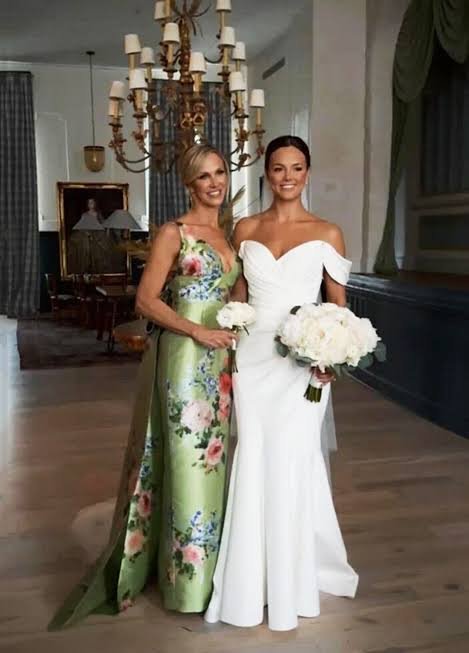
To our not so surprise, day of the wedding MIL comes out in the pictured dress. Even arranged to have a pseudo first look with my husband (which he thought was weird) and his first thought was “that dress is way too close to white”. When I initially saw it I had hoped it would photograph maybe more gold or silver, but when we got the photos back, it was extremely white. Unnecessarily close to my husband and I’s colors.
My husband followed through with the boundary we agreed to set and had the photographers change her dress to pink. We thought it looked normal and anyone seeing the photos would not think otherwise. My husband and I posted our photos on instagram with her color change.
MIL texted me that what I did was horrible and that I humiliated her. She told my brother in law that I’m jealous of her and that I changed the color of her dress because I didn’t want her looking better than my mom. And she even messaged our photographers on instagram first questioning the color change and then to claim they altered FIL’s face and demanded the originals.
My husband had been ignoring her calls and texts after the wedding (not only did she wear white but complained all week about the venue & her room – a private suite – to us and our other guests and said nasty things about my husband to his brother & brother’s gf on her drive to the airport), but we decided he should message her to confront her about her messages to me and the photographers and to call her out on her comments the entire week, during and after the wedding.
She hasn’t responded to him and her first reaction was to call my brother in law, upset that his girlfriend told me the things she was saying on the car ride.
My husband and I talked and I told him this is a hard boundary I want to set with her. She made the entire planning process a nightmare anytime we had to interact with her about wedding details, and the cherry on top was her wearing white the day of. If she can do this to us on one of the most special days in our life, I shudder to think what other milestone events she’ll continue to make about herself and how she’ll treat me going forward on any regular day as well.
She hasn’t apologized and somehow made herself the victim in all of this.
I felt validated during our wedding reception and the day after with our friends asking me if I approved her dress because of how light it was. They couldn’t believe she’s wear something like that.
And when she posted a photo she had from her phone with her original dress color on facebook, all of her comments were wishing her a happy anniversary or congratulating her on her big day – it seems obvious to me that her dress color had people thinking the photo was from her own bridal event, not a picture of her as a wedding guest.
I know reddit is brutally honest so I’m curious what other people think. Post wedding this issue has taken up a lot of my brain space, but my actual wedding day was so perfect and I paid her no mind so she didn’t ruin anything for me in the moment.
My husband made a post for fun and this is the link to his to see the photos of her dress https://www.reddit.com/r/Marriage/s/kv5EEhtpJj
Mother Arrives At Her Son’s Wedding In A Strikingly Bridal Dress, Leaving The Bride Shocked
When this woman’s son announced that he was getting married, she was reportedly thrilled about the upcoming wedding. She spoke excitedly about the ceremony, the reception, and everything her son and his fiancée were planning for their big day. From the outside, she appeared to be a proud mother who wanted nothing more than to celebrate her son. She talked about how beautiful the bride would look and how emotional it would be to watch her son exchange vows. Because of that, nobody expected her choice of clothing on the wedding day to become one of the biggest sources of tension between the families. The mother arrived wearing an extremely formal outfit that immediately stood out from what the other guests were wearing. The dress was elegant, elaborate, and, according to the bride, far too bridal for someone who was supposed to be a guest. It was not simply a nice mother-of-the-groom dress. The overall style, color, detailing, and dramatic presentation made her look as though she had intentionally chosen an outfit that could compete with the actual bride. The bride was reportedly stunned when she first saw her. She tried to stay calm because she knew the wedding was not the place for an argument, but she could not shake the feeling that the choice had been deliberate. She had spent months planning every detail of her wedding and had always imagined that she would be the obvious focus of the day. Now, before the ceremony had even started, she was already wondering how many guests would comment on her future mother-in-law’s appearance.
Advertisement
The bride reportedly tried to convince herself that she was overreacting. She knew that people have different ideas about formal clothing, and she did not want to assume malicious intentions without evidence. Maybe the woman simply loved dramatic dresses. Maybe she had misunderstood the dress code. Maybe she thought the outfit was elegant without realizing how bridal it looked. The bride considered all of those possibilities because she did not want to begin her marriage by creating a family feud. She also knew that confronting the mother before the ceremony could potentially cause an even bigger scene. If the woman became offended and started arguing, the entire wedding party could become distracted. The bride therefore decided to stay quiet and focus on the day. However, she noticed that other people were also reacting to the outfit. Some guests exchanged looks when the mother walked into the venue. A few quietly whispered to one another, apparently surprised by how bridal she looked. The bride’s closest friends noticed her discomfort and asked whether she wanted them to say something. She refused because she did not want anyone confronting the woman on her behalf. Her priority was getting through the ceremony without drama. Still, she privately told her husband that she was uncomfortable. He reportedly understood why she felt that way and promised that he would handle any issues if his mother caused a scene. Neither of them wanted to fight, but both realized that the unusual outfit had created an awkward situation they could not completely ignore.
The groom was reportedly in an especially difficult position. He loved his mother and did not want to embarrass her on his wedding day, but he also understood that his new wife deserved to feel special. When he saw what his mother was wearing, he apparently recognized immediately why the bride was uncomfortable. He considered asking his mother whether she had another outfit available, but he ultimately decided against creating a confrontation just before the ceremony. He knew that telling his mother she looked too bridal could result in an emotional argument. She might claim that nobody had the right to criticize her appearance or that she had spent a lot of time and money preparing for the wedding. He also worried that if he challenged her, she would accuse his new wife of controlling him. So instead, he chose to keep the peace. He reassured his bride that the wedding was still about them and that nobody could take that away. The bride appreciated his support, but she also knew that the photographs would matter long after the wedding was over. She did not want to look back at her wedding album years later and see her mother-in-law dressed almost as though she were another bride. That thought bothered her more than the actual outfit itself. She knew that the ceremony would last only a few hours, but the photographs would remain for decades.
Once the ceremony began, the bride tried to forget about the dress. She walked down the aisle, exchanged vows with her husband, and focused on the moment she had been waiting for. For those few minutes, the clothing issue disappeared completely. She was surrounded by the people she loved, and the attention naturally shifted toward the couple. The groom’s mother sat among the guests and watched the ceremony. From a distance, everything appeared normal. There was no confrontation, no public argument, and no obvious sign of tension. After the vows, however, the photographer began organizing family photographs. This was when the bride and groom quietly decided how they wanted the situation handled. They did not ask the photographer to remove the mother from every picture. They did not tell anyone to insult her or make comments about her dress. Instead, they simply made sure that the majority of the important photographs centered on the newlyweds. The photographer took plenty of pictures of the couple alone, pictures with the bridal party, pictures with the bride’s family, pictures with the groom’s family, and candid photographs during the reception. The mother was included in appropriate family shots, but she was not placed in the center of every photograph. To the couple, this seemed completely normal. After all, it was their wedding.
The bride later explained that she did not want to punish the mother for her clothing choice. She simply wanted to make sure that the wedding album reflected the actual purpose of the event. She believed that if someone chose to wear an unusually attention-grabbing outfit, that person could not then expect the bride and groom to rearrange their entire photography plan around them. The couple had already paid for a photographer to document their wedding, and they wanted pictures that captured their relationship and the people who genuinely supported them. The bride’s family had also dressed formally, but nobody had attempted to look like the bride. That difference mattered to her. She felt that there was an unspoken understanding at most weddings that the bride and groom were supposed to be visually distinct from the guests. Nobody needed to sign a contract saying guests could not compete with the bride’s appearance. It was simply basic wedding etiquette. Because the mother had ignored that expectation, the couple decided that they would not give her additional attention to compensate for it. They did not have to tell her that directly. Their actions were subtle enough that most guests probably did not even notice.
Throughout the reception, the mother seemed completely comfortable with her outfit. She accepted compliments from relatives and posed for photographs whenever people approached her. She appeared proud of how she looked and did not seem embarrassed by the attention. Some family members complimented her and told her that she looked beautiful. The bride remained polite whenever she crossed paths with her. She smiled, thanked people for coming, and participated in the celebration. However, the bride’s closest friends could tell that she was still bothered. One friend reportedly asked her whether she was angry. The bride admitted that she was, but she did not want to let the anger control the day. She had dreamed about her wedding for too long to spend the entire reception worrying about someone else’s dress. Her husband agreed and encouraged her to enjoy herself. They danced, spoke with guests, took pictures, and celebrated their marriage. The mother continued moving around the reception, apparently enjoying herself. At that point, the bride decided that the best response was to simply ignore the situation.
The tension resurfaced later when the couple began receiving the wedding photographs. They had expected hundreds of images showing every important moment of the day. As they looked through them, they were happy with most of what they saw. The bride loved the pictures of herself walking down the aisle, the couple exchanging vows, and their first dance. She also loved the candid pictures of their friends laughing and their families celebrating. Then they came across the family photographs involving the groom’s mother. She was present in several images, but the photographer had naturally kept the focus on the couple. There were not as many prominent pictures of her as she apparently expected. The bride and groom decided not to alter the photographs dramatically. They simply selected the images they wanted for their album based on the memories they wanted to preserve. The mother would still appear in the wedding collection, but she would not dominate it. At first, they assumed she would never even notice the difference.
Unfortunately, the mother did notice. When she eventually saw the photographs, she reportedly became upset about how few pictures prominently featured her. She believed that because she was the groom’s mother, she should have had a larger presence in the wedding album. She apparently expected more pictures of herself with her son and his new wife. Instead, most of the couple’s favorite photographs focused on the newlyweds. She interpreted this as a deliberate attempt to exclude her. The groom tried to explain that the photographer had taken plenty of photographs and that she had not been removed from the wedding. She had been included in family pictures and had every opportunity to take photographs with relatives. The mother reportedly disagreed. She believed the couple had intentionally chosen photographs that made her less visible because they were angry about her outfit. The bride did not deny that the outfit had influenced how she felt about the photographs, but she also argued that there was nothing unreasonable about choosing pictures where the bride and groom were the clear focus.
The mother reportedly accused the bride of being petty. She suggested that the bride had been looking for a reason to punish her and had used the wedding photographer as a way to do it without openly confronting her. The bride found that accusation frustrating because she believed she had actually shown restraint. She had not demanded that the mother change clothes. She had not embarrassed her during the ceremony. She had not told other guests to mock her. She had not made a public announcement about the dress. She had simply refused to let the situation become bigger than it already was. If the mother wanted to interpret that as punishment, the bride felt that was her choice. The groom also became more defensive of his wife at this point. He told his mother that the wedding photographs were not designed to make every guest look equally important. The bride and groom were supposed to be the center of the album. His mother reportedly responded that she was not just another guest. She was his mother.
That statement created an entirely different argument. The groom acknowledged that his mother had an important role in his life, but he told her that being his mother did not mean she should receive the same visual prominence as the bride on their wedding day. He explained that there would be many family occasions in the future where she could be celebrated and photographed. His wedding, however, was about his marriage. His mother reportedly felt that he was taking his wife’s side and allowing her to disrespect his family. The groom insisted that he was not choosing sides. He was simply asking everyone to respect the boundaries of the newly married couple. This reportedly made the mother even more upset. She claimed that her son had changed since getting married and suggested that his wife was influencing him. The bride found that especially hurtful because she had tried very hard not to create conflict with her new in-laws.
The couple’s decision regarding the photographs soon became a topic of discussion among extended family members. Some relatives believed the bride had handled the situation maturely by refusing to start a fight at the wedding. Others thought she had been unnecessarily sensitive about the outfit and should have simply ignored it. A few family members argued that the mother had every right to wear an elegant dress and that nobody could know whether she intended to compete with the bride. The bride agreed with one part of that argument. She admitted that she could not prove the outfit had been intentionally chosen to upstage her. That was why she had never confronted the woman directly. But she also believed that intentions were not the only thing that mattered. Even if the mother had not meant to cause harm, the result was still uncomfortable. The bride did not think she should be required to pretend otherwise just to keep everyone else happy.
The groom eventually spoke privately with his mother and asked why she had chosen that particular dress. Her answer reportedly made the situation even more confusing. She said that she had wanted to look beautiful because it was one of the most important days of her son’s life. She claimed that she had not intended to look like a bride or compete with anyone. She simply wanted to look special. The groom told her that he believed she could have looked beautiful without choosing something so close to bridal attire. She reportedly became defensive and said that nobody had complained to her at the wedding. He reminded her that his wife had deliberately avoided confrontation because she did not want to ruin the day. The mother apparently argued that if the bride had been truly bothered, she should have said something at the time. The groom responded that avoiding a public scene was not the same as being comfortable.
The bride later admitted that she struggled with the question of whether she had handled everything correctly. She wondered if she should have simply ignored the outfit and included the mother in more photographs to avoid conflict. She knew that family relationships could last for decades and that a disagreement over clothing could seem insignificant compared with future milestones. At the same time, she did not want to establish a pattern where her boundaries were ignored and then she was expected to remain silent. If she had allowed the situation to bother her while pretending everything was fine, she feared future incidents would become harder to address. She also believed that wedding photographs were deeply personal. Couples often look at them years later to remember how they felt on the day. She wanted her own memories to be about marrying the person she loved, not about managing another person’s need for attention.
The groom reportedly shared that perspective. He told his wife that he had noticed his mother’s outfit immediately and understood why it had made her uncomfortable. He also admitted that he had been afraid to confront his mother before the ceremony because he knew she could become emotional. Looking back, however, he wondered whether avoiding the conversation had made things worse. If he had gently asked his mother to reconsider the dress before the wedding, perhaps the entire issue could have been avoided. He felt guilty because he had allowed his wife to carry the discomfort alone during a day that was supposed to be about both of them. The bride reassured him that she did not blame him for trying to avoid a scene. What mattered to her was that he supported her afterward.
Meanwhile, the mother continued insisting that the photographs were unfair. She reportedly wanted the couple to add more pictures of her to the final album. The bride and groom refused. They explained that they had chosen the photographs they liked best and did not want to redesign their wedding album around one person’s expectations. The mother argued that she deserved more pictures because she was family. The couple responded that she was included in the photographs that mattered. They simply did not agree that every important photograph needed to feature her. This became a point where neither side seemed willing to compromise. The mother believed the lack of photographs was a deliberate slight. The newlyweds believed it was simply the natural result of having a wedding album centered on the couple.
Eventually, some relatives suggested that everyone should let the matter go. They pointed out that the wedding had already happened and that the marriage itself was more important than the photographs. The bride agreed with that in principle, but she also felt that the disagreement revealed something deeper. She believed the argument was not really about pictures. It was about expectations. The mother expected to have a significant role in her son’s wedding and apparently believed that her status as his mother gave her certain privileges. The bride believed that once the wedding day began, the couple’s preferences should take priority. Neither position was completely surprising, but they were difficult to reconcile. The photographs simply became the evidence that exposed the underlying tension.
The mother reportedly told other family members that she felt deliberately humiliated. She said she had dressed carefully because she wanted to look her best for her son’s wedding, only to feel as though her efforts had been punished afterward. The bride felt sorry that the woman was hurt but did not believe she was responsible for making her feel like the star of someone else’s wedding. She also pointed out that nobody had asked the mother to leave, change clothes, or hide from cameras. She had been welcomed throughout the day. The only thing the couple had controlled was which photographs they chose to highlight. To the bride, that seemed like a reasonable boundary rather than an act of cruelty.
The groom’s relationship with his mother became somewhat strained after the wedding. He still spoke to her and wanted her to remain part of his life, but he became more careful about allowing family expectations to influence his marriage. He told his wife that he did not want every disagreement to become a competition between her and his mother. He also told his mother that he loved her but would not allow her to turn his marriage into a loyalty test. This was apparently difficult for everyone because the mother had spent years being one of the most important people in her son’s life. She now had to accept that his wife would naturally become his primary partner in making decisions about their shared life.
The bride also tried to avoid turning the incident into a permanent family feud. She did not want to tell future relatives that her mother-in-law was forbidden from certain events or that she could never be trusted. Instead, she hoped the situation would eventually fade into the background. She recognized that everyone makes mistakes, and she did not want one wedding-day decision to define their relationship forever. However, she also made it clear to her husband that she would not apologize for the photographs. She believed the album represented their wedding, and she wanted it to reflect the day as they experienced it. If the mother wanted more pictures of herself, she could have taken personal photographs with family members. The couple simply did not believe they owed her a featured role in their own memories.
Months later, the wedding photographs still occasionally came up during family conversations. Some relatives joked about how formal the mother had looked, while others avoided mentioning the subject altogether. The bride tried not to dwell on it, but she admitted that the experience had changed how she viewed future family events. She became more aware of the importance of setting expectations early, especially when it came to major celebrations. She did not want to repeat the same situation at future anniversaries, holidays, or family ceremonies. Her husband agreed that they would need to communicate more clearly with everyone beforehand rather than assuming people understood the boundaries.
The mother, for her part, reportedly never fully admitted that her outfit had been inappropriate. She maintained that she had simply wanted to look beautiful and had never intended to compete with the bride. That explanation left the couple with an uncomfortable ambiguity. They could not prove what her intentions had been, and they eventually stopped trying to. The bride decided that she did not need to know whether the choice had been deliberate. What mattered was how she chose to respond. She had refused to create a public confrontation, protected her wedding day, and made sure the photographs reflected the couple rather than the controversy surrounding them.
In the end, the newlyweds’ wedding album told the story they wanted it to tell. It showed the bride and groom laughing, exchanging vows, dancing, celebrating with friends, and surrounded by people who had come to support their marriage. The groom’s mother was present in the memories, but she was not the central figure. Some people believed the couple had handled the situation perfectly by quietly keeping the focus where it belonged. Others thought they had been passive-aggressive and should have addressed the outfit directly instead of allowing the photograph choices to send a message. The bride herself remained somewhere in the middle. She wished the dress had never become an issue, but she was also glad she had not sacrificed her own happiness simply to avoid upsetting someone else. Perhaps the mother truly had no intention of competing with her. Perhaps she knew exactly what she was doing. There was no way to prove it. But years later, when the couple looked through their wedding photographs, they saw what they had wanted to preserve all along: their marriage, their happiness, and the beginning of their life together. And perhaps that was the quietest way they could make sure that, regardless of what anyone wore that day, the wedding would always remain their story.