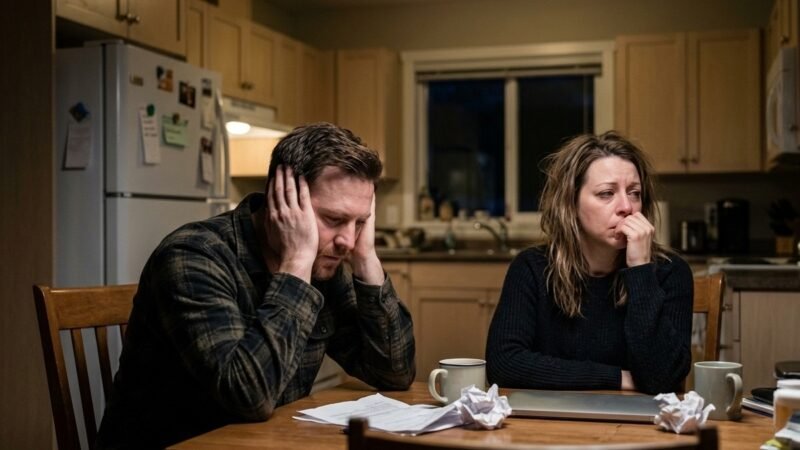
36-Year-Old Dumped By Younger Fiancée, Loses Everything, and Moves In With His Elderly Parents Only to Verbally Attack Them at Every Opportunity

Thirty-six-year-old Michael had spent years believing that his life was finally going exactly the way he wanted. He had a steady career, a comfortable apartment, and a younger fiancée named Lauren whom he believed he would eventually marry. Their relationship had lasted several years, and Michael had become accustomed to a lifestyle that depended heavily on their combined income and shared plans. They had talked about marriage, traveling, buying a home, and eventually starting a family. Michael believed that because he was older and financially established, he was the person who had everything under control. However, his confidence disappeared when Lauren unexpectedly ended their engagement. She told him that she no longer believed they were compatible and wanted to move forward with her life without him. The breakup did not simply leave Michael heartbroken; it completely disrupted his finances and living situation. The apartment they had shared was primarily connected to Lauren’s financial arrangements, and several of the expenses Michael had become accustomed to were no longer affordable once they separated. Within a short period of time, he found himself struggling to pay his bills and facing the uncomfortable reality that he could no longer maintain the lifestyle he had previously enjoyed. With few immediate options, Michael turned to the people he knew would probably take him in regardless of the circumstances: his elderly parents.
Michael’s parents, Robert and Linda, were both in their seventies and had been living quietly in the family home for years. They were not wealthy, but they had always tried to make sure their son knew he had somewhere to go if life became difficult. When Michael arrived at their doorstep with his belongings, they did not turn him away. They cleared a room for him, rearranged their routines, and welcomed him back into the home despite knowing that having an adult son living with them again would not be easy. At first, they assumed Michael needed time to recover emotionally from the breakup. They expected him to be embarrassed, frustrated, and perhaps depressed about losing his relationship and independence. Instead, Michael quickly became angry and bitter. Rather than treating his parents with gratitude, he began blaming them for almost every inconvenience in his life. He complained about the size of the room they gave him, criticized the food they prepared, complained about the temperature in the house, and became irritated whenever they asked him to help with basic chores. Whenever Linda reminded him that they were allowing him to live there without paying full household expenses, Michael would become defensive and tell her that she should be grateful to have the opportunity to help her own son. Robert tried to remain patient, repeatedly reminding Michael that the arrangement was temporary and that they wanted him to get back on his feet. But Michael interpreted even gentle advice as criticism. He began telling his parents that they had failed him throughout his childhood and that his current situation was somehow the result of their parenting.

Advertisement
As the weeks turned into months, Michael’s behavior became increasingly hostile. He had no problem accepting his parents’ help, but he seemed unwilling to accept any responsibility for his circumstances. When Robert suggested that Michael search for a cheaper apartment or take on additional work, Michael accused him of being judgmental and out of touch. When Linda asked him to clean up after himself, he called her controlling. If dinner was not prepared the way he liked, he complained that his mother had never been good at taking care of him. The elderly couple began walking on eggshells inside their own home. They had originally imagined that their son would stay with them temporarily while rebuilding his finances, but instead they found themselves constantly trying to avoid arguments. Michael also started making cruel comments about their age. He would mock his father’s physical limitations and complain that his mother was too slow whenever she needed help with something. On several occasions, he told them that they were lucky he had chosen to live with them because otherwise they would barely see him. Robert and Linda were deeply hurt by those comments, especially because they had never stopped supporting their son. They began questioning whether helping Michael had actually made the situation worse. Still, they continued allowing him to stay because they feared that forcing him out would leave him without anywhere to go.
The turning point came after a particularly ugly argument over money and household responsibilities. Robert had calmly told Michael that he needed to start contributing something toward groceries and utilities because the financial burden was becoming difficult for them. Michael exploded. He accused his father of treating him like a tenant and said that his parents were selfish for demanding money from their own son while he was already struggling. Linda reminded him that they were elderly and living on a limited income, and that they could not continue covering additional expenses indefinitely. Instead of showing understanding, Michael began shouting that they had never done enough for him and that their generation had made life easier for themselves while leaving younger people to struggle. He blamed them for his failed relationship, his financial problems, and even his career frustrations. Robert finally told him that they were willing to help him, but they would not accept being verbally abused in their own home. Michael responded by saying that if they truly loved him, they would stop criticizing him and let him live however he wanted. The argument left both parents devastated. For the first time, they seriously considered telling their own son to leave.
When the story eventually reached Reddit, readers were shocked by the contrast between Michael’s circumstances and his behavior. Many commenters said that being dumped, losing financial stability, or having to move back home could happen to anyone, but none of those things justified verbally attacking elderly parents who had opened their home to him. Several people argued that Michael was treating his parents’ kindness as an obligation rather than a gift. Others pointed out that he appeared to be blaming everyone around him because accepting responsibility for his own choices was too painful. Some Redditors encouraged Robert and Linda to establish firm boundaries and give Michael a clear deadline to find employment, contribute to the household, and move out. Others went even further, saying that protecting their own emotional and financial well-being should come before protecting their adult son’s comfort. Michael’s situation had begun with a painful breakup and financial setback, but according to many commenters, his biggest problem was no longer what he had lost. It was the way he treated the people who were still willing to stand beside him. His parents had given him a place to recover, but Michael seemed determined to punish them for the fact that he needed their help. Whether he would eventually recognize his behavior and take responsibility remained uncertain, but one thing had become clear: his parents could no longer continue sacrificing their peace simply because he refused to face the consequences of his own life.
Read Story…
My (F31) brother (M36) is ruining our parents (M,F60s) lives!
So in the past month my older brother’s fiancee left him. This meant he lost his house because the home they lived in was in her name. He lost his vehicle because what he was driving was her old car. He also lost his job because he was so focused on his breakup that he was constantly making mistakes. He moved in with our parents who live about 5 minutes away from my husband and I.
I DO have a lot of sympathy for him. He literally has nothing, no home, no car, no job, no relationship. The problem is, this is third time this has happened to him. That’s right, he has had 3 fiancees leave him now and every time he winds up losing everything. He has had two cars impounded because he gets so upset over his breakups he loses his job and can’t make payments on his vehicles. My parents and I have bailed him out of these situations every time. I even paid off his back payments on his car, paid for his dog’s vet bills, AND paid some of his rent before. My parents and I have literally spent thousands of dollars trying to ‘help’ him. Each of the past two times he winds up moving back in with my parents who are in their late 60s.
While we pay for everything for him whenever he goes through a breakup he becomes a total jerk. He spends every weekend with his friends out camping or vacationing (how he pays for it I have no idea, after the second fiancee he took a trip to Fiji with his friends but couldn’t afford to pay his rent). He mostly ignores me unless he needs money, which, during this breakup I am refusing to help him out at all.
The worst part is he treats my parents like garbage. If they ask him questions like, “have you been looking for a job?” he will yell at them. He has no problem eating the food they provide for him and living in their house rent and utility free, and driving my mom’s brand new car (which she got because he totaled her last car) but makes them absolutely miserable. My mom told me he will yell at them, call her stupid, trashes their house, sleeps all day, and leaves the care of his dog up to them. Every time I see my mom lately it’s obvious that she’s been crying.
The most recent event took place on Sunday. In an attempt to get him out of the house for a while I offered to take him out in our boat. He seemed super excited about it and when he’s excited he can actually be a lot of fun to be around. He tells me he’s hanging out with friends but will be back in town Sunday afternoon. Sunday afternoon rolls around and he’s nowhere to be seen. I get a text around 6pm that he’s decided to go to a local tourist destination with all his friends, they are going to tube down a river. I’m bummed because I was honestly looking forward to it and because my brother has once again chosen his friends over his family. But it’s whatever, I honestly don’t rely on him for anything so it’s not that big of deal. But then I find out he’s driving my mom’s car and she has to be in her office early Monday morning.
Then the peaceful protests in our town turn into full on riots and my brother is still not home. At this point he can’t get home because they’ve blocked off access to our town so he just stays with his friends and I wind up taking my mom to work. My Dad tries to talk to my brother on Monday about how irresponsible he was and my brother just yells at him and then locks himself in my parents basement for the rest of the day.
My parents are miserable. They want to help and have always said they will do anything for us kids, but they are just enabling my brother every time they bail him out. My Dad has major health problems that are being exacerbated by the stress my brother is causing. My mom has a history of severe depression that I see her slipping back into the longer my brother is with them. I’m really close to my parents and they are usually very fun people.
The longer my brother stays with them I am seeing them become depressed, short-tempered, and miserable. I tried telling them to kick him out, one of his friends would surely take him in, but they insist that they don’t want to leave him homeless. I can’t convince them to kick them out but is there anything else I can say or do that might get my brother to get his head out his ass and get a job? How can I get my brother to see his behavior towards my parents is unacceptable?
It just sucks, I used to really look up to my older brother because he is outgoing and funny and the sort of person everyone just gravitates towards. Now I’m just pissed at him for how he treats my parents and simultaneously scared for his mental health because he clearly has a lot of problems.
tl;dr Older brother lost his fiancee, house, car, and job. My parents took him in and he is now treating them like garbage.
**UPDATE** Thank you for the responses. A couple of things: I am in no position to psychoanalyze my brother or parents, but I do believe that mental health is a primary reason for how any human acts the way they do and clearly my brother’s mental health is not good. I am encouraging my family to see therapists, but decided I will not be paying for my brother’s because there is truly no telling if he would go or be willing to change. Also, my mom works for a not-for-profit for the elderly and specializes in elderly abuse cases. She told me that she knows what he is doing is ‘technically’ elder abuse, but she does not want to report it or want me to report it. If things get any worse though, I will go behind her back.
I went to my parents house last night for an unrelated reason and had a brief talk with my brother that devolved into a shouting match. I started by showing him four different jobs I found online that he could apply for, but none of them were ‘good enough’ for him. He was ‘insulted’ that I thought he would work those jobs and that’s when the shouting match started. I’m an educator, I KNOW I shouldn’t have let myself get into a power struggle with him, but siblings just know how to push your buttons, you know?
ANYWAY, I was able to talk to my mom one on one and she is totally unwilling to do anything about him. She will not even give him a deadline of when he has to have a job, nor will she stop lending him her car. She also reiterated how miserable she is in her own home with him around, but insists she’s feels so bad for him she doesn’t want to force him to do anything.
So I told her that I am done with him, and I will not be spending any time at their house as long as they continue to let him drain them of their health, finances, and mental well-being. I told her she and Dad are welcome at my house any time, but my brother is not. I have to tell you, I have never felt like a shittier person, it’s not in my nature to just give up on people.
Michael Thought He Had His Future All Figured Out
Thirty-six-year-old Michael had always believed that he was in control of his life. He had built a career, maintained a comfortable lifestyle, and became engaged to Lauren, a woman several years younger than him whom he believed would eventually become his wife. From the outside, their relationship appeared stable. They had discussed marriage, vacations, finances, and the possibility of having children in the future. Michael had become accustomed to making plans around the assumption that Lauren would remain by his side. Because he was older and believed he had more life experience, he often saw himself as the person who knew what was best for their future. He never seriously considered that Lauren might eventually decide she no longer wanted the relationship.

Advertisement
That confidence disappeared when Lauren suddenly ended their engagement. She explained that she had spent months questioning whether their relationship was still right for her and had eventually realized that she wanted a different future. Michael was devastated. He initially believed the breakup was something they could overcome, but Lauren was firm about her decision. She moved forward with her life and left Michael to deal with the consequences of their separation. Unfortunately for him, the breakup also created serious financial problems. Many of the expenses associated with their lifestyle had been shared, and Michael quickly discovered that maintaining everything on his own was much more difficult than he had expected.

Advertisement
Within a few months, Michael found himself unable to afford the lifestyle he had previously enjoyed. His apartment was too expensive, several bills had become difficult to manage, and he had accumulated expenses that suddenly seemed impossible to handle alone. He had expected his career and income to be enough, but his financial situation had deteriorated more quickly than he anticipated. Rather than immediately making significant changes, Michael spent much of his time blaming Lauren. He believed she had abandoned him at the worst possible moment and felt that she should have helped him transition into his new life. Lauren disagreed and told him that ending a relationship did not make her responsible for supporting him financially.
Eventually, Michael had very few options left. He contacted his elderly parents, Robert and Linda, and asked whether he could temporarily move into their home. His parents were both in their seventies and had been enjoying a quiet retirement. They understood that their son was struggling, so despite having concerns, they agreed to let him stay. They cleared out a spare bedroom, made room for his belongings, and told him that he could use their home as a temporary place to recover. Robert and Linda did not expect rent immediately because they wanted Michael to stabilize himself first. They assumed he would eventually find another job opportunity, reduce his expenses, and move into his own place again.
For the first few days, Michael seemed embarrassed about having to return to his parents’ home at thirty-six. He rarely talked about the breakup and spent most of his time alone. His parents tried to give him privacy while also making sure he had meals and everything he needed. Linda occasionally asked whether he wanted to talk, but Michael usually responded that he was fine. Robert encouraged him to start looking for a more affordable place and offered to help him organize his finances. Michael said he appreciated the help, but he clearly did not want advice. His parents assumed that he simply needed time to process everything.
Unfortunately, Michael’s embarrassment gradually turned into resentment. He began complaining about the house almost immediately. He disliked the bedroom, criticized the furniture, complained about the food, and constantly compared his parents’ home to the apartment he had shared with Lauren. He repeatedly said that he had been forced to “downgrade” his life because of the breakup. Linda tried to remind him that the arrangement was temporary and that he was fortunate to have a safe place to stay. Michael interpreted her comment as an insult. He told her that she had no idea how difficult his situation was and that he did not need anyone reminding him that he had lost everything.
Robert and Linda tried to remain patient. They understood that Michael was going through a painful period, and they did not want to make things worse. They gave him plenty of space and avoided unnecessary arguments. However, Michael began criticizing them over increasingly minor things. He complained when his mother cooked meals he did not like and accused her of not considering his preferences. He became irritated when his father asked him to keep his belongings organized. He even complained about household routines that had existed long before he moved back. His parents began feeling as though their entire home had to be reorganized around their adult son’s moods.
One evening, Linda politely asked Michael whether he could help with some basic household chores. She explained that both she and Robert were getting older and could use some assistance. Michael reacted angrily and said that he had enough problems without being expected to work around the house. Linda reminded him that he was living there without paying full rent, and that contributing through chores was a reasonable expectation. Michael responded that he was already suffering because of his breakup and did not understand why his own mother would make his life harder. Linda was stunned by the response. She had not been trying to punish him; she simply wanted him to understand that living with other people came with responsibilities.
Robert later tried to speak with Michael privately. He told his son that nobody expected him to have everything figured out immediately, but he needed to start taking responsibility for his future. Robert suggested that Michael create a budget, reduce unnecessary expenses, and begin searching for a more affordable apartment. Michael became defensive and said his father was acting as though he had failed at life. Robert explained that he was not judging him and simply wanted him to become independent again. Michael replied that if his father really wanted to support him, he would stop giving advice and let him recover at his own pace.
As time passed, Michael became increasingly dependent on his parents. He stopped treating the arrangement as temporary and began behaving as though the house belonged to him. He would complain if his parents had plans that interfered with his routines and expected meals to be available whenever he wanted them. He occasionally used his mother’s car without asking and became angry when she questioned him about it. Robert and Linda started noticing that they were spending more money since Michael moved in, especially on groceries and household utilities. Yet whenever they mentioned expenses, Michael accused them of being obsessed with money.
The situation became particularly painful when Michael began making comments about his parents’ age. He complained that his father was too slow and that his mother was becoming forgetful. During arguments, he sometimes mocked their physical limitations. Robert found those comments especially hurtful because he had spent his entire life trying to provide for his family. He had never expected that his adult son would use his age against him after being welcomed back into the family home. Linda often cried privately after arguments because she could not understand how the child she had raised could speak to her with such cruelty.
Michael justified his behavior by insisting that his parents were responsible for some of his struggles. He claimed that they had not prepared him properly for adulthood and said they should have helped him financially earlier in life. He also argued that his breakup proved he had been unlucky and that nobody understood what he was going through. Whenever his parents suggested that he could change his situation through work and better financial decisions, he accused them of blaming the victim. In his mind, everyone else seemed responsible for his problems except him.
Eventually, Michael’s parents began discussing the situation privately. Robert told Linda that he was worried about their health and finances. He admitted that he loved their son but could not continue allowing him to treat them this way. Linda agreed, although she struggled with the idea of forcing Michael out. She kept hoping that one morning he would wake up and realize how unfairly he had been behaving. They decided to give him another opportunity to change before making any final decision.
The next confrontation happened over groceries. Linda had purchased food for the household and asked Michael to contribute toward the next grocery trip. She explained that their retirement income was limited and that supporting another adult had increased their expenses. Michael immediately became angry. He said that he was already struggling financially and accused his parents of making him feel like a burden. Linda calmly explained that they were not asking him to repay everything they had done for him. They simply wanted him to contribute something while he was living there. Instead of listening, Michael accused her of being selfish.
Robert finally stepped into the conversation and told Michael that he needed to stop speaking to his mother disrespectfully. Michael became even more furious and accused both parents of ganging up on him. He shouted that they were supposed to be his support system and that they were making his recovery impossible. Robert responded that support did not mean allowing someone to verbally abuse the people helping them. Michael stormed out of the room and spent the rest of the evening refusing to speak to either parent.
That night, Robert and Linda realized that the situation could not continue indefinitely. Their home had become a place of tension instead of peace. They were constantly worried about saying something that might trigger another argument. Linda stopped asking Michael for help because she feared his reaction. Robert avoided discussing finances because he knew it would lead to conflict. The couple began feeling like strangers in their own home. They had invited their son in because they loved him, but his presence was slowly damaging their emotional well-being.
Michael, however, believed that his parents were the problem. He told a friend that they had become impossible to live with and that they were treating him like a failure. According to him, they did not understand how difficult it was to lose a relationship and financial stability at the same time. He insisted that they should be grateful he trusted them enough to come home. His friend listened but eventually pointed out that Michael was not behaving like someone who was grateful. The comment angered him, and he stopped discussing the situation with that friend.
Eventually, Michael’s parents decided that they needed firm boundaries. Robert told him that he could continue living there temporarily, but he would need to contribute to household expenses, help with chores, and speak respectfully to both parents. They also gave him a deadline for finding independent housing. Michael was furious. He accused them of abandoning him just as his life was falling apart. Robert told him that they were not abandoning him; they were giving him a reasonable amount of time to rebuild his life while protecting their own well-being.
The conversation forced Michael to confront something he had avoided for months: his parents were not responsible for fixing his life. They had given him shelter, food, privacy, and time to recover. They had allowed him to stay when they could have said no. Yet Michael had treated their generosity as though it were an obligation. He had accepted every form of help while criticizing the people providing it. For the first time, he began to realize that his anger had not actually solved anything.
Michael eventually started looking for work opportunities that would improve his finances. He also began considering smaller apartments instead of trying to recreate the lifestyle he had lost with Lauren. It was not an easy adjustment. He still felt bitter about the breakup, but he slowly began recognizing that his former relationship was over and that blaming Lauren would not bring it back. More importantly, he began understanding that his parents had never been his enemies.
When the story was eventually shared on Reddit, commenters had strong opinions. Many people sympathized with Michael’s breakup and financial problems but said those difficulties did not excuse his treatment of his elderly parents. Several commenters emphasized that being temporarily dependent on family was not shameful, but being abusive toward the people providing help was unacceptable. Others encouraged Robert and Linda to prioritize their own health and establish firm boundaries. Some Redditors believed Michael needed professional support to process the breakup and anger he was carrying, while others simply said he needed to grow up and accept responsibility for his choices.
A number of commenters also criticized Michael for acting as though his parents owed him unlimited support simply because they were his parents. They pointed out that Robert and Linda were elderly and deserved to enjoy their home peacefully. Their willingness to help their son did not mean they had surrendered their right to privacy, respect, or financial stability. One recurring theme in the comments was that parents can love their adult children deeply while still saying “no” to destructive behavior. Helping someone does not require tolerating mistreatment.
For Robert and Linda, the experience became a painful lesson about boundaries. They still loved Michael and wanted him to succeed, but they finally understood that rescuing him from every consequence was not necessarily helping him. They could provide temporary shelter and emotional support, but they could not rebuild his career, repair his broken relationship, or force him to become responsible. Michael had to do those things himself. Their decision to establish limits was not an act of cruelty. It was an attempt to protect their own lives while still giving their son a reasonable opportunity to recover.
Michael’s story ultimately became less about losing a fiancée and more about how he responded after losing her. The breakup had taken away the future he imagined, but it had not taken away his ability to start again. He still had his health, his parents’ support, and the opportunity to rebuild his finances. What he needed most was not someone to blame but the willingness to accept responsibility. His parents had opened their home when he had nowhere else to go, but their kindness could only continue if he learned to respect the people who had offered it. Whether Michael would truly change remained uncertain, but one thing was clear: losing a relationship and losing financial stability did not give him permission to make his elderly parents pay the emotional price for his pain.