AITA for Confronting a Parent After Their Child Burned My Leg and They Refused to Apologize?
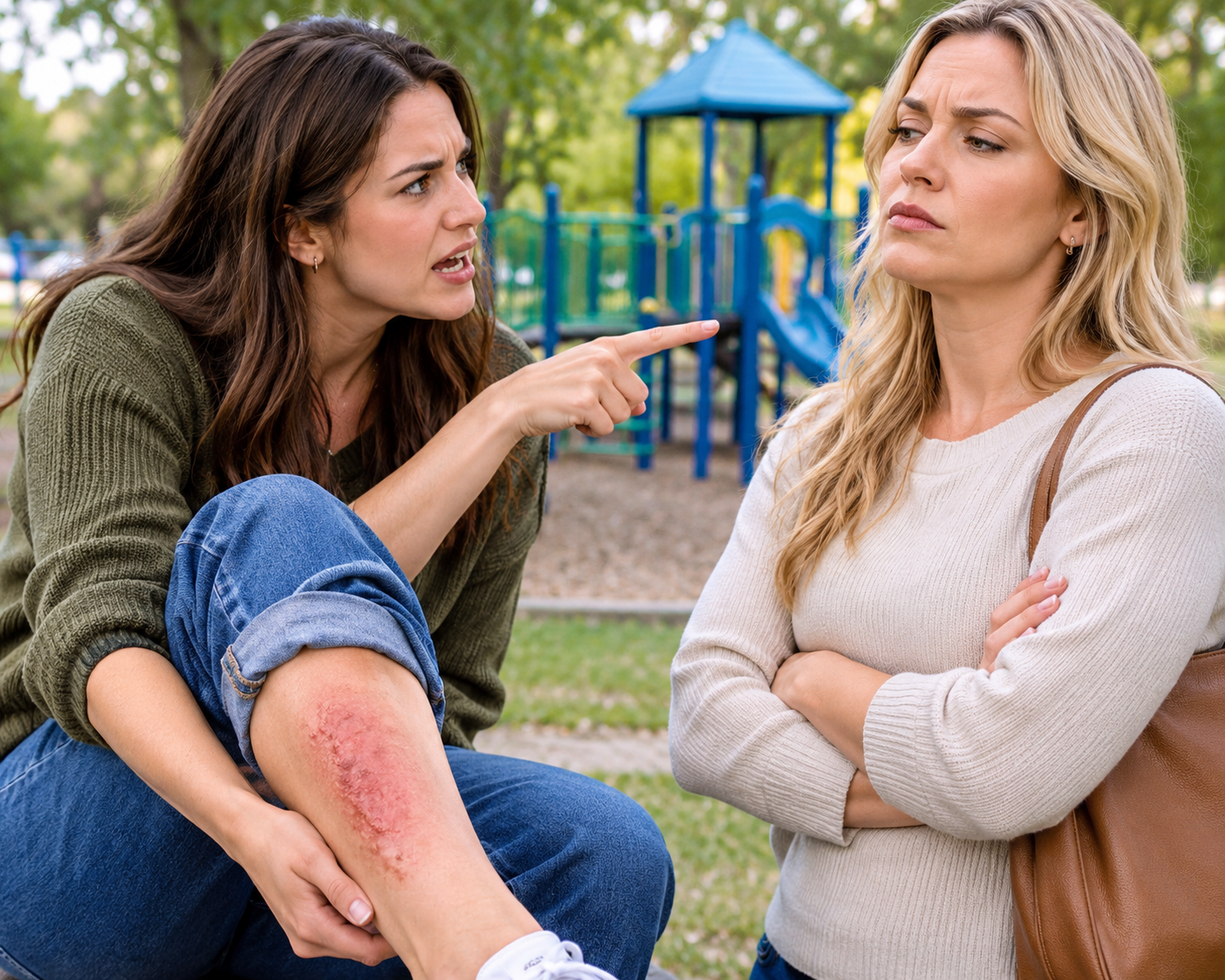
I never imagined that I would end up arguing with another parent simply because I expected them to take responsibility after their child hurt me. I have always tried to be understanding when it comes to children because I know they are still learning how to behave and understand the consequences of their actions. However, I also believe parents have a responsibility to teach their children that hurting someone is not acceptable. Recently, I experienced something that left me physically hurt and emotionally frustrated. What bothered me most was not just the injury itself, but the way the child’s parent reacted afterward. Instead of checking on me or encouraging their child to apologize, they acted as though I was the one who had done something wrong by speaking up.
The incident happened while I was spending time with a family I know. Their child was playing nearby, and at first, everything seemed normal. He was energetic and curious, but he sometimes behaved in ways that made people uncomfortable. I did not want to constantly correct him because I understood that he was not my child and his parents were responsible for raising him. At one point, however, he got close to me while playing with something hot. Before I could properly react, he caused it to touch my leg, leaving me with a painful burn. I immediately moved away and told him firmly that he could not do that because it was dangerous and had genuinely hurt me. I was shocked by what had happened, especially because I had not expected a simple moment of play to turn into an injury.
What happened next frustrated me even more. Rather than asking whether I was okay, the child’s parent immediately started defending him. They said he was only a child and probably did not understand what he was doing. I explained that I was not expecting him to behave like an adult, but he still needed to learn that hurting another person was wrong. I also expected his parent to acknowledge the situation and encourage him to apologize. Instead, they became irritated with me for correcting their child. They suggested that I had been too harsh and should have allowed them to handle the situation themselves. I tried to remain calm, but it was difficult when the person responsible for the child seemed more concerned about defending his behavior than acknowledging my injury.
I eventually confronted the parent directly and told them that I was not asking for anything unreasonable. I simply wanted them to understand that their child had hurt me and that dismissing the incident because he was young did not make it acceptable. I pointed out that children learn boundaries through guidance, and ignoring dangerous behavior only makes it more likely to happen again. The parent accused me of making a big deal out of something that was supposedly an accident. I told them that whether it was intentional or not, I was still injured, and a basic apology would have shown some consideration. After that conversation, things became awkward, and the parent seemed to believe I had deliberately embarrassed them by speaking up. I focused on taking care of my leg, but I could not stop thinking about how differently the situation could have gone if they had simply acknowledged what happened.
Now I am questioning whether confronting the parent was the right decision. I understand that children make mistakes, and I would never expect a young child to understand every situation perfectly. But I do believe parents should teach them to take responsibility when their actions hurt someone. I was not trying to insult the child or interfere with anyone’s parenting. I only wanted the parent to recognize that my injury mattered and that their child needed to understand why what happened was wrong. Some people might say I should have stayed quiet and let the parent deal with it privately, while others believe I had every right to speak up after being hurt. So, AITA for confronting a parent after their child burned my leg and they refused to apologize?
Read Story….
AITA for telling a child it wasn’t okay to burn my leg?
This is a throwaway account, because kid discipline is a sensitive topic.
Two days ago I was in a coffee shop with a friend. It was Halloween morning so there were kids in there with their parents, wearing their costumes, and looking really excited. One kid in particular was so excited that he couldn’t sit still at all and I guess his mom gave up on trying to control him so she allowed him to run around while she had a conversation with a fellow mom friend. So their kids were running around while they chatted and the moms basically ignored them.
Coffee shop = people are carrying hot drinks. I saw lots of people trying to maneuver around these kids, but one gentleman couldn’t avoid them and they tripped him. He stumbled, dropped his very hot coffee, and said coffee fell on my leg. I was wearing shorts after a run, so hot coffee hit bare skin, and I instantly received a pretty significant burn.
The gentleman was apologetic, and the employees all rushed to try to help me. They brought cool cloths, ice, etc. I was in a lot of pain as the coffee was very hot and I tried my best to say thank you to all of them but it was tough to stay calm. (Edit: yes now I know ice is not how you treat a burn, they told me that at the ER. I am not a doctor and I didn’t know that.)
My friend and I then get up to leave and he offers to take me to the ER. As we are leaving, the mom of the little boy comes up to me and pushes him in my direction and tells him to apologize. He does so, in the quiet and meek way that little kids who know they’ve done something wrong do. I would guess this kid to have been 3 or 4 — little kid, but not toddler. Okay apparently 3 still counts as a toddler. My mistake.
I really don’t want to deal with a little kid right now. I can’t bring myself to put on my gentle parenting hat. So I took a deep breath and told him firmly, without yelling, that what he did was not okay. That I appreciated that he was sorry, but that being sorry didn’t change how much pain I was in. I told him that sometimes apologies are not enough.
Then I turned to his mom and told her that she was the one who should be apologizing, that she was who allowed this, that it was her responsibility to control her child.
She then got defensive and accused me of trying to make her son feel bad, that he didn’t know any better, that he was excited for Halloween and I was ruining his holiday. Her son starts crying, loudly. She kneels down to comfort him and says to me,
“Look what you did.” The employees don’t know what to do. Other patrons are staring. And I’m still in a f*ck ton of pain. So my friend and I leave. The mom yells at us as we leave but I didn’t hear what she said. I didn’t have any more in me. ER says it’s a 2nd degree burn.
I don’t have kids yet. I was in a ton of pain. I didn’t know how to react.
AITA for telling a child that his actions were not okay? I know the mom was the responsible party, but I’m wondering if I shouldn’t have said anything to the kid at all.
EDIT: to people saying this isn’t believable because “why would you stop to lecture them if you’re that badly burned?” — THEY approached ME. I was trying to leave. I wish I had just pushed past them and left. And this entire exchange was two or three minutes tops. Start to finish, from burn to me walking out the door was probably five minutes.
I didn’t give the kid a lecture, I basically said, “This is not okay, it really hurts, I know you’re sorry but you need to watch where you’re going,” and to the mom I said, “You’re the one who should be apologizing, you can’t let your kid run around like that.”
That was pretty much it. I literally did not know what the hell I should say in that scenario, hence why I’m hemming and hawwing over it now.
Also edit: I’m going back to the shop today to see if they have footage of this happening. I still think a lawsuit is more trouble and expense than it’s worth, but I’m going to ask the cafe if they have liability insurance for something like this. I do have medical insurance but the ER visit was not free by any means.
Also also edit: I’m a guy. Don’t know why that’s important but there seems to be confusion.
When a Child’s Actions Caused a Painful Injury and Their Parent Refused to Take Responsibility
I never imagined that I would find myself in a situation where I had to confront another parent because their child physically hurt me and they refused to acknowledge what happened. I have always tried to be patient with children because I understand that they are still learning about the world, their emotions, and the consequences of their actions. I do not expect children to behave perfectly, and I certainly do not believe adults should lose their patience over every little mistake. However, I also believe there is a difference between making an innocent mistake and doing something dangerous that causes another person real pain. What happened recently left me with a painful burn on my leg and an uncomfortable disagreement with a parent who seemed more offended by my reaction than concerned about my injury.
The incident happened while I was visiting a family I know. It was supposed to be a relaxed gathering where everyone could spend some time together, enjoy food, and have a conversation. Several adults were sitting around while the children were playing nearby. I had met the child involved before, so I was somewhat familiar with his personality. He was energetic, curious, and sometimes a little difficult to manage, but I never considered him a particularly bad child. Like most children, he occasionally got carried away while playing, and I usually ignored minor behavior because I did not want to interfere with his parents.
At the beginning of the gathering, everything seemed completely normal. The child was moving around, playing, and occasionally approaching the adults to show them things. His parents were nearby, although they were mostly occupied with conversations. I did not think there was any reason to be concerned because nothing unusual had happened. I was simply sitting comfortably and enjoying the afternoon when the situation suddenly changed. Looking back, I wish someone had paid closer attention to what the child was doing, especially because he eventually got involved with something that could easily cause an injury.
At some point, the child started playing around with something hot. I noticed him nearby, but I did not immediately assume that he would do anything dangerous. Children sometimes become fascinated by objects they are not supposed to touch, and I assumed an adult would stop him if necessary. Unfortunately, before I could properly understand what was happening, the hot object came into contact with my leg. The pain was immediate, and I instinctively pulled away. I was shocked because I had not expected anything like that to happen during an ordinary family gathering.
My first reaction was to check my leg and understand how badly I had been hurt. It was not something I could simply laugh off or pretend had not happened. The area was painful, and I could tell that I had suffered a burn. I was also frustrated because the entire situation could have been avoided if the child had been properly supervised or had understood that playing with something hot was dangerous. I was not thinking about punishing anyone at that moment. I just wanted the pain to stop and wanted the people around me to understand that something serious had happened.
I turned toward the child and told him firmly that what he had done was not okay. I explained that hot objects could burn people and cause real injuries. I was careful not to insult him or call him names because I knew he was young. I simply wanted him to understand that hurting another person was not a game. I also told him that he should never play with dangerous objects near someone else’s body. I thought this was a completely reasonable thing to say, especially considering that I was the person who had just been injured.
However, the child’s parent immediately reacted in a way I was not expecting. Instead of first asking whether my leg was okay, they became defensive and told me not to speak to their child like that. Their tone made it seem as though my words were the biggest problem in the entire situation. I was confused because I had not shouted at the child or treated him disrespectfully. I had simply told him that burning someone was wrong. I could not understand why that statement was being treated as an inappropriate response.
The parent then started explaining that their child was young and did not understand what he was doing. They suggested that I should not take the situation so seriously because children sometimes make mistakes. I understand that point, and I would probably have agreed if the incident had involved something harmless. But this was not a situation where a child had accidentally knocked over a toy or spilled a drink. I had suffered a physical injury, and I felt that the parent was completely ignoring that fact.
I tried to explain that I was not expecting their child to understand everything perfectly. I was not asking them to punish him harshly or make him feel terrible. I simply expected them to explain why his behavior was dangerous and encourage him to apologize. Children learn through these moments, and I believe it is important for parents to use situations like this to teach them about safety and respect. If a child hurts someone and the adults immediately dismiss the behavior, how is that child supposed to understand the seriousness of what happened?
Instead of listening, the parent continued defending their child. They said I was making him feel bad and that I should have handled the situation more gently. I found this particularly frustrating because I was already dealing with the consequences of his actions. I had not embarrassed him intentionally, and I had not said anything cruel. I simply reacted to being hurt. I felt that the parent was expecting me to prioritize their child’s feelings while completely overlooking my own physical pain.
At that point, I decided to speak directly to the parent rather than continue arguing about whether I had been too firm with the child. I told them that I understood their child was young, but being young did not mean he should be allowed to hurt other people without being corrected. I also explained that I was not trying to take over their parenting responsibilities. I was simply defending myself after being injured. I believed any reasonable person would understand why someone might react firmly after having something hot touch their skin.
The parent responded by saying that I should have come to them instead of correcting the child myself. I understood that parents generally prefer to handle discipline themselves, but the incident had happened directly to me. I did not believe I needed permission to tell someone that hurting me was unacceptable. If an adult had caused the same injury, I would have been expected to speak up. I did not see why the situation should be completely different just because the person involved was a child.
I also pointed out that an apology would have made a significant difference. I was not demanding money, special treatment, or some dramatic punishment. I simply wanted the parent to acknowledge that I had been hurt and that the child needed to understand what he had done. A simple statement such as “I’m sorry that happened, let me check your leg” would have changed the entire atmosphere. Instead, I felt as though I was being blamed for reacting to an injury that I had never asked to receive.
The parent seemed particularly bothered by the fact that I expected an apology from their child. They argued that children should not be forced to apologize when they do not fully understand their actions. I disagreed with that reasoning because an apology can be part of learning. It does not have to be a meaningless punishment or an embarrassing public performance. Parents can explain what happened, help their children understand how another person feels, and encourage them to take responsibility. That is how children gradually develop empathy and learn to respect other people’s boundaries.
As the conversation continued, the situation became increasingly uncomfortable. Other people at the gathering had noticed the disagreement, and I could tell that everyone was aware something had gone wrong. I did not want to turn a family gathering into a major argument, so I eventually stopped trying to convince the parent. However, I was disappointed that nobody seemed particularly interested in checking on my injury. The discussion had somehow become entirely about the parent’s belief that I had spoken too firmly to their child.
I moved away from the conversation and focused on looking after my leg. The pain was still bothering me, and I wanted to make sure the burn was properly treated. I was also thinking about how easily the situation could have been prevented. If the child had been supervised more closely or had been taught not to play with dangerous objects, perhaps none of this would have happened. I did not want to assume that the child had deliberately tried to hurt me, but I also did not think that the possibility of an accident made the consequences disappear.
Later, I expected the parent might approach me and acknowledge what had happened. I thought perhaps they had become defensive in the moment and would reconsider their reaction once everyone had calmed down. Unfortunately, that did not happen. Instead, they continued behaving as though I had been unreasonable. Their attitude made me feel even more frustrated because I had been hoping for some understanding rather than another argument. I did not need them to agree with every word I had said, but I expected them to recognize that I had been injured.
When I eventually spoke to someone else about the incident, I received mixed reactions. One person said that I had every right to tell the child to stop because I was the person who had been hurt. They also felt that the parent should have apologized instead of becoming defensive. Another person suggested that I should have avoided speaking directly to the child and allowed the parent to handle everything. According to them, parents can become sensitive when someone else corrects their children, even when the correction is justified.
I understand that parents can feel protective of their children. Nobody wants to hear that their child has done something wrong, especially in front of other people. However, I think there is a difference between protecting a child and refusing to acknowledge their behavior. Children are not born knowing every boundary, and it is the responsibility of adults to help them understand those boundaries. If a child accidentally or intentionally hurts someone, the situation should be treated as an opportunity to teach them rather than an opportunity to blame the injured person.
What concerns me most is the idea that I should have remained completely silent because the person who hurt me was a child. I do not believe that is a reasonable expectation. Being a child does not make someone incapable of understanding basic instructions such as not touching another person with something hot. Of course, the explanation needs to be appropriate for their age, but that does not mean adults should pretend dangerous behavior is harmless. I believe children can learn much more when adults calmly explain why something is wrong instead of automatically excusing it.
I also keep thinking about what might happen if this behavior is never corrected. Today it was my leg, but another day the child could hurt someone more seriously. Hot objects can cause painful injuries, and playing with them around other people is not something that should be ignored. I am not suggesting that the child is dangerous or that he has some serious behavioral problem. I am simply saying that children need to understand basic safety rules before a preventable accident becomes something much worse.
Some people might argue that I should have been more understanding because children do not always recognize the consequences of their actions. I agree with that to an extent. I do not expect a child to understand every possible danger, and I know that mistakes are part of growing up. But understanding a child’s age does not require me to pretend that I was not hurt. I can be compassionate toward a child while still expecting the parent to take responsibility for the situation.
I also wonder whether the parent would have reacted differently if the injury had happened to someone they cared about more closely. If their own partner, sibling, or close friend had suffered a burn because of their child’s behavior, would they still have focused on whether that person spoke too firmly? Would they have dismissed the injury as an ordinary childhood mistake? I cannot know the answer, but the thought has made me question whether they were genuinely concerned about what happened or simply uncomfortable with someone criticizing their child.
I have no desire to create a long-term conflict with this family. I would rather move on and avoid turning one incident into a permanent disagreement. At the same time, I do not want to apologize for saying that burning another person is unacceptable. I believe that would send the wrong message and make it seem as though my reaction was the real problem. If anything, I wish the parent had used the opportunity to teach their child about safety, empathy, and taking responsibility when someone gets hurt.
If the parent had simply checked my injury, acknowledged that the situation was serious, and encouraged the child to apologize, I probably would not be thinking about this nearly as much. I would have understood that accidents happen and that nobody can control every moment of a child’s behavior. What made the incident difficult was the complete lack of accountability afterward. Instead of showing concern, the parent turned the conversation into a disagreement about my right to speak up.
I have been trying to decide whether there was a better way to handle the situation. Perhaps I could have immediately called the parent over and asked them to explain the danger to their child. Maybe that would have prevented the argument. But at the moment, I was in pain and reacted naturally by telling the child that what he had done was wrong. I do not think it is realistic to expect someone who has just been injured to carefully plan every word before expressing that they are hurt.
At the end of the day, I believe children deserve patience, understanding, and guidance. They should not be humiliated or treated cruelly when they make mistakes. However, the people around them also deserve safety and respect. I do not think those two things are opposites. A parent can protect their child’s feelings while still teaching them that their actions have consequences. An apology does not make a child a bad person; it helps them understand how their behavior affects others.
Now I am left wondering whether I crossed a line by directly confronting the parent and expecting an apology after their child burned my leg. I never intended to embarrass anyone or start a fight. I simply wanted my injury to be taken seriously and wanted the child to understand that playing with something hot around another person is dangerous. The parent believes I was too harsh, while I believe they were more concerned with defending their child than acknowledging what happened. So, AITA for confronting a parent after their child burned my leg and they refused to apologize?