Woman Leaves Toxic Relationship And Seeks Family Support, Dad Turns Conversation Into Weird Demand
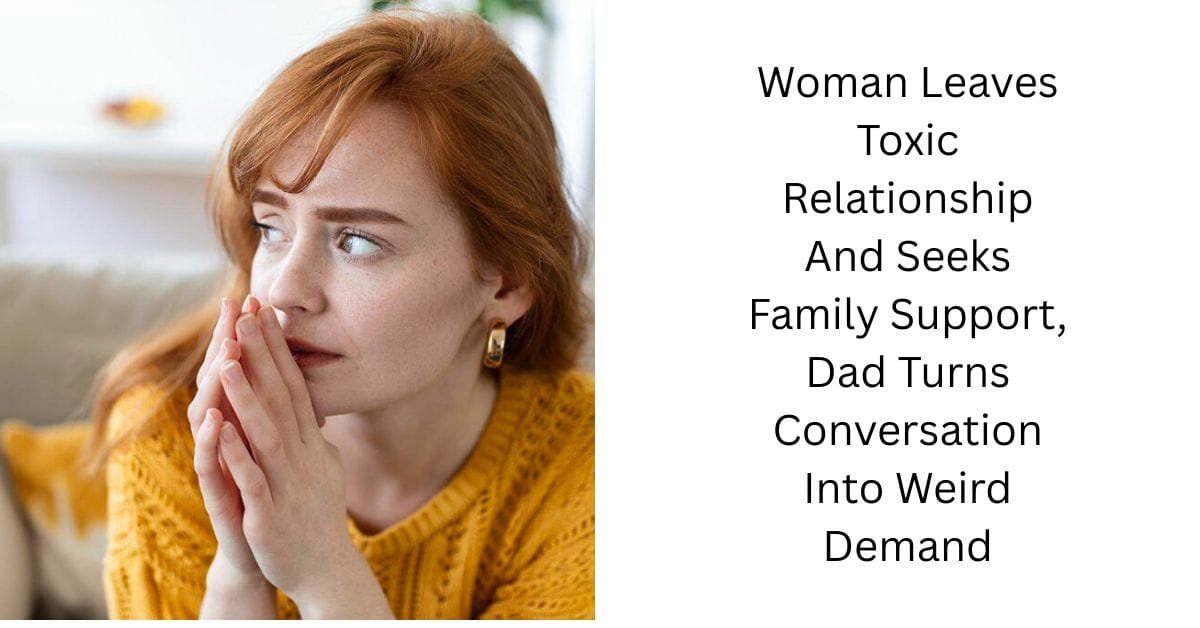
I never expected leaving a toxic relationship to become the beginning of another painful family conflict. For years, I had been with a man who constantly made me question my own decisions, criticized the way I looked, controlled who I spent time with, and somehow managed to make every disagreement feel like it was my fault. From the outside, people probably thought we were simply going through a rough patch, but living with him was completely different. I slowly became isolated from the people who cared about me because I was always trying to avoid another argument at home. Eventually, I reached a point where I realized that staying with him was doing more damage to me than leaving ever could. Ending the relationship was terrifying, but I finally packed my things, left, and went back to my family hoping that I would have a safe place to recover.
When I arrived at my parents’ house, I wasn’t expecting them to solve everything for me. I simply wanted some emotional support and a little time to figure out what I was going to do next. I was exhausted, embarrassed, and still struggling to understand why I had tolerated so much for so long. My mother was sympathetic and told me that I could stay with them while I got back on my feet. My father, however, seemed more focused on practical matters. He asked several questions about my former relationship, my finances, and whether my ex was going to try to contact me again. At first, I assumed he was simply worried about me. I appreciated his concern, even though some of his questions felt uncomfortable. I thought that after everything I had been through, my family would at least give me the space to recover without making me feel as though I had to justify every decision.
A few days later, I finally had a private conversation with my father about what had happened. I told him how difficult the relationship had become and explained that I was trying to rebuild my confidence. Instead of simply listening, however, he suddenly turned the conversation in a direction I never expected. He started talking about what I should do with my personal life now that I was single and suggested something that left me completely stunned. His suggestion wasn’t about finding a job, getting counseling, or making a plan for my future. It was a deeply personal and strange demand that crossed a boundary I never imagined my own father would cross. I initially thought I had misunderstood him, so I asked him to repeat what he meant. When he did, I realized that he was serious. I felt uncomfortable, shocked, and almost betrayed because I had gone to my family looking for safety after escaping a relationship where my boundaries had repeatedly been ignored.
I immediately told him that his demand was inappropriate and that I wasn’t willing to discuss it any further. He became defensive and insisted that he was only trying to help me. According to him, I was looking at the situation emotionally and needed to think more practically. But to me, this wasn’t something that could be explained away as practical advice. I had just spent years dealing with someone who made me feel as though my boundaries didn’t matter, and now I was being confronted with another situation where someone close to me was ignoring those same boundaries. My mother eventually noticed how upset I was and asked what had happened. When I explained the conversation, she was just as uncomfortable, although she initially tried to calm everyone down rather than take a strong position. My father argued that I was overreacting, while I kept thinking about how strange it was that I had finally found the courage to leave one unhealthy relationship only to feel pressured by my own family in a completely different way.
Since then, I’ve been questioning how much support I can actually expect from my family. I still believe leaving my former partner was the right decision, and I know I need to focus on rebuilding my life instead of allowing another person’s behavior to control me. At the same time, I never imagined that asking my parents for help would lead to such an uncomfortable conversation. Part of me feels guilty for creating tension in the house, even though I know I didn’t cause the situation. Another part of me wonders whether I should temporarily move out and create some distance until everyone understands that my boundaries are not negotiable. I came home because I believed my family would be the one place where I could finally feel safe and respected. Now I’m realizing that leaving a toxic relationship may have been only the first step. The harder part may be learning how to recognize unhealthy behavior, even when it comes from people I love, and finding the courage to say no when someone crosses a line.
Read Story…
My entitled father thinks he owns my sister’s uretus
My sister was in a abusive relationship for 6 years. Unfortunately, like many women that went through the same, she was manipulated by her ex-boyfriend and didn’t have enough self esteem to stop the abuse. She didn’t think it was abuse until things got really ugly. Fortunately, the marriage has ended last week and now she is in much better shape and headed towards a better life.
After the break-up, my sister reunited the family to tell us about it. This is when the entitlement took place. The cast is: entitled dad (ED), entitled mom (EM), sister (S) and me. This is how the conversation went:
S: everyone, I have important news. I broke up with insert shitty ex-husband’s name.
ED: What!? Why?! What happened?
S: proceeds to tell the story of a 6 years abusive relationship with a lot a verbal and even physical abuse
ED: Well, okay. But what about me?
S: What do you mean, dad?
ED: Well, you still have to give me a grandson. You are thirty three years old, you won’t be able to bear healthy children much longer.
S: Dad, how can ou say something like that to me? I’ve been though hell and back and you can think about is your grandchild that doesn’t even exist?
ED: Yes. I gave you life, a proper education, house, food, everything you wanted. The least you can give us is a grandchild.
EM: yeah, I agree. We are very impatient. All I want is a grandchild.
S: I am not having a child with a man like shitty ex-husband. I need to find the right man, the one what will love and cherish me.
ED: Well, you better do that soon. I am tired of waiting. I swear, both you and your brother are the most ungrateful children I could’ve been cursed with.
S: You can not make me have a child, it’s my body. I will have a child whenever I feel to. Not when you want.
ED: Unfortunately you are right, I can’t. I want to have a grandchild so bad. You have no idea. If the child was a boy, maybe I can shape him into a real man, unlike your brother (for context: I am gay and my father hate me for it. I only went to the family reunion because my sister really insisted for me to go).
The fight got really ugly and from that on. I backed up my sister the entire time and we ended up storming out of the house. Both of us haven’t talked to our parents since that event. My dad is such a horrible and selfish person. I have other stories about him that I’ll maybe tell someday. I’m just happy that my sister is better and now has a chance to find the right person for her.
When Toxic Behavior Slowly Became Normal
I never expected leaving a toxic relationship to make me question my relationship with my own family. For years, I had been with someone who slowly convinced me that almost everything I did was wrong. At first, his behavior seemed like ordinary relationship problems. He would get annoyed when I spent too much time with friends, question why I needed to go somewhere without him, or criticize small things about the way I dressed. I kept telling myself that every couple had disagreements and that things would eventually get better. Instead, the problems became more frequent and more serious.
Over time, I began changing myself just to keep the peace. I stopped telling certain friends what was happening because I didn’t want them to worry about me. I became careful about what I said at home because I knew even a harmless comment could turn into an argument. He would sometimes apologize after making me feel terrible, and those apologies convinced me that there was still a good person underneath everything. I kept holding onto the idea that if I was more patient, more understanding, or more supportive, the relationship could return to the way it had been when we first met.
Eventually, I realized I was spending more energy trying to prevent his reactions than actually living my own life. I couldn’t remember the last time I felt completely relaxed around him. I constantly worried about whether he would approve of my plans, who I talked to, and how I spent my time. The relationship had become exhausting, but admitting that to myself was difficult because I had invested so many years in it. I also felt embarrassed that I had allowed things to reach that point.
The final incident wasn’t necessarily the biggest argument we’d ever had, but something about it made everything suddenly clear to me. I remember sitting alone afterward and realizing that I couldn’t imagine living like that for another five years. I had spent so much time hoping things would improve that I had forgotten to ask myself whether I was actually happy. For the first time, I stopped thinking about how leaving would affect him and started thinking about what staying would continue to do to me.
I decided to leave. It wasn’t dramatic or easy. I packed what I could, made arrangements quietly, and went to my parents because I didn’t know where else to go. I was terrified about what would happen afterward. Even though I knew the relationship was unhealthy, ending it still felt like losing a huge part of my life. There were moments when I wondered whether I had made the right decision simply because the familiar felt less frightening than starting over.
My parents were surprised when I arrived. I hadn’t told them the full extent of what had been happening because I had spent years minimizing it. My mother immediately noticed that something was wrong and asked me what had happened. I finally told her that the relationship was over and that I needed somewhere safe to stay for a while. She hugged me and told me that I could stay with them as long as I needed.
That moment meant more to me than I could explain. I had spent so long feeling as though I had to handle everything alone that being told I didn’t have to worry about a place to sleep was incredibly comforting. My mother didn’t pressure me for details. She simply told me to take things one day at a time. For the first time in months, I felt like I could breathe without worrying about what someone else might think.
My father was different. He wasn’t unkind, but he immediately started asking practical questions. He wanted to know whether my ex knew where I was, whether he had contacted me, whether I had access to my money, and what my plans were for finding another place. I understood that he was probably worried about my safety and financial situation, so I tried not to take his questioning personally.
Over the next few days, I began settling into my parents’ house. I started looking for work opportunities and apartments while trying to figure out what I actually wanted from my life. I also started reconnecting with friends I had pushed away during the relationship. Some of them were incredibly supportive and told me they had been worried about me for a long time but didn’t know how to help.
Despite having support around me, I was still emotionally exhausted. Leaving someone doesn’t automatically erase everything that happened during the relationship. I found myself second-guessing simple decisions and wondering whether I was being unreasonable. Sometimes I would remember something my ex had said and immediately feel guilty, even though I knew I had done nothing wrong.
My father noticed that I wasn’t acting like myself. One evening, he asked me to sit down with him because he wanted to talk privately. I assumed he wanted to discuss my plans for moving out or maybe help me organize my finances. Instead, the conversation became much more personal than I expected.
He started by asking whether I planned to date again anytime soon. I told him that dating was the last thing on my mind. I had just escaped a relationship that had damaged my confidence, and I wanted to spend some time alone. I explained that I needed to figure out who I was again before thinking about another relationship.
He nodded at first, but then he started giving me advice about how I should handle my future. He said that I shouldn’t waste too much time being alone and that I needed to think about what would be best for me long-term. I told him I appreciated his concern, but I wasn’t ready to make any major decisions about my personal life.
Then he brought up something I absolutely wasn’t expecting. What he suggested was so strange and personal that I honestly thought I had misunderstood him. I asked him to repeat what he had said because I couldn’t believe that was actually what he meant.
When he repeated himself, I immediately felt uncomfortable. It wasn’t normal fatherly advice, and it wasn’t something I had asked him about. I had gone to him because I needed support after leaving a toxic partner, yet suddenly I was being pressured to consider something deeply personal that I believed should never have been brought into our relationship.
I told him that I wasn’t comfortable with the suggestion and that I didn’t want to discuss it. Instead of apologizing, he tried to explain why he believed his idea made sense. He told me that he was only thinking about my future and that I was reacting emotionally because of everything I had recently experienced.
That explanation made me even more upset. I had spent years being told that my feelings were irrational whenever I objected to something in my relationship. Hearing my father use similar reasoning felt strangely familiar. I wasn’t saying that my father was the same as my ex, because he wasn’t, but the feeling of having my boundaries dismissed was difficult to ignore.
My mother eventually noticed that something was wrong. She asked why I was upset, and I initially didn’t want to tell her because I was embarrassed. Eventually, I explained the conversation. Her reaction was complicated. She clearly understood why I was uncomfortable, but she also seemed worried that confronting my father would create a bigger family conflict.
My father insisted that everyone was misunderstanding him. He said he was trying to help me and that his intentions weren’t bad. I told him that intentions didn’t change how inappropriate the conversation felt to me. I didn’t need someone deciding what was best for my personal life while I was still trying to recover from everything I had experienced.
The argument ended without anyone really feeling satisfied. I went back to my room and spent most of the night thinking about what had happened. I kept asking myself whether I was being too sensitive. Maybe I was still emotionally overwhelmed from my previous relationship. Maybe I had interpreted his words more negatively than he intended. But every time I replayed the conversation, I came back to the same conclusion: I had clearly said I wasn’t comfortable, and that should have been enough.
The next morning, things at the house felt awkward. My mother tried to act normally, while my father barely spoke to me. I felt guilty even though I didn’t believe I had done anything wrong. I had come home expecting my parents to be the people I could rely on during one of the hardest periods of my life, and now I was wondering whether staying with them was making things worse.
I also started thinking about the bigger lesson from everything that had happened. Leaving my ex had taught me that boundaries are important, but it had also shown me how easily people can convince you to ignore your own discomfort. I didn’t want to repeat that pattern simply because the person crossing the boundary was a family member. Loving someone doesn’t mean accepting everything they say or do.
For now, I’m focusing on becoming independent again. I’m looking for a place of my own, trying to rebuild friendships, and learning how to trust my own judgment. I don’t know whether my relationship with my father will eventually return to normal. Part of me hopes that he will realize how inappropriate the conversation was and apologize without trying to justify it.
At the same time, I don’t want to spend the rest of my life feeling guilty for protecting my own boundaries. I left one relationship because I finally understood that being uncomfortable all the time wasn’t something I should accept as normal. Now I have to apply that same lesson to the rest of my life, even when it is difficult.
Maybe the strangest part is that I originally thought leaving my toxic relationship would be the hardest thing I’d ever have to do. I thought once I got away, the rest would slowly become easier. Instead, I’ve discovered that starting over means learning how to trust myself again, recognizing when something crosses a line, and being willing to speak up even when doing so creates conflict.
I still don’t know exactly what will happen with my family. I don’t want this one conversation to destroy my relationship with my parents, but I also don’t want to pretend it never happened. For the first time in years, I’m trying to build a life where my comfort, choices, and boundaries actually matter. Maybe that’s the real beginning of moving forward.