Man Wonders How To Proceed After His GF’s Parents Make A Facebook Group That Could Ruin His Life

I never expected a relationship problem to turn into something that could potentially affect my entire life, but that is exactly what happened after my girlfriend’s parents created a Facebook group about me. My girlfriend and I had been together for a little over two years, and until recently, I thought her parents and I had a reasonably good relationship. We were never extremely close, but I was always polite to them, helped around their house when I visited, and tried to show them that I cared about their daughter. There had been occasional disagreements, mostly because they were very protective of her, but I never imagined they would go as far as publicly discussing me online. What made everything worse was that the group wasn’t simply a private family chat where they could complain about me. It was a Facebook group with other people in it, and some of the things being said about me were exaggerated, misleading, or completely missing the context of what had actually happened.
The whole thing started after an argument between my girlfriend and me. It wasn’t anything unusual for a couple that had been together for two years. We disagreed about our future, specifically about where we wanted to live and how quickly we should move in together. I wanted us to take our time because I was saving money and trying to make sure we could actually afford the next step. She felt that after two years, I should already be ready to commit to a specific plan. We argued, but we didn’t break up. In fact, we talked later that evening and agreed that we both needed to communicate better. I thought the situation was over until her mother sent me a message asking me why I was “wasting her daughter’s time.” I was confused because I had never told her that I didn’t want a future with my girlfriend. When I asked what she meant, she didn’t answer directly. Instead, she told me that I would “understand soon enough.”
A few days later, one of my friends sent me a screenshot of a Facebook group that I had never heard of. The group’s name was something along the lines of people warning others about “toxic partners” in our area, although it wasn’t officially connected to any organization. When I opened the screenshot, I immediately recognized my girlfriend’s parents from the comments. At first, I thought they were simply discussing their concerns with other family members, but then I saw my name being mentioned. They were describing me as controlling, emotionally manipulative, financially irresponsible, and someone who supposedly isolated their daughter from her family. I couldn’t believe what I was reading. There were several details that had clearly come from private conversations between my girlfriend and her parents, but those details had been twisted into something completely different. For example, the argument about our future was described as me refusing to commit to her because I supposedly wanted to “keep her around without marrying her.” Another disagreement about her spending money was presented as me trying to control her finances. Anyone reading the posts without knowing me could easily come away with a very negative impression.
My first instinct was to confront my girlfriend, but I stopped myself because I didn’t know how much she knew. I called her and asked if she was aware that her parents had created the group and were talking about me. There was a long silence before she finally admitted that she knew they had been discussing me online. She claimed she hadn’t realized how serious it had become. According to her, her mother had originally created the group because she wanted advice from other parents about “recognizing unhealthy relationships.” My girlfriend said she had complained to her parents about some of our arguments, and they apparently decided that meant something much more serious was happening. I asked her why she hadn’t told me. She said she was embarrassed and didn’t know how to handle the situation. That answer didn’t make me feel better. I understood that she might have been caught between me and her parents, but the fact that she had allowed strangers to read private information about our relationship without saying anything made me question how much control she actually had over the situation.
Things became even more concerning when someone sent me another screenshot. This time, one of her parents had apparently posted additional information about my workplace and the neighborhood where I lived. They didn’t include my exact address, but there was enough information that someone who knew the area could probably figure out where I worked. The comments underneath were filled with people making assumptions about me based on the limited information they had been given. Some suggested that my girlfriend should leave immediately. Others called me names and accused me of things that had never happened. One person even asked whether anyone knew where I worked because they wanted to “warn people about him.” That was the moment I realized this wasn’t just embarrassing family drama anymore. If the posts continued spreading, they could potentially reach coworkers, friends, or people who had never met me. I started worrying about how easily a misleading Facebook post could affect someone’s reputation when strangers believed it was true.
I asked my girlfriend to speak to her parents and tell them to remove anything identifying me and stop discussing our relationship publicly. She initially agreed, but later told me that her parents refused. Her mother apparently believed that she had every right to “protect her daughter” and said that if I didn’t like what was being posted, I should give people my side of the story. That made me angry because I had never agreed to have my private relationship turned into a public discussion. I also didn’t want to get into a social-media argument where I would be forced to defend myself against accusations one comment at a time. My girlfriend tried to convince me that ignoring it would eventually make it disappear, but I wasn’t convinced. Once information gets copied and shared online, deleting the original post doesn’t necessarily mean the problem is gone. I told her that I needed her to take the situation seriously because this wasn’t simply her parents being unhappy with me anymore.
The biggest argument between my girlfriend and me happened when I asked her whether she would publicly correct the misinformation. She became defensive and said she didn’t want to get involved because she didn’t want to fight with her parents. I told her that I wasn’t asking her to choose between us or abandon her family. I was asking her to tell the truth about what had actually happened. If I had really behaved the way her parents were describing, then she had every right to leave me and tell people about her experience. But if the accusations were exaggerated, I couldn’t understand why she was comfortable letting them continue. She eventually admitted that some of the things her parents had posted weren’t accurate. She also admitted that she had never told them the full context of several arguments because she had only been venting when she was upset. Hearing that made me realize how quickly private complaints can become something much bigger when other people decide to fill in the missing details themselves.
At this point, I’m trying very hard not to make an emotional decision. Part of me wants to contact her parents directly and demand that they remove everything. Another part of me thinks that doing so could make the situation even worse. I have also considered speaking to an attorney just to understand what my options are if they continue posting false claims about me or sharing personal information. I don’t want revenge, and I don’t want to destroy my girlfriend’s relationship with her parents. I simply want the situation to stop before it becomes something that follows me into my personal and professional life. I’ve also started saving screenshots and keeping records of what has been posted, because I don’t want to rely on memory if the situation gets worse. My friends have told me that I should publicly defend myself, but I’m hesitant because responding emotionally could create even more attention around the group.
Now I’m stuck trying to figure out what my next move should be. My girlfriend says she loves me and doesn’t want to lose our relationship, but she also says she can’t control what her parents do. I understand that she can’t literally control them, but I keep wondering whether she is willing to establish boundaries with them. This isn’t really about whether her parents like me anymore. People are allowed to dislike someone their daughter is dating. The problem is that they have taken private relationship issues, added their own interpretation, and shared them with strangers as though their version is the complete truth. I don’t know whether our relationship can survive that kind of interference, especially if my girlfriend continues avoiding confrontation with her parents. For now, I’ve told her that I need some space to think and that I won’t be discussing our relationship with anyone connected to her family. I also told her that before we can talk about getting our relationship back on track, we need to figure out whether there is a way to stop this from happening again. I’m still waiting to see what she decides to do, because at this point, her next action may tell me more than anything she could say.
Read Story…
Her parents hate me and made a facebook group about me.
My girlfriend(25F) and I(23M) have been dating for a little over 2 years. I very much love her and plan on asking her to marry me very very soon, but there’s one pretty large obstacle. Her family is EXTREMELY extremely displeased about her being involved with me in any way, and most of the hate comes from her parents. For context, I am a medic in the military. Saw more combat when i was an EMT on the civilian side. Never deployed, never shot at, never shot back. But that doesn’t mean shit to her family apparently? Her parents continuously call me a “murderer” and throw shade and disrespect in my face even though i continuously explain I have never deployed or been in combat.
I’ve met them multiple times. The first few times i was kind and respectful, but lately i feel like they are just trying to get a rise out of me to prove their point, and by the lord above i really really want to slap them both into some sense. A few months ago, one of my very good friends from my first unit took his own life, and i confided in my girlfriend, telling her everything and being very vulnerable. I got the news while at dinner with my gf and her parents, and had to step away, taking her with me to the car. After talking for a while and a lot of yelling on my part, she walked back to the table to collect our things so we could leave while i stayed in the truck to collect myself. After another few minutes, she rushed outside, telling me to drive. She was visibly upset and said that we won’t be talking to her parents for a while.
A few days later, I got a notification on my burner facebook account with a little friend request from gf’s mother. I accepted with much confusion(the burner account had some random name), and i was met with a message “I see you’re friends with OP. there’s some very shocking information here that you might find useful and revealing,” and a group invite with the title “[Full Legal Name] is an Abuser.” There were like 200 posts in this group with AI photos of me putting hands on my gf, shouting, and a video of me in the truck yelling the day i received the message about my best friend.
I don’t want to report the group because this is defamation and i’m pressing charges 100%, but MY parents, both ex military as well, are extremely confused and distant, and a lot of my friends are casting accusations at me. What should I do?
BIG EDIT: I was not yelling at her. i was extremely upset at myself and blamed myself for my buddies death.
And no i have never had anger issues.
New update: gf gave a statement to my command so i’ll most likely no longer be flagged and won’t be under investigation anymore. We officially have a lawyer representing us as well and are suing.
gf has dropped her parents completely.
A Loving Relationship Faces a Serious Threat From Her Hostile Parents
I never imagined that a relationship I was seriously considering turning into marriage could suddenly become a situation that might affect every part of my life. My girlfriend and I had been together for a little over two years, and despite the problems surrounding her family, I loved her deeply and had already been planning to ask her to marry me very soon. We were both young, but I had never felt more certain about wanting to build a future with someone. Unfortunately, her parents had never accepted our relationship. From the beginning, they made it clear that they didn’t like me, and over time their attitude became increasingly hostile. I tried to be patient because I understood that parents can be protective of their children, but their behavior eventually went far beyond normal concern. What I didn’t know was that they were preparing to take their dislike of me to a level that could potentially damage my reputation, my career, my friendships, and even my relationship with my own family.
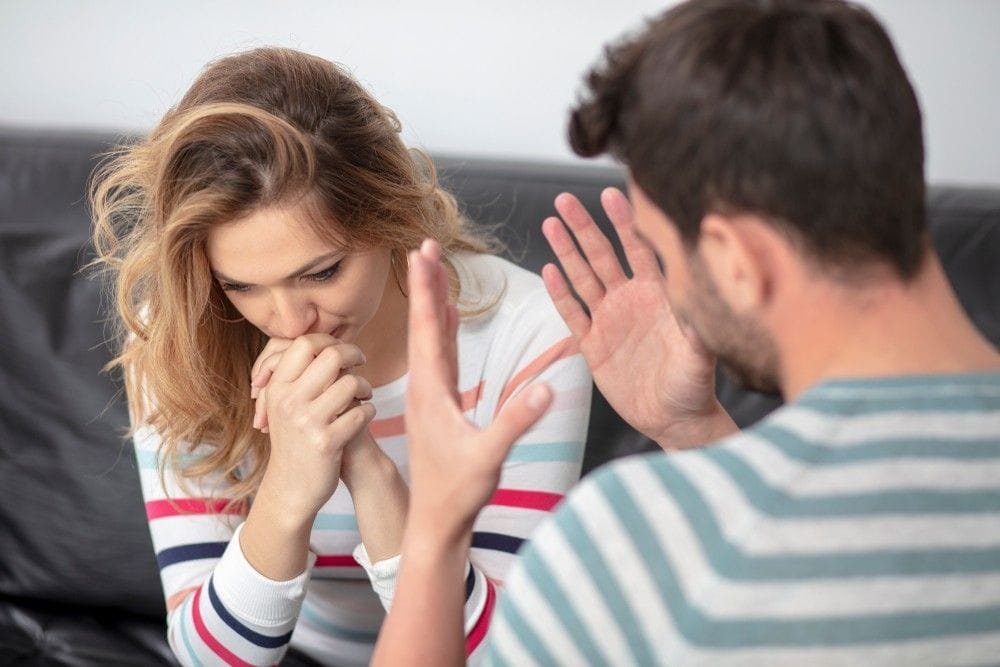
Advertisement
For some background, I am 23 years old and serve as a medic in the military. Before joining the military, I also worked as an EMT on the civilian side, so I have seen some difficult situations and have been around serious injuries and death. However, there is an important distinction that her parents apparently refuse to acknowledge. I have never been deployed, I have never been shot at, and I have never shot at anyone. I have never participated in combat. My job has involved helping people and providing medical care, and while I understand that the military carries complicated associations for some people, I don’t believe that automatically makes me a violent person. Her parents, however, have repeatedly called me a “murderer” simply because I am in the military. I have tried explaining my actual role to them several times, but they either ignored what I said or acted as though my explanation didn’t matter.
I’ve met her parents many times over the course of our relationship. During the first several meetings, I made a genuine effort to be respectful and friendly. I helped around their house when I visited, listened when they spoke, answered their questions, and never deliberately challenged them. Even when they made comments about my military career, I tried not to react. I knew that getting into an argument with them would only make things worse, and I didn’t want my girlfriend to feel like she had to constantly defend one person against another. Unfortunately, their comments gradually became more personal. They would make sarcastic remarks about my job, question my character, and occasionally say things that seemed designed specifically to provoke me. Eventually, I started feeling like they weren’t interested in getting to know me at all. They had already decided what kind of person I was, and nothing I said was going to change their minds.
Over time, I became convinced that her parents were intentionally trying to make me lose my temper. They would make comments about the military and then watch my reaction. If I disagreed with them, they would accuse me of being aggressive. If I stayed quiet, they would say I was being disrespectful. It felt like there was no response I could give that they wouldn’t twist into evidence against me. There were moments when I was so frustrated that I wanted to yell back at them, and I’ll admit that I had thoughts about physically confronting them when their insults became particularly nasty. But thinking something in frustration and acting on it are two completely different things. I never hit them, threatened them, or physically intimidated them. In fact, I usually removed myself from the situation because I knew that losing my temper would only give them exactly what they wanted.
A few months ago, something happened that changed the situation completely. One of my closest friends from my first military unit died by suicide. He was someone I had known for a long time, and his death hit me incredibly hard. I don’t think anyone who hasn’t experienced something similar can fully understand how complicated grief can become when someone you care about dies that way. There was sadness, anger, confusion, and an enormous amount of guilt. I kept thinking about things I could have done differently and wondering whether I should have noticed something. Even though I knew logically that I couldn’t control another person’s decisions, emotionally I kept blaming myself. I was struggling to process everything, and my girlfriend was the person I trusted enough to tell what was going on inside my head.
Unfortunately, I received the news while I was having dinner with my girlfriend and her parents. I remember sitting there and suddenly realizing what had happened, and I immediately became overwhelmed. I didn’t want to have an emotional breakdown in front of everyone, so I stepped away from the table and went outside. My girlfriend followed me to the car because she knew something was seriously wrong. Once we were alone, I finally broke down. I was crying, angry, and blaming myself for my friend’s death. I raised my voice while talking about everything going through my head, but I wasn’t yelling at my girlfriend. I was furious with myself and devastated by what had happened. I kept saying that I should have known, that maybe I could have done something, and that I couldn’t understand why I hadn’t seen the signs.
My girlfriend stayed with me and tried to calm me down. Eventually, she went back inside to collect our belongings because neither of us wanted to stay for the rest of the dinner. I remained in the truck because I needed some time to collect myself. A few minutes later, she came rushing outside. She looked extremely upset and immediately told me to drive. I asked what happened, but she simply said that we wouldn’t be talking to her parents for a while. At the time, I assumed they had made some insensitive comments about my friend or had somehow interpreted my emotional reaction as something it wasn’t. I was too emotionally exhausted to argue about it. We left, and for the next few days, I focused almost entirely on dealing with my friend’s death.
Then something happened that I still have trouble believing. A few days later, I received a friend request on a burner Facebook account that I occasionally used. The account didn’t contain my real name or much personal information, so I was extremely confused about how my girlfriend’s mother had even found it. I accepted the request because I wanted to understand why she was contacting me. Almost immediately, she sent me a message saying that she could see I was friends with “OP” and that there was some shocking information I might find useful. Attached to the message was an invitation to a Facebook group with a title accusing me of being an abuser.
At first, I thought it might be some kind of bizarre misunderstanding. Then I opened the group and realized just how serious it was. There were hundreds of posts and comments. People were discussing me as though they knew me personally. Some posts contained pictures that appeared to show me physically hurting my girlfriend. Except the pictures weren’t real. They had been generated or manipulated using AI. In some of them, I was shown grabbing her, threatening her, or standing over her while she appeared frightened. Looking at those images was surreal because they depicted events that had never happened. Someone had essentially created fake evidence of abuse and presented it to strangers as though it were legitimate.
The fake images were bad enough, but there was also a video that made the situation much more dangerous. It showed me sitting inside my truck on the day I received the news about my friend’s death. I was visibly emotional and shouting while talking about what had happened. The video had apparently been recorded without my knowledge. My girlfriend’s parents had taken that moment completely out of context and were presenting it as evidence that I had been aggressively yelling at their daughter. Anyone watching the clip without knowing what happened before it could easily assume that I was screaming at her. They had apparently either deliberately misunderstood the situation or decided that the truth didn’t matter because the video supported the story they wanted people to believe.
I started scrolling through the group and became increasingly horrified. There were people commenting on my personality, my military career, my relationship, and even my family. Some were demanding that my girlfriend leave me immediately. Others were calling me dangerous and saying I shouldn’t be trusted around women. A few people were sharing information about where I worked and details that could potentially identify me. The worst part was seeing strangers confidently discussing events that had never happened. They weren’t asking questions or trying to understand what happened. They were simply accepting the story they had been given. I realized that if the group grew large enough, someone could easily share the posts outside the group, and suddenly people in my real life could encounter these accusations without knowing they were fabricated.
I immediately contacted my girlfriend and asked her what was going on. She sounded horrified when I told her about the group. She already knew her parents hated me, but she had apparently not known the full extent of what they were doing. She told me that after the dinner incident, her parents had apparently become convinced that I had shown some kind of violent side. She tried to explain that I had been grieving and wasn’t yelling at her, but they refused to listen. According to her, they had convinced themselves that they were protecting her. They had taken things she had previously told them about normal disagreements in our relationship, combined them with their own assumptions, and created a narrative in which I was supposedly abusive.
I asked my girlfriend whether she had ever told her parents that I had physically hurt her or threatened her. She immediately said no. She told me that we had arguments like any other couple, but there had never been physical violence. She also said she had never described me as an abuser. Hearing that gave me some relief, but it also made the situation more frightening. If my girlfriend herself was telling them that I wasn’t abusive, why were they creating fake images and presenting me as one? At that point, I stopped thinking of this as a family disagreement. Whatever their personal feelings about me were, they had crossed a line by manufacturing things that could seriously damage my reputation.
The consequences started appearing almost immediately. My own parents, who are both former military members, somehow heard about the accusations. Instead of simply dismissing them, they were confused and distant. I couldn’t blame them entirely because they had seen the Facebook group and the video without knowing the complete context. I tried explaining everything, including what had happened when my friend died, but I could tell they were struggling to understand how the situation had become so extreme. That hurt more than I expected. I had always believed my parents knew me well enough to understand that I wasn’t the person being portrayed online. Suddenly, I found myself feeling like I had to prove my character to people who had known me my entire life.
Some of my friends also started acting differently around me. A few asked direct questions about whether there was any truth to the allegations. I understood why they were asking because the fake pictures looked convincing enough at first glance. But hearing people I trusted question whether I was capable of hurting my girlfriend was devastating. I wanted to scream at everyone and demand that they believe me, but I knew that reacting emotionally could make things worse. The irony was painful. A video of me being emotionally overwhelmed by my friend’s death was being used as proof that I was dangerous, and now every angry reaction I had to the accusations could potentially be interpreted in the same way.
I considered reporting the Facebook group immediately, but I decided against doing anything impulsive. My first thought was that this could be a case of defamation, and I wanted to preserve the evidence before anything disappeared. I took screenshots, saved messages, recorded the names of accounts involved, and kept copies of the posts and comments that directly accused me of things that never happened. I didn’t want to get into a public argument with strangers because I knew that could create even more problems. My girlfriend and I also discussed the possibility that some of the people involved might not realize they were looking at fabricated material. Once a false story spreads, correcting every single person who saw it can become almost impossible.
The more evidence I collected, the more disturbing the situation became. Her parents weren’t simply expressing concern about their daughter. They were actively encouraging other people to believe that I was dangerous. They had apparently created an entire community around that accusation, and some members were adding their own assumptions. A few comments even suggested that people should contact my employer or military command. That terrified me because accusations like these can have consequences even when they aren’t true. I knew that my career could be affected simply because someone made an allegation. I had spent years working toward my position, and suddenly a group of people online could potentially interfere with it based on fabricated material.
I also started thinking about the video differently. I couldn’t stop replaying the memory of sitting in that truck, completely devastated after hearing about my friend’s death. I remembered how badly I was hurting and how desperately I was trying to make sense of everything. Now that private moment had become entertainment and evidence for strangers. The fact that someone had recorded me without my knowledge was disturbing enough, but the deliberate removal of context made it much worse. They had taken one of the worst moments of my life and used it to construct a completely different story. I began wondering how long they had been collecting information about me and whether there were other recordings or fabricated posts I hadn’t even found yet.
My girlfriend eventually confronted her parents. From what she told me, the conversation was extremely difficult. She demanded to know why they were doing this and why they were posting fake images. Her mother reportedly insisted that the images represented what she believed I was capable of doing. My girlfriend told her that believing something and presenting it as fact were two completely different things. She also told them that the video had been completely misrepresented. Her father apparently argued that they were only trying to protect her and that if I had nothing to hide, I shouldn’t be worried about the group. That response made my girlfriend even more upset because it showed that they didn’t seem to understand the seriousness of what they were doing.
My girlfriend came to me afterward and told me that she was sorry. She said she never imagined her parents would go this far. She also admitted that she felt partly responsible because she had previously vented to them about arguments we had. She had never intended for those conversations to become ammunition against me, but she understood now that her parents were taking every negative detail and interpreting it in the worst possible way. I told her that I didn’t blame her for having normal relationship problems or for talking to her parents. Everyone needs someone to talk to sometimes. What mattered to me was what she was willing to do now that she knew exactly what they had created.
At that point, I told her that I didn’t want her to choose between me and her parents simply because I was angry. I wanted her to make her own decision based on what she believed was right. If she genuinely thought I was abusive or dangerous, she should leave me. I would rather lose the relationship than have her stay because she felt pressured. But if she knew the accusations were false, then I needed her to stand up for the truth. She told me that she knew who I was and that she had never been afraid of me. She also said that what her parents were doing had crossed a line she couldn’t ignore anymore. That was the first moment since this whole disaster began when I felt like I wasn’t completely alone.
I still wasn’t sure what to do about the legal side of things. Part of me wanted to immediately confront her parents and demand an apology. Another part of me knew that this had gone beyond something an apology could fix. I was worried about my military career, my reputation, and the possibility that the accusations could follow me for years. I decided that the smartest thing I could do was stop arguing directly with them and let professionals handle the situation. I wanted to preserve every piece of evidence and avoid making statements that could later be taken out of context. My parents encouraged me to be careful and not respond to the group emotionally. For once, everyone agreed that the situation needed to be handled seriously rather than through another family argument.
Then things became even more serious when the allegations reached my command. I was terrified that someone in the military would see the group and assume the accusations were true. I knew that even an investigation could create enormous stress and potentially affect my career. I cooperated fully and explained what had actually happened. My girlfriend also provided her own account of the events. She made it clear that I had never assaulted her and that the video from the truck had been misrepresented. She explained that I had been devastated by the death of my friend and was blaming myself for what happened. Having her statement was incredibly important because she was the person supposedly being “protected” by the group, yet she was directly contradicting the story her parents had created.
Eventually, we decided that we needed professional legal representation. We began gathering everything we had, including screenshots, messages, the fake images, the video, group posts, and information about who had shared the accusations. We were advised not to engage with her parents directly and to let the legal process determine what could be done. I don’t know exactly where everything will lead, and I don’t want to make claims about the outcome before anything is resolved. What I do know is that I never expected my girlfriend’s parents to become the people I would need to protect myself from. I had spent years building my career and reputation, and suddenly I was defending myself against allegations created by people who were supposed to simply be my girlfriend’s family.
The situation has also changed my relationship with my girlfriend’s family permanently. My girlfriend eventually made the decision to cut contact with her parents. She told them that she could not maintain a relationship with people who were willing to fabricate accusations against her partner and publicly portray him as someone he wasn’t. I know that decision wasn’t easy for her. Despite everything they did, they are still her parents, and cutting off family members comes with its own kind of pain. I never demanded that she do it, and I don’t want anyone to think I forced her into that decision. She made it herself after seeing how far things had gone.
For now, we are trying to focus on getting through the legal process and repairing the damage that has already been done. My parents have become more supportive now that they understand the full story, although the situation understandably created tension and confusion at first. Some friends apologized after seeing the evidence and hearing my girlfriend’s statement, while others still seem uncertain about what to believe. I have learned that once someone puts an accusation online, people don’t always wait for proof before forming an opinion. The fake images made everything even more complicated because technology has made it possible to create convincing scenes that never happened. I honestly don’t know how long it will take for my reputation to recover, but I’m trying to concentrate on what I can actually control.
Looking back, the strangest part is that only a few months earlier I had been thinking about proposing to my girlfriend. I was imagining a future with her, planning how I would ask her, and thinking about the life we could build together. Now we’re dealing with lawyers, investigations, family separation, and accusations that neither of us ever expected. I still love her, and she has stood beside me through a situation that could have destroyed our relationship. But this experience has also taught me that love doesn’t exist in a vacuum. Relationships can be affected by family, technology, social media, and the stories other people choose to believe. I don’t know exactly what the future will look like, but I do know that I won’t allow someone else’s fabricated version of me to become the truth simply because they posted it online. For now, I’m taking everything one step at a time, preserving the evidence, cooperating with the proper authorities, and letting the legal process run its course.


2 thoughts on “Man Wonders How To Proceed After His GF’s Parents Make A Facebook Group That Could Ruin His Life”
Comments are closed.