After Everything We Built Together, My Husband Suddenly Wants a Divorce

I never imagined that I would find myself questioning the future of my marriage after everything my husband and I had been through together. I always believed that marriage was about building a life with someone, supporting each other through difficult times, and choosing to stay together even when things weren’t perfect. My husband and I had shared years of memories, celebrated important milestones, and worked hard to create a life that felt stable and meaningful. We weren’t a couple who had never experienced problems, but I honestly believed that our relationship was strong enough to survive the challenges that came our way. That’s why his announcement left me completely stunned. He told me he was filing for divorce today, and the way he said it made it sound as though he had already made every decision without considering how it would affect me. I was left sitting there, trying to understand how the man I had built my life around could suddenly be ready to walk away from everything we had created together.
When we first met, our relationship felt natural and exciting. We could spend hours talking about our dreams, our childhoods, and the kind of future we wanted to build. He made me laugh when I was having a difficult day, and I felt comfortable sharing things with him that I rarely discussed with anyone else. As our relationship became more serious, we began making plans together. We talked about where we wanted to live, how we imagined our future, and what kind of life would make us happy. Getting married felt like the next step in a relationship that had already given me so much happiness. Of course, I understood that marriage wasn’t going to be perfect every day. I knew there would be disagreements, financial pressures, stressful periods, and moments when we would have to compromise. What I never expected was that, one day, my husband would tell me he wanted to end our marriage as though the years we had invested in each other no longer mattered.
Over the years, we built a life that I was genuinely proud of. We worked toward our goals, made important decisions together, and supported each other whenever circumstances became difficult. There were times when money was tight or work became overwhelming, but we usually managed to find a way through those challenges. We celebrated birthdays, anniversaries, holidays, and ordinary evenings that somehow became some of my favorite memories. Sometimes we would sit together after dinner and talk about things we wanted to do in the future. We discussed places we hoped to visit, improvements we wanted to make to our home, and experiences we still wanted to share. Those conversations made me feel that we were moving in the same direction. I thought we were building something that would continue growing as we got older. Looking back now, I keep wondering whether he was having doubts during those moments while I was happily imagining all the years we still had ahead of us.
Like most married couples, we had our disagreements. Sometimes we argued about responsibilities, household decisions, work schedules, or the way we handled stress. There were moments when one of us felt misunderstood, and there were occasions when we needed some time to cool down before discussing a problem properly. However, I never believed those disagreements meant our marriage was beyond repair. I thought they were normal challenges that couples could work through if both people were willing to communicate and make an effort. Whenever we experienced a difficult period, I tried to focus on finding solutions instead of allowing resentment to build. I believed my husband was doing the same, even if he didn’t always express his feelings openly. Perhaps I overlooked certain signs, or perhaps I assumed that our ability to move past previous arguments meant we were still on solid ground. Whatever the explanation, I genuinely believed that we were dealing with ordinary marital problems rather than approaching the end of our relationship.
In the months leading up to his announcement, I had noticed some changes in his behavior, but I didn’t immediately connect them to the possibility of divorce. He seemed quieter than usual and sometimes appeared distracted when we spent time together. There were evenings when I tried to start a conversation, only to receive short answers that made it difficult to understand what he was thinking. Occasionally, I asked whether something was bothering him or whether he was dealing with stress at work. He usually told me he was fine or that he simply had a lot on his mind. I accepted those explanations because I didn’t want to pressure him into discussing something he wasn’t ready to share. I assumed he might be tired, overwhelmed, or dealing with personal concerns. I also thought that perhaps we had fallen into a familiar routine and needed to make more time for each other. I never imagined that he might already be considering a future without me while I was still trying to understand why he seemed distant.
When he finally told me he was filing for divorce, I struggled to find the right words. Part of me expected him to explain that he was frustrated or that he needed some time apart, but he spoke as though his decision was final. I asked him what had happened and why he had reached this point. I wanted to know whether there was a specific incident that had changed everything or whether he had been unhappy for a long time. I kept thinking that there had to be something important I didn’t understand. I asked whether we could sit down and have an honest conversation about our problems before taking such a serious step. I reminded him that we had shared so much and that I didn’t believe a marriage should end without at least trying to understand what had gone wrong. His announcement felt sudden to me, but I began to realize that he might have been thinking about this for longer than I knew. That possibility made the conversation even more painful because I wondered how long I had been the only one who believed we were still working toward a shared future.
The hardest part was realizing that we seemed to have completely different understandings of our marriage. I had thought that our relationship was going through a difficult period, but he appeared to see divorce as the solution. I wanted to know whether counseling, better communication, or making changes to our daily lives could help us rebuild our connection. I wasn’t pretending that everything was perfect, and I wasn’t claiming that I had never made mistakes. I knew I had things I could have handled differently, just as he did. But I believed that if two people still cared about each other, they could at least have an honest discussion about whether their relationship could be repaired. I asked him whether he was absolutely certain that he didn’t want to try. I also wondered whether he had been holding on to frustrations that he never communicated clearly. I couldn’t force him to stay married, but I struggled with the feeling that such a major decision had been made without giving us a real opportunity to address the problems together.
Since that conversation, I have found myself looking back on our marriage in ways I never expected. Small memories that once made me smile now bring a mixture of sadness and confusion. I think about the promises we made, the plans we discussed, and the sacrifices we both made to build our life together. I wonder whether those experiences still mean the same thing to him or whether he has emotionally moved on from our relationship already. At the same time, I know that remembering the good years cannot automatically solve the problems we may have today. A marriage requires both people to participate, communicate, and genuinely want to remain together. I cannot make that choice for him, no matter how much I wish things were different. I am trying to understand my own feelings while preparing myself for the possibility that our life together may be coming to an end. I don’t want to make decisions out of panic, anger, or fear of being alone. I want to approach whatever happens next with as much clarity and dignity as I can.
Now I am left wondering whether there is anything I can do to change the direction our marriage is heading. Part of me still hopes that my husband will agree to have a serious conversation about what went wrong and whether there is any possibility of rebuilding our relationship. Another part of me understands that I may need to accept his decision, even if I don’t agree with it or fully understand how he reached it. I know that I deserve honesty, respect, and a clear understanding of what happens next. If divorce is truly what he wants, then I will have to think carefully about my emotional well-being, my practical circumstances, and the future I need to create for myself. I never thought that the person I chose to build a life with would one day tell me he was ready to walk away from it. I am not asking him to pretend that our problems don’t exist, but I wish we had reached this point through an honest conversation rather than a decision that left me feeling completely unprepared. If your spouse suddenly announced that they were filing for divorce after years of building a life together, would you fight to save the marriage, suggest counseling one last time, or accept their decision and begin preparing for a new chapter?
Read Story…
My Husband Told Me He’s Filing For Divorce Today
My Husband (34M) told me (32F) that he’s fed up and going to file for divorce. We’ve been married for 1 year, together for 4 years. He is very angry, and I feel depleted and numb.
Backstory: My husband suffers from a type of OCD called Relationship OCD otherwise known as Retroactive Jealousy. It is where he fixates on my past sexual relationships, particularly on one person, a person who I have not even spoken to in over 8 years.
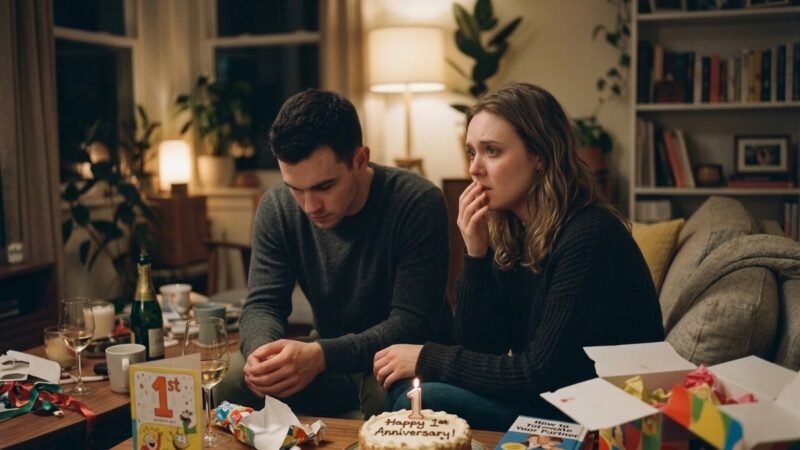
He can get triggered anytime, anywhere. We could be watching TV and a character will have the same name and he will get triggered. Last weekend, we were at a concert celebrating our one year wedding anniversary and someone came on stage wearing a jersey that is for the same sport this person used to play. He wanted to leave the concert immediately, we ended up fighting and our anniversary was ruined.
Anytime he is triggered, his energy completely shifts from warm, goofy and loving to ice cold and bothered and he shuts me out. It is a very sad, confusing, frustrating and isolating experience for me and for him, it’s mental turmoil.
Pretty much every single fight we have had in our relationship has stemmed from his retroactive jealousy. Other than that, we’ve been extremely happy. Unfortunately, every time he gets triggered it chips away at my happiness. I walk on eggshells and feel anxiety sometimes because I never know when he will get triggered next.
I thought he might get better with time / after marriage because he would finally see that I want him and only him forever, I was wrong.
Ever since he was triggered on our anniversary last weekend and we fought, things have never been worse. Something feels different about this time, like I finally realized this isn’t going away or I’ve hit my breaking point. We’ve been cordial to each other all week and sleeping in the same bed but no sex.
Yesterday, he asked me if “I’m ready to go back to being loving again”. I told him my concerns and how he needs to seek support / medication for this RJ. I also thanked him for giving me space (which literally just meant not initiating sex) and he got an attitude and say “yea well I was upset too”.
It felt clear to me in this moment that he wasn’t really listening to me and to be fair, I sometimes have a difficult time seeing things from his side as well. Sometimes his aggressive approach and victim mindset in conversation makes me automatically defensive.
He ended up storming out of the room and slept in the guest room (where he always sleeps when he’s upset or for his everyday naps) and has been slamming every door he walks through ever since.
At this point, there is so much tension that I told him I will move his things from the master bedroom to the guest room so that we both can have space to process what we’re feeling.
He left for the day to go golfing, a new hobby he picked up that he has trashed for the last 4 years.. While he was away I moved his stuff. I did not move it to upset him, I truly feel broken and anxious when I’m around him now and just need a little space to process everything.
He came home from golf and was livid. He said he wasn’t interested in being roommates and this was no way to live. I told him once again that I need space to process everything and he said rudely “you’ve had enough space, you’ve had a week of space. Instead of moving my belongings all day you could have instead come up with a way to communicate.” I told him I did try communicating with him yesterday and he got upset. I told him that the way he is currently speaking to me is with an aggressive tone to which he replied “Because I’m angry! This is ridiculous. I won’t be married to someone who can’t resolve simple issues, I won’t have kids with that person, I’m filing for divorce.”
I responded that I don’t want a divorce all I am asking for is a little space for us to work through this. I don’t remember what he responded but he didn’t care that I said that and I think again he just repeated he was filing for divorce.
After he said that he left the house. The crazy part is I still don’t feel much?
I don’t feel angry or sad, just numb. Perhaps I’m over it or it could be some kind of coping mechanism to protect myself.
I’ve never spoken to friends or family about his RJ because I love him and didn’t want them to think negatively about him. I think it’s finally time I open up to my mother about it. I feel very alone.
I’m not sure what to do or where to go from here. I’ve never been more in love with anyone in my life. He was caring, made me laugh, bought me flowers, supported me when I was laid off from my job, etc. but I am just not sure I can be in this relationship anymore now with how he’s acting. Not taking accountability, being rude to me and instead of giving me the space I need, threatening to divorce instead.
REDDIT: It would help to hear from you (an outside perspective) on this. I am too in it to think clearly at the moment. Even if no one responds, it felt nice to be able to type this out.
TL;DR: Husband has ROCD (retroactive jealousy) that causes most of our fights. After a bad trigger on our anniversary, he’s now threatening divorce because I asked for space, claiming I am incapable of solving issues. I feel numb and don’t know if this relationship is salvageable.
UPDATE: I am blown away at the amount of support this post has gotten. Thank you to everyone who has responded and to the mod of this post for giving me a great book recommendation. As many of you guessed, his threat of divorce was not real.
For the first time in 4 years I truly put my foot down and told my husband that I will no longer put up with this treatment. I told him that if he continues to choose not to seek help and instead continue to hurt me, then I’m not staying (and he knows I mean it). I told him I love him, but I love me and my mental health more.
Since this long conversation he has set up an immediate plan:
Daily plan:
- Morning reflection / meditation
- Medicine / Vitamins: Fluoxetine, magnesium, omega 3
- Workout
Weekly plan:
- Meet with therapist / start ERP (first session is scheduled for this weekend)
- Read 50 pages of self help books:
- The Art of Letting Go – read by 10/1
- The Happiness Trap – read by 10/1
- Overcoming Retroactive Jealousy – read by 10/15
- Brain Lock: Overcoming OCD – read by 10/30
I told him that I support him, but that he needs to do deep reflection and work on himself before we can start rebuilding our relationship. I plan on leaving town this week to spend some time with my mother and will be working on an exit plan to have just in case the day comes.
I have found a lot of strength and growth within myself throughout this process, and am very proud of myself.
I can’t describe how it felt going from feeling so isolated and alone to feeling like I have a community who supports me through this post. So if you’re scrolling and see someone who needs help, just know that your comment can make a big difference. <3
The Day Everything Changed
I never imagined that I would find myself questioning the future of my marriage after everything my husband and I had been through together. I always believed that marriage was about building a life with someone, supporting each other through difficult times, and choosing to stay together even when things weren’t perfect. My husband and I had shared years of memories, celebrated important milestones, and worked hard to create a life that felt stable and meaningful. We weren’t a couple who had never experienced problems, but I honestly believed that our relationship was strong enough to survive the challenges that came our way. That’s why his announcement left me completely stunned. He told me he was filing for divorce today, and the way he said it made it sound as though he had already made every decision without considering how it would affect me. I was left sitting there, trying to understand how the man I had built my life around could suddenly be ready to walk away from everything we had created together.
When we first met, our relationship felt natural and exciting. We could spend hours talking about our dreams, our childhoods, and the kind of future we wanted to build. He made me laugh when I was having a difficult day, and I felt comfortable sharing things with him that I rarely discussed with anyone else. There was something reassuring about being around him, and I quickly began to imagine that we might have a future together. We didn’t agree on absolutely everything, but our differences rarely seemed like major problems. Instead, we learned about each other and found ways to compromise. I appreciated his sense of humor, his determination, and the way he sometimes remembered little details that other people overlooked. At the time, I thought those qualities meant we had the foundation for a lasting relationship. I had no reason to believe that the man who once made me feel so secure would eventually become the person whose decision would leave me feeling completely lost.
As our relationship became more serious, we began making plans for our future. We talked about marriage, our careers, where we wanted to live, and the kind of home we hoped to create. Those conversations made everything feel more real because we weren’t simply talking about what we wanted individually. We were discussing what we could accomplish as a couple. I remember feeling excited whenever we made progress toward one of our shared goals. Even small achievements felt meaningful because we could celebrate them together. When we decided to get married, I believed we were making a commitment to face life’s challenges as partners. I understood that love alone wouldn’t solve every problem, but I believed mutual respect and consistent effort could carry us through difficult periods. Looking back, I realize that I may have assumed our shared history would always give us a reason to keep choosing each other. I never considered how painful it would be to discover that the future I imagined might no longer be something my husband wanted.
Our early married life wasn’t perfect, but it was filled with moments that made me happy. We were learning how to share responsibilities, manage our finances, and adjust to living as a married couple. Sometimes we disagreed about small things, such as how to spend a weekend or how to organize our home, but those disagreements usually passed. We learned each other’s habits and developed routines that made our lives feel familiar. I loved the simple moments when we sat together after a long day, talked about what had happened, or made plans for the following weekend. We didn’t need every day to be exciting to feel connected. I thought the ordinary parts of marriage were just as important as the big celebrations because they showed how two people could build a life through everyday decisions. Those early years helped me believe that we were creating something lasting, something that would become stronger as we grew older and faced more responsibilities together.
Over the years, we built a life that I was genuinely proud of. We worked toward our goals, made important decisions together, and supported each other whenever circumstances became difficult. There were times when money was tight or work became overwhelming, but we usually managed to find a way through those challenges. We celebrated birthdays, anniversaries, holidays, and ordinary evenings that somehow became some of my favorite memories. Sometimes we would sit together after dinner and talk about things we wanted to do in the future. We discussed places we hoped to visit, improvements we wanted to make to our home, and experiences we still wanted to share. Those conversations made me feel that we were moving in the same direction. I thought we were building something that would continue growing as we got older. Looking back now, I keep wondering whether he was having doubts during those moments while I was happily imagining all the years we still had ahead of us.
Like most married couples, we had our disagreements. Sometimes we argued about responsibilities, household decisions, work schedules, or the way we handled stress. There were moments when one of us felt misunderstood, and there were occasions when we needed some time to cool down before discussing a problem properly. However, I never believed those disagreements meant our marriage was beyond repair. I thought they were normal challenges that couples could work through if both people were willing to communicate and make an effort. Whenever we experienced a difficult period, I tried to focus on finding solutions instead of allowing resentment to build. I believed my husband was doing the same, even if he didn’t always express his feelings openly. Perhaps I overlooked certain signs, or perhaps I assumed that our ability to move past previous arguments meant we were still on solid ground. Whatever the explanation, I genuinely believed that we were dealing with ordinary marital problems rather than approaching the end of our relationship.
In the months leading up to his announcement, I had noticed some changes in his behavior, but I didn’t immediately connect them to the possibility of divorce. He seemed quieter than usual and sometimes appeared distracted when we spent time together. There were evenings when I tried to start a conversation, only to receive short answers that made it difficult to understand what he was thinking. Occasionally, I asked whether something was bothering him or whether he was dealing with stress at work. He usually told me he was fine or that he simply had a lot on his mind. I accepted those explanations because I didn’t want to pressure him into discussing something he wasn’t ready to share. I assumed he might be tired, overwhelmed, or dealing with personal concerns. I also thought that perhaps we had fallen into a familiar routine and needed to make more time for each other. I never imagined that he might already be considering a future without me while I was still trying to understand why he seemed distant.
One of the things that troubles me most now is how many opportunities we may have had to discuss our problems before they reached this point. I remember asking him whether everything was okay between us, especially when I noticed that he seemed less interested in spending time together. He usually reassured me that nothing serious was happening. Sometimes he blamed work, and other times he said he was simply tired. I didn’t want to interrogate him every evening or make him feel that he had to explain every mood change. I thought giving him space was a reasonable way to show that I trusted him. However, I now wonder whether I should have asked more direct questions. Perhaps he had been struggling with feelings he didn’t know how to express. Perhaps he believed that talking about our problems would only lead to arguments. I can’t know what was happening inside his mind because he didn’t clearly communicate it to me. All I know is that I would have preferred an uncomfortable conversation over discovering that our marriage was in danger through a sudden announcement.
There was a time when we could talk about almost anything without making a special effort. We would tell each other stories about our days, share funny things we had seen, and discuss plans that had nothing to do with work or responsibilities. Gradually, those conversations became less frequent. We still talked about practical matters, but our deeper conversations seemed to disappear. I noticed that we sometimes spent an entire evening in the same room without really connecting. He might focus on his phone or television while I occupied myself with something else. I tried suggesting that we have dinner together without distractions or go somewhere for a change of scenery. Sometimes he agreed, but the sense of distance never completely disappeared. I told myself that long-term relationships naturally become less exciting than they were at the beginning. I thought we needed to put more effort into our routine, not that our marriage might be approaching a breaking point.
I tried several small ways to bring us closer again. I suggested going out for dinner, taking walks together, and setting aside time to talk without worrying about work or household responsibilities. I sometimes brought home something he liked or made an effort to plan an evening that I thought we would both enjoy. I wasn’t expecting grand romantic gestures in return. I simply wanted us to spend time together in a way that reminded us why we had chosen each other in the first place. Some evenings were pleasant, and we managed to laugh and talk as we once had. Those moments gave me hope that our connection was still there, even if it had become harder to access. Other times, however, he seemed distracted or uninterested. I tried not to take every disappointing evening personally because I understood that people go through difficult periods. I believed consistency and patience would help us reconnect. I didn’t realize that my efforts might not be addressing whatever had caused him to emotionally withdraw.
As the distance continued, I began questioning whether I was missing something important. Had I become too focused on our responsibilities and forgotten to nurture our relationship? Was I taking him for granted without realizing it? Had our disagreements left him feeling unheard? I considered these questions because I wanted to understand my own contribution to the problems between us. I didn’t believe I was a perfect spouse, and I knew there were times when I could have been more patient or communicated better. At the same time, I couldn’t identify one particular event that explained the growing distance. There hadn’t been one dramatic argument that suddenly changed everything. Instead, the relationship seemed to have become quieter and less connected over time. I kept hoping that if I could identify the problem, we could discuss it and work toward a solution. What I didn’t understand was that a marriage cannot be repaired by one person alone, no matter how carefully that person examines their own behavior.
Then came the day that changed everything. My husband told me he was filing for divorce today. He didn’t begin with a long explanation or ask whether we could sit down and discuss our relationship. He simply told me what he intended to do. For a moment, I honestly thought I had misunderstood him. I asked him to repeat what he had said because my mind struggled to accept the words. When he made it clear that he was serious, I felt as though everything around me had suddenly become unfamiliar. I looked at him, trying to find some indication that he was speaking out of frustration or that he might reconsider after we had both calmed down. Instead, he seemed determined. I couldn’t understand how we had gone from discussing ordinary life to a conversation about ending our marriage. The suddenness of the announcement left me feeling unprepared, frightened, and desperate to understand what had happened between us.
My first response was to ask why. I wanted to know what had led him to this point and whether there had been a particular event that changed his feelings. I asked whether he had been unhappy for months or whether something had happened recently that I didn’t know about. I wanted details because the announcement itself explained almost nothing. If there were problems, I wanted to understand what they were. If I had hurt him in some way, I wanted to know what I had done and how he had experienced it. If our relationship had become unhealthy for either of us, I wanted us to be honest about that rather than simply walking away without a meaningful conversation. But I found myself struggling to get the clarity I needed. The more I asked, the more I realized that he had already spent time thinking about his decision, while I was only beginning to understand that our marriage might be ending.
One of the most painful possibilities is that my husband had been unhappy for a long time without telling me the full extent of his feelings. I keep wondering whether there were conversations I thought had resolved our problems when, in reality, he still felt hurt or dissatisfied. Perhaps he believed that I wouldn’t understand his concerns. Perhaps he tried to express himself in ways I didn’t recognize. Or perhaps he simply stopped believing that things could improve. I don’t want to assume that he never tried to communicate because I know my memory of our relationship is only one perspective. At the same time, I wish he had been more direct with me before reaching a decision that could end our marriage. If he had told me that he was seriously considering divorce, I would have understood the urgency of the situation. Instead, I believed we were experiencing a difficult period that we could still work through together.
As I tried to process his words, I couldn’t stop thinking about the years we had spent together. We had shared so many experiences that had shaped who we were as individuals and as a couple. We had celebrated achievements, supported each other through stressful periods, and made countless decisions that connected our lives. We had inside jokes, familiar routines, and memories that no one else could fully understand. I know that a shared history doesn’t automatically mean two people must remain married forever, but it makes the possibility of separation much harder to accept. I kept wondering how he could look at everything we had built and decide that he was ready to leave it behind. I wasn’t asking him to stay simply because we had invested years in our relationship. I wanted to know whether he believed there was still anything worth saving. To me, our history represented a reason to have one serious conversation before making a final decision.
Until that day, I had imagined my future with my husband in it. I thought about the experiences we might share, the goals we could achieve, and the changes we would face as we grew older. Even when I made individual plans, I usually considered how they might fit into our life together. Now I suddenly had to imagine a future that might look completely different. That realization was frightening in ways I hadn’t expected. I wasn’t only thinking about losing my relationship. I was thinking about changing my home life, adjusting my routines, reconsidering financial plans, and explaining the situation to people who knew us as a couple. Things that had once seemed straightforward now felt uncertain. I knew that people could rebuild their lives after divorce, but understanding that logically didn’t make the immediate uncertainty any less painful. I had spent so much time planning for a shared future that I hadn’t prepared myself for the possibility of creating a different one.
Our home became another source of anxiety once the possibility of divorce became real. It wasn’t just a place where we slept or kept our belongings. It was the place where we had celebrated milestones, had difficult conversations, and created everyday memories. I started wondering what would happen to it if we separated. Would one of us stay while the other moved out? Would we have to sell it or make other arrangements? How would we divide the belongings and responsibilities we had accumulated over the years? I didn’t want to turn an emotional conversation into an argument about possessions, but I knew practical decisions would eventually need to be made. The thought of walking through a home that no longer felt like a shared space was deeply upsetting. At the same time, I realized that I needed to approach these questions carefully. Whatever happened between us, I wanted to protect my interests and make sure that major decisions were handled fairly and responsibly.
The financial side of the situation also began weighing on me. Marriage often involves shared expenses, joint plans, and responsibilities that are difficult to separate overnight. We had made financial decisions based on the assumption that we were building a life together. Now I had to consider what separation might mean for my income, expenses, savings, and future plans. I didn’t know exactly how everything would be handled, and I didn’t want to make assumptions before understanding our circumstances properly. I realized that I would need to review important financial information, understand which obligations belonged to both of us, and seek appropriate professional advice if divorce proceedings moved forward. Thinking about money while feeling emotionally overwhelmed was exhausting, but I knew ignoring it wouldn’t help. I needed to make sure that fear and sadness didn’t prevent me from making sensible decisions. Protecting my future didn’t mean I had stopped caring about my marriage. It meant recognizing that I needed to be prepared for more than one possible outcome.
Another thing that worried me was how our friends would react. Many people knew us as a couple and had watched our relationship develop over the years. They had attended celebrations with us, listened to our stories, and assumed we would continue building our life together. I wondered how I would explain that my husband wanted a divorce, especially when I was still struggling to understand it myself. I didn’t want to turn our private problems into public gossip or feel pressured to prove that one person was entirely right and the other entirely wrong. Relationships are complicated, and outsiders rarely know every detail. At the same time, I knew I would need emotional support from people I trusted. I couldn’t carry the entire experience alone simply because I wanted to protect our privacy. I began thinking about which friends would listen without immediately judging either of us and who could help me stay grounded while I worked through the uncertainty.
The thought of telling my family was equally difficult. They had always known my husband as the person I had chosen to share my life with. Some of them had supported our relationship from the beginning, and others had watched us overcome challenges together. I worried about the questions they would ask and whether I would be able to answer them honestly. I didn’t want to pretend that everything was fine, but I also wasn’t ready to discuss every detail while my emotions were still so raw. I knew some family members might immediately become angry with him, while others might encourage me to fight for the marriage. Neither reaction would necessarily give me the clarity I needed. I wanted support without feeling that I had to make a decision simply to satisfy someone else’s expectations. Eventually, I realized that I could tell the people closest to me that we were facing a serious problem and that I needed time to understand what would happen next.
There were moments when I wanted to ask him to reconsider repeatedly. I wanted to remind him of the good years, the promises we had made, and all the reasons I believed our marriage deserved another chance. I wanted him to understand that I was willing to listen, make changes, and work on the problems between us. The thought of losing him made me feel as though I needed to do something immediately to stop the situation from becoming final. But I also knew that begging someone to remain in a relationship could not create the mutual commitment a marriage required. I could express my feelings and ask whether he was willing to work on our problems, but I couldn’t make that choice for him. I didn’t want to lose my sense of self while trying to preserve the relationship. If our marriage was going to survive, I wanted it to be because both of us genuinely wanted to rebuild it, not because one person felt pressured into staying.
Naturally, my mind began searching for explanations. One of the questions that crossed my mind was whether there might be someone else in his life. His sudden decision and the emotional distance I had noticed made me wonder whether another relationship could be involved. I thought about whether he had been spending more time away from home, whether there were changes in his routine, and whether I had overlooked anything important. However, I had no clear evidence that he was involved with another person, and I didn’t want to turn my fears into accusations. It would have been easy to assume the worst because I was hurt and confused, but speculation wouldn’t give me reliable answers. I needed to distinguish between what I knew and what I feared might be true. If there was another person involved, I hoped the truth would eventually become clear. If there wasn’t, I didn’t want to create additional conflict by accusing him of something without evidence.
I also considered the possibility that our marriage had gradually changed in ways neither of us fully understood. Sometimes people become so focused on work, financial responsibilities, family obligations, and everyday routines that they stop paying attention to their emotional connection. Two people can continue living together while becoming less involved in each other’s inner lives. Perhaps that had happened to us. We might have mistaken the absence of major arguments for evidence that everything was fine. We might have continued managing practical responsibilities without addressing the loneliness or frustration that had begun to develop. I don’t know whether that explains my husband’s decision, but it made me reflect on the difference between maintaining a household and nurturing a marriage. Sharing a home and paying bills are important, yet they don’t automatically guarantee that two people feel understood or emotionally connected. If our relationship had been suffering for a long time, I wished we had recognized it sooner and addressed it before divorce became the central issue.
One of the first solutions I considered was marriage counseling. I thought a neutral professional might help us communicate more honestly about the problems we had been unable to resolve on our own. Sometimes couples become trapped in familiar arguments and struggle to understand what the other person is really trying to say. Counseling could potentially provide a structured environment where both people could express their feelings without the conversation immediately turning into another disagreement. I was willing to consider it because I didn’t want to dismiss the possibility of repairing our relationship without exploring reasonable options. However, I also understood that counseling could only help if both of us were willing to participate honestly. If my husband had already decided that he no longer wanted to remain married, I couldn’t force him to attend or expect the process to change his mind. Still, I wanted to know whether he was willing to make one final effort before moving forward with divorce.
What I needed most was an honest conversation about whether there was any room for reconsideration. I wanted him to explain what had brought him to this decision and whether he believed our problems were beyond repair. I wasn’t asking him to promise that everything would immediately return to normal. I knew rebuilding trust and connection would take time, and I understood that some issues might be more serious than I realized. I simply wanted to know whether he was willing to explore the possibility of working through them. If he had specific concerns, I wanted to hear them without interrupting or immediately defending myself. I also wanted the chance to explain my own feelings and discuss the changes I believed might help us. A conversation like that wouldn’t guarantee reconciliation, but it would at least give us a clearer understanding of where we stood. The uncertainty was becoming almost as painful as the possibility of divorce itself.
Eventually, I had to confront a difficult truth: no matter how much I loved my husband, I couldn’t decide for both of us. I could ask questions, express my concerns, suggest counseling, and offer to work on our relationship. I could acknowledge my mistakes and make a genuine effort to improve the way we communicated. But I couldn’t make him feel differently or guarantee that he would want to continue the marriage. That realization was painful because I had always thought of our relationship as something we built together. I wanted to believe that the commitment we made years ago would continue to guide our decisions during difficult times. Yet commitment has to be supported by present choices, not only by memories of past promises. I began to understand that saving a marriage requires two people who are willing to participate. If one person has completely withdrawn from the relationship, the other person cannot repair it alone.
As the shock began to settle, I realized that I needed to take care of myself regardless of what happened next. I had spent so much time thinking about his decision that I was neglecting my own emotional needs. I was replaying conversations, searching for explanations, and imagining different outcomes late into the night. It became difficult to concentrate on ordinary tasks because my mind kept returning to the same questions. I knew that I couldn’t solve everything immediately, and I needed to give myself permission to process what had happened. I started reminding myself that feeling hurt did not mean I was weak and that being uncertain did not mean I was incapable of making good decisions. I needed rest, support, and enough space to think clearly. I also wanted to avoid making major decisions simply because I was afraid of losing control of the situation. My marriage was important, but my well-being mattered too.
I began reflecting on my own behavior, but I tried to do so without assuming that every problem was my fault. There were certainly moments when I could have communicated more clearly or responded with greater patience. Every long-term relationship involves mistakes, misunderstandings, and opportunities to learn. I was willing to acknowledge those things honestly. However, I also knew that a marriage is a shared responsibility. I couldn’t take responsibility for feelings my husband had never explained to me or for decisions he made without discussing them. It would have been easy to believe that if I had been a better spouse in every possible way, he would never have considered divorce. But relationships are rarely that simple. Two people can have different needs, expectations, and understandings of what has gone wrong. I wanted to learn from the experience without turning the entire situation into a judgment about my worth as a partner or as a person.
Sometimes I look back at old photographs and remember the happiness we felt during those moments. There are pictures from celebrations, trips, and ordinary days when we seemed completely comfortable with each other. Seeing those memories is bittersweet because I know that the happiness we experienced was real to me. I don’t want to erase those years simply because our marriage may be ending. At the same time, I have started to understand that a good memory cannot guarantee a good future. The fact that we once loved each other deeply doesn’t automatically mean we can continue building a healthy relationship today. I can appreciate what we shared while acknowledging that something has changed. That distinction is difficult to accept because part of me wants to believe that returning to the way things were would solve everything. But our relationship exists in the present, and whatever happens next will depend on the choices we make now rather than the memories we hold on to.
The thought of starting over is one of the things that frightens me most. I had grown accustomed to having a partner to share decisions with and someone whose presence was part of my everyday life. The idea of living independently again feels unfamiliar, even though I know many people rebuild their lives after divorce. I wonder what holidays will look like, how my daily routines might change, and how long it will take before the uncertainty becomes easier to manage. I also worry about the emotional adjustment of accepting that someone who once felt like my closest companion might no longer be part of my future. I know I cannot answer all these questions right now, and I don’t need to plan every detail before I understand what is happening. For now, I am trying to focus on the next practical step instead of imagining every possible difficulty at once. Starting over may be painful, but it doesn’t mean my life or my ability to be happy has come to an end.
Even while I am trying to understand my emotions, I know I need to prepare for the possibility that the divorce will move forward. That means gathering information about our finances, understanding our shared obligations, and making sure I know where important documents are kept. I don’t want to make assumptions about how property or other matters will be divided, because those details depend on our circumstances and the applicable laws. If necessary, I will seek independent legal advice before agreeing to anything significant. I also want to avoid making rushed decisions about our home or financial arrangements while I am feeling overwhelmed. Preparing does not mean that I have given up on the marriage. It means I am taking responsibility for my future in case reconciliation is not possible. I can still hope for an honest conversation while making sure I am not left unprepared if the situation becomes more complicated.
One of the most exhausting parts of this experience is not knowing exactly what will happen next. I don’t know whether my husband will agree to counseling, whether he will explain his decision more fully, or whether he has already made every choice he intends to make. I also don’t know how long the legal process might take or how our lives will look once the situation becomes clearer. I have always preferred having a plan, and the uncertainty makes it difficult to feel grounded. However, I am beginning to accept that I cannot control every outcome. I can ask questions, seek information, make thoughtful decisions, and choose how I respond to what happens. Beyond that, I have to allow events to unfold without constantly trying to predict them. It is not easy, especially when the future I expected suddenly feels uncertain, but I am learning that I can take things one step at a time instead of demanding an immediate answer to every question.
At this point, I need honesty and clarity more than anything else. I need to understand whether my husband is willing to discuss our relationship seriously or whether he has already decided that divorce is the only option he wants to pursue. I need him to communicate clearly about practical matters rather than leaving me to guess what he intends to do next. I also need our conversations to remain respectful, even if we disagree about the future of our marriage. I don’t expect him to pretend that he is happy if he isn’t, and I don’t want him to remain in the relationship out of guilt. But I do believe that a marriage built over years deserves to be discussed with care and honesty when one person wants to end it. Whatever decision we ultimately make, I hope we can handle it without unnecessary cruelty. I want to come through this experience knowing that I tried to understand the situation and treated both myself and him with dignity.
This experience has forced me to think about what love really means in a long-term relationship. I used to believe that if two people loved each other and had built a good life together, they would naturally keep choosing each other through difficult times. I still believe commitment matters, but I understand now that love and commitment also require communication, honesty, and a willingness to address problems before they become overwhelming. A shared history can give a couple a strong foundation, but it cannot replace the effort needed to maintain a relationship in the present. I also recognize that love does not mean ignoring my own needs or accepting an uncertain situation indefinitely. I can care deeply about my husband while still asking for clarity and respect. If our marriage ends, that won’t mean every good thing we shared was meaningless. It will mean that our relationship reached a point where the future became something we could no longer agree on, and I will have to learn how to live with that reality.
Despite everything, I haven’t completely stopped hoping that we might find a way forward together. Part of me still believes that an honest conversation could reveal problems we have misunderstood or avoided discussing. Perhaps we could identify changes that would make our relationship healthier. Perhaps counseling would help us understand each other’s needs and decide whether we still have a shared future. I know hope alone cannot repair a marriage, and I don’t want to confuse the possibility of reconciliation with a guarantee that it will happen. Both of us would have to be willing to participate, communicate honestly, and accept responsibility for our part in the relationship. If my husband is no longer willing to try, I will eventually have to accept that. But until I understand his position clearly, I want to know that I considered the reasonable options available to us. I don’t want to look back and wonder whether we could have had one meaningful conversation that might have helped us make a more informed decision.
I am trying to prepare myself emotionally for both possibilities. If my husband agrees to work on our marriage, I know that rebuilding our connection will require patience and consistent effort from both of us. We would need to discuss the problems honestly, establish healthier ways of communicating, and decide what changes we could realistically maintain. We couldn’t simply pretend that his announcement never happened. The trust and security I once felt would need time to recover. If he continues with the divorce, I will need to focus on practical arrangements and gradually create a life that no longer depends on our relationship. Neither outcome is simple, and both involve difficult conversations. Still, I am beginning to understand that preparing for different possibilities does not mean I have stopped caring. It means I am trying to remain steady in a situation I cannot completely control. I want to make decisions based on what is actually happening rather than what I desperately wish would happen.
I don’t want this experience to turn me into someone who approaches every relationship with suspicion or resentment. I know that being hurt can make it tempting to close yourself off and assume that trusting another person will only lead to disappointment. But I don’t believe that is the future I want for myself. I want to learn from what has happened, understand my own needs more clearly, and become better at recognizing when communication is missing from a relationship. I also want to remember that I can be a caring partner without being responsible for controlling another person’s choices. If my marriage ends, I hope I can eventually look back on it with a balanced understanding of both the good years and the difficulties that brought us here. I don’t need to pretend that I wasn’t hurt, and I don’t need to turn my husband into a villain to acknowledge that his decision has deeply affected me. I simply want to move forward with self-respect and a clearer understanding of what I need from a relationship.
For now, I am still processing the fact that my husband has told me he is filing for divorce. I have more questions than answers, and I am trying to avoid making assumptions about what he will do next. I want a clear conversation about his reasons, our options, and the practical matters we will need to address if the divorce proceeds. I am also giving myself permission to feel sad without treating every difficult emotion as a sign that I cannot cope. Some days, I may feel hopeful that we can work things out. On other days, I may feel angry, disappointed, or afraid of the changes ahead. I understand that those feelings can exist together while I work through this situation. I don’t know exactly what the next few weeks or months will bring, but I know I need to approach them carefully. Whatever happens, I want to make decisions that protect my future and reflect the person I want to be, rather than decisions driven entirely by the shock of the announcement.
After everything we built together, I never expected my husband to tell me that he wanted a divorce so suddenly. I understand that people can change, that relationships can become difficult, and that sometimes two people reach a point where they no longer want the same future. I am not asking him to stay married simply because we have years of memories behind us. I just wish we had reached this moment through a more open conversation, one that gave us both the chance to understand what had gone wrong before making such a significant decision. Part of me still wants to fight for our marriage, suggest counseling, and see whether we can rebuild the connection we once had. Another part of me knows that I cannot save a relationship alone if my husband has already made up his mind. I am trying to find the balance between respecting his decision and acknowledging that I am still hurt and confused by how everything unfolded. If your spouse suddenly announced that they were filing for divorce after years of building a life together, would you fight to save the marriage, ask for one final attempt at counseling, or accept their decision and begin preparing for a new chapter?