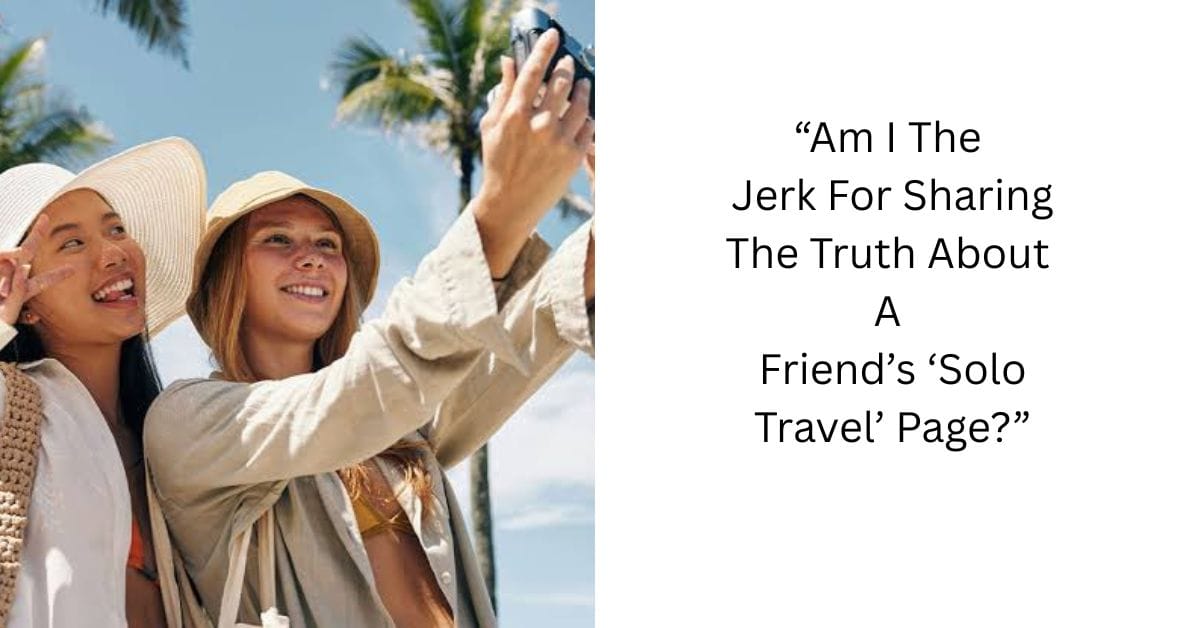
“Am I The Jerk For Sharing The Truth About A Friend’s ‘Solo Travel’ Page?”
A social media dispute quickly turned into a heated online debate after one person questioned whether they had done the right thing by revealing the truth behind a friend’s popular “solo travel” page. For months, the friend had built an impressive online presence by sharing breathtaking photos, inspiring captions, and stories about traveling the world alone. Thousands of followers admired the account, praising the confidence, independence, and adventurous lifestyle it seemed to represent. However, someone who knew the creator personally claimed there was one major detail the audience didn’t know—and revealing it would spark an unexpected wave of controversy.
She Wasn’t Actually Traveling Alone
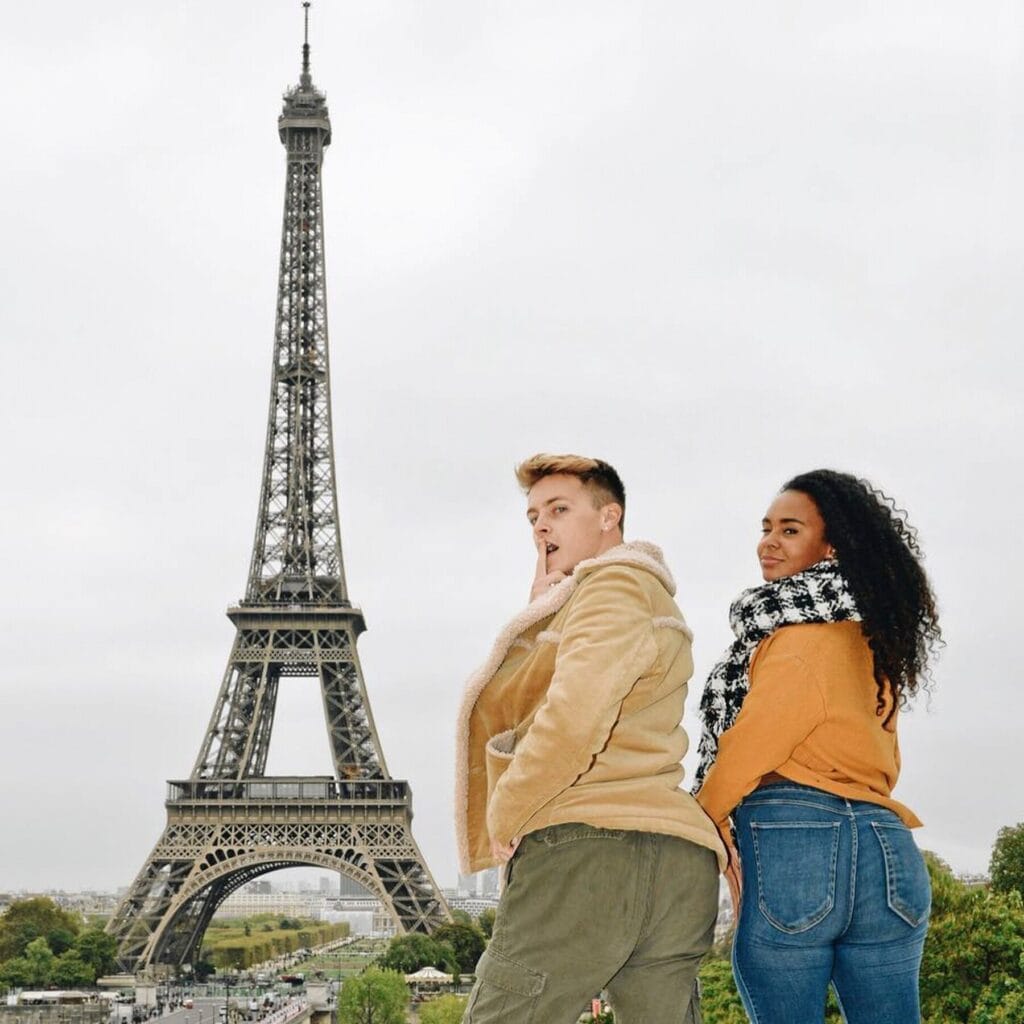
According to the post, the travel influencer rarely traveled alone at all. Instead, many of the trips were reportedly taken with a long-term partner who stayed behind the camera and was carefully cropped out of nearly every photo. The account continued promoting the image of complete independence, leading followers to believe every destination had been explored entirely solo. While the creator argued that the page focused on personal experiences rather than relationships, others felt the presentation created a misleading impression that contributed significantly to the account’s popularity.
Advertisement
The disagreement reached a breaking point after the influencer posted advice encouraging followers to embrace solo adventures and stop waiting for someone else to travel with. Having witnessed how each trip had actually unfolded, the friend felt uncomfortable watching thousands of people praise a lifestyle that, in their opinion, wasn’t being represented honestly. Eventually, they commented publicly that many of the photos had actually been taken by the influencer’s partner, who had accompanied most of those trips from the very beginning.
The comment immediately attracted attention from both followers and other creators. Some people thanked the friend for adding important context, arguing that audiences deserve honesty from influencers who build brands around authenticity. Others believed the comment crossed a line by exposing personal information that wasn’t necessary to understand the travel content. Many argued that whether someone traveled alone or with a partner should remain a private choice unless the creator intentionally lied about it.
As the discussion spread across social media, opinions became sharply divided. Supporters of the influencer argued that the account highlighted destinations, personal growth, and travel experiences rather than relationship updates. Meanwhile, critics insisted that branding an account as “solo travel” naturally creates the expectation that the journeys are genuinely taken alone. They believed transparency matters, especially when followers use creators as inspiration for making important personal decisions.
The story ultimately became less about vacations and more about authenticity in the age of social media. Readers debated where the line should be drawn between protecting personal privacy and presenting an accurate public image. While some believed the friend was justified in revealing information they felt corrected a misleading narrative, others argued that public embarrassment was never the right solution. The incident served as another reminder that the stories people see online often represent only a carefully edited version of reality, leaving viewers to decide how much trust they should place in what appears on their screens.
Read Story…
AITA for sharing the truth about a friend’s ‘solo travel’ page?
I have a friend who is into ‘side hustles’.
Her latest hustle is as a wannabe travel influencer. She’s linked up with a travel MLM, and is billing herself as a travel expert who can also act as an agent for itineraries and routes. Her niche is presenting everything as an affordable solo travel opportunity. She’s posted nearly a hundred posts on Instagram of her all around the world, and more or less every post has a mention of it being a great solo trip, or X restaurant is perfect for dining alone etc. Every single place she has posted however is from a holiday she’s either gone on with family, friends, or past boyfriends. This should be obvious to a layman (there are selfies where people are clearly cropped out, and table settings with two meals, despite the copy saying she’s eating alone), but she’s actually gaining a small audience, as I know solo travelling is becoming more popular.
The big issue is that the prices she is quoting are disingenuous – say she’s on about a weekend in the south of France from last year, and how it was ‘only’ around £200 for her flights and accommodation. She went on that holiday with her last boyfriend, and the cost was £300 alone for the hotel they stayed in. She’s halving or portioning her share of the cost, and acting like this was her ‘solo travel’ spend. I work in travel, and keep on dealing with people who are coming with itineraries like this, and are shocked when the cost is sometimes more than double of the social media claims, which bums them out as it’s over their budget.
When she did this the other day with a holiday I actually went on with her and two friends (‘spend a week in Croatia with me for only £350!’), I couldn’t help but comment that the Airbnbs we actually stayed in were at least £100 a night, and she was portioning off £25 a night as her share, which couldn’t get you a private room in the places we visited.
Within the hour, I was blocked from her travel Instagram, and she sent me a voice note saying that I was jealous and trying to disrupt her ‘business’. I said that she’d probably do just as well if she was just honest, but did not get a response. Friends are split – some have admitted they were close to anonymously exposing her themselves as they had the full photos they’d been cropped out of, but others have said to keep the peace I need to apologise. I do want to keep her as a friend, but don’t know if apologising is best when she was objectively misrepresenting herself.
Edit: I can see a couple of comments asking the same, so will put it here – I, and several friends, did approach her privately after the first couple of posts, and she said that if anyone asked, she’d tell them the total cost in a DM. We found out a couple of days ago that she had told a customer that she had paid the ‘public’ price for a trip, which she had actually done with her brother’s family (two adults, two kids). This has arguably been the catalyst that has led me to publicly comment on a post.
Edit 2: Again, more than one comment on this so I’ll respond here – this has very little to do with me viewing her as a business rival or competitor. I work in a bricks and mortar travel agency, she is mainly doing the influencer side of things, with commission-style extras that likely get eaten up because she’s part of someone else’s downline. I’m not going to set up a competing page, or start posting my own routes, because I work a full-time job in this industry and don’t want it to be my free time hobby as well. All of this just means that I am acutely aware of the exact amounts that she is misrepresenting.
A “Solo Travel” Star Everyone Admired
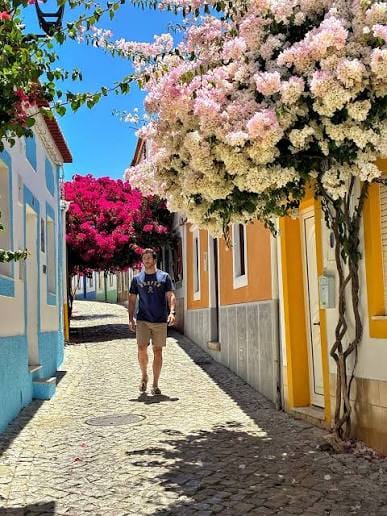
For nearly two years, a woman had watched one of her closest friends build a successful social media account centered around the idea of solo travel. The page featured breathtaking mountain views, quiet beaches, charming European streets, and inspiring captions about independence and self-discovery. Thousands of followers admired the content, believing every adventure was completed entirely alone. As the account continued growing, brands began reaching out with sponsorship opportunities, and the creator proudly described herself as someone proving that anyone could explore the world without waiting for a travel companion.
Advertisement
The woman had supported her friend from the very beginning. She had celebrated every milestone, shared posts to help increase engagement, and even offered encouragement whenever the creator doubted herself. However, there was one detail that always bothered her. Behind almost every carefully edited photo was the friend’s long-term boyfriend, who planned itineraries, carried luggage, booked hotels, drove rental cars, and spent hours taking hundreds of pictures before the perfect shot was finally captured. Yet his existence was almost completely erased from the final content.
Initially, she assumed her friend simply preferred keeping her relationship private. Everyone has different boundaries regarding what they choose to share online, and she respected that decision. However, as the account grew larger, the messaging became increasingly focused on traveling completely alone. Followers frequently praised the influencer’s courage for navigating unfamiliar countries without assistance, while many admitted they were inspired because they believed she accomplished everything entirely by herself.
Things became more complicated when the influencer started giving advice through videos and live streams. She encouraged followers not to wait for relationships before chasing their dreams and explained that every destination in her photos represented a solo journey. Hearing those statements made the woman increasingly uncomfortable because she personally knew that the boyfriend had accompanied nearly every major trip, even if he never appeared in the final images.
The breaking point came after the influencer posted a motivational caption claiming that traveling alone had taught her complete independence. Thousands of comments praised her bravery and described her as proof that women could safely experience the world without relying on anyone else. Reading those responses left the woman feeling conflicted because she believed the audience was celebrating a version of events that did not accurately reflect reality.
Without carefully considering the consequences, she left a comment beneath the post. She politely mentioned that many of the photographs had actually been taken by the influencer’s longtime boyfriend, who accompanied most of those trips behind the scenes. She did not insult her friend or accuse her of fraud, but she believed followers deserved additional context before accepting every inspirational message at face value.
The reaction was immediate. Within hours, hundreds of people responded to the comment. Some thanked her for providing information they felt was important, arguing that honesty matters whenever someone builds a personal brand around authenticity. Others criticized her for publicly exposing private details that had nothing to do with the quality of the travel content itself.
The influencer quickly deleted the comment and later posted a statement explaining that she had never intended to deceive anyone. She argued that her account focused on her personal experiences rather than documenting every individual present during each trip. According to her, choosing not to feature her boyfriend was simply a matter of protecting their relationship from unnecessary public attention rather than misleading followers.
Despite that explanation, the debate continued across multiple social media platforms. Some readers argued that privacy and honesty are not the same thing. Keeping a relationship private is perfectly reasonable, they said, but repeatedly describing partnered vacations as solo adventures could create unrealistic expectations for followers seeking genuine advice about independent travel.
Others strongly defended the influencer. They pointed out that many photographers, friends, relatives, or partners help create online content without becoming part of the public story. In their view, the presence of another person behind the camera did not necessarily diminish the traveler’s personal experiences, growth, or ability to inspire others through beautiful destinations and meaningful reflections.
The woman who revealed the information soon found herself receiving just as much criticism as praise. Some accused her of acting out of jealousy because her friend’s account had become successful. Others believed she should have discussed her concerns privately before posting publicly. Even people who agreed with her message questioned whether a public comment had been the most respectful way to handle the situation.
As the discussion continued, many people shifted their focus away from the individuals involved and toward a broader conversation about influencer culture. They questioned how much editing, selective storytelling, and carefully managed branding audiences should expect from online creators. While everyone understands that social media presents only part of reality, many wondered where the line exists between creative presentation and misleading representation.
Several experienced travelers joined the discussion with their own perspectives. They explained that solo travel involves far more than simply appearing alone in photographs. Planning transportation, solving unexpected problems, navigating unfamiliar cities, and making important decisions without support all contribute to the experience. If another person consistently handled those responsibilities, some argued, describing the trips as completely solo became difficult to justify.
Meanwhile, others believed the issue had been exaggerated. They argued that the influencer still explored destinations, met local people, and created meaningful memories regardless of who happened to stand behind the camera. To them, the argument centered more on wording than on genuine dishonesty.
In the end, the situation became a powerful reminder that social media often tells carefully edited stories rather than complete ones. Whether the woman was right or wrong for revealing the truth remained a matter of personal opinion, but the incident encouraged thousands of readers to think more critically about the content they consume online. It also highlighted the importance of balancing authenticity, privacy, and transparency in an age where carefully curated images can shape public perception far more than reality itself.