Homeowner Cuts Weekend Trip Short After Their House Sitter Breaks In Through A Window And Triggers A $250 Insurance Deductible
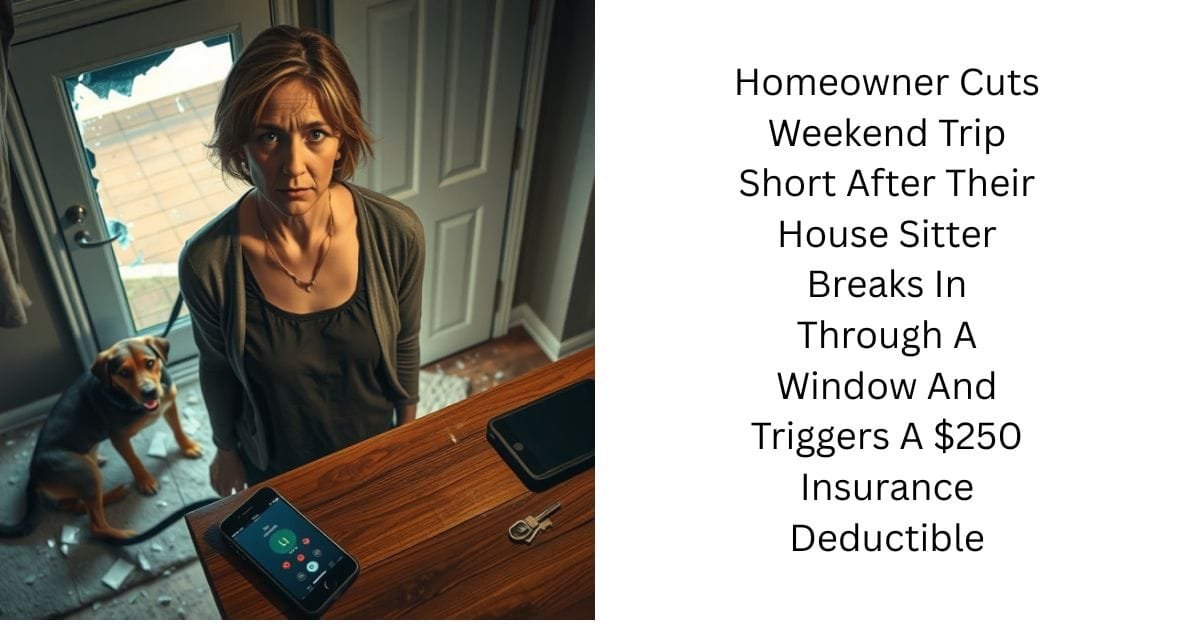
When this homeowner planned a weekend trip, they thought everything at home would be perfectly safe while they were away. They arranged for a trusted house sitter to stay at the property and keep an eye on things. The sitter was supposed to handle basic responsibilities, make sure the house remained secure, and contact the homeowner if anything unexpected happened. The homeowner left feeling confident that everything was under control.
Unfortunately, the trip didn’t go as planned. While the homeowner was away, the house sitter apparently found themselves unable to enter the house through the normal door. Instead of contacting the homeowner immediately, the sitter made a decision that would eventually create an unexpected financial problem. They chose to break into the home through a window, believing it was the quickest solution to the situation.
The homeowner was shocked when they received the news. Breaking a window wasn’t simply a minor inconvenience. The damage required repairs, and because the property was insured, the homeowner had to deal with an insurance claim and a $250 deductible. What had been a simple weekend arrangement suddenly became an unnecessary expense that the homeowner had never planned for.
The homeowner tried to understand why the sitter had chosen that option. They could have called, sent a message, contacted another person with access, or waited for instructions. Instead, they had apparently decided that forcing their way through a window was acceptable. The homeowner felt frustrated because the damage could likely have been avoided with a simple phone call.
The situation became even more awkward because the house sitter didn’t initially seem to understand why the homeowner was upset. From the sitter’s perspective, they had simply been trying to get inside and believed they had solved the problem. But the homeowner argued that the sitter’s decision had caused property damage and left them responsible for an insurance deductible.
The homeowner explained that they were willing to help with reasonable problems that occurred while someone was watching the house. However, they didn’t believe they should automatically be responsible for damage caused by an avoidable decision. The $250 deductible might not have been an enormous amount of money, but the principle bothered them more than the cost.
The disagreement also made the homeowner reconsider the original arrangement. Trust is important when someone is given access to another person’s home, and the homeowner felt that the sitter had made a serious judgment error. If something similar happened again, they wondered whether the sitter would make another major decision without asking first.
Eventually, the homeowner decided that the issue needed to be handled calmly. They didn’t want a relatively small repair to destroy a relationship, but they also didn’t want to ignore what had happened. They told the sitter that in an emergency, protecting the property and people’s safety comes first, but unnecessary damage should be avoided whenever possible.
In the end, the homeowner’s weekend trip became an unexpected lesson about communication and responsibility. The $250 deductible was frustrating, but the bigger issue was the lack of communication before the window was broken. The homeowner realized that even people who are trusted with a house may interpret situations differently, so clear instructions about what to do when something goes wrong can prevent small problems from turning into expensive disputes.
Read Story…
WIBTA If I made the house sitter pay for breaking into my house (after locking themself out)?
My partner and I went away for a weekend with friends and left our dog with a sitter who agreed to stay at our house so we didn’t have to board the dog somewhere. Around 3am on one of the nights, the sitter let the dog out (apparently was barking) and got locked out of the house. We could see on the video doorbell that they tried the other doors to get in and tried calling us through the doorbell but we were sleeping.
The next day we find out that the sitter broke the window on the back door to get back into the house. We cut our trip short, relieved the sitter and started making calls to get it fixed. Turns out the glass on the door isn’t easily replaced due to the way the door was manufactured so it’s more cost effective to replace. The service we used says they cover damage caused during the stay after a deductible has been met – $250 in this case.
Here’s where I may be the asshole – I want the sitter to pay for the deductible since this is essentially their fault. We had to cut our trip short, deal with the hassle of replacing, likely won’t be able to get it fixed until next week or longer due to the door being an odd size and having one shipped.
Am I in the wrong here? My partner doesn’t want to make the sitter pay but I feel like we shouldn’t have to pay for someone else’s stupidity. We paid up front for them to watch the dog otherwise I would be refusing payment.
Additional info:
- We paid the sitter ~$70/night for the stay (house sitting was part of the agreement). First time using them and have no idea what finances are like for them. I think mid to late 40s probably doing this as a side gig?
- The key was provided in a lockbox outside. Sitter left the key on the table when they went out with the dog
- Saw that they were smoking either cigarettes or weed outside on the pet cam, so assume it was also a smoke break when the dog was let out during the night (no other reason to go outside with the dog since the yard is fenced)
2nd edit to address some questions:
- The door the sitter used to go outside is a sliding glass door that doesn’t slide easily (i.e. didn’t close automatically). The most likely scenario is that the lock was not lifted all the way and latched when they closed the door.
- What I would have had them do differently? – I think they made the right decision and I’m not faulting them for getting back into the house. Especially since the dog was also outside and they were not dressed to walk anywhere. Nor did they have a phone or means to call a locksmith.
- Payment for the service was completed and was for the appropriate amount – no lost $ there.
- One key was provided in the lockbox for the sitter to use. There was another key inside but we didn’t think to leave instructions for its use. Effectively the sitter had the one key which was on the table when they became locked out. (we will of course be leaving that one out in the future)
- This was our first time using this sitter and will be our last. No previous relationship.
She Leaves For A Weekend Trip, Trusting Her House Sitter
When this homeowner planned a weekend trip, they expected everything at home to remain quiet and secure while they were away. They didn’t want the house to sit completely unattended, so they arranged for a house sitter to stay at the property. The arrangement seemed simple enough. The sitter would watch the house, take care of a few basic responsibilities, and contact the homeowner if anything unexpected happened. With everything organized before the trip, the homeowner left feeling confident that there would be no major problems.

Advertisement
The homeowner had trusted the sitter enough to give them access to the property. They believed the person was responsible and capable of handling ordinary situations that might come up while they were away. There was no reason to expect that a short weekend trip would turn into a stressful situation involving property damage, insurance paperwork, and an unexpected bill.
For the first part of the trip, everything appeared normal. The homeowner was enjoying their time away and wasn’t expecting to receive any urgent messages. They assumed the sitter was comfortable at the house and that everything was going according to plan. Then, unexpectedly, the homeowner received news that something had gone wrong.
The sitter apparently had trouble getting into the house through the usual entrance. The exact reason for the problem wasn’t as important to the homeowner as what happened next. Instead of contacting the homeowner for instructions, the sitter decided to find another way inside.
That alternative involved one of the home’s windows.
According to the homeowner, the sitter broke the window in order to gain access to the property. The decision may have seemed like a quick solution at the time, but it immediately created a new problem. A window that had been perfectly fine before the sitter’s arrival now needed to be repaired.
The homeowner was shocked when they heard about the damage. They couldn’t understand why the sitter hadn’t called or sent a message before taking such a drastic step. In an age when almost everyone carries a phone, the homeowner felt that communication should have been the first option.
They immediately started asking questions. Why had the sitter broken the window? Had there been a genuine emergency? Was there someone else who could have helped? Could the homeowner have provided instructions remotely? The more they thought about the situation, the more frustrated they became.
The homeowner understood that unexpected situations can happen. Keys can get misplaced, locks can malfunction, and people can make mistakes. They weren’t angry simply because something had gone wrong. They were upset because the solution chosen had caused physical damage to their property.
The next problem was figuring out how to pay for the repair. The homeowner contacted their insurance provider to understand what options were available. They discovered that the damage could be handled through their insurance, but there was a $250 deductible involved.
That meant the homeowner would still have to pay $250 out of pocket. While the amount wasn’t enough to ruin their finances, it was an expense they believed should never have happened in the first place.
The homeowner became even more frustrated because the damage seemed avoidable. If the sitter had contacted them, they could have discussed other options. The homeowner might have been able to arrange access through another door, contact a neighbor, or provide instructions for dealing with the lock.
Instead, the window was broken before any conversation could happen.
When the homeowner finally spoke to the sitter, they tried to remain calm. They didn’t want the discussion to become an unnecessary argument, but they needed an explanation. They asked why the sitter had thought breaking a window was an acceptable solution.
The sitter apparently believed they were simply trying to solve an immediate problem. They didn’t necessarily intend to create a financial burden for the homeowner. From their perspective, getting into the house seemed urgent, and breaking a window appeared to be the fastest way to accomplish that.
The homeowner acknowledged that explanation but still felt that the decision was unreasonable. They pointed out that breaking someone else’s window isn’t a minor action. Even if the sitter believed they were solving a problem, they should have considered whether there were less destructive alternatives.
The conversation also raised a bigger issue about responsibility. The homeowner had trusted the sitter with their property. That trust came with an expectation that the sitter would treat the house carefully and make sensible decisions.
The homeowner wasn’t expecting the sitter to predict every possible situation. They simply expected them to communicate before taking an action that could cause damage.
The $250 deductible became a symbol of the larger problem. The homeowner knew that paying the deductible would allow the window to be repaired, but the financial cost wasn’t the only thing bothering them. They were more concerned about the judgment behind the decision.
They wondered what might happen if something more serious occurred in the future. If the sitter encountered another unexpected problem, would they call for help or make another major decision without asking?
That thought made the homeowner reconsider whether they could trust the sitter with their home again.
Eventually, the homeowner explained that they weren’t accusing the sitter of intentionally damaging anything. They believed the person had made a poor decision in a stressful moment. However, good intentions didn’t erase the consequences.
The sitter reportedly understood the homeowner’s frustration after the situation was explained. What had seemed like a simple way to get inside had resulted in a damaged window, an insurance claim, and an unexpected $250 expense.
The homeowner decided that the experience was also a lesson for them. In the future, they would provide house sitters with much clearer emergency instructions. They would make sure the sitter knew exactly who to contact if they couldn’t enter the home or encountered a problem.
They also realized that trusting someone with a property involves more than simply giving them a key. People need to understand what is expected of them when something unexpected happens. Clear communication can prevent small problems from becoming much bigger ones.
Although the homeowner’s weekend trip had been interrupted by the incident, they eventually focused on getting the window repaired and moving forward. They didn’t want a single mistake to become an endless family or personal dispute.
Still, the experience changed how they viewed house-sitting arrangements. They learned that even a person who seems trustworthy can make a surprising decision when faced with an unexpected situation.
In the end, the homeowner wasn’t devastated by the $250 deductible itself. What frustrated them was knowing that the expense could likely have been avoided with one simple phone call. The incident became a reminder that when you’re responsible for someone else’s home, solving a problem quickly isn’t always the same as solving it responsibly.